



Industrial Lubricants Market Size & Growth Forecast 2027–2036, By Segments (Product, Application), Regional Demand Trends (North America, Asia Pacific, Europe), Key Country Insights (U.S., Japan, South Korea, Germany, France, Italy), and Competitive Landscape
Market Size and Growth Outlook
Industrial Lubricants Market size was valued at USD 60 billion in 2026 and is anticipated to grow at a 2.66% CAGR from 2027 to 2036, attaining USD 78.01 billion by 2036. The industry revenue for 2027 is calculated at USD 61.34 billion.
Base Year Value (2026)
USD 60 billion
CAGR (2027-2036)
2.66%
Forecast Year Value (2036)
USD 78.01 billion

Historical Data Period
2022-2026

Largest Region
Asia Pacific

Forecast Period
2027-2036
Industrial Lubricants Market Intelligence Snapshot:
-
Regional Market Dynamics:
- Asia Pacific held a 36.15% market share in 2026, driven by its extensive manufacturing base, heavy industrial activity, and continuous lubricant demand across power generation, metal processing, and construction equipment.
- North America is expected to grow at a 4.56% CAGR as industrial modernization, automation, and demand for higher-performance lubricants improve equipment reliability and maintenance efficiency.
-
Segment Momentum:
- Process Oils held a 36.99% share in 2026 due to their broad use as both lubricants and functional processing inputs across diverse industrial manufacturing operations, supporting consistent demand.
- Food Processing is expanding fastest as manufacturers increase mechanization and require specialized lubricants that support reliable equipment performance while meeting stricter operational hygiene requirements.
-
Market Expansion Drivers:
- Expansion of automated industrial machinery increasing demand for high-performance lubricants.
- Growing adoption of bio-based and synthetic lubricants driven by sustainability and ESG mandates.
- Rising predictive maintenance and lubrication-as-a-service models enhancing industrial equipment efficiency.
-
Leading Market Participants:
Major players in the industrial lubricants market include Exxon Mobil Corporation (United States), Shell plc (United Kingdom), TotalEnergies SE (France), FUCHS SE (Germany), Chevron Corporation (United States), The Lubrizol Corporation (United States), Klüber Lubrication München SE & Co. KG (Germany), BP p.l.c. (United Kingdom), Valvoline Global Operations (United States), Quaker Houghton (United States).
Global Market Forecast Snapshot:
-
Market Outlook:
- 2026 Market Size: USD 60 billion
- 2027 Estimated Market Size: USD 61.34 billion.
- Projected Market Size: USD 78.01 billion by 2036
- Growth Forecasts: 2.66% CAGR (2027-2036)
-
Regional and Segment Outlook:
- Leading Regional Market: Asia Pacific
- High-Growth Regional Hub: North America
- Core Revenue Segment: Process Oils (Product) | Power Generation (Application)
- Emerging Opportunity Segment: Metalworking Fluids (Product) | Food Processing (Application)
Market Growth Drivers and Industry Trends
Expansion of automated industrial machinery increasing demand for high-performance lubricants
The expansion of automation is driving the industrial lubricants market as modern machinery operates with greater precision, speed, and continuous-duty requirements. Automated equipment depends on effective lubrication to manage friction, heat, and component wear across demanding operating conditions. As industrial facilities introduce more sophisticated machinery, the need for lubricants capable of supporting equipment performance and reliable operation becomes increasingly important.
Growing adoption of bio-based and synthetic lubricants driven by sustainability and ESG mandates
Sustainability priorities are reshaping the industrial lubricants market, with manufacturers increasingly considering bio-based and synthetic formulations as alternatives suited to environmental and operational requirements. ESG mandates are encouraging industrial users to evaluate lubricant choices based on sustainability considerations while maintaining equipment performance. This shift is creating greater interest in formulations that combine functional performance with improved alignment to environmental objectives.
Rising predictive maintenance and lubrication-as-a-service models enhancing industrial equipment efficiency
Predictive maintenance practices are strengthening the industrial lubricants market by linking lubrication activities more closely with equipment condition and operational performance. Lubrication-as-a-service models further support this transition by providing structured approaches to monitoring and maintaining lubrication requirements. These practices help industrial operators manage lubricant use more systematically, address maintenance needs based on equipment conditions, and improve the efficiency of industrial assets.
| Growth Driver Assessment Framework | |||||
| Growth Driver | Impact On CAGR | Regulatory Influence | Geographic Relevance | Adoption Rate | Impact Timeline |
|---|---|---|---|---|---|
| Expansion of automated industrial machinery increasing demand for high-performance lubricants | 1.90% | Moderate | Asia Pacific, North America | High | Near Term |
| Growing adoption of bio-based and synthetic lubricants driven by sustainability and ESG mandates | 1.70% | High | Europe, North America | High | Mid Term |
| Rising predictive maintenance and lubrication-as-a-service models enhancing industrial equipment efficiency | 1.50% | Moderate | Asia Pacific, Europe | Emerging | Mid Term |
Unlock insights tailored to your business with our bespoke market research solutions - Click to get your customized report now!
Regional Demand Dynamics
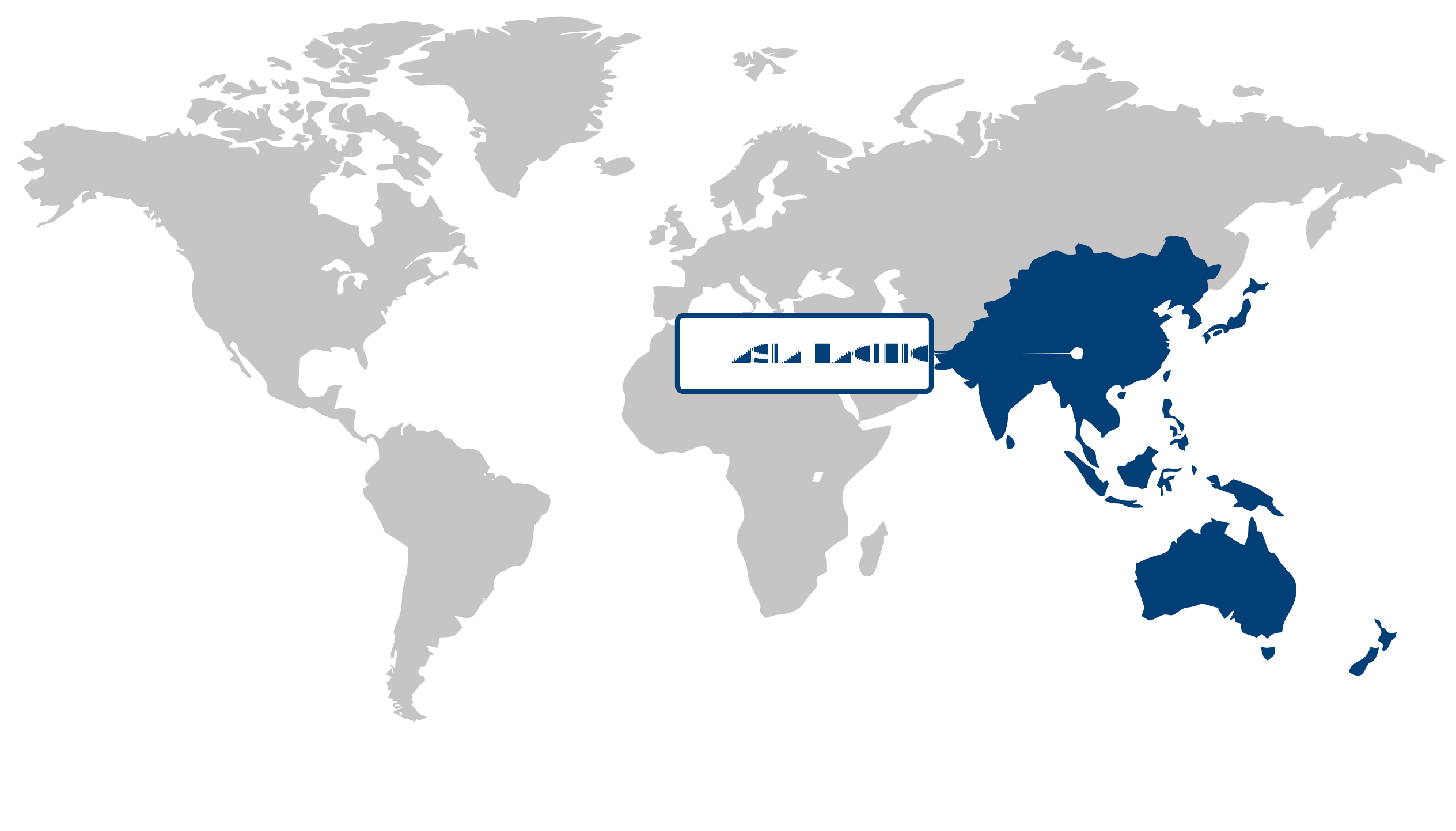
Largest Region
Asia Pacific
36.15% Market Share in 2026
Asia Pacific (Largest Region) vs North America (Fastest-Growing Region)
The industrial lubricants market was led by Asia Pacific, which held a 36.15% share in 2026, supported by extensive manufacturing activity, expanding industrial production, and continued development of heavy-duty infrastructure across major economies. Demand for lubricants is closely linked to machinery-intensive sectors such as automotive manufacturing, construction, power generation, metal processing, and general industrial operations. The region's expanding industrial base is increasing the need for products that improve equipment reliability, reduce friction, and support longer maintenance intervals. Growing investments in automated production and advanced machinery are also encouraging the use of higher-performance lubricant formulations. In addition, increasing attention to energy efficiency and equipment productivity is encouraging industrial operators to adopt lubricants with improved thermal stability, wear protection, and operating performance, strengthening regional demand.
North America is the fastest-growing region, supported by modernization across manufacturing facilities, increasing automation, and rising emphasis on equipment efficiency and operational reliability. Industrial operators are increasingly upgrading machinery and production systems, creating demand for lubricants capable of performing under demanding operating conditions. The expansion of advanced manufacturing, transportation infrastructure, energy-related activities, and industrial processing is providing diverse applications for specialized lubricant products. Environmental considerations are also influencing product development, encouraging greater interest in formulations designed to reduce waste, improve equipment efficiency, and support responsible industrial operations. Growing adoption of predictive maintenance and digitally monitored machinery further enhances opportunities for high-performance lubricants that can contribute to equipment longevity and more efficient maintenance practices.
Key Country Insights
The U.S. industrial lubricants market is shaped by demand from manufacturing, energy, and heavy equipment operations seeking improved equipment performance. End users in the U.S. are increasingly adopting high-performance and synthetic lubricants to reduce maintenance requirements and downtime.
Japan emphasizes industrial lubricants that enhance machine longevity and operational consistency across sophisticated manufacturing environments. Japanese companies are adopting specialty formulations that support predictive maintenance and high-efficiency production processes.
South Korea's industrial lubricants market is driven by electronics, shipbuilding, and heavy industrial operations requiring dependable machinery performance. Manufacturers in South Korea are increasing demand for advanced lubricant solutions that improve productivity and reduce equipment wear.
Germany's industrial lubricants market is closely tied to advanced machinery and precision manufacturing sectors. German customers prioritize lubricants that support equipment reliability, energy efficiency, and compatibility with highly automated production systems.
France is witnessing growing interest in industrial lubricants that align with environmental and operational efficiency goals. Industrial users in France are evaluating bio-based and lower-emission formulations while maintaining performance standards for diverse manufacturing applications.
Italy's industrial lubricants market is supported by machinery, automotive, and processing industries focused on extending equipment life. Italian manufacturers are increasingly selecting premium lubricant products that help optimize maintenance schedules and operational efficiency.
Segment Leadership and Growth Trends
Product Segment Analysis: Process Oils (Largest Segment) vs Metalworking Fluids (Fastest-Growing Segment)
The process oils segment represented the largest share of the industrial lubricants market at 36.99% in 2026, driven by its extensive use as a processing aid and functional ingredient across manufacturing activities. Process oils support applications where material flexibility, processing performance, and formulation consistency are important, making them valuable across rubber, polymer, chemical, and other industrial operations. Continued manufacturing activity and demand for materials that improve production efficiency are reinforcing the segment's established role.
Metalworking fluids are expanding at a faster pace as manufacturers increasingly prioritize machining efficiency, tool protection, heat management, and surface quality. These fluids are essential in cutting, grinding, forming, and other metal-processing operations, where effective lubrication and cooling can improve equipment performance and production outcomes. Growing industrial automation, advanced machining requirements, and the need for greater manufacturing efficiency are supporting increased demand for specialized metalworking fluid formulations.
Application Segment Analysis: Power Generation (Largest Segment) vs Food Processing (Fastest-Growing Segment)
In the industrial lubricants market, power generation held the largest application share at 28.73% in 2026, reflecting the extensive use of lubricants in turbines, generators, compressors, and other equipment operating under demanding conditions. Reliable lubrication is essential for reducing friction, controlling wear, and supporting the continuous operation of power-generation machinery. Ongoing emphasis on equipment reliability, maintenance efficiency, and operational continuity continues to sustain lubricant consumption across power-generation facilities.
Food processing is the fastest-growing application as manufacturers increasingly require lubricants that can support efficient machinery operation while meeting stringent hygiene and contamination-control requirements. Processing, packaging, conveying, and filling equipment depend on specialized lubrication to maintain smooth operation and minimize downtime. The expansion of automated food-production systems and growing attention to food safety and equipment reliability are creating additional opportunities for specialized industrial lubricants in this application.
| Report Segmentation | |||
| Segment | Sub-Segment | Largest Segment | Fastest Growing Segment |
|---|---|---|---|
| Product | Process Oils, General Industrial Oils, Metalworking Fluids, Industrial Engine Oils, Others | Process Oils | Metalworking Fluids |
| Application | Mining, Power Generation, Food Processing, Chemical Manufacturing, Textile Manufacturing, Steel & Metals, Others | Power Generation | Food Processing |
 Read our Research Approach
Competitive Landscape and Market Positioning
Prominent players in the industrial lubricants market:
1. Exxon Mobil Corporation (United States)
2. Shell plc (United Kingdom)
3. TotalEnergies SE (France)
4. FUCHS SE (Germany)
5. Chevron Corporation (United States)
6. The Lubrizol Corporation (United States)
7. Klüber Lubrication München SE & Co. KG (Germany)
8. BP p.l.c. (United Kingdom)
9. Valvoline Global Operations (United States)
10. Quaker Houghton (United States)
The industrial lubricants market is evolving with increasing demand for high-performance and sustainable lubrication solutions. In the industrial lubricants market, advancements in formulation technology are improving equipment efficiency and lifespan. Industrial applications are also driving demand for specialized lubrication systems.
Industry Development/News
| Company Name | Date | Key Development |
|---|---|---|
| LANXESS | Jul-25 | LANXESS entered a strategic partnership with Hindustan Petroleum Corporation Limited (HPCL) to accelerate the expansion of aviation and industrial lubricant portfolios across India and the SAARC region. By leveraging HPCL’s extensive distribution network, LANXESS aims to enhance regional product availability and market penetration for its high-performance lubricant technologies in critical industrial sectors. |
| HF Sinclair | Jul-25 | HF Sinclair completed the acquisition of Industrial Oils Unlimited for approximately $38 million. This transaction integrates specialized industrial fluid capabilities into the company’s Lubricants & Specialties business, significantly expanding its manufacturing footprint and regional distribution capacity to support long-term growth in high-performance industrial oil solutions within the United States. |
| SK Enmove | Jul-25 | SK Enmove established a joint venture with Gabriel India Limited to strengthen its strategic position in the Indian market. The partnership focuses on scaling production and distribution capabilities to meet increasing demand for automotive and industrial lubricants, supporting the company's broader objective of capturing growth within India’s expanding industrial and transportation manufacturing sectors. |
| Lubrication Engineers | Jun-25 | Lubrication Engineers completed a dual acquisition of Southwestern Petroleum Lubricants and Royal Purple’s industrial brands. These strategic moves significantly broaden the company’s industrial lubricant portfolio and enhance its competitive capabilities in high-performance lubrication solutions, allowing for deeper market penetration across diverse industrial applications requiring advanced, mission-critical maintenance products. |
| Chevron Lummus Global | Jun-25 | Chevron Lummus Global and Hongrun Petrochemical successfully commissioned the world’s largest all-hydroprocessing white oil unit. This project represents a material expansion in global production capacity for high-purity base oils, directly impacting the supply chain for advanced industrial and specialty lubricant manufacturing by providing the essential feedstocks required for premium synthetic formulations. |
| Asyad Holding | Jun-25 | Asyad Holding, through Wafi Energy, finalized the acquisition of Shell Pakistan’s 77.42% stake following regulatory approval. This restructuring of the local downstream market alters the regional energy distribution landscape and significantly expands the acquirer’s access to petroleum and lubricant operations, shifting competitive dynamics within Pakistan’s industrial and retail lubricant supply chain. |
| Kodiak | Jun-25 | Kodiak acquired Aztech Lubricants, diversifying its product portfolio to include specialized powder-based chemicals for industrial applications such as wire drawing. This acquisition represents a strategic shift toward niche, high-value-added chemical solutions, enabling the company to expand its service offerings beyond traditional liquid lubricants into broader industrial processing segments. |
| Vollenhoven Oil | Jul-25 | Vollenhoven Oil Technology and ABC Energies formed a joint entity, Vona, to consolidate their wholesale fuel and specialty lubricant operations. The new organization focuses on integrating distribution channels across the automotive, transport, agriculture, and industrial sectors, aiming to optimize logistics and strengthen market presence in metalworking fluids and specialized industrial lubrication applications. |
| FPT Industrial | Jun-25 | FPT Industrial and PETRONAS Lubricants International launched a co-branded range of high-performance fluids targeting marine, on-road, off-road, and power generation applications. This collaboration aims to provide optimized, engine-specific lubricant solutions designed to enhance equipment efficiency and reduce total operating costs, strengthening the competitive positioning of both firms within the industrial and transportation lubrication segments. |
| Chem Arrow | Jun-25 | Following its acquisition by Motul, Chem Arrow expanded its industrial lubricant offerings in the UK by integrating the MotulTech product portfolio. This integration bolsters the company’s technical capabilities and provides industrial engineering customers with broader access to advanced, specialized lubricant technologies, enhancing the firm's competitive relevance in the manufacturing and industrial maintenance sectors. |
Why Choose Us
Specialized Expertise: Our team comprises industry experts with a deep understanding of your market segment. We bring specialized knowledge and experience that ensures our research and consulting services are tailored to your unique needs.
Customized Solutions: We understand that every client is different. That's why we offer customized research and consulting solutions designed specifically to address your challenges and capitalize on opportunities within your industry.
Proven Results: With a track record of successful projects and satisfied clients, we have demonstrated our ability to deliver tangible results. Our case studies and testimonials speak to our effectiveness in helping clients achieve their goals.
Cutting-Edge Methodologies: We leverage the latest methodologies and technologies to gather insights and drive informed decision-making. Our innovative approach ensures that you stay ahead of the curve and gain a competitive edge in your market.
Client-Centric Approach: Your satisfaction is our top priority. We prioritize open communication, responsiveness, and transparency to ensure that we not only meet but exceed your expectations at every stage of the engagement.
Continuous Innovation: We are committed to continuous improvement and staying at the forefront of our industry. Through ongoing learning, professional development, and investment in new technologies, we ensure that our services are always evolving to meet your evolving needs.
Value for Money: Our competitive pricing and flexible engagement models ensure that you get maximum value for your investment. We are committed to delivering high-quality results that help you achieve a strong return on your investment.
Select Licence Type

