



Industrial Pumps Market Size & Growth Forecast 2027–2036, By Segments (Product Type, Application), Regional Demand Trends (North America, Asia Pacific, Europe), Key Country Insights (U.S., Japan, South Korea, Germany, France, Italy), and Competitive Landscape
Market Size and Growth Outlook
Industrial Pumps Market size was worth USD 49.5 billion in 2026 and is poised to grow at a 5.42% CAGR between 2027 and 2036, reaching USD 83.91 billion by 2036. The industry revenue for 2027 is assessed at USD 51.76 billion.
Base Year Value (2026)
USD 49.5 billion
CAGR (2027-2036)
5.42%
Forecast Year Value (2036)
USD 83.91 billion

Historical Data Period
2022-2026

Largest Region
Asia Pacific

Forecast Period
2027-2036
Industrial Pumps Market Intelligence Snapshot:
-
Regional Market Dynamics:
- Asia Pacific led the market in 2026, supported by its extensive manufacturing base, large process industries, and sustained infrastructure investment that drives both replacement demand and new equipment procurement.
- North America is expected to expand at a 5.47% CAGR, driven by industrial modernization, infrastructure rehabilitation, and increasing demand for pump upgrades that improve efficiency, reliability, and compliance.
-
Segment Momentum:
- Centrifugal pumps lead with 65.38% share due to strong suitability for continuous high-volume fluid handling, easy integration into industrial systems, and widespread use in water, processing, and utility operations requiring steady flow.
- Positive displacement pumps grow fastest because they enable precise flow control and handle viscous, abrasive, or shear-sensitive fluids, meeting increasing demand for dosing accuracy, pressure stability, and specialized industrial process requirements.
-
Market Expansion Drivers:
- Expanding water and wastewater infrastructure investments increasing demand for industrial pumping systems.
- Growing adoption of IoT-enabled energy-efficient pumps optimizing industrial operating costs.
- Rising renewable energy and green hydrogen projects creating new high-capacity pump applications.
-
Leading Market Participants:
Major companies in the industrial pumps market include Flowserve Corporation (United States), Xylem Inc. (United States), Grundfos Holding A/S (Denmark), Sulzer Ltd. (Switzerland), KSB SE & Co. KGaA (Germany), Ingersoll Rand Inc. (United States), ITT Inc. (United States), Ebara Corporation (Japan), SPX FLOW, Inc. (United States), The Weir Group PLC (United Kingdom).
Global Market Forecast Snapshot:
-
Market Outlook:
- 2026 Market Size: USD 49.5 billion
- 2027 Estimated Market Size: USD 51.76 billion.
- Projected Market Size: USD 83.91 billion by 2036
- Growth Forecasts: 5.42% CAGR (2027-2036)
-
Regional and Segment Outlook:
- Leading Regional Market: Asia Pacific
- High-Growth Regional Hub: North America
- Core Revenue Segment: Centrifugal Pump (Product Type) | Water & Wastewater Treatment (Application)
- Emerging Opportunity Segment: Positive Displacement Pump (Product Type) | Chemicals (Application)
Market Growth Drivers and Industry Trends
Expanding water and wastewater infrastructure investments increasing demand for industrial pumping systems
Growing investment in water supply, treatment, and wastewater infrastructure is strengthening demand for reliable fluid-handling equipment, and expansion of these projects will drive the industrial pumps market growth across municipal and industrial applications. Population growth, urban development, industrialization, and increasing pressure on water resources are encouraging governments and industrial operators to expand treatment capacity, modernize distribution networks, and improve wastewater management systems. Pumping equipment is essential across multiple stages of these facilities, including water transfer, treatment processes, sludge handling, and distribution. Industrial facilities are also increasing investments in water recycling and process-water management to improve resource efficiency and comply with environmental requirements. The development and modernization of these infrastructure systems therefore creates recurring requirements for pumps capable of handling different flow rates, pressures, fluids, and operating conditions.
Growing adoption of IoT-enabled energy-efficient pumps optimizing industrial operating costs
Industrial operators are increasingly integrating connected technologies into pumping systems to improve energy management, equipment monitoring, and maintenance efficiency, which will boost the industrial pumps market demand for intelligent and energy-efficient solutions. IoT-enabled pumps and associated monitoring systems can provide operational information such as equipment performance, operating conditions, and potential abnormalities, allowing facility managers to make more informed maintenance and process-control decisions. Energy optimization is particularly important because pumping operations can represent a significant component of energy consumption in many industrial processes, encouraging users to select systems capable of operating efficiently under changing load conditions. Connected pump technologies can also support condition-based maintenance by helping identify performance deviations before they develop into more disruptive equipment problems, while remote monitoring capabilities improve visibility across distributed industrial assets.
Rising renewable energy and green hydrogen projects creating new high-capacity pump applications
The development of renewable energy infrastructure and emerging green hydrogen production facilities is creating specialized requirements for fluid movement and process management, opening new application areas for the industrial pumps market. Renewable energy projects can require pumping systems for cooling, water management, heat-transfer processes, and other auxiliary operations, while green hydrogen facilities involve water treatment and process-fluid handling within production environments. As these projects expand, equipment suppliers must address demanding requirements related to flow control, reliability, operating pressure, material compatibility, and continuous operation. Hydrogen-related infrastructure can also involve multiple interconnected processing stages where dependable fluid-handling equipment is essential for maintaining stable operations. The increasing diversification of industrial applications associated with clean-energy infrastructure is consequently broadening the range of environments in which high-capacity pumping systems are required.
| Growth Driver Assessment Framework | |||||
| Growth Driver | Impact On CAGR | Regulatory Influence | Geographic Relevance | Adoption Rate | Impact Timeline |
|---|---|---|---|---|---|
| Expanding water and wastewater infrastructure investments increasing demand for industrial pumping systems | 1.90% | High | Asia Pacific, Middle East & Africa | High | Near Term |
| Growing adoption of IoT-enabled energy-efficient pumps optimizing industrial operating costs | 1.60% | Moderate | North America, Europe | Medium | Mid Term |
| Rising renewable energy and green hydrogen projects creating new high-capacity pump applications | 1.30% | Moderate | Europe, Asia Pacific | Emerging | Long Term |
Unlock insights tailored to your business with our bespoke market research solutions - Click to get your customized report now!
Regional Demand Dynamics
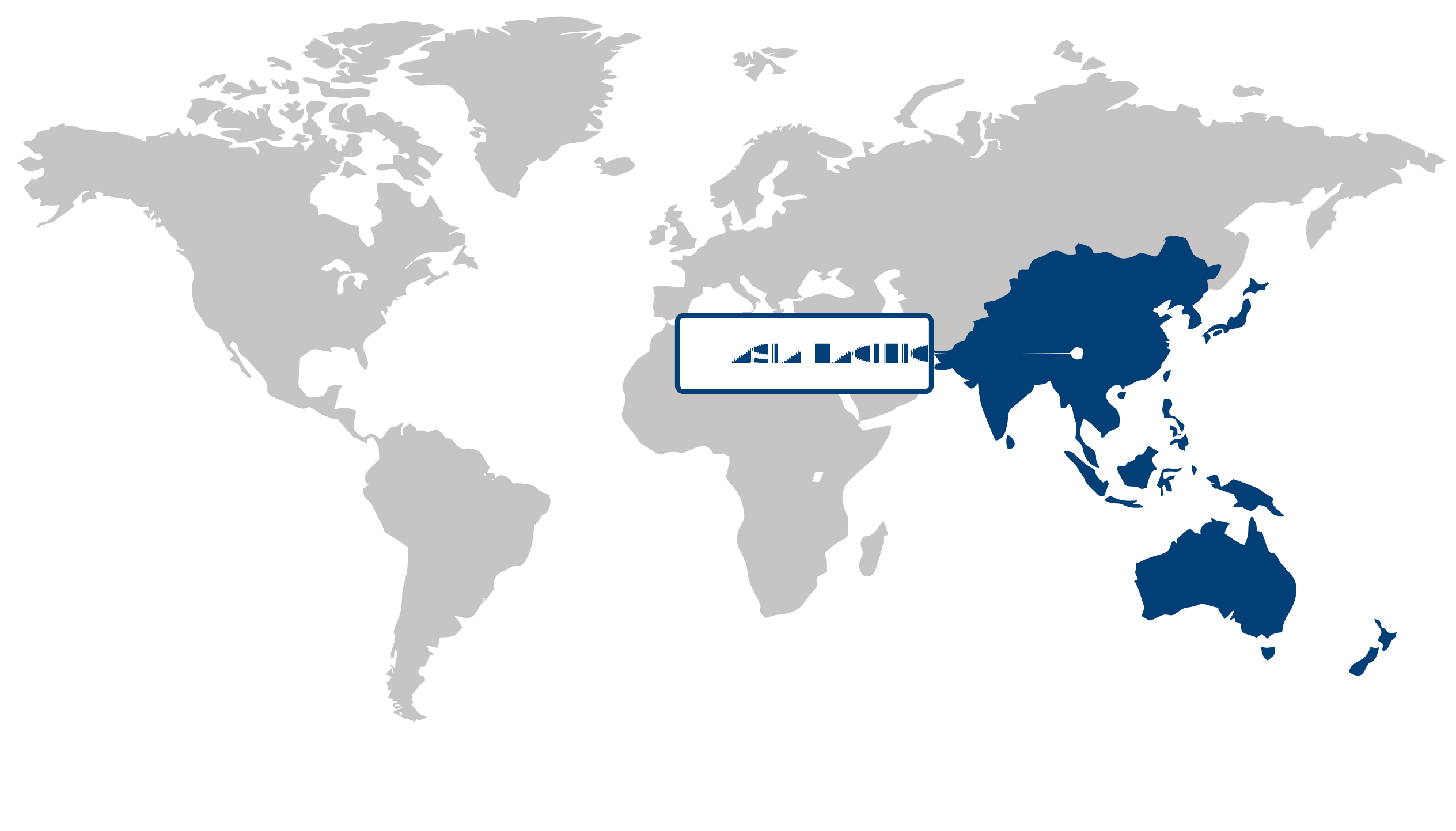
Largest Region
Asia Pacific
Largest Market Share in 2026
Asia Pacific (Largest Region) vs North America (Fastest-Growing Region)
Asia Pacific maintained the largest position in the industrial pumps market in 2026, supported by extensive industrialization, infrastructure development, and strong demand from manufacturing, energy, water management, chemical processing, and construction activities. Rapid expansion of industrial facilities is creating sustained requirements for pumps used in fluid transfer, circulation, pressure management, and process operations. Urban development and growing investments in water and wastewater infrastructure are also increasing demand for reliable pumping systems. The region's broad manufacturing ecosystem and expanding production capacity across resource-intensive industries provide a diverse customer base, while increasing emphasis on operational efficiency is encouraging industries to replace aging equipment with more energy-efficient and technologically advanced pump systems. Investments in industrial automation and process optimization are further supporting the integration of pumps with monitoring and control technologies.
North America represents the fastest-growing region, driven by modernization of industrial infrastructure, expansion of energy and water-related projects, and increasing emphasis on equipment efficiency and reliability. Aging pumping assets are creating opportunities for replacement and upgrades, particularly in facilities where downtime reduction and improved energy performance are important operational priorities. Growing investment in water treatment, municipal infrastructure, manufacturing, and energy applications is broadening demand across multiple end-use sectors. The adoption of smart monitoring, automation, and predictive maintenance technologies is also enhancing the value proposition of advanced industrial pumps by enabling more effective equipment management. In addition, efforts to strengthen domestic industrial capacity and improve infrastructure resilience are encouraging capital investment, creating favorable conditions for continued demand for sophisticated pumping solutions.
Key Country Insights
The U.S. industrial pumps market is shaped by modernization across water treatment, energy, and manufacturing facilities. Companies prioritize energy-efficient pumping systems, predictive maintenance, and digital monitoring to improve operational reliability and reduce lifecycle costs.
Japan focuses on durable industrial pump solutions that minimize downtime across industrial production and infrastructure. Japanese manufacturers continue enhancing compact designs, efficiency improvements, and smart monitoring capabilities to support reliable plant operations.
South Korea integrates industrial pumps into highly automated production environments across electronics, shipbuilding, and heavy industries. Demand centers on intelligent pump systems that improve process control, maintenance planning, and energy management.
Germany emphasizes high-performance industrial pumps designed for demanding manufacturing and chemical processing applications. German end users increasingly invest in automation-ready equipment that supports efficiency, precision, and long-term operational stability.
France prioritizes industrial pumps for municipal water, wastewater, and industrial processing projects requiring efficient fluid management. French operators increasingly seek equipment with lower energy consumption and enhanced environmental compliance features.
Italy supports industrial pump demand through continuous upgrades within manufacturing, food processing, and industrial utilities. Italian businesses increasingly value flexible pump configurations and efficient maintenance solutions that enhance production continuity.
Segment Leadership and Growth Trends
Product Type Segment Analysis: Centrifugal Pump (Largest Segment) vs Positive Displacement Pump (Fastest-Growing Segment)
The centrifugal pump segment dominated the industrial pumps market with a 65.38% share in 2026, supported by its broad applicability across industrial processes that require continuous movement of liquids. Its ability to handle substantial fluid volumes efficiently makes it well suited to water circulation, process industries, cooling systems, and general industrial operations. Established operating principles, wide equipment availability, and compatibility with diverse industrial systems further strengthen its adoption. Ongoing investments in process efficiency and infrastructure maintenance continue to sustain demand for centrifugal pumping solutions.
Positive displacement pumps are positioned as the fastest-growing product segment, benefiting from their ability to deliver controlled and consistent fluid flow under demanding operating conditions. These characteristics make them particularly valuable where precise dosing, handling of viscous fluids, or stable flow performance is required. Expanding industrial automation and increasing demand for reliable fluid-handling equipment are encouraging the adoption of positive displacement technologies across specialized applications. Their suitability for challenging process environments further supports their growth potential.
Application Segment Analysis: Water & Wastewater Treatment (Largest Segment) vs Chemicals (Fastest-Growing Segment)
Water and wastewater treatment represented the largest application segment of the industrial pumps market in 2026. Pumps are essential throughout treatment operations for transferring, circulating, and managing water and wastewater across different processing stages. Growing emphasis on water conservation, treatment infrastructure, and reliable utility systems is sustaining demand for efficient pumping equipment. The need to maintain dependable water management systems across municipal and industrial facilities further reinforces the importance of pumps in this application.
The chemicals application is experiencing the fastest growth as chemical processing facilities require pumps capable of safely and reliably handling diverse fluids under demanding operating conditions. Process applications often require precise flow control, resistance to aggressive media, and dependable performance across continuous operations. Increasing emphasis on process optimization, operational safety, and efficient material handling is creating greater demand for specialized pumping technologies within chemical production and processing environments.
| Report Segmentation | |||
| Segment | Sub-Segment | Largest Segment | Fastest Growing Segment |
|---|---|---|---|
| Product Type | Centrifugal Pump, Positive Displacement Pump | Centrifugal Pump | Positive Displacement Pump |
| Application | Oil & Gas, Chemicals, Construction, Power Generation, Water & Wastewater Treatment, Others | Water & Wastewater Treatment | Chemicals |
 Read our Research Approach
Competitive Landscape and Market Positioning
Top players in the industrial pumps market:
1. Flowserve Corporation (United States)
2. Xylem Inc. (United States)
3. Grundfos Holding A/S (Denmark)
4. Sulzer Ltd. (Switzerland)
5. KSB SE & Co. KGaA (Germany)
6. Ingersoll Rand Inc. (United States)
7. ITT Inc. (United States)
8. Ebara Corporation (Japan)
9. SPX FLOW Inc. (United States)
10. The Weir Group PLC (United Kingdom)
The industrial pumps market is evolving through improved fluid handling systems that enhance operational efficiency across industrial processes. Continuous innovation is strengthening energy efficiency and durability of pumping systems. Expanding engineering solutions are also supporting broader industrial applicability.
Industry Development/News
| Company Name | Date | Key Development |
|---|---|---|
| KBL | Feb-26 | KBL inaugurated a new advanced manufacturing facility in Kaniyur to increase production capacity for modular pump solutions. This strategic investment strengthens the company's manufacturing footprint and enhances its ability to support sustainable production requirements for both domestic and global pump markets. |
| KSB SE & Co. KGaA | Jan-26 | KSB launched the Omega 2, a next-generation axially split volute casing pump series. Engineered for improved hydraulic performance and energy efficiency, the product is optimized for water supply, irrigation, and industrial water transport, addressing the industry requirement for cost-effective, easily maintained pumping solutions. |
| Sulzer | Jul-25 | Sulzer expanded its Latin American manufacturing and service footprint by opening its third facility in Argentina. This investment aligns with the company’s regional growth strategy, enhancing its ability to provide localized support and industrial pumping solutions to key infrastructure and industrial sectors. |
| Walrus Pump | Jun-25 | Walrus Pump entered a partnership with a Japanese motor manufacturer to co-develop compact brushless DC pumps. The initiative targets liquid-cooling applications in high-density AI data centers, addressing the critical market demand for energy-efficient and space-saving thermal management systems required for advanced computing infrastructure. |
| Verder | May-25 | Verder acquired the Spanish firm ITC to strengthen its dosing pump portfolio. The acquisition expands the company’s technical capabilities in water treatment and infrastructure applications, reinforcing its competitive positioning in environmental sustainability markets through a broader, high-performance pump range. |
| Grundfos | May-25 | Grundfos announced an expansion of its production facility in Brookshire, Texas. The investment is intended to increase regional manufacturing capacity, improve supply chain resilience, and capture growth in the North American water, wastewater, and industrial pumping sectors. |
| LEWA | Apr-25 | LEWA successfully deployed a six-head combination pump system for a Swedish chemical manufacturer. The project provides a cleanroom-focused solution tailored for processing sulfate granules in ultrapure water treatment, demonstrating the application of high-precision pumping technology in sensitive industrial manufacturing environments. |
| H.I.G. Capital | Nov-24 | H.I.G. Capital acquired a portfolio company specializing in petroleum fueling, EV charging infrastructure, and industrial pumps and compressors. This acquisition reflects private equity interest in scaling industrial equipment platforms that serve critical infrastructure segments, including fluid transfer and energy-related pumping applications. |
Why Choose Us
Specialized Expertise: Our team comprises industry experts with a deep understanding of your market segment. We bring specialized knowledge and experience that ensures our research and consulting services are tailored to your unique needs.
Customized Solutions: We understand that every client is different. That's why we offer customized research and consulting solutions designed specifically to address your challenges and capitalize on opportunities within your industry.
Proven Results: With a track record of successful projects and satisfied clients, we have demonstrated our ability to deliver tangible results. Our case studies and testimonials speak to our effectiveness in helping clients achieve their goals.
Cutting-Edge Methodologies: We leverage the latest methodologies and technologies to gather insights and drive informed decision-making. Our innovative approach ensures that you stay ahead of the curve and gain a competitive edge in your market.
Client-Centric Approach: Your satisfaction is our top priority. We prioritize open communication, responsiveness, and transparency to ensure that we not only meet but exceed your expectations at every stage of the engagement.
Continuous Innovation: We are committed to continuous improvement and staying at the forefront of our industry. Through ongoing learning, professional development, and investment in new technologies, we ensure that our services are always evolving to meet your evolving needs.
Value for Money: Our competitive pricing and flexible engagement models ensure that you get maximum value for your investment. We are committed to delivering high-quality results that help you achieve a strong return on your investment.
Select Licence Type

