Infection Control In Agriculture Market Size & Forecasts 2026-2035, By Segments (Type, Distribution Channel, Form, Mode of Application, Application), Growth Opportunities, Innovation Landscape, Regulatory Shifts, Strategic Regional Insights (U.S., Japan, China, South Korea, UK, Germany, France), and Competitive Dynamics (Bayer, Zoetis, Elanco, Merck Animal Health, Boehringer Ingelheim)
Market Size and Growth Outlook
Infection Control In Agriculture Market size is set to grow from USD 107.19 billion in 2025 to USD 220.92 billion by 2035, reflecting a CAGR greater than 7.5% through 2026-2035. Industry revenues in 2026 are estimated at USD 114.24 billion.
Get more details on this report
Request Free Sample ReportInfection Control In Agriculture Market Intelligence Snapshot
Regional Market Dynamics
Segment Momentum
Market Expansion Drivers
Leading Market Participants
Global Market Forecast Snapshot
Market Outlook
Regional and Segment Outlook
Market Growth Drivers and Industry Trends
The increasing implementation of biosecurity and hygiene protocols is a pivotal driver in the infection control in agriculture market. Farmers and agribusinesses are responding to rising awareness of disease outbreaks that threaten livestock and crop health, resulting in greater demand for sanitation products, disinfectants, and protective equipment. For instance, the Food and Agriculture Organization (FAO) has emphasized biosecurity best practices as fundamental to safeguarding food supply chains. This trend opens significant strategic avenues for established chemical manufacturers to expand specialized disinfectant lines while enabling new entrants to innovate with eco-friendly hygiene solutions tailored to diverse agricultural environments. Continuous adoption will likely accelerate as producers seek to mitigate economic losses and comply with evolving on-farm disease prevention standards outlined by international bodies like the World Organisation for Animal Health (WOAH).
Government Initiatives and Regulatory Push for Infection Control
Policy environments are increasingly favorable to controlling infections in agriculture, driven by governmental and intergovernmental mandates aiming to strengthen food safety and animal health. Regulatory bodies such as the United States Department of Agriculture (USDA) have introduced stringent guidelines for managing biosecurity risks, incentivizing compliance through funding and technical assistance programs. These measures compel market participants to innovate and scale infection control technologies that meet new safety benchmarks, fostering competitive differentiation. For investors and industry players, this regulatory momentum provides a robust foundation for product development and service delivery aligned with official frameworks, ensuring sustained demand supported by public-sector enforcement. Moving forward, policy-driven compliance will remain a cornerstone shaping the infection control in agriculture market’s direction.
Advancements in Precision Agriculture and IoT-based Monitoring
Technological innovations in precision agriculture, particularly IoT-based monitoring systems, are reshaping infection control strategies by enabling real-time detection and management of disease threats. Companies like John Deere and Trimble have integrated sensors and data analytics platforms to empower farmers with detailed health insights at the micro-level, enhancing rapid response capabilities. This digital transformation leads to optimized use of disinfectants and targeted intervention, reducing both costs and environmental impact. For existing players, coupling traditional infection control products with advanced monitoring solutions presents a compelling opportunity to differentiate offerings, while startups can leverage digital technologies to develop new business models. As smart farming adoption broadens, the infection control in agriculture market will increasingly pivot toward integrated, technology-driven solutions.
Industry Restraints:
Stringent Regulatory Compliance and Approval Processes
The complex and evolving regulatory landscape significantly restrains innovation and market entry in infection control within agriculture. Agencies like the U.S. Environmental Protection Agency (EPA) and the European Food Safety Authority (EFSA) impose rigorous safety and efficacy standards that extend product development timelines and raise compliance costs. For instance, Bayer and Syngenta have reported extended approval cycles for novel biopesticides, delaying commercial rollouts. These regulatory hurdles disproportionately burden startups lacking resources for exhaustive compliance, while established players face increased operational expenditure to maintain adherence. Consequently, companies must allocate substantial capital to navigate these frameworks, limiting agility in responding to emerging pathogen threats. Moving forward, continuous tightening of environmental and health safety protocols will likely sustain pressure on innovation pipelines, forcing market participants to invest heavily in regulatory expertise and adaptive product development strategies.
Supply Chain Disruptions and Raw Material Scarcity
Supply chain fragilities pose a critical constraint on scaling infection control solutions in agriculture. The COVID-19 pandemic exposed vulnerabilities, highlighted by companies such as Corteva Agriscience, which reported delays in procuring active ingredients essential for antimicrobial formulations. Additionally, geopolitical tensions affecting key chemical exporters exacerbate raw material shortages and increase costs. These disruptions hinder timely product availability, impacting farmers’ ability to implement effective infection control measures during critical planting and harvesting windows. Smaller firms, in particular, struggle with less diversified supplier networks and reduced bargaining power. Strategically, firms must enhance supply chain resilience through geographic diversification and strategic inventory management. Given continuing global uncertainties and resource competition, supply chain instability will remain a pivotal challenge, compelling stakeholders to seek integrated, adaptive sourcing frameworks to mitigate operational risks.
| Growth Driver | Impact on CAGR | Regulatory Influence | Geographic Relevance | Adoption Rate | Impact Timeline |
|---|---|---|---|---|---|
| Adoption of biosecurity and hygiene solutions in agriculture | 3.00% | Short term (≤ 2 yrs) | North America, Europe; Spillover: Asia Pacific | High | Fast |
| Government initiatives and regulatory push for infection control | 2.50% | Medium term (2–5 yrs) | Europe, Asia Pacific; Spillover: North America | High | Moderate |
| Advancements in precision agriculture and IoT-based monitoring | 2.00% | Long term (5+ yrs) | North America, Europe; Spillover: Asia Pacific | Medium | Slow |
Explore Growth Opportunities
Request Free Sample ReportRegional Demand Dynamics
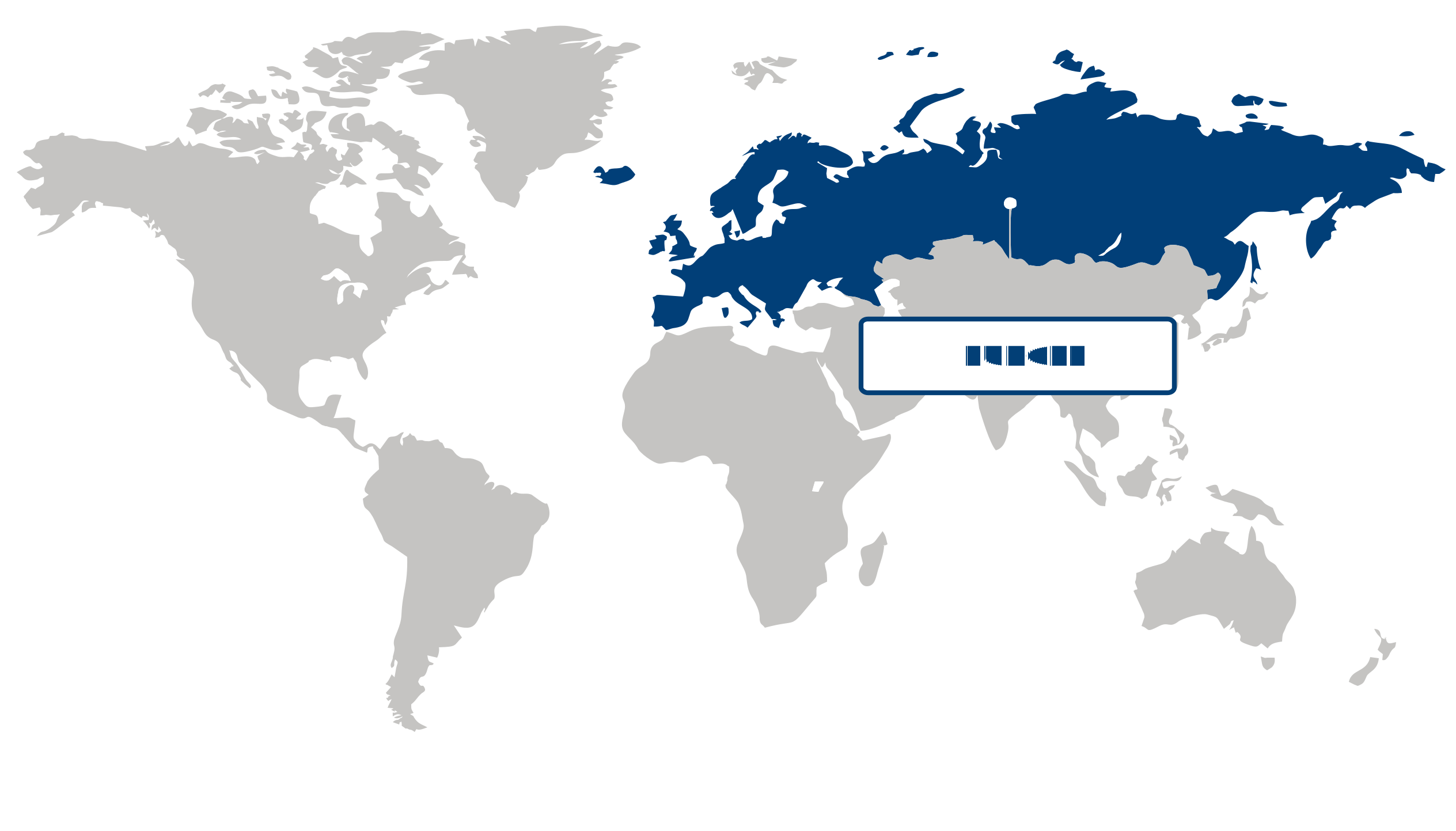
Europe dominated the infection control in agriculture market in 2025, capturing approximately 37% of the global share. This leadership is driven by stringent biosecurity regulations enforced by entities such as the European Food Safety Authority (EFSA), which have elevated preventive farm management practices across the region. High consumer demand for sustainably produced food and comprehensive government initiatives like Germany’s Federal Ministry of Food and Agriculture’s hygiene protocols underscore Europe’s disciplined approach. Moreover, advancements in digital monitoring technologies adopted by agricultural enterprises from France’s Institut National de la Recherche Agronomique (INRAE) enhance early detection and containment of infections. These factors collectively fortify Europe’s resilience against agricultural infections, making it a fertile ground for investment and innovation in infection control solutions.
Germany anchors the European infection control in agriculture market with its rigorous regulatory environment and widespread implementation of biosecurity frameworks. The Federal Office of Consumer Protection and Food Safety (BVL) actively promotes preventative protocols, while collaboration with companies like Bayer fosters innovative disinfection products tailored for agricultural use. This organized ecosystem stimulates efficient infection management, supporting Germany’s critical role in sustaining regional market growth. Strategically, Germany’s structured policies and cutting-edge research facilities highlight its capacity to influence broader European trends and investor confidence in this sector.
France plays a pivotal role in Europe’s infection control in agriculture market by emphasizing integrated farm management and digital transformation. The French Ministry of Agriculture supports programs encouraging farmers to adopt real-time pathogen surveillance tools developed by INRAE and private tech firms. These efforts align with growing consumer preferences for traceability and eco-friendly production. France’s proactive stance on infection control not only reduces outbreak risks but also exemplifies how technology and regulation can converge, reinforcing Europe’s regional dominance and offering expansive opportunities for stakeholders targeting sustainable agriculture solutions.
Asia Pacific Market Analysis:
Asia Pacific emerged as the fastest-growing region in the infection control in agriculture market, registering rapid growth with a robust CAGR of 9%. This expansion is primarily driven by increasing awareness of crop and livestock disease management across APAC. Governments and industry stakeholders have intensified efforts to safeguard agricultural productivity amid rising population pressure and food security concerns. Countries in the region are adopting stringent regulatory frameworks and investing in advanced infection control technologies to minimize yield losses caused by pests and pathogens. For instance, the Food and Agriculture Organization of the United Nations highlights APAC’s push toward sustainable agricultural practices incorporating biosecurity measures. With growing digital adoption and heightened public-private collaboration, Asia Pacific presents significant opportunities for introducing innovative infection control solutions tailored to diverse agro-ecological zones.
Japan plays a critical role in the APAC infection control in agriculture market with its advanced agricultural technology infrastructure and robust disease surveillance systems. The government’s support for precision farming and biosecurity initiatives, such as the Ministry of Agriculture, Forestry and Fisheries’ programs on integrated pest management, enhances infection control adoption. Japanese farmers’ preference for sustainable practices and demand for safe food supplies accelerate investments in cutting-edge disinfectants and biological controls. As a result, Japan exemplifies the shift toward high-tech, eco-friendly approaches that can serve as models for the broader regional market.
China serves as a key growth engine within APAC’s infection control in agriculture market, fueled by the government’s strong emphasis on disease control to secure its massive agricultural output. China’s regulatory framework has tightened in response to outbreaks affecting livestock and staple crops, with bodies like the Ministry of Agriculture and Rural Affairs promoting biosecurity training and the use of biopesticides. Rising consumer preference for residue-free produce and stricter import-export compliance bolster demand for effective infection control products. The rapid modernization of China’s agricultural supply chain and digital monitoring tools further reinforce its pivotal role in advancing regional market opportunities and innovations.
North America Market Trends:
North America maintained a notable presence in the infection control in agriculture market, driven by its integration of advanced technologies and stringent regulatory frameworks that prioritize biosecurity in food production chains. The region benefits from widespread adoption of digitally enabled monitoring systems and automated sanitation solutions, reflecting a shift towards operational efficiency and sustainability, as highlighted by the U.S. Department of Agriculture’s emphasis on reducing pathogen-related crop losses. Additionally, heightened consumer demand for safe, traceable agricultural products underpins increased investment in infection control measures. Regulatory support from agencies such as the Environmental Protection Agency further encourages innovation in biocidal products. These dynamics, combined with North America’s robust supply chain infrastructure and favorable economic environment, position the region as a fertile ground for continued market expansion and the development of next-generation infection control technologies.
The U.S. serves as a pivotal market within North America, propelled by intensive commercial farming practices and aggressive regulatory oversight that elevate the demand for infection control in agriculture. The U.S. Food and Drug Administration’s recent updates on microbial contamination standards in fresh produce have stimulated adoption of advanced antimicrobial coatings and biosecurity protocols, as confirmed by reports from the Center for Produce Safety. Leading agritech firms, including Corteva Agriscience, have announced strategic partnerships to enhance disease management solutions, reflecting a competitive landscape focused on innovation. These factors underscore the U.S. role as a technological testbed and growth driver, offering strategic advantages to companies seeking to leverage a mature regulatory environment and a large consumer base demanding high food safety standards. This amplifies North America’s overall market opportunity by reinforcing technology diffusion and regulatory compliance.
| Parameter | North America | Asia Pacific | Europe | Latin America | MEA |
|---|---|---|---|---|---|
| Innovation Hub i Scale Nascent Developing Advanced | |||||
| Cost-Sensitive Region i Scale Low Medium High | |||||
| Regulatory Environment i Scale Restrictive Neutral Supportive | |||||
| Demand Drivers i Scale Weak Moderate Strong | |||||
| Development Stage i Scale Emerging Developing Developed | |||||
| Adoption Rate i Scale Low Medium High | |||||
| New Entrants / Startups i Scale Sparse Moderate Dense | |||||
| Macro Indicators i Scale Weak Stable Strong |
Segment Leadership and Growth Trends
Infection Control In Agriculture Market Share (%), by Type, 2026
Go beyond the chart, access full insights & data tables
Request Free Sample ReportPesticide held largest share in the infection control in agriculture market in 2025, primarily driven by the escalating need for effective crop protection and pest management to safeguard global food security. This segment's leadership reflects intensifying demands from growers prioritizing sustained yields amidst rising pest resistance and climate challenges. Regulatory frameworks from agencies like the U.S. Environmental Protection Agency (EPA) have facilitated the adoption of safer, innovative pesticide formulations, fostering competitive product development. Additionally, evolving supply chains integrating precision agriculture technologies amplify deployment efficiency. Established agrochemical firms and agile entrants alike benefit from expanding opportunities to develop biologically based or targeted pesticides aligning with sustainability goals. Given ongoing pressures on agricultural productivity and stringent safety norms, the pesticide segment remains critical for mitigating risks and optimizing output in the near to medium term.
Analysis by Distribution Channel
B2C represented the largest share in the infection control in agriculture market in 2025, fueled by the surge in direct farm input sales and the expanding footprint of digital retail platforms reaching individual growers. This segment thrives as smallholder and mid-sized farmers increasingly access agro-inputs through online marketplaces and specialized retailer portals, supported by initiatives from companies like Corteva Agriscience and platforms such as AgroStar. Growing digital literacy and mobile penetration in rural areas enhance demand transparency and supply chain responsiveness, enabling farmers to make informed procurement choices. The B2C channel’s rise aligns with trends emphasizing personalized service and sustainability-conscious buying behaviors. For incumbent suppliers and new entrants, this presents strategic openings to leverage e-commerce and data-driven engagement. Its relevance is expected to persist as digital transformation deepens across agricultural value chains.
Analysis by Form
Liquid formulations held largest share in the infection control in agriculture market in 2025, driven by farmer preference for easy-to-apply and versatile products during field operations. This segment’s dominance reflects operational efficiencies and improved coverage achievable with liquid forms, as endorsed by agronomists and integrated pest management guidelines from bodies such as the Food and Agriculture Organization (FAO). Innovations in formulation technology, including microemulsions and water-soluble concentrates from leading developers like BASF, have enhanced stability and efficacy, further incentivizing adoption. The liquid form’s compatibility with automated spraying equipment and drone applications also streamlines application labor and supports precision agriculture. These factors generate significant competitive advantages for product manufacturers prioritizing formulation advances. Looking ahead, liquid forms will maintain prominence given their adaptability to evolving agricultural mechanization and environmental compliance requirements.
| Segment | Sub-Segment | Largest Segment | Fastest Growing |
|---|---|---|---|
| Type | Pesticide, Soil Sterilant | ||
| Distribution Channel | B2B, B2C | ||
| Form | Solid, liquid, Gases | ||
| Mode of Application | Foilar Spray, Fertigation, Soil Treatment, Others | ||
| Application | Grains & Cereals, Oilseed, Commercial Crops, Fruits & Vegetables, Others |
Unlock insights tailored to your business with our bespoke market research solutions.
Click to get your customized report now.
Competitive Landscape and Market Positioning
The competitive landscape is marked by concerted efforts among these top players to enhance their market foothold through targeted alliances, portfolio expansions, and cutting-edge product introductions. Cross-border collaborations and acquisitions enable players like Merck Animal Health and Elanco to access novel technologies and broaden geographic coverage. Companies such as Bayer and Boehringer Ingelheim emphasize research advancements to develop next-generation infection control solutions, reinforcing their competitive edge. Meanwhile, European firms leverage synergies in regional expertise and innovation to diversify offerings. This dynamic environment drives continuous evolution in response to shifting agricultural demands, fostering a landscape where integrated, technology-forward solutions stand out.
Strategic / Actionable Recommendations for Regional Players
In North America, forging partnerships with emerging biotech startups and integrating precision agriculture technologies could amplify innovation capacity and market responsiveness, particularly in managing antibiotic resistance challenges. Emphasizing high-growth livestock disease segments while optimizing supply chains will differentiate offerings amidst intensifying competition.
Asian players might focus on expanding collaborations that leverage Sumitomo Chemical’s agrochemical expertise with cutting-edge infection monitoring platforms. Exploring tailored solutions for smallholder farmers and incorporating digital diagnostics can tap into underserved markets, strengthening regional influence.
Europe-based entities could enhance market positioning by nurturing cooperative networks combining veterinary pharmacology insights with sustainable infection control technologies. Prioritizing regulatory alignment and advancing eco-friendly product lines will resonate with evolving market expectations and environmental mandates.
| Company | Market Share | Company Revenue | Revenue CAGR (%) | Product Portfolio | Geographic Presence | Innovation / R&D Focus | Strategic Developments |
|---|---|---|---|---|---|---|---|
| No companies available. | |||||||
Customize Your Report
Explore examples of how this report can be tailored to different research needs, including custom segments, additional topics or chapters, and related reports. Click a section of the wheel or its numbered marker to explore the available options.
Infection Control In Agriculture Market — Custom Segments
| Segment | Sub-Segment |
|---|---|
| No segment data available. | |
Infection Control In Agriculture Market — Custom TOC
| Custom Chapter | Chapter Details | ||
|---|---|---|---|
| No custom TOC data available. | |||
Need a different cut of the data?
Request Custom ResearchHow is the infection control in agriculture industry projected to perform over the next decade?
Which global region commands the highest percentage of the infection control in agriculture market?
In which region is the infection control in agriculture sector expanding most rapidly?
Where is the pesticide segment seeing the strongest adoption within the infection control in agriculture industry?
When did B2C sub-segment emerge as the largest sub-segment in the distribution channel segment of infection control in agriculture sector?
Why is the liquid segment leading in the infection control in agriculture industry?
Why does foilar spray sub-segment dominate the mode of application segment of infection control in agriculture sector?
How much is the grains & cereals segment expected to grow in the infection control in agriculture industry beyond 2025?
Who are the major participants shaping the infection control in agriculture landscape?
Our Clients
"The report helped us understand emerging consumer trends in our product category. It clarified where to focus innovation for the next product launch."
LyondellBasell
"The regional forecast section was incredibly useful. We were able to identify two new potential partners in Europe thanks to the vendor mapping you included."
SABIC
"We appreciated how actionable the recommendations were. It guided us to improve supply chain resilience."
Olin Corporation
Our Research Team & Methodology
Every Fundamental Business Insights report is built by a dedicated vertical research team, validated through a structured primary-and-secondary methodology, and reviewed for accuracy before it reaches you.
Research Team Overview
Prepared by the Chemicals & Materials Research Team
Delivery
Published
Demand
Available
Support
Trust & Compliance
Research Intelligence
| Source | Reference |
|---|---|
| American Chemistry Council (ACC) | www.americanchemistry.com |
| European Chemical Industry Council (Cefic) | cefic.org |
| International Council of Chemical Associations (ICCA) | icca-chem.org |
| European Chemicals Agency (ECHA) | echa.europa.eu |
| U.S. Environmental Protection Agency (EPA) | www.epa.gov |
| ASTM International | www.astm.org |
| International Organization for Standardization (ISO) | www.iso.org |
| National Institute of Standards and Technology (NIST) | www.nist.gov |
| Plastics Industry Association (PLASTICS) | www.plasticsindustry.org |
| European Biplastics | www.european-bioplastics.org |
| The Adhesive and Sealant Council (ASC) | www.ascouncil.org |
| National Association of Corrosion Engineers (AMPP) | www.ampp.org |
| Society of Plastics Engineers (SPE) | www.4spe.org |
| International Fertilizer Association (IFA) | www.fertilizer.org |
| CropLife International | croplife.org |
| Packaging Europe | packagingeurope.com |
| Flexible Packaging Association (FPA) | www.flexpack.org |
| Battery Council International (BCI) | batterycouncil.org |
| International Copper Association (ICA) | internationalcopper.org |
| World Steel Association | worldsteel.org |
Research Workflow & Quality Assurance
Data Collection
Verified information gathered through primary and secondary research.
Data Triangulation
Cross-validation using multiple independent data sources.
Forecast Modelling
Market estimates developed using historical trends and analytical models.
Analyst Validation
Findings reviewed by domain experts for accuracy and consistency.
Editorial & Quality Review
Final editorial, quality, and compliance checks before publication.
Final Publication
Released after successful completion of the internal review process.
Report Coverage
📊 Market Assessment
- Market Size & Forecast
- Market Segmentation
- Regional Analysis
- Growth Drivers & Challenges
- Market Dynamics
🏢 Competitive Intelligence
- Competitive Landscape
- Company Profiles
- Competitive Benchmarking
- Mergers & Acquisitions
- Market Share Analysis or Key Company Strategies
🔍 Strategic Analysis
- Value Chain Analysis
- Porter's Five Forces
- PESTLE Analysis
- Pricing Trends
- Supply-Demand Analysis
🚀 Future Outlook
- Technology Landscape
- Regulatory Landscape
- Investment & Funding Landscape
- Emerging Opportunities
- Future Market Outlook
Have a question about this report or need a custom scope?
Request Customization