



Inland Water Passenger Transport Market Size & Growth Forecast 2027–2036, By Segments (Vessel, Propulsion, Transportation Mode), Regional Demand Trends (North America, Asia Pacific, Europe), Key Country Insights (U.S., Japan, South Korea, Germany, France, Italy), and Competitive Landscape
Market Size and Growth Outlook
Inland Water Passenger Transport Market size was valued at USD 1.82 billion in 2026 and is projected to grow at a 5.13% CAGR from 2027 to 2036, reaching USD 3 billion by 2036. The industry revenue for 2027 is estimated at USD 1.91 billion.
Base Year Value (2026)
USD 1.82 billion
CAGR (2027-2036)
5.13%
Forecast Year Value (2036)
USD 3 billion

Historical Data Period
2022-2026

Largest Region
Europe

Forecast Period
2027-2036
Inland Water Passenger Transport Market Intelligence Snapshot:
-
Regional Market Dynamics:
- Europe held a 38.90% share in 2026, supported by extensive inland waterways, mature transport infrastructure, established ferry and cruise services, and diversified commuter and tourism demand.
- Asia Pacific is forecast to grow at a 6.44% CAGR as urbanization, rising passenger volumes, and expanding waterway transport improve regional connectivity and reduce pressure on road networks.
-
Segment Momentum:
- Cruise ships accounted for 60.33% of the market in 2026, supported by high passenger capacity, established tourism routes, onboard amenities, and infrastructure that helps operators maximize occupancy and trip revenue.
- Electric propulsion is the fastest-growing segment as operators increasingly adopt cleaner and quieter vessels on predictable inland routes where charging requirements and operational efficiency support fleet modernization.
-
Market Expansion Drivers:
- Government-backed low-carbon mobility initiatives driving inland water transport infrastructure development.
- Urban-rural connectivity expansion reducing congestion and improving regional passenger mobility networks.
- Growth of waterway tourism and passenger cruise services enhancing transport monetization opportunities.
-
Leading Market Participants:
Key players in the inland water passenger transport market include Damen Shipyards Group (Netherlands), Incat Crowther (Australia), Holland Shipyards Group (Netherlands), VARD Group AS (Norway), Groupe Beneteau (France), Candela Technology AB (Sweden), Kooiman Marine Group (Netherlands).
Global Market Forecast Snapshot:
-
Market Outlook:
- 2026 Market Size: USD 1.82 billion
- 2027 Estimated Market Size: USD 1.91 billion.
- Projected Market Size: USD 3 billion by 2036
- Growth Forecasts: 5.13% CAGR (2027-2036)
-
Regional and Segment Outlook:
- Leading Regional Market: Europe
- High-Growth Regional Hub: Asia Pacific
- Core Revenue Segment: Cruise Ships (Vessel) | Conventional (Propulsion) | Rivers (Transportation Mode)
- Emerging Opportunity Segment: Water Taxis (Vessel) | Electric (Propulsion) | Canals (Transportation Mode)
Market Growth Drivers and Industry Trends
Government-backed low-carbon mobility initiatives driving inland water transport infrastructure development
Government efforts to promote lower-emission transportation systems are creating favorable conditions for investment in waterways as an alternative passenger mobility option. The inland water passenger transport market is supported by policies and infrastructure programs that encourage cleaner mobility, improve waterway accessibility, and integrate inland routes into broader public transportation networks. Investments in terminals, passenger facilities, navigational infrastructure, and environmentally oriented vessel technologies can improve service reliability while making water-based transportation more attractive to commuters and regional travelers. As authorities seek alternatives to road-based transportation in areas affected by congestion and environmental pressures, inland waterways can provide an additional mobility channel where suitable rivers, canals, and lakes are available.
Urban-rural connectivity expansion reducing congestion and improving regional passenger mobility networks
Improving connections between urban centers, surrounding communities, and rural areas is increasing the relevance of inland waterways within regional transportation networks. Expansion of passenger routes can provide communities located along navigable waterways with an additional transportation option, particularly where road infrastructure is congested, limited, or geographically difficult to expand. This dynamic will drive the inland water passenger transport market as transport planners increasingly consider multimodal networks that connect water-based services with road and other public mobility systems. More accessible terminals, coordinated schedules, and improved passenger facilities can also strengthen the usefulness of water transport for daily commuting, education, employment, and essential regional travel, while reducing dependence on heavily used road corridors.
Growth of waterway tourism and passenger cruise services enhancing transport monetization opportunities
The growing appeal of recreational travel along rivers, canals, and other inland waterways is creating additional revenue opportunities for passenger transport operators. Within the inland water passenger transport market, tourism-oriented services can complement regular passenger operations by generating demand for sightseeing cruises, leisure journeys, and destination-focused waterway experiences. Operators can develop differentiated services around scenic routes, cultural attractions, and regional tourism destinations, allowing existing waterways and passenger infrastructure to serve both mobility and recreational purposes. Rising interest in experiential tourism also creates opportunities for premium cruise offerings and organized excursions, increasing the range of passenger services that can be provided through inland water transportation networks.
| Growth Driver Assessment Framework | |||||
| Growth Driver | Impact On CAGR | Regulatory Influence | Geographic Relevance | Adoption Rate | Impact Timeline |
|---|---|---|---|---|---|
| Growing inland water passenger transport demand | 1.90% | Short term (≤ 2 yrs) | North America, Europe | Medium | Fast |
| Technological advancements in vessels and operations | 1.90% | Medium term (2–5 yrs) | North America, Asia Pacific | Low | Moderate |
| Expansion of waterway transport infrastructure in emerging markets | 1.90% | Long term (5+ yrs) | Asia Pacific, Latin America | Low | Slow |
| Government-backed low-carbon mobility initiatives driving inland water transport infrastructure development | 2.00% | High | Europe, Asia Pacific | High | Near Term |
| Urban-rural connectivity expansion reducing congestion and improving regional passenger mobility networks | 1.60% | Moderate | Asia Pacific, Europe | Medium | Mid Term |
| Growth of waterway tourism and passenger cruise services enhancing transport monetization opportunities | 1.20% | Moderate | Global | Medium | Mid Term |
Unlock insights tailored to your business with our bespoke market research solutions - Click to get your customized report now!
Regional Demand Dynamics
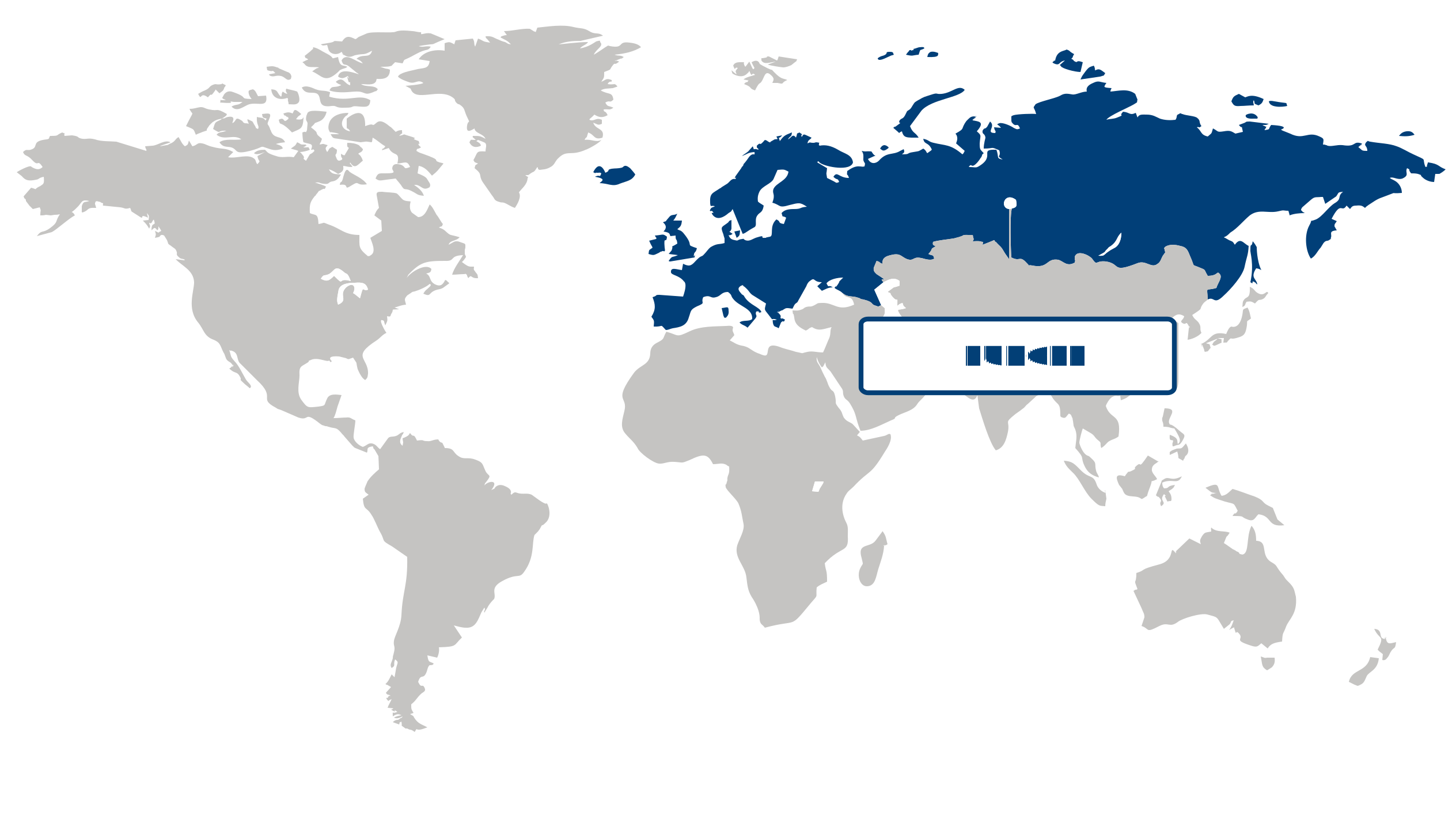
Largest Region
Europe
38.9% Market Share in 2026
Europe (Largest Region) vs Asia Pacific (Fastest-Growing Region)
In the inland water passenger transport market, Europe held the largest share of 38.90% in 2026, reflecting its extensive network of navigable rivers, canals, and lakes and the established role of water-based mobility in urban and tourism-oriented transportation. Well-developed waterfront cities and integrated transport infrastructure support regular passenger services, sightseeing operations, ferries, and recreational travel. Environmental priorities are also encouraging the modernization of inland vessels through cleaner propulsion systems, energy-efficient technologies, and improved vessel designs. Furthermore, strong tourism activity, investment in waterfront infrastructure, and growing interest in lower-emission transportation alternatives are reinforcing the importance of inland waterways within regional mobility systems.
Asia Pacific represents the fastest-growing region, supported by rapid urbanization, expanding tourism activity, and the development of transportation infrastructure around major rivers, lakes, and coastal-adjacent inland waterways. Increasing passenger mobility needs in densely populated urban areas are creating opportunities for ferry and water-transit services, particularly where road infrastructure faces congestion and capacity constraints. Investments in ports, terminals, waterways, and modern passenger vessels are improving service accessibility and operational efficiency. At the same time, rising disposable incomes and growing domestic and international tourism are stimulating demand for recreational cruises and sightseeing services, while the adoption of cleaner propulsion and digitally enabled ticketing systems is contributing to the modernization of inland passenger transport.
Key Country Insights
The U.S. is prioritizing modernization of urban ferry networks through vessel upgrades, digital ticketing, and low-emission propulsion. Investment is focused on improving passenger connectivity in coastal cities while enhancing operational efficiency and resilience across inland waterways.
Japan is aligning inland water passenger transport with regional tourism development by upgrading cruise vessels and waterfront facilities. The country is emphasizing seamless passenger experiences while preserving efficient services across established inland waterways.
South Korea is incorporating digital operations and environmentally efficient vessels into inland passenger transport projects. Investments support urban waterfront redevelopment while improving service quality and operational flexibility for passenger routes.
Germany is strengthening inland passenger transport by integrating river services with regional public transit and sustainable mobility initiatives. Fleet modernization and improved terminal infrastructure support reliable transport along major river corridors.
France is expanding the role of inland waterways through cleaner passenger fleets and improved river transport infrastructure. The country is encouraging multimodal connectivity while supporting tourism-oriented and commuter-focused passenger services.
Italy is enhancing inland water passenger transport by improving services across lakes and historic waterways. Infrastructure upgrades and modern passenger vessels are supporting tourism demand while maintaining reliable regional transport connections.
Segment Leadership and Growth Trends
Vessel Segment Analysis: Cruise Ships (Largest Segment) vs Water Taxis (Fastest-Growing Segment)
Cruise ships held a 60.33% share in 2026, making them the largest vessel category in the inland water passenger transport market. Their leading position reflects the capacity of cruise vessels to accommodate substantial passenger volumes while combining transportation with leisure, sightseeing, and onboard services. Demand for water-based tourism and recreational travel, together with the appeal of organized inland cruising experiences, supports continued utilization of cruise ships across suitable waterways.
Water taxis are the fastest-growing vessel segment, supported by increasing interest in flexible and convenient passenger mobility across inland waterways. Their smaller size and point-to-point operating model make them well suited to short-distance journeys, tourism routes, and connections between locations that may experience road congestion. As urban and tourism-oriented transport systems increasingly explore waterways as an alternative mobility option, water taxis are gaining relevance for responsive and on-demand passenger services.
Propulsion Segment Analysis: Conventional (Largest Segment) vs Electric (Fastest-Growing Segment)
Conventional propulsion accounted for a 49.82% share in 2026, giving the conventional propulsion segment the largest position in the inland water passenger transport market. Its established infrastructure, familiarity among vessel operators, and compatibility with existing inland passenger vessels support continued deployment. Conventional propulsion also benefits from the extensive installed base of vessels designed around traditional power systems, allowing operators to rely on proven technologies and established operating practices.
Electric propulsion is the fastest-growing propulsion segment as inland passenger transport increasingly moves toward cleaner and more efficient vessel operations. Electric systems can help reduce direct emissions and support quieter operation, which is particularly attractive for passenger services operating in urban, recreational, and environmentally sensitive waterways. Growing interest in sustainable mobility and the modernization of inland transport fleets is strengthening the adoption potential of electric propulsion systems.
| Report Segmentation | |||
| Segment | Sub-Segment | Largest Segment | Fastest Growing Segment |
|---|---|---|---|
| Vessel | Water Taxis, Cruise Ships | Cruise Ships | Water Taxis |
| Propulsion | Conventional, Electric, Hydrogen, Hybrid | Conventional | Electric |
| Transportation Mode | Canals, Lakes, Rivers, Others | Rivers | Canals |
 Read our Research Approach
Competitive Landscape and Market Positioning
Top players in the inland water passenger transport market:
1. Damen Shipyards Group (Netherlands)
2. Incat Crowther (Australia)
3. Holland Shipyards Group (Netherlands)
4. VARD Group AS (Norway)
5. Groupe Beneteau (France)
6. Candela Technology AB (Sweden)
7. Kooiman Marine Group (Netherlands)
The inland water passenger transport market is experiencing a gradual transformation driven by efficiency upgrades and service optimization. Modernization of fleets and digital scheduling systems is improving passenger flow management. Rising emphasis on travel experience and sustainability is influencing operational strategies. The inland water passenger transport market is steadily aligning with smarter mobility expectations.
Industry Development/News
| Company Name | Date | Key Development |
|---|---|---|
| Uniworld | Mar-24 | Uniworld expanded its cruise offerings through new 2024 itineraries, including extension of its Cruise & Rail program to destinations such as Istanbul and the Swiss Alps. The initiative enhances luxury inland water travel experiences and strengthens its positioning in high-end experiential tourism across key river cruise routes. |
| AmaWaterways | Apr-23 | AmaWaterways strengthened its partnership with Backroads to offer over 140 active river cruise departures for 2023–2024, integrating biking excursions across European routes. The collaboration enhances differentiated experiential travel offerings within the inland water passenger transport segment, combining cruise and active tourism services. |
Why Choose Us
Specialized Expertise: Our team comprises industry experts with a deep understanding of your market segment. We bring specialized knowledge and experience that ensures our research and consulting services are tailored to your unique needs.
Customized Solutions: We understand that every client is different. That's why we offer customized research and consulting solutions designed specifically to address your challenges and capitalize on opportunities within your industry.
Proven Results: With a track record of successful projects and satisfied clients, we have demonstrated our ability to deliver tangible results. Our case studies and testimonials speak to our effectiveness in helping clients achieve their goals.
Cutting-Edge Methodologies: We leverage the latest methodologies and technologies to gather insights and drive informed decision-making. Our innovative approach ensures that you stay ahead of the curve and gain a competitive edge in your market.
Client-Centric Approach: Your satisfaction is our top priority. We prioritize open communication, responsiveness, and transparency to ensure that we not only meet but exceed your expectations at every stage of the engagement.
Continuous Innovation: We are committed to continuous improvement and staying at the forefront of our industry. Through ongoing learning, professional development, and investment in new technologies, we ensure that our services are always evolving to meet your evolving needs.
Value for Money: Our competitive pricing and flexible engagement models ensure that you get maximum value for your investment. We are committed to delivering high-quality results that help you achieve a strong return on your investment.
Select Licence Type

