Intelligent Battery Sensor Market Size & Growth Forecast 2027–2036, By Segments (Sensor Type, Voltage Range, Technology, Sensor Functionality, Battery Type, End Use, Application), Regional Demand Trends (North America, Asia Pacific, Europe), Key Country Insights (U.S., Japan, South Korea, Germany, France, Italy), and Competitive Landscape
Jump to Content
Market Size and Growth Outlook
Intelligent Battery Sensor Market size was more than USD 3.91 billion in 2026 and is set to grow at a 10.5% CAGR between 2027 and 2036, attaining USD 10.61 billion by 2036. The industry revenue for 2027 is calculated at USD 4.27 billion.
Get more details on this report
Request Free Sample ReportIntelligent Battery Sensor Market Intelligence Snapshot
Regional Market Dynamics
- Europe accounted for 36.94% of the market in 2026, supported by vehicle electrification, established automotive manufacturing, and growing demand for advanced battery management systems.
- Asia Pacific is the fastest-growing region, fueled by expanding electric vehicle adoption, increasing battery production, and investments in energy storage infrastructure and advanced battery management technologies.
Segment Momentum
- Hall effect sensors accounted for 60.48% of market revenue in 2026, supported by non-contact current measurement, electrical isolation, and reliable sensing. Their compatibility with battery management systems makes them suitable for continuous monitoring, diagnostics, and battery protection.
- CAN is the fastest-growing communication technology segment, driven by demand for reliable, real-time data exchange between battery sensors and electronic control units. Its ability to support coordinated monitoring, diagnostics, and energy management benefits increasingly interconnected battery and vehicle systems.
Market Expansion Drivers
- Integration of Intelligent Battery Sensors in EVs.
- Adoption in Industrial & Energy Storage Systems.
- Regulatory Push for Battery Safety & Monitoring.
Leading Market Participants
- Prominent companies in the intelligent battery sensor market include Bosch (Germany), Continental (Germany), Denso (Japan), HELLA (Germany), Infineon Technologies (Germany), Valeo (France), Panasonic Automotive (Japan), NXP Semiconductors (Netherlands), Texas Instruments (USA), LG Innotek (South Korea).
Global Market Forecast Snapshot
Market Outlook
- 2026 Market Size: USD 3.91 billion
- 2027 Estimated Market Size: USD 4.27 billion
- Projected Market Size: USD 10.61 billion by 2036
- Growth Forecast: 10.5% CAGR (2027-2036)
Regional and Segment Outlook
- Leading Regional Market: Europe
- High-Growth Regional Hub: Asia Pacific
- Core Revenue Segment: Sensor Type (Hall Effect Sensor) | Voltage Range (12V) | Technology (LIN (Local Interconnect Network)) | Sensor Functionality (Multi-parameter Sensors (SOC/SOH)) | Battery Type (Lead-acid Batteries) | End Use (Automotive) | Application (Battery Management Systems (BMS))
- Emerging Opportunity Segment: Sensor Type (Shunt Sensor) | Voltage Range (12V) | Technology (CAN (controller Area Network)) | Sensor Functionality (Multi-parameter Sensors (SOC/SOH)) | Battery Type (Lithium-ion Batteries) | End Use (Automotive) | Application (Battery Management Systems (BMS))
Market Growth Drivers and Industry Trends
Integration of Intelligent Battery Sensors in EVs
The growing adoption of electric vehicles is driving the integration of intelligent battery sensors to enable accurate monitoring of battery conditions and support efficient energy management. These sensors provide critical information on parameters such as current, voltage, and temperature, helping battery management systems optimize performance, identify abnormal operating conditions, and improve overall reliability. Increasing emphasis on battery efficiency, driving range, thermal management, and lifecycle optimization is further supporting the incorporation of intelligent sensing technologies into electric vehicle architectures.
Adoption in Industrial & Energy Storage Systems
The expansion of stationary energy storage, backup power, industrial batteries, and distributed energy systems is creating additional demand for intelligent battery monitoring solutions. Accurate sensing enables operators to track battery operating conditions, improve charging and discharging management, and identify potential performance issues before they affect system availability. As energy storage systems become more integrated with renewable generation and critical infrastructure, intelligent battery sensors are increasingly important for maintaining operational efficiency, reliability, and asset longevity.
Regulatory Push for Battery Safety & Monitoring
Increasing regulatory attention toward battery safety, performance, and traceability is encouraging the adoption of advanced sensing and monitoring technologies. Intelligent battery sensors support continuous assessment of operating conditions, helping detect abnormal temperature, current, voltage, and other parameters that may contribute to safety risks or accelerated degradation. Growing requirements for safer battery systems and improved monitoring across transportation and stationary applications are therefore strengthening demand for integrated sensing capabilities.
| Growth Driver | Impact on CAGR | Regulatory Influence | Geographic Relevance | Adoption Rate | Impact Timeline |
|---|---|---|---|---|---|
| Integration of Intelligent Battery Sensors in EVs | 2% | Short term (≤ 2 yrs) | Asia Pacific; North America; Spillover Europe | Medium | Fast |
| Adoption in Industrial & Energy Storage Systems | 1.7% | Medium term (2–5 yrs) | North America; Europe; Spillover Asia Pacific | Low | Moderate |
| Regulatory Push for Battery Safety & Monitoring | 1.2% | Long term (5+ yrs) | Europe; North America; Spillover Asia Pacific | High | Moderate |
Explore Growth Opportunities
Request Free Sample ReportRegional Demand Dynamics
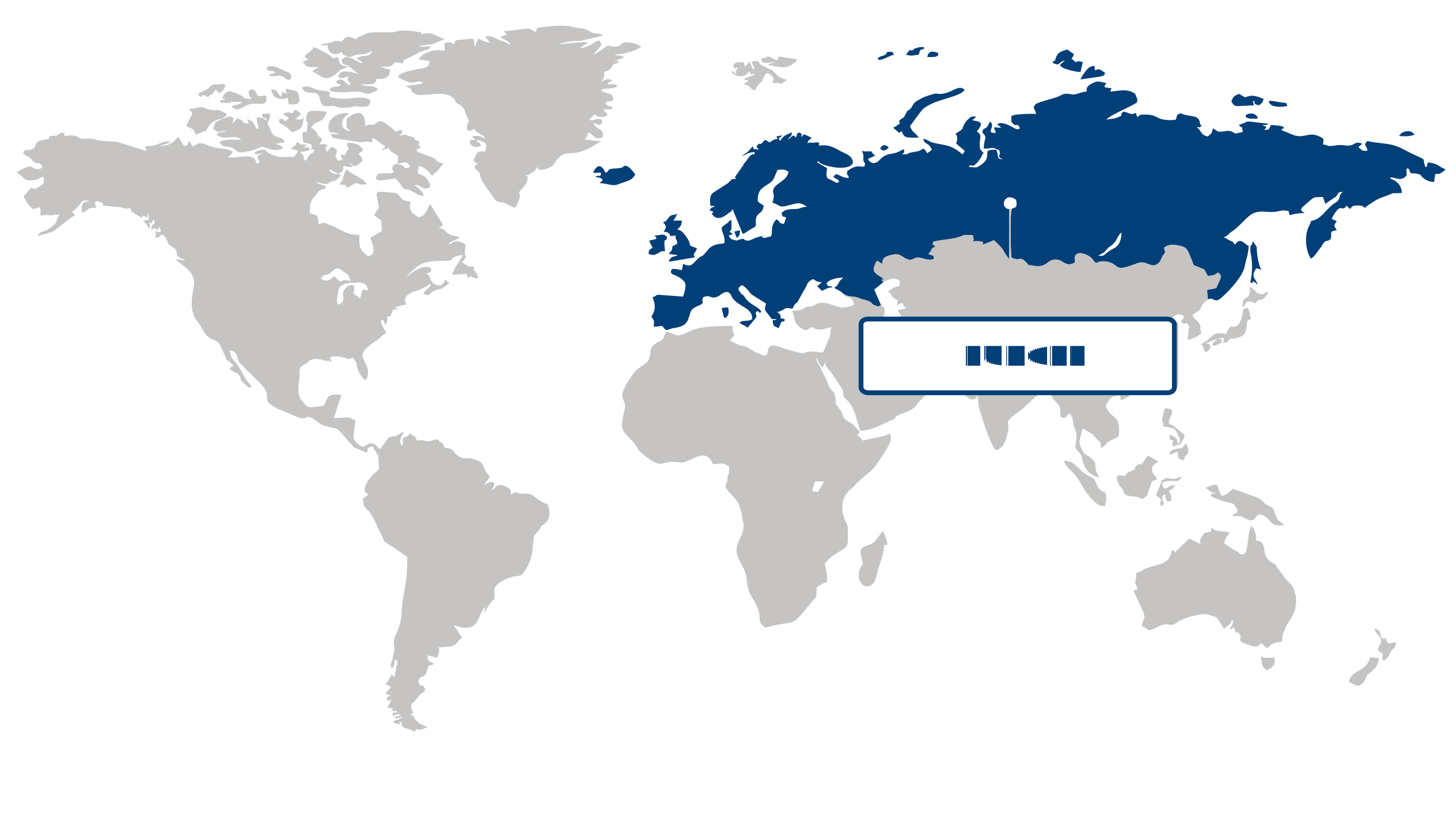
Europe (Largest Region)
Europe accounted for a 36.94% share of the intelligent battery sensor market in 2026, making it the largest regional market due to increasing vehicle electrification, strong automotive technology development, and growing demand for advanced battery management systems. Intelligent battery sensors are becoming increasingly important for monitoring battery voltage, current, temperature, and state of charge, enabling improved battery performance, safety, and efficiency. The region’s established automotive industry and increasing adoption of electric and hybrid vehicles are creating significant opportunities for advanced battery sensing technologies. Growing emphasis on vehicle safety, energy efficiency, and battery longevity is encouraging manufacturers to integrate intelligent monitoring systems into modern vehicles. In addition, the expansion of energy storage applications and increasing focus on efficient battery utilization are broadening the demand for intelligent battery sensors beyond automotive applications, supporting continued market development across Europe.
Asia Pacific (Fastest-Growing Region)
Asia Pacific is expected to witness the fastest growth in the intelligent battery sensor market, driven by expanding electric vehicle adoption, increasing battery production, and rapid development of energy storage infrastructure. Growing electrification across transportation and industrial applications is creating greater demand for accurate battery monitoring technologies that can improve system reliability, safety, and performance. The expansion of electric mobility and the increasing deployment of rechargeable battery systems are encouraging manufacturers to incorporate intelligent sensing capabilities into battery management architectures. Rising investments in battery manufacturing and energy storage technologies are further supporting market opportunities across the region. Moreover, increasing technological development in battery management systems and growing demand for longer battery life and improved energy efficiency are expected to accelerate the adoption of intelligent battery sensors throughout Asia Pacific.
| Parameter | North America | Asia Pacific | Europe | Latin America | MEA |
|---|---|---|---|---|---|
| Innovation HubiScaleNascentDeveloping Advanced | |||||
| Cost-Sensitive RegioniScaleLowMedium High | |||||
| Regulatory EnvironmentiScaleRestrictiveNeutral Supportive | |||||
| Demand DriversiScaleWeakModerate Strong | |||||
| Development StageiScaleEmergingDeveloping Developed | |||||
| Adoption RateiScaleLowMedium High | |||||
| New Entrants / StartupsiScaleSparseModerate Dense | |||||
| Macro IndicatorsiScaleWeakStable Strong |
Key Country Insights
United States 🇺🇸
EV Battery IntelligenceThe U.S. intelligent battery sensor market is supported by electric vehicle development, connected mobility, and advanced battery management requirements. Automotive manufacturers and battery-system developers are prioritizing sensing capabilities that improve state-of-charge monitoring, thermal management, diagnostics, and battery safety across increasingly software-driven vehicle platforms.
Germany 🇩🇪
Automotive Battery MonitoringGermany’s intelligent battery sensor market is closely linked to vehicle electrification and sophisticated automotive electronics. Sensor adoption is centered on accurate battery condition monitoring, energy management, and diagnostic functionality, helping manufacturers integrate intelligent battery systems into electric and hybrid vehicle architectures while maintaining stringent reliability requirements.
Japan 🇯🇵
Energy Management SystemsJapan’s intelligent battery sensor market is shaped by applications spanning hybrid vehicles, electric mobility, and energy storage systems. Manufacturers are focused on compact, reliable sensing technologies that provide accurate battery-condition data, enabling more precise power management, preventive diagnostics, and efficient operation of increasingly complex battery systems.
South Korea 🇰🇷
Battery System OptimizationSouth Korea’s intelligent battery sensor market is strongly connected to advanced battery manufacturing and electrified mobility applications. Sensor technologies are being integrated into battery management architectures to improve cell-level monitoring, thermal control, fault detection, and operational efficiency across automotive and energy-storage systems.
France 🇫🇷
Electrified Mobility MonitoringFrance’s intelligent battery sensor market is gaining relevance through vehicle electrification and the need for dependable battery management. Automotive and mobility applications require sensors capable of monitoring battery health, temperature, and electrical conditions, supporting safer operation and more effective management of electric and hybrid powertrains.
Italy 🇮🇹
Battery Diagnostics IntegrationItaly’s intelligent battery sensor market is tied to automotive electrification and the integration of smarter vehicle electronics. Demand centers on sensing solutions that provide battery diagnostics and operating-state information, helping vehicle and component manufacturers enhance energy management, reliability, and maintenance capabilities within electrified powertrain systems.
Intelligent Battery Sensor Market Share (%), by Sensor Type, 2026
Go beyond the chart, access full insights & data tables
Request Free Sample ReportSensor Type Segment Analysis: Hall Effect Sensor (Largest Segment) vs Shunt Sensor (Fastest-Growing Segment)
The hall effect sensor segment dominated the intelligent battery sensor market in 2026 with the largest revenue share of 60.48%, driven by its ability to provide non-contact current measurement with strong electrical isolation and reliable sensing performance. Besides this, hall effect sensors support continuous monitoring of battery current while minimizing direct electrical interference with the battery circuit, making them suitable for applications requiring enhanced safety and operational reliability. In addition, their compatibility with battery management systems enables accurate monitoring of charging and discharging conditions, supporting broader adoption across intelligent energy storage and vehicle applications. Furthermore, the increasing integration of electronic monitoring and protection functions in battery systems is strengthening demand for hall effect sensors where reliable current detection and system diagnostics are essential.
The shunt sensor segment is growing at the fastest rate over the forecast period. Segment growth is driven by its ability to deliver direct and precise current measurement through a simple sensing architecture, making it suitable for applications where accurate battery monitoring is required. Besides this, shunt-based sensing can support detailed measurement of charging and discharging currents, enabling battery management systems to improve monitoring and control functions. In addition, increasing demand for efficient battery diagnostics and real-time energy management is supporting adoption of shunt sensors across intelligent battery applications. Their practical integration into compact battery monitoring systems further contributes to accelerating segment growth.
Voltage Range Segment Analysis: 12V (Largest & Fastest-Growing Segment)
The 12V segment dominated the intelligent battery sensor market in 2026 with the largest revenue share of 44.73% and is also growing at the fastest rate over the forecast period, supported by the widespread use of 12V electrical architectures across battery-powered applications. The segment benefits from established compatibility with vehicle electrical systems and auxiliary power applications, creating sustained demand for intelligent sensing solutions capable of monitoring battery condition, current flow, and electrical performance. Besides this, the familiarity of 12V architectures enables straightforward integration of intelligent battery sensors into existing systems while supporting reliable battery diagnostics and energy management. In addition, continued adoption of electronically controlled functions and increasing requirements for real-time battery monitoring are strengthening demand for 12V sensing solutions. The broad application compatibility, established system infrastructure, and growing monitoring requirements support the segment's leading position and accelerated growth.
Technology Segment Analysis: LIN (Local Interconnect Network) (Largest Segment) vs CAN (controller Area Network) (Fastest-Growing Segment)
The LIN (local interconnect network) segment dominated the intelligent battery sensor market in 2026 with the largest revenue share of 47.7%, driven by its suitability for cost-efficient communication between battery sensors and electronic control systems. Besides this, LIN provides a relatively simple communication architecture that supports the integration of intelligent sensing functions where high-speed data transmission is not essential. This makes LIN-based technology suitable for applications requiring reliable battery monitoring while maintaining system simplicity and cost efficiency. In addition, its compatibility with automotive electronic architectures supports integration of battery sensing and diagnostic functions into broader vehicle control systems. The growing deployment of electronic battery management functions and demand for practical communication solutions are therefore supporting continued use of LIN technology.
The CAN (controller area network) segment is growing at the fastest rate over the forecast period, supported by increasing demand for robust, real-time communication between intelligent battery sensors and interconnected electronic control systems. Besides this, CAN enables reliable exchange of battery-related information across multiple control units, supporting more advanced monitoring, diagnostics, and energy management functions. In addition, the increasing complexity of electronically controlled battery and vehicle systems is creating greater requirements for dependable communication between sensing devices and control modules. As battery systems become more connected and require coordinated monitoring of operating conditions, CAN-based technology is gaining importance, supporting its accelerated adoption across intelligent battery sensor applications.
| Segment | Sub-Segment | Largest Segment | Fastest Growing |
|---|---|---|---|
| Sensor Type | Hall Effect Sensor, Shunt Sensor | Hall Effect Sensor | Shunt Sensor |
| Voltage Range | 12V, 24V, 36V and Above | 12V | 12V |
| Technology | LIN (local Interconnect Network), CAN (controller Area Network), Others | LIN (Local Interconnect Network) | CAN (controller Area Network) |
| Sensor Functionality | Current Monitoring Sensors, Voltage Monitoring Sensors, Temperature Monitoring Sensors, Multi-parameter Sensors (SOC/SOH) | Multi-parameter Sensors (SOC/SOH) | Multi-parameter Sensors (SOC/SOH) |
| Battery Type | Lead-acid Batteries, Lithium-ion Batteries, Nickel-metal Hydride Batteries, Others | Lead-acid Batteries | Lithium-ion Batteries |
| End Use | Automotive, Marine, Aerospace, Industrial, Others | Automotive | Automotive |
| Application | State of Charge (SOC) Measurement, State of Health (SOH) Monitoring, Battery Management Systems (BMS), Energy Recovery, Start-stop Functions, Others | Battery Management Systems (BMS) | Battery Management Systems (BMS) |
Unlock insights tailored to your business with our bespoke market research solutions.
Click to get your customized report now.
Competitive Landscape and Market Positioning
Analyst Perspective:
Intelligent battery sensor competitiveness depends on delivering dependable battery information while minimizing energy consumption and integration effort. Accurate state-of-charge and state-of-health estimates are essential for range assessment, aging evaluation, and charging decisions, but their reliability must persist across changing temperatures, operating conditions, and battery lifecycles. Precise current and voltage measurements underpin these estimates and support charging control and fault detection, making measurement consistency under dynamic loads an important selection criterion for automakers. At the same time, low parasitic drain is critical when vehicles remain parked or support increasingly complex electrical systems. Sensor suppliers must therefore balance continuous monitoring and communication functionality against minimal battery demand. Compatibility with established automotive communication networks further influences adoption by reducing integration complexity and supporting interoperability across vehicle electronic architectures.
Key companies in the intelligent battery sensor market:
- Bosch (Germany)
- Continental (Germany)
- Denso (Japan)
- HELLA (Germany)
- Infineon Technologies (Germany)
- Valeo (France)
- Panasonic Automotive (Japan)
- NXP Semiconductors (Netherlands)
- Texas Instruments (USA)
- LG Innotek (South Korea)
| Company | Market Share | Company Revenue | Revenue CAGR (%) | Product Portfolio | Geographic Presence | Innovation / R&D Focus | Strategic Developments |
|---|---|---|---|---|---|---|---|
| Bosch (Germany) | |||||||
| Continental (Germany) | |||||||
| Denso (Japan) | |||||||
| HELLA (Germany) | |||||||
| Infineon Technologies (Germany) | |||||||
| Valeo (France) | |||||||
| Panasonic Automotive (Japan) | |||||||
| NXP Semiconductors (Netherlands) | |||||||
| Texas Instruments (USA) | |||||||
| LG Innotek (South Korea) |
Industry Development/News
| Company Name | Date | Key Development |
|---|---|---|
| FORVIA HELLA | January 2026 | FORVIA HELLA announced that its next-generation intelligent battery sensor is scheduled to enter mass production in China by mid-2026, marking a strategic expansion of its advanced battery-sensing technology deployment within the Chinese automotive market. |
| Honeywell | July 2025 | Honeywell received the 2025 Best of Sensors Award for its Battery Safety Electrolyte Sensor, a diagnostic device designed to detect early-stage lithium-ion battery failure gases and support proactive thermal runaway intervention across electric vehicles and energy storage applications. |
| LEM | June 2025 | LEM expanded its intelligent battery sensor portfolio with the introduction of the Hybrid Supervising Unit, an integrated high-voltage battery current sensor combining shunt and Hall-effect technologies to improve measurement accuracy and reduce system footprint for electric vehicle battery management systems. |
Customize Your Report
Explore examples of how this report can be tailored to different research needs, including custom segments, additional topics or chapters, and related reports. Click a section of the wheel or its numbered marker to explore the available options.
Intelligent Battery Sensor Market — Custom Segments
| Segment | Sub-Segment |
|---|---|
| Vehicle Electrification Level | Conventional vehicles, Start-stop vehicles, Mild hybrid electric vehicles, Full hybrid electric vehicles, Battery electric vehicles |
| Integration Level | Standalone battery sensors, Battery-management-system integrated sensors, Battery-terminal integrated sensors, Battery-pack integrated sensor modules |
| OEM vs Aftermarket Demand | OEM-installed sensors, Replacement and aftermarket sensors |
Intelligent Battery Sensor Market — Custom TOC
| Custom Chapter | Chapter Details |
|---|---|
| Battery Management System Integration |
|
| OEM Adoption & Design-In Strategies |
|
| Sensor Data & Predictive Diagnostics |
|
Need a different cut of the data?
Request Custom ResearchFrequently Asked Questions
How big is the intelligent battery sensor market?
How is the intelligent battery sensor industry projected to perform over the next decade?
How is electric vehicle adoption shaping demand for intelligent battery sensors?
How are industrial energy storage requirements influencing intelligent battery sensor adoption?
Why do Hall effect sensors dominate the intelligent battery sensor market?
How is CAN technology gaining ground in the intelligent battery sensor market?
Why does Europe lead the intelligent battery sensor market?
What is driving intelligent battery sensor market growth in Asia Pacific?
Who are the leading players in the intelligent battery sensor landscape?
Our Clients
"Working with FBI has been a good experience. The market report provided a holistic view, covering everything from emerging trends to potential risks."
Semtech Corporation
"The experience was highly positive. The team showcased remarkable flexibility in adapting to our specific needs and delivered report that perfectly aligned with all our requirements."
TSMC
"What really stood out to me was how clearly and promptly the Fundamental Business Insights team communicated throughout. It made the collaboration feel effortless."
NXP Semiconductors
Our Research Team & Methodology
Every Fundamental Business Insights report is built by a dedicated vertical research team, validated through a structured primary-and-secondary methodology, and reviewed for accuracy before it reaches you.
This report was prepared by the Electronics & Semiconductors Research Team at Fundamental Business Insights, a dedicated research group specializing in the global electronics and semiconductor ecosystem. Our analysts continuously monitor technology innovations, manufacturing trends, competitive developments, supply chain dynamics, regulatory changes, and end-user demand to deliver timely market intelligence. The research is developed using a structured methodology that combines primary industry interactions, company financial disclosures, government publications, trade associations, technical literature, patent analysis, and other authoritative secondary sources. Market estimates are validated through multiple research techniques, including top-down and bottom-up analysis, before undergoing an internal quality review to ensure accuracy, consistency, and methodological integrity prior to publication.
Delivery
Published
Available
Support
- Market Size & Forecast
- Market Segmentation
- Regional Analysis
- Growth Drivers & Challenges
- Market Dynamics
- Competitive Landscape
- Company Profiles
- Competitive Benchmarking
- Mergers & Acquisitions
- Market Share Analysis or Key Company Strategies
- Value Chain Analysis
- Porter's Five Forces
- PESTLE Analysis
- Pricing Trends
- Supply-Demand Analysis
- Technology Landscape
- Regulatory Landscape
- Investment & Funding Landscape
- Emerging Opportunities
- Future Market Outlook