IO-Link Market Size & Growth Forecast 2027–2036, By Segments (Type, Component, Application, End Use), Regional Demand Trends (North America, Asia Pacific, Europe), Key Country Insights (U.S., Japan, South Korea, Germany, France, Italy), and Competitive Landscape
Jump to Content
Market Size and Growth Outlook
IO-Link Market size stood at USD 23.24 billion in 2026 and is predicted to grow at a 26.01% CAGR from 2027 to 2036, surpassing USD 234.58 billion by 2036. The industry revenue for 2027 is estimated at USD 28.57 billion.
Get more details on this report
Request Free Sample ReportIO-Link Market Intelligence Snapshot
Regional Market Dynamics
- Europe held 36.5% of the market in 2026, supported by advanced industrial automation, a strong manufacturing base, and growing adoption of Industry 4.0 technologies for real-time monitoring and predictive maintenance.
- Asia Pacific is expanding fastest as industrialization, factory automation investments, and smart manufacturing initiatives increase demand for connected sensors and flexible communication solutions across automotive, electronics, semiconductor, and machinery production.
Segment Momentum
- Wired IO-Link leads the type segment through established use in industrial automation, where reliable communication between sensors, actuators, and control systems is essential. Its diagnostic and parameterization capabilities support equipment monitoring and maintenance.
- Intralogistics is the fastest-growing application segment as warehouses and manufacturing facilities automate material handling, sorting, and storage. IO-Link enables connected sensors and actuators to provide operational data that improves equipment visibility and maintenance.
Market Expansion Drivers
- Rising Industrial Automation & Smart Manufacturing Needs.
- Integration of IO-Link with IIoT and Industry 4.0 Platforms.
- Advancements in IO-Link-enabled Sensor & Device Technologies.
Leading Market Participants
- Top players in the IO-link market include Balluff (Germany), Siemens (Germany), Turck (Germany), Pepperl+Fuchs (Germany), ifm electronic (Germany), Schneider Electric (France), Rockwell Automation (USA), Omron (Japan), Beckhoff (Germany), Panasonic (Japan).
Global Market Forecast Snapshot
Market Outlook
- 2026 Market Size: USD 23.24 billion
- 2027 Estimated Market Size: USD 28.57 billion
- Projected Market Size: USD 234.58 billion by 2036
- Growth Forecast: 26.01% CAGR (2027-2036)
Regional and Segment Outlook
- Leading Regional Market: Europe
- High-Growth Regional Hub: Asia Pacific
- Core Revenue Segment: Type (IO-Link Wired) | Component (IO-Link Device) | Application (Machine Tool) | End Use (Automotive)
- Emerging Opportunity Segment: Type (IO-Link Wireless) | Component (IO-Link Device) | Application (Intralogistics) | End Use (Automotive)
Market Growth Drivers and Industry Trends
Rising Industrial Automation & Smart Manufacturing Needs
The increasing adoption of industrial automation and smart manufacturing practices is driving demand for IO-link technology by enabling more efficient communication between sensors, actuators, and control systems. Manufacturers are increasingly seeking flexible and intelligent connectivity solutions that can support real-time monitoring, automated process adjustments, and improved equipment performance. IO-Link facilitates the seamless exchange of diagnostic and operational information, helping production environments improve process visibility and reduce manual intervention. As industries continue modernizing manufacturing operations and integrating connected equipment across production lines, the need for standardized point-to-point communication is supporting broader adoption of IO-link solutions.
Integration of IO-Link with IIoT and Industry 4.0 Platforms
The integration of IO-link with industrial internet of things and industry 4.0 platforms is accelerating market growth by enabling greater connectivity between field-level devices and higher-level automation systems. IO-Link allows sensors and actuators to provide detailed operational information that can be used for equipment monitoring, predictive maintenance, and process optimization. This enhanced data accessibility supports manufacturers in developing more connected and responsive production environments while improving transparency across industrial processes. As factories increasingly transition toward interconnected architectures, the compatibility of IO-link with digital manufacturing frameworks is strengthening its role in modern industrial communication networks.
Advancements in IO-Link-enabled Sensor & Device Technologies
Advancements in IO-link-enabled sensors and field devices are expanding the technology's applicability across diverse industrial processes. Modern devices increasingly incorporate enhanced sensing capabilities, diagnostic functions, parameterization features, and greater flexibility, allowing manufacturers to obtain more detailed information from production equipment. These improvements simplify device configuration and support faster troubleshooting while enabling more efficient management of industrial assets. As sensor technology evolves alongside the growing need for intelligent field-level data, the expanding functionality of IO-link-enabled devices is contributing to wider adoption across automated manufacturing environments.
| Growth Driver | Impact on CAGR | Regulatory Influence | Geographic Relevance | Adoption Rate | Impact Timeline |
|---|---|---|---|---|---|
| Rising Industrial Automation & Smart Manufacturing Needs | 8% | Short term (≤ 2 yrs) | North America; Europe | Medium | Fast |
| Integration of IO-Link with IIoT and Industry 4.0 Platforms | 9% | Medium term (2–5 yrs) | Europe; Asia Pacific | Medium | Moderate |
| Advancements in IO-Link-enabled Sensor & Device Technologies | 9.3% | Long term (5+ yrs) | North America; Asia Pacific | Low | Slow |
Explore Growth Opportunities
Request Free Sample ReportRegional Demand Dynamics
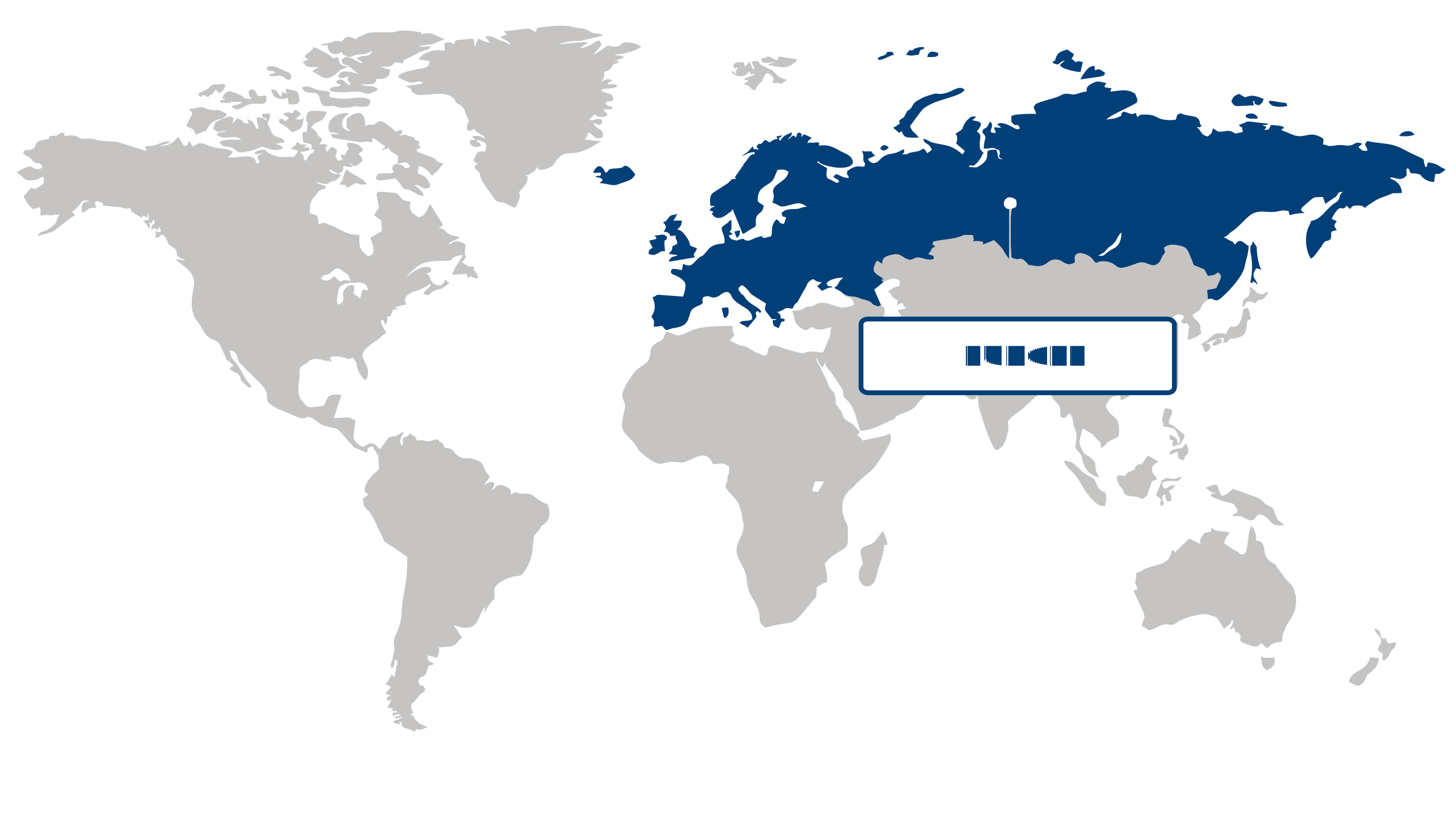
Europe (Largest Region)
The IO-link market in Europe held the largest share in 2026, accounting for 36.5% of the market, led by the region’s advanced industrial automation ecosystem, strong manufacturing base, and increasing adoption of smart factory technologies. The growing integration of connected sensors, actuators, and industrial communication systems is enabling manufacturers to improve machine monitoring, operational efficiency, and predictive maintenance capabilities. Europe’s emphasis on industry 4.0, digital transformation, and intelligent manufacturing is encouraging the deployment of standardized communication technologies that enable seamless data exchange between field devices and automation systems. In addition, the modernization of production facilities and increasing focus on real-time industrial data are supporting the adoption of IO-link across automotive, machinery, electronics, and process manufacturing applications.
Asia Pacific (Fastest-Growing Region)
The IO-link market in Asia Pacific is expected to register the fastest growth, influenced by rapid industrialization, expanding manufacturing capacity, and increasing investments in factory automation and digital production systems. Countries across the region are accelerating the modernization of industrial facilities and adopting connected technologies to improve productivity, quality control, and equipment performance. The expansion of automotive, electronics, semiconductor, and machinery manufacturing is creating increasing demand for intelligent sensors and flexible communication solutions. Furthermore, growing adoption of smart manufacturing initiatives and increasing investments in industrial automation are encouraging manufacturers to integrate IO-link-enabled devices into production environments, supporting the rapid development of the regional market.
| Parameter | North America | Asia Pacific | Europe | Latin America | MEA |
|---|---|---|---|---|---|
| Innovation HubiScaleNascentDeveloping Advanced | |||||
| Cost-Sensitive RegioniScaleLowMedium High | |||||
| Regulatory EnvironmentiScaleRestrictiveNeutral Supportive | |||||
| Demand DriversiScaleWeakModerate Strong | |||||
| Development StageiScaleEmergingDeveloping Developed | |||||
| Adoption RateiScaleLowMedium High | |||||
| New Entrants / StartupsiScaleSparseModerate Dense | |||||
| Macro IndicatorsiScaleWeakStable Strong |
Key Country Insights
United States 🇺🇸
Smart Factory ConnectivityThe U.S. IO-Link market is supported by industrial automation initiatives requiring greater visibility from sensors and field devices. Commercial priorities include easier device configuration, diagnostic access, machine-data collection, and integration with broader automation architectures across manufacturing operations.
Germany 🇩🇪
Industrial Automation IntegrationGermany's IO-Link adoption is closely connected with sophisticated factory automation and machine-building applications. Manufacturers and system integrators can leverage standardized sensor communication, parameterization, diagnostics, and data access to improve machine commissioning and operational transparency.
Japan 🇯🇵
Precision Manufacturing NetworksJapan's IO-Link market aligns with highly automated production environments where reliable sensor communication and precise machine control are important. Adoption priorities include streamlined configuration, equipment diagnostics, production-line flexibility, and efficient integration of intelligent sensors into established factory systems.
South Korea 🇰🇷
Electronics Factory AutomationSouth Korea presents strong relevance for IO-Link in automated electronics and advanced manufacturing environments. Market activity can center on connecting intelligent sensors, simplifying device management, improving production-line visibility, and supporting flexible automation architectures where equipment integration is commercially important.
France 🇫🇷
Connected Factory ModernizationFrance's IO-Link market is positioned around modernization of industrial automation and greater accessibility of field-level data. Manufacturers can use IO-Link-enabled devices to simplify sensor configuration, obtain diagnostics, and connect shop-floor equipment with higher-level automation and monitoring systems.
Italy 🇮🇹
Machine Builder AdoptionItaly's IO-Link market is closely relevant to machinery and automated production equipment, where standardized device communication can simplify machine design and commissioning. System builders can prioritize flexible sensor integration, remote diagnostics, easier parameterization, and maintainable automation architectures.
IO-Link Market Share (%), by Type, 2026
Go beyond the chart, access full insights & data tables
Request Free Sample ReportType Segment Analysis: IO-Link Wired (Largest Segment) vs IO-Link Wireless (Fastest-Growing Segment)
The IO-link wired segment represents the largest share of the type segment, supported by its established role in industrial automation environments requiring reliable communication between sensors, actuators, and control systems. Wired connectivity provides consistent data transmission and supports the integration of field devices with automation architectures, making it well suited to manufacturing applications where dependable communication and continuous monitoring are essential. The ability to exchange detailed device and process information also supports improved diagnostics, parameterization, and maintenance. As manufacturers continue to modernize production lines and pursue greater visibility into machine performance, the established infrastructure and operational familiarity associated with wired IO-link are sustaining demand across industrial automation applications.
The IO-link wireless segment is expected to experience the fastest growth as manufacturers increasingly seek flexible connectivity solutions that can simplify sensor deployment and support more adaptable production environments. Wireless communication can reduce cabling requirements and facilitate the integration of devices in locations where conventional wiring may be difficult or costly to install. This flexibility is particularly valuable in facilities adopting modular machinery, mobile equipment, and reconfigurable production systems. Growing interest in connected manufacturing and real-time industrial data is further encouraging the adoption of wireless device communication, while advances in industrial wireless technologies are helping address requirements related to reliability and integration.
Component Segment Analysis: IO-Link Device (Largest & Fastest-Growing Segment)
The IO-link device segment represents the largest share of the component segment and is also expected to witness the fastest growth, reflecting the central role of connected field devices in industrial automation architectures. IO-Link devices enable sensors and actuators to exchange detailed process and diagnostic information with higher-level automation systems, extending functionality beyond basic signal transmission. Their ability to support device identification, parameter configuration, condition monitoring, and diagnostic information helps manufacturers improve machine visibility and reduce maintenance complexity. Increasing adoption of smart manufacturing practices is encouraging industrial facilities to replace conventional field devices with more intelligent and communicative equipment. As production systems become increasingly connected and data-driven, demand for IO-link devices is expected to expand alongside the broader deployment of automated and digitally integrated machinery.
Application Segment Analysis: Machine Tool (Largest Segment) vs Intralogistics (Fastest-Growing Segment)
The machine tool application represents the largest share of the application segment, supported by the extensive use of sensors, actuators, and automation components for monitoring and controlling precision manufacturing processes. IO-Link technology enables machine tool operators to obtain detailed information from connected devices, supporting accurate process control, equipment diagnostics, and preventive maintenance. The ability to configure devices remotely and access operational data can improve machine availability and simplify troubleshooting, which is particularly important in highly automated production environments. As manufacturers pursue greater production efficiency, process consistency, and equipment utilization, the integration of intelligent communication technologies into machine tools continues to support demand for IO-link solutions.
The intralogistics application is expected to register the fastest growth as warehouses, distribution centers, and manufacturing facilities increasingly automate the movement, sorting, storage, and handling of goods. Modern intralogistics systems rely on interconnected sensors and actuators to monitor material flow, identify objects, control conveyors, and coordinate automated handling equipment. IO-Link enables these field devices to provide richer diagnostic and operational information, supporting greater visibility into equipment status and facilitating predictive maintenance. The expansion of smart warehouses and increasingly automated material-handling processes is creating additional demand for flexible and data-enabled connectivity, positioning intralogistics as an important growth area for IO-link technology.
| Segment | Sub-Segment | Largest Segment | Fastest Growing |
|---|---|---|---|
| Type | IO-Link Wired, IO-Link Wireless | IO-Link Wired | IO-Link Wireless |
| Component | IO-Link Master, IO-Link Device, Cables & Connectors, IO-Link Hubs, Others | IO-Link Device | IO-Link Device |
| Application | Machine Tool, Assembly Line, Intralogistics, Packaging, Others | Machine Tool | Intralogistics |
| End Use | Electronics, Automotive, Food & Beverages, Oil & Gas, Pharmaceutical, Others | Automotive | Automotive |
Unlock insights tailored to your business with our bespoke market research solutions.
Click to get your customized report now.
Competitive Landscape and Market Positioning
Analyst Perspective:
Expanding Beyond sensor-level communication, competitive edge in this space centers on seamlessly bridging field devices with broader digital and physical architectures. Although IO-Link inherently functions as a wired point-to-point interface, integration into enterprise architectures hinges on IO-Link masters capable of converting sensor data for higher-level fieldbus protocols and cloud platforms to support predictive workflows. Reliability within harsh industrial environments demands ruggedized components with application-specific IP ratings, balancing enclosure protection against thermal and spatial constraints. Furthermore, while deterministic control requires wired stability, integrating additional wireless gateways can enhance deployment flexibility; however, vendors must navigate trade-offs in latency and interference to maintain predictable performance in demanding control settings.
Major players in the IO-link market:
- Balluff (Germany)
- Siemens (Germany)
- Turck (Germany)
- Pepperl+Fuchs (Germany)
- ifm electronic (Germany)
- Schneider Electric (France)
- Rockwell Automation (USA)
- Omron (Japan)
- Beckhoff (Germany)
- Panasonic (Japan)
| Company | Market Share | Company Revenue | Revenue CAGR (%) | Product Portfolio | Geographic Presence | Innovation / R&D Focus | Strategic Developments |
|---|---|---|---|---|---|---|---|
| Balluff (Germany) | |||||||
| Siemens (Germany) | |||||||
| Turck (Germany) | |||||||
| Pepperl+Fuchs (Germany) | |||||||
| ifm electronic (Germany) | |||||||
| Schneider Electric (France) | |||||||
| Rockwell Automation (USA) | |||||||
| Omron (Japan) | |||||||
| Beckhoff (Germany) | |||||||
| Panasonic (Japan) |
Industry Development/News
| Company Name | Date | Key Development |
|---|---|---|
| Endress+Hauser | February 2026 | Endress+Hauser introduced a targeted Picomag electromagnetic flowmeter variant equipped with IO-Link connectivity for data centers and OEM applications in the US. The release strengthens the company's positioning in specialized process sensing and accelerates digital transformation in high-density cooling infrastructure. |
| STMicroelectronics | October 2025 | STMicroelectronics launched the P-NUCLEO-IOD5A1 modular development kit, integrating STM32 microcontrollers, transceivers, and actuator boards. The platform simplifies prototyping and system design for industrial automation equipment, accelerating the commercialization of next-generation IO-Link-enabled devices. |
| HBK | August 2025 | HBK transitioned its force measurement technology to digital operation via IO-Link integration. By enabling direct connectivity with the industrial communication standard, the company expanded its digital sensor capabilities for connected industrial automation environments and advanced smart manufacturing workflows. |
| Renesas Electronics | November 2024 | Renesas Electronics expanded its industrial semiconductor offerings by developing a four-channel master IC and a dual-channel sensor signal conditioner IC designed for high-efficiency IO-Link networks, optimizing device-to-master communication across automated factory architectures. |
| Renesas Electronics | July 2024 | Renesas launched the CCE4511 IO-Link master IC alongside the ZSSC3286 sensor signal conditioner IC. The dual-chip solution addresses both master-level connectivity and field-level signal processing, broadening the hardware ecosystem for connected smart factory sensors and actuators. |
| STMicroelectronics | July 2024 | STMicroelectronics introduced an IO-Link actuator board targeted at industrial monitoring and smart home appliances. The release expands the company's hardware development tools, allowing equipment manufacturers to integrate standardized digital control interfaces into low-voltage motors and actuators. |
| Orca Semiconductor | June 2024 | Orca Semiconductor introduced a dedicated IO-Link communications transceiver alongside an industrial analog solution. The product deployment enhances physical-layer transceiver options for smart factory hardware manufacturers, driving broader adoption of connected fieldbus protocols. |
Customize Your Report
Explore examples of how this report can be tailored to different research needs, including custom segments, additional topics or chapters, and related reports. Click a section of the wheel or its numbered marker to explore the available options.
IO-Link Market — Custom Segments
| Segment | Sub-Segment |
|---|---|
| Network Architecture | Point-to-Point, Star, Line/Tree, Hybrid |
| Installation Environment | Factory Floor, Hazardous Areas, Cleanroom Environments, Outdoor & Harsh Environments |
| Replacement vs. New Installation | New Installations, Retrofit Installations, System Upgrades |
IO-Link Market — Custom TOC
| Custom Chapter | Chapter Details |
|---|---|
| Industrial Automation Architecture Adoption |
|
| Brownfield Modernization Opportunities |
|
| Device Ecosystem & Interoperability Landscape |
|
Need a different cut of the data?
Request Custom ResearchFrequently Asked Questions
How much revenue does the IO-link market generate?
What is the forecasted size of the IO-link industry?
How is smart manufacturing adoption accelerating demand for IO-Link technology?
Why is IO-Link becoming strategically important within connected industrial architectures?
Why does wired IO-Link remain the leading connectivity option in industrial automation?
How is intralogistics creating new growth opportunities for IO-Link technology?
How does Europe maintain its leadership in the IO-Link market?
Why is Asia Pacific expected to experience the fastest growth in the IO-Link market?
Which companies are driving growth in the IO-link landscape?
Our Clients
"Working with FBI has been a good experience. The market report provided a holistic view, covering everything from emerging trends to potential risks."
Semtech Corporation
"The experience was highly positive. The team showcased remarkable flexibility in adapting to our specific needs and delivered report that perfectly aligned with all our requirements."
TSMC
"What really stood out to me was how clearly and promptly the Fundamental Business Insights team communicated throughout. It made the collaboration feel effortless."
NXP Semiconductors
Our Research Team & Methodology
Every Fundamental Business Insights report is built by a dedicated vertical research team, validated through a structured primary-and-secondary methodology, and reviewed for accuracy before it reaches you.
This report was prepared by the Electronics & Semiconductors Research Team at Fundamental Business Insights, a dedicated research group specializing in the global electronics and semiconductor ecosystem. Our analysts continuously monitor technology innovations, manufacturing trends, competitive developments, supply chain dynamics, regulatory changes, and end-user demand to deliver timely market intelligence. The research is developed using a structured methodology that combines primary industry interactions, company financial disclosures, government publications, trade associations, technical literature, patent analysis, and other authoritative secondary sources. Market estimates are validated through multiple research techniques, including top-down and bottom-up analysis, before undergoing an internal quality review to ensure accuracy, consistency, and methodological integrity prior to publication.
Delivery
Published
Available
Support
- Market Size & Forecast
- Market Segmentation
- Regional Analysis
- Growth Drivers & Challenges
- Market Dynamics
- Competitive Landscape
- Company Profiles
- Competitive Benchmarking
- Mergers & Acquisitions
- Market Share Analysis or Key Company Strategies
- Value Chain Analysis
- Porter's Five Forces
- PESTLE Analysis
- Pricing Trends
- Supply-Demand Analysis
- Technology Landscape
- Regulatory Landscape
- Investment & Funding Landscape
- Emerging Opportunities
- Future Market Outlook