



Iodine Market Size & Growth Forecast 2027–2036, By Segments (Source, End-use), Regional Demand Trends (North America, Asia Pacific, Europe), Key Country Insights (U.S., Japan, South Korea, Germany, France, Italy), and Competitive Landscape
Market Size and Growth Outlook
Iodine Market size was valued at USD 4.04 billion in 2026 and is anticipated to grow at a 4.18% CAGR from 2027 to 2036, exceeding USD 6.08 billion by 2036. The industry revenue for 2027 is estimated at USD 4.18 billion.
Base Year Value (2026)
USD 4.04 billion
CAGR (2027-2036)
4.18%
Forecast Year Value (2036)
USD 6.08 billion

Historical Data Period
2022-2026

Largest Region
Europe

Forecast Period
2027-2036
Iodine Market Intelligence Snapshot:
-
Regional Market Dynamics:
- Europe leads through established industrial infrastructure, reliable processing networks, and consistent downstream demand requiring supply stability, quality, and regulatory compliance.
- Asia Pacific is projected to grow at a 5.24% CAGR, supported by rising industrial consumption, broader manufacturing activity, and stronger regional supply chain integration.
-
Segment Momentum:
- Caliche Ore held a 50.88% share in 2026 because established extraction infrastructure, stable output, and reliable large-scale supply make it a preferred source for meeting commercial iodine demand.
- Medical imaging is the largest and fastest-growing end use, driven by routine consumption of iodine-based contrast agents and increasing imaging procedure volumes that support sustained demand growth.
-
Market Expansion Drivers:
- Rising pharmaceutical production increasing iodine consumption in thyroid and diagnostic applications.
- Growing demand for CT scans and contrast imaging driving iodine-based media utilization.
- Expanding fortified animal feed production supporting iodine supplementation demand globally.
-
Leading Market Participants:
Leading players in the iodine market include SQM S.A. (Chile), Cosayach (Chile), Iofina plc (United Kingdom), Iochem Corporation (United States), ISE Chemicals Corporation (Japan), Godo Shigen Co., Ltd. (Japan), Itochu Chemical Frontier Corporation (Japan), Kanto Natural Gas Development Co., Ltd. (Japan), NIPPOH CHEMICALS CO., LTD. (Japan), ACF Minera S.A. (Chile).
Global Market Forecast Snapshot:
-
Market Outlook:
- 2026 Market Size: USD 4.04 billion
- 2027 Estimated Market Size: USD 4.18 billion.
- Projected Market Size: USD 6.08 billion by 2036
- Growth Forecasts: 4.18% CAGR (2027-2036)
-
Regional and Segment Outlook:
- Leading Regional Market: Europe
- High-Growth Regional Hub: Asia Pacific
- Core Revenue Segment: Caliche Ore (Source) | Medical Imaging (End-use)
- Emerging Opportunity Segment: Recycling (Source) | Medical Imaging (End-use)
Market Growth Drivers and Industry Trends
Rising pharmaceutical production increasing iodine consumption in thyroid and diagnostic applications
Expansion of pharmaceutical manufacturing will drive the iodine market growth as iodine remains an important input across thyroid-related medicines, nutritional preparations, and diagnostic applications. Increasing healthcare demand for products used to manage thyroid disorders is supporting consumption of iodine-containing compounds and formulations, while pharmaceutical manufacturers require consistent access to suitable iodine materials for production processes. Broader development of diagnostic and therapeutic products is also increasing the range of healthcare applications in which iodine-based ingredients and compounds are incorporated.
Growing demand for CT scans and contrast imaging driving iodine-based media utilization
The iodine market is gaining momentum from rising utilization of computed tomography and other contrast-enhanced imaging procedures, where iodine-based contrast media help improve the visibility of internal structures during diagnostic examinations. Increasing demand for advanced imaging is associated with greater use of contrast agents across hospitals, diagnostic centers, and specialized healthcare facilities. As clinicians rely on imaging to identify and evaluate a broad range of conditions, continued adoption of contrast-enhanced procedures supports the need for iodine-containing media that provide effective radiographic contrast during examinations.
Expanding fortified animal feed production supporting iodine supplementation demand globally
Expansion of fortified animal nutrition programs is creating additional demand within the iodine market as iodine supplementation is incorporated into feed formulations to support animal health and nutritional balance. Livestock and poultry producers increasingly use fortified feeds to provide essential micronutrients and maintain consistent dietary intake across managed animal populations. Greater emphasis on animal productivity, feed quality, and nutritional management is encouraging feed manufacturers to incorporate iodine-containing supplements into formulated diets for different livestock applications.
| Growth Driver Assessment Framework | |||||
| Growth Driver | Impact On CAGR | Regulatory Influence | Geographic Relevance | Adoption Rate | Impact Timeline |
|---|---|---|---|---|---|
| Rising pharmaceutical production increasing iodine consumption in thyroid and diagnostic applications | 1.90% | High | Europe, North America, Asia Pacific | High | Near Term |
| Growing demand for CT scans and contrast imaging driving iodine-based media utilization | 1.70% | High | North America, Europe | High | Near Term |
| Expanding fortified animal feed production supporting iodine supplementation demand globally | 1.30% | Moderate | Asia Pacific, Latin America | Medium | Mid Term |
Unlock insights tailored to your business with our bespoke market research solutions - Click to get your customized report now!
Regional Demand Dynamics
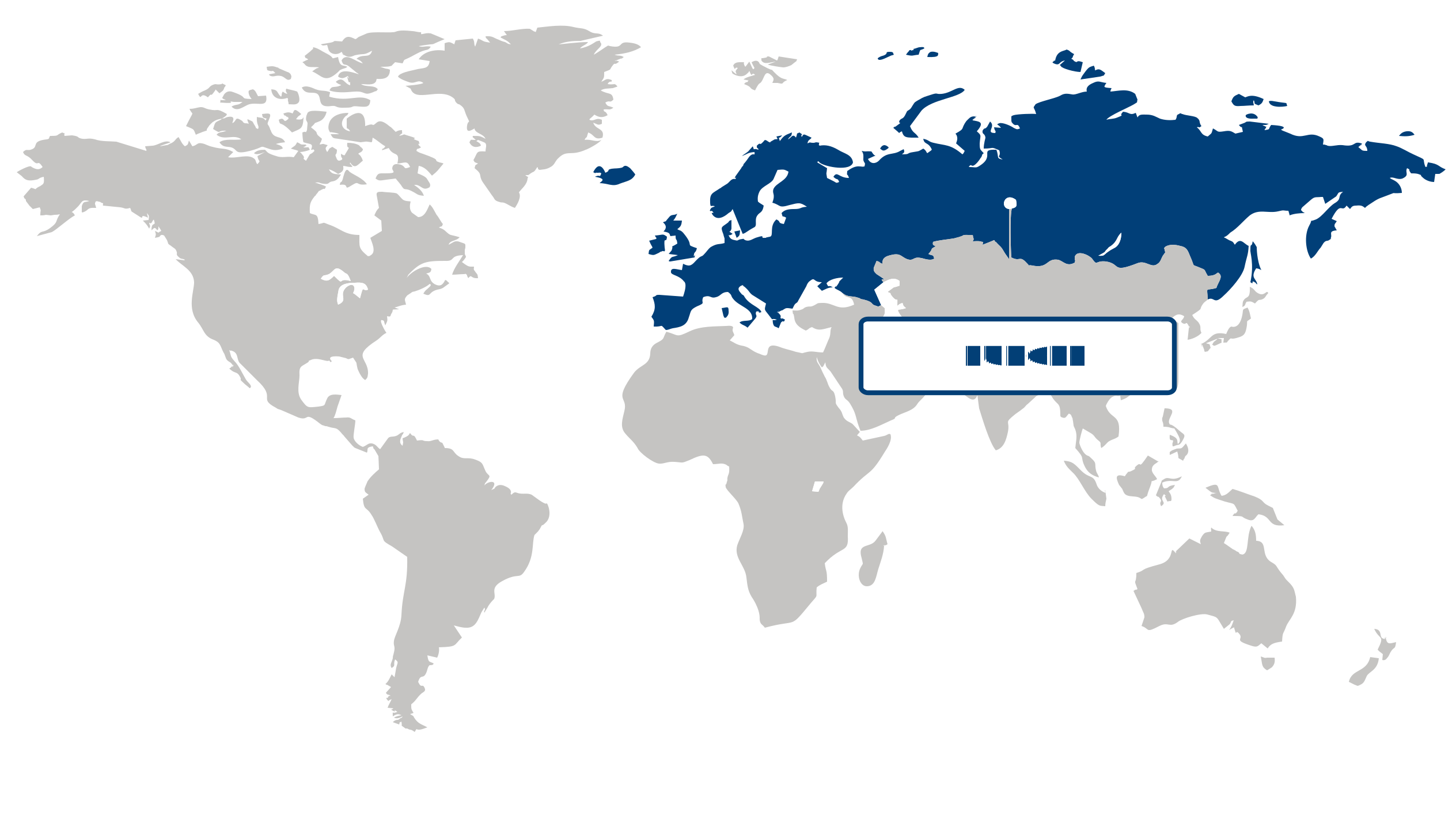
Largest Region
Europe
Largest Market Share in 2026
Europe (Largest Region) vs Asia Pacific (Fastest-Growing Region)
The iodine market was led by Europe, which held the largest share in 2026, supported by established healthcare systems, sustained demand for iodine-based pharmaceutical and nutritional applications, and well-developed industrial infrastructure. The region benefits from strong awareness of iodine’s importance in health and nutrition, while regulatory frameworks and established supply networks support consistent product availability. Demand from healthcare, food processing, and industrial applications further reinforces Europe’s position, with ongoing emphasis on product quality, safety, and reliable sourcing.
Asia Pacific is positioned as the fastest-growing region, driven by expanding healthcare access, rising nutritional awareness, and increasing industrial activity across emerging economies. Greater attention to iodine deficiency prevention and public health nutrition is supporting demand, while growing pharmaceutical and food-processing sectors are creating additional applications. Improvements in healthcare infrastructure, urbanization, and broader access to nutritional products are expected to strengthen regional consumption and encourage further development of iodine supply and distribution networks.
Key Country Insights
The U.S. iodine market is driven by demand from pharmaceuticals, medical imaging, and industrial processing. Suppliers are prioritizing secure sourcing strategies and value-added iodine derivatives to support healthcare manufacturing and specialized chemical applications across multiple industries.
Japan prioritizes high-purity iodine for electronics, healthcare, and specialty chemical applications. Manufacturers invest in refined processing technologies and quality assurance measures to meet demanding specifications across technologically advanced production sectors.
South Korea utilizes iodine extensively in display technologies, healthcare products, and specialty manufacturing. Companies continue strengthening processing capabilities and procurement networks to ensure reliable material availability for technology-driven industrial applications.
Germany emphasizes iodine use in specialty chemicals, pharmaceuticals, and advanced manufacturing processes. Market participants focus on consistent raw material quality, regulatory compliance, and efficient supply partnerships to support precision-oriented industrial production requirements.
France maintains steady demand for iodine through pharmaceutical production, healthcare formulations, and laboratory applications. Suppliers focus on regulatory-compliant materials and dependable distribution channels to support medical manufacturers and research organizations.
Italy integrates iodine into pharmaceutical, chemical, and industrial production activities requiring consistent material performance. Producers and distributors emphasize reliable sourcing, product quality, and application-specific formulations that support domestic manufacturing operations.
Segment Leadership and Growth Trends
Source Segment Analysis: Caliche Ore (Largest Segment) vs Recycling (Fastest-Growing Segment)
Caliche ore was the largest source segment in the iodine market, accounting for a 50.88% share in 2026. Its established role in iodine production provides a significant supply base for industries that depend on iodine and iodine-derived compounds. The availability of iodine-bearing mineral resources and established extraction practices support continued use of caliche ore as an important feedstock. Existing production infrastructure and its established position within the iodine supply chain further reinforce its leading contribution to market supply.
Recycling is the fastest-growing source segment as greater attention is being directed toward resource efficiency, supply diversification, and recovery of iodine from used materials and industrial streams. Recycling can provide an additional source of iodine while reducing dependence on primary extraction and improving the utilization of available resources. Increasing emphasis on circular production models and more efficient recovery technologies is encouraging investment in recovery processes, strengthening the role of recycling within the iodine supply landscape.
End-use Segment Analysis: Medical Imaging (Largest & Fastest-Growing Segment)
Medical imaging dominated the iodine market, holding the largest share in 2026, while also emerging as the fastest-growing end-use segment. Iodine-based contrast materials are important in diagnostic imaging procedures because they help improve the visibility of internal structures and support more detailed examination. Continued demand for diagnostic imaging and the increasing emphasis on accurate and timely clinical assessment sustain the use of iodine in this application. Expansion of diagnostic capabilities and ongoing demand for advanced imaging procedures are reinforcing medical imaging as a major source of iodine consumption.
| Report Segmentation | |||
| Segment | Sub-Segment | Largest Segment | Fastest Growing Segment |
|---|---|---|---|
| Source | Caliche Ore, Underground Brines, Recycling, Seaweed | Caliche Ore | Recycling |
| End-use | Pharmaceuticals, Animal Feed, Medical Imaging, Chemicals, Others | Medical Imaging | Medical Imaging |
 Read our Research Approach
Competitive Landscape and Market Positioning
Key companies in the iodine market:
1. SQM S.A. (Chile)
2. Cosayach (Chile)
3. Iofina plc (United Kingdom)
4. Iochem Corporation (United States)
5. ISE Chemicals Corporation (Japan)
6. Godo Shigen Co. Ltd. (Japan)
7. Itochu Chemical Frontier Corporation (Japan)
8. Kanto Natural Gas Development Co. Ltd. (Japan)
9. NIPPOH CHEMICALS CO. LTD. (Japan)
10. ACF Minera S.A. (Chile)
The iodine market is evolving through efforts to strengthen supply chain stability and expand application-specific product offerings across healthcare, nutrition, and industrial sectors. Producers are investing in advanced extraction and purification technologies to improve production efficiency and product quality. Regulatory requirements associated with pharmaceutical and food-grade applications are also influencing innovation and operational strategies within the market.
Industry Development/News
| Company Name | Date | Key Development |
|---|---|---|
| Iofina | Oct-23 | Iofina announced site blueprints to build its 10th industrial iodine extraction facility within a targeted production zone in Oklahoma, USA. |
| Iofina | Jun-23 | Iofina commissioned its 6th proprietary technology-driven iodine extraction plant in Oklahoma, accelerating initial production capacity to leverage high global market pricing. |
| REMONDIS SE & Co. KG | May-23 | REMONDIS SE & Co. KG launched an industrial waste recycling facility engineered to extract and recover iodine directly from hazardous waste incineration flue gas emissions. |
Why Choose Us
Specialized Expertise: Our team comprises industry experts with a deep understanding of your market segment. We bring specialized knowledge and experience that ensures our research and consulting services are tailored to your unique needs.
Customized Solutions: We understand that every client is different. That's why we offer customized research and consulting solutions designed specifically to address your challenges and capitalize on opportunities within your industry.
Proven Results: With a track record of successful projects and satisfied clients, we have demonstrated our ability to deliver tangible results. Our case studies and testimonials speak to our effectiveness in helping clients achieve their goals.
Cutting-Edge Methodologies: We leverage the latest methodologies and technologies to gather insights and drive informed decision-making. Our innovative approach ensures that you stay ahead of the curve and gain a competitive edge in your market.
Client-Centric Approach: Your satisfaction is our top priority. We prioritize open communication, responsiveness, and transparency to ensure that we not only meet but exceed your expectations at every stage of the engagement.
Continuous Innovation: We are committed to continuous improvement and staying at the forefront of our industry. Through ongoing learning, professional development, and investment in new technologies, we ensure that our services are always evolving to meet your evolving needs.
Value for Money: Our competitive pricing and flexible engagement models ensure that you get maximum value for your investment. We are committed to delivering high-quality results that help you achieve a strong return on your investment.
Select Licence Type

