



Kitchen Knives Market Size & Growth Forecast 2027–2036, By Segments (Manufacturing Process, Application, Distribution Channel, Cutting Edge, Price, Size), Regional Demand Trends (North America, Asia Pacific, Europe), Key Country Insights (U.S., Japan, South Korea, Germany, France, Italy), and Competitive Landscape
Market Size and Growth Outlook
Kitchen Knives Market size was around USD 2.7 billion in 2026 and is slated to grow at a 10.64% CAGR from 2027 to 2036, surpassing USD 7.42 billion by 2036. The industry revenue for 2027 is calculated at USD 2.94 billion.
Base Year Value (2026)
USD 2.7 billion
CAGR (2027-2036)
10.64%
Forecast Year Value (2036)
USD 7.42 billion

Historical Data Period
2022-2026

Largest Region
Europe

Forecast Period
2027-2036
Kitchen Knives Market Intelligence Snapshot:
-
Regional Market Dynamics:
- Europe held a 29.86% market share in 2026, supported by a mature retail landscape, strong demand for quality cookware, established brands, and steady household and foodservice replacement purchases.
- Asia Pacific is projected to grow at a 12.43% CAGR, driven by rising household consumption, urbanization, expanding e-commerce and organized retail, and increasing interest in modern kitchen products.
-
Segment Momentum:
- Stamped Blades accounted for a 74.11% share in 2026 due to cost-efficient manufacturing, broad retail availability, and affordability, making them the preferred choice for everyday household use.
- Commercial is the fastest-growing application segment as restaurants, catering businesses, and other foodservice operators increasingly require durable, high-performance knives for intensive daily use.
-
Market Expansion Drivers:
- Rising consumer interest in cooking and culinary content driving premium knife adoption.
- Increasing demand for premium, durable kitchen tools in hospitality and foodservice sectors.
- Growing adoption of advanced materials like powdered steel enhancing blade performance.
-
Leading Market Participants:
Top players in the kitchen knives market include Zwilling J.A. Henckels AG (Germany), Victorinox AG (Switzerland), Wüsthof GmbH (Germany), Kyocera Corporation (Japan), Friedr. Dick GmbH & Co. KG (Germany), Dexter-Russell, Inc. (United States), MAC Knife, Inc. (Japan), Masamoto Sohonten Co., Ltd. (Japan), Messermeister, Inc. (United States), Misen, Inc. (United States).
Global Market Forecast Snapshot:
-
Market Outlook:
- 2026 Market Size: USD 2.7 billion
- 2027 Estimated Market Size: USD 2.94 billion.
- Projected Market Size: USD 7.42 billion by 2036
- Growth Forecasts: 10.64% CAGR (2027-2036)
-
Regional and Segment Outlook:
- Leading Regional Market: Europe
- High-Growth Regional Hub: Asia Pacific
- Core Revenue Segment: Stamped Blades (Manufacturing Process) | Residential (Application) | Indirect Selling (Distribution Channel) | Plain (Cutting Edge) | Low (less Than USD 100) (Price) | 5-7 Inches (Size)
- Emerging Opportunity Segment: Hand Forged (Manufacturing Process) | Commercial (Application) | Direct Selling (Distribution Channel) | Serrated (Cutting Edge) | High (above USD 200) (Price) | 7-9 Inches (Size)
Market Growth Drivers and Industry Trends
Rising consumer interest in cooking and culinary content driving premium knife adoption
Growing consumer engagement with cooking and culinary content is encouraging greater attention to the quality and functionality of kitchen equipment, which will drive the kitchen knives market growth by supporting demand for premium products. Exposure to cooking techniques and food preparation practices can increase consumer awareness of blade quality, handling, precision, and durability, encouraging households to move beyond basic knives toward higher-value options suited to more demanding culinary activities.
Increasing demand for premium, durable kitchen tools in hospitality and foodservice sectors
Demand from hospitality and foodservice operators for reliable equipment is strengthening the kitchen knives market as professional kitchens require tools capable of supporting frequent and intensive food preparation. The emphasis on premium and durable kitchen tools encourages purchasing decisions based on longevity, performance, and consistent usability, creating opportunities for higher-quality knives across commercial food preparation environments.
Growing adoption of advanced materials like powdered steel enhancing blade performance
The adoption of advanced materials such as powdered steel is contributing to kitchen knives market growth by enabling manufacturers to offer blades with enhanced performance characteristics. Improved material properties can support sharper cutting performance, durability, and edge retention, making advanced-material knives increasingly attractive to consumers and professional users seeking dependable tools for demanding culinary applications.
| Growth Driver Assessment Framework | |||||
| Growth Driver | Impact On CAGR | Regulatory Influence | Geographic Relevance | Adoption Rate | Impact Timeline |
|---|---|---|---|---|---|
| Rising Demand for High-quality Kitchen Knives | 4.00% | Short term (≤ 2 yrs) | North America, Europe (spillover: Asia Pacific) | Medium | Fast |
| Technological Advancements in Knife Manufacturing | 3.50% | Medium term (2–5 yrs) | Europe, North America (spillover: Asia Pacific) | Low | Moderate |
| Regulatory Compliance for Food Safety & Materials | 3.60% | Long term (5+ yrs) | North America, Europe (spillover: MEA) | High | Moderate |
| Rising consumer interest in cooking and culinary content driving premium knife adoption | 2.20% | Low | Europe, North America | High | Near Term |
| Increasing demand for premium, durable kitchen tools in hospitality and foodservice sectors | 2.00% | Moderate | Europe, Asia Pacific | High | Near Term |
| Growing adoption of advanced materials like powdered steel enhancing blade performance | 1.60% | Low | North America, Europe | Emerging | Mid Term |
Unlock insights tailored to your business with our bespoke market research solutions - Click to get your customized report now!
Regional Demand Dynamics
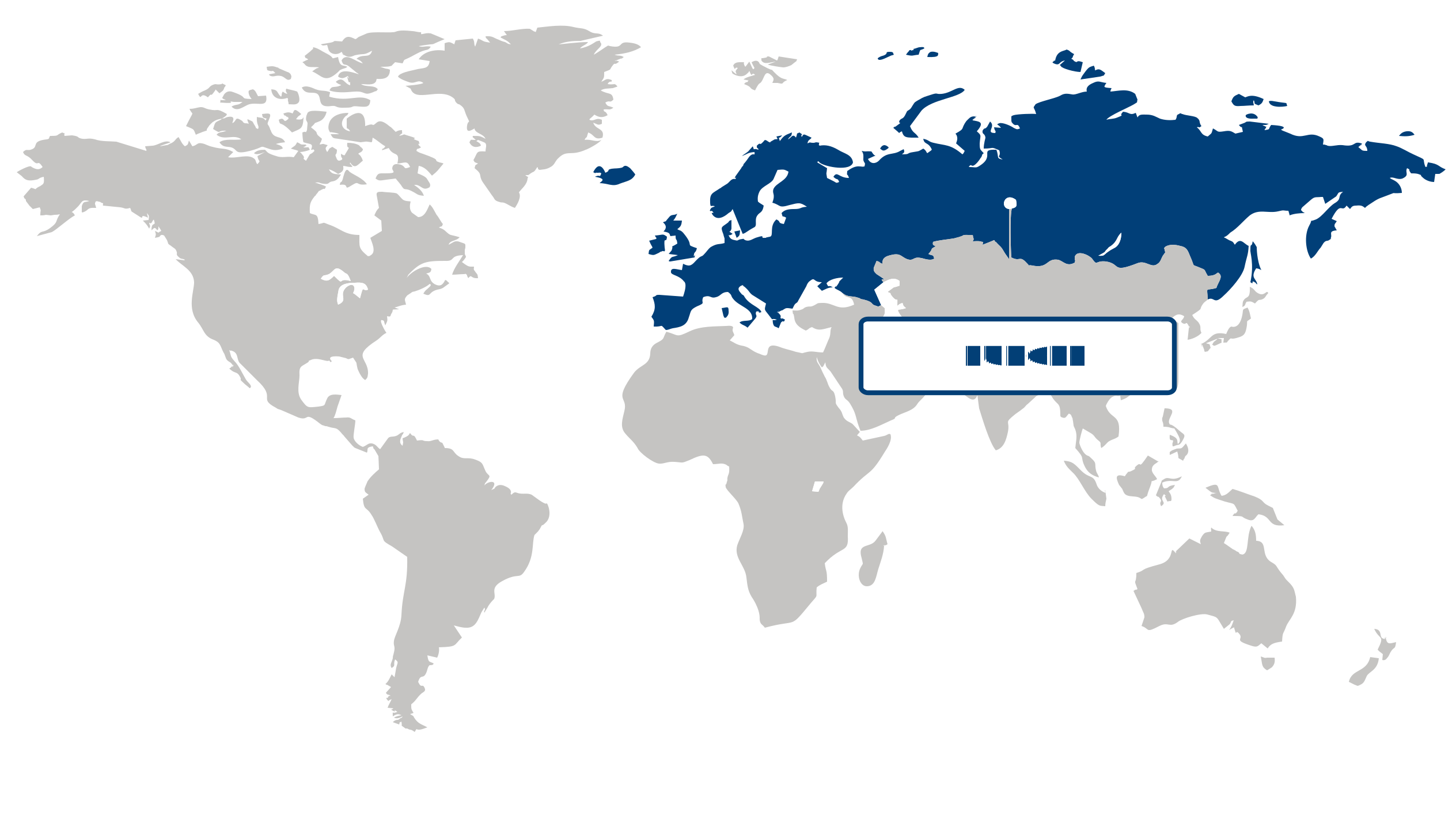
Largest Region
Europe
29.86% Market Share in 2026
Europe (Largest Region) vs Asia Pacific (Fastest-Growing Region)
Europe held the largest share of the kitchen knives market at 29.86% in 2026, supported by a strong culinary culture, established foodservice industry, and consumer preference for durable, precisely manufactured kitchen tools. Demand is reinforced by widespread home cooking, professional culinary applications, and interest in premium knives designed for performance and longevity. Well-developed specialty retail and e-commerce channels also provide consumers with access to a broad range of products, while growing attention to ergonomic designs, high-quality materials, and functional craftsmanship continues to support the region's market position.
Asia Pacific is emerging as the fastest-growing regional market, driven by urbanization, expanding household consumption, and the modernization of foodservice infrastructure. Rising disposable incomes are encouraging consumers to upgrade from basic kitchen tools toward products offering improved sharpness, durability, and ease of use. Growth in organized retail and online commerce is further widening product availability, while expanding restaurant, hospitality, and food-processing activities are creating additional demand. Increasing interest in home cooking and contemporary kitchen equipment is also supporting adoption across both developed and developing markets in the region.
Key Country Insights
Consumers in the U.S. are showing sustained interest in high-performance kitchen knives designed for home cooking and professional food preparation. Manufacturers are emphasizing ergonomic designs, premium materials, and direct-to-consumer sales channels to strengthen product differentiation.
Japan continues to attract demand for kitchen knives that combine traditional blade-making expertise with modern manufacturing techniques. Domestic and international buyers seek premium products recognized for precision, sharpness, and specialized culinary applications.
South Korea is experiencing growing interest in kitchen knives that complement modern cooking habits and premium kitchen equipment. Brands are introducing innovative materials and stylish designs while expanding online retail availability.
Germany maintains strong demand for durable kitchen knives that combine precision manufacturing with long product life. Buyers value craftsmanship and reliable cutting performance, encouraging suppliers to highlight material quality and functional design.
France supports demand for kitchen knives that meet the expectations of professional chefs and serious home cooks. Manufacturers are focusing on precision cutting performance, balanced handling, and premium craftsmanship aligned with culinary traditions.
Italy values kitchen knives that combine functional performance with refined design for household and professional culinary use. Suppliers are introducing premium collections featuring durable materials and craftsmanship that appeal to quality-focused consumers.
Segment Leadership and Growth Trends
Manufacturing Process Segment Analysis: Stamped Blades (Largest Segment) vs Hand Forged (Fastest-Growing Segment)
Stamped blades accounted for the largest share of the kitchen knives market, reaching 74.11% in 2026. Their widespread adoption is supported by efficient manufacturing, consistent blade dimensions, and suitability for producing kitchen knives at scale across a broad range of price points. Stamped production also allows manufacturers to maintain standardized designs and respond efficiently to large-volume consumer demand, making the process particularly relevant for mass-market kitchenware. Hand forged knives are the fastest-growing manufacturing process segment as consumers increasingly value craftsmanship, blade durability, distinctive construction, and premium culinary performance. Greater interest in specialized cooking tools and higher-quality kitchen equipment is encouraging demand for forged knives, particularly among users who place greater emphasis on craftsmanship and long-term usability.
Application Segment Analysis: Residential (Largest Segment) vs Commercial (Fastest-Growing Segment)
The residential segment led the kitchen knives market, holding a 59.85% share in 2026. Its substantial position is driven by the essential role of kitchen knives in everyday food preparation, ranging from basic household cooking to more specialized culinary activities. Rising interest in home cooking and greater consumer attention to kitchen equipment are supporting demand for knives that combine functionality, durability, and ease of use. Commercial applications are the fastest-growing segment as restaurants, hotels, catering operations, and institutional kitchens require reliable knives capable of withstanding frequent and intensive use. Expansion of foodservice activity and the increasing emphasis on professional kitchen efficiency are creating stronger demand for durable, performance-oriented kitchen tools in commercial environments.
| Report Segmentation | |||
| Segment | Sub-Segment | Largest Segment | Fastest Growing Segment |
|---|---|---|---|
| Manufacturing Process | Hand Forged, Stamped Blades | Stamped Blades | Hand Forged |
| Application | Residential, Commercial | Residential | Commercial |
| Distribution Channel | Direct Selling, Indirect Selling | Indirect Selling | Direct Selling |
| Cutting Edge | Plain, Granton, Serrated | Plain | Serrated |
| Price | Low (less Than USD 100), Medium (USD 100 – USD 200), High (above USD 200) | Low (less Than USD 100) | High (above USD 200) |
| Size | 3-5 Inches, 5-7 Inches, 7-9 Inches, 9-12 Inches | 5-7 Inches | 7-9 Inches |
 Read our Research Approach
Competitive Landscape and Market Positioning
Major players in the kitchen knives market:
1. Zwilling J.A. Henckels AG (Germany)
2. Victorinox AG (Switzerland)
3. Wüsthof GmbH (Germany)
4. Kyocera Corporation (Japan)
5. Friedr. Dick GmbH & Co. KG (Germany)
6. Dexter-Russell Inc. (United States)
7. MAC Knife Inc. (Japan)
8. Masamoto Sohonten Co. Ltd. (Japan)
9. Messermeister Inc. (United States)
10. Misen Inc. (United States)
The kitchen knives market is experiencing steady transformation driven by evolving culinary preferences and design innovation. In the kitchen knives market, emphasis is being placed on ergonomic handling and material performance improvements. Product differentiation is increasingly centered around durability and precision cutting efficiency. Consumer-driven demand for professional-grade tools in home kitchens is also influencing product development cycles.
Industry Development/News
| Company Name | Date | Key Development |
|---|---|---|
| Cuisine::pro | Nov-25 | Cuisine::pro expanded its U.S. retail distribution through a strategic partnership with Crate & Barrel. This collaboration strengthens the brand's footprint within the North American premium kitchenware segment, increasing product accessibility and enhancing market visibility among high-end home cooking consumers. |
| Victorinox | Apr-21 | Victorinox launched the Damast Bread- and Pastry Knife, utilizing multi-layered Damast steel technology. The product features an intricate "Thor" blade pattern, engineered to provide superior strength and corrosion resistance. This development underscores the company's commitment to material-led innovation and the commercialization of high-performance, durable cutlery solutions for the premium market. |
Why Choose Us
Specialized Expertise: Our team comprises industry experts with a deep understanding of your market segment. We bring specialized knowledge and experience that ensures our research and consulting services are tailored to your unique needs.
Customized Solutions: We understand that every client is different. That's why we offer customized research and consulting solutions designed specifically to address your challenges and capitalize on opportunities within your industry.
Proven Results: With a track record of successful projects and satisfied clients, we have demonstrated our ability to deliver tangible results. Our case studies and testimonials speak to our effectiveness in helping clients achieve their goals.
Cutting-Edge Methodologies: We leverage the latest methodologies and technologies to gather insights and drive informed decision-making. Our innovative approach ensures that you stay ahead of the curve and gain a competitive edge in your market.
Client-Centric Approach: Your satisfaction is our top priority. We prioritize open communication, responsiveness, and transparency to ensure that we not only meet but exceed your expectations at every stage of the engagement.
Continuous Innovation: We are committed to continuous improvement and staying at the forefront of our industry. Through ongoing learning, professional development, and investment in new technologies, we ensure that our services are always evolving to meet your evolving needs.
Value for Money: Our competitive pricing and flexible engagement models ensure that you get maximum value for your investment. We are committed to delivering high-quality results that help you achieve a strong return on your investment.
Select Licence Type

