Knife Market Size & Growth Forecast 2027–2036, By Segments (Type, Size, Material, Application, Distribution Channel), Regional Demand Trends (North America, Asia Pacific, Europe), Key Country Insights (U.S., Japan, South Korea, Germany, France, Italy), and Competitive Landscape
Jump to Content
Market Size and Growth Outlook
Knife Market size was assessed at USD 4.96 billion in 2026 and is poised to grow at a 6.78% CAGR between 2027 and 2036, exceeding USD 9.56 billion by 2036. The industry revenue for 2027 is estimated at USD 5.25 billion.
Get more details on this report
Request Free Sample ReportKnife Market Intelligence Snapshot
Regional Market Dynamics
- Europe accounted for 35.38% of the market in 2026, supported by strong culinary traditions, mature retail networks, professional foodservice demand, and consumer preference for durable, precision-designed products.
- Asia Pacific is growing fastest as rising disposable incomes, expanding e-commerce, increasing foodservice activity, and established manufacturing capabilities support demand across household, culinary, professional, and outdoor applications.
Segment Momentum
- Fixed blade knives accounted for 52.18% of the market in 2026, supported by durability, structural strength, and reliable performance. Their suitability for outdoor recreation, hunting, camping, and demanding professional cutting applications sustains their leading position.
- Folding blade knives are the fastest-growing type segment, benefiting from demand for compact, portable, and convenient cutting tools. Their space-saving designs, retractable blades, and improved locking mechanisms appeal to consumers seeking everyday carry products and versatile outdoor equipment.
Market Expansion Drivers
- Rising demand for professional and culinary knives.
- Innovation in materials and ergonomic designs.
- Regulatory safety standards for knives and cutlery.
Leading Market Participants
- Key companies in the knife market include Zwilling J.A. Henckels (Germany), Victorinox (Switzerland), Groupe SEB (France), Kai Group (Japan), Fiskars (Finland), Wüsthof (Germany), Tramontina (Brazil), Dexter-Russell (USA), MAC Knife (Japan), Cangshan (USA).
Global Market Forecast Snapshot
Market Outlook
- 2026 Market Size: USD 4.96 billion
- 2027 Estimated Market Size: USD 5.25 billion
- Projected Market Size: USD 9.56 billion by 2036
- Growth Forecast: 6.78% CAGR (2027-2036)
Regional and Segment Outlook
- Leading Regional Market: Europe
- High-Growth Regional Hub: Asia Pacific
- Core Revenue Segment: Type (Fixed Blade) | Size (6-9 Inches) | Material (Steel) | Application (Kitchen) | Distribution Channel (Supermarkets & Hypermarkets)
- Emerging Opportunity Segment: Type (Folding Blade) | Size (3-6 Inches) | Material (Ceramic) | Application (Outdoor/Survival/Hunting) | Distribution Channel (Supermarkets & Hypermarkets)
Market Growth Drivers and Industry Trends
Rising demand for professional and culinary knives
The rising demand for professional and culinary knives is supporting market growth as chefs, foodservice operators, and home cooks increasingly seek tools that offer precision, durability, and ease of handling. Growing interest in specialized cooking techniques and food preparation is encouraging consumers to use knives designed for specific tasks, including slicing, chopping, carving, and filleting. In addition, the expansion of professional foodservice activities and increasing consumer interest in home cooking are strengthening demand for high-quality cutlery that can provide consistent performance during frequent use.
Innovation in materials and ergonomic designs
Innovation in blade materials, handle construction, and ergonomic designs is driving the development of knives with improved sharpness, durability, balance, and user comfort. Manufacturers are increasingly incorporating advanced materials and design features that enhance resistance to corrosion, wear, and deformation while improving handling during prolonged use. Ergonomically designed handles and optimized blade profiles can also reduce hand fatigue and improve cutting control, making modern knives more suitable for both professional and household applications.
Regulatory safety standards for knives and cutlery
The implementation of safety standards for knives and cutlery is influencing product development and manufacturing practices by encouraging greater attention to material quality, construction, handling characteristics, and safe usage. Compliance requirements help establish consistent product specifications while supporting consumer protection and reducing risks associated with improper design or manufacturing. As regulatory oversight becomes more important across different applications and markets, manufacturers are placing greater emphasis on quality control, standardized production processes, and safety-focused product development.
| Growth Driver | Impact on CAGR | Regulatory Influence | Geographic Relevance | Adoption Rate | Impact Timeline |
|---|---|---|---|---|---|
| Rising demand for professional and culinary knives | 2.5% | Short term (≤ 2 yrs) | North America; Europe; spillover Asia Pacific | Low | Fast |
| Innovation in materials and ergonomic designs | 2.7% | Medium term (2–5 yrs) | North America; Europe; spillover Asia Pacific | Medium | Moderate |
| Regulatory safety standards for knives and cutlery | 1.5% | Long term (5+ yrs) | Europe; North America; spillover Asia Pacific | High | Slow |
Explore Growth Opportunities
Request Free Sample ReportRegional Demand Dynamics
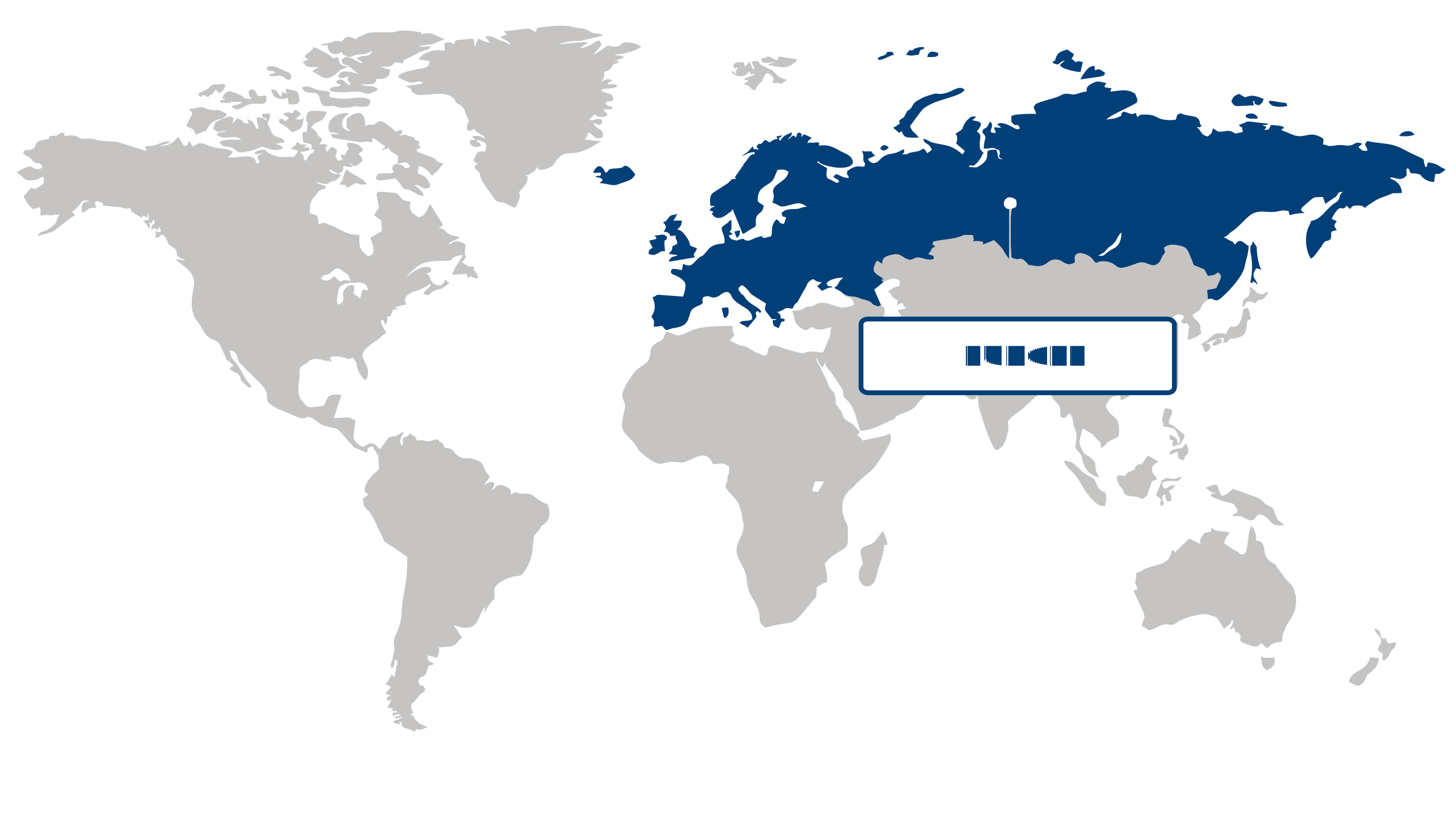
Europe (Largest Region)
Europe accounted for a 35.38% share of the knife market in 2026, supported by a well-established consumer base, strong culinary traditions, and sustained demand for high-quality cutting tools across household, professional, and specialized applications. The region benefits from a mature retail and distribution network, along with continued consumer interest in durable, precision-oriented, and ergonomically designed knives. Strong foodservice and hospitality sectors are also contributing to demand for professional-grade products, while established manufacturing capabilities and craftsmanship traditions support product differentiation and premium positioning. In addition, increasing interest in outdoor recreation, home cooking, and specialized utility applications is broadening demand across different knife categories. Product innovation focused on improved materials, durability, safety, and functional design is further supporting the region's market position.
Asia Pacific (Fastest-Growing Region)
Asia Pacific is emerging as the fastest-growing region in the knife market, impelled by expanding consumer markets, increasing urbanization, and rising demand for knives across culinary, household, professional, and outdoor applications. Growing foodservice activity and changing consumption patterns are supporting greater adoption of specialized kitchen and food-preparation products, while expanding retail and e-commerce channels are improving product accessibility across emerging economies. The region also benefits from established manufacturing capabilities and a broad supply ecosystem, enabling manufacturers to serve both domestic and international demand. Rising disposable incomes and growing consumer interest in premium, durable, and technologically advanced products are creating additional opportunities for market expansion. Furthermore, increasing participation in outdoor recreation and the development of modern culinary cultures are contributing to wider adoption across multiple end-use segments.
| Parameter | North America | Asia Pacific | Europe | Latin America | MEA |
|---|---|---|---|---|---|
| Innovation HubiScaleNascentDeveloping Advanced | |||||
| Cost-Sensitive RegioniScaleLowMedium High | |||||
| Regulatory EnvironmentiScaleRestrictiveNeutral Supportive | |||||
| Demand DriversiScaleWeakModerate Strong | |||||
| Development StageiScaleEmergingDeveloping Developed | |||||
| Adoption RateiScaleLowMedium High | |||||
| New Entrants / StartupsiScaleSparseModerate Dense | |||||
| Macro IndicatorsiScaleWeakStable Strong |
Key Country Insights
United States 🇺🇸
Diverse End-Use DemandThe U.S. knife market spans culinary, outdoor, sporting, household, and professional applications, creating distinct purchasing requirements across channels. Product differentiation increasingly centers on ergonomics, materials, durability, specialized functionality, and compliance with varying state and local restrictions affecting certain knife categories.
Germany 🇩🇪
Precision Culinary OrientationGermany's knife market benefits from strong demand for precision-oriented culinary and household products, alongside established outdoor and professional applications. Manufacturers and retailers compete through blade quality, ergonomic design, manufacturing credibility, and clear product positioning across specialist and general consumer channels.
Japan 🇯🇵
Craftsmanship-Driven BladesJapan's knife market places substantial commercial emphasis on blade performance, craftsmanship, culinary specialization, and product heritage. Demand spans professional and serious home cooking, supporting differentiated offerings based on steel characteristics, sharpening performance, blade geometry, handle design, and specialized culinary applications.
South Korea 🇰🇷
Premium Kitchen SpecializationSouth Korea's knife market is strongly connected to modern home cooking, professional food preparation, and premium kitchenware consumption. Commercial priorities include sharpness, ergonomic handling, contemporary design, and specialized kitchen formats, with brands using digital retail and culinary content to demonstrate product functionality.
France 🇫🇷
Professional Culinary HeritageFrance's knife market is closely tied to professional and home culinary use, where cutting performance, craftsmanship, ergonomics, and design remain important purchase considerations. Suppliers can differentiate through specialized chef formats, durable construction, premium presentation, and alignment with established culinary traditions.
Italy 🇮🇹
Design-Led Kitchen UtilityItaly's knife market combines everyday kitchen functionality with strong interest in product design and culinary performance. Commercial opportunities center on well-designed chef and household knives, differentiated materials, ergonomic construction, and premium presentation, while professional foodservice demand reinforces requirements for durability and dependable handling.
Knife Market Share (%), by Type, 2026
Go beyond the chart, access full insights & data tables
Request Free Sample ReportType Segment Analysis: Fixed Blade (Largest Segment) vs Folding Blade (Fastest-Growing Segment)
The fixed blade segment dominated the type segment of the knife market, accounting for a 52.18% market share in 2026, driven by its durability, structural strength, and suitability for demanding cutting applications. Fixed blade knives are widely used across outdoor activities, hunting, camping, survival applications, and professional environments where reliability and consistent performance are essential. Their one-piece construction provides greater structural stability and reduces the mechanical complexity associated with folding mechanisms, making them suitable for heavy-duty tasks. Additionally, their availability in diverse blade designs, materials, and handle configurations supports their adoption across consumer and professional applications. Growing interest in outdoor recreation, tactical equipment, and specialized cutting tools continues to sustain demand for fixed blade knives and protect their leading market share position.
The folding blade segment is projected to witness the fastest market share growth within the type segment in 2026 as consumers increasingly prefer compact, portable, and convenient cutting tools for everyday applications. Folding knives offer space-saving designs and enhanced portability, making them suitable for outdoor enthusiasts, travelers, hobbyists, and individuals seeking multipurpose tools. Their retractable blade mechanism also provides convenient storage and reduces the risk of accidental contact during transportation. Manufacturers are increasingly introducing ergonomic handles, improved locking mechanisms, lightweight materials, and innovative blade designs to enhance functionality and user convenience. Furthermore, growing demand for everyday carry products and compact outdoor equipment is encouraging the expansion of folding blade knife share across diverse consumer groups.
Size Segment Analysis: 6-9 Inches (Largest Segment) vs 3-6 Inches (Fastest-Growing Segment)
In 2026, the 6-9 inches segment accounted for the largest knife market share by size, holding 52.26%, supported by its versatility and suitability for a broad range of cutting applications. Knives within this size category provide a balance between cutting capacity, handling stability, and operational efficiency, making them appropriate for outdoor activities, professional use, food preparation, and general-purpose applications. Their relatively longer blades allow users to perform demanding cutting tasks while maintaining sufficient control across different applications. Additionally, the availability of multiple blade profiles and handle configurations within this size range supports its appeal among consumers seeking multifunctional cutting tools. The established use of medium-to-large knives across professional and recreational activities continues to contribute to the segment's leading market share in 2026.
The 3-6 inches segment is expected to experience the fastest growth in market share as consumers increasingly demand compact knives that offer convenience, portability, and ease of handling. Smaller knives are particularly suitable for everyday cutting requirements, household applications, outdoor recreation, and lightweight utility purposes. Their compact dimensions make them easier to carry and store, while their manageable blade length supports controlled cutting activities. Increasing interest in portable everyday carry tools and compact outdoor equipment is further encouraging market share growth for this size category in 2026. Manufacturers are also focusing on ergonomic designs, lightweight construction, and versatile blade configurations to improve usability across consumer applications. The growing preference for convenient, multifunctional products is expected to support the expansion of smaller knife market share.
Material Segment Analysis: Steel (Largest Segment) vs Ceramic (Fastest-Growing Segment)
The steel segment dominated the material segment, holding a 58.29% knife market share in 2026, primarily due to its established performance characteristics, durability, and suitability for diverse cutting applications. Steel blades offer a combination of strength, edge retention, toughness, and ease of manufacturing, making them widely preferred across household, professional, outdoor, and industrial applications. The availability of different steel compositions and grades allows manufacturers to develop knives with specific characteristics, including corrosion resistance, hardness, and cutting efficiency. Furthermore, established manufacturing infrastructure and broad consumer familiarity with steel knives support their widespread availability across different price categories. Continuous improvements in steel processing, heat treatment, and blade finishing technologies are further enhancing product performance and strengthening the segment's 2026 market share position.
The ceramic segment is anticipated to register the fastest growth in market share within the material segment as consumers increasingly seek lightweight, corrosion-resistant, and low-maintenance cutting tools. Ceramic blades offer high hardness and excellent resistance to chemical corrosion, making them suitable for applications where maintaining blade sharpness and preventing rust formation are important considerations. Their lightweight construction also enhances handling convenience, particularly in household and food preparation environments. Additionally, growing consumer awareness of alternative blade materials and increasing demand for specialized kitchen tools are encouraging the adoption of ceramic knives to gain share. Manufacturers are focusing on improving ceramic blade durability, edge design, and product aesthetics to expand their application potential. Advancements in material engineering and growing interest in specialized cutting solutions are expected to support the expansion of ceramic knife market share by 2026.
| Segment | Sub-Segment | Largest Segment | Fastest Growing |
|---|---|---|---|
| Type | Folding Blade, Fixed Blade, Side Slide | Fixed Blade | Folding Blade |
| Size | 3-6 Inches, 6-9 Inches, 9-12 Inches | 6-9 Inches | 3-6 Inches |
| Material | Steel, Titanium, Ceramic, Others | Steel | Ceramic |
| Application | Kitchen, Outdoor/Survival/Hunting, Tactical/Military, Others | Kitchen | Outdoor/Survival/Hunting |
| Distribution Channel | Supermarkets & Hypermarkets, Specialty Stores, Department Stores, Online/E-commerce, Others | Supermarkets & Hypermarkets | Supermarkets & Hypermarkets |
Unlock insights tailored to your business with our bespoke market research solutions.
Click to get your customized report now.
Competitive Landscape and Market Positioning
Analyst Perspective:
Competitive advantage in the knife market hinges on aligning advanced blade metallurgy and edge retention technologies with practical end-user requirements. While high-performance steel compositions and precise heat treatments enhance durability and sharpness, premium positioning requires balancing hardness with ease of maintenance and toughness. Handle design acts as a critical link between ergonomic function and product identity, dictating user comfort and control across intensive culinary, outdoor, or tactical settings. Ultimately, successful manufacturers establish brand credibility by tailoring task-specific blade profiles and grip geometries to distinct application segments rather than relying on broad, generalized performance claims.
Major players in the knife market:
- Zwilling J.A. Henckels (Germany)
- Victorinox (Switzerland)
- Groupe SEB (France)
- Kai Group (Japan)
- Fiskars (Finland)
- Wüsthof (Germany)
- Tramontina (Brazil)
- Dexter-Russell (USA)
- MAC Knife (Japan)
- Cangshan (USA)
| Company | Market Share | Company Revenue | Revenue CAGR (%) | Product Portfolio | Geographic Presence | Innovation / R&D Focus | Strategic Developments |
|---|---|---|---|---|---|---|---|
| Zwilling J.A. Henckels (Germany) | |||||||
| Victorinox (Switzerland) | |||||||
| Groupe SEB (France) | |||||||
| Kai Group (Japan) | |||||||
| Fiskars (Finland) | |||||||
| Wüsthof (Germany) | |||||||
| Tramontina (Brazil) | |||||||
| Dexter-Russell (USA) | |||||||
| MAC Knife (Japan) | |||||||
| Cangshan (USA) |
Industry Development/News
| Company Name | Date | Key Development |
|---|---|---|
| Montana Knife Company | June 2026 | Montana Knife Company launched its first folding knife, THE MONTANA, utilizing MagnaCut steel at a weight under 3 ounces. This release marks the company's strategic expansion from its established knife portfolio into the folding-knife category, broadening its product offering with a lightweight model featuring premium blade materials. |
| Work Sharp | June 2026 | Work Sharp introduced the Madrone EDC folding knife, featuring M390 steel, an integral aluminum handle, and manual-to-automatic conversion capability. Priced at $179.95, the release expands the company's premium folding-knife offering and incorporates high-performance materials aimed at the everyday carry segment. |
| Cold Steel | January 2026 | Cold Steel launched the revamped Mackinac Hunter and the 5-Max Scout knife models featuring AUS-10A stainless steel, ergonomic Micarta handles, and the proprietary Tri-Ad locking mechanism. The introduction blends traditional design with modern functional enhancements to target the hunting and utility cutting segments. |
| Victorinox | December 2025 | Victorinox launched a commercial knife line embedded with DataMatrix-Code traceability technology for the food and meat processing industries. The laser-engraved codes and serial numbers enable companies to track usage, cleaning cycles, and maintenance, as well as link knives to specific employees and workstations, enhancing operational control and supply chain accountability. |
| Leatherman | July 2025 | Leatherman launched a new line of top-tier folding and fixed-blade knives incorporating MagnaCut steel alongside G10 and stainless-steel handles. This product expansion strengthens the company's competitive position in the premium knife segment by combining high-performance materials with established blade designs. |
| Buck Knives | March 2024 | Buck Knives expanded its flagship retail store in Post Falls by doubling its physical size to accommodate an increased volume of products and services. The facility expansion enhances the company's retail footprint and product presentation capacity, supporting broader customer access to its knife portfolio. |
Customize Your Report
Explore examples of how this report can be tailored to different research needs, including custom segments, additional topics or chapters, and related reports. Click a section of the wheel or its numbered marker to explore the available options.
Knife Market — Custom Segments
| Segment | Sub-Segment |
|---|---|
| Price Tier | Economy, Mid-Range, Premium, Luxury |
| Buyer Segment | Consumer Buyers, Professional Users, Institutional Buyers, Specialized Collectors |
| Blade Edge Type | Plain Edge, Serrated Edge, Partially Serrated Edge |
Knife Market — Custom TOC
| Custom Chapter | Chapter Details |
|---|---|
| E-Commerce & Direct-to-Consumer Strategy |
|
| Aftermarket Sharpening & Maintenance Ecosystem |
|
| Counterfeit & Grey-Market Exposure |
|
Need a different cut of the data?
Request Custom ResearchFrequently Asked Questions
How much is the knife market worth?
How much is the knife industry expected to grow by 2036?
How are changing culinary practices influencing purchasing behavior in the knife market?
How are material innovations and safety standards shaping product development in the knife market?
Why do fixed blade knives hold the largest share of the knife market?
How are folding blade knives gaining market share in the knife market?
What makes Europe the leading market for knives?
Why is Asia Pacific experiencing rapid growth in the knife market?
What are the key competitors in the knife landscape?
Our Clients
"The report provided us with a clear direction, and the level of detail was beyond what we expected. I would definitely recommend their services to others."
Haier Appliances
"The collaboration with Fundamental Business Insights has added significant value to our decision-making process, and we look forward to continuing this partnership for our future market research requirements."
Luxottica Group S.p.A.
"The team at FBI delivered an exceptional research report. The insights on industry innovations were particularly impressive and added a lot of value to the overall report."
Nike
Our Research Team & Methodology
Every Fundamental Business Insights report is built by a dedicated vertical research team, validated through a structured primary-and-secondary methodology, and reviewed for accuracy before it reaches you.
This report was prepared by the Consumer Goods & Services Research Team at Fundamental Business Insights, a dedicated research group specializing in global consumer markets, retail industries, and service-oriented businesses. The team closely tracks evolving consumer preferences, purchasing behavior, product innovation, brand strategies, retail and e-commerce developments, pricing trends, distribution channels, sustainability initiatives, demographic shifts, and changing lifestyle patterns to deliver timely and reliable market intelligence. The research is developed using a structured methodology that combines primary discussions with manufacturers, brand owners, retailers, distributors, service providers, industry experts, and other key stakeholders, along with company annual reports, government consumer statistics, regulatory publications, industry associations, retail market data, trade publications, and other authoritative secondary sources. Market estimates are validated through multiple research techniques, including top-down and bottom-up analysis, before undergoing an internal quality review to ensure accuracy, consistency, and methodological integrity prior to publication.
Delivery
Published
Available
Support
- Market Size & Forecast
- Market Segmentation
- Regional Analysis
- Growth Drivers & Challenges
- Market Dynamics
- Competitive Landscape
- Company Profiles
- Competitive Benchmarking
- Mergers & Acquisitions
- Market Share Analysis or Key Company Strategies
- Value Chain Analysis
- Porter's Five Forces
- PESTLE Analysis
- Pricing Trends
- Supply-Demand Analysis
- Technology Landscape
- Regulatory Landscape
- Investment & Funding Landscape
- Emerging Opportunities
- Future Market Outlook