Laboratory Water Purifier Market Size & Forecasts 2026-2035, By Segments (Type, Application, End-user, Technology), Growth Opportunities, Innovation Landscape, Regulatory Shifts, Strategic Regional Insights (U.S., Japan, China, South Korea, UK, Germany, France), and Competitive Dynamics (MilliporeSigma, Sartorius, ELGA LabWater, Thermo Fisher Scientific, GE Healthcare)
Jump to content
Market Size and Growth Outlook
Laboratory Water Purifier Market size is expected to advance from USD 43.23 billion in 2025 to USD 139.14 billion by 2035, registering a CAGR of more than 12.4% across 2026-2035. By 2026, the industry is anticipated to generate USD 48.02 billion in revenue.
Get more details on this report
Request Free Sample ReportLaboratory Water Purifier Market Intelligence Snapshot
Regional Market Dynamics
Segment Momentum
Market Expansion Drivers
Leading Market Participants
Global Market Forecast Snapshot
Market Outlook
Regional and Segment Outlook
Market Growth Drivers and Industry Trends
The escalating requirement for ultra-pure water within pharmaceutical, biotechnology, and semiconductor laboratories is a critical driver in the laboratory water purifier market. Industry leaders like Merck KGaA emphasize stringent purity standards essential for sensitive applications, reinforcing the trend toward higher-grade purification systems. This demand reflects evolving consumer focus on product quality and reproducibility in research, pushing manufacturers to innovate robust purification solutions. For established players, this translates into opportunities to differentiate through advanced filtration technologies and validation services, while new entrants can capitalize on niche ultra-pure market segments. With regulatory bodies such as the U.S. Pharmacopeia tightening water quality norms, the laboratory water purifier market is set to experience sustained interest in high-performance systems aligned with these elevated purity benchmarks.
Technological Advancements in Water Purification
Continuous innovation in membrane filtration, UV treatment, and sensor integration is transforming the laboratory water purifier market, enabling more efficient and reliable purification processes. Companies like ELGA LabWater have recently introduced modular solutions with smart monitoring systems that optimize water usage and maintenance alerts, responding to growing customer preferences for operational efficiency and sustainability. These technological strides appeal widely in research-intensive sectors demanding precise water quality with minimal downtime. The competitive landscape favors incumbents with R&D capabilities to integrate digital diagnostics and energy-efficient components, while startups can leverage agility to introduce disruptive technologies. Institutional endorsements from entities like the Environmental Protection Agency (EPA) on green water technologies further bolster market expansion toward next-generation purification innovation.
Emerging Market Laboratory Expansion
Rapid development of research infrastructure in emerging economies is driving growth in the laboratory water purifier market through increased laboratory installations and upgrades. Governments in regions like Southeast Asia and Latin America, including Brazil's Ministry of Science and Technology, have significantly boosted investments in pharmaceutical research and quality control labs, stimulating demand for reliable water purification systems. This infrastructural expansion aligns with rising science education standards and industrial diversification efforts, creating broader laboratory water needs. Market players can exploit this by tailoring cost-effective, scalable solutions suitable for diverse local regulatory environments and infrastructure constraints. The noticeable shift in global R&D hubs signals enduring opportunities in these geographies as scientific innovation ecosystems mature, progressively demanding sophisticated laboratory water purification equipment.
Industry Restraints:
Regulatory Compliance Complexity
The evolving and stringent regulatory landscape poses a significant barrier for laboratory water purifier manufacturers. Compliance with standards such as ISO 3696 and USP Purified Water standards demands rigorous validation and ongoing quality assurance, increasing operational costs and elongating product development cycles. For instance, the U.S. Food and Drug Administration (FDA) and the European Medicines Agency (EMA) frequently update water quality guidelines, necessitating continuous adaptation from manufacturers. This complexity slows innovation, as companies must allocate substantial resources toward certification processes rather than accelerating feature enhancements. Both established firms and new entrants encounter elevated entry barriers, limiting market agility and reducing competitiveness. Moving forward, regulatory pressures will likely intensify, compelling market players to invest heavily in compliance infrastructure, potentially favoring those with robust regulatory expertise and delaying the adoption of novel purification technologies.
Supply Chain Disruptions and Component Shortages
Persistent supply chain disruptions significantly constrain production capacity and delivery timelines for laboratory water purifiers. Components such as advanced filtration membranes and ultraviolet lamps face frequent shortages, as highlighted by the International Ultrapure Water Association’s recent analysis of critical raw material bottlenecks. These constraints elevate procurement costs and cause inventory unpredictability, impeding manufacturers’ ability to meet growing demand from research institutions and healthcare providers. Larger companies benefit from diversified supplier networks, but smaller vendors and startups often struggle with limited bargaining power, increasing market consolidation risk. As geopolitical tensions and logistical challenges persist, supply chain vulnerabilities will remain a critical bottleneck, urging market participants to develop resilient sourcing strategies and consider vertical integration to stabilize production and maintain competitive delivery schedules.
| Growth Driver | Impact on CAGR | Regulatory Influence | Geographic Relevance | Adoption Rate | Impact Timeline |
|---|---|---|---|---|---|
| Increasing demand for ultra-pure laboratory water | 4.50% | Short term (≤ 2 yrs) | North America, Europe | Medium | Fast |
| Advancements in water purification technologies | 4.00% | Medium term (2–5 yrs) | North America, Asia Pacific | Medium | Moderate |
| Expansion of laboratory setups in emerging markets | 4.00% | Long term (5+ yrs) | Asia Pacific, Latin America | Low | Moderate |
Unlock insights tailored to your business with our bespoke market research solutions.
Click to get your customized report now.
Regional Demand Dynamics
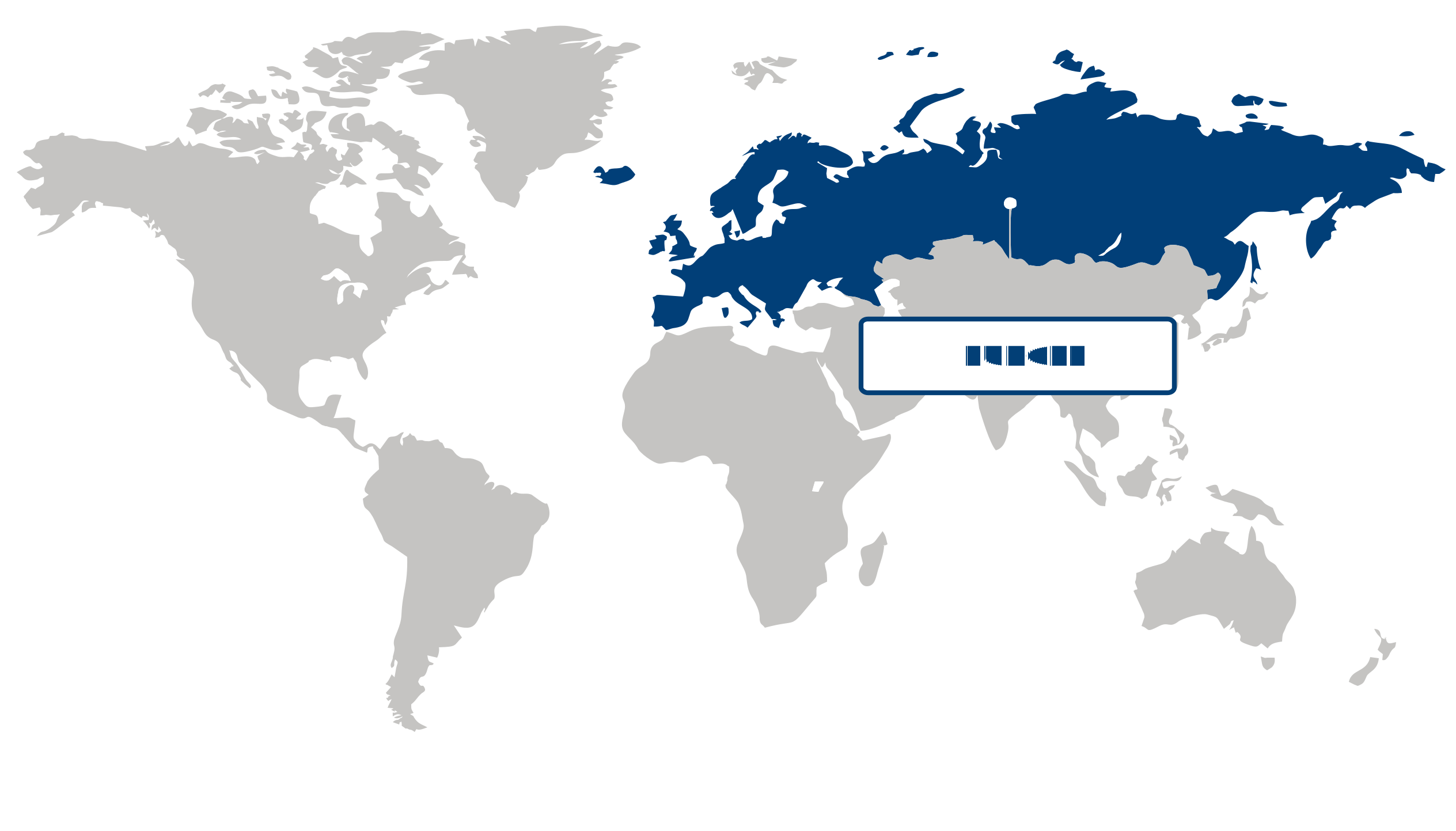
Europe captured over 32% of the global laboratory water purifier market in 2025, emerging as the largest regional player. The region's dominance is primarily driven by stringent regulatory standards for water quality in clinical research, which elevate demand for advanced purification systems. Regulatory frameworks, such as those enforced by the European Medicines Agency (EMA), mandate high-purity water for pharmaceutical and biotechnology applications, prompting hospitals and research institutions to invest heavily in cutting-edge water purification technologies. Additionally, Europe’s emphasis on sustainability and innovation fosters rapid adoption of energy-efficient and digitalized purification solutions, further bolstering market growth. Leading companies like Sartorius AG and ELGA LabWater, headquartered in Europe, continuously innovate to meet these elevated standards. Looking ahead, the convergence of strict compliance requirements and technological progress positions Europe as a fertile ground for expanding laboratory water purifier market opportunities.
Germany anchors the European laboratory water purifier market, capitalizing on its robust pharmaceutical and biotechnology sectors. The German Federal Institute for Drugs and Medical Devices (BfArM) enforces rigorous water quality mandates in clinical and industrial laboratories, accelerating demand for sophisticated purification systems. Germany-based firms, including Merck KGaA, actively promote integrated water purification solutions that align with regulatory prescriptions and sustainability goals. Meanwhile, France plays a critical role with its strong focus on clinical research and healthcare infrastructure modernization. Regulatory oversight by the National Agency for the Safety of Medicines and Health Products (ANSM) ensures consistent demand for high-grade laboratory water purifiers in French pharmaceutical labs. These country-specific dynamics reinforce Europe’s leadership by exemplifying how localized regulatory rigor and industry innovation collectively drive the regional laboratory water purifier market forward.
Asia Pacific Market Analysis:
Asia Pacific emerged as the fastest-growing region in the laboratory water purifier market, registering a robust CAGR of 14.4%. The market expansion is notably driven by substantial investments in the semiconductor and pharmaceutical sectors across the region. These industries demand ultrapure water for manufacturing and research processes, fueling the adoption of advanced water purification technologies. The region’s ongoing emphasis on high-tech manufacturing hubs and pharmaceutical innovation, supported by government initiatives and private sector funding, strengthens demand for reliable, high-performance purification systems. For example, the Semiconductor Industry Association of Japan has highlighted increased capital expenditures in fabrication plants, which underscores growing water purification needs. Looking ahead, Asia Pacific's combination of robust industrial growth, innovation-driven ecosystems, and increasing environmental standards positions it as a pivotal market offering significant opportunities for suppliers of laboratory water purifiers.
Japan plays a critical role within Asia Pacific’s laboratory water purifier market, driven by its leading semiconductor manufacturing and pharmaceutical research capabilities. The country’s stringent quality standards and regulatory frameworks, such as the Pharmaceuticals and Medical Devices Agency (PMDA) guidelines, mandate rigorous water purification processes, boosting demand for state-of-the-art purifiers. Japan’s industrial landscape, marked by companies like Toshiba and Takeda Pharmaceutical, emphasizes precision and consistency, which further propels investments in cutting-edge laboratory water purification solutions. Additionally, Japan’s commitment to sustainability and digital transformation in manufacturing aligns with the introduction of IoT-enabled purification systems, elevating operational efficiencies. This strategic environment enables Japan to reinforce Asia Pacific’s dominance in the market.
China’s laboratory water purifier market is propelled by escalating investments in both semiconductor fabrication and pharmaceutical sectors, underpinning the region’s overall growth momentum. China’s aggressive expansion of semiconductor wafer fabs, supported by government initiatives like the "Made in China 2025" plan, creates a burgeoning need for ultrapure water essential to chip production. Concurrently, the country’s fast-growing pharmaceutical industry, exemplified by companies such as Sinopharm, prioritizes high-quality water purification to meet regulatory compliance and global supply chain standards. China’s evolving regulatory landscape, along with advancements in automation and supply chain modernization, further accelerates purifier adoption. These dynamics in China amplify Asia Pacific’s market potential, reinforcing the region as a critical hub for laboratory water purification solutions to meet high-growth industrial demands.
North America Market Trends:
North America held a substantial share in the laboratory water purifier market, driven by its robust healthcare infrastructure and advanced research ecosystems. Increasing investment in biotechnology and pharmaceutical sectors coupled with stringent regulatory standards from agencies like the U.S. Food and Drug Administration (FDA) have heightened the demand for high-purity water solutions. Additionally, rising sustainability priorities and digital integration in laboratory operations are fostering innovation in water purification technologies, as evidenced by MilliporeSigma’s recent launch of eco-friendly purification systems. The region’s well-established supply chains and skilled workforce further enhance its competitive landscape. Looking ahead, North America’s strong emphasis on precision research and environmental compliance positions it as a key market with durable growth potential in laboratory water purification.
The U.S. dominates North America’s laboratory water purifier market, propelled by its extensive network of academic laboratories and pharmaceutical companies prioritizing water quality and compliance. The country’s regulatory rigor through the Environmental Protection Agency (EPA) and the FDA ensures adoption of advanced purification systems meeting the highest standards. Companies like Sartorius Stedim Biotech have capitalized on this environment by introducing cutting-edge, user-friendly water purification units tailored for clinical and research labs. Such innovation, combined with widespread digital transformation in laboratory management, underscores the U.S. as a critical innovation hub. This leadership reinforces North America’s regional opportunities, as ongoing technological evolution in the U.S. cascades across neighboring markets, fostering broader adoption of sophisticated laboratory water purification solutions.
| Parameter | North America | Asia Pacific | Europe | Latin America | MEA |
|---|---|---|---|---|---|
| Innovation HubiScaleNascentDeveloping Advanced | |||||
| Cost-Sensitive RegioniScaleLowMedium High | |||||
| Regulatory EnvironmentiScaleRestrictiveNeutral Supportive | |||||
| Demand DriversiScaleWeakModerate Strong | |||||
| Development StageiScaleEmergingDeveloping Developed | |||||
| Adoption RateiScaleLowMedium High | |||||
| New Entrants / StartupsiScaleSparseModerate Dense | |||||
| Macro IndicatorsiScaleWeakStable Strong |
Laboratory Water Purifier Market Share (%), by Type, 2026
Go beyond the chart, access full insights & data tables
Request Free Sample ReportType I (Ultrapure) held the largest share in the laboratory water purifier market in 2025, driven by escalating demand for ultrapure water in high-precision pharmaceutical and biotech research. This segment’s leadership stems from stringent purity requirements critical for sensitive analytical applications and biotechnological processes. Global pharmaceutical firms such as Pfizer and Biogen underscore the necessity for ultrapure water compliant with USP guidelines, reinforcing this segment's prominence. Furthermore, advancements in purification technology and the tightening of regulatory standards by authorities like the U.S. FDA contribute to its growth. This segment presents strategic value for established players focusing on innovation and for emerging firms targeting niche high-purity markets. Given continuous advancements in pharmaceutical R&D and increasing regulatory scrutiny, Type I ultrapure water purifiers are poised to remain essential in the near to medium term.
Analysis by Application
Clinical laboratories represented the largest share of the laboratory water purifier market owing to the surge in clinical diagnostics activity requiring high-quality purified water. The segment benefits from growing demand for reliable diagnostic testing, especially amidst expanding healthcare screening programs worldwide. Organizations such as the CDC emphasize stringent quality control in diagnostic sample preparation, which underpins the preference for advanced water purification solutions. Moreover, the rising trend of decentralizing diagnostic services and the shift towards laboratory automation have reinforced demand patterns within this segment. For market participants, clinical labs offer opportunities to deploy systems tailored for high throughput and compliance-driven environments. Continuous advancements in diagnostic technologies and the evolving regulatory landscape ensure the sustained relevance of the clinical laboratories segment.
Analysis by End-user
Hospitals commanded the largest share in the laboratory water purifier market, fueled by expanding healthcare facility research and testing capacities. This segment leads due to hospitals' multifaceted needs, ranging from patient diagnostics to clinical research and pharmaceutical compounding, demanding stringent water quality standards. Influential institutions like the Mayo Clinic exemplify comprehensive in-house laboratory and research capabilities requiring dependable water purification infrastructure. Moreover, increasing hospital investments in digital transformation and automation enhance the demand for integrated purification systems. This segment provides a competitive platform for suppliers emphasizing reliability and service excellence. The expanding role of hospitals in both clinical and translational research, supported by ongoing healthcare modernization efforts, positions this segment for continued growth in the foreseeable future.
| Segment | Sub-Segment | Largest Segment | Fastest Growing |
|---|---|---|---|
| Type | Type I (Ultrapure), Type II (Pure), Type III (RO Water) | ||
| Application | Clinical Laboratories, Research Laboratories, Pharmaceutical & Biotech Companies, Academic Institutes | ||
| End-user | Hospitals, Diagnostic Labs, Research Centers, Universities | ||
| Technology | Reverse Osmosis, Ion Exchange, UV, Ultrafiltration, Combination |
Competitive Landscape and Market Positioning
The competitive environment is marked by a dynamic interplay of new product rollouts, technology enhancement, and strategic agreements. For instance, several top companies have broadened their purification technology portfolio, incorporating digital monitoring and IoT connectivity to improve system reliability. Collaborative endeavors and acquisitions have expedited entry into emerging markets and niche segments, reinforcing their competitive posture. Investments in advanced filtration membranes and energy-efficient designs underscore a commitment to sustainability and performance. This active landscape encourages differentiation through innovation, enabling firms to better address stringent laboratory water quality regulations and evolving user requirements. Such initiatives collectively intensify market competition while elevating overall product sophistication.
Strategic / Actionable Recommendations for Regional Players
In North America, aligning with biotechnology and pharmaceutical clusters could unlock avenues for tailored water purification solutions that meet complex regulatory and operational demands. Adopting smart diagnostic technologies and predictive maintenance capabilities can enhance system uptime, fostering greater user confidence in critical laboratory applications.
In Asia Pacific, forming alliances with local research institutions and technology providers may accelerate adoption of cutting-edge purification methods across rapidly expanding laboratory infrastructures. Emphasizing cost-effective, modular systems could meet diverse application needs while appealing to budget-conscious end-users.
Within Europe, investing in sustainability-oriented innovations that reduce chemical usage and energy consumption would resonate with stringent environmental policies. Collaborations focused on digital water quality analytics can sharpen competitive edge by enabling proactive system management and compliance assurance.
| Company | Market Share | Company Revenue | Revenue CAGR (%) | Product Portfolio | Geographic Presence | Innovation / R&D Focus | Strategic Developments |
|---|---|---|---|---|---|---|---|
| No companies available. | |||||||
Customize Your Report
Explore examples of how this report can be tailored to different research needs, including custom segments, additional topics or chapters, and related reports. Click a section of the wheel or its numbered marker to explore the available options.
Laboratory Water Purifier Market — Custom Segments
| Segment | Sub-Segment |
|---|---|
| No segment data available. | |
Laboratory Water Purifier Market — Custom TOC
| Custom Chapter | Chapter Details |
|---|---|
| No custom TOC data available. | |
Need a different cut of the data?
Request Custom ResearchFrequently Asked Questions
What is the projected value of the laboratory water purifier industry by 2035?
In which region is the laboratory water purifier market most concentrated?
Where has the laboratory water purifier sector recorded the sharpest year-over-year increase?
Why does type I (ultrapure) sub-segment dominate the type segment of laboratory water purifier sector?
How much is the clinical laboratories segment expected to grow in the laboratory water purifier industry beyond 2025?
What factors give hospitals segment a competitive edge in the laboratory water purifier sector?
Which is the largest sub-segment within the technology segment for laboratory water purifier industry?
What are the prominent companies operating in the laboratory water purifier landscape?
Our Clients
"The team took the time to understand our specific business needs and delivered a report that was well aligned with our objectives. Their expertise and understanding of the industry were clearly reflected in the quality and relevance of the insights provided."
Siemens Healthcare
"Our experience in acquiring the research report has been excellent. The depth of analysis, and actionable insights provided have been extremely valuable in supporting our ongoing R&D efforts."
GC Biopharma
"The report offered a comprehensive view of the market trends. The in-depth segmentation and analysis of emerging opportunities gave us a better understanding of the market."
Medtronic
Our Research Team & Methodology
Every Fundamental Business Insights report is built by a dedicated vertical research team, validated through a structured primary-and-secondary methodology, and reviewed for accuracy before it reaches you.
Delivery
Published
Available
Support
- Market Size & Forecast
- Market Segmentation
- Regional Analysis
- Growth Drivers & Challenges
- Market Dynamics
- Competitive Landscape
- Company Profiles
- Competitive Benchmarking
- Mergers & Acquisitions
- Market Share Analysis or Key Company Strategies
- Value Chain Analysis
- Porter's Five Forces
- PESTLE Analysis
- Pricing Trends
- Supply-Demand Analysis
- Technology Landscape
- Regulatory Landscape
- Investment & Funding Landscape
- Emerging Opportunities
- Future Market Outlook