Landfill Mining Market Size & Growth Forecast 2027–2036, By Segments (Material Recovery, Landfill Type), Regional Demand Trends (North America, Asia Pacific, Europe), Key Country Insights (U.S., Japan, South Korea, Germany, France, Italy), and Competitive Landscape
Jump to Content
Market Size and Growth Outlook
Landfill Mining Market size was more than USD 187.52 million in 2026 and is set to grow at a 4.43% CAGR between 2027 and 2036, surpassing USD 289.27 million by 2036. The industry revenue for 2027 is assessed at USD 194.44 million.
Get more details on this report
Request Free Sample ReportLandfill Mining Market Intelligence Snapshot
Regional Market Dynamics
- Europe accounted for 41.26% of the market in 2026, supported by established waste management infrastructure, strong environmental policies, and circular economy initiatives promoting resource recovery and landfill remediation.
- Asia Pacific is expected to grow fastest as urbanization, rising waste generation, land constraints, and waste management modernization increase demand for material recovery, landfill remediation, and improved resource efficiency.
Segment Momentum
- Organics account for 56.86% of market share in 2026, supported by their substantial presence in municipal landfill waste. Their recovery helps reduce disposal volumes, supports landfill remediation, and aligns with circular economy and waste diversion objectives.
- Metals are the fastest-growing material recovery segment, driven by their recyclability, established recovery value, and demand for secondary raw materials. Improvements in sorting, screening, and separation technologies are helping operators extract valuable metals while reducing waste requiring final disposal.
Market Expansion Drivers
- Rising environmental concerns and landfill waste management.
- Technological advancements in landfill mining and recycling.
- Government incentives and regulations for waste recovery.
Leading Market Participants
- Leading companies in the landfill mining market include Biogas Technology (USA), Clarke Hazardous Waste (USA), Condorchem Envitech (Spain), Dressta (Poland), Edaphic Scientific (USA), Landsaver Environmental (USA), ISCO Industries (USA), ETW Energietechnik (Germany), Envirofix (UK), Golder Associates (Canada).
Global Market Forecast Snapshot
Market Outlook
- 2026 Market Size: USD 187.52 million
- 2027 Estimated Market Size: USD 194.44 million
- Projected Market Size: USD 289.27 million by 2036
- Growth Forecast: 4.43% CAGR (2027-2036)
Regional and Segment Outlook
- Leading Regional Market: Europe
- High-Growth Regional Hub: Asia Pacific
- Core Revenue Segment: Material Recovery (Organics) | Landfill Type (Municipal Solid Waste)
- Emerging Opportunity Segment: Material Recovery (Metals) | Landfill Type (Municipal Solid Waste)
Market Growth Drivers and Industry Trends
Rising environmental concerns and landfill waste management
Rising environmental concerns surrounding aging landfills, land scarcity, soil contamination, and methane emissions are increasing interest in landfill mining as an alternative waste management approach. Excavating and processing legacy landfill materials can help recover recyclable resources, reduce the long-term environmental burden of waste deposits, and create opportunities for land reclamation. Growing emphasis on circular waste management is encouraging municipalities and waste operators to evaluate landfill sites as potential sources of recoverable materials.
Technological advancements in landfill mining and recycling
Technological advancements in excavation, material separation, sorting, screening, and recycling are improving the feasibility of landfill mining operations. Modern processing systems can help distinguish recyclable materials, combustible fractions, soil-like material, and other recoverable components from heterogeneous landfill deposits. Improvements in automated sorting, material characterization, and resource recovery are supporting more efficient processing while enabling operators to address complex waste compositions and improve the overall value of recovered materials.
Government incentives and regulations for waste recovery
Government incentives and regulations promoting waste recovery are supporting the development of landfill mining projects by encouraging resource conservation, landfill remediation, and circular economy practices. Policies focused on reducing landfill dependence, increasing material recovery, and improving environmental management are creating stronger incentives to extract useful resources from existing waste deposits. Regulatory support can also encourage investment in remediation technologies and recovery infrastructure while helping integrate landfill mining into broader municipal waste management strategies.
| Growth Driver | Impact on CAGR | Regulatory Influence | Geographic Relevance | Adoption Rate | Impact Timeline |
|---|---|---|---|---|---|
| Rising environmental concerns and landfill waste management | 1.5% | Short term (≤ 2 yrs) | North America; Europe; Spillover: Asia Pacific | Medium | Fast |
| Technological advancements in landfill mining and recycling | 1.5% | Medium term (2–5 yrs) | Europe; Asia Pacific | Low | Moderate |
| Government incentives and regulations for waste recovery | 1.31% | Long term (5+ yrs) | North America; Europe | High | Moderate |
Explore Growth Opportunities
Request Free Sample ReportRegional Demand Dynamics
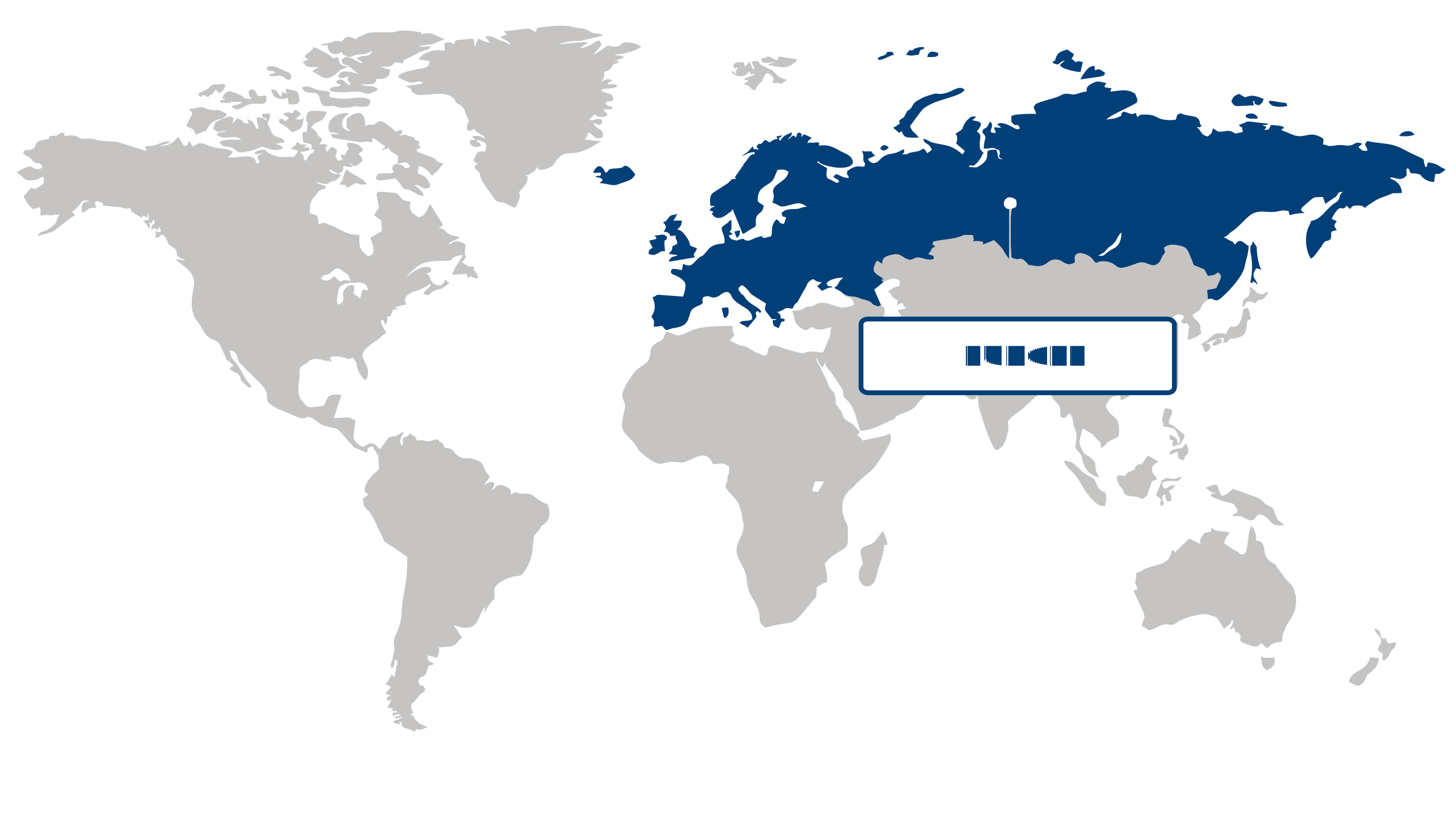
Europe (Largest Region)
Europe accounted for a 41.26% share in 2026, backed by strong environmental policies, established waste management infrastructure, and growing emphasis on resource recovery and circular economy practices. Landfill mining is increasingly being viewed as a means of recovering valuable materials from legacy waste deposits while addressing the environmental and land-use challenges associated with older landfill sites. The region’s focus on reducing landfill dependency and improving material recovery is encouraging waste management authorities and operators to explore technologies that can excavate, sort, process, and reuse materials contained within existing landfills. Growing awareness of resource scarcity is also strengthening interest in recovering recyclable materials and other usable resources from historical waste streams. Furthermore, European sustainability initiatives are encouraging greater integration of landfill remediation with broader waste recovery strategies, creating opportunities for advanced sorting, processing, and material separation technologies.
Asia Pacific (Fastest-Growing Region)
Asia Pacific is expected to witness the fastest growth in the landfill mining market, driven by rapid urbanization, increasing waste generation, land constraints, and the need to modernize waste management systems. Expanding cities are placing greater pressure on available landfill capacity, encouraging governments and waste management organizations to explore alternatives that can recover materials while extending the useful life of existing waste management infrastructure. Landfill mining can also support remediation of older disposal sites by enabling the recovery of recyclable materials and facilitating the redevelopment or improved management of previously used landfill areas. Rising awareness of resource efficiency and circular economy principles is encouraging greater interest in extracting reusable materials from accumulated waste rather than relying solely on conventional disposal practices. In addition, improvements in waste sorting, excavation, separation, and processing technologies are creating opportunities to make landfill mining more practical across developing waste management systems. Increasing policy attention toward sustainable waste disposal and resource recovery is further supporting the adoption of landfill mining approaches throughout the region.
| Parameter | North America | Asia Pacific | Europe | Latin America | MEA |
|---|---|---|---|---|---|
| Innovation HubiScaleNascentDeveloping Advanced | |||||
| Cost-Sensitive RegioniScaleLowMedium High | |||||
| Regulatory EnvironmentiScaleRestrictiveNeutral Supportive | |||||
| Demand DriversiScaleWeakModerate Strong | |||||
| Development StageiScaleEmergingDeveloping Developed | |||||
| Adoption RateiScaleLowMedium High | |||||
| New Entrants / StartupsiScaleSparseModerate Dense | |||||
| Macro IndicatorsiScaleWeakStable Strong |
Key Country Insights
United States 🇺🇸
Resource Recovery FocusThe U.S. landfill mining market is centered on recovering metals, recyclables, and usable land from mature waste sites. Project priorities include advanced sorting technologies, landfill redevelopment, environmental remediation, and improved material recovery economics, with municipal and private operators assessing opportunities to combine resource recovery with long-term site management.
Germany 🇩🇪
Circular Resource RecoveryGermany is prioritizing landfill mining where material recovery can complement established recycling and waste-management systems. Projects emphasize selective excavation, high-efficiency sorting, remediation, and recovery of secondary raw materials, while stringent environmental requirements encourage technologies capable of minimizing disturbance and managing contaminated or heterogeneous landfill materials safely.
Japan 🇯🇵
Landfill Capacity OptimizationJapan is examining landfill mining as a means of extending the value and usable capacity of constrained disposal sites. Priorities include recovering recyclable materials, reducing residual waste volumes, and supporting site redevelopment, with technology selection emphasizing controlled excavation, precise separation, environmental safeguards, and efficient handling of heterogeneous waste streams.
South Korea 🇰🇷
Urban Land RecoverySouth Korea is exploring landfill mining in the context of resource recovery and constrained urban waste infrastructure. Market priorities include extracting valuable materials, reducing landfill footprints, and enabling redevelopment of recovered sites, supported by automated sorting and processing technologies that can improve recovery efficiency while controlling environmental and operational risks.
France 🇫🇷
Landfill Remediation IntegrationFrance is integrating landfill mining concepts with broader waste remediation, recycling, and land-reuse initiatives. Commercial priorities include recovering secondary materials from legacy sites, improving site environmental performance, and preparing land for alternative uses, creating demand for excavation, sorting, treatment, and monitoring solutions suited to complex historical waste deposits.
Italy 🇮🇹
Legacy Site RecoveryItaly presents opportunities for landfill mining through remediation of legacy disposal sites and recovery of potentially valuable materials. Project priorities include selective excavation, material separation, environmental risk reduction, and land restoration, with operators seeking economically viable approaches that can address heterogeneous waste deposits while supporting broader circular-economy objectives.
Landfill Mining Market Share (%), by Material Recovery, 2026
Go beyond the chart, access full insights & data tables
Request Free Sample ReportMaterial Recovery Segment Analysis: Organics (Largest Segment) vs Metals (Fastest-Growing Segment)
Organics represent the dominant material recovery segment, accounting for a 56.86% share of the market in 2026, supported by their substantial presence in municipal landfill waste streams and the growing emphasis on recovering biodegradable materials from legacy waste. Landfill mining enables the extraction and processing of organic-rich materials alongside other recoverable fractions, helping reduce the volume of waste requiring further disposal while supporting resource recovery and waste diversion objectives. Increasing focus on landfill remediation, circular economy practices, and improved waste management efficiency is encouraging greater attention toward recovering usable materials from accumulated waste. The recovery of organics can also complement broader resource management strategies by reducing landfill dependency and creating opportunities for subsequent processing or treatment, particularly in regions seeking to improve the environmental performance of existing landfill sites.
Metals are expected to be the fastest-growing material recovery segment, driven by their high recoverability, established recycling value, and increasing focus on extracting commercially useful resources from previously discarded waste. Landfill mining provides an opportunity to recover ferrous and non-ferrous materials that may have accumulated within older waste deposits, creating additional resource streams while reducing the quantity of material left for final disposal. Advances in sorting, screening, separation, and material-processing technologies are improving the efficiency of metal recovery and making landfill-based resource extraction more practical. Rising demand for secondary raw materials and growing interest in reducing reliance on virgin resources are further supporting the adoption of metal recovery processes. These factors are strengthening the role of metals in landfill mining projects and encouraging greater investment in technologies capable of efficiently separating valuable metallic fractions from complex waste streams.
Landfill Type Segment Analysis: Municipal Solid Waste (Largest & Fastest-Growing Segment)
Municipal solid waste represents the dominant landfill type segment, accounting for a 56.65% share of the market in 2026, while also emerging as the fastest-growing segment due to the large volumes of household and commercial waste historically deposited in municipal landfills. These sites contain diverse material streams, including organic matter, metals, plastics, construction-related residues, and other recoverable resources, creating significant opportunities for systematic landfill mining and material recovery. Growing pressure to address landfill capacity constraints, remediate aging disposal sites, and recover resources from existing waste deposits is encouraging municipalities to explore landfill mining as part of broader waste management strategies. The increasing adoption of circular economy principles is also shifting attention from landfilling toward recovering materials already embedded in waste infrastructure. Improvements in excavation, screening, sorting, and separation technologies are further supporting the feasibility of processing municipal landfill deposits, strengthening demand for landfill mining activities across this segment.
| Segment | Sub-Segment | Largest Segment | Fastest Growing |
|---|---|---|---|
| Material Recovery | Metals, Plastic, Organics, Others | Organics | Metals |
| Landfill Type | Municipal Solid Waste, Industrial Waste, Hazardous Waste, Others | Municipal Solid Waste | Municipal Solid Waste |
Unlock insights tailored to your business with our bespoke market research solutions.
Click to get your customized report now.
Competitive Landscape and Market Positioning
Analyst Perspective:
Landfill mining competitiveness is fundamentally shaped by the ability to convert heterogeneous legacy waste into marketable materials while controlling excavation, processing, and remediation costs. Resource recovery potential varies with waste composition, degradation, contamination, and site accessibility, making material characterization and realistic yield estimates essential to project feasibility. Separation technologies must deliver usable metal, plastic, and other material fractions without imposing excessive processing costs. For combustible residues, refuse-derived fuel offers a potential outlet, provided recovered material meets quality specifications and dependable offtake infrastructure is available. However, revenue from recovered resources is only one part of the economic equation. Remediation and land reclamation may strengthen project value, but hazardous waste management, leachate control, monitoring, and long-term liabilities can offset these benefits. Successful project assessment therefore requires an integrated evaluation of recovery economics and site-specific environmental obligations.
Top players in the landfill mining market:
- Biogas Technology (USA)
- Clarke Hazardous Waste (USA)
- Condorchem Envitech (Spain)
- Dressta (Poland)
- Edaphic Scientific (USA)
- Landsaver Environmental (USA)
- ISCO Industries (USA)
- ETW Energietechnik (Germany)
- Envirofix (UK)
- Golder Associates (Canada)
| Company | Market Share | Company Revenue | Revenue CAGR (%) | Product Portfolio | Geographic Presence | Innovation / R&D Focus | Strategic Developments |
|---|---|---|---|---|---|---|---|
| Biogas Technology (USA) | |||||||
| Clarke Hazardous Waste (USA) | |||||||
| Condorchem Envitech (Spain) | |||||||
| Dressta (Poland) | |||||||
| Edaphic Scientific (USA) | |||||||
| Landsaver Environmental (USA) | |||||||
| ISCO Industries (USA) | |||||||
| ETW Energietechnik (Germany) | |||||||
| Envirofix (UK) | |||||||
| Golder Associates (Canada) |
Industry Development/News
| Company Name | Date | Key Development |
|---|---|---|
| EFI USA (EFI); EC Applications (ECA) | June 2026 | EFI USA (EFI) and EC Applications (ECA) merged their businesses, combining capabilities in environmental construction, geosynthetic membrane installation, and infrastructure delivery. The transaction strengthens their combined position in environmental infrastructure projects relevant to landfill development and related waste-management applications. |
| Collier County | May 2026 | Collier County commissioners approved an eastward expansion of the 311-acre landfill, extending its estimated capacity by approximately 80 years. The project addresses diminishing disposal options and rising regional waste demand, representing a major landfill infrastructure development with implications for long-term waste-management capacity. |
| Blue Planet Environmental Solutions | March 2026 | Blue Planet Environmental Solutions is integrating the waste-management value chain from household waste collection through landfill operations. The integrated model spans multiple stages of waste handling and disposal, strengthening the company’s involvement across landfill-related activities within an end-to-end waste-management framework. |
| Condorchem Envitech | June 2025 | Condorchem Envitech launched an integrated leachate treatment and landfill gas capture system at a closed landfill in Barcelona, Spain. The project combines chemical and biological treatment units for hazardous leachate with gas recovery capabilities, supporting landfill remediation while recovering metals and other recyclable materials and reducing harmful emissions. |
| Clarke Hazardous Waste | April 2025 | Clarke Hazardous Waste completed installation of a 3 MW landfill gas-powered power plant at the Okhla landfill site in Delhi, India. The project retrofitted existing landfill gas collection infrastructure with high-efficiency gas engines and integrated recovered energy into nearby industrial and municipal networks, expanding landfill gas utilization. |
| Biogas Technology | January 2025 | Biogas Technology commissioned a 5 MW landfill gas-to-electricity project in Rotterdam, Netherlands, capturing methane from municipal landfills for renewable power generation. The facility incorporates gas monitoring and purification systems, demonstrating the commercialization of landfill gas recovery infrastructure and the integration of landfill operations with renewable energy generation. |
Customize Your Report
Explore examples of how this report can be tailored to different research needs, including custom segments, additional topics or chapters, and related reports. Click a section of the wheel or its numbered marker to explore the available options.
Landfill Mining Market — Custom Segments
| Segment | Sub-Segment |
|---|---|
| Landfill Age | Active and Recently Closed Landfills, Mature Landfills, Historic Landfills |
| Project Scale | Small-Scale Projects, Medium-Scale Projects, Large-Scale Projects |
| Revenue Model | Material Recovery and Sale, Land Reclamation and Redevelopment, Energy Recovery |
Landfill Mining Market — Custom TOC
| Custom Chapter | Chapter Details |
|---|---|
| Site Prioritization & Mining Potential |
|
| Recovered Material Offtake Strategies |
|
| Landfill Remediation Business Models |
|
Need a different cut of the data?
Request Custom ResearchFrequently Asked Questions
What is the market valuation of the landfill mining market?
How is the landfill mining industry size expected to evolve during the forecast period?
How are environmental pressures increasing interest in landfill mining?
How are technology and policy support improving the commercial feasibility of landfill mining?
Why do organics dominate material recovery in the landfill mining market?
How is metal recovery creating growth opportunities in the landfill mining market?
Why does Europe hold the largest share of the landfill mining market?
What is driving landfill mining market growth in Asia Pacific?
Who are the leading players in the landfill mining landscape?
Our Clients
"Your insights on workforce structures were spot-on. The analysis on mid-to-senior level roles validated some of our hiring decisions and highlighted gaps."
Ateliers De France
"The report gave us insights on competitors in the market. It helped our team refine our bidding strategy for upcoming contracts."
Clark Construction
"The reports provided a deep dive into market trends, and competitive landscape. The strategic insights and recommendations have been very helpful."
Rudolph and Sletten
Our Research Team & Methodology
Every Fundamental Business Insights report is built by a dedicated vertical research team, validated through a structured primary-and-secondary methodology, and reviewed for accuracy before it reaches you.
This report was prepared by the Construction & Manufacturing Research Team at Fundamental Business Insights, a dedicated research group specializing in global construction, building materials, manufacturing processes, and industrial infrastructure markets. The team closely tracks construction activity, infrastructure investments, manufacturing technologies, raw material trends, equipment adoption, labor and productivity developments, sustainability initiatives, regulatory standards, and supply chain dynamics to provide timely and reliable market intelligence. The research is developed using a structured methodology that combines primary discussions with manufacturers, construction companies, equipment suppliers, distributors, contractors, and industry experts, along with company annual reports, government infrastructure statistics, regulatory publications, industry associations, engineering standards, technical publications, and other authoritative secondary sources. Market estimates are validated through multiple research techniques, including top-down and bottom-up analysis, before undergoing an internal quality review to ensure accuracy, consistency, and methodological integrity prior to publication.
Delivery
Published
Available
Support
- Market Size & Forecast
- Market Segmentation
- Regional Analysis
- Growth Drivers & Challenges
- Market Dynamics
- Competitive Landscape
- Company Profiles
- Competitive Benchmarking
- Mergers & Acquisitions
- Market Share Analysis or Key Company Strategies
- Value Chain Analysis
- Porter's Five Forces
- PESTLE Analysis
- Pricing Trends
- Supply-Demand Analysis
- Technology Landscape
- Regulatory Landscape
- Investment & Funding Landscape
- Emerging Opportunities
- Future Market Outlook