



Lecithin Market Size & Growth Forecast 2027–2036, By Segments (Form, Source, End Use), Regional Demand Trends (North America, Asia Pacific, Europe), Key Country Insights (U.S., Japan, South Korea, Germany, France, Italy), and Competitive Landscape
Market Size and Growth Outlook
Lecithin Market size was valued at USD 744 million in 2026 and is anticipated to grow at a 8.17% CAGR from 2027 to 2036, reaching USD 1.63 billion by 2036. The industry revenue for 2027 is estimated at USD 795.19 million.
Base Year Value (2026)
USD 744 million
CAGR (2027-2036)
8.17%
Forecast Year Value (2036)
USD 1.63 billion

Historical Data Period
2022-2026

Largest Region
Europe

Forecast Period
2027-2036
Lecithin Market Intelligence Snapshot:
-
Regional Market Dynamics:
- Europe holds the largest share in 2026 due to strong food processing base, extensive use in bakery, confectionery and dairy, and mature emulsifier formulation practices ensuring product consistency.
- Asia Pacific grows at 10.4% CAGR, driven by rising processed food production, increasing use of functional ingredients, and industrialization of bakery, infant nutrition, and convenience food manufacturing.
-
Segment Momentum:
- Liquid held an 81.89% share in 2026 due to its easy blending, efficient emulsification, and compatibility with established large-scale manufacturing and ingredient dosing processes across multiple applications.
- Sunflower is the fastest-growing source because manufacturers increasingly seek non-soy alternatives that support evolving formulation preferences, sourcing strategies, and product positioning while maintaining lecithin's functional performance.
-
Market Expansion Drivers:
- Rising demand for clean-label food ingredients increasing adoption of natural emulsifiers.
- Expansion of plant-based food manufacturing strengthening lecithin utilization across alternative protein products.
- Growing functional nutrition and dietary supplement markets increasing phospholipid ingredient integration.
-
Leading Market Participants:
Key players in the lecithin market include Archer Daniels Midland Company (USA), Cargill, Inc. (USA), Bunge Global SA (Switzerland), Lipoid GmbH (Germany), American Lecithin Company (USA), Global River Food Ingredients (India), DuPont de Nemours, Inc. (USA), Stern-Wywiol Gruppe GmbH & Co. KG (Germany), Haneil Soyatech Pvt. Ltd. (India), NOW Foods (USA).
Global Market Forecast Snapshot:
-
Market Outlook:
- 2026 Market Size: USD 744 million
- 2027 Estimated Market Size: USD 795.19 million.
- Projected Market Size: USD 1.63 billion by 2036
- Growth Forecasts: 8.17% CAGR (2027-2036)
-
Regional and Segment Outlook:
- Leading Regional Market: Europe
- High-Growth Regional Hub: Asia Pacific
- Core Revenue Segment: Liquid (Form) | Soy (Source) | Animal Feed (End Use)
- Emerging Opportunity Segment: Powder (Form) | Sunflower (Source) | Convenience Foods (End Use)
Market Growth Drivers and Industry Trends
Rising demand for clean-label food ingredients increasing adoption of natural emulsifiers
Rising consumer preference for recognizable and minimally processed ingredients is supporting the lecithin market as food manufacturers seek natural emulsifying solutions for processed and packaged products. Lecithin can improve the dispersion, texture, stability, and consistency of formulations while supporting the functional performance of products such as baked goods, confectionery, dairy alternatives, and prepared foods. As manufacturers reformulate products to align with clean-label positioning, naturally derived emulsifiers are increasingly being evaluated as alternatives to synthetic additives, particularly where ingredient transparency is an important purchasing consideration.
Expansion of plant-based food manufacturing strengthening lecithin utilization across alternative protein products
Expansion of plant-based food manufacturing is creating additional applications for the lecithin market, with alternative protein producers using lecithin to improve formulation stability and product texture. In plant-based beverages, meat alternatives, spreads, and other formulations, lecithin can assist with emulsification and the uniform distribution of fats and other ingredients, helping manufacturers achieve desirable sensory and processing characteristics. Its compatibility with different plant-derived formulations also makes it useful during product development as producers refine recipes to replicate the functional properties associated with conventional food products.
Growing functional nutrition and dietary supplement markets increasing phospholipid ingredient integration
Growing interest in functional nutrition is contributing to the lecithin market as phospholipid-rich ingredients are increasingly incorporated into nutritional products and dietary supplements. Lecithin provides phospholipids such as phosphatidylcholine, which are used in formulations positioned around nutritional and physiological benefits, while its functional properties can also support ingredient dispersion and formulation stability. Expanding consumer interest in products that combine everyday nutrition with targeted functional attributes is encouraging manufacturers to incorporate phospholipid ingredients into supplements, wellness formulations, and specialized nutrition products.
| Growth Driver Assessment Framework | |||||
| Growth Driver | Impact On CAGR | Regulatory Influence | Geographic Relevance | Adoption Rate | Impact Timeline |
|---|---|---|---|---|---|
| Rising demand for clean-label food ingredients increasing adoption of natural emulsifiers | 2.00% | Moderate | Europe, North America, Asia Pacific | High | Near Term |
| Expansion of plant-based food manufacturing strengthening lecithin utilization across alternative protein products | 1.70% | Low | North America, Europe | High | Mid Term |
| Growing functional nutrition and dietary supplement markets increasing phospholipid ingredient integration | 1.50% | Moderate | Asia Pacific, North America, Europe | Emerging | Long Term |
Unlock insights tailored to your business with our bespoke market research solutions - Click to get your customized report now!
Regional Demand Dynamics
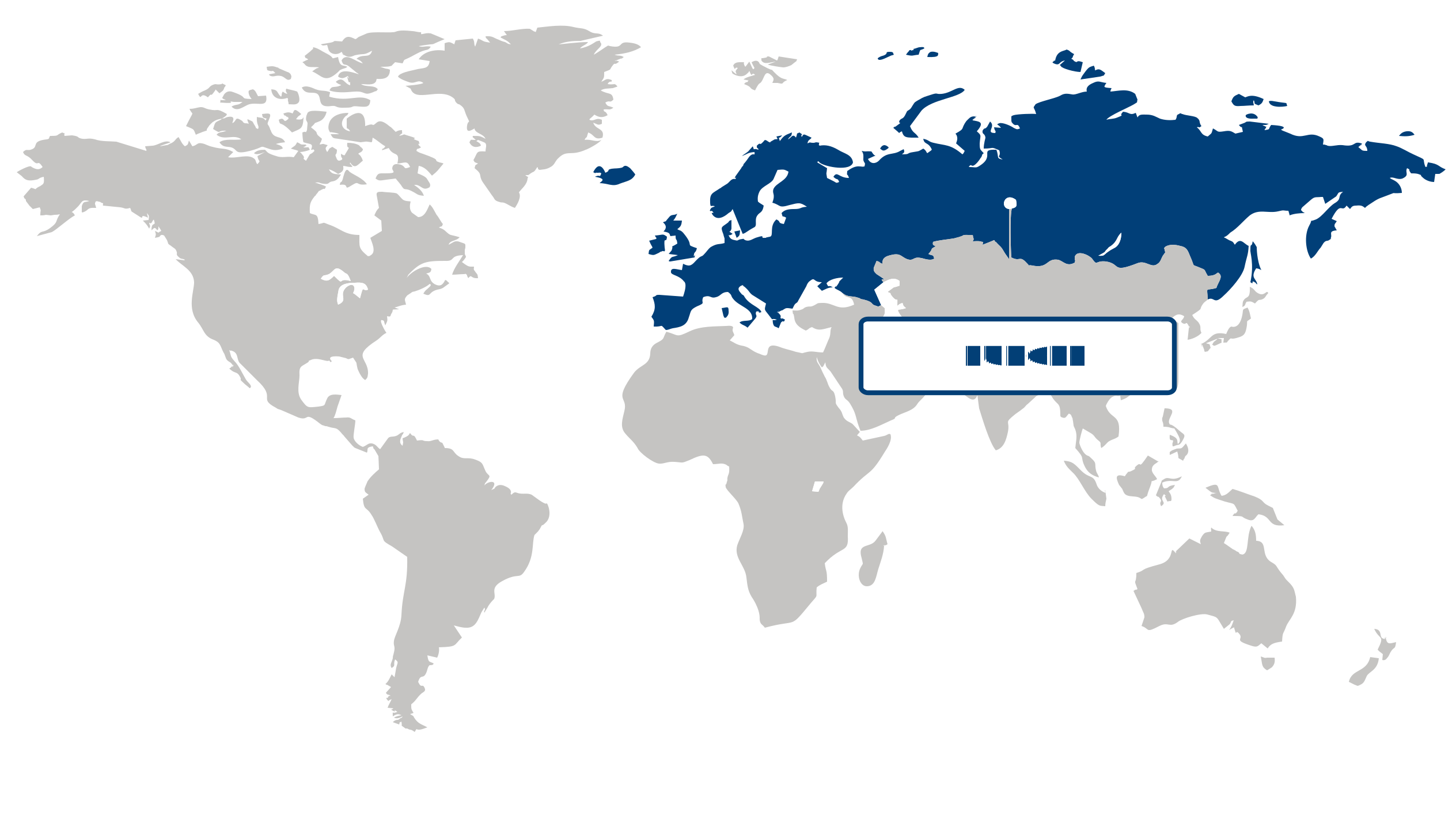
Largest Region
Europe
Largest Market Share in 2026
Europe (Largest Region) vs Asia Pacific (Fastest-Growing Region)
Europe accounted for the largest share of the lecithin market in 2026, reflecting strong demand for functional food ingredients, established food processing industries, and widespread use of lecithin across food, nutrition, and pharmaceutical applications. The region's mature packaged food sector supports continued utilization of lecithin as an emulsifying and stabilizing ingredient, while consumer interest in clean-label and functional formulations encourages manufacturers to incorporate naturally derived ingredients. Regulatory emphasis on food quality and ingredient standards also supports demand for reliable, standardized lecithin products.
Asia Pacific is projected to be the fastest-growing region in the lecithin market, supported by expanding food and beverage manufacturing, rising consumption of processed and convenience foods, and increasing interest in functional nutrition. Rapid development of food processing capabilities is creating broader applications for lecithin across bakery, confectionery, dairy, and nutritional formulations. Growing urbanization and evolving consumer preferences are also encouraging manufacturers to improve product functionality and formulation efficiency, creating favorable conditions for wider lecithin adoption.
Key Country Insights
The U.S. lecithin market emphasizes multifunctional ingredients for processed foods, nutraceuticals, and pharmaceutical formulations. Manufacturers in the U.S. are prioritizing non-GMO sourcing, clean-label formulations, and improved emulsification performance to address evolving product development requirements.
Japan focuses on lecithin applications requiring consistent functionality in nutritional products, confectionery, and pharmaceutical formulations. Japanese companies emphasize formulation stability, ingredient purity, and compatibility with premium food products that require reliable processing performance.
South Korea is expanding the use of lecithin across functional foods, cosmetics, and dietary supplements. Local manufacturers are developing application-specific lecithin ingredients that improve texture, stability, and product differentiation while meeting consumer preference for premium formulations.
Germany prioritizes high-quality lecithin production for food processing, pharmaceutical applications, and industrial uses. German manufacturers continue investing in advanced extraction technologies and stringent quality standards to support demand for specialty-grade lecithin across regulated industries.
France places strong emphasis on naturally sourced lecithin for food, bakery, and specialty nutrition applications. Companies in France increasingly integrate sunflower-derived lecithin and clean-label ingredient strategies to align with evolving formulation preferences among food manufacturers.
Italy utilizes lecithin extensively in bakery, confectionery, and processed food manufacturing where ingredient functionality remains essential. Italian producers continue refining formulations that enhance texture, shelf stability, and production efficiency while maintaining product quality expectations.
Segment Leadership and Growth Trends
Form Segment Analysis: Liquid (Largest Segment) vs Powder (Fastest-Growing Segment)
The liquid form segment dominated the lecithin market, accounting for an 81.89% share in 2026. Liquid lecithin is widely valued for its emulsifying, dispersing, and texture-enhancing properties, making it suitable for applications across food processing, animal nutrition, pharmaceuticals, and other industrial formulations. Its ease of incorporation into liquid and semi-liquid mixtures supports efficient processing and consistent product performance. Food manufacturers particularly benefit from its ability to improve texture, stability, and processing characteristics, while broad compatibility with formulation systems reinforces the established demand for liquid lecithin.
Powdered lecithin is gaining traction as manufacturers seek convenient, stable, and easily handled ingredients for dry blends and specialized formulations. Its free-flowing characteristics can simplify storage, transportation, dosing, and incorporation into powdered food and nutritional products. Powder formats are also attractive where manufacturers require greater flexibility in dry processing and controlled ingredient distribution. Growing demand for convenient functional ingredients, along with increased use of lecithin in nutrition-focused and processed food applications, is supporting wider adoption of powdered lecithin.
Source Segment Analysis: Soy (Largest Segment) vs Sunflower (Fastest-Growing Segment)
Soy lecithin held the largest share of the lecithin market in 2026, representing 75.17% of demand. Its established position is supported by broad availability, recognized emulsification performance, and extensive use across food and industrial formulations. Soy lecithin can improve texture, mixing, dispersion, and product stability, making it valuable in applications such as confectionery, bakery products, processed foods, and nutritional formulations. Its established processing infrastructure and familiarity among manufacturers further strengthen its role as a widely adopted lecithin source.
Sunflower lecithin is expanding at a faster pace as manufacturers and consumers increasingly favor plant-based ingredients that align with clean-label and allergen-conscious formulation trends. Sunflower-derived lecithin provides functional emulsification properties while offering an alternative to soy-based ingredients, making it attractive to manufacturers seeking greater source diversity. Its suitability for natural and minimally processed product positioning is particularly relevant in health-oriented food and nutrition categories. Growing consumer interest in recognizable ingredients and formulation flexibility is therefore creating stronger opportunities for sunflower lecithin.
| Report Segmentation | |||
| Segment | Sub-Segment | Largest Segment | Fastest Growing Segment |
|---|---|---|---|
| Form | Liquid, Powder, Granules | Liquid | Powder |
| Source | Soy, Sunflower, Rapeseed, Others | Soy | Sunflower |
| End Use | Convenience Foods, Bakery, Confectionary, Pharmaceuticals & Personal Care, Personal Care & Cosmetics, Animal Feed, Industrial, Other | Animal Feed | Convenience Foods |
 Read our Research Approach
Competitive Landscape and Market Positioning
Top players in the lecithin market:
1. Archer Daniels Midland Company (USA)
2. Cargill Inc. (USA)
3. Bunge Global SA (Switzerland)
4. Lipoid GmbH (Germany)
5. American Lecithin Company (USA)
6. Global River Food Ingredients (India)
7. DuPont de Nemours Inc. (USA)
8. Stern-Wywiol Gruppe GmbH & Co. KG (Germany)
9. Haneil Soyatech Pvt. Ltd. (India)
10. NOW Foods (USA)
The lecithin market is witnessing increasing demand from food, pharmaceutical, and cosmetic industries due to its emulsification and functional ingredient properties. Manufacturers are expanding application areas by introducing soy-free, sunflower-based, and non-GMO lecithin products to address evolving consumer preferences. Growing focus on natural ingredients and clean-label formulations is also supporting product diversification in the market.
Industry Development/News
| Company Name | Date | Key Development |
|---|---|---|
| Bunge | Mar-26 | Bunge completed the acquisition of International Flavors & Fragrances’ soy protein concentrate, lecithin, and soy crush business units. This strategic consolidation strengthens Bunge’s ingredient portfolio and significantly enhances its global production capabilities and market positioning in the plant-based protein and emulsifier segments. |
| Ruby Bio | May-26 | Ruby Bio announced plans to launch a new range of fermentation-derived, clean-label emulsifiers in 2027. This development highlights an advancement in alternative ingredient technologies, targeting the growing food industry demand for sustainable, non-traditional emulsification solutions that meet clean-label standards. |
| Louis Dreyfus Company | Oct-25 | Louis Dreyfus Company inaugurated a new laboratory in China to scale its value-added ingredient solutions. The facility integrates multiple processing capabilities, including oilseed crushing and the production of food-grade lecithin, allowing the company to better capture regional demand for specialized feed and food-grade lecithin products. |
| Austrade | May-25 | Austrade introduced a non-GMO hydrolyzed sunflower lecithin powder specifically formulated for functional beverage applications. This launch addresses the increasing market demand for high-performance, allergen-friendly emulsifiers, expanding the range of functional ingredient options available for beverage manufacturers. |
| VAV Lipids | Apr-24 | VAV Lipids initiated expansion efforts to meet rising global demand for pharmaceutical-grade egg yolk lecithin. These initiatives focus on scaling production and refining processing standards to strengthen the company’s competitive position in high-value, specialized lecithin applications within the healthcare and pharmaceutical sectors. |
Why Choose Us
Specialized Expertise: Our team comprises industry experts with a deep understanding of your market segment. We bring specialized knowledge and experience that ensures our research and consulting services are tailored to your unique needs.
Customized Solutions: We understand that every client is different. That's why we offer customized research and consulting solutions designed specifically to address your challenges and capitalize on opportunities within your industry.
Proven Results: With a track record of successful projects and satisfied clients, we have demonstrated our ability to deliver tangible results. Our case studies and testimonials speak to our effectiveness in helping clients achieve their goals.
Cutting-Edge Methodologies: We leverage the latest methodologies and technologies to gather insights and drive informed decision-making. Our innovative approach ensures that you stay ahead of the curve and gain a competitive edge in your market.
Client-Centric Approach: Your satisfaction is our top priority. We prioritize open communication, responsiveness, and transparency to ensure that we not only meet but exceed your expectations at every stage of the engagement.
Continuous Innovation: We are committed to continuous improvement and staying at the forefront of our industry. Through ongoing learning, professional development, and investment in new technologies, we ensure that our services are always evolving to meet your evolving needs.
Value for Money: Our competitive pricing and flexible engagement models ensure that you get maximum value for your investment. We are committed to delivering high-quality results that help you achieve a strong return on your investment.
Select Licence Type

