Legionella Testing Market Size & Growth Forecast 2027–2036, By Segments (Type, Test Method), Regional Demand Trends (North America, Asia Pacific, Europe), Key Country Insights (U.S., Japan, South Korea, Germany, France, Italy), and Competitive Landscape
Market Size and Growth Outlook
Legionella Testing Market size was around USD 399.3 million in 2026 and is slated to grow at a 7.98% CAGR from 2027 to 2036, exceeding USD 860.46 million by 2036. The industry revenue for 2027 is estimated at USD 426.13 million.
Get more details on this report
Request Free Sample ReportLegionella Testing Market Intelligence Snapshot
Regional Market Dynamics
- Europe held the largest share in 2026 due to established water safety oversight, routine monitoring practices, and recurring testing demand across commercial and public water systems.
- Asia Pacific is forecast to expand at a 9.38% CAGR, supported by urban infrastructure growth, wider water monitoring adoption, and increasing testing needs across facilities.
Segment Momentum
- Water Testing accounted for 73.73% of the market in 2026 because routine monitoring of water systems remains the primary approach for identifying contamination risks before potential exposure occurs.
- Microbial Culture is the fastest-growing test method as users increasingly value direct organism recovery and confirmatory evidence for detailed environmental investigations and follow-up testing workflows.
Market Expansion Drivers
- Rising incidence of Legionnaires disease outbreaks increasing demand for rapid legionella diagnostic testing solutions.
- Expanding government public health surveillance programs strengthening routine water and environmental legionella monitoring.
- Growing adoption of PCR-based pathogen detection technologies improving testing speed and diagnostic accuracy.
Leading Market Participants
- Leading players in the legionella testing market include Abbott Laboratories (United States), Danaher Corporation (United States), Becton, Dickinson and Company (United States), bioMérieux SA (France), F. Hoffmann-La Roche Ltd. (Switzerland), Thermo Fisher Scientific Inc. (United States), QIAGEN N.V. (Netherlands), Bio-Rad Laboratories, Inc. (United States), Hologic, Inc. (United States), Takara Bio Inc. (Japan).
Global Market Forecast Snapshot
Market Outlook
- 2026 Market Size: USD 399.3 million
- 2027 Estimated Market Size: USD 426.13 million.
- Projected Market Size: USD 860.46 million by 2036
- Growth Forecast: 7.98% CAGR (2027-2036)
Regional and Segment Outlook
- Leading Regional Market: Europe
- High-Growth Regional Hub: Asia Pacific
- Core Revenue Segment: Water Testing (Type) | PCR (Test Method)
- Emerging Opportunity Segment: IVD Testing (Type) | Microbial Culture (Test Method)
Market Growth Drivers and Industry Trends
Rising incidence of Legionnaires disease outbreaks increasing demand for rapid legionella diagnostic testing solutions
The increasing occurrence of legionnaires disease outbreaks is strengthening the need for timely environmental and clinical pathogen identification, supporting growth of the legionella testing market. Legionella bacteria can proliferate in complex water systems such as cooling towers, plumbing networks, and healthcare facilities, creating risks when contaminated water becomes a source of exposure. Rapid testing enables public health authorities and facility operators to identify contamination more efficiently and implement corrective measures before exposure expands. The need for faster confirmation during suspected outbreaks also encourages healthcare and environmental laboratories to adopt testing solutions that can support prompt investigation and targeted remediation activities.
Expanding government public health surveillance programs strengthening routine water and environmental legionella monitoring
Government-led surveillance initiatives are increasing the frequency and scope of water system monitoring, creating sustained demand within the legionella testing market. Public health programs can require healthcare facilities, commercial buildings, and other high-risk environments to implement structured monitoring practices designed to detect legionella contamination and reduce exposure risks. Routine environmental testing supports early identification of bacterial growth before it develops into a larger public health concern, while standardized surveillance procedures improve consistency in sample collection and laboratory analysis. Increased attention to water safety and outbreak prevention is encouraging facilities to incorporate regular legionella assessment into broader environmental health and risk-management programs.
Growing adoption of PCR-based pathogen detection technologies improving testing speed and diagnostic accuracy
PCR-based methods are improving the speed and analytical capabilities available for detecting legionella in clinical and environmental samples, supporting the legionella testing market growth. Molecular testing can identify pathogen-specific genetic material without relying solely on conventional culture-based approaches, allowing laboratories to obtain useful results more rapidly in appropriate testing applications. Improved sensitivity and specificity can also support the detection of low levels of contamination and help distinguish target organisms from other microorganisms present in complex water samples. As laboratories prioritize faster workflows and more precise pathogen identification, PCR platforms are increasingly being incorporated into legionella surveillance and diagnostic testing procedures.
| Growth Driver | Impact on CAGR | Regulatory Influence | Geographic Relevance | Adoption Rate | Impact Timeline |
|---|---|---|---|---|---|
| Rising incidence of Legionnaires disease outbreaks increasing demand for rapid legionella diagnostic testing solutions | 2.00% | High | Europe, Asia Pacific | High | Near Term |
| Expanding government public health surveillance programs strengthening routine water and environmental legionella monitoring | 1.70% | High | Europe, North America | High | Mid Term |
| Growing adoption of PCR-based pathogen detection technologies improving testing speed and diagnostic accuracy | 1.40% | Moderate | Asia Pacific, Europe | Emerging | Mid Term |
Explore Growth Opportunities
Request Free Sample ReportRegional Demand Dynamics
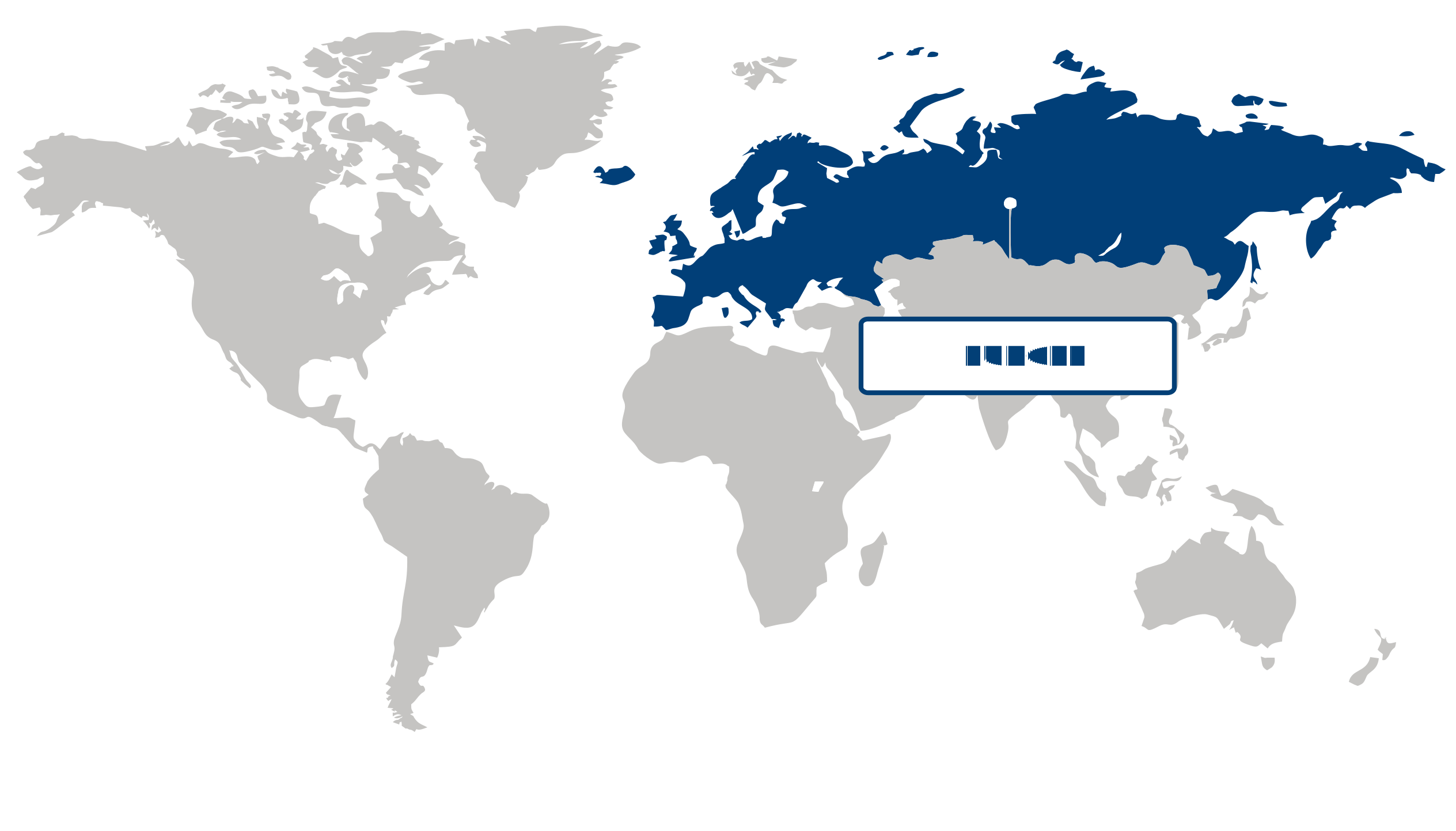
Europe (Largest Region)
Europe held the largest share of the legionella testing market in 2026, supported by strong public health frameworks, established water safety practices, and heightened attention to preventing outbreaks associated with contaminated water systems. The region’s extensive hospitality, healthcare, and commercial infrastructure creates sustained demand for reliable detection of legionella bacteria, while stringent hygiene and environmental monitoring requirements encourage regular testing. Growing awareness of waterborne disease risks and continued investment in laboratory and environmental testing capabilities further strengthen the regional market.
Asia Pacific (Fastest-Growing Region)
Asia Pacific is positioned as the fastest-growing region, driven by expanding urban infrastructure, increasing development of healthcare and hospitality facilities, and greater awareness of waterborne infection prevention. Rapid industrialization and population growth are placing greater emphasis on maintaining safe water systems, creating demand for effective monitoring and testing solutions. Improvements in laboratory capacity, public health surveillance, and regulatory attention to water quality are also supporting broader adoption of legionella testing across the region.
| Parameter | North America | Asia Pacific | Europe | Latin America | MEA |
|---|---|---|---|---|---|
| Innovation Hub i Scale Nascent Developing Advanced | |||||
| Cost-Sensitive Region i Scale Low Medium High | |||||
| Regulatory Environment i Scale Restrictive Neutral Supportive | |||||
| Demand Drivers i Scale Weak Moderate Strong | |||||
| Development Stage i Scale Emerging Developing Developed | |||||
| Adoption Rate i Scale Low Medium High | |||||
| New Entrants / Startups i Scale Sparse Moderate Dense | |||||
| Macro Indicators i Scale Weak Stable Strong |
Key Country Insights
Germany 🇩🇪
Preventive Water MonitoringGermany emphasizes preventive water quality management through consistent Legionella surveillance in public buildings and healthcare facilities. Testing providers are expanding validated laboratory capabilities and efficient sampling services to support compliance with established water hygiene standards.
France 🇫🇷
Public Health SurveillanceFrance continues expanding Legionella testing across healthcare institutions, hospitality facilities, and municipal water systems to reinforce preventive public health practices. Market participants emphasize accredited laboratory services and dependable analytical accuracy to support routine monitoring requirements.
Italy 🇮🇹
Building Water ManagementItaly places strong emphasis on Legionella testing within hotels, hospitals, and public facilities where water quality management remains a key operational priority. Testing providers focus on practical monitoring solutions that facilitate regular inspections and effective contamination control.
Japan 🇯🇵
Facility Hygiene AssuranceJapan focuses on Legionella testing as part of comprehensive building hygiene and water system maintenance programs. Organizations increasingly adopt reliable diagnostic methods that enable early contamination detection while supporting safe operation of public and commercial facilities.
South Korea 🇰🇷
Rapid Detection IntegrationSouth Korea is strengthening Legionella testing by incorporating faster diagnostic technologies into environmental monitoring programs. Demand is supported by heightened attention to water safety across hospitals, residential complexes, and large commercial infrastructure requiring regular surveillance.
United States 🇺🇸
Water Safety ComplianceThe U.S. legionella testing market is driven by routine monitoring across healthcare facilities, commercial buildings, and industrial water systems. Laboratories are prioritizing rapid detection methods and standardized testing workflows to support timely risk management and regulatory compliance.
Segment Leadership and Growth Trends
Legionella Testing Market Share (%), by Type, 2026
Go beyond the chart, access full insights & data tables
Request Free Sample ReportType Segment Analysis: Water Testing (Largest Segment) vs IVD Testing (Fastest-Growing Segment)
Water testing segment dominated the legionella testing market, representing a 73.73% share in 2026. Its substantial position reflects the importance of monitoring water systems for legionella contamination and maintaining effective environmental testing practices. Regular assessment of water sources supports early identification of potential contamination and strengthens efforts to manage risks associated with legionella exposure, particularly in environments where water systems require consistent monitoring.
IVD testing is the fastest-growing segment, reflecting increasing demand for diagnostic approaches that support the identification of legionella infections through clinical testing. The expansion of diagnostic testing strengthens the ability to investigate suspected cases and support timely clinical assessment. As attention to legionella-related health risks increases, IVD testing is gaining importance alongside environmental monitoring, broadening the role of testing across both preventive and diagnostic applications.
Test Method Segment Analysis: PCR (Largest Segment) vs Microbial Culture (Fastest-Growing Segment)
PCR held the largest share of the legionella testing market, accounting for 44.52% in 2026. Its leading position is supported by the value of molecular testing methods in detecting legionella genetic material and enabling efficient analysis. PCR-based testing can strengthen testing workflows by providing a molecular approach to identifying the presence of the organism, supporting broader efforts to improve the effectiveness of legionella detection.
Microbial culture is the fastest-growing test method segment, supported by its continued relevance in identifying and characterizing legionella through laboratory-based analysis. Culture-based methods provide an established approach for confirming microbial presence and can complement other testing techniques within comprehensive detection workflows. Growing attention to reliable legionella identification is sustaining demand for microbial culture as part of broader testing strategies.
| Segment | Sub-Segment | Largest Segment | Fastest Growing |
|---|---|---|---|
| Type | Water Testing, IVD Testing | Water Testing | IVD Testing |
| Test Method | Microbial Culture, Direct Fluorescent Antibody (DFA) Stain, PCR, Others | PCR | Microbial Culture |
Unlock insights tailored to your business with our bespoke market research solutions.
Click to get your customized report now.
Competitive Landscape and Market Positioning
Key companies in the legionella testing market:
1. Abbott Laboratories (United States)
2. Danaher Corporation (United States)
3. Becton Dickinson and Company (United States)
4. bioMérieux SA (France)
5. F. Hoffmann-La Roche Ltd. (Switzerland)
6. Thermo Fisher Scientific Inc. (United States)
7. QIAGEN N.V. (Netherlands)
8. Bio-Rad Laboratories Inc. (United States)
9. Hologic Inc. (United States)
10. Takara Bio Inc. (Japan)
Growing concerns regarding water safety and infection prevention are accelerating advancements in the legionella testing market. Companies are introducing rapid detection systems and highly sensitive analytical methods designed to improve testing efficiency and compliance with public health standards. Increased investment in automated testing workflows and environmental monitoring technologies is also supporting market expansion.
| Company | Market Share | Company Revenue | Revenue CAGR (%) | Product Portfolio | Geographic Presence | Innovation / R&D Focus | Strategic Developments |
|---|---|---|---|---|---|---|---|
| Abbott Laboratories (United States) | |||||||
| Danaher Corporation (United States) | |||||||
| Becton Dickinson and Company (United States) | |||||||
| bioMérieux SA (France) | |||||||
| F. Hoffmann-La Roche Ltd. (Switzerland) | |||||||
| Thermo Fisher Scientific Inc. (United States) | |||||||
| QIAGEN N.V. (Netherlands) | |||||||
| Bio-Rad Laboratories Inc. (United States) | |||||||
| Hologic Inc. (United States) | |||||||
| Takara Bio Inc. (Japan). |
Industry Development/News
| Company Name | Date | Key Development |
|---|---|---|
| Ecolab | Nov-24 | Ecolab acquired Barclay Water Management, incorporating its digital monitoring and monochloramine generation technologies into the Ecolab water-safety portfolio. This acquisition enhances the company's capability to provide continuous, automated Legionella risk management and water treatment solutions to institutional and industrial clients. |
| LuminUltra Technologies | Sep-24 | LuminUltra Technologies acquired the Legionella testing assets of Genomadix Inc., including the Genomadix Cube qPCR platform. This portable molecular diagnostic device allows for laboratory-grade Legionella detection in under one hour, significantly reducing turnaround times for onsite environmental and clinical water safety monitoring. |
| Aptamer Group | Jun-24 | Aptamer Group partnered with Microsaic Systems to integrate Optimer binders into the Microtox platform. This collaboration focuses on developing a rapid Legionella detection solution, leveraging high-affinity binders to improve the sensitivity and speed of pathogen identification in water systems. |
| Bio-Rad Laboratories | Sep-22 | Bio-Rad Laboratories received AFNOR validation for its iQ-Check Legionella PCR protocol. This certification provides independent regulatory confidence in the accuracy and reliability of the company’s molecular-based testing method, supporting its adoption for standardized Legionella surveillance and compliance in water safety programs. |
| Pace Analytical Services | Dec-21 | Pace Analytical Services acquired Special Pathogens Laboratory to consolidate its position in the waterborne pathogen testing market. By integrating specialized expertise in Legionella detection and identification, the company expanded its suite of onsite and laboratory-based regulatory testing services for healthcare and industrial facilities. |
Customize Your Report
Explore examples of how this report can be tailored to different research needs, including custom segments, additional topics or chapters, and related reports. Click a section of the wheel or its numbered marker to explore the available options.
Legionella Testing Market — Custom Segments
| Segment | Sub-Segment |
|---|---|
| Sample Source | Potable Water, Cooling Towers & HVAC Systems, Recreational Water, Healthcare Water Systems |
| Testing Setting | Environmental Testing Laboratories, Healthcare Facilities, Public Health Laboratories, On-site Testing |
| Detection Purpose | Routine Monitoring, Outbreak Investigation, Regulatory Compliance Testing, Post-Remediation Verification |
Legionella Testing Market — Custom TOC
| Custom Chapter | Chapter Details |
|---|---|
| Water Infrastructure Risk Assessment |
|
| Institutional Testing Compliance Landscape |
|
| Testing Ecosystem and Service Provider Analysis |
|
Need a different cut of the data?
Request Custom ResearchHow much revenue does the legionella testing market generate?
How much is the legionella testing industry expected to grow by 2036?
How are public health surveillance programs influencing demand in the legionella testing market?
Why is PCR technology gaining momentum in the legionella testing market?
Why is Water Testing the largest segment in the legionella testing market?
What is driving growth in the Microbial Culture segment of the legionella testing market?
What makes Europe the leading region for the legionella testing market?
Where is the strongest growth opportunity emerging in the legionella testing market?
What are the prominent companies operating in the legionella testing landscape?
Our Clients
"The team took the time to understand our specific business needs and delivered a report that was well aligned with our objectives. Their expertise and understanding of the industry were clearly reflected in the quality and relevance of the insights provided."
Siemens Healthcare
"Our experience in acquiring the research report has been excellent. The depth of analysis, and actionable insights provided have been extremely valuable in supporting our ongoing R&D efforts."
GC Biopharma
"The report offered a comprehensive view of the market trends. The in-depth segmentation and analysis of emerging opportunities gave us a better understanding of the market."
Medtronic
Our Research Team & Methodology
Every Fundamental Business Insights report is built by a dedicated vertical research team, validated through a structured primary-and-secondary methodology, and reviewed for accuracy before it reaches you.
Research Team Overview
Prepared by the Healthcare & Medical Devices Research Team
Delivery
Published
Demand
Available
Support
Trust & Compliance
Research Intelligence
| Source | Reference |
|---|---|
| World Health Organization (WHO) | www.who.int |
| U.S. Food & Drug Administration (FDA) | www.fda.gov |
| European Medicines Agency (EMA) | www.ema.europa.eu |
| Centers for Disease Control and Prevention (CDC) | www.cdc.gov |
| National Institutes of Health (NIH) | www.nih.gov |
| National Center for Biotechnology Information (NCBI) | www.ncbi.nlm.nih.gov |
| PubMed | pubmed.ncbi.nlm.nih.gov |
| ClinicalTrials.gov | clinicaltrials.gov |
| International Organization for Standardization (ISO) | www.iso.org |
| ASTM International | www.astm.org |
| Advanced Medical Technology Association (AdvaMed) | www.advamed.org |
| Medical Device Innovation Consortium (MDIC) | mdic.org |
| Biotechnology Innovation Organization (BIO) | www.bio.org |
| International Federation of Pharmaceutical Manufacturers & Associations (IFPMA) | www.ifpma.org |
| U.S. Pharmacopeia (USP) | www.usp.org |
| European Directorate for the Quality of Medicines & HealthCare (EDQM) | www.edqm.eu |
| World Organisation for Animal Health (WOAH) | www.woah.org |
| American Hospital Association (AHA) | www.aha.org |
| OECD Health | www.oecd.org/health |
| World Bank Data | data.worldbank.org |
Research Workflow & Quality Assurance
Data Collection
Verified information gathered through primary and secondary research.
Data Triangulation
Cross-validation using multiple independent data sources.
Forecast Modelling
Market estimates developed using historical trends and analytical models.
Analyst Validation
Findings reviewed by domain experts for accuracy and consistency.
Editorial & Quality Review
Final editorial, quality, and compliance checks before publication.
Final Publication
Released after successful completion of the internal review process.
Report Coverage
📊 Market Assessment
- Market Size & Forecast
- Market Segmentation
- Regional Analysis
- Growth Drivers & Challenges
- Market Dynamics
🏢 Competitive Intelligence
- Competitive Landscape
- Company Profiles
- Competitive Benchmarking
- Mergers & Acquisitions
- Market Share Analysis or Key Company Strategies
🔍 Strategic Analysis
- Value Chain Analysis
- Porter's Five Forces
- PESTLE Analysis
- Pricing Trends
- Supply-Demand Analysis
🚀 Future Outlook
- Technology Landscape
- Regulatory Landscape
- Investment & Funding Landscape
- Emerging Opportunities
- Future Market Outlook
Have a question about this report or need a custom scope?
Request Customization