Liposomal Supplements Market Size & Forecasts 2026-2035, By Segments (Mode of Purchase, Type), Growth Opportunities, Innovation Landscape, Regulatory Shifts, Strategic Regional Insights (U.S., Japan, China, South Korea, UK, Germany, France), and Competitive Dynamics (DSM, BASF, Embria Health Sciences, Lipo Foods, LivOn Laboratories)
Market Size and Growth Outlook
Liposomal Supplements Market size is likely to expand from USD 438.94 million in 2025 to USD 904.67 million by 2035, posting a CAGR above 7.5% across 2026-2035. The industry’s revenue potential for 2026 is USD 467.78 million.
Get more details on this report
Request Free Sample ReportLiposomal Supplements Market Intelligence Snapshot
Regional Market Dynamics
Segment Momentum
Market Expansion Drivers
Leading Market Participants
Global Market Forecast Snapshot
Market Outlook
Regional and Segment Outlook
Market Growth Drivers and Industry Trends
Consumers are increasingly prioritizing supplement forms that offer superior absorption and efficacy, propelling the liposomal supplements market forward. Liposomal delivery enhances nutrient bioavailability by encapsulating active ingredients in lipid bilayers, improving their assimilation compared to conventional formats. This shift is underscored by findings from the Natural Products Association, which highlight consumer demand for supplements with demonstrable health benefits. Leading companies like LivOn Laboratories emphasize bioavailability in their product development, signaling the market’s emphasis on scientifically advanced formulations. This evolving preference opens avenues for players innovating in liposomal technology to differentiate themselves while educating consumers. With awareness continuing to rise, firms that invest in transparent communication about bioavailability stand to build stronger brand loyalty and expand their market footprint sustainably.
Expansion of Nutraceutical Distribution Channels
The proliferation of diverse sales channels significantly impacts the liposomal supplements market by increasing product accessibility and consumer reach. E-commerce platforms, health-focused retailers, and direct-to-consumer models facilitate wider availability of liposomal supplements, as illustrated by the strategic retail partnerships announced by USANA Health Sciences. The growth of digital marketplaces allows new entrants to compete globally without traditional distribution constraints. This channel diversification also enables tailored marketing approaches aligned with consumer behavior data, enhancing customer acquisition and retention. Established firms benefit from fortified supply chains and omnichannel strategies, while startups leverage innovative digital tools to build niche communities. Continued evolution in distribution logistics and partnerships is likely to sustain momentum by reducing barriers and expanding market penetration.
Increased Clinical Validation of Liposomal Formulations
Robust clinical evidence supporting the efficacy of liposomal supplements is fundamentally influencing market dynamics by bolstering consumer and regulatory confidence. Studies published in journals like the Journal of Clinical Biochemistry and Nutrition validate enhanced bioavailability and therapeutic outcomes, encouraging regulatory bodies such as the FDA to recognize these formulations more readily. Corporate initiatives, such as those by Quicksilver Scientific, to fund clinical trials further enhance product credibility and differentiate offerings in a crowded landscape. This shift enables companies to position liposomal supplements not just as dietary aids but as clinically substantiated health products, appealing to health professionals and informed consumers alike. As clinical research expands, companies that invest in science-driven marketing and compliance will solidify competitive advantage and consumer trust.
Industry Restraints:
Regulatory Complexity and Compliance Costs
The liposomal supplements market faces significant headwinds from a fragmented regulatory landscape, as agencies like the U.S. Food and Drug Administration (FDA) and the European Food Safety Authority (EFSA) impose stringent safety, labeling, and efficacy requirements. These regulatory challenges drive up compliance costs and elongate product development cycles, discouraging innovation and slowing new product launches. For instance, the FDA’s rigorous scrutiny of novel delivery mechanisms can delay market entry, affecting companies’ ability to capitalize on consumer trends rapidly. Both established players and startups must allocate substantial resources toward regulatory approvals and quality assurance, which may deter smaller firms lacking dedicated regulatory expertise. This complexity necessitates strategic prioritization of regulatory alignment, compelling firms to balance formulation innovation with compliance readiness. Given ongoing updates to supplement guidelines and international harmonization efforts, regulatory hurdles will persist as a critical restraint, shaping market dynamics by favoring players with robust regulatory affairs capabilities.
Raw Material Supply Constraints and Cost Volatility
The liposomal supplements market’s reliance on specialized phospholipids and high-purity active ingredients exposes it to notable supply chain vulnerabilities and price fluctuations. Disruptions linked to geopolitical tensions and volatile commodity markets, highlighted by supply challenges reported by companies like Lipoid GmbH, hinder consistent manufacturing and inflate costs. These supply constraints disproportionately impact smaller manufacturers, who face difficulty securing reliable sources at scale, limiting their production capacity and market responsiveness. Additionally, sustainability-driven shifts in sourcing—such as demands for non-GMO or organic phospholipids—further complicate procurement, adding operational complexity. Market participants must invest in supply chain diversification and strategic partnerships to mitigate these risks, often increasing operational overhead. Over the near term, these supply-driven restraints are likely to persist, pressuring profit margins and favoring companies with vertically integrated or resilient supply networks.
| Growth Driver | Impact on CAGR | Regulatory Influence | Geographic Relevance | Adoption Rate | Impact Timeline |
|---|---|---|---|---|---|
| Rising consumer shift toward bioavailable supplement formats | 1.60% | Short term (≤ 2 yrs) | North America, Europe | Low | Fast |
| Expansion of nutraceutical distribution channels | 1.30% | Medium term (2–5 yrs) | Asia Pacific, Latin America | Low | Moderate |
| Increased clinical validation of liposomal formulations | 1.00% | Long term (5+ yrs) | Europe, North America | Medium | Moderate |
Explore Growth Opportunities
Request Free Sample ReportRegional Demand Dynamics
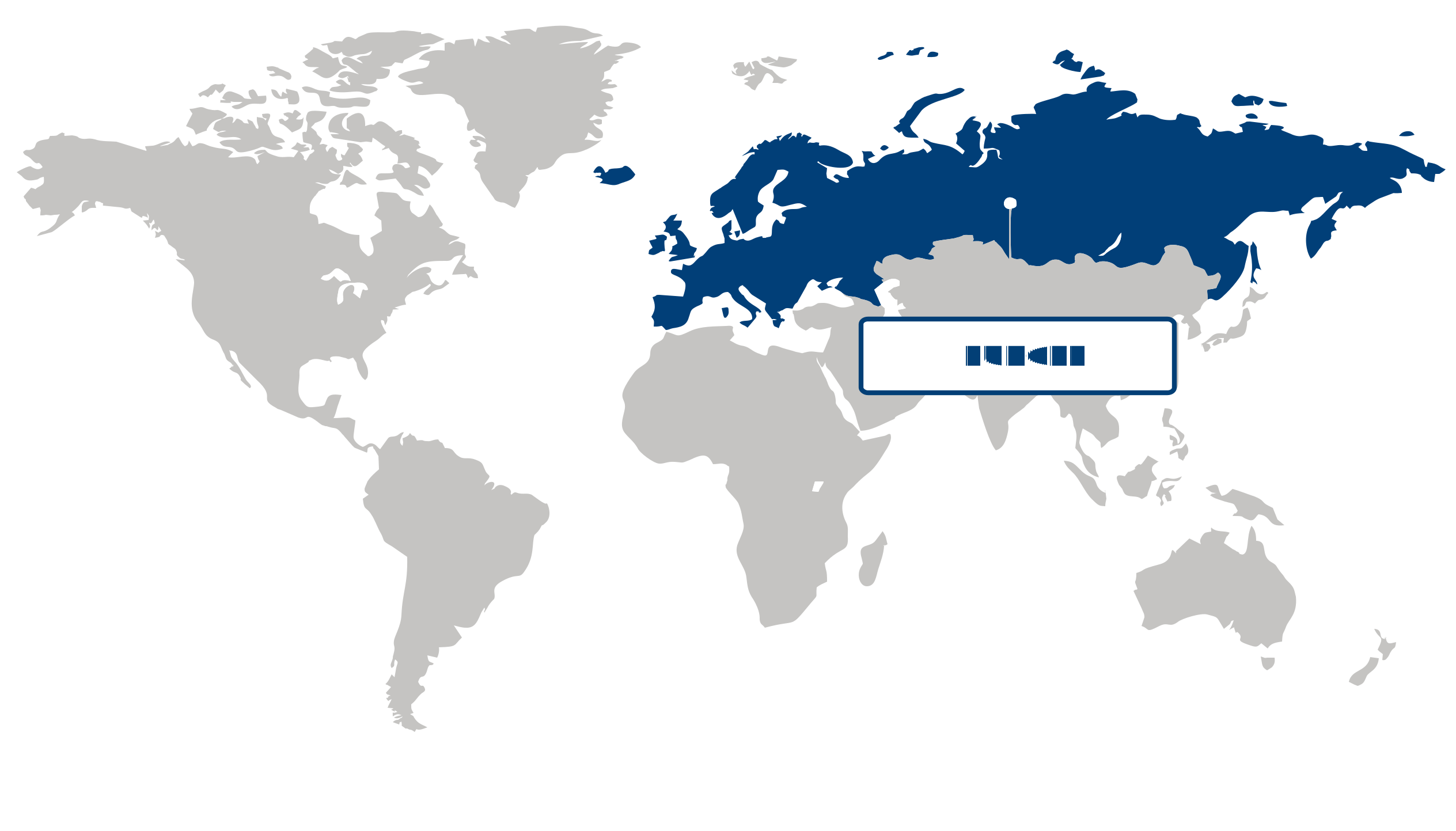
Europe captured over 30% of the global liposomal supplements market in 2025, standing as the largest regional player. The region's leadership is primarily driven by increasing consumer awareness regarding the enhanced bioavailability of liposomal formulations. This shift toward more effective nutrient delivery has steered demand upward across diverse demographic segments. Moreover, heightened spending on premium health products, particularly in Western Europe, reflects evolving preferences for scientifically advanced supplements. Regulatory bodies like the European Food Safety Authority (EFSA) have fostered trust by enforcing stringent quality and safety standards, encouraging market expansion. Companies such as LipoLife have capitalized on digital transformation to optimize supply chains and consumer engagement. Europe's economic resilience and dedication to sustainability in healthcare products further bolster market opportunities, positioning it as a critical growth hub for liposomal supplements.
Germany anchors the European liposomal supplements market, driven by robust consumer sophistication and a well-established nutraceutical industry. German consumers, informed by agencies like the Federal Institute for Risk Assessment (BfR), increasingly prefer products with proven absorption benefits, propelling demand for liposomal vitamin and mineral supplements. Industry leaders such as Bionorica SE emphasize incorporating liposomal technology in clinical nutrition formulations, reflecting competitive innovation. Stricter health claims regulations foster transparent marketing, enhancing consumer trust and accelerating adoption. Germany’s advanced logistics and R&D capabilities position it as a strategic epicenter that reinforces Europe’s dominance in the liposomal supplements market.
France plays a pivotal role in Europe's liposomal supplements market, where cultural emphasis on preventive health and wellness aligns with rising preference for high-efficacy formulations. French regulatory frameworks, overseen by the National Agency for the Safety of Medicines and Health Products (ANSM), support the proliferation of novel supplement delivery methods while safeguarding consumer safety. Market players such as Arkopharma leverage traditional herbal expertise combined with liposomal delivery to meet shifting consumer demands. Urbanization and widespread health consciousness fuel consistent growth, especially in metropolitan hubs like Paris. France’s integration of scientific rigor and cultural health values expands its influence, amplifying Europe's overall prominence in the liposomal supplements market.
Asia Pacific Market Analysis:
Asia Pacific emerged as the fastest-growing region in the liposomal supplements market, registering a robust CAGR of 10.7%. This rapid expansion is primarily propelled by rising health consciousness and a growing middle-class population in emerging economies, which are increasingly prioritizing preventive health and wellness products. The region’s diverse consumer base exhibits a strong inclination toward advanced supplement delivery systems like liposomal formulations, recognized for enhanced bioavailability. Additionally, government health initiatives and increasing disposable incomes in countries such as India and Indonesia underline the expanding demand. According to the Asia-Pacific Nutraceutical Alliance, recent campaigns promoting nutrition awareness have facilitated consumer shifts toward high-efficacy supplements. The integration of digital health platforms and e-commerce channels across the region further accelerates accessibility and personalized nutrition solutions. Moving forward, Asia Pacific’s dynamic demographic trends and sustainable product innovations position it as a critical hub for investment and strategic growth in the liposomal supplements market.
Japan plays a pivotal role in Asia Pacific’s liposomal supplements market due to its aging population and high health awareness. Japanese consumers demand premium, science-backed health products, reflected in the surge of personalized and functional supplements. The Ministry of Health, Labour and Welfare’s stringent regulatory framework ensures product quality, fostering trust and loyalty toward liposomal supplements. Corporate initiatives, such as the launch of enhanced liposomal vitamin C by Otsuka Pharmaceutical, underscore innovation focused on bioavailability and efficacy. The widespread adoption of digital health monitoring tools also promotes consumer engagement and product customization. Japan’s mature market complements regional growth by setting high standards for product innovation and regulatory compliance, which catalyzes regional competitiveness.
China stands as a significant growth driver within Asia Pacific, energized by its expanding middle class and increasing urban health consciousness. The government’s Healthy China 2030 strategy champions preventive healthcare and nutraceutical advancements, enhancing the regulatory environment for liposomal supplements. Chinese consumers show growing preference for natural and scientifically validated products, supported by domestic brands such as BY-HEALTH investing heavily in R&D to improve liposomal delivery systems. E-commerce platforms like Alibaba’s Tmall facilitate broad market penetration, enabling rapid scaling and access to tier 2 and 3 cities. This growing consumer sophistication combined with government backing places China at the forefront of the region’s growth story, reinforcing Asia Pacific’s leadership in the global liposomal supplements market.
North America Market Trends:
North America held a substantial share in the liposomal supplements market, driven by escalating consumer awareness around enhanced bioavailability and wellness-focused lifestyles. The region’s advanced healthcare infrastructure and high disposable incomes support robust demand for premium nutraceuticals. Regulatory frameworks, as seen with the U.S. Food and Drug Administration’s evolving guidelines on dietary supplements, foster consumer confidence and product innovation. Additionally, North America’s adoption of digital health platforms enables targeted marketing and improved customer engagement. Leading firms such as Healthy Lipids Inc. have advanced liposomal delivery technologies locally, demonstrating operational sophistication. These dynamics, combined with increasing interest in plant-based and sustainably sourced formulations, position North America to capitalize on growing health-conscious demographics and technologically enabled supply chains, underpinning long-term opportunities for market expansion.
The U.S. remains a pivotal market within North America for the liposomal supplements market, propelled by strong consumer inclination toward scientifically supported wellness products and stricter regulatory oversight by the FDA that promotes transparency and quality assurance. Industry leaders like LivOn Laboratories emphasize clinical research and patent-protected formulations, reflecting high innovation levels. The country’s extensive retail networks and e-commerce penetration facilitate widespread product accessibility and adoption. Moreover, a competitive landscape characterized by both established players and agile startups accelerates product diversification. This environment highlights the U.S. role as a critical innovation hub, offering strategic advantages to stakeholders aiming to leverage the North American market’s depth of expertise and evolving consumer expectations in liposomal supplements.
| Parameter | North America | Asia Pacific | Europe | Latin America | MEA |
|---|---|---|---|---|---|
| Innovation Hub i Scale Nascent Developing Advanced | |||||
| Cost-Sensitive Region i Scale Low Medium High | |||||
| Regulatory Environment i Scale Restrictive Neutral Supportive | |||||
| Demand Drivers i Scale Weak Moderate Strong | |||||
| Development Stage i Scale Emerging Developing Developed | |||||
| Adoption Rate i Scale Low Medium High | |||||
| New Entrants / Startups i Scale Sparse Moderate Dense | |||||
| Macro Indicators i Scale Weak Stable Strong |
Segment Leadership and Growth Trends
Liposomal Supplements Market Share (%), by Mode of Purchase, 2026
Go beyond the chart, access full insights & data tables
Request Free Sample ReportThe online segment held the largest share in the liposomal supplements market in 2025, driven primarily by increasing consumer preference for the convenience of online shopping and broader e-commerce accessibility. This segment benefits from evolving digital transformation, with significant investments in user-friendly platforms and seamless payment gateways, as highlighted by Amazon’s escalation in health supplement sales. Consumer demand patterns favor flexible ordering, home delivery, and detailed product information, enhancing adoption. Additionally, supply chain optimizations by logistics companies such as DHL contribute to expedited distribution, further reinforcing online dominance. This segment presents lucrative opportunities for both established firms to expand their digital footprints and emerging players to leverage niche online marketing strategies. Given continued advancements in mobile commerce and augmented reality product experiences, the online mode of purchase is poised to sustain its leadership in the near to medium term.
Analysis by Type
Vitamin C represented the largest share in the liposomal supplements market in 2025, driven by high consumer demand linked to its well-documented immune-boosting and antioxidant benefits. The heightened health awareness triggered by organizations such as the World Health Organization has intensified focus on preventive care, positioning vitamin C-based supplements favorably. This segment leverages technological improvements in liposomal encapsulation, improving bioavailability and patient adherence, a fact underscored by market leaders like Merck KGaA in their product portfolios. Cultural shifts towards natural, scientifically validated health products also support sustained consumption. Strategic advantages arise as both global incumbents and emerging companies innovate around formulation and delivery tech. With ongoing regulatory emphasis on supplement quality and efficacy, the vitamin C segment is well-positioned to remain a cornerstone of the liposomal supplements market in the forthcoming years.
| Segment | Sub-Segment | Largest Segment | Fastest Growing |
|---|---|---|---|
| Mode of Purchase | Offline, Online | ||
| Type | Vitamin D, Curcumin, Vitamin C, Glutathione |
Unlock insights tailored to your business with our bespoke market research solutions.
Click to get your customized report now.
Competitive Landscape and Market Positioning
The competitive environment is characterized by dynamic collaborations and targeted expansion initiatives that enhance product offerings and technological capabilities. Several top players continuously refine their liposomal encapsulation processes to improve supplement bioavailability and consumer appeal. Efforts to integrate cross-industry expertise and develop synergistic partnerships have accelerated innovations and broadened access to emerging markets. Strategic product introductions aligned with evolving consumer preferences, alongside investments in research infrastructure, emphasize differentiation and resilience against intensifying rivalry. These moves not only widen market penetration but also embed sustainability and scientific rigor as key competitive pillars.
Strategic / Actionable Recommendations for Regional Players
North American companies would benefit from strengthening alliances with biotechnology firms and academic institutions, fostering innovation in liposomal formulations tailored to specific health concerns. Emphasizing scalability and digital marketing can also enhance consumer engagement and distribution efficiency.
In Asia Pacific, leveraging advancements in nanotechnology and collaborating with regulatory bodies to expedite product approvals may help capitalize on growing health awareness. Focusing on natural and plant-based liposomal supplements could meet rising demand for clean-label products, differentiating offerings from competitors.
European entities should consider deepening partnerships with pharmaceutical innovators and investing in sustainable raw materials to align with evolving regulatory and consumer sustainability priorities. Enhancing traceability and certification processes may further solidify trust and expand market access.
| Company | Market Share | Company Revenue | Revenue CAGR (%) | Product Portfolio | Geographic Presence | Innovation / R&D Focus | Strategic Developments |
|---|---|---|---|---|---|---|---|
| No companies available. | |||||||
Customize Your Report
Explore examples of how this report can be tailored to different research needs, including custom segments, additional topics or chapters, and related reports. Click a section of the wheel or its numbered marker to explore the available options.
Liposomal Supplements Market — Custom Segments
| Segment | Sub-Segment |
|---|---|
| No segment data available. | |
Liposomal Supplements Market — Custom TOC
| Custom Chapter | Chapter Details | ||
|---|---|---|---|
| No custom TOC data available. | |||
Need a different cut of the data?
Request Custom ResearchHow will the liposomal supplements industry grow in terms of size and CAGR by 2035?
Which region shows the largest market footprint in the liposomal supplements market?
Which region leads in terms of year-over-year growth for the liposomal supplements sector?
Where is the online segment seeing the strongest adoption within the liposomal supplements industry?
When did vitamin C sub-segment emerge as the largest sub-segment in the type segment of liposomal supplements sector?
Who holds a significant market share in the liposomal supplements landscape?
Our Clients
"The team took the time to understand our specific business needs and delivered a report that was well aligned with our objectives. Their expertise and understanding of the industry were clearly reflected in the quality and relevance of the insights provided."
Siemens Healthcare
"Our experience in acquiring the research report has been excellent. The depth of analysis, and actionable insights provided have been extremely valuable in supporting our ongoing R&D efforts."
GC Biopharma
"The report offered a comprehensive view of the market trends. The in-depth segmentation and analysis of emerging opportunities gave us a better understanding of the market."
Medtronic
Our Research Team & Methodology
Every Fundamental Business Insights report is built by a dedicated vertical research team, validated through a structured primary-and-secondary methodology, and reviewed for accuracy before it reaches you.
Research Team Overview
Prepared by the Healthcare & Medical Devices Research Team
Delivery
Published
Demand
Available
Support
Trust & Compliance
Research Intelligence
Research Workflow & Quality Assurance
Data Collection
Verified information gathered through primary and secondary research.
Data Triangulation
Cross-validation using multiple independent data sources.
Forecast Modelling
Market estimates developed using historical trends and analytical models.
Analyst Validation
Findings reviewed by domain experts for accuracy and consistency.
Editorial & Quality Review
Final editorial, quality, and compliance checks before publication.
Final Publication
Released after successful completion of the internal review process.
Report Coverage
📊 Market Assessment
- Market Size & Forecast
- Market Segmentation
- Regional Analysis
- Growth Drivers & Challenges
- Market Dynamics
🏢 Competitive Intelligence
- Competitive Landscape
- Company Profiles
- Competitive Benchmarking
- Mergers & Acquisitions
- Market Share Analysis or Key Company Strategies
🔍 Strategic Analysis
- Value Chain Analysis
- Porter's Five Forces
- PESTLE Analysis
- Pricing Trends
- Supply-Demand Analysis
🚀 Future Outlook
- Technology Landscape
- Regulatory Landscape
- Investment & Funding Landscape
- Emerging Opportunities
- Future Market Outlook
Have a question about this report or need a custom scope?
Request Customization