Liquid Packaging Market Size & Growth Forecast 2027–2036, By Segments (Material, End User, Packaging, Technology), Regional Demand Trends (North America, Asia Pacific, Europe), Key Country Insights (U.S., Japan, South Korea, Germany, France, Italy), and Competitive Landscape
Jump to Content
Market Size and Growth Outlook
Liquid Packaging Market size was estimated at USD 417.1 Billion in 2026 and is projected to grow at 6.36% CAGR from 2027 to 2036, reaching USD 772.72 Billion by 2036. The industry revenue for 2027 is calculated at USD 439.62 Billion.
Get more details on this report
Request Free Sample ReportLiquid Packaging Market Intelligence Snapshot
Regional Market Dynamics
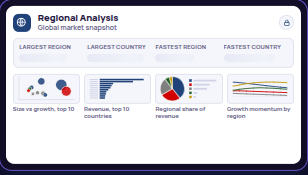
- Asia Pacific accounted for 41.04% in 2026, supported by expanding food and beverage production, packaged-liquid consumption, urbanization, organized retail, and e-commerce growth.
- The region combines the largest market position with fastest growth, supported by consumer-oriented manufacturing and rising demand for lightweight, recyclable, resource-efficient packaging.
Segment Momentum
- Plastics captured 31% of the market in 2026 because they offer durability, lightweight performance, cost-effectiveness, strong barrier protection, and compatibility with a wide range of liquid packaging applications.
- Paperboard is the fastest-growing material segment as demand for recyclable and renewable packaging increases, while advances in barrier coatings and processing technologies improve its performance for liquid packaging.
Market Expansion Drivers
- E-commerce expansion driving demand for durable and transport-optimized liquid packaging solutions
- Adoption of sustainable barrier coatings improving recyclability and packaging performance
- IoT-enabled smart packaging enhancing logistics tracking and supply chain visibility
Leading Market Participants
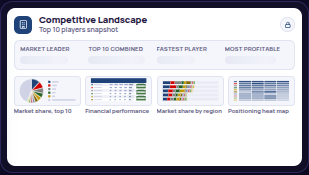
- Prominent companies in the liquid packaging market include Tetra Pak International S.A. (Switzerland), Amcor plc (Australia), SIG Group AG (Switzerland), Elopak ASA (Norway), Ball Corporation (United States), Crown Holdings, Inc. (United States), Ardagh Group S.A. (Luxembourg), O-I Glass, Inc. (United States), Sealed Air Corporation (United States), Smurfit Kappa Group plc (Ireland)
Global Market Forecast Snapshot
Market Outlook
- 2026 Market Size: USD 417.1 Billion
- 2027 Estimated Market Size: USD 439.62 Billion
- Projected Market Size: USD 772.72 Billion by 2036
- Growth Forecast: 6.36% CAGR (2027-2036)
Regional and Segment Outlook
- Leading Regional Market: Asia Pacific
- High-Growth Regional Hub: Asia Pacific
- Core Revenue Segment: Plastics (Material) | Food & Beverage (End User) | Rigid (Packaging) | Aseptic Liquid Packaging (Technology)
- Emerging Opportunity Segment: Paperboard (Material) | Food & Beverage (End User) | Flexible (Packaging) | Aseptic Liquid Packaging (Technology)
Market Growth Drivers and Industry Trends
E-commerce expansion driving demand for durable and transport-optimized liquid packaging solutions
Rapid growth in online retail is increasing the movement of beverages, personal care products, household chemicals, and other liquid goods through complex distribution networks, which will drive the liquid packaging market growth. Packaging manufacturers are developing stronger and more transport-efficient formats that minimize leakage, withstand repeated handling, and protect product integrity during shipping. The need to reduce product damage while maintaining consumer convenience is encouraging the adoption of innovative packaging designs optimized for direct-to-consumer delivery.
Adoption of sustainable barrier coatings improving recyclability and packaging performance
Environmental priorities and evolving packaging regulations are accelerating the use of advanced barrier technologies, allowing the liquid packaging market to expand through solutions that balance product protection with improved sustainability. Modern barrier coatings help preserve freshness and extend shelf life while reducing reliance on conventional multilayer structures that can complicate recycling processes. These material innovations enable manufacturers to meet both performance expectations and circular economy objectives across food, beverage, and consumer goods applications.
IoT-enabled smart packaging enhancing logistics tracking and supply chain visibility
Digital technologies are transforming packaging into an active source of operational data, and the liquid packaging market is benefiting from the growing integration of smart tracking capabilities throughout supply chains. IoT-enabled packaging solutions support real-time monitoring of product movement, storage conditions, and inventory status, helping manufacturers and distributors improve traceability and logistics efficiency. Enhanced visibility also assists in identifying handling issues, reducing product losses, and strengthening quality assurance across transportation and warehousing operations.
| Growth Driver | Impact on CAGR | Regulatory Influence | Geographic Relevance | Adoption Rate | Impact Timeline |
|---|---|---|---|---|---|
| E-commerce expansion driving demand for durable and transport-optimized liquid packaging solutions | 2% | Moderate | North America, Asia Pacific | High | Near Term |
| Adoption of sustainable barrier coatings improving recyclability and packaging performance | 1.7% | Moderate | Europe, North America | High | Mid Term |
| IoT-enabled smart packaging enhancing logistics tracking and supply chain visibility | 1.5% | Moderate | Asia Pacific, Europe | Emerging | Long Term |
Unlock insights tailored to your business with our bespoke market research solutions.
Click to get your customized report now.
Regional Demand Dynamics

Asia Pacific (Largest & Fastest-Growing Region)
Asia Pacific accounted for 41.04% of the liquid packaging market in 2026, making it both the largest and fastest-growing regional market. The region benefits from expanding food and beverage production, rising consumption of packaged liquids, and rapid urbanization that is reshaping purchasing and distribution patterns. Growth in organized retail, e-commerce, and consumer-oriented manufacturing is increasing the need for packaging that provides product protection, convenience, and efficient transportation. At the same time, manufacturers are placing greater emphasis on lightweight, recyclable, and resource-efficient packaging formats, encouraging technological development and supporting continued market expansion across the region.
| Parameter | North America | Asia Pacific | Europe | Latin America | MEA |
|---|---|---|---|---|---|
| Innovation HubiScaleNascentDeveloping Advanced | |||||
| Cost-Sensitive RegioniScaleLowMedium High | |||||
| Regulatory EnvironmentiScaleRestrictiveNeutral Supportive | |||||
| Demand DriversiScaleWeakModerate Strong | |||||
| Development StageiScaleEmergingDeveloping Developed | |||||
| Adoption RateiScaleLowMedium High | |||||
| New Entrants / StartupsiScaleSparseModerate Dense | |||||
| Macro IndicatorsiScaleWeakStable Strong |
Key Country Insights
United States 🇺🇸
Sustainable Packaging InnovationThe U.S. liquid packaging market is advancing toward recyclable, lightweight, and high-performance packaging formats across food, beverage, and personal care applications. Manufacturers invest in material innovation and production efficiency to address evolving sustainability and product protection requirements.
Germany 🇩🇪
High-Performance Packaging SystemsGermany prioritizes liquid packaging solutions that combine manufacturing precision with efficient material utilization. Packaging producers focus on recyclable formats, advanced barrier properties, and automation compatibility to meet the needs of diverse consumer and industrial liquid products.
Japan 🇯🇵
Functional Packaging DesignJapan emphasizes liquid packaging that balances convenience, product preservation, and efficient use of shelf space. Companies continue developing innovative container designs and advanced packaging materials that improve usability while maintaining product quality throughout distribution.
South Korea 🇰🇷
Convenience Packaging FormatsSouth Korea continues expanding liquid packaging solutions tailored to convenience-oriented consumer products and premium beverages. Manufacturers prioritize attractive packaging designs, lightweight materials, and efficient filling technologies that enhance production flexibility and retail appeal.
France 🇫🇷
Premium Product PresentationFrance values liquid packaging solutions that reinforce product quality across beverages, cosmetics, and specialty food segments. Packaging suppliers focus on sustainable materials, refined package aesthetics, and reliable barrier performance to support premium brand positioning.
Italy 🇮🇹
Flexible Filling SolutionsItaly's liquid packaging market supports diverse food, beverage, and industrial applications requiring adaptable packaging formats. Producers increasingly emphasize flexible packaging technologies, efficient filling operations, and recyclable materials to improve production efficiency and respond to changing customer requirements.
Liquid Packaging Market Share (%), by Material, 2026
Go beyond the chart, access full insights & data tables
Request Free Sample ReportMaterial Segment Analysis: Plastics (Largest Segment) vs Paperboard (Fastest-Growing Segment)
The plastics material segment dominated the liquid packaging market, accounting for 31% of the market share in 2026. Its leadership is supported by its excellent durability, lightweight characteristics, cost-effectiveness, and compatibility with a broad range of liquid products. Plastic packaging offers strong barrier properties and design flexibility, making it suitable for beverages, dairy products, household chemicals, and personal care applications. Its efficient manufacturing processes and ease of transportation continue to reinforce its widespread adoption across multiple industries.
The paperboard material segment is emerging as the fastest-growing category as sustainability initiatives reshape packaging preferences across consumer and industrial markets. Increasing demand for recyclable and renewable packaging solutions is encouraging manufacturers and brand owners to adopt paper-based alternatives for liquid packaging applications. Continuous innovation in barrier coatings and paperboard processing technologies is further improving product performance, supporting the rapid expansion of this segment.
End User Segment Analysis: Food & Beverage (Largest & Fastest-Growing Segment)
Holding 25.7% of the market share in 2026, the food & beverage end-user segment led the liquid packaging market while also remaining the fastest-growing category. Rising consumption of packaged beverages, dairy products, edible oils, sauces, and other liquid food products continues to drive demand for reliable packaging solutions that preserve freshness, maintain product quality, and extend shelf life. Growing consumer preference for convenient packaged products, coupled with continuous innovation in food packaging formats and sustainability initiatives, is expected to reinforce the segment's dominant position and ongoing growth.
Packaging Segment Analysis: Rigid (Largest Segment) vs Flexible (Fastest-Growing Segment)
The rigid packaging segment held the largest position in 2026, supported by its superior structural strength, product protection, and suitability for storing and transporting a wide variety of liquid products. Rigid containers remain widely preferred in applications where durability, product integrity, and resistance to external impact are critical. Their compatibility with established filling and distribution systems continues to support extensive adoption across multiple end-use industries.
In the liquid packaging market, flexible packaging is witnessing the fastest growth as manufacturers increasingly seek lightweight, space-efficient, and resource-efficient packaging formats. Flexible solutions reduce transportation costs, require less material, and provide greater convenience for consumers while supporting sustainability objectives. Ongoing advancements in flexible packaging materials and sealing technologies continue to accelerate adoption across diverse liquid product categories.
| Segment | Sub-Segment | Largest Segment | Fastest Growing |
|---|---|---|---|
| Material | Paperboard, Plastics, Glass, Metal, Others | Plastics | Paperboard |
| End User | Food & Beverage, Personal Care, Pharmaceutical, Household Care, Industrial, Others | Food & Beverage | Food & Beverage |
| Packaging | Flexible, Rigid | Rigid | Flexible |
| Technology | Aseptic Liquid Packaging, Blow Molding, Form Fill Seal | Aseptic Liquid Packaging | Aseptic Liquid Packaging |
Competitive Landscape and Market Positioning
Top players in the liquid packaging market:
- Tetra Pak International S.A. (Switzerland)
- Amcor plc (Australia)
- SIG Group AG (Switzerland)
- Elopak ASA (Norway)
- Ball Corporation (United States)
- Crown Holdings, Inc. (United States)
- Ardagh Group S.A. (Luxembourg)
- O-I Glass, Inc. (United States)
- Sealed Air Corporation (United States)
- Smurfit Kappa Group plc (Ireland)
Sustainability objectives are reshaping competitive dynamics in the liquid packaging market, prompting manufacturers to redesign packaging formats around material efficiency, recyclability, and compatibility with circular economy initiatives while preserving product protection and shelf performance. Rather than relying solely on packaging aesthetics or production scale, suppliers are competing through innovations that reduce material usage, improve filling-line efficiency, and accommodate a wider range of liquid products across food, beverage, healthcare, and industrial applications. Growing demand for convenience is also encouraging the development of lightweight, resealable, and application-specific packaging solutions that balance consumer expectations with operational requirements. This evolution is increasing the strategic importance of engineering expertise, manufacturing flexibility, and the ability to adapt packaging designs to changing regulatory and environmental priorities.
| Company | Market Share | Company Revenue | Revenue CAGR (%) | Product Portfolio | Geographic Presence | Innovation / R&D Focus | Strategic Developments |
|---|---|---|---|---|---|---|---|
| Tetra Pak International S.A. (Switzerland) | |||||||
| Amcor plc (Australia) | |||||||
| SIG Group AG (Switzerland) | |||||||
| Elopak ASA (Norway) | |||||||
| Ball Corporation (United States) | |||||||
| Crown Holdings Inc. (United States) | |||||||
| Ardagh Group S.A. (Luxembourg) | |||||||
| O-I Glass Inc. (United States) | |||||||
| Sealed Air Corporation (United States) | |||||||
| Smurfit Kappa Group plc (Ireland) |
Industry Development/News
| Company Name | Date | Key Development |
|---|---|---|
| RMB Corvest | Sep-24 | RMB Corvest completed a management buyout of Nampak Liquid Cartons, Nampak Zambia, and Nampak Malawi. The transaction facilitates independent ownership of these liquid carton operations and supports strategic portfolio restructuring. |
| Suzano | Sep-24 | Suzano finalized the acquisition of Pactiv Evergreen's Pine Bluff paper mill and Waynesville extrusion facility. The transaction expands Suzano's operational footprint and enhances its capacity to supply paper-based liquid packaging materials. |
| Oji | Sep-24 | Oji announced a ¥16 billion investment to construct a 57,000-square-meter liquid packaging carton manufacturing plant in Vietnam. The facility is scheduled to begin commercial operations in 2028, expanding regional production capacity. |
| Carton Service | Sep-24 | Carton Service upgraded its North American liquid packaging capabilities through machinery and patented technology investments at its manufacturing and testing facility, directly boosting liquid gable carton production capacity. |
| Stora Enso | Sep-24 | Stora Enso initiated the production ramp-up of its rebuilt consumer packaging board machine at the Oulu mill in Finland, expanding its capacity to supply board for liquid carton applications. |
| Toyo Ink India | Sep-24 | Toyo Ink India announced plans to expand its Gujarat facility, increasing liquid ink production capacity by approximately 1.5 times by 2028 to satisfy escalating demand from the packaging industry. |
| AeroFlexx | Sep-24 | AeroFlexx partnered with Packaging Imolese to expand its global manufacturing capabilities, accelerating the commercialization of its proprietary liquid packaging technology across personal care and household markets. |
| ABB | Sep-24 | ABB secured a modernization contract with Billerud to upgrade Paper Machine 5 at the Gävle mill with automation and quality control technologies, optimizing the efficiency of liquid packaging board production. |
| AeroFlexx | Jun-24 | AeroFlexx partnered with Chemipack to commercialize sustainable liquid packaging in Europe, installing its proprietary filling machine at Chemipack’s facility in Poland to leverage blending and filling capabilities exceeding 100 billion liters annually. |
| Amcor plc | Feb-24 | Amcor plc, Stonyfield Organic, and Cheer Pack North America commercialized the first all-polyethylene spouted pouch, transitioning a refrigerated yogurt line to a mono-material, recyclable design to advance sustainable liquid packaging. |
Customize Your Report
Explore examples of how this report can be tailored to different research needs, including custom segments, additional topics or chapters, and related reports. Click a section of the wheel or its numbered marker to explore the available options.
Liquid Packaging Market — Custom Segments
| Segment | Sub-Segment |
|---|---|
| Container Type | Bottles, Cartons, Pouches, Cans, Jars & Tubs |
| Closure Type | Screw Caps, Snap-On Caps, Flip-Top Caps, Spouts, Lids |
| Sustainability Profile | Conventional Packaging, Recyclable Packaging, Recycled-Content Packaging, Bio-based/Compostable Packaging |
Liquid Packaging Market — Custom TOC
| Custom Chapter | Chapter Details |
|---|---|
| Sustainable Packaging Transition |
|
| Circularity & Recycling Ecosystem |
|
| Packaging Format Innovation Outlook |
|
Need a different cut of the data?
Request Custom ResearchFrequently Asked Questions
What is the current revenue of the liquid packaging market?
What is the forecasted size of the liquid packaging industry?
How is e-commerce reshaping product development priorities in the liquid packaging market?
Why are smart and sustainable packaging technologies gaining strategic importance in the liquid packaging market?
Why do plastics remain the leading material in the liquid packaging market?
What is accelerating the growth of paperboard in the liquid packaging market?
Why does Asia Pacific lead the liquid packaging market?
What is driving Asia Pacific’s continued growth in the liquid packaging market?
Which companies are driving growth in the liquid packaging landscape?
Our Clients
"The report provided a thorough look at market trends, technological advancements, and the competitive landscape. The depth of insights was really valuable."
ITC Limited
"We would highly recommend Fundamental Business Insights & Consulting to anyone looking for reliable, detailed, and comprehensive market research in the Food industry."
Tyson Foods
"The clarity and presentation of the information were commendable. The report was delivered timely, which made the overall experience smooth and convenient."
Mondelēz International
Our Research Team & Methodology
Every Fundamental Business Insights report is built by a dedicated vertical research team, validated through a structured primary-and-secondary methodology, and reviewed for accuracy before it reaches you.
Delivery
Published
Available
Support
- Market Size & Forecast
- Market Segmentation
- Regional Analysis
- Growth Drivers & Challenges
- Market Dynamics
- Competitive Landscape
- Company Profiles
- Competitive Benchmarking
- Mergers & Acquisitions
- Market Share Analysis or Key Company Strategies
- Value Chain Analysis
- Porter's Five Forces
- PESTLE Analysis
- Pricing Trends
- Supply-Demand Analysis
- Technology Landscape
- Regulatory Landscape
- Investment & Funding Landscape
- Emerging Opportunities
- Future Market Outlook