



LNG Virtual Pipeline Market Size & Growth Forecast 2027–2036, By Segments (Mode of Transportation, End Use), Regional Demand Trends (North America, Asia Pacific, Europe), Key Country Insights (U.S., Japan, South Korea, Germany, France, Italy), and Competitive Landscape
Market Size and Growth Outlook
LNG Virtual Pipeline Market size was more than USD 1.6 Billion in 2026 and is set to grow at 5.72% CAGR between 2027 and 2036, attaining USD 2.79 Billion by 2036. The industry revenue for 2027 is assessed at USD 1.68 Billion.
Base Year Value (2026)
USD 1.6 Billion
CAGR (2027-2036)
5.72%
Forecast Year Value (2036)
USD 2.79 Billion

Historical Data Period
2022-2026

Largest Region
Europe

Forecast Period
2027-2036
LNG Virtual Pipeline Market Intelligence Snapshot:
-
Regional Market Dynamics:
- Europe leads due to strong energy-security priorities, gas-supply diversification, and demand for flexible LNG transportation serving industrial, commercial, and isolated power-generation sites.
- Industrial expansion, urbanization, rising energy consumption, limited pipeline connectivity, and investments in LNG storage and distribution infrastructure are supporting rapid regional adoption.
-
Segment Momentum:
- Truck transportation accounted for 50.67% of the market in 2025 due to its flexibility, established logistics networks, and ability to efficiently deliver LNG to industrial, commercial, and remote locations without pipeline access.
- The transportation segment is expanding rapidly as LNG adoption increases across commercial vehicles and marine transport, supported by investments in refueling infrastructure and growing demand for lower-emission fuel alternatives.
-
Market Expansion Drivers:
- Energy transition toward natural gas accelerating decentralized LNG distribution infrastructure
- Increasing renewable gas integration supporting hybrid LNG supply chain expansion
- Rising off-grid industrial fuel demand boosting mobile LNG logistics deployment
-
Leading Market Participants:
Key players in the LNG virtual pipeline market include Air Products and Chemicals, Inc. (United States), Hexagon Composites ASA (Norway), Kinder Morgan, Inc. (United States), Aggreko plc (United Kingdom), PETRONAS (Malaysia), Snam S.p.A. (Italy), Galileo Technologies S.A. (Argentina), NG Advantage LLC (United States), Stabilis Solutions, Inc. (United States), Xpress Natural Gas LLC (United States)
Global Market Forecast Snapshot:
-
Market Outlook:
- 2026 Market Size: USD 1.6 Billion
- 2027 Estimated Market Size: USD 1.68 Billion
- Projected Market Size: USD 2.79 Billion by 2036
- Growth Forecasts: 5.72% CAGR (2027-2036)
-
Regional and Segment Outlook:
- Leading Regional Market: Europe
- High-Growth Regional Hub: Asia Pacific
- Core Revenue Segment: Truck (Mode of Transportation) | Industrial (End Use)
- Emerging Opportunity Segment: Ship (Mode of Transportation) | Transportation (End Use)
Market Growth Drivers and Industry Trends
Energy transition toward natural gas accelerating decentralized LNG distribution infrastructure
The ongoing shift toward cleaner-burning fuels is encouraging industries and utilities to adopt natural gas in locations beyond the reach of conventional pipeline networks. The LNG virtual pipeline market is driven by growing investment in decentralized distribution infrastructure that transports liquefied natural gas through road, rail, or marine logistics to remote consumers. Virtual pipeline systems enable reliable fuel delivery while reducing dependence on fixed pipeline construction, providing greater flexibility for regions with dispersed industrial demand and limited gas transmission infrastructure.
Increasing renewable gas integration supporting hybrid LNG supply chain expansion
The growing incorporation of renewable gases into existing energy systems is encouraging the development of hybrid fuel supply networks that combine conventional and low-carbon energy sources. This trend will propel the LNG virtual pipeline market by supporting distribution models capable of transporting liquefied natural gas alongside evolving renewable gas infrastructure. Flexible logistics solutions help energy providers optimize fuel availability, improve supply continuity, and facilitate gradual integration of cleaner gaseous fuels across diverse industrial and commercial applications.
Rising off-grid industrial fuel demand boosting mobile LNG logistics deployment
Industrial facilities operating in remote locations are increasingly seeking dependable fuel alternatives that can be delivered without permanent pipeline infrastructure. Within this environment, the LNG virtual pipeline market benefits from expanding deployment of mobile LNG logistics solutions that ensure continuous energy supply for mining, manufacturing, power generation, and other energy-intensive operations. Mobile transportation and storage systems allow operators to access natural gas efficiently while maintaining operational flexibility across geographically isolated sites.
| Growth Driver Assessment Framework | |||||
| Growth Driver | Impact On CAGR | Regulatory Influence | Geographic Relevance | Adoption Rate | Impact Timeline |
|---|---|---|---|---|---|
| Energy transition toward natural gas accelerating decentralized LNG distribution infrastructure | 2% | High | Asia Pacific, Europe | High | Mid Term |
| Increasing renewable gas integration supporting hybrid LNG supply chain expansion | 1.7% | High | North America, Europe | Medium | Mid Term |
| Rising off-grid industrial fuel demand boosting mobile LNG logistics deployment | 1.5% | Moderate | Asia Pacific, Latin America | Medium | Near Term |
Unlock insights tailored to your business with our bespoke market research solutions - Click to get your customized report now!
Regional Demand Dynamics
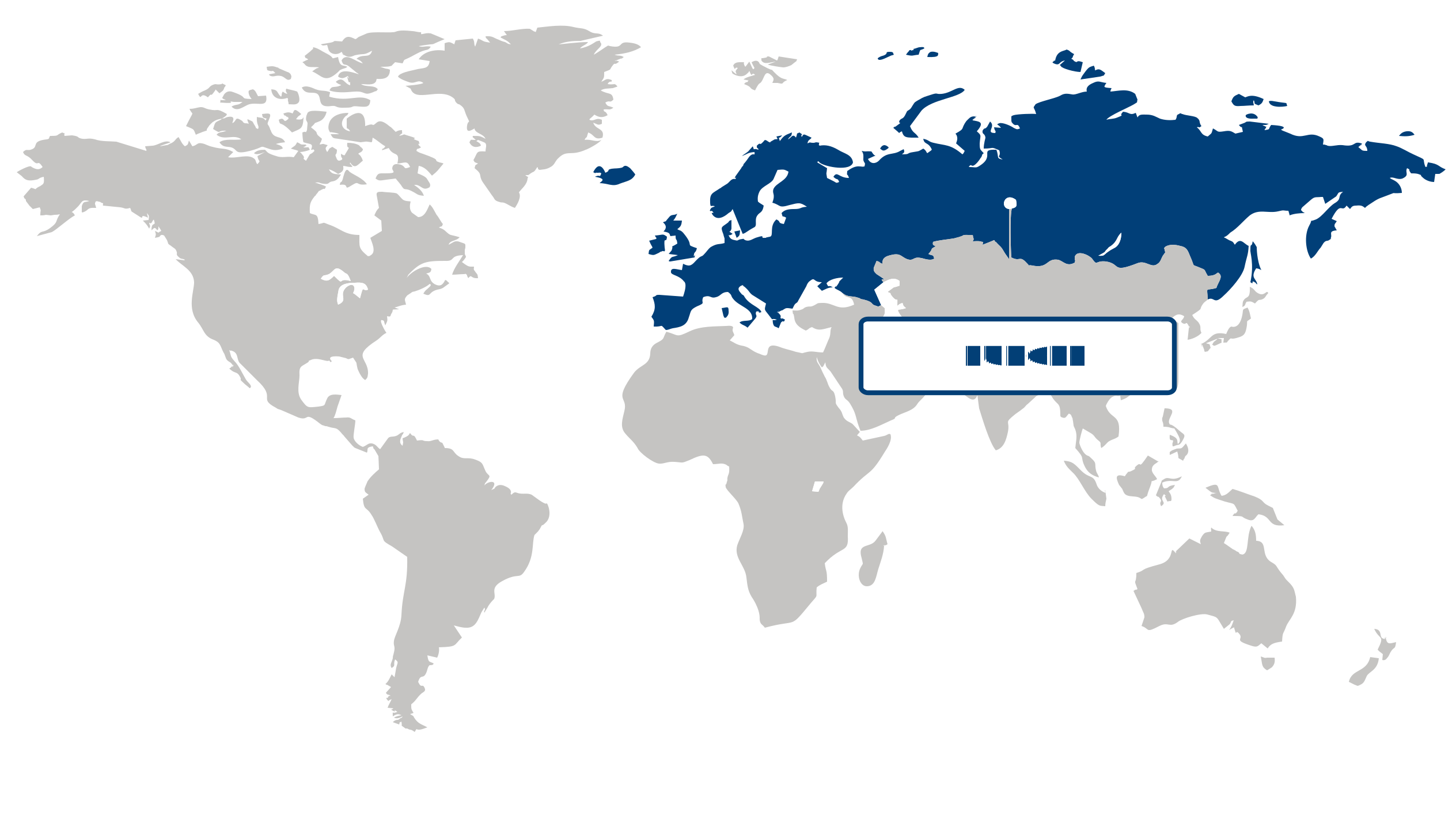
Largest Region
Europe
Largest Market Share in 2026
Europe (Largest Region) vs Asia Pacific (Fastest-Growing Region)
The LNG virtual pipeline market was led by Europe in 2026, reflecting the region's strong focus on energy security, diversification of gas supplies, and development of flexible alternatives to conventional pipeline infrastructure. Virtual LNG transportation systems provide a practical means of supplying gas to locations where fixed pipeline networks are unavailable or difficult to expand, supporting energy access across remote and underserved areas. The region's efforts to strengthen supply resilience and accommodate changing energy infrastructure requirements are encouraging investment in flexible gas transportation solutions. Furthermore, demand from industrial facilities, commercial users, and isolated power-generation sites is supporting the use of LNG delivered through road, rail, and other transport-based distribution networks.
Asia Pacific is projected to be the fastest-growing region as expanding industrial activity, urbanization, and rising energy consumption increase demand for reliable gas supplies. Many areas continue to develop energy infrastructure where conventional pipeline connectivity is limited, creating opportunities for virtual pipeline models to provide flexible LNG access. Growing interest in cleaner-burning fuels for industrial and power applications is also supporting LNG adoption as economies seek to diversify their energy mix. Investments in LNG receiving, storage, transportation, and distribution infrastructure are further improving the feasibility of virtual pipeline networks, particularly in developing markets where demand centers are geographically dispersed.
No card data available for this language/report.
Segment Leadership and Growth Trends
Mode of Transportation Segment Analysis: Truck (Largest Segment) vs Ship (Fastest-Growing Segment)
The truck transportation segment led the LNG virtual pipeline market with a 50.67% share in 2026. Trucks remain the preferred mode for delivering liquefied natural gas to locations that lack access to conventional pipeline infrastructure due to their operational flexibility and ability to serve dispersed industrial, commercial, and remote customers. Their established logistics networks, relatively quick deployment, and suitability for short- and medium-distance distribution continue to support their dominant market position.
The ship transportation segment is expected to record the fastest growth, driven by rising LNG demand across coastal regions and islands where marine transport offers an efficient supply solution. Increasing investments in small-scale LNG infrastructure and expanding maritime distribution networks are enhancing the viability of ship-based transportation. The growing need to deliver cleaner fuel to geographically isolated markets is further strengthening the adoption of this transportation mode.
End Use Segment Analysis: Industrial (Largest Segment) vs Transportation (Fastest-Growing Segment)
The industrial end-use segment held the largest share of the market in 2026, supported by widespread LNG adoption across manufacturing facilities, processing plants, and other energy-intensive industries seeking cleaner and more reliable fuel alternatives. Industrial users benefit from LNG's lower emissions profile, consistent energy supply, and suitability for operations located beyond the reach of natural gas pipelines. These advantages continue to drive strong demand from the industrial sector.
The transportation end-use segment is anticipated to expand at the fastest pace as the LNG virtual pipeline market benefits from increasing adoption of LNG-powered commercial vehicles and marine transport. Growing efforts to reduce emissions from the transportation sector, along with supportive investments in LNG refueling infrastructure, are encouraging broader fuel substitution. Rising interest in cleaner mobility solutions and alternative fuels is expected to sustain strong growth within this segment.
| Report Segmentation | |||
| Segment | Sub-Segment | Largest Segment | Fastest Growing Segment |
|---|---|---|---|
| Mode of Transportation | Truck, Rail, Ship, Barge | Truck | Ship |
| End Use | Commercial, Industrial, Transportation | Industrial | Transportation |
 Read our Research Approach
Competitive Landscape and Market Positioning
Leading companies in the LNG virtual pipeline market:
- Air Products and Chemicals, Inc. (United States)
- Hexagon Composites ASA (Norway)
- Kinder Morgan, Inc. (United States)
- Aggreko plc (United Kingdom)
- PETRONAS (Malaysia)
- Snam S.p.A. (Italy)
- Galileo Technologies S.A. (Argentina)
- NG Advantage LLC (United States)
- Stabilis Solutions, Inc. (United States)
- Xpress Natural Gas LLC (United States)
Market participants are expanding beyond transportation services by developing integrated delivery models that improve supply reliability for customers located outside conventional pipeline networks. Competitive positioning increasingly depends on the ability to coordinate logistics, storage, monitoring, and distribution within a unified operational framework, enabling more consistent fuel availability across geographically dispersed sites. As industrial users seek dependable energy solutions with greater operational flexibility, providers offering stronger scheduling capabilities, infrastructure integration, and end-to-end service management are gaining an advantage over competitors focused primarily on fuel movement.
Industry Development/News
| Company Name | Date | Key Development |
|---|---|---|
| Kinder Morgan | Aug-22 | Kinder Morgan acquired North American Natural Resources, Inc., alongside partner firms including North American BiofueLLC, for USD 135 million, bringing total strategic investments associated with the initiative to approximately USD 175 million including contractual costs. |
| Petronas | Sep-20 | Petronas unveiled its virtual pipeline system solution originating from the Regasification Terminal in Peninsular Malaysia, a strategic operational initiative designed to advance clean energy utilization and enhance regional distribution capabilities. |
Why Choose Us
Specialized Expertise: Our team comprises industry experts with a deep understanding of your market segment. We bring specialized knowledge and experience that ensures our research and consulting services are tailored to your unique needs.
Customized Solutions: We understand that every client is different. That's why we offer customized research and consulting solutions designed specifically to address your challenges and capitalize on opportunities within your industry.
Proven Results: With a track record of successful projects and satisfied clients, we have demonstrated our ability to deliver tangible results. Our case studies and testimonials speak to our effectiveness in helping clients achieve their goals.
Cutting-Edge Methodologies: We leverage the latest methodologies and technologies to gather insights and drive informed decision-making. Our innovative approach ensures that you stay ahead of the curve and gain a competitive edge in your market.
Client-Centric Approach: Your satisfaction is our top priority. We prioritize open communication, responsiveness, and transparency to ensure that we not only meet but exceed your expectations at every stage of the engagement.
Continuous Innovation: We are committed to continuous improvement and staying at the forefront of our industry. Through ongoing learning, professional development, and investment in new technologies, we ensure that our services are always evolving to meet your evolving needs.
Value for Money: Our competitive pricing and flexible engagement models ensure that you get maximum value for your investment. We are committed to delivering high-quality results that help you achieve a strong return on your investment.
Select Licence Type

