



Low Temperature Commercial Boiler Market Size & Growth Forecast 2027–2036, By Segments (Temperature, Technology, Fuel, Capacity, Application), Regional Demand Trends (North America, Asia Pacific, Europe), Key Country Insights (U.S., Japan, South Korea, Germany, France, Italy), and Competitive Landscape
Market Size and Growth Outlook
Low Temperature Commercial Boiler Market size was over USD 7.27 Billion in 2026 and is likely to grow at 6.78% CAGR between 2027 and 2036, crossing USD 14.01 Billion by 2036. The industry revenue for 2027 is assessed at USD 7.69 Billion.
Base Year Value (2026)
USD 7.27 Billion
CAGR (2027-2036)
6.78%
Forecast Year Value (2036)
USD 14.01 Billion

Historical Data Period
2022-2026

Largest Region
Europe

Forecast Period
2027-2036
Low Temperature Commercial Boiler Market Intelligence Snapshot:
-
Regional Market Dynamics:
- Europe leads through its extensive commercial building stock, established heating infrastructure, strong energy-efficiency focus, and replacement of older equipment with lower-temperature systems.
- HVAC modernization, commercial construction and renovation, growing energy-performance priorities, lower-emission heating demand, and integration with modern building controls are strengthening adoption.
-
Segment Momentum:
- The 160°F–180°F temperature segment led the market with a 28.94% share in 2025 due to its dependable heating performance, compatibility with established building systems, and consistent thermal efficiency.
- Condensing technology is both the largest and fastest-growing segment because it maximizes heat recovery, improves energy efficiency, lowers fuel consumption, and supports environmental compliance while reducing operating costs across commercial buildings.
-
Market Expansion Drivers:
- Commercial building heating demand driving low temperature boiler installations
- Regulatory emissions standards accelerating replacement of inefficient legacy boiler systems
- Retrofit of aging HVAC infrastructure improving energy-efficient heating adoption
-
Leading Market Participants:
Major companies in the low temperature commercial boiler market include Viessmann Group (Germany), Vaillant Group (Germany), Cleaver-Brooks Inc. (United States), Babcock & Wilcox Enterprises Inc. (United States), Ariston Holding N.V. (Italy), Bosch Thermotechnology (Germany), Weil-McLain (United States), Hoval AG (Liechtenstein), FERROLI S.p.A. (Italy), The Fulton Companies (United States)
Global Market Forecast Snapshot:
-
Market Outlook:
- 2026 Market Size: USD 7.27 Billion
- 2027 Estimated Market Size: USD 7.69 Billion
- Projected Market Size: USD 14.01 Billion by 2036
- Growth Forecasts: 6.78% CAGR (2027-2036)
-
Regional and Segment Outlook:
- Leading Regional Market: Europe
- High-Growth Regional Hub: North America
- Core Revenue Segment: 160°F - 180°F (Temperature) | Condensing (Technology) | Natural Gas (Fuel) | ≤ 0.3 - 2.5 MMBtu/hr (Capacity) | Healthcare Facilities (Application)
- Emerging Opportunity Segment: ≤ 120°F (Temperature) | Condensing (Technology) | Natural Gas (Fuel) | ≤ 0.3 - 2.5 MMBtu/hr (Capacity) | Healthcare Facilities (Application)
Market Growth Drivers and Industry Trends
Commercial building heating demand driving low temperature boiler installations
The growing need for dependable and energy-efficient heating across commercial properties is creating sustained opportunities that will drive the low temperature commercial boiler market growth. Office buildings, educational institutions, healthcare facilities, hospitality establishments, and retail complexes increasingly require heating systems capable of maintaining consistent indoor comfort while reducing energy consumption. Low temperature commercial boilers operate efficiently by delivering heat at lower water temperatures, improving overall system performance and lowering operating costs. Their compatibility with modern building heating networks makes them a preferred solution for commercial facilities seeking reliable thermal management without excessive energy use.
Regulatory emissions standards accelerating replacement of inefficient legacy boiler systems
Evolving environmental regulations are encouraging building owners to modernize outdated heating infrastructure, which will propel the low temperature commercial boiler market growth. Compliance with stricter emissions requirements is prompting the replacement of aging boilers that consume more fuel and generate higher levels of pollutants than modern alternatives. Low temperature commercial boilers improve combustion efficiency while reducing emissions through optimized operating conditions and better heat utilization. These advantages support commercial facilities in meeting environmental compliance objectives while improving overall heating system performance and operational reliability.
Retrofit of aging HVAC infrastructure improving energy-efficient heating adoption
Modernization of existing commercial buildings is increasing investment in efficient heating technologies, creating favorable conditions that will boost the low temperature commercial boiler market demand. Many aging HVAC systems require upgrades to improve energy performance, reduce maintenance requirements, and integrate with advanced building management systems. Low temperature commercial boilers can be incorporated into retrofit projects with minimal disruption while enhancing heating efficiency and supporting more effective temperature control throughout commercial spaces. Their adaptability allows facility owners to improve building performance without undertaking complete heating system replacement.
| Growth Driver Assessment Framework | |||||
| Growth Driver | Impact On CAGR | Regulatory Influence | Geographic Relevance | Adoption Rate | Impact Timeline |
|---|---|---|---|---|---|
| Commercial building heating demand driving low temperature boiler installations | 2% | High | Europe, North America | High | Near Term |
| Regulatory emissions standards accelerating replacement of inefficient legacy boiler systems | 1.8% | High | Europe | High | Mid Term |
| Retrofit of aging HVAC infrastructure improving energy-efficient heating adoption | 1.5% | Moderate | Asia Pacific, Europe | Medium | Mid Term |
Unlock insights tailored to your business with our bespoke market research solutions - Click to get your customized report now!
Regional Demand Dynamics
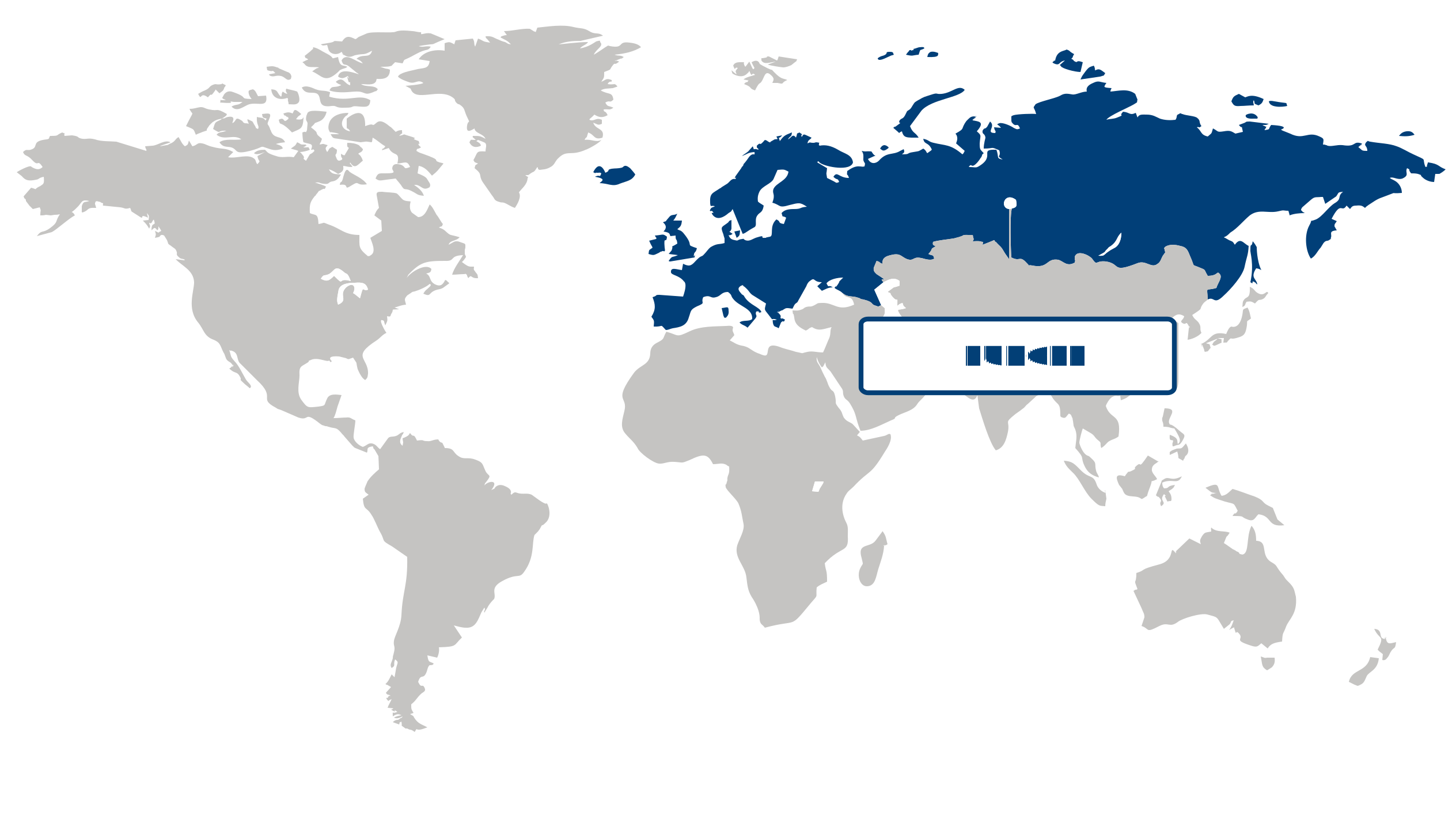
Largest Region
Europe
Largest Market Share in 2026
Europe (Largest Region) vs North America (Fastest-Growing Region)
Europe accounted for the largest share of the low temperature commercial boiler market in 2026, reflecting its extensive commercial building stock, established heating infrastructure, and strong focus on energy efficiency. Commercial facilities are increasingly replacing older heating equipment with systems designed to operate efficiently at lower temperatures, particularly as building owners pursue reduced energy consumption and improved heating performance. Environmental policies and decarbonization objectives are also encouraging the transition toward more efficient heating technologies. The region's mature construction and building renovation sectors provide a sustained application base for low-temperature boilers across offices, hospitality facilities, retail properties, and institutional buildings.
North America is expected to experience the fastest growth as commercial building operators increasingly prioritize energy-efficient heating systems and modernization of aging HVAC infrastructure. Growing attention to building energy performance is encouraging investments in equipment that can provide reliable space heating while improving overall system efficiency. The expansion of commercial construction and renovation activity is also creating opportunities for low-temperature boiler installations. Furthermore, increasing interest in lower-emission heating solutions and integration with modern building control systems is supporting adoption among commercial property owners seeking greater operational efficiency and improved energy management.
No card data available for this language/report.
Segment Leadership and Growth Trends
Temperature Segment Analysis: 160°F - 180°F (Largest Segment) vs ≤ 120°F (Fastest-Growing Segment)
The 160°F–180°F temperature segment accounted for 28.94% share in 2026 and led the low temperature commercial boiler market. This operating temperature range is widely utilized across commercial buildings because it provides dependable heating performance while supporting space heating and hot water requirements under varying operating conditions. Its compatibility with established building heating systems, combined with consistent thermal efficiency and reliable operation, has contributed to broad market adoption. Ongoing modernization of commercial heating infrastructure continues to sustain the segment's leading position.
The ≤ 120°F temperature segment is expected to experience the fastest growth as commercial facilities increasingly prioritize energy-efficient heating solutions. Lower-temperature boiler operation aligns well with advanced hydronic systems and modern building efficiency strategies aimed at reducing energy consumption while maintaining occupant comfort. Rising adoption of sustainable building designs and low-emission heating technologies is expected to encourage greater deployment of boilers operating within this temperature range.
Technology Segment Analysis: Condensing (Largest & Fastest-Growing Segment)
The condensing technology segment dominated the low temperature commercial boiler market and remained the fastest-growing technology, holding the largest share in 2026. Condensing boilers are increasingly preferred because they maximize heat recovery from exhaust gases, enabling superior energy efficiency and lower fuel consumption compared with conventional systems. Their ability to support stringent environmental requirements while reducing operating costs has encouraged widespread adoption across offices, educational institutions, healthcare facilities, hotels, and other commercial buildings. Continued investments in energy-efficient building infrastructure and sustainable heating solutions are expected to reinforce the segment's leadership.
Fuel Segment Analysis: Natural Gas (Largest & Fastest-Growing Segment)
The natural gas fuel segment led the low temperature commercial boiler market and represented the fastest-growing fuel category, holding the largest share in 2026. Natural gas remains the preferred fuel because it offers dependable availability, efficient combustion characteristics, and comparatively lower emissions than many conventional alternatives. Its extensive distribution infrastructure and compatibility with high-efficiency commercial boiler systems support broad adoption across a wide range of commercial facilities. As building owners continue to prioritize cost-effective, cleaner heating solutions, the natural gas segment is expected to maintain its dominant position while sustaining strong market expansion.
| Report Segmentation | |||
| Segment | Sub-Segment | Largest Segment | Fastest Growing Segment |
|---|---|---|---|
| Temperature | ≤ 120°F, 120°F - 140°F, 140°F - 160°F, 160°F - 180°F | 160°F - 180°F | ≤ 120°F |
| Technology | Condensing, Non-Condensing | Condensing | Condensing |
| Fuel | Natural Gas, Oil, Coal, Others | Natural Gas | Natural Gas |
| Capacity | ≤ 0.3 - 2.5 MMBtu/hr, > 2.5 - 10 MMBtu/hr, > 10 - 50 MMBtu/hr, > 50 - 100 MMBtu/hr, > 100 - 250 MMBtu/hr | ≤ 0.3 - 2.5 MMBtu/hr | ≤ 0.3 - 2.5 MMBtu/hr |
| Application | Offices, Healthcare Facilities, Educational Institutions, Lodgings, Retail Stores, Others | Healthcare Facilities | Healthcare Facilities |
 Read our Research Approach
Competitive Landscape and Market Positioning
Major players in the low temperature commercial boiler market:
- Viessmann Group (Germany)
- Vaillant Group (Germany)
- Cleaver-Brooks, Inc. (United States)
- Babcock & Wilcox Enterprises, Inc. (United States)
- Ariston Holding N.V. (Italy)
- Bosch Thermotechnology (Germany)
- Weil-McLain (United States)
- Hoval AG (Liechtenstein)
- FERROLI S.p.A. (Italy)
- The Fulton Companies (United States)
Market dynamics are increasingly shaped by the transition toward energy-efficient building systems, prompting manufacturers to refine product designs that balance heating performance with lower operating costs. Rather than relying on broad product portfolios, many suppliers are strengthening their positions through application-focused solutions designed for commercial buildings with varying occupancy patterns and energy management requirements. Integration with digital monitoring platforms, simplified maintenance, and compatibility with modern building controls have become meaningful competitive differentiators, while evolving efficiency regulations continue to reward companies capable of delivering equipment that supports long-term building modernization strategies.
Industry Development/News
| Company Name | Date | Key Development |
|---|---|---|
| Hurst Boiler & Welding Company | May-23 | Hurst Boiler & Welding Company finalized a strategic sales representative agreement with Nationwide Boiler, appointing Nationwide as the representative for California and the Greater Houston Area of Texas. This partnership expands Hurst Boiler's market reach and grants regional customers access to its comprehensive product line and technical expertise. |
| Babcock Wanson Group | Jan-23 | Babcock Wanson Group partnered with Parat, backed by majority shareholder Kartesia, to advance European industrial boiler decarbonization solutions. The collaboration integrates Parat's expertise in electric boilers, electrode technology, and high-voltage systems to strengthen their combined market position in energy transition initiatives. |
Why Choose Us
Specialized Expertise: Our team comprises industry experts with a deep understanding of your market segment. We bring specialized knowledge and experience that ensures our research and consulting services are tailored to your unique needs.
Customized Solutions: We understand that every client is different. That's why we offer customized research and consulting solutions designed specifically to address your challenges and capitalize on opportunities within your industry.
Proven Results: With a track record of successful projects and satisfied clients, we have demonstrated our ability to deliver tangible results. Our case studies and testimonials speak to our effectiveness in helping clients achieve their goals.
Cutting-Edge Methodologies: We leverage the latest methodologies and technologies to gather insights and drive informed decision-making. Our innovative approach ensures that you stay ahead of the curve and gain a competitive edge in your market.
Client-Centric Approach: Your satisfaction is our top priority. We prioritize open communication, responsiveness, and transparency to ensure that we not only meet but exceed your expectations at every stage of the engagement.
Continuous Innovation: We are committed to continuous improvement and staying at the forefront of our industry. Through ongoing learning, professional development, and investment in new technologies, we ensure that our services are always evolving to meet your evolving needs.
Value for Money: Our competitive pricing and flexible engagement models ensure that you get maximum value for your investment. We are committed to delivering high-quality results that help you achieve a strong return on your investment.
Select Licence Type

