Luxury Tableware Market Size & Forecasts 2026-2035, By Segments (Price Range, Material, Design Style, Product Type, Distribution Channel), Growth Opportunities, Innovation Landscape, Regulatory Shifts, Strategic Regional Insights (U.S., Japan, China, South Korea, UK, Germany, France), and Competitive Dynamics (Lenox, Christofle, Wedgwood, Villeroy & Boch, Royal Doulton)
Market Size and Growth Outlook
Luxury Tableware Market size is forecasted to reach USD 41.01 billion by 2035, rising from USD 23.56 billion in 2025, at a CAGR of more than 5.7% between 2026 and 2035. In 2026, revenue is projected at USD 24.73 billion.
Get more details on this report
Request Free Sample ReportLuxury Tableware Market Intelligence Snapshot
Regional Market Dynamics
Segment Momentum
Market Expansion Drivers
Leading Market Participants
Global Market Forecast Snapshot
Market Outlook
Regional and Segment Outlook
Market Growth Drivers and Industry Trends
The luxury tableware market is being shaped profoundly by consumers’ increasing preference for elevated dining environments at home and in upscale hospitality settings. Affluent buyers are prioritizing artisanal craftsmanship and exclusive design to enhance meal experiences, as reflected in Hermès’ 2023 launch of bespoke porcelain collections that emphasize personalization and heritage aesthetics. This trend aligns with broader shifts toward experiential luxury and cultural sophistication, encouraging brands to deepen storytelling and customization offerings. For established players, this fosters opportunities to leverage brand heritage and exclusivity, while new entrants can focus on niche artisanal innovations that highlight provenance. As consumers continue valuing unique, immersive dining moments, companies integrating authentic craftsmanship with differentiated narratives will sustain competitive advantage in the luxury tableware market.
Innovations in Luxury Tableware Materials & Design
Advances in materials and design innovation are key drivers of transformation within the luxury tableware market, as brands experiment with sustainable, resilient, and visually striking elements. For instance, Christofle recently unveiled collections incorporating recycled metals and bioceramics, responding to rising consumer consciousness around environmental impact without compromising aesthetic excellence. Such innovation not only aligns with evolving regulatory expectations and sustainability mandates globally but also addresses younger affluent cohorts who prioritize ethical consumption. Established manufacturers gain avenues to reposition themselves as eco-conscious luxury brands, while disruptors can capitalize by introducing cutting-edge materials and production techniques. Continued investment in R&D and collaboration with designers attuned to sustainability will shape the market’s future dynamics.
Growth of Hospitality & Luxury Real Estate Markets
Expansion in luxury hospitality and premium real estate sectors drives demand for high-end tableware that complements curated lifestyle environments, reinforcing the luxury tableware market's growth trajectory. Global hotel brands like Four Seasons and Aman Resorts increasingly partner with luxury tableware manufacturers to provide exclusive collections tailored to their elite clientele, elevating brand differentiation. Similarly, developers of luxury residences incorporate customized tableware to enhance property appeal and exclusivity. This synergy creates strategic openings for luxury tableware firms to establish prestige partnerships and embedded design programs, amplifying brand visibility and recurring revenue. As the hospitality and real estate markets evolve to emphasize bespoke luxury experiences, integrated collaborations will remain pivotal for sustained market expansion.
Industry Restraints:
High Production Costs and Artisanal Labor Constraints
The luxury tableware market is significantly constrained by the high production costs associated with premium materials and skilled craftsmanship. The artisanal nature of luxury tableware—often involving precious metals, fine porcelain, and hand-painted designs—limits scalability and elevates input expenses. According to Hermès’ 2023 corporate sustainability report, maintaining artisanal craftsmanship ensures product exclusivity but drives cost structures higher, restricting pricing flexibility and consumer accessibility. This dynamic poses challenges for established players who must balance exclusivity with profitability, and new entrants face steep barriers due to investment in artisanal skills and sourcing rare materials. Strategically, companies increasingly must innovate supply chains or explore selective automation without compromising craftsmanship. Moving forward, sustained labor cost pressures and material scarcity will keep production costs elevated, serving as a persistent bottleneck for market expansion and new product launches.
Sustainability and Ethical Sourcing Pressures
Increasing consumer and regulatory demands for sustainability and ethical sourcing impose critical operational challenges on luxury tableware manufacturers. The European Chemicals Agency (ECHA) tightened restrictions on hazardous substances in ceramics and metallic glazes through REACH regulations, compelling brands to reformulate products or risk market exclusion. Simultaneously, environmental advocacy, as highlighted by the World Wildlife Fund (WWF), pressures companies to adopt eco-friendly production and responsibly sourced raw materials like fine porcelain clay or precious metals, often raising costs and complicating supply chains. These pressures slow product development cycles and raise compliance risks, demanding operational transparency and traceability from market participants. For industry leaders and entrants alike, integrating sustainability is essential but costly and complex. Over the coming years, regulatory enforcement and consumer advocacy will intensify, institutionalizing sustainability as a fundamental constraint shaping competitive positioning and innovation trajectories.
| Growth Driver | Impact on CAGR | Regulatory Influence | Geographic Relevance | Adoption Rate | Impact Timeline |
|---|---|---|---|---|---|
| Rising Demand for Premium Dining Experiences | 2.00% | Short term (≤ 2 yrs) | North America, Europe; Spillover: Asia Pacific | Low | Fast |
| Innovations in Luxury Tableware Materials & Design | 1.80% | Medium term (2–5 yrs) | North America, Europe; Spillover: Asia Pacific | Low | Moderate |
| Growth of Hospitality & Luxury Real Estate Markets | 1.90% | Long term (5+ yrs) | Asia Pacific, North America; Spillover: Europe | Medium | Moderate |
Explore Growth Opportunities
Request Free Sample ReportRegional Demand Dynamics
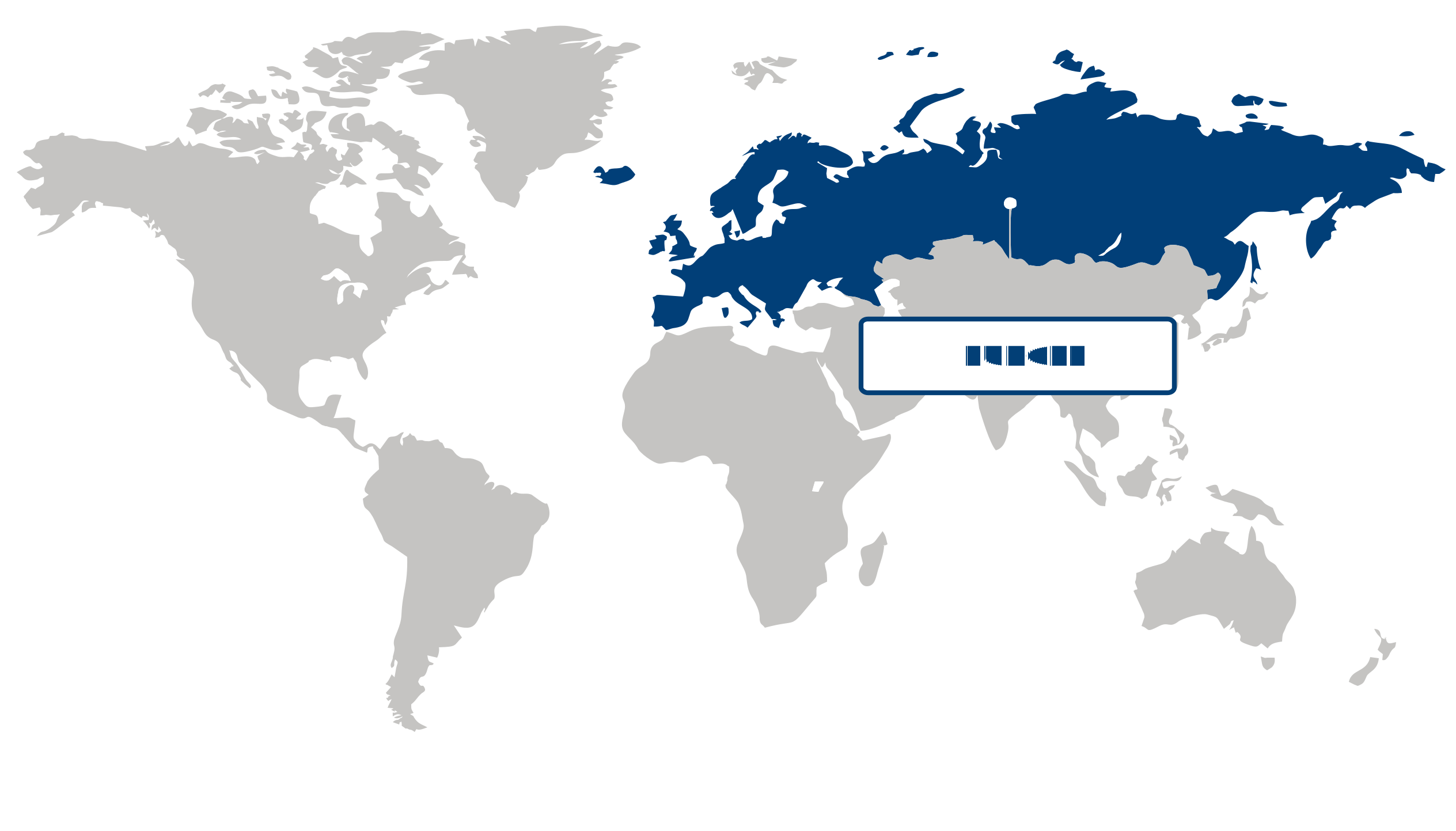
Europe dominated the luxury tableware market in 2025, representing more than 43% of the global share. This leadership stems from the region's strong heritage craftsmanship deeply rooted in countries like Italy and France, which sustains high demand for premium, artisanal tableware. The presence of affluent consumer segments coupled with a thriving luxury hospitality sector further fuels spending on exquisite tableware collections. According to the European Fine Art Foundation, demand for bespoke and traditionally crafted luxury items remains robust despite economic uncertainties, reflecting Europe's economic resilience and sophisticated consumer preferences. Additionally, technological advancements integrated with artisanal manufacturing enhance production efficiency while preserving quality, supporting supply chain reliability. These factors collectively position Europe as a well-established hub for luxury tableware, offering considerable opportunities for market expansion driven by evolving tastes and hospitality innovation.
Germany anchors the European luxury tableware market with its strong industrial base and discerning consumer cohort that values both functionality and craftsmanship. The country benefits from a growing premium hospitality industry that prioritizes exclusive table settings, as reported by the German Hotel Association (IHA). German consumers increasingly seek sustainable yet luxurious products, pushing manufacturers to innovate with eco-friendly materials while maintaining artisanal quality. This trend highlights Germany's dual focus on sustainability and luxury, reinforcing its strategic role within Europe, which bolsters regional market leadership through demand for high-quality, environmentally conscious tableware.
France plays a pivotal role in the European luxury tableware market, renowned for its heritage in fine porcelain and crystal craftsmanship, with brands like Baccarat and Bernardaud driving international prestige. The French luxury hospitality sector, supported by tourism from sources such as Atout France, significantly propels demand for exclusive tableware. French consumers' cultural appreciation for artistry and tradition continues to support premium pricing and brand loyalty. Corporate announcements from companies such as Christofle underline ongoing investments in artisanal craft preservation combined with modern design. France’s position helps shape Europe’s luxury tableware trends, strengthening the regional market’s appeal by melding tradition with innovation and creating sustained growth avenues.
Asia Pacific Market Analysis:
Asia Pacific emerged as the fastest-growing region in the luxury tableware market, registering rapid growth with a robust CAGR of 6.84%. This expansion is primarily driven by rising affluence and an expanding middle class, which amplify demand for premium dining experiences and luxury gifting. Increasing urbanization and cultural shifts towards sophisticated lifestyle preferences have encouraged consumer spending on high-end tableware products. The region benefits from enhanced distribution networks and digital sales channels, enabling greater accessibility to luxury brands. Notably, government initiatives to promote tourism and luxury retail, such as those led by the Singapore Tourism Board, further stimulate market growth. The Asia Pacific’s combination of economic resilience and evolving consumer tastes presents significant opportunities for luxury tableware manufacturers aiming to capitalize on rising premiumization trends.
Japan plays a pivotal role in Asia Pacific’s luxury tableware market, driven by a strong cultural emphasis on aesthetics and refined dining rituals. Japanese consumers demonstrate discerning preferences for craftsmanship and design innovation, aligning with the region’s growing affluence. Companies like Noritake Co., Ltd. have capitalized on this by introducing limited-edition collections that blend traditional artistry with modern elegance, appealing to both domestic and international markets. Furthermore, Japan’s stringent quality standards and robust retail infrastructure support consistent product availability and consumer trust. This dynamic enhances Asia Pacific’s overall market development by serving as a benchmark for premium quality and innovation.
China substantially contributes to Asia Pacific’s ascent in luxury tableware, with its burgeoning middle class fueling demand for sophisticated home dining and gifting occasions, particularly during festivals like Chinese New Year. The proliferation of e-commerce platforms such as Tmall and JD.com facilitates widespread access to luxury brands, a factor leveraged by companies like Herend and Wedgwood to expand market penetration. Government policies promoting domestic luxury consumption, coupled with cultural emphasis on status and exclusivity, amplify this trend. China’s strategic importance lies in its scale and rapid market transformation, reinforcing Asia Pacific’s dominant position in the luxury tableware landscape and offering extensive growth avenues for industry stakeholders.
North America Market Trends:
North America held a commanding share in the luxury tableware market, underscoring its strategic importance driven by affluent consumer bases and robust premium retail ecosystems. The region benefits from evolving lifestyle preferences that emphasize exclusivity and artisanal craftsmanship, reflected in increased spending on bespoke and heritage-inspired tableware collections. Moreover, North American manufacturers have advanced operational capabilities, integrating digital customization tools to attract discerning buyers, as reported by Lenox Corporation’s recent innovation launch. Supply chain resilience, bolstered by localized production and diversified sourcing post-pandemic, further strengthens market stability. Additionally, heightened environmental awareness among consumers has accelerated demand for sustainably sourced and ethically crafted luxury tableware, a trend supported by the Sustainable Furnishings Council’s North America initiatives. These factors collectively position North America as a lucrative arena for market expansion, presenting significant opportunities for companies attuned to sophisticated consumer segments and evolving retail technologies.
The U.S. functions as the primary engine within North America’s luxury tableware market, propelled by its concentration of high-net-worth individuals and a vibrant luxury hospitality sector fostering premium tableware adoption. American consumers increasingly value experiential dining enhanced by luxury tableware, a shift documented in the National Restaurant Association’s 2023 consumer trends report. Corporate strategies emphasize digitization, with companies like Mikasa unveiling augmented reality platforms for virtual product interaction, enhancing customer engagement. Regulatory frameworks favor innovation through intellectual property protections, encouraging artisanal brands to flourish. Consequently, the U.S. stands as a critical fulcrum for luxury tableware market growth in North America, enabling regional players to harness sophisticated consumer demand and technological integration to expand their market footprint.
| Parameter | North America | Asia Pacific | Europe | Latin America | MEA |
|---|---|---|---|---|---|
| Innovation Hub i Scale Nascent Developing Advanced | |||||
| Cost-Sensitive Region i Scale Low Medium High | |||||
| Regulatory Environment i Scale Restrictive Neutral Supportive | |||||
| Demand Drivers i Scale Weak Moderate Strong | |||||
| Development Stage i Scale Emerging Developing Developed | |||||
| Adoption Rate i Scale Low Medium High | |||||
| New Entrants / Startups i Scale Sparse Moderate Dense | |||||
| Macro Indicators i Scale Weak Stable Strong |
Segment Leadership and Growth Trends
Luxury Tableware Market Share (%), by Price Range, 2026
Go beyond the chart, access full insights & data tables
Request Free Sample ReportThe premium segment represented the largest share in the luxury tableware market in 2025, driven by rising disposable incomes and a heightened consumer focus on superior dining experiences. This segment's leadership is underpinned by affluent customers prioritizing craftsmanship, exclusivity, and brand heritage, as seen in product lines from companies like Christofle and Wedgwood. Supply chains supporting artisanal manufacturing and sustainable sourcing have enhanced appeal among eco-conscious luxury buyers. Competitive dynamics favor firms investing in personalization and digital customer engagement, creating strategic openings for both incumbents and niche entrants. Given ongoing wealth growth and increased experiential spending, the premium segment is poised to maintain its relevance by continuously aligning with sophisticated lifestyle trends and innovation in luxury dining culture.
Analysis by Material
Porcelain held the largest share in the luxury tableware market in 2025, mainly due to persistent demand for durable, elegant tableware that combines functionality with refined aesthetics. The segment benefits from advanced manufacturing techniques and refined glazing processes that elevate quality, supported by heritage brands such as Royal Copenhagen and Meissen. Additionally, consumers increasingly value sustainable production methods and chemical safety standards, aligning porcelain with regulatory preferences established by authorities like the European Chemicals Agency. The segment’s sustained popularity offers considerable advantage to market players who innovate with design and eco-friendly materials. As porcelain continues to meet both traditional and contemporary expectations, it remains a cornerstone material in luxury tableware’s evolving portfolio.
Analysis by Design Style
The contemporary segment dominated the luxury tableware market in 2025, fueled by shifting consumer preferences towards sleek, functional, and stylish table settings that complement modern lifestyles. This trend reflects broader cultural movements embracing minimalism and digital aesthetics, with leading manufacturers such as Villeroy & Boch incorporating technology-enabled customization and interactive retail experiences. Competitive pressures and increased urbanization have heightened demand for versatile designs that suit both casual and formal occasions. Sustainability-driven materials innovation and design adaptability also enhance appeal for younger demographics seeking high-end products with responsible credentials. The contemporary segment’s ability to integrate aesthetic innovation with evolving cultural values ensures its continued prominence as a dynamic driver within the luxury tableware market.
| Segment | Sub-Segment | Largest Segment | Fastest Growing |
|---|---|---|---|
| Price Range | Premium, Mid-Range, Value | ||
| Material | Porcelain, Crystal, Glass, Silver, Gold | ||
| Design Style | Contemporary, Traditional, Art Deco, Modern, Eclectic | ||
| Product Type | Dinnerware Sets, Flatware, Drinkware, Table Linen, Decorative Items | ||
| Distribution Channel | Online Retailers, Department Stores, Specialty Stores, Wholesale Distributors, Direct-to-Consumer |
Unlock insights tailored to your business with our bespoke market research solutions.
Click to get your customized report now.
Competitive Landscape and Market Positioning
The competitive environment is marked by continuous refinement of product portfolios and strategic alliances enhancing market reach and brand exclusivity. Leading players orchestrate collaborations with renowned designers and invest subtly in enriching material innovation, which reshapes consumer expectations. Several have expanded their presence in lifestyle sectors by introducing complementary luxury home accessories, embedding technology-driven processes to enhance quality and sustainability. These initiatives collectively bolster their differentiation, intensify competitive positioning, and nurture brand loyalty amidst discerning clientele.
Strategic / Actionable Recommendations for Regional Players
North American entities should explore synergies with technology innovators to enhance customization and sustainability credentials, appealing to environmentally conscious consumers. Collaborations with luxury lifestyle brands could elevate their positioning in premium segments.
In Asia Pacific, tapping into the rising luxury appetite through partnerships with local artisans and leveraging traditional aesthetics along with modern design could capture emerging affluent consumers. Investing in e-commerce platforms tailored for the region can amplify reach and engagement.
European players might benefit from deepening heritage-driven storytelling while integrating eco-friendly materials and production methods. Alliances with cultural institutions or haute couture sectors can reinforce their image and extend influence among niche luxury buyers.
| Company | Market Share | Company Revenue | Revenue CAGR (%) | Product Portfolio | Geographic Presence | Innovation / R&D Focus | Strategic Developments |
|---|---|---|---|---|---|---|---|
| No companies available. | |||||||
Customize Your Report
Explore examples of how this report can be tailored to different research needs, including custom segments, additional topics or chapters, and related reports. Click a section of the wheel or its numbered marker to explore the available options.
Luxury Tableware Market — Custom Segments
| Segment | Sub-Segment |
|---|---|
| No segment data available. | |
Luxury Tableware Market — Custom TOC
| Custom Chapter | Chapter Details | ||
|---|---|---|---|
| No custom TOC data available. | |||
Need a different cut of the data?
Request Custom ResearchHow is the luxury tableware industry size expected to evolve during the forecast period?
Which part of the world shows the greatest dominance in the luxury tableware market?
What is the fastest growing region in the luxury tableware sector?
What factors give premium segment a competitive edge in the luxury tableware sector?
Which is the largest sub-segment within the material segment for luxury tableware industry?
Why does contemporary sub-segment dominate the design style segment of luxury tableware sector?
How does dinnerware sets segment fare in the luxury tableware industry?
What share does online retailers segment hold in the luxury tableware sector as of 2025?
Which companies are driving growth in the luxury tableware landscape?
Our Clients
"The report provided us with a clear direction, and the level of detail was beyond what we expected. I would definitely recommend their services to others."
Haier Appliances
"The collaboration with Fundamental Business Insights has added significant value to our decision-making process, and we look forward to continuing this partnership for our future market research requirements."
Luxottica Group S.p.A.
"The team at FBI delivered an exceptional research report. The insights on industry innovations were particularly impressive and added a lot of value to the overall report."
Nike
Our Research Team & Methodology
Every Fundamental Business Insights report is built by a dedicated vertical research team, validated through a structured primary-and-secondary methodology, and reviewed for accuracy before it reaches you.
Research Team Overview
Prepared by the Consumer Goods & Services Research Team
Delivery
Published
Demand
Available
Support
Trust & Compliance
Research Intelligence
| Source | Reference |
|---|---|
| International Organization for Standardization (ISO) | www.iso.org |
| ASTM International | www.astm.org |
| U.S. Consumer Product Safety Commission (CPSC) | www.cpsc.gov |
| European Commission – Consumer Safety | ec.europa.eu/safety-gate |
| Consumer Technology Association (CTA) | www.cta.tech |
| National Retail Federation (NRF) | nrf.com |
| World Retail Congress | www.worldretailcongress.com |
| World Travel & Tourism Council (WTTC) | wttc.org |
| UN Tourism | www.unwto.org |
| Personal Care Products Council (PCPC) | www.personalcarecouncil.org |
| Cosmetics Europe | cosmeticseurope.eu |
| International Housewares Association (IHA) | www.housewares.org |
| American Apparel & Footwear Association (AAFA) | www.aafaglobal.org |
| World Federation of the Sporting Goods Industry (WFSGI) | wfsgi.org |
| Juvenile Products Manufacturers Association (JPMA) | www.jpma.org |
| Pet Industry Joint Advisory Council (PIJAC) | pijac.org |
| International Council of Toy Industries (ICTI) | www.toy-icti.org |
| International Association of Amusement Parks and Attractions (IAAPA) | iaapa.org |
| Organisation for Economic Co-operation and Development (OECD) | www.oecd.org |
| World Bank Data | data.worldbank.org |
Research Workflow & Quality Assurance
Data Collection
Verified information gathered through primary and secondary research.
Data Triangulation
Cross-validation using multiple independent data sources.
Forecast Modelling
Market estimates developed using historical trends and analytical models.
Analyst Validation
Findings reviewed by domain experts for accuracy and consistency.
Editorial & Quality Review
Final editorial, quality, and compliance checks before publication.
Final Publication
Released after successful completion of the internal review process.
Report Coverage
📊 Market Assessment
- Market Size & Forecast
- Market Segmentation
- Regional Analysis
- Growth Drivers & Challenges
- Market Dynamics
🏢 Competitive Intelligence
- Competitive Landscape
- Company Profiles
- Competitive Benchmarking
- Mergers & Acquisitions
- Market Share Analysis or Key Company Strategies
🔍 Strategic Analysis
- Value Chain Analysis
- Porter's Five Forces
- PESTLE Analysis
- Pricing Trends
- Supply-Demand Analysis
🚀 Future Outlook
- Technology Landscape
- Regulatory Landscape
- Investment & Funding Landscape
- Emerging Opportunities
- Future Market Outlook
Have a question about this report or need a custom scope?
Request Customization