



Luxury Yacht Market Size & Growth Forecast 2027–2036, By Segments (Propulsion, Yacht, Length), Regional Demand Trends (North America, Asia Pacific, Europe), Key Country Insights (U.S., Japan, South Korea, Germany, France, Italy), and Competitive Landscape
Market Size and Growth Outlook
Luxury Yacht Market size was valued at USD 12.42 Billion in 2026 and is anticipated to grow at 6.36% CAGR from 2027 to 2036, crossing USD 23.01 Billion by 2036. The industry revenue for 2027 is estimated at USD 13.09 Billion.
Base Year Value (2026)
USD 12.42 Billion
CAGR (2027-2036)
6.36%
Forecast Year Value (2036)
USD 23.01 Billion

Historical Data Period
2022-2026

Largest Region
Europe

Forecast Period
2027-2036
Luxury Yacht Market Intelligence Snapshot:
-
Regional Market Dynamics:
- Europe held 39.96% of the market in 2025, supported by established yachting culture, sophisticated maritime infrastructure, shipbuilding capabilities, and affluent tourism markets.
- North America is expanding rapidly as luxury tourism, recreational boating, coastal infrastructure, and demand for customized, technologically advanced vessels strengthen premium spending.
-
Segment Momentum:
- Motor-powered yachts accounted for 75.84% of the market in 2025 because they offer higher speed, operational convenience, long-distance cruising capability, and premium onboard comfort across diverse marine environments.
- Sports yachts are gaining momentum as buyers seek performance-oriented vessels that combine speed, advanced design, and luxury features, reflecting growing interest in personalized recreational boating experiences.
-
Market Expansion Drivers:
- Rising ultra-high-net-worth individuals population driving high-value yacht ownership expansion globally
- Growing demand for experiential luxury accelerating private yacht charter and ownership trends
- Integration of hybrid propulsion and smart navigation systems enhancing luxury yacht innovation adoption
-
Leading Market Participants:
Key companies in the luxury yacht market include Azimut Benetti S.p.A. (Italy), Ferretti Group (Italy), Sanlorenzo S.p.A. (Italy), Lürssen Yachts (Germany), Feadship (Netherlands), Sunseeker International (United Kingdom), Princess Yachts Limited (United Kingdom), Groupe Beneteau (France), The Italian Sea Group S.p.A. (Italy), Heesen Yachts (Netherlands)
Global Market Forecast Snapshot:
-
Market Outlook:
- 2026 Market Size: USD 12.42 Billion
- 2027 Estimated Market Size: USD 13.09 Billion
- Projected Market Size: USD 23.01 Billion by 2036
- Growth Forecasts: 6.36% CAGR (2027-2036)
-
Regional and Segment Outlook:
- Leading Regional Market: Europe
- High-Growth Regional Hub: North America
- Core Revenue Segment: Motor (Propulsion) | Flybridge Yacht (Yacht) | 50 to 100 Meters (Length)
- Emerging Opportunity Segment: Sail (Propulsion) | Sports Yacht (Yacht) | Above 100 Meters (Length)
Market Growth Drivers and Industry Trends
Rising ultra-high-net-worth individuals population driving high-value yacht ownership expansion globally
The increasing number of affluent individuals with substantial discretionary wealth is creating sustained demand for premium marine assets, a trend that will drive the luxury yacht market growth. High-net-worth buyers increasingly view yachts as symbols of exclusivity, lifestyle, and long-term leisure investment, encouraging manufacturers to expand offerings across customized and high-performance vessel categories. Growing purchasing power also supports demand for larger yachts equipped with advanced amenities, bespoke interiors, and personalized design features that reflect individual preferences. This expanding customer base continues to influence innovation and premium product development within the luxury marine sector.
Growing demand for experiential luxury accelerating private yacht charter and ownership trends
Consumer preferences are shifting from traditional luxury goods toward exclusive travel and personalized leisure experiences, and the luxury yacht market is benefiting from this evolution in spending behavior. Private yacht ownership and charter services provide travelers with greater privacy, flexibility, and access to unique coastal destinations that are often unavailable through conventional tourism options. Charter experiences also introduce new customers to luxury yachting, frequently serving as a pathway toward future ownership. The growing emphasis on customized travel experiences is encouraging operators and manufacturers to diversify service offerings that cater to a broad range of luxury lifestyle preferences.
Integration of hybrid propulsion and smart navigation systems enhancing luxury yacht innovation adoption
Technological innovation is becoming a key differentiator in premium yacht design, which will boost the luxury yacht market demand for advanced vessel platforms. Hybrid propulsion systems improve operational efficiency while supporting quieter cruising and enhanced onboard performance, addressing the expectations of environmentally conscious buyers seeking modern marine technologies. At the same time, intelligent navigation, automated vessel management, and integrated digital control systems enhance safety, operational convenience, and the overall ownership experience. These advancements are encouraging yacht builders to incorporate sophisticated engineering solutions that combine luxury, performance, and technological refinement.
| Growth Driver Assessment Framework | |||||
| Growth Driver | Impact On CAGR | Regulatory Influence | Geographic Relevance | Adoption Rate | Impact Timeline |
|---|---|---|---|---|---|
| Rising ultra-high-net-worth individuals population driving high-value yacht ownership expansion globally | 2.1% | Low | North America, Europe, Middle East | High | Near Term |
| Growing demand for experiential luxury accelerating private yacht charter and ownership trends | 1.9% | Low | Europe, North America, Asia Pacific | High | Near Term |
| Integration of hybrid propulsion and smart navigation systems enhancing luxury yacht innovation adoption | 1.6% | Moderate | Europe, North America | Medium | Mid Term |
Unlock insights tailored to your business with our bespoke market research solutions - Click to get your customized report now!
Regional Demand Dynamics
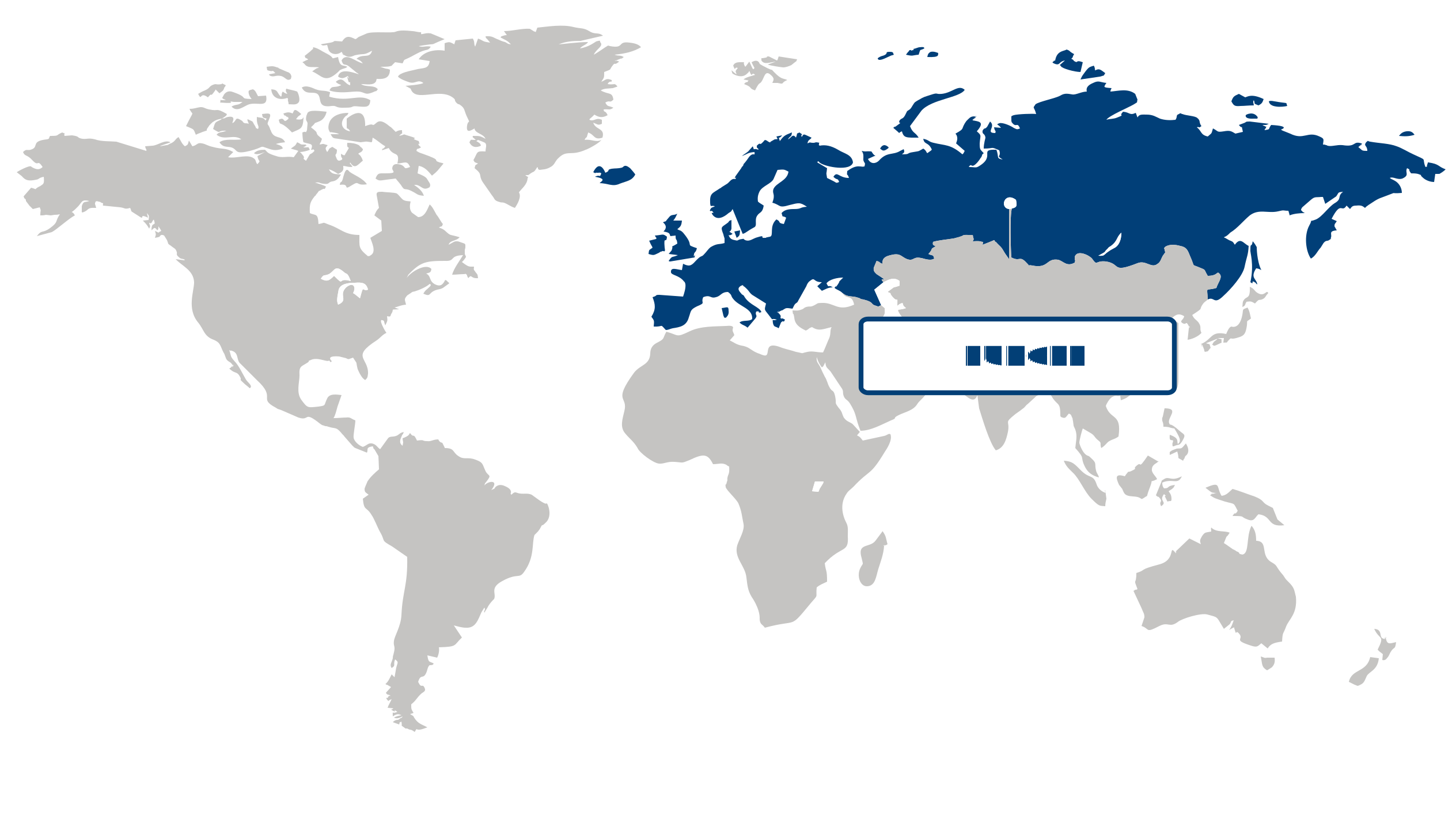
Largest Region
Europe
39.96% Market Share in 2026
Europe (Largest Region) vs North America (Fastest-Growing Region)
In the luxury yacht market, Europe held the largest share of 39.96% in 2026, supported by its established luxury marine industry, strong yachting culture, and extensive network of coastal destinations. The region benefits from sophisticated maritime infrastructure, developed shipbuilding capabilities, and strong demand for premium leisure experiences. High concentrations of affluent consumers and established tourism ecosystems further reinforce yacht ownership and charter activity, while continued investment in advanced yacht design, onboard amenities, and sustainable technologies supports the region's market position.
North America is positioned as the fastest-growing region, driven by rising interest in high-end recreational boating, expanding luxury tourism, and increasing demand for personalized leisure experiences. Strong economic activity and developed coastal infrastructure provide a favorable environment for yacht ownership, charter services, and related marine activities. In addition, growing interest in technologically advanced vessels, customized interiors, and environmentally conscious yacht solutions is encouraging premium consumers to increase spending on sophisticated marine assets.
No card data available for this language/report.
Segment Leadership and Growth Trends
Propulsion Segment Analysis: Motor (Largest Segment) vs Sail (Fastest-Growing Segment)
Motor segment dominated the luxury yacht market, accounting for the largest share of 75.84% in 2026. Motor-powered yachts are preferred due to their higher speed, operational convenience, and ability to support long-distance cruising with enhanced comfort. Their suitability for luxury travel experiences, advanced onboard features, and flexibility across different marine environments contributes to their strong market presence.
Sail segment is projected to be the fastest-growing segment in the luxury yacht market, driven by increasing interest in sustainable and experience-focused marine travel. Sailing yachts offer a more traditional boating experience while providing opportunities for fuel efficiency and environmentally conscious cruising. Growing preference for unique leisure experiences and interest in alternative propulsion approaches are supporting the adoption of sail-powered luxury yachts.
Yacht Segment Analysis: Flybridge Yacht (Largest Segment) vs Sports Yacht (Fastest-Growing Segment)
Flybridge yacht segment accounted for the largest share of 59.52% in 2026 within the luxury yacht market. Flybridge yachts are widely favored for their spacious layouts, elevated outdoor areas, and suitability for extended recreational journeys. Their combination of luxury amenities, comfort, and social entertainment spaces makes them attractive among high-end yacht owners seeking premium cruising experiences.
Sports yacht segment is expected to register the fastest growth in the luxury yacht market, supported by increasing demand for performance-oriented vessels that combine speed, style, and advanced design features. Sports yachts appeal to consumers looking for dynamic marine experiences along with luxury elements. Rising interest in recreational boating and personalized leisure activities is contributing to the expansion of this segment.
Length Segment Analysis: 50 to 100 Meters (Largest Segment) vs Above 100 Meters (Fastest-Growing Segment)
50 to 100 meters segment led the luxury yacht market in 2026, supported by strong demand for large yachts that provide a balance between spacious interiors, advanced amenities, and operational practicality. Yachts within this length category offer extensive customization opportunities and accommodate premium facilities while maintaining versatility for private and leisure use.
Above 100 meters segment is anticipated to be the fastest-growing segment in the luxury yacht market, driven by increasing interest in ultra-luxury vessels with expansive spaces and highly customized features. These yachts provide enhanced onboard experiences through larger entertainment areas, premium accommodations, and specialized designs. Growing demand for exclusive maritime experiences is encouraging development in this segment.
| Report Segmentation | |||
| Segment | Sub-Segment | Largest Segment | Fastest Growing Segment |
|---|---|---|---|
| Propulsion | Motor, Sail | Motor | Sail |
| Yacht | Flybridge Yacht, Sports Yacht, Cruiser Yacht | Flybridge Yacht | Sports Yacht |
| Length | Upto 50 Meters, 50 to 100 Meters, Above 100 Meters | 50 to 100 Meters | Above 100 Meters |
 Read our Research Approach
Competitive Landscape and Market Positioning
Major players in the luxury yacht market:
- Azimut Benetti S.p.A. (Italy)
- Ferretti Group (Italy)
- Sanlorenzo S.p.A. (Italy)
- Lürssen Yachts (Germany)
- Feadship (Netherlands)
- Sunseeker International (United Kingdom)
- Princess Yachts Limited (United Kingdom)
- Groupe Beneteau (France)
- The Italian Sea Group S.p.A. (Italy)
- Heesen Yachts (Netherlands)
Demand for increasingly customized vessels is changing how manufacturers and service providers compete, placing greater emphasis on design flexibility, engineering expertise, and long-term client engagement rather than production scale alone. Competitive differentiation is expanding into integrated ownership experiences that include digital vessel management, sustainability-oriented technologies, and tailored after-sales support, reflecting evolving buyer expectations. As environmental considerations gain influence in the premium marine sector, innovation in propulsion efficiency, lightweight materials, and onboard energy management is becoming a meaningful factor in securing high-value projects.
Industry Development/News
| Company Name | Date | Key Development |
|---|---|---|
| Four Seasons Yachts | Jun-26 | Four Seasons Yachts announced the development of its second vessel, Four Seasons II, a 679-foot yacht slated for a 2028 debut. This expansion follows the successful launch of its inaugural vessel, signaling a strategic commitment to scaling its presence within the ultra-luxury yachting segment and capturing significant market share in the premium experiential cruise sector. |
| Lürssen | May-26 | Lürssen achieved a technical launch milestone for the 101-meter superyacht Project ZIGGY. This development underscores the shipyard's continued capability in managing large-scale, complex engineering projects, further solidifying its competitive positioning in the ultra-high-net-worth segment and reflecting sustained demand for bespoke, custom-built superyachts among global clientele. |
| Four Seasons Yachts | Mar-26 | Four Seasons Yachts entered the ultra-luxury yachting sector with the debut of its inaugural vessel, Four Seasons I. By transitioning from a traditional hospitality model to yacht-based experiential travel, the company is effectively diversifying its service portfolio and setting a new benchmark for integrated luxury maritime offerings within the premium Mediterranean cruising market. |
| Turquoise Yachts | Jan-26 | Turquoise Yachts successfully launched the 87-meter superyacht ANGELIQUE, currently the largest yacht constructed in Turkey. By entering the Mediterranean charter market with this vessel, the company demonstrates significant growth in its manufacturing capacity and its strategic move to enhance its footprint in the high-end international yacht charter and luxury experiences industry. |
| IGY Marinas | Jul-25 | IGY Marinas expanded its specialized maritime infrastructure with the opening of IGY Ibiza Marina. This development enhances superyacht accommodation capabilities in the Balearic Islands, a critical hub for global luxury charter operations, thereby strengthening the regional ecosystem for high-end maritime tourism and facilitating greater commercial scalability for yacht owners and charter operators. |
| Feadship | May-24 | Feadship launched Project 821, a 118.8-meter superyacht featuring innovative fuel-cell technology. This project marks a significant advancement in sustainable maritime engineering, reflecting the industry’s shift toward decarbonization and demonstrating the technical feasibility of integrating alternative energy systems into large-scale luxury vessel construction without compromising performance or luxury standards. |
| Lionheart Capital | Apr-24 | Lionheart Capital reached an agreement to acquire Sunseeker International from Wanda Group. This transaction transitions ownership of the established British yacht builder to an investment firm focused on value-added growth, providing Sunseeker with the capital and strategic oversight necessary to sustain its post-pandemic recovery and long-term competitive development in the international yacht market. |
| Sunreef Yachts | Mar-24 | Sunreef Yachts inaugurated a new shipyard in Ras Al Khaimah, UAE, to initiate the production of high-end catamarans. This geographic expansion positions the company closer to high-growth markets in Asia and Australia, bolstering its manufacturing resilience and capacity to meet rising global demand while generating significant localized industrial employment. |
| MarineMax | Mar-24 | MarineMax completed the strategic acquisition of Williams Tenders USA. By integrating this luxury tender manufacturer into its operations, MarineMax has successfully expanded its marine business ecosystem, enhancing its ability to provide comprehensive, high-end support services and equipment to luxury yacht owners and fleet operators globally. |
| Tankoa Yachts | Feb-24 | Tankoa Yachts launched the first unit of its T450 series, expanding the company’s product portfolio into the sub-50-meter motor yacht category. This move represents a strategic effort to broaden the company's addressable market while leveraging its reputation for custom-built, high-quality engineering to capture demand within the mid-sized luxury segment. |
Why Choose Us
Specialized Expertise: Our team comprises industry experts with a deep understanding of your market segment. We bring specialized knowledge and experience that ensures our research and consulting services are tailored to your unique needs.
Customized Solutions: We understand that every client is different. That's why we offer customized research and consulting solutions designed specifically to address your challenges and capitalize on opportunities within your industry.
Proven Results: With a track record of successful projects and satisfied clients, we have demonstrated our ability to deliver tangible results. Our case studies and testimonials speak to our effectiveness in helping clients achieve their goals.
Cutting-Edge Methodologies: We leverage the latest methodologies and technologies to gather insights and drive informed decision-making. Our innovative approach ensures that you stay ahead of the curve and gain a competitive edge in your market.
Client-Centric Approach: Your satisfaction is our top priority. We prioritize open communication, responsiveness, and transparency to ensure that we not only meet but exceed your expectations at every stage of the engagement.
Continuous Innovation: We are committed to continuous improvement and staying at the forefront of our industry. Through ongoing learning, professional development, and investment in new technologies, we ensure that our services are always evolving to meet your evolving needs.
Value for Money: Our competitive pricing and flexible engagement models ensure that you get maximum value for your investment. We are committed to delivering high-quality results that help you achieve a strong return on your investment.
Select Licence Type

