Male Urinary Incontinence Market Size & Growth Forecast 2027–2036, By Segments (End-use, Incontinence Type, Usage, Distribution Channel, Product), Regional Demand Trends (North America, Asia Pacific, Europe), Key Country Insights (U.S., Japan, South Korea, Germany, France, Italy), and Competitive Landscape
Market Size and Growth Outlook
Male Urinary Incontinence Market size was worth USD 7.9 billion in 2026 and is expected to grow at a 5.61% CAGR between 2027 and 2036, exceeding USD 13.64 billion by 2036. The industry revenue for 2027 is assessed at USD 8.27 billion.
Get more details on this report
Request Free Sample ReportMale Urinary Incontinence Market Intelligence Snapshot
Regional Market Dynamics
- Europe accounted for 51.81% of the market in 2026, supported by mature reimbursement systems, established urology care pathways, specialized providers, and consistent long-term treatment adoption.
- North America is expected to grow at a 6.78% CAGR, driven by greater treatment seeking, earlier diagnosis, wider specialist access, and stronger adoption of advanced continence devices and surgical solutions.
Segment Momentum
- Hospitals and clinics accounted for 68.34% of the market in 2026, supported by their central role in diagnosis, specialist evaluation, treatment selection, and procedural care.
- Mixed urinary incontinence is the fastest-growing segment as more patients present overlapping symptoms, increasing demand for tailored management approaches across care settings.
Market Expansion Drivers
- Rising prostate cancer treatments increasing post-surgical urinary incontinence prevalence globally.
- Advancements in minimally invasive continence devices improving patient adoption rates.
- Expanding geriatric population increasing long-term demand for incontinence management solutions.
Leading Market Participants
- Key companies in the male urinary incontinence market include Coloplast A/S (Denmark), Boston Scientific Corporation (United States), Essity AB (Sweden), Kimberly-Clark Corporation (United States), Hollister Incorporated (United States), Cardinal Health, Inc. (United States), Becton, Dickinson and Company (United States), Teleflex Incorporated (United States), PAUL HARTMANN AG (Germany), ABENA A/S (Denmark).
Global Market Forecast Snapshot
Market Outlook
- 2026 Market Size: USD 7.9 billion
- 2027 Estimated Market Size: USD 8.27 billion.
- Projected Market Size: USD 13.64 billion by 2036
- Growth Forecast: 5.61% CAGR (2027-2036)
Regional and Segment Outlook
- Leading Regional Market: Europe
- High-Growth Regional Hub: North America
- Core Revenue Segment: Hospitals & Clinics (End-use) | Urge Urinary Incontinence (Incontinence Type) | Disposable (Usage) | Offline Stores (Distribution Channel) | Absorbents (Product)
- Emerging Opportunity Segment: Homecare (End-use) | Mixed Urinary Incontinence (Incontinence Type) | Reusable (Usage) | Online Channels (Distribution Channel) | Non-Absorbents (Product)
Market Growth Drivers and Industry Trends
Rising prostate cancer treatments increasing post-surgical urinary incontinence prevalence globally
Growing use of prostate cancer treatments, particularly procedures that can affect urinary control, is increasing the number of men requiring temporary or longer-term continence management, supporting the male urinary incontinence market. Following prostate-related surgery, patients may experience urinary leakage that requires absorbent products, collection systems, pelvic floor support, or other management approaches during recovery. As treatment volumes expand and survivorship improves, greater attention to post-treatment quality of life is also encouraging patients to seek solutions that provide discretion, comfort, and confidence in daily activities.
Advancements in minimally invasive continence devices improving patient adoption rates
Technological progress in minimally invasive continence devices is making treatment options more targeted and potentially easier to integrate into patient care, which will propel the male urinary incontinence market. Improvements in device design, implantation approaches, and usability can reduce barriers associated with conventional interventions and support greater acceptance among men seeking longer-term symptom control. Clinicians can also consider a broader range of intervention options based on the severity and persistence of symptoms, while patients benefit from solutions designed around functional outcomes and everyday mobility.
Expanding geriatric population increasing long-term demand for incontinence management solutions
An expanding older male population is widening the underlying demand base for continence management, and the male urinary incontinence market is benefiting from the greater need for ongoing symptom management among aging patients. Age-related changes in urinary function, together with conditions that can affect bladder control, increase reliance on absorbent products, external collection systems, and other continence solutions. The recurring nature of these needs encourages continued product use, while greater willingness to discuss urinary health supports diagnosis and access to appropriate management options.
| Growth Driver | Impact on CAGR | Regulatory Influence | Geographic Relevance | Adoption Rate | Impact Timeline |
|---|---|---|---|---|---|
| Rising prostate cancer treatments increasing post-surgical urinary incontinence prevalence globally | 2.20% | High | North America, Europe | High | Near Term |
| Advancements in minimally invasive continence devices improving patient adoption rates | 1.90% | High | Europe, Asia Pacific | High | Near Term |
| Expanding geriatric population increasing long-term demand for incontinence management solutions | 1.50% | Moderate | North America, Asia Pacific | High | Mid Term |
Unlock insights tailored to your business with our bespoke market research solutions.
Click to get your customized report now.
Regional Demand Dynamics
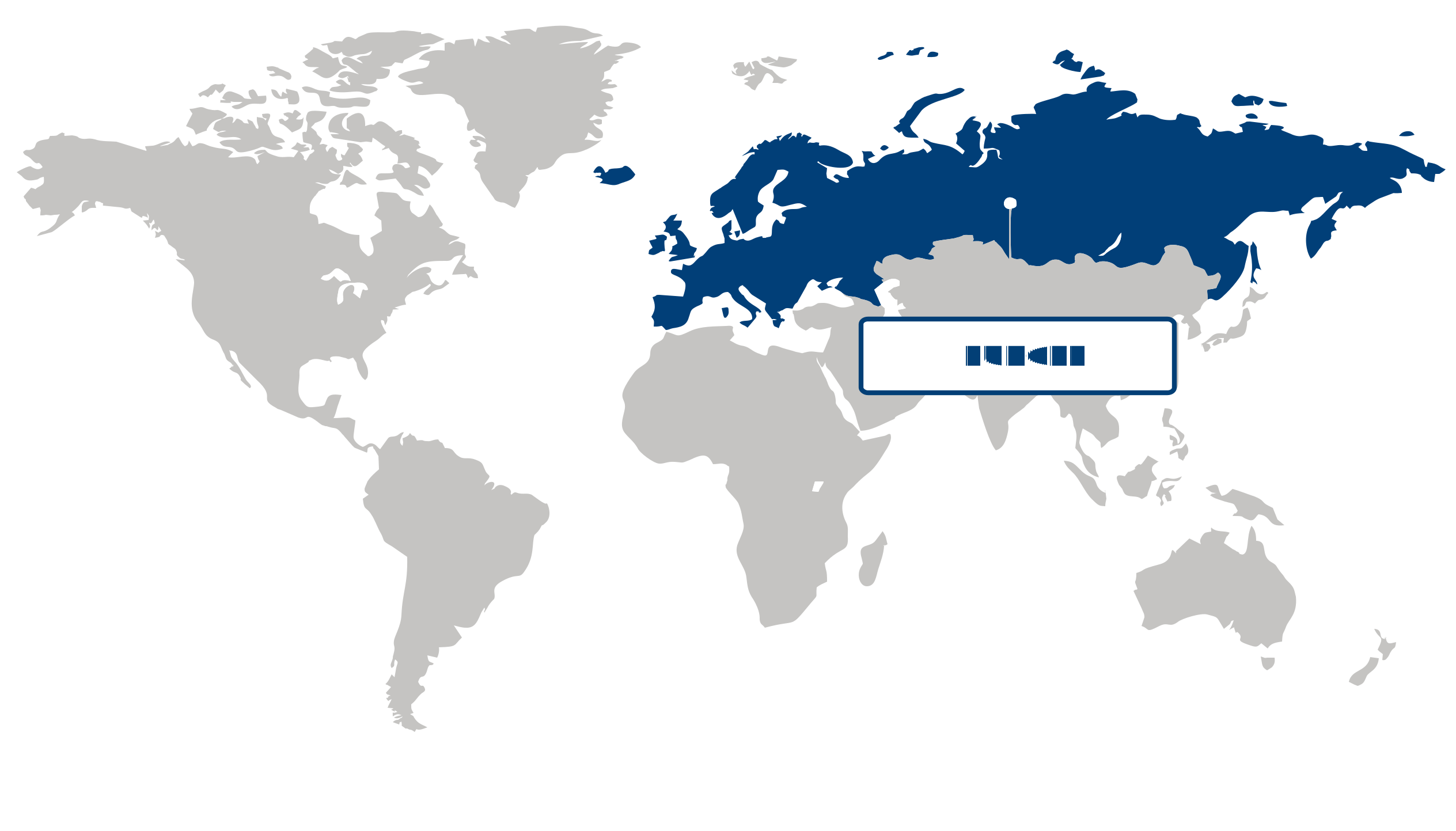
Europe (Largest Region)
Europe dominated the male urinary incontinence market with a 51.81% share in 2026, reflecting strong healthcare systems, high diagnosis and treatment awareness, and established access to continence management products and services. An aging population and increasing attention to men's health are supporting sustained demand, while healthcare providers are placing greater emphasis on improving patient independence and quality of life. Continued adoption of discreet and technologically advanced management solutions is further supporting the region's market position.
North America (Fastest-Growing Region)
North America is expected to be the fastest-growing region, supported by rising awareness of male urinary health, expanding access to continence care, and increasing demand for products that provide greater comfort, discretion, and convenience. Aging demographics and the growing focus on managing urinary conditions outside institutional settings are encouraging greater use of home-based solutions. Improvements in healthcare delivery and patient engagement are also helping broaden diagnosis and treatment uptake.
| Parameter | North America | Asia Pacific | Europe | Latin America | MEA |
|---|---|---|---|---|---|
| Innovation Hub i Scale Nascent Developing Advanced | |||||
| Cost-Sensitive Region i Scale Low Medium High | |||||
| Regulatory Environment i Scale Restrictive Neutral Supportive | |||||
| Demand Drivers i Scale Weak Moderate Strong | |||||
| Development Stage i Scale Emerging Developing Developed | |||||
| Adoption Rate i Scale Low Medium High | |||||
| New Entrants / Startups i Scale Sparse Moderate Dense | |||||
| Macro Indicators i Scale Weak Stable Strong |
Key Country Insights
Germany 🇩🇪
Integrated Clinical ManagementGermany supports the male urinary incontinence market through coordinated clinical care and adoption of advanced treatment solutions. Healthcare providers emphasize individualized treatment plans supported by high-quality medical technologies and specialized patient services.
France 🇫🇷
Patient-Centered ManagementFrance continues advancing the male urinary incontinence market through greater focus on patient education, specialized clinical care, and treatment accessibility. Healthcare professionals are adopting comprehensive management strategies that improve long-term patient outcomes.
Italy 🇮🇹
Rehabilitation-Based CareItaly strengthens the male urinary incontinence market by integrating rehabilitation programs with medical treatment and supportive care services. Providers are expanding access to practical therapeutic solutions that improve patient confidence and daily functioning.
Japan 🇯🇵
Aging Population CareJapan prioritizes male urinary incontinence management with products and therapies designed to address age-related healthcare needs. The country continues improving patient support through discreet treatment options and broader integration of long-term care services.
South Korea 🇰🇷
Minimally Invasive SolutionsSouth Korea is encouraging adoption of advanced therapies within the male urinary incontinence market by expanding access to minimally invasive treatment approaches. Healthcare providers continue emphasizing early intervention and improved patient quality of life.
United States 🇺🇸
Advanced Treatment AdoptionThe U.S. male urinary incontinence market is expanding through greater awareness, improved diagnosis, and broader access to treatment options. Healthcare providers increasingly incorporate advanced medical devices, rehabilitation approaches, and patient-focused care pathways into routine management.
Segment Leadership and Growth Trends
Male Urinary Incontinence Market Share (%), by End-use, 2026
Go beyond the chart, access full insights & data tables
Request Free Sample ReportEnd-use Segment Analysis: Hospitals & Clinics (Largest Segment) vs Homecare (Fastest-Growing Segment)
The hospitals & clinics segment accounted for the largest share of 68.34% in 2026, reflecting the important role of professional diagnosis, treatment, and ongoing management in addressing male urinary incontinence. Healthcare facilities provide access to specialized assessment, urological care, diagnostic procedures, and treatment options that support patients with varying degrees and causes of incontinence. Increasing awareness of available treatment pathways and greater emphasis on early clinical intervention continue to sustain demand for hospital- and clinic-based care.
Homecare is gaining momentum as patients increasingly seek convenient and discreet approaches to managing urinary incontinence outside traditional healthcare settings. Improvements in continence products, remote healthcare support, caregiver assistance, and patient education are making home-based management more practical. The broader preference for comfort, privacy, and reduced dependence on frequent clinical visits is also encouraging the adoption of homecare solutions, particularly for individuals requiring ongoing management.
Incontinence Type Segment Analysis: Urge Urinary Incontinence (Largest Segment) vs Mixed Urinary Incontinence (Fastest-Growing Segment)
In the male urinary incontinence market, urge urinary incontinence held the largest share of 59.65% in 2026, supported by the prevalence of bladder-control difficulties associated with sudden and difficult-to-defer urges to urinate. Greater recognition of urinary symptoms among men and improved access to diagnostic evaluation are contributing to demand for appropriate management strategies. Treatment approaches spanning behavioral interventions, medication, pelvic floor management, and other clinical options are also supporting continued attention to urge-related symptoms.
Mixed urinary incontinence is expanding as healthcare providers place greater emphasis on identifying patients who experience overlapping forms of bladder-control dysfunction. Its management often requires a more comprehensive understanding of underlying symptoms and individualized treatment strategies, encouraging demand for integrated clinical assessment. Growing awareness of different incontinence patterns and advances in personalized continence management are further supporting the segment's development.
| Segment | Sub-Segment | Largest Segment | Fastest Growing |
|---|---|---|---|
| End-use | Hospitals & Clinics, Homecare, Others | Hospitals & Clinics | Homecare |
| Incontinence Type | Stress Urinary Incontinence, Urge Urinary Incontinence, Overflow Incontinence, Functional Urinary Incontinence, Mixed Urinary Incontinence | Urge Urinary Incontinence | Mixed Urinary Incontinence |
| Usage | Reusable, Disposable | Disposable | Reusable |
| Distribution Channel | Offline Stores, Online Channels | Offline Stores | Online Channels |
| Product | Non-Absorbents, Absorbents | Absorbents | Non-Absorbents |
Competitive Landscape and Market Positioning
Key companies in the male urinary incontinence market:
1. Coloplast A/S (Denmark)
2. Boston Scientific Corporation (United States)
3. Essity AB (Sweden)
4. Kimberly-Clark Corporation (United States)
5. Hollister Incorporated (United States)
6. Cardinal Health Inc. (United States)
7. Becton Dickinson and Company (United States)
8. Teleflex Incorporated (United States)
9. PAUL HARTMANN AG (Germany)
10. ABENA A/S (Denmark)
The male urinary incontinence market is witnessing advancements in absorbent technologies, ergonomic product designs, and discreet wearable solutions aimed at improving patient convenience and confidence. Industry participants are focusing on innovative materials and enhanced comfort features to address changing consumer expectations. Integration of healthcare monitoring technologies and personalized care products is further contributing to competitive differentiation within the male urinary incontinence market.
| Company | Market Share | Company Revenue | Revenue CAGR (%) | Product Portfolio | Geographic Presence | Innovation / R&D Focus | Strategic Developments |
|---|---|---|---|---|---|---|---|
| Coloplast A/S (Denmark) | |||||||
| Boston Scientific Corporation (United States) | |||||||
| Essity AB (Sweden) | |||||||
| Kimberly-Clark Corporation (United States) | |||||||
| Hollister Incorporated (United States) | |||||||
| Cardinal Health Inc. (United States) | |||||||
| Becton Dickinson and Company (United States) | |||||||
| Teleflex Incorporated (United States) | |||||||
| PAUL HARTMANN AG (Germany) | |||||||
| ABENA A/S (Denmark). |
Industry Development/News
| Company Name | Date | Key Development |
|---|---|---|
| Coloplast | Jan-26 | Coloplast signed a definitive merger agreement to acquire U.S.-based medical technology firm Uromedica. The transaction integrates Uromedica’s ProACT adjustable continence balloons into Coloplast’s global urology portfolio, expanding its treatment offerings and competitive market presence in the male surgical incontinence segment. |
| UroMems | Jul-25 | UroMems received Investigational Device Exemption (IDE) approval from the U.S. FDA and regulatory clearance from the French ANSM. This regulatory milestone allows the company to initiate a first-of-its-kind pivotal clinical trial for its UroActive smart automated artificial urinary sphincter implant to treat male stress urinary incontinence. |
| Medline | Apr-24 | Medline expanded its clinical urology portfolio by signing an exclusive distribution agreement for Consure Medical's QiVi MEC male external urine management device. Under the terms, Medline will distribute the non-invasive incontinence management system across acute care settings throughout North America to assist in preventing healthcare-associated infections. |
Customize Your Report
Explore examples of how this report can be tailored to different research needs, including custom segments, additional topics or chapters, and related reports. Click a section of the wheel or its numbered marker to explore the available options.
Male Urinary Incontinence Market — Custom Segments
| Segment | Sub-Segment |
|---|---|
| Reimbursement Coverage | Public Insurance, Private Insurance, Self-Pay |
| Care Setting | Hospitals & Clinics, Homecare, Long-Term Care Facilities, Ambulatory & Community Care |
| Patient Life Stage | Younger Adults, Middle-Aged Adults, Older Adults |
Male Urinary Incontinence Market — Custom TOC
| Custom Chapter | Custom Details |
|---|---|
| Patient Diagnosis and Treatment Journey Assessment |
|
| Physician Referral and Prescribing Behavior Analysis |
|
| Unmet Clinical Needs and Product Innovation Opportunities |
|
Need a different cut of the data?
Request Custom ResearchWhat is the market valuation of male urinary incontinence?
What is the forecasted size of the male urinary incontinence industry?
How are advances in minimally invasive continence devices expanding treatment adoption?
How is prostate cancer treatment reshaping demand across the male urinary incontinence market?
Why do hospitals and clinics lead the male urinary incontinence market?
Which incontinence type is growing fastest in the male urinary incontinence market?
Why is Europe the leading region in the male urinary incontinence market?
How is North America expanding in the male urinary incontinence market?
Which companies dominate the male urinary incontinence landscape?
Our Clients
"The team took the time to understand our specific business needs and delivered a report that was well aligned with our objectives. Their expertise and understanding of the industry were clearly reflected in the quality and relevance of the insights provided."
Siemens Healthcare
"Our experience in acquiring the research report has been excellent. The depth of analysis, and actionable insights provided have been extremely valuable in supporting our ongoing R&D efforts."
GC Biopharma
"The report offered a comprehensive view of the market trends. The in-depth segmentation and analysis of emerging opportunities gave us a better understanding of the market."
Medtronic
Our Research Team & Methodology
Every Fundamental Business Insights report is built by a dedicated vertical research team, validated through a structured primary-and-secondary methodology, and reviewed for accuracy before it reaches you.
Research Team Overview
Prepared by the Healthcare & Medical Devices Research Team
Delivery
Published
Demand
Available
Support
Trust & Compliance
Research Domains
10 coverage areasResearch Intelligence
| Source | Reference |
|---|---|
| World Health Organization (WHO) | www.who.int |
| U.S. Food & Drug Administration (FDA) | www.fda.gov |
| European Medicines Agency (EMA) | www.ema.europa.eu |
| Centers for Disease Control and Prevention (CDC) | www.cdc.gov |
| National Institutes of Health (NIH) | www.nih.gov |
| National Center for Biotechnology Information (NCBI) | www.ncbi.nlm.nih.gov |
| PubMed | pubmed.ncbi.nlm.nih.gov |
| ClinicalTrials.gov | clinicaltrials.gov |
| International Organization for Standardization (ISO) | www.iso.org |
| ASTM International | www.astm.org |
| Advanced Medical Technology Association (AdvaMed) | www.advamed.org |
| Medical Device Innovation Consortium (MDIC) | mdic.org |
| Biotechnology Innovation Organization (BIO) | www.bio.org |
| International Federation of Pharmaceutical Manufacturers & Associations (IFPMA) | www.ifpma.org |
| U.S. Pharmacopeia (USP) | www.usp.org |
| European Directorate for the Quality of Medicines & HealthCare (EDQM) | www.edqm.eu |
| World Organisation for Animal Health (WOAH) | www.woah.org |
| American Hospital Association (AHA) | www.aha.org |
| OECD Health | www.oecd.org/health |
| World Bank Data | data.worldbank.org |
Research Workflow & Quality Assurance
Data Collection
Verified information gathered through primary and secondary research.
Data Triangulation
Cross-validation using multiple independent data sources.
Forecast Modelling
Market estimates developed using historical trends and analytical models.
Analyst Validation
Findings reviewed by domain experts for accuracy and consistency.
Editorial & Quality Review
Final editorial, quality, and compliance checks before publication.
Final Publication
Released after successful completion of the internal review process.
Report Coverage
📊 Market Assessment
- Market Size & Forecast
- Market Segmentation
- Regional Analysis
- Growth Drivers & Challenges
- Market Dynamics
🏢 Competitive Intelligence
- Competitive Landscape
- Company Profiles
- Competitive Benchmarking
- Mergers & Acquisitions
- Market Share Analysis or Key Company Strategies
🔍 Strategic Analysis
- Value Chain Analysis
- Porter's Five Forces
- PESTLE Analysis
- Pricing Trends
- Supply-Demand Analysis
🚀 Future Outlook
- Technology Landscape
- Regulatory Landscape
- Investment & Funding Landscape
- Emerging Opportunities
- Future Market Outlook
Have a question about this report or need a custom scope?
Request Customization