



Marine Emission Control Systems Market Size & Growth Forecast 2027–2036, By Segments (Fuel, Technology, Application), Regional Demand Trends (North America, Asia Pacific, Europe), Key Country Insights (U.S., Japan, South Korea, Germany, France, Italy), and Competitive Landscape
Market Size and Growth Outlook
Marine Emission Control Systems Market size was valued at USD 14.87 Billion in 2026 and is anticipated to grow at 8.16% CAGR from 2027 to 2036, exceeding USD 32.58 Billion by 2036. The industry revenue for 2027 is calculated at USD 15.9 Billion.
Base Year Value (2026)
USD 14.87 Billion
CAGR (2027-2036)
8.16%
Forecast Year Value (2036)
USD 32.58 Billion

Historical Data Period
2022-2026

Largest Region
Europe

Forecast Period
2027-2036
Marine Emission Control Systems Market Intelligence Snapshot:
-
Regional Market Dynamics:
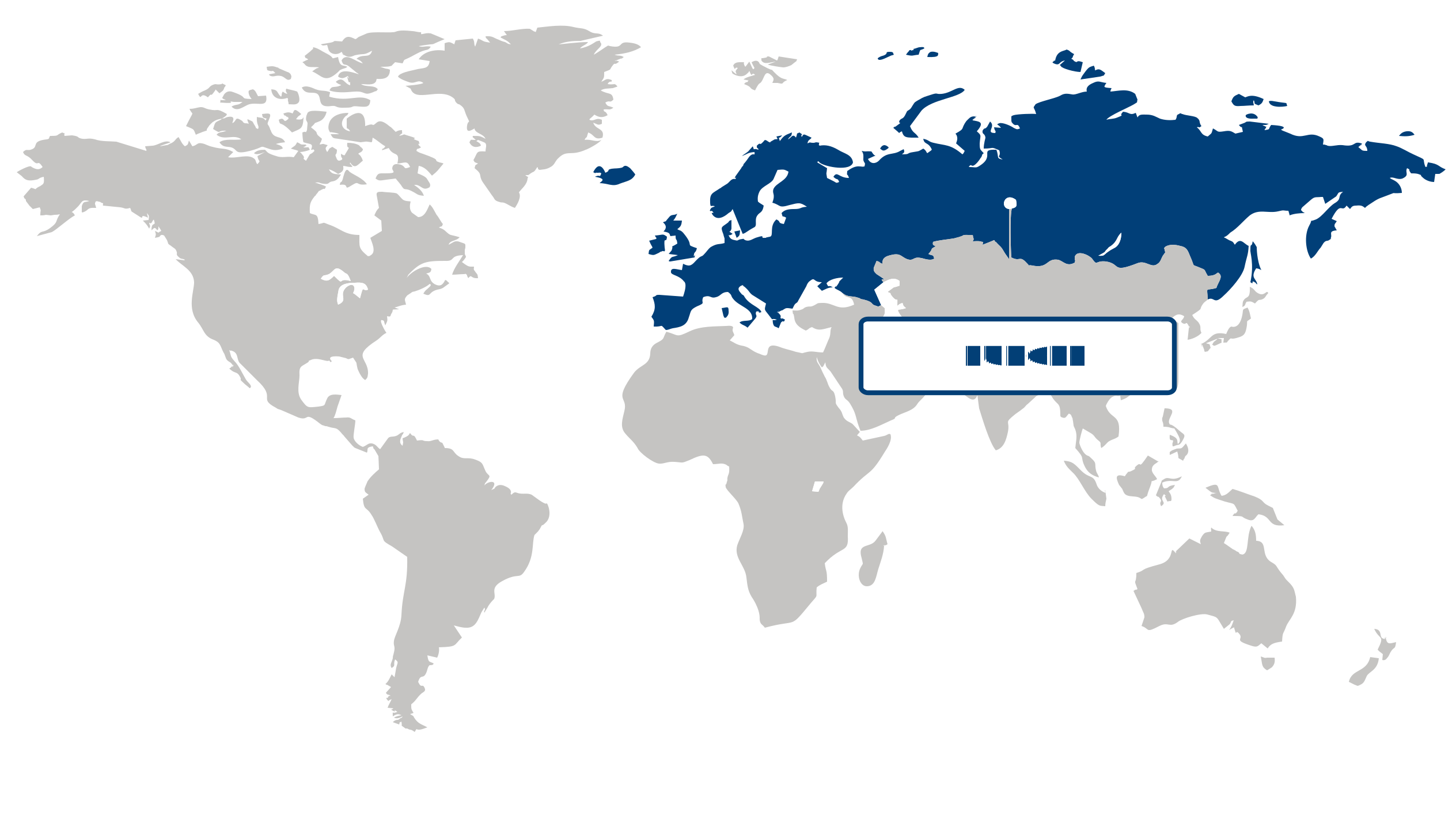
- Europe held the largest share in 2025, driven by stringent emissions regulations, established shipping infrastructure, and strong investment in maritime decarbonization technologies.
- Asia Pacific is expected to grow fastest as expanding maritime trade, vessel activity, shipbuilding investments, and stronger environmental compliance increase technology adoption.
-
Segment Momentum:
- Scrubbers accounted for 61.48% of the market in 2025 because they effectively reduce sulfur oxide emissions while allowing vessels to continue using conventional marine fuels and comply with international emission regulations.
- The hybrid fuel segment is projected to grow the fastest as shipping companies increasingly adopt cleaner propulsion solutions that improve fuel efficiency, reduce emissions, and support evolving environmental compliance requirements.
-
Market Expansion Drivers:
- Stringent maritime emission regulations accelerating scrubber and control system adoption
- Expansion of global seaborne trade increasing deployment of emission control technologies
- Shipping fleet modernization driving integration of advanced emission monitoring systems
-
Leading Market Participants:
Key companies in the marine emission control systems market include Wärtsilä Corporation (Finland), Alfa Laval AB (Sweden), Valmet Oyj (Finland), Fuji Electric Co., Ltd. (Japan), Yara International ASA (Norway), MAN Energy Solutions SE (Germany), Clean Marine AS (Norway), Ecospray Technologies S.r.l. (Italy), CR Ocean Engineering LLC (United States), Babcock & Wilcox Enterprises, Inc. (United States)
Global Market Forecast Snapshot:
-
Market Outlook:
- 2026 Market Size: USD 14.87 Billion
- 2027 Estimated Market Size: USD 15.9 Billion
- Projected Market Size: USD 32.58 Billion by 2036
- Growth Forecasts: 8.16% CAGR (2027-2036)
-
Regional and Segment Outlook:
- Leading Regional Market: Europe
- High-Growth Regional Hub: Asia Pacific
- Core Revenue Segment: MDO (Fuel) | Scrubber (Technology) | Commercial (Application)
- Emerging Opportunity Segment: Hybrid (Fuel) | ESP (Technology) | Offshore (Application)
Market Growth Drivers and Industry Trends
Stringent maritime emission regulations accelerating scrubber and control system adoption
Tighter environmental requirements for commercial shipping are encouraging vessel owners to invest in technologies that reduce atmospheric emissions and support regulatory compliance. These evolving standards will drive the marine emission control systems market growth as ship operators increasingly install exhaust gas cleaning systems, emission reduction equipment, and integrated compliance solutions across new and existing vessels. Demand is also rising for systems capable of maintaining operational efficiency while meeting environmental obligations under varying international and regional regulatory frameworks.
Expansion of global seaborne trade increasing deployment of emission control technologies
The continued growth of international maritime cargo transportation is expanding the global operating fleet, creating greater demand for onboard environmental compliance solutions. The marine emission control systems market is benefiting from this trend because increasing vessel activity requires effective technologies that manage emissions without disrupting commercial shipping operations. Fleet operators are integrating advanced emission control equipment into cargo ships, tankers, and container vessels to support reliable operations while complying with environmental standards across diverse trading routes.
Shipping fleet modernization driving integration of advanced emission monitoring systems
Ongoing fleet renewal programs are encouraging the incorporation of digital technologies that improve vessel performance, environmental compliance, and operational transparency. This development will boost the marine emission control systems market demand as modern ships increasingly utilize integrated emission monitoring systems capable of continuously measuring exhaust performance and supporting automated reporting requirements. Advanced monitoring solutions also enable operators to optimize equipment operation, simplify maintenance planning, and maintain accurate environmental performance records throughout vessel operations.
| Growth Driver Assessment Framework | |||||
| Growth Driver | Impact On CAGR | Regulatory Influence | Geographic Relevance | Adoption Rate | Impact Timeline |
|---|---|---|---|---|---|
| Stringent maritime emission regulations accelerating scrubber and control system adoption | 2% | High | Europe, North America | High | Near Term |
| Expansion of global seaborne trade increasing deployment of emission control technologies | 1.7% | Moderate | Asia Pacific | High | Mid Term |
| Shipping fleet modernization driving integration of advanced emission monitoring systems | 1.5% | Moderate | Middle East & Africa, Asia Pacific | Medium | Mid Term |
Unlock insights tailored to your business with our bespoke market research solutions - Click to get your customized report now!
Regional Demand Dynamics
Largest Region
Europe
Largest Market Share in 2026
Europe (Largest Region) vs Asia Pacific (Fastest-Growing Region)
Europe held the largest share of the marine emission control systems market in 2026, supported by the region's strong environmental regulations and longstanding focus on reducing emissions from maritime transportation. Stringent requirements for controlling sulfur oxides, nitrogen oxides, and other pollutants are encouraging shipowners and operators to invest in emission-reduction technologies. The region's established shipping industry and extensive port infrastructure further contribute to demand for compliant marine emission control solutions. In addition, increasing emphasis on maritime decarbonization and cleaner vessel operations is prompting greater adoption of advanced exhaust treatment and emissions-monitoring technologies.
Asia Pacific is anticipated to record the fastest growth in the marine emission control systems market as maritime trade expands and environmental compliance becomes increasingly important across the region's shipping industry. Rising vessel activity and investments in port and shipbuilding infrastructure are creating a broader installed base requiring efficient emission management solutions. Regulatory efforts to improve marine air quality, together with growing awareness of environmental performance, are encouraging ship operators to modernize existing vessels and incorporate emission-control technologies into new builds. The region's expanding maritime ecosystem and continued investments in cleaner transportation are expected to strengthen adoption across commercial shipping and related marine applications.
No card data available for this language/report.
Segment Leadership and Growth Trends
Fuel Segment Analysis: MDO (Largest Segment) vs Hybrid (Fastest-Growing Segment)
The MDO fuel segment dominated the marine emission control systems market, accounting for 62.59% of the market share in 2026. Its leadership is supported by the widespread use of marine diesel oil in commercial shipping fleets due to its operational reliability, established supply infrastructure, and compatibility with a broad range of marine engines and emission control technologies. MDO remains a preferred fuel for vessel operators seeking dependable performance while complying with increasingly stringent maritime environmental regulations through integrated emission reduction systems.
The hybrid fuel segment is witnessing the fastest growth as the maritime industry accelerates its transition toward cleaner and more energy-efficient propulsion solutions. Hybrid configurations combine conventional fuels with alternative energy sources or energy storage technologies to reduce emissions, improve fuel efficiency, and enhance operational flexibility. Growing investments in sustainable shipping, stricter environmental compliance requirements, and the industry's focus on lowering carbon emissions are driving the rapid adoption of hybrid-powered marine systems.
Technology Segment Analysis: Scrubber (Largest Segment) vs ESP (Fastest-Growing Segment)
Holding the largest share of 61.48% in 2026, the scrubber technology segment maintained its dominant position due to its proven effectiveness in reducing sulfur oxide emissions from marine exhaust systems. Scrubbers enable vessel operators to continue using conventional marine fuels while complying with international emission regulations, making them a practical and cost-effective solution for a wide range of commercial ships. Their extensive deployment across existing fleets and new vessel installations continues to reinforce their market leadership.
In the marine emission control systems market, the electrostatic precipitator (ESP) technology segment is expanding at the fastest pace as demand increases for advanced particulate emission control solutions. ESP systems efficiently capture fine particulate matter from exhaust gases, supporting compliance with tightening environmental standards while improving overall air quality. Continuous technological advancements and the growing emphasis on reducing multiple emission types are encouraging broader adoption of this technology across modern marine vessels.
Application Segment Analysis: Commercial (Largest Segment) vs Offshore (Fastest-Growing Segment)
The commercial application segment held the largest position in 2026, driven by the extensive deployment of emission control systems across cargo vessels, container ships, tankers, and other merchant fleets operating under increasingly stringent international environmental regulations. Commercial shipping companies continue to invest in advanced emission reduction technologies to ensure regulatory compliance, improve operational sustainability, and maintain uninterrupted global trade operations.
The offshore application segment is emerging as the fastest-growing segment in the marine emission control systems market as offshore oil and gas platforms, support vessels, and renewable energy installations increasingly adopt advanced emission control solutions. Expanding offshore activities, coupled with stricter environmental standards in marine operating environments, are encouraging greater investment in technologies that enhance environmental performance while maintaining reliable vessel operations.
| Report Segmentation | |||
| Segment | Sub-Segment | Largest Segment | Fastest Growing Segment |
|---|---|---|---|
| Fuel | MDO, MGO, Hybrid, Others | MDO | Hybrid |
| Technology | SCR, Scrubber, ESP, Others | Scrubber | ESP |
| Application | Commercial, Offshore, Recreational, Navy, Others | Commercial | Offshore |
 Read our Research Approach
Competitive Landscape and Market Positioning
Top players in the marine emission control systems market:
- Wärtsilä Corporation (Finland)
- Alfa Laval AB (Sweden)
- Valmet Oyj (Finland)
- Fuji Electric Co., Ltd. (Japan)
- Yara International ASA (Norway)
- MAN Energy Solutions SE (Germany)
- Clean Marine AS (Norway)
- Ecospray Technologies S.r.l. (Italy)
- CR Ocean Engineering LLC (United States)
- Babcock & Wilcox Enterprises, Inc. (United States)
Retrofitting activity and compliance-driven innovation are reshaping competitive dynamics in the marine emission control systems market, where suppliers increasingly differentiate themselves through the ability to deliver integrated solutions that address evolving environmental requirements across diverse vessel categories. Engineering expertise has become more influential than simple equipment availability, as shipowners prioritize systems that minimize installation complexity, reduce operational disruption, and remain adaptable to future regulatory changes. Competition is also shifting toward lifecycle capabilities, with greater emphasis on technical support, digital monitoring, predictive maintenance, and long-term service agreements that improve system reliability throughout a vessel's operating life. As environmental compliance expands beyond emissions reduction toward broader sustainability objectives, participants are strengthening research efforts to improve efficiency, compatibility with alternative marine fuels, and operational flexibility under varying maritime conditions.
Industry Development/News
| Company Name | Date | Key Development |
|---|---|---|
| Leonhardt & Blumberg | Sep-24 | German shipping company Leonhardt & Blumberg partnered with Wartsila to equip three feeder containerships with advanced scrubbers. These next-generation scrubbers are engineered to be carbon capture and storage-ready, reflecting a proactive strategic alignment toward future environmental compliance and emission reduction integration requirements in the maritime sector. |
| Wartsila ANCS | Jun-23 | Wartsila Automation, Navigation, and Control Systems launched a retrofit solution for marine engine governors in collaboration with Swedish green tech company Qtagg. This system aims to enhance propulsion control longevity, optimize vessel performance, lower fuel consumption, and reduce overall emissions to support operational efficiency. |
Why Choose Us
Specialized Expertise: Our team comprises industry experts with a deep understanding of your market segment. We bring specialized knowledge and experience that ensures our research and consulting services are tailored to your unique needs.
Customized Solutions: We understand that every client is different. That's why we offer customized research and consulting solutions designed specifically to address your challenges and capitalize on opportunities within your industry.
Proven Results: With a track record of successful projects and satisfied clients, we have demonstrated our ability to deliver tangible results. Our case studies and testimonials speak to our effectiveness in helping clients achieve their goals.
Cutting-Edge Methodologies: We leverage the latest methodologies and technologies to gather insights and drive informed decision-making. Our innovative approach ensures that you stay ahead of the curve and gain a competitive edge in your market.
Client-Centric Approach: Your satisfaction is our top priority. We prioritize open communication, responsiveness, and transparency to ensure that we not only meet but exceed your expectations at every stage of the engagement.
Continuous Innovation: We are committed to continuous improvement and staying at the forefront of our industry. Through ongoing learning, professional development, and investment in new technologies, we ensure that our services are always evolving to meet your evolving needs.
Value for Money: Our competitive pricing and flexible engagement models ensure that you get maximum value for your investment. We are committed to delivering high-quality results that help you achieve a strong return on your investment.
Select Licence Type

