



Marine Selective Catalytic Reduction Systems Market Size & Growth Forecast 2027–2036, By Segments (Application), Regional Demand Trends (North America, Asia Pacific, Europe), Key Country Insights (U.S., Japan, South Korea, Germany, France, Italy), and Competitive Landscape
Market Size and Growth Outlook
Marine Selective Catalytic Reduction Systems Market size was worth USD 6.16 Billion in 2026 and is expected to grow at 6.04% CAGR between 2027 and 2036, reaching USD 11.07 Billion by 2036. The industry revenue for 2027 is calculated at USD 6.48 Billion.
Base Year Value (2026)
USD 6.16 Billion
CAGR (2027-2036)
6.04%
Forecast Year Value (2036)
USD 11.07 Billion

Historical Data Period
2022-2026

Largest Region
Europe

Forecast Period
2027-2036
Marine Selective Catalytic Reduction Systems Market Intelligence Snapshot:
-
Regional Market Dynamics:
- Europe led in 2025 due to stringent marine emissions requirements, environmental priorities, vessel modernization, and demand for nitrogen oxide control technologies.
- Asia Pacific is growing fastest through extensive maritime activity, expanding shipbuilding, vessel modernization, commercial shipping, and rising emissions-compliance requirements.
-
Segment Momentum:
- The recreational segment leads the market as manufacturers increasingly integrate selective catalytic reduction systems into recreational vessels to reduce nitrogen oxide emissions while meeting stricter marine environmental regulations and maintaining engine performance.
- Offshore applications are expanding quickly due to growing offshore energy exploration, marine construction, and support vessel activity, increasing demand for durable emission control systems that comply with tightening international environmental standards.
-
Market Expansion Drivers:
- Strict NOx emission regulations driving widespread SCR system adoption in shipping
- Growth in global maritime trade increasing demand for emission reduction technologies
- Advancements in catalyst efficiency improving SCR system performance and cost viability
-
Leading Market Participants:
Key players in the marine selective catalytic reduction systems market include Wärtsilä Corporation (Finland), MAN Energy Solutions SE (Germany), Mitsubishi Heavy Industries (Japan), Caterpillar Inc. (United States), Hitachi Zosen Corporation (Japan), Ceco Environmental Corp. (United States), Hug Engineering AG (Switzerland), Panasia Co., Ltd. (South Korea), Alfa Laval AB (Sweden), Yara Marine Technologies (Norway)
Global Market Forecast Snapshot:
-
Market Outlook:
- 2026 Market Size: USD 6.16 Billion
- 2027 Estimated Market Size: USD 6.48 Billion
- Projected Market Size: USD 11.07 Billion by 2036
- Growth Forecasts: 6.04% CAGR (2027-2036)
-
Regional and Segment Outlook:
- Leading Regional Market: Europe
- High-Growth Regional Hub: Asia Pacific
- Core Revenue Segment: Recreational (Application)
- Emerging Opportunity Segment: Offshore (Application)
Market Growth Drivers and Industry Trends
Strict NOx emission regulations driving widespread SCR system adoption in shipping
Increasingly stringent emission standards for marine vessels are encouraging shipowners to install advanced exhaust treatment technologies, which will drive the marine selective catalytic reduction systems market growth. Selective catalytic reduction systems enable vessels to reduce nitrogen oxide emissions while maintaining compliance with environmental regulations applicable to international and regional shipping operations. This regulatory landscape is influencing both new vessel construction and retrofit projects as operators seek effective solutions to meet evolving environmental obligations.
Growth in global maritime trade increasing demand for emission reduction technologies
The expansion of international shipping activities is creating greater demand for environmentally compliant vessel operations, supporting the marine selective catalytic reduction systems market across commercial fleets. Higher cargo movement results in increased utilization of marine engines, making emission control technologies an important part of fleet modernization and operational planning. Shipping companies are incorporating advanced exhaust treatment systems to balance growing transportation requirements with stricter environmental expectations across major trade routes and ports.
Advancements in catalyst efficiency improving SCR system performance and cost viability
Continuous improvements in catalyst materials and system design are enhancing the effectiveness of emission control technologies, which will boost the marine selective catalytic reduction systems market demand. More efficient catalysts improve nitrogen oxide conversion while extending service intervals and reducing maintenance requirements, making SCR systems more practical for a wider range of vessel types. Optimized reactor configurations and improved durability also help operators achieve reliable long-term performance under varying marine engine operating conditions.
| Growth Driver Assessment Framework | |||||
| Growth Driver | Impact On CAGR | Regulatory Influence | Geographic Relevance | Adoption Rate | Impact Timeline |
|---|---|---|---|---|---|
| Strict NOx emission regulations driving widespread SCR system adoption in shipping | 2% | High | Europe, North America | High | Near Term |
| Growth in global maritime trade increasing demand for emission reduction technologies | 1.7% | Moderate | Asia Pacific | High | Mid Term |
| Advancements in catalyst efficiency improving SCR system performance and cost viability | 1.5% | Moderate | Europe, Asia Pacific | Medium | Mid Term |
Unlock insights tailored to your business with our bespoke market research solutions - Click to get your customized report now!
Regional Demand Dynamics
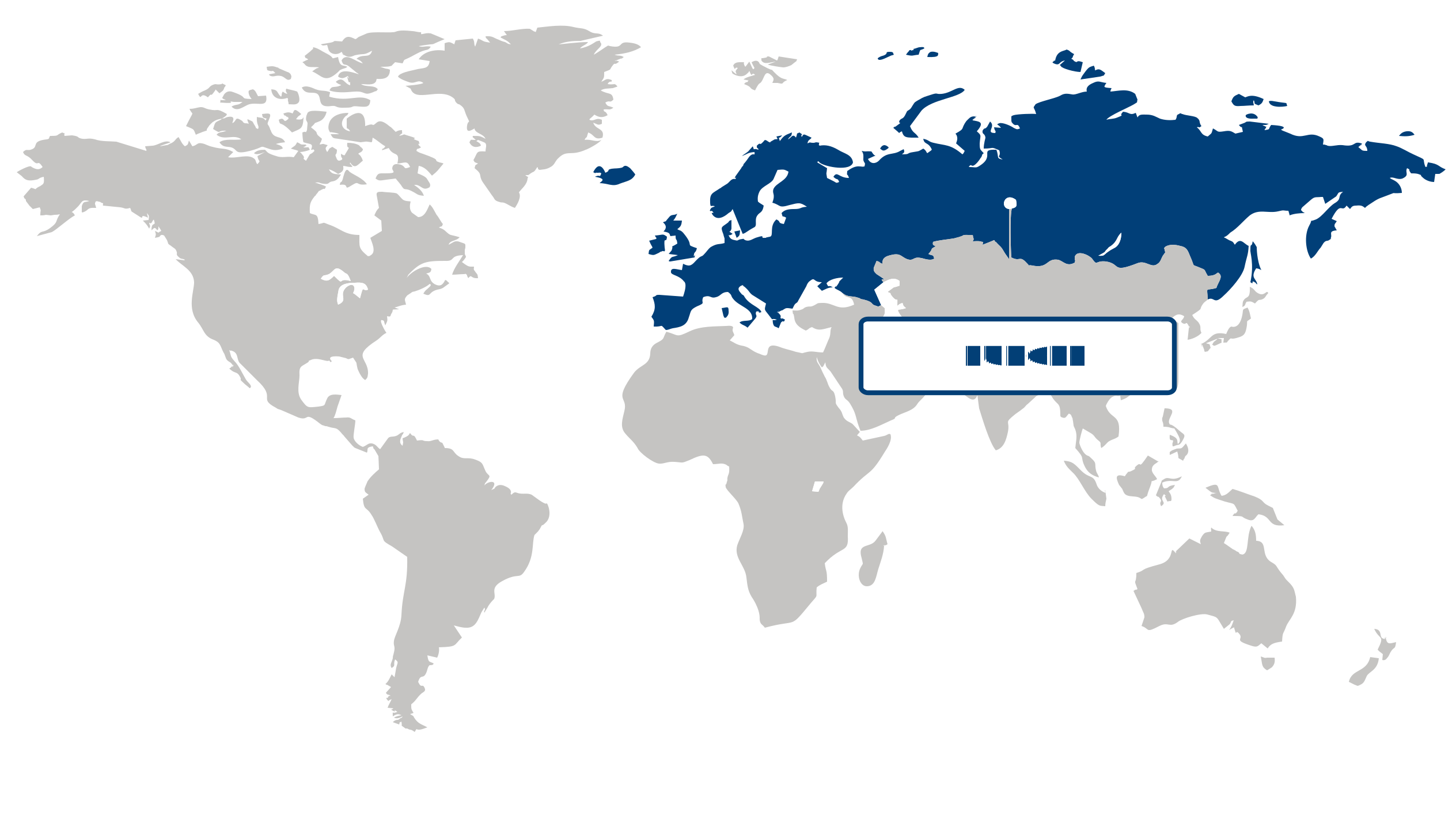
Largest Region
Europe
Largest Market Share in 2026
Europe (Largest Region) vs Asia Pacific (Fastest-Growing Region)
Europe held the largest share of the marine selective catalytic reduction systems market in 2026, reflecting the region's strong environmental focus and stringent requirements for controlling marine emissions. Regulatory pressure to reduce nitrogen oxide emissions from vessels is encouraging shipowners and operators to adopt advanced exhaust treatment technologies. The region's established maritime industry and continued investment in vessel modernization are creating additional opportunities for selective catalytic reduction systems. Growing emphasis on cleaner shipping and compliance with increasingly demanding environmental standards is further reinforcing demand for emissions-control equipment.
Asia Pacific is expected to experience the fastest growth, supported by its extensive maritime activity, expanding shipbuilding industry, and increasing investment in vessel modernization. Rising environmental concerns are encouraging operators to incorporate emissions-reduction technologies into new vessels and upgrade existing fleets. Regulatory developments affecting marine emissions are also increasing the need for compliant exhaust treatment solutions. In addition, the expansion of commercial shipping and port-related activity across major asian economies is creating a broader installed base of marine vessels requiring efficient and reliable emissions-control systems.
No card data available for this language/report.
Segment Leadership and Growth Trends
Application Segment Analysis: Recreational (Largest Segment) vs Offshore (Fastest-Growing Segment)
The recreational segment held the largest share of the marine selective catalytic reduction systems market in 2026. Growing adoption of advanced emission control technologies in recreational vessels has been driven by increasingly stringent marine environmental regulations and rising consumer preference for cleaner and more efficient propulsion systems. Manufacturers are integrating selective catalytic reduction systems into recreational marine engines to reduce nitrogen oxide emissions while maintaining engine performance, supporting the segment's dominant position across developed boating markets.
The offshore segment is emerging as the fastest-growing application due to expanding offshore energy exploration, marine construction, and support vessel operations. Offshore vessels typically operate for extended durations under demanding conditions, creating greater demand for robust emission reduction solutions that comply with tightening international environmental standards. Continued investment in offshore infrastructure and modernization of commercial fleets is expected to accelerate the adoption of marine selective catalytic reduction systems within this segment.
| Report Segmentation | |||
| Segment | Sub-Segment | Largest Segment | Fastest Growing Segment |
|---|---|---|---|
| Application | Commercial, Offshore, Recreational, Navy, Others | Recreational | Offshore |
 Read our Research Approach
Competitive Landscape and Market Positioning
Prominent players in the marine selective catalytic reduction systems market:
- Wärtsilä Corporation (Finland)
- MAN Energy Solutions SE (Germany)
- Mitsubishi Heavy Industries (Japan)
- Caterpillar, Inc. (United States)
- Hitachi Zosen Corporation (Japan)
- Ceco Environmental Corp. (United States)
- Hug Engineering AG (Switzerland)
- Panasia Co., Ltd. (South Korea)
- Alfa Laval AB (Sweden)
- Yara Marine Technologies (Norway)
Demand for cleaner marine propulsion is driving suppliers to compete on system integration rather than standalone emissions equipment. Engineering expertise is becoming a stronger differentiator as manufacturers develop solutions capable of fitting varied vessel configurations while minimizing operational disruption during installation and maintenance. Competitive positioning is also being shaped by the ability to deliver durable catalyst performance across changing operating conditions, encouraging greater emphasis on lifecycle support, diagnostic capabilities, and technical customization for different marine applications. As environmental compliance standards evolve across shipping routes, suppliers with adaptable engineering platforms are strengthening their presence in both new vessel construction and retrofit projects.
Industry Development/News
| Company Name | Date | Key Development |
|---|---|---|
| Damen Shipyards | Feb-25 | Damen Shipyards completed the successful retrofitting of its Marine NOx Reduction Systems utilizing selective catalytic reduction technology onto Van Oord's cable-laying vessel, Nexus. This integration significantly lowers nitrogen oxide emissions to comply with stringent environmental standards, reinforcing the company's operational footprint in sustainable marine shipping. |
| Trakindo | Jun-23 | Trakindo secured a substantial order for 100 Caterpillar C32 engines integrated with selective catalytic reduction systems to achieve IMO III compliance standards. This commercial deployment strengthens market alliances, expands the operational reach of high-performance propulsion solutions, and reinforces the company's competitive positioning within the marine emissions reduction sector. |
| Wartsila | Apr-21 | Wartsila launched an integrated marine engine solution utilizing selective catalytic reduction technology designed to comply with China's Stage II marine engine emission regulations. This technological integration incorporates 20 marine engines featuring advanced nitrogen oxide reduction capabilities, strengthening the company's product portfolio and market share in regulated regions. |
Why Choose Us
Specialized Expertise: Our team comprises industry experts with a deep understanding of your market segment. We bring specialized knowledge and experience that ensures our research and consulting services are tailored to your unique needs.
Customized Solutions: We understand that every client is different. That's why we offer customized research and consulting solutions designed specifically to address your challenges and capitalize on opportunities within your industry.
Proven Results: With a track record of successful projects and satisfied clients, we have demonstrated our ability to deliver tangible results. Our case studies and testimonials speak to our effectiveness in helping clients achieve their goals.
Cutting-Edge Methodologies: We leverage the latest methodologies and technologies to gather insights and drive informed decision-making. Our innovative approach ensures that you stay ahead of the curve and gain a competitive edge in your market.
Client-Centric Approach: Your satisfaction is our top priority. We prioritize open communication, responsiveness, and transparency to ensure that we not only meet but exceed your expectations at every stage of the engagement.
Continuous Innovation: We are committed to continuous improvement and staying at the forefront of our industry. Through ongoing learning, professional development, and investment in new technologies, we ensure that our services are always evolving to meet your evolving needs.
Value for Money: Our competitive pricing and flexible engagement models ensure that you get maximum value for your investment. We are committed to delivering high-quality results that help you achieve a strong return on your investment.
Select Licence Type

