Mobile Data Market Size & Growth Forecast 2027–2036, By Segments (Transmission, End-use), Regional Demand Trends (North America, Asia Pacific, Europe), Key Country Insights (U.S., Japan, South Korea, Germany, France, Italy), and Competitive Landscape
Jump to Content
Market Size and Growth Outlook
Mobile Data Market size was estimated at USD 747.23 billion in 2026 and is projected to grow at a 6.56% CAGR from 2027 to 2036, reaching USD 1.41 trillion by 2036. The industry revenue for 2027 is calculated at USD 788.48 billion.
Get more details on this report
Request Free Sample ReportMobile Data Market Intelligence Snapshot
Regional Market Dynamics
- Asia Pacific accounted for 37.10% of the market in 2026, supported by a vast subscriber base, intensive smartphone usage, and continued telecom investment to expand network coverage and capacity.
- North America is projected to grow at a 7.91% CAGR as higher per-user data consumption, network upgrades, and increasing adoption of premium data plans continue to expand market demand.
Segment Momentum
- Wireless accounted for 72% of the market in 2026 because it supports mobile connectivity, widespread smartphone usage, and convenient always-on access without requiring fixed infrastructure.
- Business is the fastest-growing end-use segment as enterprises increasingly depend on mobile connectivity to support field operations, remote productivity, and real-time access to digital business systems.
Market Expansion Drivers
- 5G network infrastructure expansion enabling ultra-fast mobile data consumption growth.
- Rising OTT streaming and social media usage driving exponential mobile bandwidth demand.
- Affordable data plans and rural connectivity initiatives expanding first-time mobile internet adoption.
Leading Market Participants
- Key players in the mobile data market include AT&T Inc. (U.S.), Verizon Communications Inc. (U.S.), China Telecom Corporation Limited (China), Deutsche Telekom AG (Germany), Vodafone Group Plc (U.K.), Telefónica, S.A. (Spain), Nippon Telegraph and Telephone Corporation (Japan), Reliance Jio Infocomm Limited (India), Orange S.A. (France), KT Corporation (South Korea).
Global Market Forecast Snapshot
Market Outlook
- 2026 Market Size: USD 747.23 billion
- 2027 Estimated Market Size: USD 788.48 billion.
- Projected Market Size: USD 1.41 trillion by 2036
- Growth Forecast: 6.56% CAGR (2027-2036)
Regional and Segment Outlook
- Leading Regional Market: Asia Pacific
- High-Growth Regional Hub: North America
- Core Revenue Segment: Wireless (Transmission) | Consumer/Residential (End-use)
- Emerging Opportunity Segment: Wireline (Transmission) | Business (End-use)
Market Growth Drivers and Industry Trends
5G network infrastructure expansion enabling ultra-fast mobile data consumption growth
The expansion of 5G infrastructure is accelerating the mobile data market by providing higher transmission speeds, lower latency, and greater network capacity for connected devices and users. As telecom operators extend 5G coverage across urban and emerging markets, consumers can access data-intensive applications such as high-definition video, cloud services, online gaming, and immersive digital platforms with improved network performance. Enhanced capacity also allows networks to accommodate increasing traffic from smartphones, connected devices, and other bandwidth-intensive services without compromising connectivity quality. The transition toward advanced mobile networks is encouraging consumers and enterprises to perform more activities through mobile connections, increasing the frequency and volume of data consumption across everyday digital services.
Rising OTT streaming and social media usage driving exponential mobile bandwidth demand
The rapid growth of OTT entertainment and social networking is creating sustained demand for high-volume mobile connectivity, making digital content consumption a key contributor to the mobile data market. Video streaming, short-form content, live broadcasts, image-heavy platforms, and interactive social features require substantially more bandwidth than basic messaging or conventional web browsing. Consumers are also spending longer periods accessing these services through smartphones, particularly as mobile devices become primary platforms for entertainment and communication. Continuous content uploads, video playback, social interactions, and personalized feeds are therefore increasing mobile traffic requirements, placing greater emphasis on reliable and high-capacity data networks.
Affordable data plans and rural connectivity initiatives expanding first-time mobile internet adoption
Lower-cost mobile data offerings are helping broaden internet accessibility among consumers who previously had limited or no regular mobile connectivity, supporting expansion of the mobile data market across price-sensitive segments. Competitive data plans reduce the cost barrier associated with frequent internet usage, encouraging users to adopt mobile services for communication, entertainment, education, digital payments, and online commerce. At the same time, rural connectivity initiatives are extending network availability into underserved areas, allowing new user groups to participate in the digital economy. Improved affordability combined with wider network reach is increasing the number of mobile internet users and encouraging greater reliance on smartphones for everyday online activities.
| Growth Driver | Impact on CAGR | Regulatory Influence | Geographic Relevance | Adoption Rate | Impact Timeline |
|---|---|---|---|---|---|
| 5G network infrastructure expansion enabling ultra-fast mobile data consumption growth | 2.00% | High | Asia Pacific, North America, Europe | High | Near Term |
| Rising OTT streaming and social media usage driving exponential mobile bandwidth demand | 1.50% | Moderate | Asia Pacific | High | Near Term |
| Affordable data plans and rural connectivity initiatives expanding first-time mobile internet adoption | 1.00% | High | Asia Pacific, Latin America, Africa | Emerging | Mid Term |
Unlock insights tailored to your business with our bespoke market research solutions.
Click to get your customized report now.
Regional Demand Dynamics

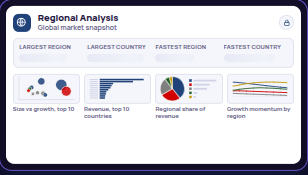
Asia Pacific (Largest Region)
In the mobile data market, Asia Pacific held the largest share of 37.10% in 2026, supported by extensive mobile connectivity, expanding smartphone adoption, and the growing reliance on mobile platforms for communication, entertainment, commerce, and digital services. Rapid urbanization and the continued development of telecommunications infrastructure are strengthening data consumption across both established and emerging economies. The region’s large and increasingly digitally engaged population, combined with the expansion of high-speed mobile networks, is encouraging consumers and businesses to shift more activities toward mobile-first services, reinforcing demand for data connectivity.
North America (Fastest-Growing Region)
North America is positioned as the fastest-growing region, driven by continued investments in advanced wireless infrastructure and increasing demand for high-quality mobile connectivity. Rising consumption of cloud-based applications, video content, connected services, and mobile enterprise solutions is increasing data usage across consumer and business segments. The expansion of next-generation networks, together with growing adoption of connected devices and data-intensive applications, is further supporting market development. Strong digital infrastructure and high levels of technology adoption provide a favorable environment for sustained expansion of mobile data services.
| Parameter | North America | Asia Pacific | Europe | Latin America | MEA |
|---|---|---|---|---|---|
| Innovation HubiScaleNascentDeveloping Advanced | |||||
| Cost-Sensitive RegioniScaleLowMedium High | |||||
| Regulatory EnvironmentiScaleRestrictiveNeutral Supportive | |||||
| Demand DriversiScaleWeakModerate Strong | |||||
| Development StageiScaleEmergingDeveloping Developed | |||||
| Adoption RateiScaleLowMedium High | |||||
| New Entrants / StartupsiScaleSparseModerate Dense | |||||
| Macro IndicatorsiScaleWeakStable Strong |
Key Country Insights
Germany 🇩🇪
Industrial Connectivity SupportGermany leverages mobile data services to strengthen enterprise mobility and connected industrial operations alongside consumer usage. Investment priorities include reliable network performance, secure connectivity, and expanding digital service capabilities.
France 🇫🇷
Balanced Connectivity StrategyFrance is strengthening mobile data services through broader digital access and consistent network performance across consumer and business segments. Operators continue refining service quality while supporting increasing reliance on mobile-first applications.
Italy 🇮🇹
Consumer Data AdoptionItaly's mobile data market reflects growing dependence on smartphones for communication, entertainment, and digital services. Service providers prioritize network reliability, flexible data offerings, and improved coverage to support expanding mobile usage patterns.
Japan 🇯🇵
High-Usage Digital ServicesJapan's mobile data market supports extensive use of digital entertainment, mobile commerce, and connected applications. Service providers continue optimizing network efficiency and user experience to accommodate sustained demand for high-quality mobile connectivity.
South Korea 🇰🇷
Advanced Mobile NetworksSouth Korea emphasizes high-performance mobile data services supporting immersive digital content and connected consumer experiences. Telecom providers focus on improving network responsiveness and capacity to accommodate evolving mobile applications.
United States 🇺🇸
Network Capacity ExpansionThe U.S. mobile data market is focused on supporting increasing bandwidth demand driven by streaming, cloud services, and connected devices. Network operators continue enhancing infrastructure and service quality to improve user experience across diverse applications.
Mobile Data Market Share (%), by Transmission, 2026
Go beyond the chart, access full insights & data tables
Request Free Sample ReportTransmission Segment Analysis: Wireless (Largest Segment) vs Wireline (Fastest-Growing Segment)
The wireless segment dominated the mobile data market with a 72% share in 2026, reflecting the central role of mobile connectivity in everyday communication and digital consumption. Wireless transmission enables users to access data across diverse locations without relying on fixed physical connections, supporting mobile browsing, applications, streaming, and connected services. Continued consumer dependence on smartphones and other connected devices further strengthens the importance of flexible, uninterrupted wireless access.
Wireline transmission is the fastest-growing segment, supported by increasing requirements for reliable, high-capacity connectivity in locations where stable network performance is essential. Fixed connections can provide consistent data transmission and support bandwidth-intensive applications that require dependable connectivity. Rising digitalization and expanding demand for robust communication infrastructure are contributing to greater adoption of wireline solutions alongside wireless networks.
End-use Segment Analysis: Consumer/Residential (Largest Segment) vs Business (Fastest-Growing Segment)
In the mobile data market, the consumer/residential segment held the largest share of 63% in 2026. Widespread reliance on mobile connectivity for communication, entertainment, digital services, social platforms, and online activities continues to sustain demand among residential users. The proliferation of connected devices and the increasing integration of digital services into daily routines further reinforce data consumption across households.
Business usage is advancing as the fastest-growing segment as organizations increasingly depend on mobile connectivity to support distributed workforces, digital collaboration, field operations, and connected business processes. Mobile data enables employees to remain connected beyond traditional office environments while supporting real-time access to enterprise applications and information. The expansion of digitally enabled workflows and greater reliance on flexible working models are further accelerating business demand.
| Segment | Sub-Segment | Largest Segment | Fastest Growing |
|---|---|---|---|
| Transmission | Wireline, Wireless | Wireless | Wireline |
| End-use | Consumer/Residential, Business | Consumer/Residential | Business |
Competitive Landscape and Market Positioning
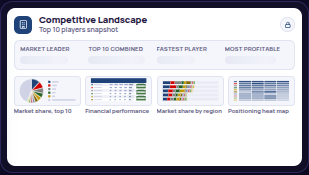
Top players in the mobile data market:
1. AT&T Inc. (U.S.)
2. Verizon Communications Inc. (U.S.)
3. China Telecom Corporation Limited (China)
4. Deutsche Telekom AG (Germany)
5. Vodafone Group Plc (U.K.)
6. Telefónica S.A. (Spain)
7. Nippon Telegraph and Telephone Corporation (Japan)
8. Reliance Jio Infocomm Limited (India)
9. Orange S.A. (France)
10. KT Corporation (South Korea)
The mobile data market is expanding rapidly due to rising consumption of high-speed digital services. Increasing reliance on connected devices is driving continuous infrastructure upgrades. Service ecosystems are becoming more integrated, while innovation focuses on improving speed, coverage, and data efficiency.
| Company | Market Share | Company Revenue | Revenue CAGR (%) | Product Portfolio | Geographic Presence | Innovation / R&D Focus | Strategic Developments |
|---|---|---|---|---|---|---|---|
| AT&T Inc. (U.S.) | |||||||
| Verizon Communications Inc. (U.S.) | |||||||
| China Telecom Corporation Limited (China) | |||||||
| Deutsche Telekom AG (Germany) | |||||||
| Vodafone Group Plc (U.K.) | |||||||
| Telefónica S.A. (Spain) | |||||||
| Nippon Telegraph and Telephone Corporation (Japan) | |||||||
| Reliance Jio Infocomm Limited (India) | |||||||
| Orange S.A. (France) | |||||||
| KT Corporation (South Korea). |
Industry Development/News
| Company Name | Date | Key Development |
|---|---|---|
| Truecaller | May-26 | Truecaller expanded into global data services by launching a travel eSIM offering across 29 countries. This move marks a strategic shift beyond caller identification, leveraging its existing user base to diversify revenue streams while entering the mobile connectivity and roaming alternatives space, strengthening its role within digital identity and mobile data services ecosystems. |
| US Mobile & Starlink | Apr-26 | US Mobile partnered with Starlink to develop an integrated satellite and cellular connectivity service. By combining terrestrial mobile networks with satellite coverage, the initiative aims to enhance connectivity in remote regions, signaling a strategic transition toward hybrid network models that extend mobile data accessibility beyond the limitations of traditional terrestrial infrastructure. |
| Samsung | Feb-26 | Samsung introduced integrated satellite communication support across its Galaxy S26 smartphone series through partnerships with global telecom operators. This integration enables device-level satellite connectivity, enhancing network resilience and expanding mobile data access capabilities for users in areas lacking reliable terrestrial mobile infrastructure. |
| Stonepeak | Dec-25 | Stonepeak acquired TeleTower from Bitė Group’s portfolio, establishing a significant independent tower operator in the Baltic region. The transaction bolsters Stonepeak’s European digital infrastructure footprint, increasing its direct exposure to mobile network tower assets required to support the long-term growth of mobile data connectivity infrastructure and network capacity. |
| TMT ID | Nov-25 | TMT ID secured £30 million in growth capital from BGF to accelerate its U.S. market expansion and further develop its mobile identity intelligence solutions. The investment provides the necessary funding to scale data-driven identity verification technologies, strengthening the company’s competitive position within secure mobile data services and fraud prevention infrastructure. |
| Cassava Technologies | Nov-25 | Cassava Technologies partnered with Google to deliver data-free AI access across African markets. By reducing data cost barriers and integrating AI services directly into mobile ecosystems, the initiative expands digital inclusion and reinforces Cassava’s strategic efforts to broaden connectivity-driven digital services throughout emerging regions. |
| Armada | Feb-25 | Armada deployed its mobile edge data center system, Galleon, for U.S. Navy tactical operations. This development demonstrates the growing commercial and operational demand for portable, high-performance edge infrastructure capable of supporting real-time data processing and mission-critical network connectivity in remote environments where traditional infrastructure is unavailable or insufficient. |
| Helium Mobile & DAWN | Jan-25 | Helium Mobile and DAWN partnered to develop a community-powered decentralized internet model. The initiative aims to reshape mobile connectivity by utilizing distributed infrastructure, representing an alternative approach to traditional telecom network reliance and expanding user-driven mobile data access models in the evolving telecommunications landscape. |
| Saily (NordVPN) | Sep-24 | Saily, an eSIM service by NordVPN, launched a business-focused connectivity solution to expand its reach within the global eSIM market. The move targets enterprise mobility requirements by providing flexible, international mobile data access solutions, catering to the increasing connectivity needs of business travelers and remote enterprise workforces. |
| Revolut | Feb-24 | Revolut introduced a digital eSIM service providing mobile data plans across more than 100 countries. By enabling seamless switching between networks and reducing roaming costs, the offering marks a strategic expansion into telecom-adjacent digital financial and connectivity services, intensifying competition for mobile data provision from non-traditional market entrants. |
Customize Your Report
Explore examples of how this report can be tailored to different research needs, including custom segments, additional topics or chapters, and related reports. Click a section of the wheel or its numbered marker to explore the available options.
Mobile Data Market — Custom Segments
| Segment | Sub-Segment |
|---|---|
| Billing Model | Prepaid, Postpaid, Hybrid |
| Data Application | Web Browsing & Social Media, Video & Audio Streaming, Online Gaming, Cloud & Productivity Applications, Enterprise & Business Applications, IoT & Machine-to-Machine Applications |
| Device Type | Smartphones, Tablets, Laptops & Mobile PCs, Connected Devices & IoT Devices |
Mobile Data Market — Custom TOC
| Custom Chapter | Chapter Details |
|---|---|
| 5G Data Monetization Opportunity Assessment |
|
| Enterprise Mobile Connectivity Demand Assessment |
|
| Mobile Data Consumption Behavior Analysis |
|
Need a different cut of the data?
Request Custom ResearchFrequently Asked Questions
How big is the mobile data market?
How will the mobile data industry grow in terms of size and CAGR by 2036?
How is 5G infrastructure expansion changing consumption patterns in the mobile data market?
Which market trends are expanding mobile data adoption beyond existing users?
Why does wireless remain the leading transmission segment in the mobile data market?
Which end-use segment is expanding the fastest in the mobile data market?
Why is Asia Pacific the largest mobile data market?
What factors are driving mobile data market growth in North America?
Who are the major participants shaping the mobile data landscape?
Our Clients
"The team demonstrated a great understanding of our business needs, and the reports were tailored to address our specific concerns and objectives."
Infosys
"The report was up-to-date with the latest industry trends and technological advancements. The detailed competitive landscape analysis was quite helpful."
Zebra Technologies
"The data presented in the report was accurate and well-researched. I also found the market dynamics section particularly useful."
Arlo Technologies
Our Research Team & Methodology
Every Fundamental Business Insights report is built by a dedicated vertical research team, validated through a structured primary-and-secondary methodology, and reviewed for accuracy before it reaches you.
This report was prepared by the Smart Technologies Research Team at Fundamental Business Insights, a dedicated research group specializing in emerging digital technologies and intelligent connected systems. Our analysts continuously monitor advancements in artificial intelligence, Internet of Things (IoT), cloud computing, edge computing, cybersecurity, automation, digital transformation strategies, and evolving enterprise adoption trends to deliver timely and reliable market intelligence. The research is developed using a structured methodology that combines primary discussions with technology providers, software vendors, system integrators, enterprise users, and industry experts, along with company annual reports, investor presentations, regulatory publications, technology standards, industry associations, technical white papers, and other authoritative secondary sources. Market estimates are validated through multiple research techniques, including top-down and bottom-up analysis, before undergoing an internal quality review to ensure accuracy, consistency, and methodological integrity prior to publication.
Delivery
Published
Available
Support
- Market Size & Forecast
- Market Segmentation
- Regional Analysis
- Growth Drivers & Challenges
- Market Dynamics
- Competitive Landscape
- Company Profiles
- Competitive Benchmarking
- Mergers & Acquisitions
- Market Share Analysis or Key Company Strategies
- Value Chain Analysis
- Porter's Five Forces
- PESTLE Analysis
- Pricing Trends
- Supply-Demand Analysis
- Technology Landscape
- Regulatory Landscape
- Investment & Funding Landscape
- Emerging Opportunities
- Future Market Outlook