Mobile Marketing Market Size & Growth Forecast 2027–2036, By Segments (Component, Enterprise Size, Channel, End-use), Regional Demand Trends (North America, Asia Pacific, Europe), Key Country Insights (U.S., Japan, South Korea, Germany, France, Italy), and Competitive Landscape
Jump to Content
Market Size and Growth Outlook
Mobile Marketing Market size was over USD 33.3 billion in 2026 and is likely to grow at a 22.71% CAGR between 2027 and 2036, attaining USD 257.78 billion by 2036. The industry revenue for 2027 is assessed at USD 39.67 billion.
Get more details on this report
Request Free Sample ReportMobile Marketing Market Intelligence Snapshot
Regional Market Dynamics
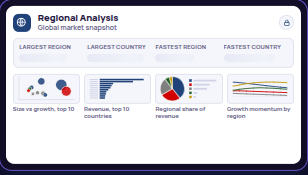
- North America held a 38.69% share in 2026, supported by mature digital advertising ecosystems, advanced data infrastructure, and strong mobile engagement capabilities.
- Asia Pacific is projected to grow at a 25.52% CAGR, driven by expanding smartphone adoption, mobile internet access, apps, and mobile-first consumer engagement.
Segment Momentum
- Platform leads the market because it serves as the core infrastructure for campaign execution, audience management, analytics, and cross-channel coordination, enabling enterprises to manage mobile marketing activities efficiently at scale.
- Small & Medium Enterprises are expanding fastest as mobile marketing provides a cost-effective, flexible way to reach targeted audiences, strengthen brand visibility, and respond quickly to changing customer behavior.
Market Expansion Drivers
- Rapid smartphone penetration and mobile internet usage driving digital advertising adoption.
- Rising adoption of AI-driven geofencing and location-based marketing enhancing campaign targeting efficiency.
- Growth of OTT platforms and digital commerce expanding mobile-first advertising ecosystem.
Leading Market Participants
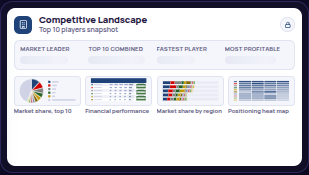
- Prominent companies in the mobile marketing market include Google LLC (United States), Salesforce, Inc. (United States), Oracle Corporation (United States), IBM Corporation (United States), InMobi Pte. Ltd. (Singapore), SAS Institute Inc. (United States), Chartboost, Inc. (United States), Adobe Inc. (United States), AppSamurai Teknoloji A.Ş. (Turkey).
Global Market Forecast Snapshot
Market Outlook
- 2026 Market Size: USD 33.3 billion
- 2027 Estimated Market Size: USD 39.67 billion.
- Projected Market Size: USD 257.78 billion by 2036
- Growth Forecast: 22.71% CAGR (2027-2036)
Regional and Segment Outlook
- Leading Regional Market: North America
- High-Growth Regional Hub: Asia Pacific
- Core Revenue Segment: Platform (Component) | Large Enterprises (Enterprise Size) | Mobile Web (Channel) | Retail (End-use)
- Emerging Opportunity Segment: Services (Component) | Small & Medium Enterprises (Enterprise Size) | QR Codes (Channel) | Media & Entertainment (End-use)
Market Growth Drivers and Industry Trends
Rapid smartphone penetration and mobile internet usage driving digital advertising adoption
Widespread smartphone ownership and increasing reliance on mobile internet are expanding the addressable audience for digital advertising, which will drive the mobile marketing market growth across consumer-facing industries. Smartphones provide users with continuous access to applications, search services, social platforms, video content, and digital commerce, creating multiple touchpoints through which marketers can engage audiences. Mobile advertising formats can be integrated directly into these digital experiences, including in-app advertisements, mobile search campaigns, social media promotions, and personalized notifications. The ability to reach consumers during different stages of their online activity also enables advertisers to adapt campaigns according to user behavior and engagement patterns. As mobile devices increasingly serve as a primary gateway to digital content and services, businesses are allocating greater attention to mobile-focused customer acquisition and engagement strategies.
Rising adoption of AI-driven geofencing and location-based marketing enhancing campaign targeting efficiency
AI-enabled targeting and location intelligence are increasing the precision of mobile advertising campaigns, strengthening the role of location-based strategies in the mobile marketing market. Geofencing allows marketers to define geographic areas and deliver relevant messages when users enter or interact within designated locations, while AI can analyze behavioral and contextual signals to improve audience segmentation and campaign timing. These capabilities can help businesses tailor promotions according to proximity, customer interests, previous interactions, and local conditions rather than relying on broad demographic targeting alone. Retailers, service providers, and event-oriented businesses can use location-aware campaigns to connect digital engagement with physical customer activity, while automated analytics can support optimization of advertising performance. The combination of mobile connectivity, location intelligence, and machine learning is making campaign delivery more context-sensitive and responsive.
Growth of OTT platforms and digital commerce expanding mobile-first advertising ecosystem
The continued expansion of streaming entertainment and online shopping is creating additional mobile advertising inventory and will support mobile marketing market demand as consumers increasingly engage with digital services through smartphones. OTT platforms provide marketers with opportunities to place targeted promotional content around video consumption, while digital commerce platforms enable advertising to be connected more closely with product discovery and purchasing activity. Mobile-first shopping experiences also generate behavioral signals that can help advertisers personalize product recommendations, promotional messages, and retargeting campaigns. The convergence of entertainment, social engagement, and commerce on mobile devices allows brands to maintain customer interactions across multiple digital touchpoints rather than relying on a single advertising channel. As consumers move between streaming content, social platforms, mobile applications, and online storefronts, advertisers are developing campaigns that are designed specifically for these interconnected mobile environments.
| Growth Driver | Impact on CAGR | Regulatory Influence | Geographic Relevance | Adoption Rate | Impact Timeline |
|---|---|---|---|---|---|
| Rapid smartphone penetration and mobile internet usage driving digital advertising adoption | 2.50% | Moderate | Asia Pacific, North America | High | Near Term |
| Rising adoption of AI-driven geofencing and location-based marketing enhancing campaign targeting efficiency | 2.10% | High | North America, Europe | High | Near Term |
| Growth of OTT platforms and digital commerce expanding mobile-first advertising ecosystem | 1.80% | Moderate | Asia Pacific | High | Mid Term |
Unlock insights tailored to your business with our bespoke market research solutions.
Click to get your customized report now.
Regional Demand Dynamics

North America (Largest Region)
North America dominated the mobile marketing market with a 38.69% share in 2026, supported by high smartphone penetration, mature digital advertising ecosystems, and widespread use of mobile channels for customer engagement. Businesses across industries are increasingly using mobile messaging, applications, personalized campaigns, and location-aware engagement to reach consumers across digital touchpoints. Strong digital infrastructure and sophisticated data analytics capabilities are enabling more targeted marketing strategies, while growing emphasis on personalized customer experiences is supporting continued investment in mobile-focused campaigns. The region's mature digital economy further reinforces its leading position.
Asia Pacific (Fastest-Growing Region)
Asia Pacific is the fastest-growing region, fueled by expanding smartphone adoption, rapid digitalization, and the increasing shift of consumer activity toward mobile platforms. Growing internet accessibility and the expansion of mobile commerce are giving businesses more opportunities to engage consumers through applications, messaging, social platforms, and other mobile channels. Rising digital advertising adoption among businesses is also supporting demand for targeted and data-driven marketing solutions. As consumer behavior becomes increasingly mobile-centric, marketers across the region are placing greater emphasis on personalized and real-time engagement.
| Parameter | North America | Asia Pacific | Europe | Latin America | MEA |
|---|---|---|---|---|---|
| Innovation HubiScaleNascentDeveloping Advanced | |||||
| Cost-Sensitive RegioniScaleLowMedium High | |||||
| Regulatory EnvironmentiScaleRestrictiveNeutral Supportive | |||||
| Demand DriversiScaleWeakModerate Strong | |||||
| Development StageiScaleEmergingDeveloping Developed | |||||
| Adoption RateiScaleLowMedium High | |||||
| New Entrants / StartupsiScaleSparseModerate Dense | |||||
| Macro IndicatorsiScaleWeakStable Strong |
Key Country Insights
Germany 🇩🇪
Privacy-Centered CampaignsGermany prioritizes mobile marketing strategies that balance personalization with strong data privacy and regulatory compliance. Companies are investing in consent-based customer engagement and first-party data capabilities to improve long-term marketing performance.
France 🇫🇷
Customer Experience PersonalizationFrance is strengthening mobile marketing by combining personalized content with responsible consumer data practices. Brands are optimizing mobile engagement across retail and service sectors to improve customer loyalty and campaign efficiency.
Italy 🇮🇹
Retail Engagement OptimizationItaly is expanding mobile marketing through stronger adoption of app-based promotions, digital loyalty programs, and localized customer outreach. Businesses are focusing on mobile-first engagement strategies that encourage repeat purchases and stronger consumer relationships.
Japan 🇯🇵
Mobile Commerce IntegrationJapan is expanding mobile marketing through close integration with digital payments, retail applications, and loyalty ecosystems. Brands are enhancing personalized customer interactions across smartphones to improve engagement and purchasing experiences.
South Korea 🇰🇷
Digital Platform ActivationSouth Korea leverages its highly connected mobile ecosystem to support interactive marketing campaigns across social media, gaming, and e-commerce platforms. Businesses are adopting AI-enabled campaign optimization to deliver more relevant customer experiences.
United States 🇺🇸
Omnichannel EngagementThe U.S. continues to refine mobile marketing through AI-driven personalization, location-based campaigns, and integrated customer engagement strategies. Businesses are investing in data-driven mobile experiences that strengthen customer retention and campaign effectiveness.
Mobile Marketing Market Share (%), by Component, 2026
Go beyond the chart, access full insights & data tables
Request Free Sample ReportComponent Segment Analysis: Platform (Largest Segment) vs Services (Fastest-Growing Segment)
The platform segment dominated the mobile marketing market in 2026, supported by the central role of software platforms in campaign management, customer engagement, mobile advertising, analytics, and personalization. Businesses are increasingly relying on integrated platforms to manage interactions across mobile applications, messaging channels, and other digital touchpoints. Growing demand for data-driven and targeted marketing strategies continues to reinforce the segment's leading position.
The services segment is expected to be the fastest-growing segment, driven by increasing demand for consulting, implementation, campaign management, and optimization support. Organizations are seeking specialized expertise to improve the effectiveness of mobile marketing initiatives and integrate campaigns with broader digital strategies. The growing complexity of customer engagement across multiple mobile channels is expected to further support demand for services.
Enterprise Size Segment Analysis: Large Enterprises (Largest Segment) vs Small & Medium Enterprises (Fastest-Growing Segment)
The large enterprises segment led the mobile marketing market in 2026, supported by greater marketing budgets and the need to manage extensive customer engagement programs across multiple digital channels. Large organizations are increasingly investing in advanced mobile marketing platforms to support personalization, analytics, customer retention, and campaign automation. Their broad customer bases and complex marketing requirements continue to strengthen the segment's dominant position.
The small and medium enterprises segment is expected to be the fastest-growing segment, driven by the increasing accessibility of cloud-based and scalable mobile marketing solutions. Smaller businesses are adopting digital marketing tools to improve customer reach, strengthen engagement, and compete more effectively with larger organizations. The growing availability of cost-efficient and easy-to-deploy platforms is expected to accelerate adoption among small and medium enterprises.
| Segment | Sub-Segment | Largest Segment | Fastest Growing |
|---|---|---|---|
| Component | Platform, Services | Platform | Services |
| Enterprise Size | Large Enterprises, Small & Medium Enterprises | Large Enterprises | Small & Medium Enterprises |
| Channel | Mobile Web, SMS, Location-Based Marketing, In-App Messages, Push Notifications, QR Codes, MMS, Others | Mobile Web | QR Codes |
| End-use | Retail, Media & Entertainment, Travel, Automotive, Healthcare, IT & Telecom, BFSI, Others | Retail | Media & Entertainment |
Competitive Landscape and Market Positioning
Prominent players in the mobile marketing market:
1. Google LLC (United States)
2. Salesforce Inc. (United States)
3. Oracle Corporation (United States)
4. IBM Corporation (United States)
5. InMobi Pte. Ltd. (Singapore)
6. SAS Institute Inc. (United States)
7. Chartboost Inc. (United States)
8. Adobe Inc. (United States)
9. AppSamurai Teknoloji A.Åž. (Turkey)
The mobile marketing market is evolving rapidly with increased integration of data-driven and AI-enabled engagement strategies. Ecosystem expansion across digital platforms is enhancing campaign reach and personalization capabilities. Rising demand for real-time customer interaction is reshaping marketing approaches.
| Company | Market Share | Company Revenue | Revenue CAGR (%) | Product Portfolio | Geographic Presence | Innovation / R&D Focus | Strategic Developments |
|---|---|---|---|---|---|---|---|
| Google LLC (United States) | |||||||
| Salesforce Inc. (United States) | |||||||
| Oracle Corporation (United States) | |||||||
| IBM Corporation (United States) | |||||||
| InMobi Pte. Ltd. (Singapore) | |||||||
| SAS Institute Inc. (United States) | |||||||
| Chartboost Inc. (United States) | |||||||
| Adobe Inc. (United States) | |||||||
| AppSamurai Teknoloji A.Ş. (Turkey). |
Industry Development/News
| Company Name | Date | Key Development |
|---|---|---|
| Adobe | Oct-25 | Adobe introduced GenStudio, an AI-enabled content supply-chain platform designed to compress creative production cycles and embed generative experimentation into marketing workflows, enhancing scalable mobile campaign development and execution efficiency. |
| United States Federal Court | Apr-25 | A U.S. federal ruling mandated structural remedies for Google’s ad-tech stack, potentially enabling divestitures that could reshape mobile advertising inventory distribution and alter competitive dynamics across the mobile marketing ecosystem. |
| Apple | Mar-25 | Apple expanded monetization of its advertising ecosystem by directly selling premium ad inventory within Apple News, focusing on high-impact placements and reinforcing its strategy to internalize advertising revenues across its mobile platform. |
| CVS Health | Jan-25 | CVS Health launched a health-and-wellness super-app integrating prescriptions, vaccinations, and AI-driven reminders, strengthening mobile-first consumer engagement and expanding its role in mobile-enabled healthcare marketing and service delivery. |
| Amazon | Nov-23 | Amazon partnered with Meta to enable shopping advertising across Instagram and Facebook, expanding cross-platform retail media reach and improving advertiser access to social mobile inventory for targeted commerce-driven campaigns. |
| Digital Turbine | Jul-23 | Digital Turbine partnered with Connect Ads to expand mobile advertising solutions across the Middle East and North Africa region, strengthening regional monetization capabilities through enhanced in-app video advertising distribution. |
| AppLovin Corporation | Jul-23 | AppLovin enhanced its AppDiscovery platform with advanced AI capabilities, improving its AXON engine to optimize user acquisition performance, campaign scaling, and global advertising efficiency across mobile marketing ecosystems. |
| Jun-23 | Google launched AI-driven advertising features, including Demand Gen, to automate ad placement across YouTube, Gmail, and Shorts, strengthening machine learning-based optimization of mobile advertising reach and performance. | |
| InMobi Commerce | Feb-23 | InMobi Commerce partnered with Point Pickup to enhance product discovery and monetization for grocery retail partners, enabling improved mobile-driven retail media revenues through in-app advertising integration. |
Customize Your Report
Explore examples of how this report can be tailored to different research needs, including custom segments, additional topics or chapters, and related reports. Click a section of the wheel or its numbered marker to explore the available options.
Mobile Marketing Market — Custom Segments
| Segment | Sub-Segment |
|---|---|
| Marketing Objective | Customer Acquisition, Customer Retention, Brand Awareness, Sales Conversion |
| Customer Engagement Stage | Awareness, Consideration, Conversion, Retention, Advocacy |
| Pricing Model | Subscription-Based, Usage-Based, Performance-Based, Transaction-Based |
Mobile Marketing Market — Custom TOC
| Custom Chapter | Chapter Details |
|---|---|
| Mobile Consumer Engagement Strategy |
|
| Mobile Marketing Technology Adoption |
|
| Brand Mobile Commerce Opportunities |
|
Need a different cut of the data?
Request Custom ResearchFrequently Asked Questions
How much revenue does the mobile marketing market generate?
What is the projected value of the mobile marketing industry by 2036?
How is mobile-first consumer behavior reshaping advertising strategies in the mobile marketing market?
Why are AI-driven geofencing and location intelligence becoming strategic investments in the mobile marketing market?
Why is the Platform segment the largest component in the mobile marketing market?
Why are Small & Medium Enterprises the fastest-growing enterprise segment in the mobile marketing market?
Why does North America lead the mobile marketing market?
How is Asia Pacific driving future mobile marketing growth?
What are the prominent companies operating in the mobile marketing landscape?
Our Clients
"The report provided us with a clear direction, and the level of detail was beyond what we expected. I would definitely recommend their services to others."
Haier Appliances
"The collaboration with Fundamental Business Insights has added significant value to our decision-making process, and we look forward to continuing this partnership for our future market research requirements."
Luxottica Group S.p.A.
"The team at FBI delivered an exceptional research report. The insights on industry innovations were particularly impressive and added a lot of value to the overall report."
Nike
Our Research Team & Methodology
Every Fundamental Business Insights report is built by a dedicated vertical research team, validated through a structured primary-and-secondary methodology, and reviewed for accuracy before it reaches you.
Delivery
Published
Available
Support
- Market Size & Forecast
- Market Segmentation
- Regional Analysis
- Growth Drivers & Challenges
- Market Dynamics
- Competitive Landscape
- Company Profiles
- Competitive Benchmarking
- Mergers & Acquisitions
- Market Share Analysis or Key Company Strategies
- Value Chain Analysis
- Porter's Five Forces
- PESTLE Analysis
- Pricing Trends
- Supply-Demand Analysis
- Technology Landscape
- Regulatory Landscape
- Investment & Funding Landscape
- Emerging Opportunities
- Future Market Outlook