



Motorcycle E Call Market Size & Forecasts 2026-2035, By Segments (Technology, Application, Connectivity Features, End-User, Motorcycle Type), Growth Opportunities, Innovation Landscape, Regulatory Shifts, Strategic Regional Insights (U.S., Japan, China, South Korea, UK, Germany, France), and Competitive Dynamics (Robert Bosch GmbH, Continental AG, Denso Corporation, Vodafone Automotive, BMW Motorrad)
Market Size and Growth Outlook
Motorcycle E Call Market size is forecasted to reach USD 24.2 billion by 2035, rising from USD 15.29 billion in 2025, at a CAGR of more than 4.7% between 2026 and 2035. In 2026, revenue is projected at USD 15.91 billion.
Base Year Value (2025)
USD 15.29 billion
CAGR (2026-2035)
4.7%
Forecast Year Value (2035)
USD 24.2 billion

Historical Data Period
2022-2025

Largest Region
Europe

Forecast Period
2026-2035
Key Takeaways
- Europe region garnered around 44% revenue share in 2025, driven by mandatory motorcycle e-Call regulations and early adoption of in-vehicle emergency safety systems.
- Asia Pacific region will achieve around 6.8% CAGR through 2035, accelerated by rising motorcycle ownership and increasing road safety initiatives across emerging economies.
- In 2025, the 4G/5G connectivity segment dominated the market share, driven by superior real-time communication and broader coverage provided by 4G/5G networks.
- The safety and security segment contributed the largest share to the motorcycle E call market in 2025, propelled by increasing focus on rider safety and emergency response solutions.
- The emergency calling segment accounted for majority share of the market in 2025, driven by the critical need for rapid assistance in accident scenarios.
- In 2025, the individual riders segment led the motorcycle E call market with a majority share, driven by rising adoption of connected safety technologies among personal motorcycle owners.
- In 2025, the street segment held largest share of the market, supported by the high global sales volume of street motorcycle models.
- The leading players in the motorcycle E call market include Robert Bosch GmbH (Germany), Continental AG (Germany), Denso Corporation (Japan), Vodafone Automotive (Italy), BMW Motorrad (Germany), Garmin Ltd. (USA), Octo Telematics (Italy), Piaggio & C. SpA (Italy), Yamaha Motor Co., Ltd. (Japan), Ericsson (Sweden).
Market Growth Drivers and Industry Trends
Rising Demand for Emergency Communication Systems in MotorcyclesThe increasing need for enhanced rider safety is propelling growth in the motorcycle E call market. Motorcyclists face higher accident risks due to exposure and limited protection, driving demand for prompt emergency response solutions. Organizations like the European Road Safety Observatory have emphasized reducing fatal accidents through advanced safety technologies, encouraging adoption of e-call systems. This trend opens strategic opportunities for providers to develop specialized, reliable communication devices tailored to motorcycles’ unique usage patterns. Established manufacturers can leverage their technological expertise, while new entrants can focus on innovation in compact, rugged hardware and seamless connectivity. As consumer awareness about safety grows alongside rising road safety campaigns, demand for emergency communication integration in motorcycles is set to strengthen steadily.
Integration with Connected Vehicle Platforms
The motorcycle E call market is experiencing significant influence from the broader shift towards vehicle connectivity and Internet of Things (IoT) ecosystems. Companies such as Bosch and Continental are actively incorporating e-call functionality into integrated connected vehicle systems that enable real-time data sharing and enhanced situational awareness. Such integration facilitates faster accident detection and response through automatic alerts linked to telematics and navigation platforms. This creates a competitive edge for players capable of delivering interoperable, multi-modal communication solutions. Strategic partnerships between motorcycle manufacturers and technology firms highlight a trend toward holistic mobility solutions, positioning motorcycle e-call systems as critical nodes within connected transport networks. This connectivity expands market scope beyond emergency response to include preventive safety services.
Regulatory Mandates for E-Call Systems in Motorcycles
Government regulations are significantly accelerating adoption in the motorcycle E call market. The European Union’s eCall mandate requiring all new motorcycles to be equipped with automatic emergency call functionality by 2024 exemplifies a critical policy driver. Regulatory agencies, including the European Commission and the National Highway Traffic Safety Administration (NHTSA) in the US, are setting compulsory standards to reduce emergency response times and save lives. This regulatory pressure compels original equipment manufacturers and aftermarket suppliers to prioritize compliance, creating a fertile environment for innovations in regulatory-certified devices. Companies aligned with these mandates gain early mover advantages in validated markets, benefiting from institutional support. As global regulatory frameworks converge on e-call requirements, regulatory-driven adoption will continue to be a primary catalyst shaping market growth.
Industry Restraints:
Regulatory Fragmentation and Compliance Challenges
Divergent regulatory frameworks across key markets create significant hurdles for the motorcycle E call market by complicating product standardization and certification processes. Regulatory bodies such as the European Commission and the National Highway Traffic Safety Administration (NHTSA) in the U.S. impose varying mandates on emergency communication systems, leading to costly customization and delayed time-to-market. This fragmentation slows technology adoption as manufacturers like Bosch and Garmin must navigate heterogeneous legal requirements while ensuring device interoperability and data privacy compliance. Strategically, this compliance burden disproportionately affects smaller innovators, who face steep entry barriers due to limited resources for multi-jurisdictional approvals. Over the near term, policymakers' push for harmonized eCall standards—exemplified by the European Union’s eCall initiative—may alleviate regulatory divergence, but until consistent global mandates emerge, market participants will continue to grapple with increased operational complexity and elevated compliance risk.
Limited Consumer Awareness and Adoption Hesitancy
Low consumer awareness regarding the benefits and safety impact of motorcycle eCall systems persistently restricts market penetration. Investigations by the International Motorcycle Manufacturers Association reveal that many riders remain unaware of integrated emergency communication technologies or perceive them as unnecessary add-ons, undermining demand. This hesitation is compounded by concerns over data security and the perceived cost premiums attached to advanced telematics devices, as indicated in surveys by J.D. Power. For incumbents like Continental AG and emerging startups alike, this dampened consumer enthusiasm complicates marketing strategies and slows scale economies, which delays price reductions and feature enhancements. Strategic emphasis on rider education and transparent data policies will be crucial; however, absent widespread advocacy campaigns or regulatory inducements, consumer reluctance is poised to remain a key constraint on market expansion through the mid-2020s.
| Growth Driver Assessment Framework | |||||
| Growth Driver | Impact On CAGR | Regulatory Influence | Geographic Relevance | Adoption Rate | Impact Timeline |
|---|---|---|---|---|---|
| Rising demand for emergency communication systems in motorcycles | 2.00% | Short term (≤ 2 yrs) | Europe, Asia Pacific | Medium | Fast |
| Integration with connected vehicle platforms | 1.20% | Medium term (2–5 yrs) | North America, Europe | Low | Moderate |
| Regulatory mandates for e-call systems in motorcycles | 1.50% | Long term (5+ yrs) | Europe, North America | High | Moderate |
Unlock insights tailored to your business with our bespoke market research solutions - Click to get your customized report now!
Regional Demand Dynamics
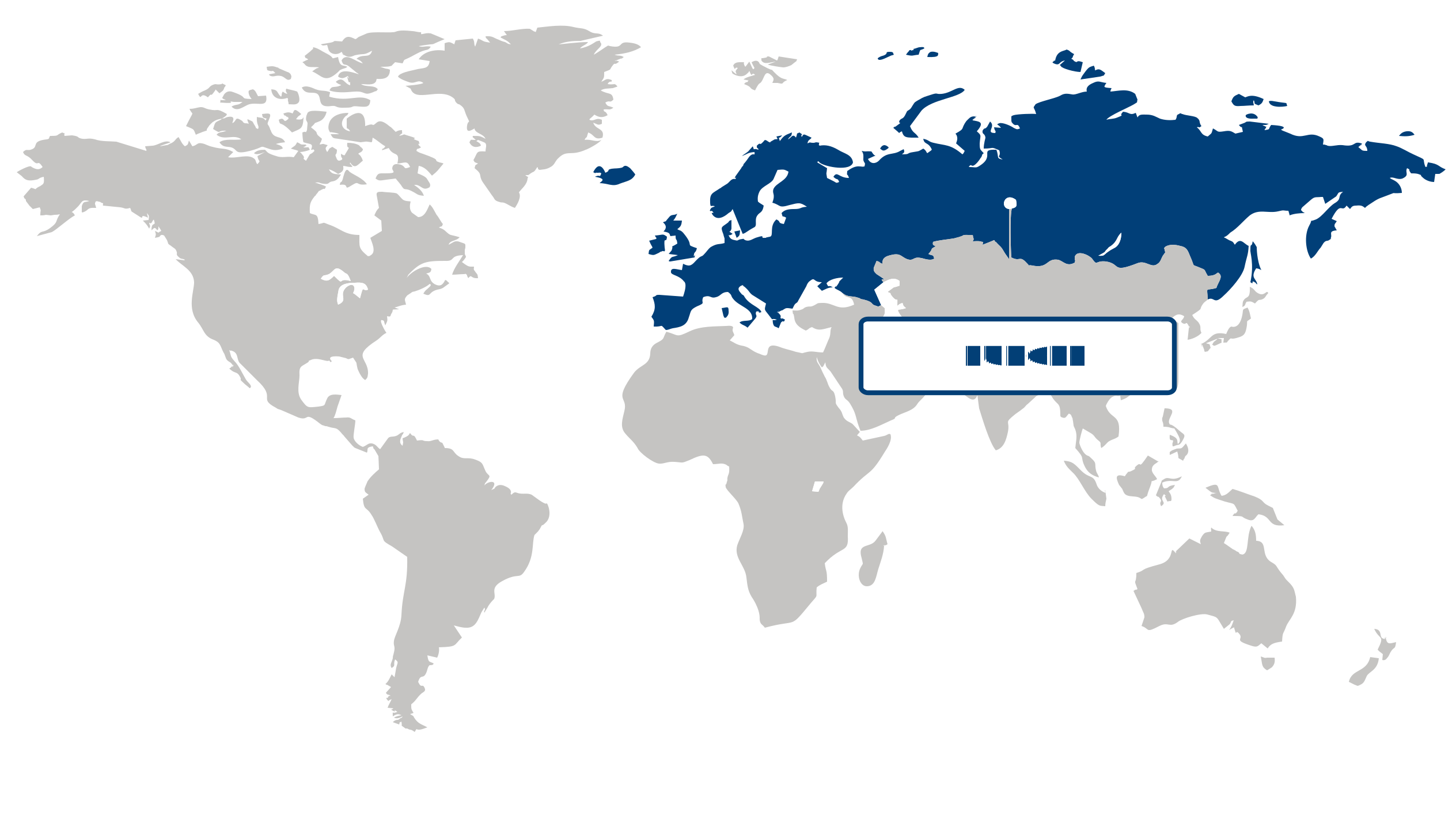
Largest Region
Europe
44% Market Share in 2025
Europe dominates the motorcycle E call market, representing more than 44% of the global share in 2025. This leadership stems primarily from stringent mandatory motorcycle e-Call regulations, spearheaded by the European Commission's eCall initiative, which requires automatic emergency communication systems in new motorcycles. This regulatory environment has accelerated adoption, complemented by high consumer awareness around safety and growing investments in advanced telematics by European manufacturers such as Bosch and Continental. Additionally, the region’s emphasis on sustainability and digital infrastructure, bolstered by EU funding programs, enhances the integration of these safety technologies, creating a resilient and innovation-driven market landscape. These collective dynamics position Europe as a pivotal domain for stakeholders aiming to capitalize on emerging opportunities in motorcycle emergency call systems amid evolving safety standards and technological advancements.
Germany anchors the European motorcycle E call market through its robust automotive engineering ecosystem and proactive policy frameworks. The German Federal Ministry of Transport’s support for connected vehicle technologies encourages rapid adoption of e-Call systems across the motorcycle segment. German manufacturers leverage innovations from industry leaders like BMW Motorrad and Bosch to integrate cutting-edge emergency communication solutions, reflecting sophisticated consumer demand for safety. This synergy of regulatory backing and technological excellence makes Germany a critical hub that reinforces Europe’s dominance in the motorcycle E call market.
France plays a strategic role in buttressing growth with progressive safety mandates and an expanding base of digital-savvy riders. The French Agency for Ecological Transition (ADEME) actively promotes intelligent transport systems, fostering market penetration of emergency call applications on motorcycles. French OEMs such as Peugeot Motocycles invest in connected safety features, while government incentives encourage wider adoption of e-Call technology. France’s policy-driven push, coupled with a vibrant consumer market, supports the broader European composition, enhancing the region’s capacity to lead and innovate in the motorcycle E call market landscape.
Asia Pacific Market Analysis:
Asia Pacific emerged as the fastest-growing region in the motorcycle E call market, registering a robust CAGR of 6.8%. The rapid expansion is primarily fueled by rising motorcycle ownership and increasing road safety initiatives across emerging economies, which are reshaping consumer demand and regulatory frameworks. Governments in the region, including ASEAN and South Asian nations, have intensified efforts to reduce road fatalities through smart safety technologies, boosting the adoption of emergency call systems in motorcycles. For example, India’s Ministry of Road Transport and Highways has been actively promoting intelligent transport systems, enhancing consumer awareness and willingness to invest in safety features. The increasing affordability of motorcycles combined with urbanization trends supports growth in demand, while manufacturers and technology providers are expanding partnerships to improve digital connectivity and emergency response infrastructure. With sustained governmental focus and growing consumer safety consciousness, Asia Pacific is poised to remain a key opportunity hub for advanced motorcycle E call solutions.
Japan plays a pivotal role in the Asia Pacific motorcycle E call market by leveraging its advanced technological ecosystem and stringent road safety regulations. Japanese consumers show a strong preference for connected vehicle technologies as part of broader smart mobility trends nurtured by agencies like the Ministry of Land, Infrastructure, Transport and Tourism (MLIT). Leading manufacturers such as Honda and Yamaha have integrated eCall technologies in their product lines, supported by regulatory policies emphasizing real-time emergency response systems. Additionally, Japan’s robust telecommunications infrastructure facilitates rapid adoption and expansion of these technologies, reinforcing the market’s growth momentum in the region.
China’s dynamic motorcycle market amplifies the regional growth driver of increasing ownership and safety measures. The Chinese government’s emphasis on intelligent transportation, led by the Ministry of Public Security and the Ministry of Industry and Information Technology, encourages deployment of eCall systems to curb road accidents as motorcycle usage rises in semi-urban and rural areas. Consumers exhibit growing acceptance of digital safety features, influenced by rising incomes and government subsidies for new safety technologies. Major Chinese manufacturers and tech firms are accelerating innovation with integrated eCall platforms that align with national smart city initiatives. This confluence of policy support and consumer readiness strengthens China’s contribution to Asia Pacific’s status as the fastest-growing motorcycle E call market region.
North America Market Trends:
North America maintained a notable presence in the motorcycle E call market, driven by evolving consumer preferences for enhanced safety features and increasing adoption of connected vehicle technologies. The region's robust infrastructure and regulatory environment, particularly initiatives championed by the National Highway Traffic Safety Administration (NHTSA), encourage integration of emergency response systems in motorcycles. Leading industry players such as Bosch and Continental have expanded their operational footprints here, leveraging advanced telematics and IoT capabilities to address growing demand. Additionally, the rise in ride-sharing and urban mobility services in metropolitan hubs like New York and Los Angeles has intensified focus on rider safety and rapid emergency assistance. This convergence of regulatory support, technological innovation, and shifting mobility patterns positions North America for sustained moderate growth and substantial opportunities in the motorcycle E call market.
The U.S. plays a central role in shaping the motorcycle E call market landscape across North America, supported by significant investments in vehicle-to-everything (V2X) communication and smart infrastructure development. Consumer adoption is bolstered by endorsements from the Insurance Institute for Highway Safety (IIHS), highlighting the value of emergency calling features in reducing response times and fatalities. Moreover, corporate announcements from Harley-Davidson showcasing integration of eCall technology in their latest models underscore the competitive momentum in the country. Regulatory frameworks like the FAST Act further incentivize manufacturers to embed emergency response systems, thereby fostering innovation and deployment. Strategically, the U.S. exemplifies a critical market where regulatory impetus and technological advancement align, enhancing regional growth prospects in the motorcycle E call market.
No card data available for this language/report.
Segment Leadership and Growth Trends
The 4G/5G connectivity segment held the largest share in the motorcycle E call market in 2025, thanks to its superior real-time communication capabilities and extensive network coverage. This leadership is underscored by the increasing reliance on high-speed data transmission, which enhances emergency responsiveness and rider connectivity. Consumer preference for seamless, uninterrupted service has pushed manufacturers like Ericsson and Qualcomm to innovate 5G-enabled modules tailored for motorcycles. Regulatory support from telecommunications authorities such as the Federal Communications Commission (FCC) ensures accelerated 5G infrastructure deployment, facilitating wider adoption. This segment offers strategic advantages by enabling manufacturers and tech providers to integrate advanced telematics and IoT solutions. With ongoing digital transformation and expanding 5G networks, 4G/5G connectivity is poised to maintain its critical role in delivering reliable motorcycle E call services.
Analysis by Application
Safety and security represented the largest share in the motorcycle E call market in 2025, driven by heightened prioritization of rider protection and emergency response solutions. This segment's dominance is linked to rising regulatory mandates for crash detection and automatic alert systems, endorsed by organizations like the National Highway Traffic Safety Administration (NHTSA). Growing consumer awareness and a cultural shift towards proactive safety contribute to increasing demand for integrated E call functionalities. Industry leaders such as Bosch and Continental emphasize safety innovation in product development, responding to evolving risk profiles and urban mobility trends. The safety and security segment enables firms to capitalize on enhanced service differentiation and builds strong brand allegiance. Given persistent focus on accident reduction and emergency interoperability, this segment’s relevance is expected to strengthen alongside regulatory and technological advancements.
Analysis by Connectivity Features
Emergency calling held the largest share in the motorcycle E call market in 2025, propelled by the urgent requirement for rapid assistance in accident scenarios. This segment’s leadership stems from its role as a critical life-saving feature, increasingly mandated by transportation safety regulations worldwide, including the European Union’s eCall initiative. User preferences lean heavily toward quick, reliable access to emergency responders, encouraging OEMs and telematics providers such as Garmin to prioritize emergency call functionality. Supply chain improvements in sensor technology and voice recognition have further enhanced system reliability under stress conditions. The emergency calling segment positions market players to deliver differentiated, compliance-driven solutions that address public safety imperatives. Its centrality to rider well-being and ongoing government enforcement ensures its sustained prominence in motorcycle E call market frameworks.
| Report Segmentation | |||
| Segment | Sub-Segment | Largest Segment | Fastest Growing Segment |
|---|---|---|---|
| Technology | Bluetooth, Wi-Fi, 4G/5G Connectivity | ||
| Application | Safety and Security, Fleet Management, Convenience | ||
| Connectivity Features | GPS Tracking, Emergency Calling, Remote Lock/Unlock, Vehicle Diagnostics | ||
| End-User | Individual Riders, Fleets (Delivery, Courier, Rental) | ||
| Motorcycle Type | Scooter, Street, Sport, Cruiser, Off-Road | ||
 Read our Research Approach
Competitive Landscape and Market Positioning
Key players in the motorcycle E call market include Robert Bosch GmbH, Continental AG, Denso Corporation, Vodafone Automotive, BMW Motorrad, Garmin Ltd., Octo Telematics, Piaggio & C. SpA, Yamaha Motor Co., Ltd., and Ericsson. These firms represent a blend of automotive giants, telematics pioneers, and technology specialists, each bringing strong regional influence and technological depth. German companies like Bosch and Continental leverage extensive automotive expertise, while Japanese leaders Denso and Yamaha integrate advanced electronics and manufacturing excellence. Italian and Swedish players contribute valuable telematics and connectivity solutions, underscoring a diverse ecosystem where multi-disciplinary competence drives innovation. This mix of manufacturers and technology providers solidifies a competitive yet collaborative landscape focused on enhancing rider safety and connectivity.The competitive environment is shaped by a series of synergistic moves, including enhanced product portfolios integrating real-time e-call functionalities and networked communication capabilities. Leading firms emphasize cross-sector alliances and leveraging IoT advancements to enrich service offerings, fostering responsiveness and reliability. Innovative developments in sensor integration, AI-driven emergency response algorithms, and seamless smartphone connectivity underpin the market’s dynamism. Players actively expand their footprint through strategic alignments that strengthen global reach and accelerate technology deployment, continuously redefining standards for rider assistance and accident mitigation.
Strategic / Actionable Recommendations for Regional Players
North American stakeholders should pursue collaborative engagements that align technology innovation with regulatory frameworks, accentuating the convergence of telematics and mobile platforms to enhance emergency responsiveness. Focus on embedding AI-driven predictive analytics may differentiate offerings in advanced safety features.
In the Asia Pacific, firms ought to capitalize on the expanding motorcycle user base by tailoring scalable and cost-effective e-call services. Exploring partnerships with telecom operators can expedite infrastructure integration, while addressing diverse regional regulatory environments ensures broader adoption.
European market participants will benefit from reinforcing cross-border interoperability and compliance with stringent safety standards. Investments in adaptive e-call solutions that integrate with smart city initiatives offer a pathway to leadership, supported by ongoing collaborations within the automotive and telecommunications sectors.
Why Choose Us
Specialized Expertise: Our team comprises industry experts with a deep understanding of your market segment. We bring specialized knowledge and experience that ensures our research and consulting services are tailored to your unique needs.
Customized Solutions: We understand that every client is different. That's why we offer customized research and consulting solutions designed specifically to address your challenges and capitalize on opportunities within your industry.
Proven Results: With a track record of successful projects and satisfied clients, we have demonstrated our ability to deliver tangible results. Our case studies and testimonials speak to our effectiveness in helping clients achieve their goals.
Cutting-Edge Methodologies: We leverage the latest methodologies and technologies to gather insights and drive informed decision-making. Our innovative approach ensures that you stay ahead of the curve and gain a competitive edge in your market.
Client-Centric Approach: Your satisfaction is our top priority. We prioritize open communication, responsiveness, and transparency to ensure that we not only meet but exceed your expectations at every stage of the engagement.
Continuous Innovation: We are committed to continuous improvement and staying at the forefront of our industry. Through ongoing learning, professional development, and investment in new technologies, we ensure that our services are always evolving to meet your evolving needs.
Value for Money: Our competitive pricing and flexible engagement models ensure that you get maximum value for your investment. We are committed to delivering high-quality results that help you achieve a strong return on your investment.
Select Licence Type

