Nanotechnology in Mining Market Size & Growth Forecast 2027–2036, By Segments (Nanomaterial Type, End-use), Regional Demand Trends (North America, Asia Pacific, Europe), Key Country Insights (U.S., Japan, South Korea, Germany, France, Italy), and Competitive Landscape
Jump to Content
Market Size and Growth Outlook
Nanotechnology in Mining Market size was over USD 1.54 billion in 2026 and is likely to grow at a 10.71% CAGR between 2027 and 2036, crossing USD 4.26 billion by 2036. The industry revenue for 2027 is calculated at USD 1.68 billion.
Get more details on this report
Request Free Sample ReportNanotechnology in Mining Market Intelligence Snapshot
Regional Market Dynamics
- Europe accounted for 41.26% of market revenue in 2026, supported by its emphasis on sustainable mining, resource efficiency, reduced material waste, and advanced technologies that improve mineral recovery and processing performance.
- North America is the fastest-growing region as mining companies explore advanced materials and innovative processing technologies to improve mineral recovery, reduce waste, optimize resource consumption, and strengthen environmental performance.
Segment Momentum
- Carbon nanomaterials accounted for 47.7% of the market in 2026 and are also the fastest-growing nanomaterial type, supported by their strength, conductivity, chemical stability, and potential applications in mineral processing and monitoring.
- Mining and metals held 65.28% of the market in 2026 and is also the fastest-growing end-use segment, driven by opportunities to improve mineral recovery, processing efficiency, equipment durability, and environmental management.
Market Expansion Drivers
- Adoption of nanotechnology for improved mining efficiency.
- Investment in mining innovation and advanced materials.
- Policy incentives for sustainable and low-impact mining.
Leading Market Participants
- Top companies in the nanotechnology in mining market include BASF (Germany), Dow (USA), Evonik Industries (Germany), Nalco Water (USA), Clariant (Switzerland), Solvay (Belgium), AkzoNobel (Netherlands), SNF Group (France), 3M (USA), Arkema (France).
Global Market Forecast Snapshot
Market Outlook
- 2026 Market Size: USD 1.54 billion
- 2027 Estimated Market Size: USD 1.68 billion
- Projected Market Size: USD 4.26 billion by 2036
- Growth Forecast: 10.71% CAGR (2027-2036)
Regional and Segment Outlook
- Leading Regional Market: Europe
- High-Growth Regional Hub: North America
- Core Revenue Segment: Nanomaterial Type (Carbon Nanomaterials) | End-use (Mining and Metals)
- Emerging Opportunity Segment: Nanomaterial Type (Carbon Nanomaterials) | End-use (Mining and Metals)
Market Growth Drivers and Industry Trends
Adoption of Nanotechnology for Improved Mining Efficiency
Increasing adoption of nanotechnology in mining is driven by its potential to improve mineral processing, resource recovery, material characterization, and operational efficiency. Nanomaterials and nanoscale processes can support more selective extraction and enhance the performance of mining and processing applications. Growing pressure to improve resource utilization, reduce processing inefficiencies, and extract value from increasingly complex ore bodies is encouraging mining operations to explore nanotechnology-based solutions.
Investment in Mining Innovation and Advanced Materials
Growing investment in mining innovation is supporting the development and deployment of advanced materials and nanoscale technologies across exploration, extraction, processing, and environmental applications. Research into nanostructured materials can enable improved equipment performance, enhanced separation processes, and more effective treatment of mining-related waste streams. Increasing focus on technological modernization and the need to improve productivity across mining operations are creating opportunities for nanotechnology adoption.
Policy Incentives for Sustainable and Low-Impact Mining
Increasing policy emphasis on sustainable resource development is encouraging the mining industry to adopt technologies that can reduce environmental impacts and improve resource efficiency. Nanotechnology can support applications such as improved mineral recovery, water treatment, waste management, and remediation while helping optimize the use of energy and raw materials. Government incentives and sustainability-focused mining policies are therefore creating a favorable environment for the development and adoption of nanoscale technologies.
| Growth Driver | Impact on CAGR | Regulatory Influence | Geographic Relevance | Adoption Rate | Impact Timeline |
|---|---|---|---|---|---|
| Adoption of nanotechnology for improved mining efficiency | 4% | Short term (≤ 2 yrs) | Asia Pacific; North America; Spillover: Europe | Medium | Fast |
| Investment in mining innovation and advanced materials | 3% | Medium term (2–5 yrs) | North America; Europe; Spillover: Asia Pacific | Low | Moderate |
| Policy incentives for sustainable and low-impact mining | 3% | Long term (5+ yrs) | Europe; Asia Pacific; Spillover: North America | High | Moderate |
Explore Growth Opportunities
Request Free Sample ReportRegional Demand Dynamics
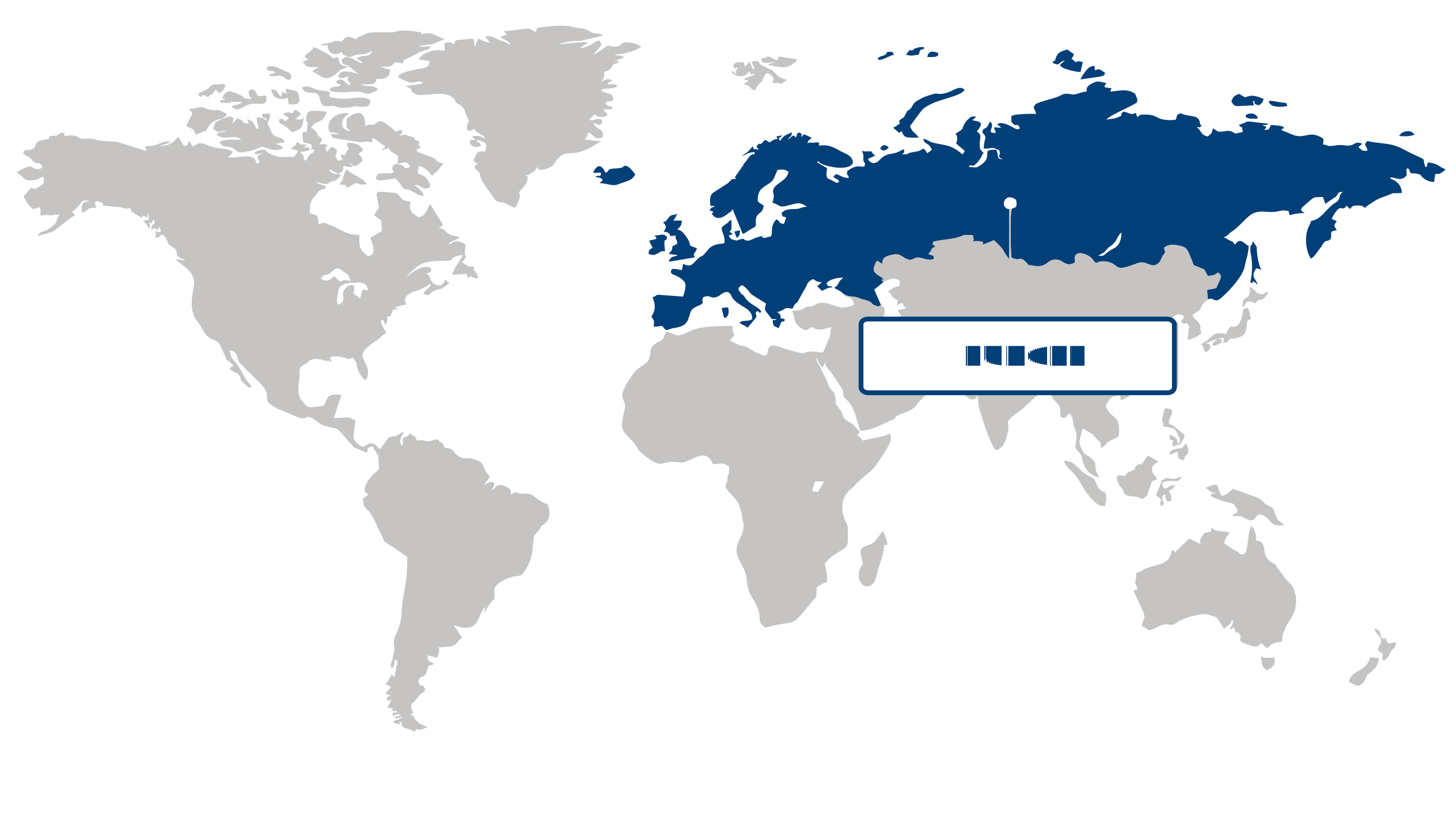
Europe (Largest Region)
The Europe nanotechnology in mining market held the largest revenue share of 41.26% in 2026, backed by increasing emphasis on sustainable mining practices, resource efficiency, and the adoption of advanced technologies to improve mining operations. The region’s focus on reducing the environmental impact of resource extraction is encouraging the development and application of technologies capable of improving mineral recovery, reducing material waste, and supporting more efficient processing activities. Nanotechnology can contribute to mining applications through advanced materials, improved separation processes, enhanced mineral processing, and technologies designed to optimize the utilization of resources. In addition, increasing attention toward environmental management and responsible resource utilization is encouraging mining stakeholders to explore innovative solutions that can improve operational performance while addressing sustainability requirements. The integration of advanced scientific approaches into mining processes is therefore creating opportunities for broader application of nanotechnology across the European mining industry.
North America (Fastest-Growing Region)
North America is anticipated to grow at the fastest pace over the forecast period, driven by increasing adoption of advanced technologies aimed at improving mining efficiency, mineral recovery, and environmental performance. Mining companies and technology developers are increasingly exploring innovative approaches to address challenges associated with resource extraction, processing efficiency, and waste reduction. Nanotechnology offers opportunities to enhance material characteristics and support more precise processes across different stages of mining and mineral treatment. Moreover, growing interest in sustainable extraction practices is encouraging the development of technologies that can reduce resource consumption and improve the environmental performance of mining operations. Continued technological innovation, research activity, and demand for more efficient mineral processing solutions are expected to support the increasing adoption of nanotechnology within the North American mining sector.
| Parameter | North America | Asia Pacific | Europe | Latin America | MEA |
|---|---|---|---|---|---|
| Innovation HubiScaleNascentDeveloping Advanced | |||||
| Cost-Sensitive RegioniScaleLowMedium High | |||||
| Regulatory EnvironmentiScaleRestrictiveNeutral Supportive | |||||
| Demand DriversiScaleWeakModerate Strong | |||||
| Development StageiScaleEmergingDeveloping Developed | |||||
| Adoption RateiScaleLowMedium High | |||||
| New Entrants / StartupsiScaleSparseModerate Dense | |||||
| Macro IndicatorsiScaleWeakStable Strong |
Key Country Insights
United States 🇺🇸
Advanced Mining R&DThe U.S. emphasizes nanotechnology applications that improve mineral processing, tailings management, sensing, and material recovery. Mining companies and technology developers are likely to prioritize scalable solutions that reduce processing losses, improve operational efficiency, and support environmental compliance across established mining operations.
Germany 🇩🇪
Precision Mining TechnologiesGermany’s mining technology ecosystem supports nanotechnology for advanced materials, filtration, sensing, and resource-efficient processing. Commercial priorities center on translating laboratory-scale nanomaterials into reliable industrial systems that improve separation efficiency, equipment performance, and environmental management within technologically intensive mining and mineral-processing operations.
Japan 🇯🇵
High-Precision Mineral ProcessingJapan focuses on sophisticated materials science and nanotechnology capabilities that can enhance mineral recovery, sensing, filtration, and process efficiency. Market opportunities are tied to integrating nanoscale materials into automated processing and resource-recovery systems while improving performance, durability, and environmental characteristics of mining-related technologies.
South Korea 🇰🇷
Smart Materials IntegrationSouth Korea’s strength in advanced materials and industrial electronics supports nanotechnology applications for mining sensors, functional materials, filtration, and process monitoring. Commercial activity is likely to emphasize integration with automated mineral-processing systems, enabling more precise operational control and improved resource utilization.
France 🇫🇷
Sustainable Mining ApplicationsFrance’s nanotechnology capabilities create opportunities for mining applications focused on cleaner processing, advanced filtration, environmental monitoring, and resource recovery. Market priorities center on technologies that can improve mineral-processing efficiency while addressing waste reduction, water management, and environmental performance requirements.
Italy 🇮🇹
Specialized Processing SolutionsItaly’s industrial materials expertise can support niche nanotechnology applications across mineral processing, coatings, filtration, and equipment materials. Commercial priorities are likely to favor specialized solutions that extend component durability, improve processing performance, and address efficiency challenges in mineral and industrial-material operations.
Nanotechnology in Mining Market Share (%), by Nanomaterial Type, 2026
Go beyond the chart, access full insights & data tables
Request Free Sample ReportNanomaterial Type Segment Analysis: Carbon Nanomaterials (Largest & Fastest-Growing Segment)
The carbon nanomaterials segment accounted for the largest share of the nanotechnology in mining market at 47.7% in 2026 and is also the fastest-growing nanomaterial type. Carbon nanomaterials offer properties such as high strength, lightweight characteristics, electrical conductivity, chemical stability, and large surface areas, making them suitable for a range of mining-related applications. Their use can support improvements in mineral processing, material durability, sensing, filtration, and environmental management, depending on the specific nanomaterial and application. Increasing efforts to improve resource efficiency and optimize mining processes are encouraging interest in advanced materials capable of enhancing the performance of existing technologies. In addition, the ability of carbon-based nanomaterials to support more sensitive monitoring and improved material performance is expanding their potential across different stages of mining operations. Continued research into their application in mineral recovery, equipment protection, water treatment, and environmental monitoring is expected to reinforce demand and accelerate adoption.
End-use Segment Analysis: Mining and Metals (Largest & Fastest-Growing Segment)
In 2026, the mining and metals segment accounted for the largest share of the nanotechnology in mining market at 65.28% and is also the fastest-growing end-use segment. Nanotechnology is increasingly being explored across mining and metals operations to improve mineral extraction, processing efficiency, material performance, and environmental management. Nanomaterials can contribute to enhanced separation and recovery processes, improved sensing and monitoring capabilities, and the development of more durable materials for demanding operating environments. The need to extract resources more efficiently while managing energy consumption, waste generation, and environmental impacts is encouraging mining and metals companies to evaluate advanced technological solutions. Nanotechnology also offers opportunities to improve water treatment and remediation processes associated with mining activities, supporting broader sustainability objectives. As the industry focuses on increasing resource recovery, extending equipment performance, and adopting more efficient processing approaches, the integration of nanotechnology into mining and metals applications is expected to expand.
| Segment | Sub-Segment | Largest Segment | Fastest Growing |
|---|---|---|---|
| Nanomaterial Type | Carbon Nanomaterials, Metal Nanomaterials, Others | Carbon Nanomaterials | Carbon Nanomaterials |
| End-use | Mining and Metals, Environmental Services, Others | Mining and Metals | Mining and Metals |
Unlock insights tailored to your business with our bespoke market research solutions.
Click to get your customized report now.
Competitive Landscape and Market Positioning
Analyst Perspective:
Commercial success for nanotechnology suppliers in mining hinges on proving operational reliability and economic value within existing processing environments rather than relies solely on lab-scale metrics. In mineral processing, nano-enhanced flotation reagents offer potential selectivity improvements, but adoption depends on consistent performance across varying ore conditions and circuit compatibility. Similarly, nanomaterial-based water remediation and wear-resistant machinery coatings require long-term validation under severe field conditions to justify high initial deployment and lifecycle costs. Furthermore, while real-time underground nanosensors enhance environmental safety monitoring, operators prioritize calibration stability and false-alarm prevention over sheer sensitivity. Consequently, competitive differentiation relies on providing robust, application-specific field data that demonstrates clear cost-benefit advantages.
Top players in the nanotechnology in mining market:
- BASF (Germany)
- Dow (USA)
- Evonik Industries (Germany)
- Nalco Water (USA)
- Clariant (Switzerland)
- Solvay (Belgium)
- AkzoNobel (Netherlands)
- SNF Group (France)
- 3M (USA)
- Arkema (France)
| Company | Market Share | Company Revenue | Revenue CAGR (%) | Product Portfolio | Geographic Presence | Innovation / R&D Focus | Strategic Developments |
|---|---|---|---|---|---|---|---|
| BASF (Germany) | |||||||
| Dow (USA) | |||||||
| Evonik Industries (Germany) | |||||||
| Nalco Water (USA) | |||||||
| Clariant (Switzerland) | |||||||
| Solvay (Belgium) | |||||||
| AkzoNobel (Netherlands) | |||||||
| SNF Group (France) | |||||||
| 3M (USA) | |||||||
| Arkema (France) |
Customize Your Report
Explore examples of how this report can be tailored to different research needs, including custom segments, additional topics or chapters, and related reports. Click a section of the wheel or its numbered marker to explore the available options.
Nanotechnology in Mining Market — Custom Segments
| Segment | Sub-Segment |
|---|---|
| Mining Process | Exploration & Prospecting, Extraction, Mineral Processing & Beneficiation, Mine Waste Management & Remediation |
| Mining Commodity | Coal, Precious Metals, Base Metals, Industrial Minerals, Rare Earth Elements & Critical Minerals |
| Deployment Stage | Laboratory & Pilot Scale, Demonstration Scale, Commercial-Scale Deployment |
Nanotechnology in Mining Market — Custom TOC
| Custom Chapter | Chapter Details |
|---|---|
| Mine-Site Use-Case Prioritization |
|
| Commercialization Pathways for Nano-Enabled Mining Solutions |
|
| Economic Case for Nanotechnology Adoption |
|
Need a different cut of the data?
Request Custom ResearchFrequently Asked Questions
How large is the nanotechnology in mining market?
How will the nanotechnology in mining industry grow in terms of size and CAGR by 2036?
How is nanotechnology supporting operational modernization in mining?
Why are sustainability policies strengthening investment in nanotechnology for mining?
Which nanomaterial type leads the nanotechnology in mining market?
Which end-use segment dominates the nanotechnology in mining market?
Why does Europe dominate the nanotechnology in mining market?
What is driving the rapid growth of nanotechnology in mining across North America?
Who are the major participants shaping the nanotechnology in mining landscape?
Our Clients
"The report helped us understand emerging consumer trends in our product category. It clarified where to focus innovation for the next product launch."
LyondellBasell
"The regional forecast section was incredibly useful. We were able to identify two new potential partners in Europe thanks to the vendor mapping you included."
SABIC
"We appreciated how actionable the recommendations were. It guided us to improve supply chain resilience."
Olin Corporation
Our Research Team & Methodology
Every Fundamental Business Insights report is built by a dedicated vertical research team, validated through a structured primary-and-secondary methodology, and reviewed for accuracy before it reaches you.
This report was prepared by the Chemicals & Materials Research Team at Fundamental Business Insights, a dedicated research group specializing in the global chemicals, advanced materials, and industrial manufacturing sectors. Our analysts continuously monitor raw material supply chains, feedstock pricing, production technologies, regulatory developments, sustainability initiatives, environmental compliance, trade dynamics, and evolving end-use applications to deliver timely and reliable market intelligence. The research is developed using a structured methodology that combines primary discussions with manufacturers, raw material suppliers, distributors, and industry experts, along with company annual reports, regulatory publications, government trade statistics, industry associations, technical literature, patent databases, and other authoritative secondary sources. Market estimates are validated through multiple research techniques, including top-down and bottom-up analysis, before undergoing an internal quality review to ensure accuracy, consistency, and methodological integrity prior to publication.
Delivery
Published
Available
Support
- Market Size & Forecast
- Market Segmentation
- Regional Analysis
- Growth Drivers & Challenges
- Market Dynamics
- Competitive Landscape
- Company Profiles
- Competitive Benchmarking
- Mergers & Acquisitions
- Market Share Analysis or Key Company Strategies
- Value Chain Analysis
- Porter's Five Forces
- PESTLE Analysis
- Pricing Trends
- Supply-Demand Analysis
- Technology Landscape
- Regulatory Landscape
- Investment & Funding Landscape
- Emerging Opportunities
- Future Market Outlook