Natural Cleaning Products Market Size & Forecasts 2026-2035, By Segments (Application, Sales Mode, Product), Growth Opportunities, Innovation Landscape, Regulatory Shifts, Strategic Regional Insights (U.S., Japan, China, South Korea, UK, Germany, France), and Competitive Dynamics (Ecover, Seventh Generation, Method, Mrs. Meyer's, The Honest Company)
Market Size and Growth Outlook
Natural Cleaning Products Market size is projected to grow steadily from USD 7.78 billion in 2025 to USD 24.16 billion by 2035, demonstrating a CAGR exceeding 12% through the forecast period (2026-2035). The 2026 revenue is estimated at USD 8.61 billion.
Get more details on this report
Request Free Sample ReportNatural Cleaning Products Market Intelligence Snapshot
Regional Market Dynamics
Segment Momentum
Market Expansion Drivers
Leading Market Participants
Global Market Forecast Snapshot
Market Outlook
Regional and Segment Outlook
Market Growth Drivers and Industry Trends
Tighter chemical standards and growing buyer demand are converging to reshape the natural cleaning products market: U.S. Environmental Protection Agency (EPA) Safer Choice labeling, European Chemicals Agency (ECHA) moves on PFAS, and consumer-trust signals cited by Nielsen are driving both compliance and shelf differentiation. Established manufacturers can leverage certification and scale to amortize reformulation costs, while challengers can use transparent ingredient sourcing and third-party credentials to win premium positioning. Expect ongoing regulatory clarifications and expanded labeling programs from EPA and ECHA to continue nudging portfolios toward demonstrably safer formulations and clearer consumer communication.
Advances in Green Formulation and Enzyme Technology
Breakthroughs in bio-based surfactants, microbial enzymes, and biodegradable chemistries—illustrated by product collaborations and R&D investments from Novozymes and Croda—are raising performance parity for the natural cleaning products market and reducing trade-offs on efficacy. Incumbents can embed these technologies into legacy brands for rapid scale-up; startups can license platform chemistries to accelerate go-to-market. Observable increases in patenting and supplier press releases signal continued industrialization of bio-based inputs, enabling faster reformulation cycles and novel value propositions tied to sustainability and performance.
E-commerce and Retail Expansion in Emerging Markets
Rapid expansion of online marketplaces and modern retail infrastructure—driven by Alibaba Group’s platform growth, Amazon’s logistics investment, and Unilever’s e-commerce initiatives—broadens distribution for natural cleaning products market entrants and incumbents alike. Digital channels lower entry costs for niche brands and enable subscription, localized SKUs, and targeted marketing, while large players convert scale into omnichannel assortment and promotions. As platform enablers and FMCG players continue investing in last-mile and digital merchandising, expect accelerated penetration of natural brands through hybrid retail models across Asia, Latin America, and Africa.
Industry Restraints:
Regulatory Compliance Burdens
Regulation of active ingredients and environmental claims imposes high technical and time costs that slow product launches and constrain formulation choices. In the United States, the Environmental Protection Agency (EPA) governs disinfectant claims and pesticide registrations, while the Federal Trade Commission (FTC) enforces green advertising under its Green Guides; in the EU the European Chemicals Agency (ECHA) and the Biocidal Products Regulation (BPR) restrict allowable biocides. These regimes force reformulation, expensive efficacy testing, and conservative marketing, disadvantaging niche brands without regulatory teams and forcing incumbents to absorb compliance spend. Strategically, firms must invest in regulatory affairs or face market access delays; in the near–medium term continued scrutiny of “natural” claims and tighter biocide approvals will sustain higher entry barriers and favour better-capitalized players.
Sustainable Feedstock Scarcity and Price Volatility
Dependence on botanical surfactants, coconut and palm derivatives, and essential oils exposes producers to climate, land-use, and certification bottlenecks. The Food and Agriculture Organization of the United Nations (FAO) documents climate-driven yield variability, and the Roundtable on Sustainable Palm Oil (RSPO) highlights limited certified supply, while multinational buyers such as Unilever have publicly tied sustainability commitments to procurement constraints. These realities drive input-price volatility and traceability costs, compress margins for smaller brands and force larger firms into long-term contracts or supplier investments. Strategically, firms face trade-offs between cost, provenance, and scalability; near term, persistent feedstock pressure will accelerate vertical integration, supplier co-investment, and premiumization of verified-sourced lines.
| Growth Driver | Impact on CAGR | Regulatory Influence | Geographic Relevance | Adoption Rate | Impact Timeline |
|---|---|---|---|---|---|
| Strong regulatory support and consumer preference for natural cleaning products | 4.00% | Short term (≤ 2 yrs) | North America, Europe; Spillover: Asia Pacific | High | Fast |
| Technological advancements in formulation and eco-friendly ingredients | 4.20% | Medium term (2–5 yrs) | Europe, Asia Pacific | Medium | Moderate |
| Expansion of retail and e-commerce channels in emerging markets | 3.80% | Long term (5+ yrs) | Asia Pacific, Latin America; Spillover: MEA | Medium | Moderate |
Unlock insights tailored to your business with our bespoke market research solutions.
Click to get your customized report now.
Regional Demand Dynamics
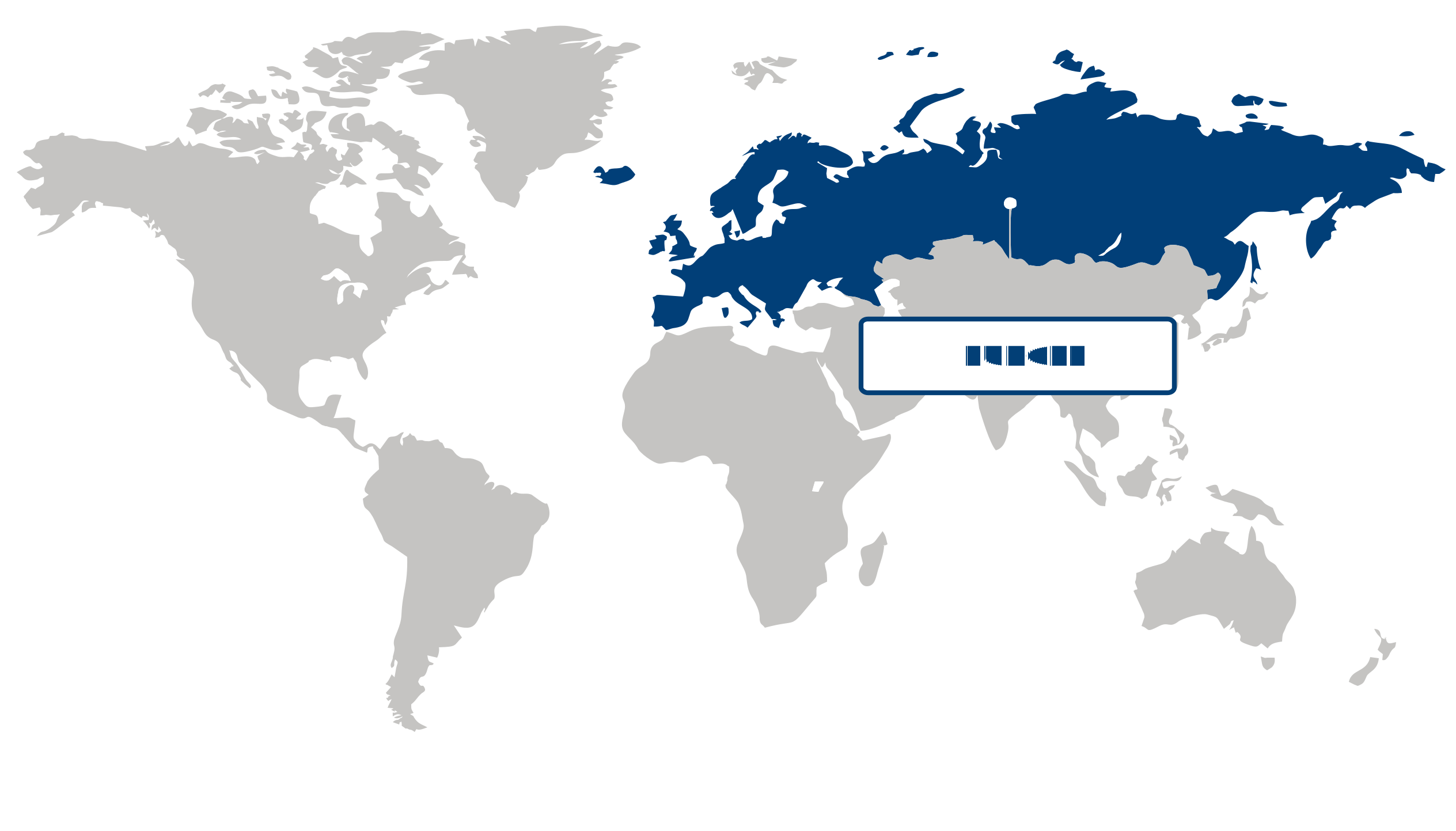
The natural cleaning products market captured approximately 33% of the global market in Europe in 2025, making the region the largest by share; this leadership is rooted in a broad shift toward eco-friendly formulations and ingredient transparency. Strong consumer preference for natural products is reinforced by policy and regulatory signals such as EU Ecolabel criteria for detergents and restrictions under the European Chemicals Agency (ECHA), while the European Commission's Eurobarometer consistently reports elevated sustainability concern among consumers. Brands like Werner & Mertz and retailer initiatives from Carrefour exemplify commercial responses, and together with procurement moves by several municipal governments, they create a robust platform for product premiumization and innovation—positioning Europe as a high-opportunity market for investors and industrial partners.
Germany anchors the European market; the natural cleaning products market in Germany benefits from strict ecolabeling regimes and deep retail distribution. German-specific mechanisms such as the Blue Angel ecolabel and guidance from the Umweltbundesamt (German Environment Agency) raise baseline demand for certified, low-toxicity formulations. Domestic players and large consumer-goods firms—Henkel’s sustainability programs and Werner & Mertz’s Frosch brand—have leveraged these signals, while retailers like dm-drogerie markt scale private-label natural lines. For strategists, the implication is clear: winning in Germany requires certified claims, retail channel partnerships, and supply-chain readiness for recycled and low-impact packaging.
France serves as a major innovation and retail testbed; the natural cleaning products market in France is driven by public agency advocacy and retailer-driven assortment shifts. ADEME (French Agency for Ecological Transition) campaigns and regulatory oversight from ANSES have heightened consumer awareness and compliance expectations, prompting Carrefour and other national chains to expand private-label eco ranges and trial concentrated or refill formats. Local brand success—alongside cross-border brands adapting packaging and certification for French shoppers—shows the market rewards demonstrable environmental performance and convenience. Strategically, France offers a launchpad for scalable product concepts and retailer pilots that can reinforce Europe-wide rollouts.
Asia Pacific Market Analysis:
Asia Pacific emerged as the fastest-growing region in the natural cleaning products market, registering a robust CAGR of 14.4%. This rapid expansion is driven by rising health consciousness and increasing spending power across Asian consumers, prompting demand for hypoallergenic, plant-based, and low-toxicity formulations; the World Bank’s income and middle‑class growth data and World Health Organization hygiene guidance after COVID-19 underscore changing household priorities. Corporates are responding: Kao Corporation’s Kirei Lifestyle Plan and Unilever’s Sustainable Living initiatives illustrate product reformulation and sustainability commitments, while Alibaba Group’s e‑commerce scale accelerates reach. Given tightening labeling expectations from regional regulators and strong retailer adoption, the Asia Pacific market offers outsized opportunities for premium, certified, and digitally distributed natural cleaning solutions.
Japan acts as a premium-adoption market in the natural cleaning products market, where consumers prioritize safety, fragrance control, and compact, refillable formats. High household spending power and an aging population raise demand for gentle, easy-to-use formulations; Japan’s Ministry of Health, Labour and Welfare guidance on household hygiene and Kao Corporation’s public sustainability commitments demonstrate how local regulation and incumbents shape product specifications. Retail channels such as Rakuten and Amazon Japan enable niche brands to reach affluent urban consumers quickly. Strategic implication: success in Japan requires superior safety data, compact formats, and partnerships with established retail and institutional buyers to set premium benchmarks for the region.
China functions as a volume-driven growth engine in the natural cleaning products market, powered by expanding urban middle classes and pervasive digital retail. Rising health awareness—reinforced by guidance from the National Health Commission of the People’s Republic of China—and stronger consumer-protection oversight from the State Administration for Market Regulation are increasing demand for transparent ingredient claims and certified natural labels. Alibaba Group and JD.com enable rapid scaling and direct-to-consumer testing for new formulas, while domestic manufacturers are investing in greener chemistries to capture market share. Strategic implication: penetrating China at scale requires digital-first go‑to‑market strategies, clear regulatory compliance, and localized formulations that match mainstream preferences while leveraging e‑commerce distribution to amplify regional growth.
North America Market Trends:
The natural cleaning products market held a commanding share in North America as consumer preferences shifted toward ingredient transparency, lower-toxicity formulations and sustainable packaging; this position is reinforced by certification and procurement channels such as the U.S. Environmental Protection Agency (EPA) Safer Choice program and the U.S. Department of Agriculture (USDA) BioPreferred program, while state-level activity in California has driven supplier reformulation through the California Department of Toxic Substances Control (DTSC). Major brand commitments—illustrated by Seventh Generation (Unilever) and SC Johnson sustainability disclosures—and retail assortment expansion tracked by NielsenIQ and IRI signal durable demand, e-commerce acceleration, and supply-chain investment. Together, these forces create pockets for premiumization, private-label growth and commercial cleaning adoption across the region.
The natural cleaning products market in the U.S. serves as the primary engine for North American momentum, propelled by retailer assortment decisions, institutional procurement and active regulatory scrutiny that accelerate adoption. Leading retailers such as Target and Walmart have increased shelf space and private-label development for greener SKUs, while Amazon’s marketplace strategies and subscription models have reduced friction to trial; at the same time, institutional players like Ecolab have signaled interest in greener formulations for commercial customers. Corporate sustainability commitments from Procter & Gamble and portfolio marketing actions from Seventh Generation (Unilever) further validate mainstreaming of natural claims. Strategically, the U.S. ecosystem—shaped by purchases, policy and large retail and industrial channels—offers the most scalable entry points to capture North American share.
| Parameter | North America | Asia Pacific | Europe | Latin America | MEA |
|---|---|---|---|---|---|
| Innovation Hub i Scale Nascent Developing Advanced | |||||
| Cost-Sensitive Region i Scale Low Medium High | |||||
| Regulatory Environment i Scale Restrictive Neutral Supportive | |||||
| Demand Drivers i Scale Weak Moderate Strong | |||||
| Development Stage i Scale Emerging Developing Developed | |||||
| Adoption Rate i Scale Low Medium High | |||||
| New Entrants / Startups i Scale Sparse Moderate Dense | |||||
| Macro Indicators i Scale Weak Stable Strong |
Segment Leadership and Growth Trends
Natural Cleaning Products Market Share (%), by Application, 2026
Go beyond the chart, access full insights & data tables
Request Free Sample ReportResidential dominated the natural cleaning products market as the largest segment by share in 2025. Leadership stems from rising consumer preference for eco-friendly and non-toxic cleaning solutions in households, a trend documented by NielsenIQ and echoed in manufacturer product portfolios; this demand favors formulations certified under the EPA Safer Choice and USDA BioPreferred programs. Shifts in purchasing behavior, heightened household hygiene awareness and local supply-chain adaptations have reinforced residential demand while retailers and manufacturers (for example, Procter & Gamble and Unilever) expand green SKUs. The residential segments create strategic opportunities for incumbents to scale branded, certified ranges and for challengers to target niche natural formulations and DTC channels. Given persistent consumer sustainability priorities and tightening chemical regulations such as REACH, residential relevance should endure in the near to medium term.
Analysis by Sales Mode
Offline represented largest share in the natural cleaning products market as the largest segment by share in 2025. This leadership is driven by strong retail presence and consumer trust in physical stores for household products, evidenced by assortment commitments from Walmart and Target and brand-retailer partnerships announced by Procter & Gamble and SC Johnson. In-store merchandising, immediate availability, and retailer private-label strategies have reinforced purchase frequency even as online grows, while distribution efficiencies and retail sustainability initiatives support shelf expansion. Offline segments offer established firms scale benefits and margin control via private label, and offer emerging players chances to pilot regional assortments and experiential activations. With retailers continuing to curate eco-friendly bays and invest in omnichannel fulfillment, offline will remain a core channel in the near to medium term.
Analysis by Product
Surface Cleaners held largest share in the natural cleaning products market as the largest segment by share in 2025. The segment’s lead reflects frequent usage of surface disinfectants for hygiene and sanitation purposes, underscored by guidance from the Centers for Disease Control and Prevention and EPA resources such as List N that sustained demand for effective surface solutions. Manufacturers including Procter & Gamble and SC Johnson expanded disinfectant and greener surface formulations in response to institutional and household hygiene requirements, while certification pathways like EPA Safer Choice have enabled product differentiation. Surface cleaner segments present opportunities to innovate in plant-based disinfectants and certification-backed ranges for both legacy brands and agile entrants. Continued emphasis on infection control, regulatory scrutiny of ingredients, and facility hygiene standards supports sustained relevance over the near to medium term.
| Segment | Sub-Segment | Largest Segment | Fastest Growing |
|---|---|---|---|
| Application | Residential, Commercial | ||
| Sales Mode | Offline, Online | ||
| Product | Fabric Cleaners, Surface Cleaners, Glass Cleaners, Others |
Competitive Landscape and Market Positioning
The competitive landscape is shaped by portfolio extension, channel deepening and product-format refinement pursued by these firms. Several have broadened assortments while integrating smaller niche labels and expanding into mainstream retail and DTC platforms, prompting peers to accelerate development of concentrated, refillable and fragrance-differentiated SKUs. Investment in formulation science—greater use of bio-derived actives, enzymes and milder surfactants—runs alongside efforts to tighten supply-chain traceability and secure sustainability credentials. These moves elevate brand premiumization in some segments while compressing margins in others, shifting competition toward experiential packaging, certification rigor and route-to-consumer efficiency.
Strategic / Actionable Recommendations for Regional Players
North America: Prioritize partnerships with large retail chains and digital marketplaces to scale distribution while deepening direct relationships with health- and baby-care consumer segments; simultaneously pursue co-development with ingredient specialists to differentiate formulations and pilot concentrated/refill formats in urban test markets.
Asia Pacific: Adapt product profiles and packaging formats to local cleaning habits and high-density retail; collaborate with regional contract manufacturers and leading e-commerce platforms to accelerate market entry, and focus on premium urban consumers and hospitality channels seeking verified sustainability credentials.
Europe: Leverage strong regulatory and certification ecosystems to differentiate via circular packaging pilots and documented supply-chain provenance; work with refill networks, trade coalitions and ingredient origin programs to strengthen trust and capture consumers migrating to low-waste, certified natural options.
| Company | Market Share | Company Revenue | Revenue CAGR (%) | Product Portfolio | Geographic Presence | Innovation / R&D Focus | Strategic Developments |
|---|---|---|---|---|---|---|---|
| No companies available. | |||||||
Industry Development/News
| Company Name | Date | Key Development |
|---|
Customize Your Report
Explore examples of how this report can be tailored to different research needs, including custom segments, additional topics or chapters, and related reports. Click a section of the wheel or its numbered marker to explore the available options.
Natural Cleaning Products Market — Custom Segments
| Segment | Sub-Segment |
|---|---|
| No segment data available. | |
Natural Cleaning Products Market — Custom TOC
| Custom Chapter | Custom Details | ||
|---|---|---|---|
| No custom TOC data available. | |||
Need a different cut of the data?
Request Custom ResearchHow big is the natural cleaning products market?
How is the natural cleaning products industry expected to grow over the next 10 years?
In which region is the natural cleaning products market share the greatest?
Which region has emerged as the fastest-growing for the natural cleaning products sector?
Why does residential sub-segment dominate the application segment of natural cleaning products sector?
How does offline segment fare in the natural cleaning products industry?
What share does surface cleaners segment hold in the natural cleaning products sector as of 2025?
Who are the major participants shaping the natural cleaning products landscape?
Our Clients
"The report provided us with a clear direction, and the level of detail was beyond what we expected. I would definitely recommend their services to others."
Haier Appliances
"The collaboration with Fundamental Business Insights has added significant value to our decision-making process, and we look forward to continuing this partnership for our future market research requirements."
Luxottica Group S.p.A.
"The team at FBI delivered an exceptional research report. The insights on industry innovations were particularly impressive and added a lot of value to the overall report."
Nike
Our Research Team & Methodology
Every Fundamental Business Insights report is built by a dedicated vertical research team, validated through a structured primary-and-secondary methodology, and reviewed for accuracy before it reaches you.
Research Team Overview
Prepared by the Consumer Goods & Services Research Team
Delivery
Published
Demand
Available
Support
Trust & Compliance
Research Intelligence
Research Workflow & Quality Assurance
Data Collection
Verified information gathered through primary and secondary research.
Data Triangulation
Cross-validation using multiple independent data sources.
Forecast Modelling
Market estimates developed using historical trends and analytical models.
Analyst Validation
Findings reviewed by domain experts for accuracy and consistency.
Editorial & Quality Review
Final editorial, quality, and compliance checks before publication.
Final Publication
Released after successful completion of the internal review process.
Report Coverage
📊 Market Assessment
- Market Size & Forecast
- Market Segmentation
- Regional Analysis
- Growth Drivers & Challenges
- Market Dynamics
🏢 Competitive Intelligence
- Competitive Landscape
- Company Profiles
- Competitive Benchmarking
- Mergers & Acquisitions
- Market Share Analysis or Key Company Strategies
🔍 Strategic Analysis
- Value Chain Analysis
- Porter's Five Forces
- PESTLE Analysis
- Pricing Trends
- Supply-Demand Analysis
🚀 Future Outlook
- Technology Landscape
- Regulatory Landscape
- Investment & Funding Landscape
- Emerging Opportunities
- Future Market Outlook
Have a question about this report or need a custom scope?
Request Customization