Natural Cosmetic Color Market Size & Forecasts 2026-2035, By Segments (Type, Application, Source, Form), Growth Opportunities, Innovation Landscape, Regulatory Shifts, Strategic Regional Insights (U.S., Japan, China, South Korea, UK, Germany, France), and Competitive Dynamics (Clariant, BASF, Sensient Technologies, Chr. Hansen, Givaudan)
Jump to content
Market Size and Growth Outlook
Natural Cosmetic Color Market size is expected to advance from USD 2.3 billion in 2025 to USD 3.82 billion by 2035, registering a CAGR of more than 5.2% across 2026-2035. By 2026, the industry is anticipated to generate USD 2.4 billion in revenue.
Get more details on this report
Request Free Sample ReportNatural Cosmetic Color Market Intelligence Snapshot
Regional Market Dynamics
Segment Momentum
Market Expansion Drivers
Leading Market Participants
Global Market Forecast Snapshot
Market Outlook
Regional and Segment Outlook
Market Growth Drivers and Industry Trends
The rising consumer preference for transparency and ingredient safety is significantly accelerating growth in the natural cosmetic color market. Consumers increasingly scrutinize product labels, demanding formulations free from synthetic, potentially harmful substances, a trend highlighted in the 2023 report by the Environmental Working Group (EWG). This has led leading brands such as L’Oréal and Burt’s Bees to reformulate offerings with recognizable, plant-based colorants, reflecting a shift towards clean-label products. For established players, this drives innovation in sourcing and communicating ingredient origins, while new entrants can differentiate themselves through niche clean-label certifications. The momentum toward clean-label ingredients is set to persist, supported by ongoing shifts in consumer awareness and retailer assortments prioritizing ingredient transparency.
Growth of Natural and Organic Cosmetics
Expanding consumer focus on sustainability and wellness continues to propel the natural cosmetic color market within the broader natural and organic cosmetic segment. According to the Organic Trade Association, sales of organic beauty products increased sharply over recent years, reflecting a cultural shift towards eco-conscious self-care. Brands like Tata Harper and Ilia Beauty integrate naturally derived colors with holistic organic certifications, appealing to environmentally minded consumers. This growing segment invites established firms to expand downstream transparency and sustainable sourcing, while startups can capitalize on demand for authentic, organic-certified product lines. As supply chains become more sustainable, the natural cosmetic color market will increasingly embed itself within the organic cosmetics ecosystem.
Regulatory Scrutiny on Synthetic Colorants
Heightened regulatory attention on the safety of synthetic colorants worldwide is reshaping competitive dynamics within the natural cosmetic color market. Agencies such as the European Chemicals Agency (ECHA) have proposed stricter limits on certain synthetic dyes due to health concerns, prompting brands to explore natural alternatives. Companies like Kjaer Weis and RMS Beauty have leveraged this regulatory environment to emphasize their use of natural pigments, gaining a competitive edge. This regulatory momentum provides strategic opportunities for players innovating in natural substitutes while disadvantaging those heavily reliant on synthetic colors. Continued regulatory scrutiny is expected, compelling the industry to accelerate reformulation and certification efforts to maintain market access and consumer trust.
Industry Restraints:
Stringent Regulatory and Certification Requirements
The natural cosmetic color market faces considerable headwinds due to complex and evolving regulatory frameworks governing ingredient sourcing, labeling, and safety testing. Agencies such as the European Chemicals Agency (ECHA) and the U.S. Food and Drug Administration (FDA) impose rigorous standards to ensure consumer safety, yet inconsistent regulations across regions create compliance challenges for manufacturers. For instance, the European Union’s strict COSMOS certification criteria for natural and organic cosmetics demand extensive documentation and auditing, increasing time-to-market and operational costs. This regulatory landscape limits scalability, disproportionately affecting smaller players lacking resources to navigate certification processes. Established firms must also allocate significant capital to maintain compliance, diverting funds from innovation. Going forward, regulatory stringency will likely intensify alongside consumer safety advocacy, necessitating market participants invest in agile compliance strategies and transparent supply chains to mitigate risk and maintain competitive positioning.
Limited Availability and Price Volatility of Natural Pigments
The supply constraints and cost instability of plant-based pigments and mineral colorants significantly restrict growth in the natural cosmetic color segment. Dependence on agricultural inputs like beetroot, turmeric, or mica subjects producers to seasonal fluctuations, climate variability, and geopolitical trade disruptions. For example, the Rainforest Alliance highlighted that mica mining regions face labor and environmental scrutiny, restricting sustainable sourcing. Such supply vulnerabilities elevate raw material costs, squeezing manufacturer margins and inflating retail prices. This dynamic slows adoption among price-sensitive consumers and constrains product portfolio expansion. Both incumbents and newcomers confront difficult balancing acts between sustainability standards and cost competitiveness. With escalating environmental pressures and supply chain complexity, companies must prioritize diversified sourcing strategies and invest in biotechnological innovations to stabilize inputs and sustain market growth in the near term.
| Growth Driver | Impact on CAGR | Regulatory Influence | Geographic Relevance | Adoption Rate | Impact Timeline |
|---|---|---|---|---|---|
| Demand for clean-label cosmetic ingredients | 1.20% | Medium term (2–5 yrs) | Europe; North America | Medium | Moderate |
| Growth of natural and organic cosmetics | 1.10% | Short term (≤ 2 yrs) | Asia Pacific; Europe | Low | Fast |
| Regulatory scrutiny on synthetic colorants | 0.90% | Long term (5+ yrs) | Europe; North America | High | Moderate |
Unlock insights tailored to your business with our bespoke market research solutions.
Click to get your customized report now.
Regional Demand Dynamics
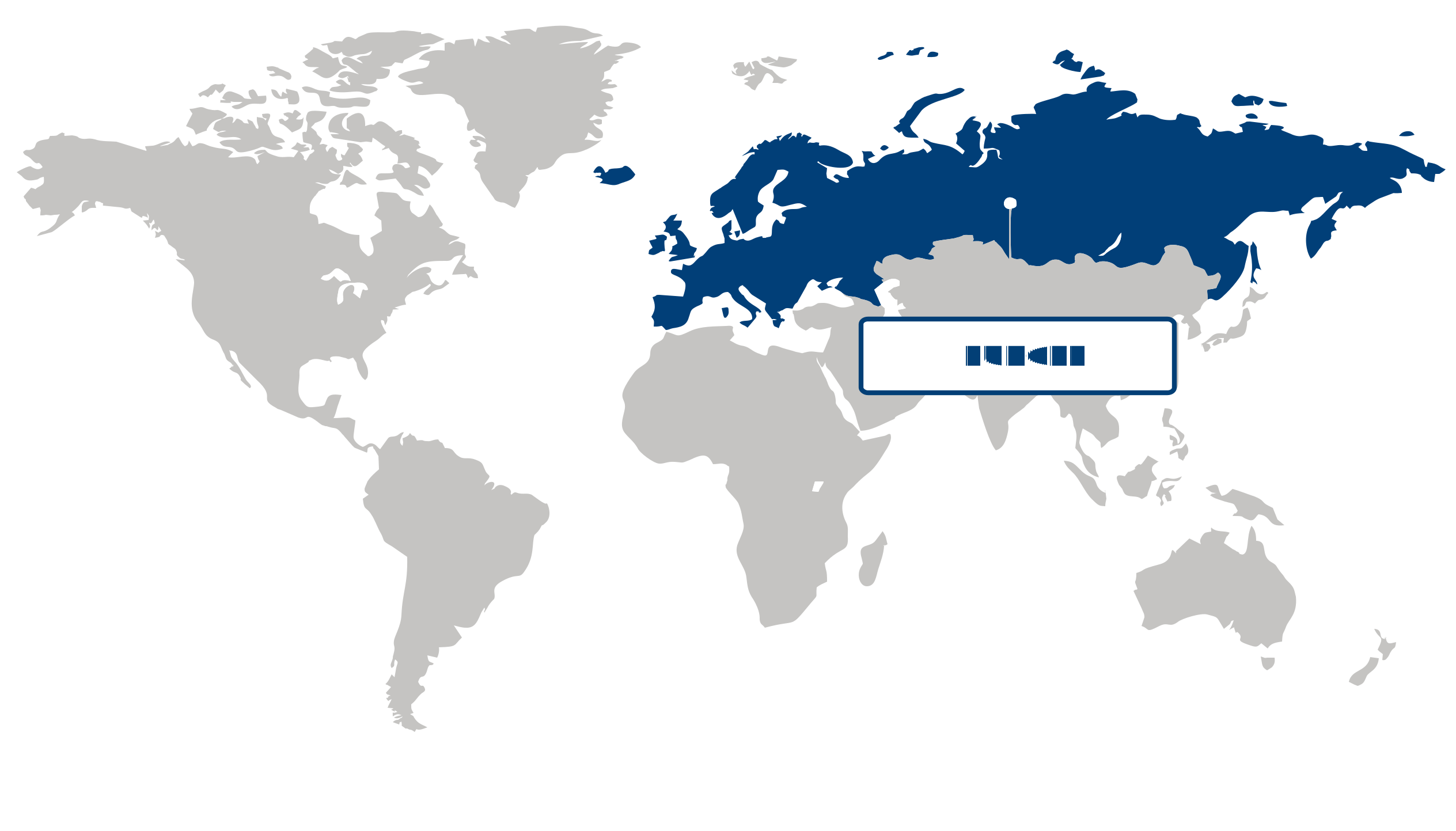
Europe captured over 36.4% of the global natural cosmetic color market in 2025, establishing itself as the largest regional player. This dominance is largely driven by stringent regulations on synthetic ingredients enforced by the European Chemicals Agency (ECHA) and the European Commission, compelling manufacturers to pivot toward natural alternatives. Concurrently, strong consumer demand for clean-label beauty products, reinforced by growing environmental awareness and disposable income growth in Western Europe, accelerates market expansion. Leading brands like L’Oréal and BASF emphasize sustainable sourcing and transparency, aligning with consumer preferences. Logistic advantages and robust R&D infrastructures further strengthen Europe’s standing. Given the increasing enforcement of eco-friendly product standards and digital marketing strategies that engage eco-conscious consumers, Europe offers significant opportunities for innovation and investment in natural cosmetic colors.
Germany anchors Europe’s natural cosmetic color market with a regulatory landscape pioneered by the Federal Institute for Risk Assessment (BfR), which sets high safety and labeling standards. German consumers exhibit a pronounced preference for organic-certified, allergen-free formulations, prompting firms such as Beiersdorf to innovate natural pigments tailored to sensitive skin. Strong supply chain integration and proximity to raw material suppliers bolster efficiency and product quality. This positions Germany as a testing ground for cutting-edge natural colorant innovations, reinforcing Europe’s leadership and drawing strategic investments focused on regulatory compliance and sustainability.
France plays a pivotal role in Europe’s natural cosmetic color market, leveraging its historic strengths in luxury cosmetics coupled with evolving clean beauty trends. Regulatory oversight from the French Agency for Food, Environmental and Occupational Health & Safety (ANSES) ensures consumer safety while encouraging organic certifications. French consumers increasingly demand transparency and ethically sourced ingredients, inspiring brands like Yves Rocher to expand natural color portfolios with botanical extracts. The country’s cultural emphasis on beauty and wellness, combined with strong digital engagement, stimulates product experimentation. France’s market vitality enhances Europe’s collective appeal, underpinning regional strategies centered on premium natural cosmetic colors with heritage and innovation.
Asia Pacific Market Analysis:
Asia Pacific emerged as the fastest-growing region in the natural cosmetic color market, registering a robust CAGR of 7.28%. This rapid growth is primarily driven by the rising popularity of vegan and cruelty-free products among the expanding middle class, reflecting shifting consumer preferences towards ethical and sustainable beauty solutions. Consumers in the region are increasingly prioritizing transparency and natural ingredients, encouraged by stricter regulatory frameworks and endorsements from entities like the Japan Cosmetic Industry Association, which promotes clean beauty formulations. Additionally, advancements in digital retail platforms facilitate broader reach, while supply chain innovations ensure the availability of plant-based colorants across diverse markets. These factors, combined with a culturally diverse demographic that values personal care investments, position Asia Pacific as a dynamic and resilient market poised for continued expansion in the natural cosmetic color sector.
Japan plays a pivotal role in Asia Pacific’s natural cosmetic color market, driven by sophisticated consumer demand for premium, vegan, and cruelty-free beauty products. The rising middle class in Japan exhibits strong purchasing power and a preference for high-quality natural ingredients, often influenced by local beauty standards and wellness trends. Regulatory bodies such as Japan’s Ministry of Health, Labour and Welfare have progressively updated guidelines that favor natural product claims, further encouraging market development. Prominent companies like Shiseido have responded with innovative vegan cosmetic color lines that cater to these preferences, leveraging advanced R&D capabilities. Japan’s strategic focus on quality and safety reinforces regional opportunities by setting a high benchmark, fostering innovation, and creating spillover effects across neighboring markets.
China is a key growth engine within Asia Pacific, reflecting the expanding middle class’s enthusiasm for vegan and cruelty-free cosmetic products. Chinese consumers increasingly demand transparency and sustainability, driven by rising environmental awareness and evolving lifestyle aspirations. Government initiatives like the China National Medical Products Administration’s push for clearer ingredient regulations have enhanced consumer confidence. Major players such as Pechoin have introduced natural colorant ranges that align with these shifting preferences, supported by digital ecosystems that enable effective marketing and distribution across urban and rural areas. China’s vast consumer base and accelerated digital adoption amplify regional momentum, underscoring its crucial contribution to Asia Pacific’s leadership in the natural cosmetic color market.
North America Market Trends:
North America held a substantial share in the natural cosmetic color market, driven by evolving consumer preferences towards clean and sustainable beauty products. The region’s mature retail landscape, coupled with heightened regulatory scrutiny from agencies like the U.S. Food and Drug Administration (FDA) and Health Canada, has accelerated the shift to natural alternatives, reinforcing quality and safety standards. Furthermore, the presence of key industry players such as L’Oréal USA and Revlon, who have increasingly integrated biobased pigments and eco-friendly formulations, underscores a competitive edge anchored in innovation and operational efficiency. Rising consumer awareness reflected in reports by the Personal Care Products Council also highlights an increased willingness to invest in premium, ethically sourced cosmetic colors. Ongoing technological advancements in pigment extraction and supply chain transparency position North America to sustain its leadership while leveraging growing demand for hybrid clean-beauty offerings.
The U.S. stands as the principal market within North America for natural cosmetic colors, with consumer demand notably influenced by digital beauty platforms and wellness trends emphasizing organic ingredients. Regulatory developments, notably FDA guidance updates on cosmetic ingredient transparency, encourage manufacturers to adopt more stringent sourcing protocols, as seen in press releases by companies like Burt’s Bees. Competitive dynamics are intensified by niche players specializing in allergen-free, vegan pigments, expanding market penetration beyond conventional brands. This aligns with shifting cultural values towards sustainability and inclusivity, fostering innovation ecosystems in hubs such as California and New York. As a result, the U.S. market’s leadership role strengthens the North American opportunity, underpinning broader regional growth driven by both supply-side advances and consumer-driven market evolution.
| Parameter | North America | Asia Pacific | Europe | Latin America | MEA |
|---|---|---|---|---|---|
| Innovation HubiScaleNascentDeveloping Advanced | |||||
| Cost-Sensitive RegioniScaleLowMedium High | |||||
| Regulatory EnvironmentiScaleRestrictiveNeutral Supportive | |||||
| Demand DriversiScaleWeakModerate Strong | |||||
| Development StageiScaleEmergingDeveloping Developed | |||||
| Adoption RateiScaleLowMedium High | |||||
| New Entrants / StartupsiScaleSparseModerate Dense | |||||
| Macro IndicatorsiScaleWeakStable Strong |
Natural Cosmetic Color Market Share (%), by Type, 2026
Go beyond the chart, access full insights & data tables
Request Free Sample ReportNatural pigments held the largest share in the natural cosmetic color market in 2025, driven by growing consumer preference for chemical-free and sustainable cosmetic ingredients. This segment’s leadership is reinforced by heightened demand for naturally derived colors that align with global sustainability trends and strict regulatory frameworks promoted by agencies such as the U.S. FDA and the European Chemicals Agency. Consumer consciousness about ingredient safety and eco-responsibility has prompted brands like Burt’s Bees and L’Oréal to prioritize natural pigment formulations in their product lines. The segment presents strategic opportunities for both incumbents and new entrants to innovate in bio-based extraction and eco-certification, enhancing brand credibility. Continued advancements in sustainable sourcing and processing methods suggest that natural pigments will maintain their dominance in the evolving cosmetic palette.
Analysis by Application
Makeup represented the largest share in the natural cosmetic color market in 2025, driven by the increasing use of natural colors in cosmetic formulations for eyes, lips, and face. Consumer trends toward versatile, clean-label makeup products have intensified, supported by creative digital marketing campaigns from leading players such as Estée Lauder and Revlon, which emphasize natural ingredient transparency. Regulatory milestones around ingredient disclosure and allergen reduction further empower this segment’s growth. The expanding diversity of demographics seeking clean makeup solutions amplifies demand, offering lucrative entry points for innovation in formulation and packaging. Given ongoing consumer advocacy for health-conscious beauty, natural color applications in makeup are poised to sustain prominence amid evolving preferences.
Analysis by Source
Plants represented the largest share in the natural cosmetic color market in 2025, with growth accelerated by a robust preference for plant-based, environmentally friendly pigment sources. Rising consumer awareness of the ecological footprint of cosmetic ingredients, along with supportive initiatives like the Environmental Working Group's verification programs, motivate brands such as Juice Beauty to harness botanical pigments. This segment benefits from continuously improving agricultural supply chains and advances in green extraction technologies, enhancing pigment purity and stability. The alignment with global sustainability priorities combined with the rich diversity of plant extracts creates extensive strategic opportunities for innovation and differentiation. These dynamics affirm the sustained relevance of plant-based sources in natural cosmetic colors through the near to medium term.
| Segment | Sub-Segment | Largest Segment | Fastest Growing |
|---|---|---|---|
| Type | Natural Pigments, Carmine, Ultramarines, Iron Oxides | ||
| Application | Makeup, Skincare, Hair Care, Nail Care | ||
| Source | Plants, Minerals, Animals, Synthetic | ||
| Form | Powder, Liquid, Paste, Gel |
Competitive Landscape and Market Positioning
The competitive landscape is shaped by strategic expansions including novel product rollouts emphasizing naturally derived pigments and eco-friendly formulations. Collaborations between key players and cosmetic manufacturers drive integration of advanced botanical colorants, accelerating innovation cycles. Investments in biotechnological research underpin the ability to meet stringent environmental standards and consumer preferences. Market leaders pursue synergies through cross-border partnerships and enhanced supply chain integration, maintaining robust responsiveness to market trends. These initiatives bolster differentiation and underscore how agility in product development and sustainable sourcing fortify market positioning amid intensifying competition.
Strategic / Actionable Recommendations for Regional Players
In North America, tapping into collaborations that merge botanical expertise with advanced formulation technologies can unlock new value chains. Emphasizing regional sourcing of natural raw materials while enhancing eco-certifications would heighten appeal to sustainability-conscious consumers.
Asia Pacific stakeholders should capitalize on emerging technologies in bio-pigmentation and invest in joint ventures to integrate traditional botanical knowledge with modern cosmetic innovation, capturing rising consumer demand in emerging economies.
European players can strengthen their foothold by deepening alliances focused on regulatory-compliant, high-efficacy natural colors, and targeting niche markets like luxury and organic cosmetics, where premium quality commands differentiation amid robust competition.
| Company | Market Share | Company Revenue | Revenue CAGR (%) | Product Portfolio | Geographic Presence | Innovation / R&D Focus | Strategic Developments |
|---|---|---|---|---|---|---|---|
| No companies available. | |||||||
Customize Your Report
Explore examples of how this report can be tailored to different research needs, including custom segments, additional topics or chapters, and related reports. Click a section of the wheel or its numbered marker to explore the available options.
Natural Cosmetic Color Market — Custom Segments
| Segment | Sub-Segment |
|---|---|
| No segment data available. | |
Natural Cosmetic Color Market — Custom TOC
| Custom Chapter | Chapter Details |
|---|---|
| No custom TOC data available. | |
Need a different cut of the data?
Request Custom ResearchFrequently Asked Questions
What is the projected value of the natural cosmetic color industry by 2035?
In which region is the natural cosmetic color market most concentrated?
Which region shows the most rapid acceleration in the natural cosmetic color sector?
Which is the largest sub-segment within the type segment for natural cosmetic color industry?
Why does makeup sub-segment dominate the application segment of natural cosmetic color sector?
How does plants segment fare in the natural cosmetic color industry?
What share does powder segment hold in the natural cosmetic color sector as of 2025?
What are the prominent companies operating in the natural cosmetic color landscape?
Our Clients
"The report provided us with a clear direction, and the level of detail was beyond what we expected. I would definitely recommend their services to others."
Haier Appliances
"The collaboration with Fundamental Business Insights has added significant value to our decision-making process, and we look forward to continuing this partnership for our future market research requirements."
Luxottica Group S.p.A.
"The team at FBI delivered an exceptional research report. The insights on industry innovations were particularly impressive and added a lot of value to the overall report."
Nike
Our Research Team & Methodology
Every Fundamental Business Insights report is built by a dedicated vertical research team, validated through a structured primary-and-secondary methodology, and reviewed for accuracy before it reaches you.
Delivery
Published
Available
Support
- Market Size & Forecast
- Market Segmentation
- Regional Analysis
- Growth Drivers & Challenges
- Market Dynamics
- Competitive Landscape
- Company Profiles
- Competitive Benchmarking
- Mergers & Acquisitions
- Market Share Analysis or Key Company Strategies
- Value Chain Analysis
- Porter's Five Forces
- PESTLE Analysis
- Pricing Trends
- Supply-Demand Analysis
- Technology Landscape
- Regulatory Landscape
- Investment & Funding Landscape
- Emerging Opportunities
- Future Market Outlook