



Natural Hair Care Products Market Size & Forecasts 2026-2035, By Segments (Distribution Channel, Price Range, Product Type), Growth Opportunities, Innovation Landscape, Regulatory Shifts, Strategic Regional Insights (U.S., Japan, China, South Korea, UK, Germany, France), and Competitive Dynamics (Procter & Gamble, L'Oréal, Unilever, Henkel, Johnson & Johnson)
Market Size and Growth Outlook
Natural Hair Care Products Market size is estimated to increase from USD 151.47 billion in 2025 to USD 407.4 billion by 2035, supported by a CAGR exceeding 10.4% during 2026-2035. In 2026, revenues are forecast to reach USD 165.52 billion.
Base Year Value (2025)
USD 151.47 billion
CAGR (2026-2035)
10.4%
Forecast Year Value (2035)
USD 407.4 billion

Historical Data Period
2022-2025

Largest Region
Europe

Forecast Period
2026-2035
Key Takeaways
- Europe region secured around 38.6% revenue share in 2025, owing to a strong consumer preference for chemical-free formulations and eco-friendly packaging.
- Asia Pacific region will grow at around 12.4% CAGR from 2026 to 2035, propelled by rising urbanization and increasing awareness of scalp health among younger demographics.
- In 2025, the online segment led the natural hair care products market with a majority share, propelled by rising e‑commerce adoption and convenience of online retail.
- In 2025, the medium segment held largest share of the market, driven by consumer demand for affordable natural hair care solutions.
- In 2025, the shampoo segment held the largest share of the natural hair care products market, driven by high usage frequency and broad consumer base for hair cleansing products.
- Major competitors in the natural hair care products market include Procter & Gamble (USA), L'Oréal (France), Unilever (UK/Netherlands), Henkel (Germany), Johnson & Johnson (USA), Kao Corporation (Japan), Beiersdorf AG (Germany), Amorepacific Corporation (South Korea), Shiseido Company (Japan), The Estée Lauder Companies (USA).
Market Growth Drivers and Industry Trends
Rising Awareness of Natural Hair BenefitsGrowing consumer recognition of the health and aesthetic advantages of curly, coily, and textured hair care fuels the natural hair care products market's evolution. Influential campaigns by organizations such as the Natural Hair Movement and endorsements from public figures emphasize hair health and cultural pride, shifting preferences away from chemical treatments. The U.S. Food and Drug Administration’s increasing scrutiny on synthetic additives reinforces demand for gentler, non-toxic alternatives. This trend opens strategic opportunities for incumbents to reformulate legacy products and for startups to introduce niche, culturally attuned brands. As educational content by the National Institutes of Health and grassroots social media communities broadens awareness, natural hair care brands can build loyal consumer bases rooted in authenticity and wellness, underpinning sustained market expansion.
Expansion of Retail and E-commerce Channels
The diversification and digitization of distribution channels are pivotal for the natural hair care products market, enabling broader consumer access and personalized shopping experiences. Leading retailers like Sephora and Ulta Beauty, alongside digital platforms such as Amazon and niche e-commerce sites like CurlMix, escalate product visibility and convenience. The integration of AI-driven recommendation engines and virtual try-ons heightens customer engagement and purchase confidence, while the COVID-19 pandemic accelerated shifts toward online shopping. For market players, this channel expansion facilitates direct-to-consumer models, reducing dependence on traditional wholesale and enhancing data-driven marketing. Continuous investment in omnichannel strategies is essential as consumers expect seamless integration of physical and digital touchpoints.
Product Innovation with Organic Formulations
Innovation focused on organic and sustainably sourced ingredients is reshaping the natural hair care products market amid rising consumer and regulatory demand for cleaner formulations. Companies like SheaMoisture and Burt’s Bees highlight transparency by sourcing ethically certified botanicals, responding to heightened scrutiny by agencies such as the Environmental Protection Agency. Advances in green chemistry enable effective preservation and texture enhancement without synthetic chemicals, differentiating offerings in a competitive landscape increasingly crowded with “natural” claims. This driver presents a strategic imperative for brands to invest in R&D and supply chain traceability, leveraging certifications like USDA Organic as trust signals. As consumers prioritize environmental impact alongside efficacy, ongoing innovation in organic formulations will sustain market relevance and resilience.
Industry Restraints:
Regulatory Complexity and Compliance Challenges
Navigating the intricate regulatory landscape significantly constrains innovation and market entry in natural hair care products. Diverse and evolving standards across regions, such as the U.S. FDA’s stringent requirements on ingredient safety and the EU’s Cosmetics Regulation, impose operational challenges, delaying product launches and increasing costs. For instance, brands like Aveda have publicly highlighted the need for rigorous ingredient testing to meet both regional and international criteria, which slows time-to-market. This complexity disproportionately burdens smaller players lacking regulatory expertise, limiting competitive dynamics and innovation. Established firms must allocate substantial resources to compliance, impacting R&D investment and strategic agility. Moving forward, as governments amplify scrutiny on natural claims and ingredient transparency, the regulatory challenge will intensify, urging companies to deepen compliance capabilities or risk market exclusion.
Supply Chain Instability and Raw Material Constraints
The dependency on sustainably sourced botanicals exposes natural hair care companies to significant supply chain disruptions, constraining market growth. Fluctuating availability of key natural inputs—exacerbated by climate variability and geopolitical tensions—is documented by the Specialty Food Association, reporting increasing scarcity and price volatility in ingredients like shea butter and argan oil. These interruptions elevate production costs and reduce consistency, frustrating consumer trust and brand loyalty. Both legacy firms and new entrants face difficulty securing reliable suppliers, complicating product innovation and scaling efforts. To remain competitive, companies must invest in supply chain diversification and transparent sourcing strategies. Given ongoing environmental pressures and global trade uncertainties, supply chain fragility will persist, compelling market participants to enhance resilience and sustainability integration in procurement practices.
| Growth Driver Assessment Framework | |||||
| Growth Driver | Impact On CAGR | Regulatory Influence | Geographic Relevance | Adoption Rate | Impact Timeline |
|---|---|---|---|---|---|
| Rising Awareness of Natural Hair Benefits | 4.00% | Short term (≤ 2 yrs) | North America, Europe | Low | Fast |
| Expansion of Retail and E-commerce Channels | 3.00% | Medium term (2–5 yrs) | Asia Pacific, North America | Medium | Moderate |
| Product Innovation with Organic Formulations | 3.00% | Long term (5+ yrs) | Europe, Asia Pacific | Low | Moderate |
Unlock insights tailored to your business with our bespoke market research solutions - Click to get your customized report now!
Regional Demand Dynamics
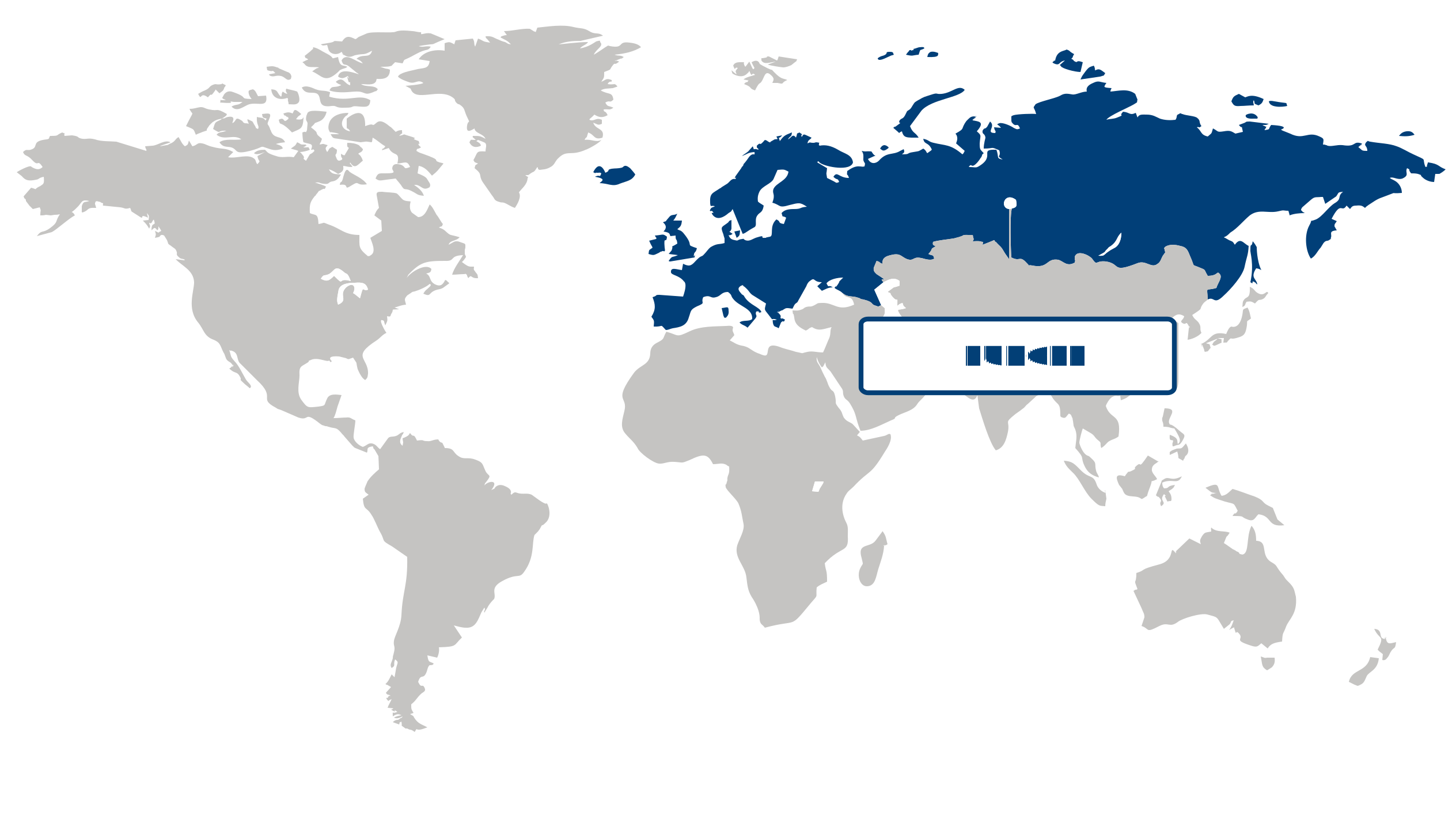
Largest Region
Europe
38.6% Market Share in 2025
Europe dominated the natural hair care products market in 2025, representing more than 38.6% of the global share. This leadership reflects strong consumer preference for chemical-free formulations and eco-friendly packaging, fueling demand across the region. German regulatory bodies like the Federal Environment Agency have increasingly endorsed sustainable practices, encouraging brands to innovate with biodegradable ingredients and recyclable containers. Additionally, rising environmental awareness among European consumers, as highlighted by the European Environment Agency, has spurred shifts toward greener products, significantly influencing spending patterns. Retailers such as Douglas Group have expanded their natural hair care assortments, indicating robust operational responses to evolving preferences. These factors position Europe as a critical arena for sustained growth, with companies poised to leverage digital advancements and circular economy frameworks to deepen market penetration and capitalize on tightening sustainability standards.
Germany anchors the European natural hair care products market with its advanced regulatory environment and discerning consumer base. The German Federal Institute for Risk Assessment has actively promoted non-toxic formulations, enhancing public trust in chemical-free offerings. Key market players like Schwarzkopf have responded by launching innovative lines emphasizing naturally derived components and sustainable packaging. German consumers prioritize transparency and quality, driving brands to enhance product traceability and certification, which solidifies the country’s leadership. Consequently, Germany serves as a strategic model within Europe for integrating stringent safety regulations with green innovation, reinforcing regional opportunities.
France plays a pivotal role in shaping Europe's natural hair care products market, driven by strong cultural affinity for luxury and wellness-oriented skincare. French consumers, as observed in data from the French Cosmetic Toiletry Federation, increasingly favor brands that align with ethical sourcing and environmental stewardship. Companies such as L’Oréal have expanded their sustainable product portfolios, combining tradition with innovation to meet this demand. France’s unique blend of heritage and progressive consumer expectations makes it a vital contributor to Europe’s market dynamics, enhancing the region’s appeal to global investors seeking sustainable growth in the natural hair care segment.
Asia Pacific Market Analysis:
Asia Pacific emerged as the fastest-growing region in the natural hair care products market, registering a robust CAGR of 12.4%. This growth is primarily driven by rising urbanization and increasing awareness of scalp health among younger demographics, which are reshaping consumer priorities toward natural and sustainable personal care solutions. Rapid urban expansion in countries like China and Japan has spurred demand for premium, health-focused hair care products, reflecting a broader shift towards wellness and eco-conscious consumption. According to the Japan Cosmetic Industry Association, there is a growing trend among urban youth investing in scalp-friendly, chemical-free products, reinforcing sustainability alongside beauty needs. Additionally, Asia Pacific’s evolving retail infrastructure and digital penetration enable targeted marketing and distribution, amplifying the appeal of specialized natural hair care formulations. These factors position the region as a critical growth hub, offering significant opportunities for innovation-driven brands seeking to capitalize on health awareness and evolving lifestyle patterns.
Japan plays a pivotal role in the Asia Pacific natural hair care products market, marked by sophisticated consumer preferences and an emphasis on scalp wellness. The rise in urban consumers prioritizing scalp health has accelerated demand for innovative, natural formulations rich in botanicals and devoid of harsh chemicals. Brands such as Shiseido have actively expanded their scalp care product lines, attuned to preferences for efficacy and safety among younger consumers, as reported in their 2023 corporate press release. Regulatory encouragement for clean beauty standards further supports market expansion, with the Ministry of Health, Labour and Welfare promoting product transparency. Japan’s high spending power and developed retail channels make it a strategic market for premium natural hair care products, reinforcing its leadership role within the region and contributing to the overall Asia Pacific growth narrative.
China stands as a dynamic force within Asia Pacific’s natural hair care products market, leveraging its vast urban population and rising health consciousness. Increasing governmental emphasis on product safety and natural ingredients, exemplified by recent guidelines from the National Medical Products Administration (NMPA), has catalyzed consumer trust and adoption. Chinese consumers show strong preferences for plant-based hair treatments, often driven by social media influence and e-commerce penetration from platforms like Tmall and JD.com. Local companies, such as Inoherb, capitalize on traditional herbal knowledge combined with modern formulations, resonating with urban middle-class customers focused on scalp health and environmental sustainability. China’s expansive digital ecosystem and evolving logistics infrastructure facilitate rapid market scaling, underscoring its critical contribution to Asia Pacific’s rapid natural hair care product market growth trajectory.
North America Market Trends:
North America held a commanding share of the natural hair care products market, driven by heightened consumer awareness regarding health and sustainability. The region’s market significance stems from evolving preferences toward clean-label ingredients and eco-conscious packaging, coupled with robust retail infrastructure that facilitates widespread distribution. In addition, policies promoting transparency in cosmetic formulations, as highlighted by the U.S. Food and Drug Administration’s (FDA) updated labeling guidelines, have reinforced consumer trust. Innovation hubs within North America, particularly in the U.S., have accelerated technological advancements, enabling brands to develop multifunctional and personalized natural hair care solutions. This dynamic, supported by rising online penetration and omnichannel retailing reported by the Personal Care Products Council, further amplifies market reach. North America’s resilience amid fluctuating economic conditions and regulatory vigilance ensures sustained momentum, positioning it as a fertile ground for investment and innovation in natural hair care products.
The U.S. serves as a pivotal driver within North America’s natural hair care products market, reflecting robust consumer demand for organic and ethically sourced ingredients. Cultural shifts towards embracing diverse hair types and textures have expanded product offerings, with companies like SheaMoisture and Credo Beauty emphasizing inclusivity and transparency, as disclosed in their corporate sustainability reports. Regulatory oversight by the FDA and the Environmental Protection Agency ensures compliant formulation and packaging, which bolsters buyer confidence. Additionally, the U.S. benefits from advanced supply chain networks and a skilled workforce dedicated to research and development, enabling rapid innovation cycles. This landscape creates a strategic advantage, positioning the U.S. not only as a major consumption hub but also as a catalyst for regional growth, underscoring significant opportunities throughout North America’s natural hair care products market.
No card data available for this language/report.
Segment Leadership and Growth Trends
The natural hair care products market is led by the online segment, which dominated distribution channels in 2025 driven by rising e-commerce adoption and the convenience of online retail. Consumers increasingly favor digital platforms, benefiting from greater product variety, detailed information, and personalized recommendations. Companies like Sephora and Amazon have reported significant traction in natural hair care sales through digital storefronts, reflecting shifts in purchasing behavior amplified by enhanced mobile connectivity and secure payment systems. This segment presents strategic opportunities for established firms to leverage data analytics and for emerging players to tap into niche audiences with targeted online marketing. Given ongoing digital transformation and expanding internet penetration, the online distribution channel is poised to maintain its relevance and growth momentum in the natural hair care products market.
Analysis by Price Range
In the natural hair care products market, the medium price range segment represented the largest share in 2025, driven primarily by consumer demand for affordable yet quality natural formulations. This segment balances cost and efficacy, appealing to middle-class demographics increasingly conscious of ingredient transparency and sustainable sourcing. Regulatory endorsement of clean beauty standards by agencies like the U.S. Food and Drug Administration (FDA) bolster consumer confidence in mid-tier products. Medium-priced offerings also benefit from efficient supply chain innovations, ensuring accessibility without compromising quality. These dynamics create attractive entry points for both established brands to expand their portfolios and startups to capture loyal, value-conscious customers. As financial prudence couples with health-oriented lifestyles, the medium price range segment is positioned to sustain its leadership.
Analysis by Product Type
Within the natural hair care products market, shampoo held the largest share in 2025, supported by its essential role in daily hair hygiene and widespread consumer adoption. The segment's leadership is linked to high usage frequency and an expansive user base across diverse demographics. Industry leaders such as The Body Shop emphasize botanical ingredients in shampoos, aligning with growing preferences for natural, sulfate-free formulations that promote scalp health. Additionally, global initiatives from organizations like the Environmental Working Group (EWG) encourage transparency in ingredient safety, influencing purchase decisions. This segment offers robust opportunities for innovation in specialized shampoos targeting different hair types and concerns, reinforcing competitive positioning. Anticipated continued consumer prioritization of hair cleanliness and health suggests the shampoo segment will remain vital in the natural hair care products market.
| Report Segmentation | |||
| Segment | Sub-Segment | Largest Segment | Fastest Growing Segment |
|---|---|---|---|
| Distribution Channel | Offline, Online | ||
| Price Range | High, Medium, Low | ||
| Product Type | Shampoo, Conditioner, Gel & Wax, Hair Color, Oils & Serum | ||
 Read our Research Approach
Competitive Landscape and Market Positioning
Key players in the natural hair care products market include Procter & Gamble, L'Oréal, Unilever, Henkel, Johnson & Johnson, Kao Corporation, Beiersdorf AG, Amorepacific Corporation, Shiseido Company, and The Estée Lauder Companies. These corporations exhibit strong global footprints, underpinned by access to extensive R&D capabilities and well-established distribution networks. Their prominence is marked by a portfolio diversification that balances mainstream and niche natural hair care brands, leveraging brand equity to meet evolving consumer preferences. The integration of sustainability credentials and clean-label offerings further strengthens their positioning, reflecting a commitment to premium quality and ethical sourcing that resonates with increasingly conscious consumers worldwide.The competitive landscape in this sector is notably dynamic, characterized by continuous innovation and strategic alignment. Leading players are enhancing their competitive edge through collaborative ventures and targeted portfolio expansions, embedding botanical ingredients and advanced formulation technologies in new product developments. Strategic alliances across supply chains and selective acquisitions enable these companies to accelerate market responsiveness and reinforce their presence in emerging regions. This proactive approach not only nurtures innovation pipelines but also consolidates market share, ensuring adaptability to shifting consumer demands and regulatory frameworks focused on natural and organic certification standards.
Strategic / Actionable Recommendations for Regional Players
In North America, leveraging collaborations with startups specializing in sustainable sourcing or biotechnology could amplify innovation while meeting stringent regulatory requirements. Emphasizing digital engagement and personalized product experiences can also enhance consumer loyalty amid rising demand for clean and efficacious natural hair care.
Asia Pacific players should capitalize on integrating indigenous botanicals with modern formulation expertise, fostering cross-border partnerships to enrich product authenticity and drive regional differentiation. Investments in scalable manufacturing technologies and e-commerce infrastructure will be pivotal for broader market penetration.
European companies might benefit from deepening commitments to transparency and eco-labeling while aligning with circular economy principles. Strengthening alliances within local ecosystems and utilizing cutting-edge R&D to elevate product efficacy could secure stronger footholds in both mature and emerging market segments.
Why Choose Us
Specialized Expertise: Our team comprises industry experts with a deep understanding of your market segment. We bring specialized knowledge and experience that ensures our research and consulting services are tailored to your unique needs.
Customized Solutions: We understand that every client is different. That's why we offer customized research and consulting solutions designed specifically to address your challenges and capitalize on opportunities within your industry.
Proven Results: With a track record of successful projects and satisfied clients, we have demonstrated our ability to deliver tangible results. Our case studies and testimonials speak to our effectiveness in helping clients achieve their goals.
Cutting-Edge Methodologies: We leverage the latest methodologies and technologies to gather insights and drive informed decision-making. Our innovative approach ensures that you stay ahead of the curve and gain a competitive edge in your market.
Client-Centric Approach: Your satisfaction is our top priority. We prioritize open communication, responsiveness, and transparency to ensure that we not only meet but exceed your expectations at every stage of the engagement.
Continuous Innovation: We are committed to continuous improvement and staying at the forefront of our industry. Through ongoing learning, professional development, and investment in new technologies, we ensure that our services are always evolving to meet your evolving needs.
Value for Money: Our competitive pricing and flexible engagement models ensure that you get maximum value for your investment. We are committed to delivering high-quality results that help you achieve a strong return on your investment.
Select Licence Type

