



Natural Household Cleaners Market Size & Growth Forecast 2026–2035, By Segments (Product, Application, Distribution Channel), Regional Demand Trends (North America, Asia Pacific, Europe), Key Country Insights (U.S., Japan, South Korea, Germany, France, Italy), and Competitive Landscape
Market Size and Growth Outlook
Natural Household Cleaners Market size was around USD 7.53 Billion in 2025 and is slated to grow at a 11.2% CAGR from 2026 to 2035, reaching USD 21.77 Billion by 2035. The industry revenue for 2026 is assessed at USD 8.29 billion.
Base Year Value (2025)
USD 7.53 Billion
CAGR (2026-2035)
11.2%
Forecast Year Value (2035)
USD 21.77 Billion

Historical Data Period
2022-2025

Largest Region
Europe

Forecast Period
2026-2035
Natural Household Cleaners Market Intelligence Snapshot:
-
Regional Market Dynamics:
- Europe held a 34.98% market share in 2025, supported by strong consumer demand for plant-based cleaners, broad retail availability, and sustainability-focused purchasing behavior that encourages repeat sales.
- North America is forecast to grow at a 12.54% CAGR as consumers prioritize ingredient transparency, eco-conscious home care, premium products, and wider online access to natural cleaning solutions.
-
Segment Momentum:
- Surface Cleaners accounted for 58.07% of the market in 2025, driven by frequent household use across multiple rooms and steady repurchase demand for versatile, everyday cleaning applications.
- Kitchen is the fastest-growing application segment as consumers increasingly prefer natural cleaners for food-contact surfaces, reducing synthetic chemical exposure in areas used for cooking and meal preparation.
-
Market Expansion Drivers:
- Increasing consumer awareness of chemical-related health risks boosting demand for natural cleaning products.
- Stringent regulations on hazardous cleaning chemicals accelerating eco-friendly product adoption.
- Expanding sustainable living trends and e-commerce availability strengthening premium natural cleaner sales.
-
Leading Market Participants:
Key players in the natural household cleaners market include The Honest Company, Inc. (United States), Seventh Generation, Inc. (United States), Ecover (Belgium), Method Products, PBC (United States), Frosch [Werner & Mertz GmbH] (Germany), ECOS by Earth Friendly Products (United States), Mrs. Meyer's Clean Day (United States), Biokleen (United States).
Global Market Forecast Snapshot:
-
Market Outlook:
- 2025 Market Size: USD 7.53 Billion
- Projected Market Size: USD 21.77 Billion by 2035
- Growth Forecasts: 11.2% CAGR (2026-2035)
-
Regional and Segment Outlook:
- Leading Regional Market: Europe
- High-Growth Regional Hub: North America
- Core Revenue Segment: Surface Cleaners (Product) | Bathroom (Application) | Supermarkets/Hypermarkets (Distribution Channel)
- Emerging Opportunity Segment: Fabric Cleaners (Product) | Kitchen (Application) | Online (Distribution Channel)
Market Growth Drivers and Industry Trends
Increasing consumer awareness of chemical-related health risks boosting demand for natural cleaning productsHeightened attention to the health effects of harsh cleaning agents is reshaping purchase behavior in the natural household cleaners market, particularly for products used on kitchen surfaces, children’s items, and enclosed indoor spaces. As consumers become more cautious about residues, fumes, and repeated exposure to conventional chemicals, they increasingly screen ingredient labels and favor plant-based, non-toxic, and fragrance-conscious formulations. This shift is increasing demand for the natural household cleaners market by moving purchasing decisions away from price-only comparisons toward safety-led product selection, which gives natural brands stronger shelf appeal and encourages retailers to widen assortments in everyday cleaning categories.
Stringent regulations on hazardous cleaning chemicals accelerating eco-friendly product adoption
Tighter controls on hazardous ingredients are influencing formulation strategies, compliance costs, and product positioning in the natural household cleaners market. When regulators restrict or scrutinize certain solvents, disinfectants, or synthetic additives, manufacturers are pushed to reformulate product lines and invest in safer ingredient systems that can meet both performance and labeling expectations. That process often narrows the commercial advantage of conventional cleaners and supports market expansion for natural alternatives, especially as retailers and institutional buyers increasingly favor products with lower regulatory risk, clearer ingredient disclosure, and easier alignment with internal sustainability standards.
Expanding sustainable living trends and e-commerce availability strengthening premium natural cleaner sales
Broader lifestyle shifts toward low-waste, environmentally conscious consumption are increasing willingness to pay for higher-value offerings in the natural household cleaners market, especially where products combine biodegradable ingredients, refill formats, and plastic-reduction claims. E-commerce is amplifying that effect by giving niche and premium brands direct access to consumers who actively search for specific environmental attributes rather than relying on limited in-store selection. The result is stronger market development for differentiated natural cleaners, as digital channels make it easier to communicate ingredient transparency, bundle subscription purchases, and build loyalty around sustainability-focused household routines.
| Growth Driver Assessment Framework | |||||
| Growth Driver | Impact On CAGR | Regulatory Influence | Geographic Relevance | Adoption Rate | Impact Timeline |
|---|---|---|---|---|---|
| Increasing consumer awareness of chemical-related health risks boosting demand for natural cleaning products | 2.00% | Moderate | Europe, North America, Asia Pacific | High | Near Term |
| Stringent regulations on hazardous cleaning chemicals accelerating eco-friendly product adoption | 1.80% | High | Europe, North America | High | Mid Term |
| Expanding sustainable living trends and e-commerce availability strengthening premium natural cleaner sales | 1.50% | Moderate | Asia Pacific, Europe | Medium | Mid Term |
Unlock insights tailored to your business with our bespoke market research solutions - Click to get your customized report now!
Regional Demand Dynamics
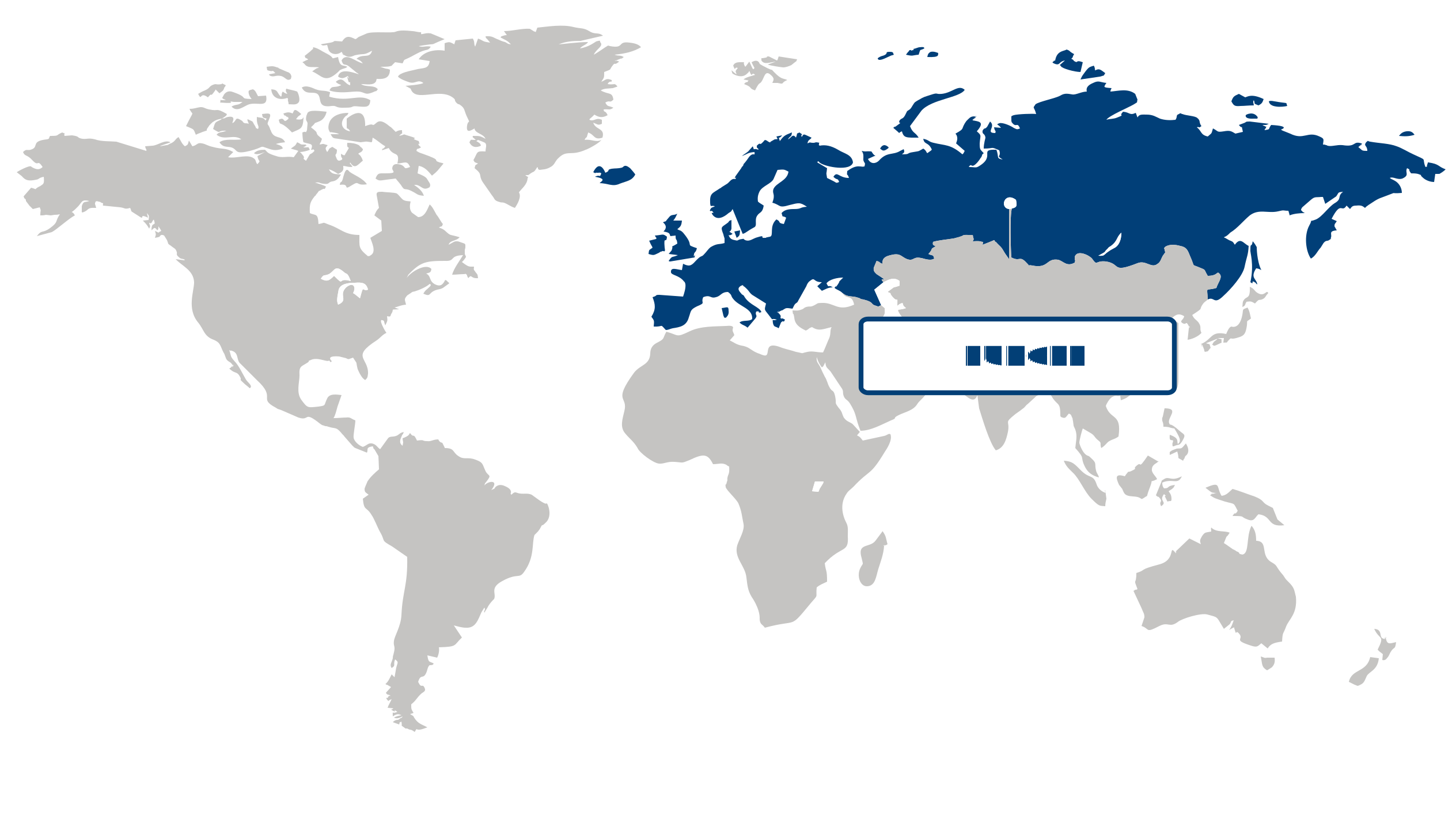
Largest Region
Europe
34.98% Market Share in 2025
Europe held a 34.98% share of the natural household cleaners market in 2025, bolstered by deeply established consumer demand for plant-based and low-toxicity cleaning products, broad retail availability, and strong alignment with sustainability-led purchasing behavior. The region’s leadership is strengthened by mature private-label and branded offerings across supermarkets, specialty stores, and e-commerce channels, which keeps product visibility high and repeat purchasing consistent. Regulatory and consumer preference patterns also favor cleaner ingredient positioning and reduced environmental impact, helping sustain steady market activity across household cleaning categories.
North America is projected to expand at a 12.54% CAGR over the forecast period, with growth in the natural household cleaners market being fueled by rising consumer attention to ingredient transparency, indoor health considerations, and the shift toward eco-conscious home care routines. Adoption is accelerating as established brands and newer entrants widen product assortments across multipurpose cleaners, detergents, and surface care, while online channels make product comparison and access easier for households seeking alternatives to conventional formulations. This growth pattern is also being strengthened by premiumization in home care, where consumers are increasingly willing to pay for products positioned around safety, efficacy, and environmentally aware formulations.
Key Country Insights
The U.S. market for natural household cleaners is shaped by consumer demand for plant-based ingredients and reduced chemical exposure. Brands are expanding environmentally responsible product portfolios while improving cleaning performance and sustainable packaging solutions.
Japan is encouraging adoption of natural household cleaners designed for convenience, efficiency, and everyday household use. Companies are introducing concentrated and multifunctional products that reduce waste while maintaining reliable cleaning performance.
South Korea is experiencing sustained interest in natural household cleaners that align with environmentally conscious lifestyles and premium home care preferences. Brands are differentiating through naturally derived ingredients, attractive packaging, and multifunctional cleaning capabilities.
Germany prioritizes natural household cleaners that combine verified environmental credentials with dependable cleaning effectiveness. Manufacturers are focusing on biodegradable formulations and transparent ingredient sourcing to meet consumer and retail sustainability expectations.
France favors natural household cleaners formulated with plant-derived ingredients that balance environmental responsibility with effective household cleaning. Manufacturers are strengthening product transparency and sustainable packaging to address evolving consumer purchasing priorities.
Italy is expanding demand for natural household cleaners as consumers increasingly seek practical alternatives to conventional chemical-based products. Producers are emphasizing naturally sourced ingredients, recyclable packaging, and reliable cleaning performance across everyday household applications.
Segment Leadership and Growth Trends
Surface Cleaners held a 58.07% share of the natural household cleaners market in 2025, reflecting their established role in routine home cleaning across countertops, floors, tables, and other high-contact areas. This leadership is underpinned by the frequency of use associated with surface hygiene, where consumers tend to repurchase products regularly and prioritize formulations that can be used across multiple rooms. In the natural household cleaners market, Surface Cleaners benefit from broad household applicability and consistent demand tied to everyday maintenance rather than occasional cleaning needs.
Fabric Cleaners are emerging as the fastest-growing product segment in the natural household cleaners market as consumers increasingly extend natural cleaning preferences beyond hard surfaces to soft furnishings, upholstery, and fabric-based household items. Growth is being reinforced through rising interest in reducing chemical exposure in areas with close and prolonged human contact, especially on items used by children, pets, and allergy-sensitive users. Compared with more established product types, Fabric Cleaners are gaining momentum because they address an expanding need for gentle yet effective cleaning solutions in parts of the home that were traditionally served by conventional products.
Application Segment Analysis: Bathroom (Largest Segment) vs Kitchen (Fastest-Growing Segment)
By 2025, Bathroom accounted for the largest share in the natural household cleaners market, reinforced through the regular need to manage stains, moisture, odors, and hygiene-sensitive surfaces in enclosed residential spaces. Bathrooms require frequent cleaning cycles and often involve multiple surfaces such as tiles, sinks, toilets, and glass, which helps sustain strong product turnover. The segment’s leading share in the natural household cleaners market is reinforced by consumers’ preference for dependable daily-use cleaning solutions in areas where cleanliness is closely linked to household sanitation.
Kitchen is the fastest-growing application segment in the natural household cleaners market, influenced by stronger consumer attention to food-contact surfaces and the desire to limit synthetic chemical residues in cooking and preparation areas. Growth is accelerating as natural formulations become more relevant for countertops, stovetops, sinks, and dining surfaces that are cleaned often and used directly around food. Relative to other household applications, Kitchen is gaining momentum because natural cleaning choices align closely with everyday health-conscious behavior and practical concerns around repeated exposure in meal preparation environments.
| Report Segmentation | |||
| Segment | Sub-Segment | Largest Segment | Fastest Growing Segment |
|---|---|---|---|
| Product | Surface Cleaners, Glass Cleaners, Fabric Cleaners | Surface Cleaners | Fabric Cleaners |
| Application | Bathroom, Kitchen, Others | Bathroom | Kitchen |
| Distribution Channel | Supermarkets/Hypermarkets, Convenience Stores, Online | Supermarkets/Hypermarkets | Online |
 Read our Research Approach
Competitive Landscape and Market Positioning
Top players in the natural household cleaners market:1. The Honest Company Inc. (United States)
2. Seventh Generation Inc. (United States)
3. Ecover (Belgium)
4. Method Products PBC (United States)
5. Frosch [Werner & Mertz GmbH] (Germany)
6. ECOS by Earth Friendly Products (United States)
7. Mrs. Meyer's Clean Day (United States)
8. Biokleen (United States)
Eco-friendly consumer behavior is significantly influencing the natural household cleaners market, where manufacturers are developing plant-based and biodegradable cleaning formulations with reduced chemical content. Brands are emphasizing sustainable packaging, non-toxic ingredients, and environmentally responsible production processes to strengthen consumer trust. Increased awareness regarding indoor air quality and green living practices is also supporting market expansion.
Why Choose Us
Specialized Expertise: Our team comprises industry experts with a deep understanding of your market segment. We bring specialized knowledge and experience that ensures our research and consulting services are tailored to your unique needs.
Customized Solutions: We understand that every client is different. That's why we offer customized research and consulting solutions designed specifically to address your challenges and capitalize on opportunities within your industry.
Proven Results: With a track record of successful projects and satisfied clients, we have demonstrated our ability to deliver tangible results. Our case studies and testimonials speak to our effectiveness in helping clients achieve their goals.
Cutting-Edge Methodologies: We leverage the latest methodologies and technologies to gather insights and drive informed decision-making. Our innovative approach ensures that you stay ahead of the curve and gain a competitive edge in your market.
Client-Centric Approach: Your satisfaction is our top priority. We prioritize open communication, responsiveness, and transparency to ensure that we not only meet but exceed your expectations at every stage of the engagement.
Continuous Innovation: We are committed to continuous improvement and staying at the forefront of our industry. Through ongoing learning, professional development, and investment in new technologies, we ensure that our services are always evolving to meet your evolving needs.
Value for Money: Our competitive pricing and flexible engagement models ensure that you get maximum value for your investment. We are committed to delivering high-quality results that help you achieve a strong return on your investment.
Select Licence Type

