Fundamental Business Insights and Consulting
Home Industry Reports Custom Research Blogs About Us Contact us

Naval Destroyers and Submarines Market Size & Forecasts 2026-2035, By Segments (type, system, application), Growth Opportunities, Innovation Landscape, Regulatory Shifts, Strategic Regional Insights (U.S., Japan, China, South Korea, UK, Germany, France), and Competitive Dynamics (Lockheed Martin, BAE Systems, General Dynamics, Naval Group, Huntington Ingalls)

Report ID: FBI 8271

|

Published Date: Sep-2025

|

Format : PDF, Excel

Market Size and Growth Outlook

Naval Destroyers and Submarines Market size is anticipated to rise from USD 124.1 million in 2025 to USD 214 million by 2035, reflecting a CAGR surpassing 5.6% over the forecast horizon of 2026-2035. The estimated revenue for 2026 is USD 130.13 million.

Base Year Value (2025)

USD 124.1 Million

21-25 x.x %
26-35 x.x %

CAGR (2026-2035)

5.6%

21-25 x.x %
26-35 x.x %

Forecast Year Value (2035)

USD 214 Million

21-25 x.x %
26-35 x.x %
Naval Destroyers and Submarines Market

Historical Data Period

2021-2025

Naval Destroyers and Submarines Market

Largest Region

North America

Naval Destroyers and Submarines Market

Forecast Period

2026-2035

Get more details on this report -

Key Takeaways

  • North America region secured more than 41.2% revenue share in 2025, propelled by strong naval defense spending in the U.S.
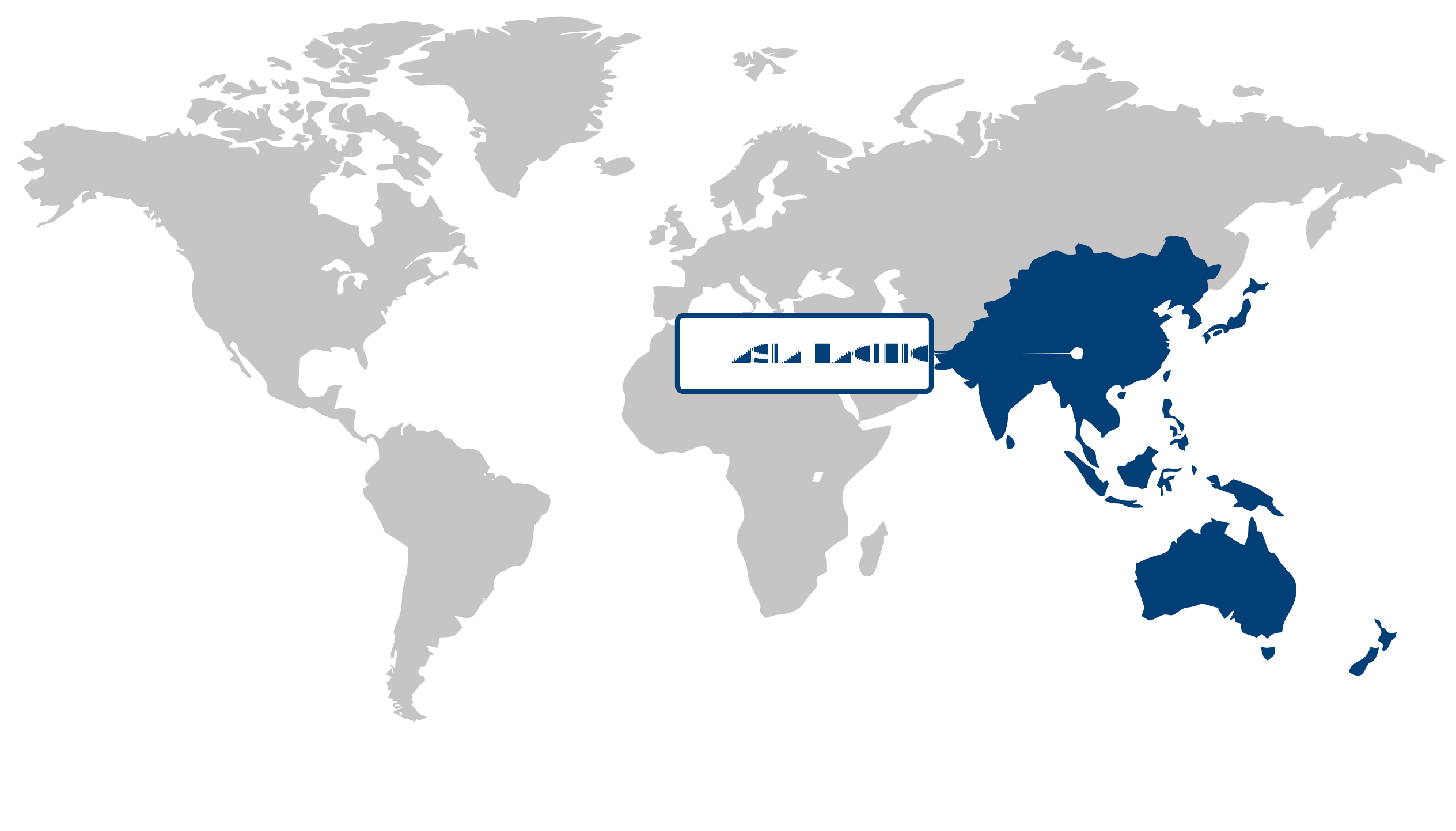
  • Asia Pacific region will grow at around 6.5% CAGR from 2026 to 2035, fueled by military modernization in china and india.
  • In 2025, submarines segment captured 54.45% naval destroyers and submarines market share, propelled by stealth and strategic capabilities drive submarine market dominance.
  • Holding 49.5% share in 2025, the success of combat operations segment was shaped by geopolitical tensions drive combat operation vessel demand.
  • The market share of marine engine systems segment stood at 23.92% in 2025, propelled by critical role in vessel propulsion drives engine system demand.
  • Key companies dominating the naval destroyers and submarines market are Lockheed Martin (USA), BAE Systems (UK), General Dynamics (USA), Naval Group (France), Huntington Ingalls (USA), Thyssenkrupp Marine Systems (Germany), Navantia (Spain), Mitsubishi Heavy Industries (Japan), Fincantieri (Italy), Damen Shipyards (Netherlands).
Experience Data-Driven Insights through Visuals & Forecasts

Market Growth Drivers and Industry Trends

Global Naval Modernization and Defense Spending

The naval destroyers and submarines market is significantly influenced by the ongoing trend of global naval modernization and increased defense spending. Nations are recognizing the necessity of enhancing their maritime capabilities in response to geopolitical tensions and evolving security threats. For instance, the U.S. Department of Defense has outlined its commitment to modernizing its fleet, which includes investments in next-generation destroyers and submarines. This focus not only bolsters national security but also stimulates demand for advanced naval platforms, presenting strategic opportunities for established manufacturers like Lockheed Martin and new entrants looking to innovate in the defense sector. As countries prioritize their naval capabilities, the market is poised for transformation, driven by both governmental initiatives and public awareness of maritime security issues.

Integration of Advanced Combat Systems and Sensors

The integration of advanced combat systems and sensors is reshaping the naval destroyers and submarines market, as military forces seek to enhance situational awareness and operational effectiveness. The incorporation of cutting-edge technologies such as artificial intelligence and data analytics is enabling navies to operate more efficiently and respond more effectively to threats. For example, the Royal Navy's Type 26 frigate program exemplifies how modern combat systems improve interoperability and precision in naval operations. This technological evolution not only enhances the capabilities of existing platforms but also creates opportunities for collaboration between defense contractors and tech firms, allowing new entrants to carve out niches in specialized technologies that support naval operations. The ongoing advancements in sensor technology and combat systems are likely to redefine operational paradigms in naval warfare.

Long-term Adoption of Nuclear-powered and Autonomous Naval Platforms

The long-term adoption of nuclear-powered and autonomous naval platforms is a pivotal growth driver in the naval destroyers and submarines market. As countries like China and India invest in nuclear submarine capabilities, the strategic advantages of extended operational range and reduced logistical burdens become increasingly apparent. Concurrently, the rise of autonomous naval systems, such as unmanned underwater vehicles, is revolutionizing maritime operations by enhancing surveillance and reconnaissance capabilities. The U.S. Navy's commitment to integrating unmanned systems into its fleet illustrates the potential of these technologies to reshape naval engagements. For both established players and startups, this trend presents opportunities to innovate and collaborate on the development of next-generation naval platforms that meet the demands of modern warfare. The ongoing evolution in nuclear and autonomous technologies signals a transformative phase for the naval destroyers and submarines market.

Growth Driver Assessment Framework
Growth Driver Impact On CAGR Regulatory Influence Geographic Relevance Adoption Rate Impact Timeline
Global naval modernization and defense spending 1.80% Short term (≤ 2 yrs) North America, Europe (spillover: Asia Pacific) High Moderate
Integration of advanced combat systems and sensors 1.50% Medium term (2–5 yrs) Asia Pacific, North America (spillover: Europe) Medium Moderate
Long-term adoption of nuclear-powered and autonomous naval platforms 1.30% Long term (5+ yrs) Europe, Asia Pacific (spillover: MEA) Medium Slow

Unlock insights tailored to your business with our bespoke market research solutions - Click to get your customized report now!

Industry Restraints and Adoption Challenges:

Regulatory Compliance Burdens

The naval destroyers and submarines market is significantly constrained by stringent regulatory compliance requirements, which impose operational inefficiencies and elevate costs for manufacturers. Governments worldwide, particularly in the United States and European Union, enforce rigorous standards concerning environmental sustainability, safety protocols, and international arms regulations. For instance, the U.S. Navy's adherence to the National Environmental Policy Act (NEPA) necessitates extensive environmental assessments before new projects can commence, delaying timelines and inflating budgets. This regulatory landscape not only challenges established defense contractors like Lockheed Martin and Raytheon, who must navigate complex compliance frameworks, but also poses substantial barriers for new entrants lacking the resources to absorb such costs. As a result, the market is likely to see a continued consolidation of players, with smaller firms struggling to compete under these burdensome regulations, thereby limiting innovation and diversity in offerings.

Supply Chain Vulnerabilities

The naval destroyers and submarines market is increasingly hindered by supply chain vulnerabilities, exacerbated by geopolitical tensions and the COVID-19 pandemic. Disruptions in sourcing critical components, such as advanced sensors and propulsion systems, have been highlighted by industry leaders like General Dynamics, which reported delays in production schedules due to shortages of semiconductors and other materials. These supply chain constraints not only impede the delivery of new vessels but also inflate costs and lead to project overruns, creating hesitance among potential buyers regarding investment in new naval capabilities. Furthermore, as nations prioritize self-reliance in defense manufacturing, established players may face increased competition from domestic firms in various regions, complicating global supply dynamics. Looking ahead, these vulnerabilities are expected to persist, necessitating strategic partnerships and diversification of supply sources to mitigate risks and enhance resilience in the naval defense sector.

Regional Demand Dynamics

Naval Destroyers and Submarines Market

Largest Region

North America

41.2% Market Share in 2025
Access Free Report Snapshot with Regional Insights

North America Market Statistics:

North America dominated the naval destroyers and submarines market, capturing over 41.2% of the global share in 2025. This region leads primarily due to robust naval defense spending in the United States, driven by an emphasis on national security and modernization of maritime capabilities. The strategic investments by the U.S. Navy in advanced technologies and fleet expansion reflect a broader shift in defense priorities, enhancing operational readiness and addressing emerging threats. Such dynamics are further supported by ongoing technological advancements and a competitive landscape that encourages innovation, positioning North America as a critical player with significant opportunities for growth in the naval destroyers and submarines market.

The United States anchors the North American market, showcasing an unparalleled commitment to naval defense through substantial investments in destroyers and submarines. This focus is evident in the U.S. Navy's recent initiatives, such as the procurement of the latest Virginia-class submarines, which are designed to enhance stealth and combat capabilities. The U.S. Department of Defense emphasizes the importance of maintaining a technological edge, aligning with strategic imperatives that prioritize maritime dominance. Such initiatives not only reflect consumer demand for advanced naval platforms but also highlight a regulatory environment conducive to defense spending, ultimately reinforcing the country's pivotal role in the regional naval destroyers and submarines market. This positioning underscores the significant opportunities for investors and stakeholders looking to capitalize on the growing demand for sophisticated naval assets.

Asia Pacific Market Analysis:

Asia Pacific emerged as the fastest-growing region in the naval destroyers and submarines market, registering a robust CAGR of 6.5%. This growth is significantly driven by military modernization efforts in China and India, where both nations are investing heavily in enhancing their naval capabilities to secure maritime interests and assert their presence in regional waters. The increasing geopolitical tensions in the South China Sea and the Indian Ocean have catalyzed a shift in defense spending priorities, prompting countries in this region to bolster their naval fleets. Consequently, advancements in technology and operational capabilities are becoming paramount, with nations focusing on integrating cutting-edge systems into their destroyers and submarines to ensure strategic superiority. Recent reports from the International Institute for Strategic Studies (IISS) highlight that both China and India are prioritizing indigenous production and procurement strategies, reflecting a broader trend towards self-reliance and sustainability in defense manufacturing. This region, therefore, presents significant opportunities for investors and stakeholders in the naval destroyers and submarines market, as demand continues to rise in response to these evolving dynamics.

Japan plays a pivotal role in the Asia Pacific naval destroyers and submarines market, characterized by its commitment to enhancing maritime security amid regional tensions. The country’s focus on military modernization aligns with its strategic initiatives to counterbalance China's growing naval influence. Japan's defense budget has seen consistent increases, with the Ministry of Defense planning to acquire advanced destroyers and submarines equipped with state-of-the-art technology, as reported by the Japan Times. This shift reflects a broader consumer demand for sophisticated naval assets that can operate effectively in joint missions with allies. Additionally, Japan's regulatory environment is evolving to support more proactive defense postures, including increased collaboration with the United States and other allies. As such, Japan's proactive stance in naval modernization not only strengthens its national defense but also reinforces the region's overall growth trajectory in the naval destroyers and submarines market, presenting substantial investment prospects.

China is a dominant force in the Asia Pacific naval destroyers and submarines market, driven by its ambitious military modernization agenda. The government's focus on expanding naval capabilities is evident in its substantial investments in advanced submarine and destroyer technologies, as highlighted by the Chinese Ministry of National Defense. This strategic emphasis is fueled by the need to secure maritime trade routes and assert territorial claims in contested waters. Consumer preferences are shifting towards more capable and technologically advanced naval platforms, as evidenced by the rapid development of the Type 055 destroyer and the Type 095 submarine. Moreover, China’s commitment to indigenous innovation is reshaping its defense procurement landscape, fostering a competitive environment where domestic manufacturers are increasingly at the forefront. The implications of China's aggressive naval expansion are profound, as they not only position China as a leader in the regional naval market but also create opportunities for collaboration and competition among other nations in the Asia Pacific, ultimately enhancing the overall market landscape.

Europe Market Trends:

The Europe region has maintained a notable presence in the naval destroyers and submarines market, driven by a combination of strategic geopolitical interests and robust defense spending. Countries within this region are increasingly prioritizing naval capabilities to address emerging security challenges, which has led to a steady demand for advanced maritime platforms. Factors such as technological advancements in submarine stealth and destroyer armaments, alongside initiatives for sustainable naval operations, are reshaping market dynamics. For instance, the European Defence Agency has highlighted the importance of collaborative defense projects, fostering innovation and efficiency in naval procurement. This environment not only enhances operational readiness but also positions Europe as a key player in the global naval defense landscape, offering significant opportunities for investment and development.

Germany plays a pivotal role in the naval destroyers and submarines market, characterized by its commitment to modernizing its naval fleet amid changing security paradigms. The country's focus on enhancing its submarine capabilities is evident through recent announcements from ThyssenKrupp Marine Systems, which is advancing its Type 212 submarine program to incorporate cutting-edge technologies. This aligns with Germany's strategic emphasis on maintaining maritime security in the Baltic Sea and beyond, reflecting a broader trend of increased defense budgets and technological investments. As Germany continues to innovate and expand its naval capabilities, it not only strengthens its own defense posture but also contributes significantly to regional stability and collaborative defense initiatives in Europe.

France, similarly, is a key player in the naval destroyers and submarines market, leveraging its historical expertise in naval engineering and its strategic maritime interests. The French government has been actively investing in its naval fleet, with the Direction Générale de l'Armement (DGA) recently announcing plans to enhance its Barracuda-class submarines, focusing on advanced stealth and operational versatility. This investment reflects France's commitment to maintaining a formidable naval presence, particularly in the Mediterranean and Atlantic regions. Furthermore, France's collaborative defense projects with other European nations, such as the joint development of naval systems, underscore its role in fostering regional defense cooperation. As France continues to innovate and expand its naval capabilities, it reinforces the collective strength of Europe in the naval destroyers and submarines market, creating avenues for partnerships and technological advancements.

Regional Market Attractiveness & Strategic Fit Matrix
Parameter North America Asia Pacific Europe Latin America MEA
Innovation Hub Advanced Developing Advanced Nascent Nascent
Cost-Sensitive Region Low High Medium High High
Regulatory Environment Supportive Neutral Restrictive Neutral Neutral
Demand Drivers Strong Moderate Strong Weak Moderate
Development Stage Developed Developing Developed Emerging Emerging
Adoption Rate High Medium High Low Low
New Entrants / Startups Dense Moderate Dense Sparse Sparse
Macro Indicators Strong Stable Strong Weak Weak

Segment Leadership and Growth Trends

Go Beyond the Chart, Access Full Insights & Data Tables
 

Analysis by Submarines

The naval destroyers and submarines market is significantly influenced by the submarines segment, which is projected to dominate the segment with a 54.4% share in 2025. This leadership stems from the increasing emphasis on stealth and strategic capabilities, which are critical in contemporary naval warfare. As nations prioritize advanced underwater technologies, the demand for submarines that can operate undetected has surged, reflecting a broader trend toward enhancing national security amidst rising geopolitical tensions. Reports from the International Maritime Organization highlight that the integration of advanced sonar systems and AI-driven navigation is reshaping operational capabilities, thereby attracting investment from both established defense contractors and new entrants. The strategic advantages offered by submarines, including their versatility and extended operational range, position them favorably for continued relevance, especially as naval forces adapt to emerging threats and operational requirements in the coming years.

Analysis by Combat Operations

Within the naval destroyers and submarines market, the combat operations segment is poised to capture over 49.5% share in 2025, driven by escalating geopolitical tensions that necessitate advanced combat vessels. The demand for sophisticated naval platforms capable of engaging in combat scenarios has intensified, reflecting a shift in military strategies that prioritize readiness and rapid response capabilities. According to a report by the North Atlantic Treaty Organization, the increased focus on joint military exercises and enhanced interoperability among allied forces underscores the importance of combat-ready vessels. This segment not only offers established firms a robust market opportunity but also paves the way for emerging players to innovate with next-generation combat technologies. As defense budgets continue to expand globally, the combat operations segment is expected to remain a focal point for investment and development, ensuring its significance in future naval engagements.

Analysis by Marine Engine Systems

In the naval destroyers and submarines market, the marine engine systems segment holds a commanding 23.9% share in 2025, underscoring its critical role in vessel propulsion. The demand for efficient and reliable marine engine systems is driven by the necessity for improved fuel efficiency and reduced emissions, aligning with global sustainability goals. The International Maritime Organization has emphasized the importance of adopting cleaner technologies, which has led to increased investment in advanced propulsion systems that enhance operational performance while meeting regulatory standards. This segment not only supports established manufacturers in optimizing their offerings but also presents opportunities for new players to enter the market with innovative solutions. As the naval industry increasingly focuses on sustainability and efficiency, the marine engine systems segment is expected to maintain its relevance and importance in the evolving landscape of naval operations.

Report Segmentation
Segment Sub-Segment
type Destroyers, Submarines
system Marine engine systems, Weapon launch systems, Control systems, Electrical systems, Communication systems
application Search & rescue, Combat operations, MCM operations, Coastal operations

Competitive Landscape and Market Positioning

Company Profile

Business Overview Financial Highlights Product Landscape SWOT Analysis Recent Developments Company Heat Map Analysis
15_640aa219.jpg
16_838efa57.jpg

Key players in the naval destroyers and submarines market include Lockheed Martin, BAE Systems, General Dynamics, Naval Group, Huntington Ingalls, Thyssenkrupp Marine Systems, Navantia, Mitsubishi Heavy Industries, Fincantieri, and Damen Shipyards. These companies are distinguished not only by their technological advancements but also by their strategic positioning within various regional markets. Lockheed Martin and General Dynamics, for instance, leverage their extensive experience in defense contracts to maintain a competitive edge, while BAE Systems and Naval Group are recognized for their innovative designs and integration capabilities. Meanwhile, firms like Mitsubishi Heavy Industries and Fincantieri are noted for their strong emphasis on collaboration with local governments, enhancing their influence in key markets.

The competitive landscape in the naval destroyers and submarines market is characterized by a dynamic interplay of strategic initiatives among these leading companies. Collaborations between entities such as Thyssenkrupp Marine Systems and various national navies have fostered advancements in submarine technology, while partnerships in research and development are pivotal for firms like Huntington Ingalls and Damen Shipyards. Additionally, product launches aimed at enhancing stealth capabilities or operational efficiency are increasingly common, reflecting a commitment to innovation. This environment is further shaped by mergers and alliances, which enable companies to consolidate resources and expertise, thereby enhancing their competitiveness and market positioning.

Strategic / Actionable Recommendations for Regional Players

In North America, fostering relationships with defense technology innovators can yield significant advancements in naval capabilities. Engaging in joint ventures with tech startups focused on autonomous systems may present opportunities to enhance operational efficiency and effectiveness in naval operations.

For players in the Asia Pacific region, focusing on partnerships with regional governments can facilitate access to emerging markets. Collaborating on defense initiatives that prioritize local manufacturing and technology transfer could enhance market penetration and foster goodwill.

In Europe, addressing the growing demand for environmentally sustainable naval solutions presents an avenue for differentiation. Engaging in collaborative research projects aimed at developing hybrid or electric propulsion technologies could position firms favorably in a market increasingly focused on sustainability.

Competitive Dynamics and Strategic Insights
Assessment Parameter Assigned Scale Scale Justification
Market Concentration High Major defense contractors dominate due to high barriers and government contracts.
M&A Activity / Consolidation Trend Moderate Strategic acquisitions to enhance missile and AI tech drive moderate consolidation.
Degree of Product Differentiation Medium Variations in propulsion (hybrid, nuclear) and weaponry, but standardized designs limit diversity.
Competitive Advantage Sustainability Durable Established firms maintain advantage through government contracts and advanced tech.
Innovation Intensity High AI, hypersonic missiles, and stealth propulsion (e.g., AIP systems) drive rapid innovation.
Customer Loyalty / Stickiness Strong Long-term defense contracts and high switching costs ensure strong government retention.
Vertical Integration Level High Major contractors control design, manufacturing, and servicing for strategic reliability.

Frequently Asked Questions

How large is the naval destroyers and submarines market?

The market size of the naval destroyers and submarines is estimated at USD 130.13 million in 2026.

What is the anticipated CAGR of the naval destroyers and submarines industry?

Naval Destroyers and Submarines Market size is anticipated to rise from USD 124.1 million in 2025 to USD 214 million by 2035, reflecting a CAGR surpassing 5.6% over the forecast horizon of 2026-2035.

What is the leading region in terms of naval destroyers and submarines industry share?

North America region secured more than 41.2% revenue share in 2025, propelled by strong naval defense spending in the U.S.

Which region is experiencing the fastest growth in the naval destroyers and submarines sector?

Asia Pacific region will grow at around 6.5% CAGR from 2026 to 2035, fueled by military modernization in china and india.

Which is the largest sub-segment within the type segment for naval destroyers and submarines industry?

In 2025, submarines segment captured 54.45% naval destroyers and submarines market share, propelled by stealth and strategic capabilities drive submarine market dominance.

Why does combat operations sub-segment dominate the application segment of naval destroyers and submarines sector?

Holding 49.5% share in 2025, the success of combat operations segment was shaped by geopolitical tensions drive combat operation vessel demand.

How does marine engine systems sub-segment fare in the naval destroyers and submarines industry?

The market share of marine engine systems segment stood at 23.92% in 2025, propelled by critical role in vessel propulsion drives engine system demand.

Who holds a significant market share in the naval destroyers and submarines landscape?

Key companies dominating the naval destroyers and submarines market are Lockheed Martin (USA), BAE Systems (UK), General Dynamics (USA), Naval Group (France), Huntington Ingalls (USA), Thyssenkrupp Marine Systems (Germany), Navantia (Spain), Mitsubishi Heavy Industries (Japan), Fincantieri (Italy), Damen Shipyards (Netherlands).

Our Clients

Why Choose Us

Specialized Expertise: Our team comprises industry experts with a deep understanding of your market segment. We bring specialized knowledge and experience that ensures our research and consulting services are tailored to your unique needs.

Customized Solutions: We understand that every client is different. That's why we offer customized research and consulting solutions designed specifically to address your challenges and capitalize on opportunities within your industry.

Proven Results: With a track record of successful projects and satisfied clients, we have demonstrated our ability to deliver tangible results. Our case studies and testimonials speak to our effectiveness in helping clients achieve their goals.

Cutting-Edge Methodologies: We leverage the latest methodologies and technologies to gather insights and drive informed decision-making. Our innovative approach ensures that you stay ahead of the curve and gain a competitive edge in your market.

Client-Centric Approach: Your satisfaction is our top priority. We prioritize open communication, responsiveness, and transparency to ensure that we not only meet but exceed your expectations at every stage of the engagement.

Continuous Innovation: We are committed to continuous improvement and staying at the forefront of our industry. Through ongoing learning, professional development, and investment in new technologies, we ensure that our services are always evolving to meet your evolving needs.

Value for Money: Our competitive pricing and flexible engagement models ensure that you get maximum value for your investment. We are committed to delivering high-quality results that help you achieve a strong return on your investment.

Select Licence Type

Single User

US$ 4250

Multi User

US$ 5050

Corporate User

US$ 6150