Offshore Marine Emission Control Systems Market Size & Growth Forecast 2027–2036, By Segments (Fuel, Market, Technology), Regional Demand Trends (North America, Asia Pacific, Europe), Key Country Insights (U.S., Japan, South Korea, Germany, France, Italy), and Competitive Landscape
Market Size and Growth Outlook
Offshore Marine Emission Control Systems Market size was more than USD 3.07 Billion in 2026 and is set to grow at 8.8% CAGR between 2027 and 2036, crossing USD 7.14 Billion by 2036. The industry revenue for 2027 is calculated at USD 3.3 Billion.
Get more details on this report
Request Free Sample ReportOffshore Marine Emission Control Systems Market Intelligence Snapshot
Regional Market Dynamics
- Europe leads due to stringent environmental priorities, maritime activity, regulatory pressure, fleet modernization, and investments in cleaner shipping and marine infrastructure.
- Asia Pacific is projected to grow fastest as maritime trade, vessel activity, shipbuilding, port infrastructure, and tightening emission requirements accelerate demand for emission control systems.
Segment Momentum
- Scrubber technology led the market in 2026 because it effectively reduces sulfur oxide emissions while allowing vessels to continue using conventional marine fuels with cost-efficient regulatory compliance.
- The hybrid fuel segment is projected to grow the fastest as offshore operators increasingly adopt cleaner propulsion solutions to improve fuel efficiency, lower emissions, and meet evolving environmental regulations.
Market Expansion Drivers
- Tightening offshore drilling emission regulations driving advanced control system adoption
- Expanding offshore oil and gas production increasing emission mitigation demand
- Growth in offshore wind installations requiring environmental compliance systems
Leading Market Participants
- Top companies in the offshore marine emission control systems market include Alfa Laval AB (Sweden), Wärtsilä Corporation (Finland), Valmet Corporation (Finland), Fuji Electric Co., Ltd. (Japan), Babcock & Wilcox Enterprises, Inc. (United States), Tenneco Inc. (United States), Yara International ASA (Norway), Langh Tech Oy Ab (Finland), Clean Marine AS (Norway), CR Ocean Engineering LLC (United States)
Global Market Forecast Snapshot
Market Outlook
- 2026 Market Size: USD 3.07 Billion
- 2027 Estimated Market Size: USD 3.3 Billion
- Projected Market Size: USD 7.14 Billion by 2036
- Growth Forecast: 8.8% CAGR (2027-2036)
Regional and Segment Outlook
- Leading Regional Market: Europe
- High-Growth Regional Hub: Asia Pacific
- Core Revenue Segment: MDO (Fuel) | Scrubber (Market, Technology)
- Emerging Opportunity Segment: Hybrid (Fuel) | SCR (Market, Technology)
Market Growth Drivers and Industry Trends
Tightening offshore drilling emission regulations driving advanced control system adoption
Stricter environmental requirements governing emissions from offshore drilling operations are encouraging operators to modernize vessel and platform emission management capabilities. These regulatory developments will drive the offshore marine emission control systems market growth as advanced control technologies help reduce harmful exhaust emissions while supporting compliance with evolving environmental standards. Integrated monitoring and treatment systems allow operators to continuously manage emissions from engines, generators, and auxiliary equipment without significantly disrupting offshore production activities.
Expanding offshore oil and gas production increasing emission mitigation demand
Growing investment in offshore exploration and hydrocarbon production is increasing the number of operating platforms, support vessels, and processing facilities that require effective emission management solutions. Rising offshore activity will propel the offshore marine emission control systems market growth by creating greater demand for technologies capable of minimizing atmospheric emissions generated during drilling, production, and marine logistics operations. These systems assist operators in balancing production efficiency with environmental responsibilities by improving emission monitoring and reducing pollutants released throughout offshore operations.
Growth in offshore wind installations requiring environmental compliance systems
The continued expansion of offshore wind projects is increasing the need for environmental management technologies throughout construction, installation, and long-term maintenance activities. In this evolving landscape, the offshore marine emission control systems market benefits from demand for compliance systems that help installation vessels, service fleets, and supporting marine infrastructure meet increasingly rigorous environmental requirements. Emission control technologies contribute to cleaner offshore operations by supporting reduced exhaust emissions while enabling renewable energy projects to align with broader sustainability and environmental performance objectives.
| Growth Driver | Impact on CAGR | Regulatory Influence | Geographic Relevance | Adoption Rate | Impact Timeline |
|---|---|---|---|---|---|
| Tightening offshore drilling emission regulations driving advanced control system adoption | 3.2% | High | North America, Europe | High | Near Term |
| Expanding offshore oil and gas production increasing emission mitigation demand | 3.1% | High | Middle East, Asia Pacific | High | Mid Term |
| Growth in offshore wind installations requiring environmental compliance systems | 3% | High | Europe, Asia Pacific | High | Mid Term |
Unlock insights tailored to your business with our bespoke market research solutions.
Click to get your customized report now.
Regional Demand Dynamics
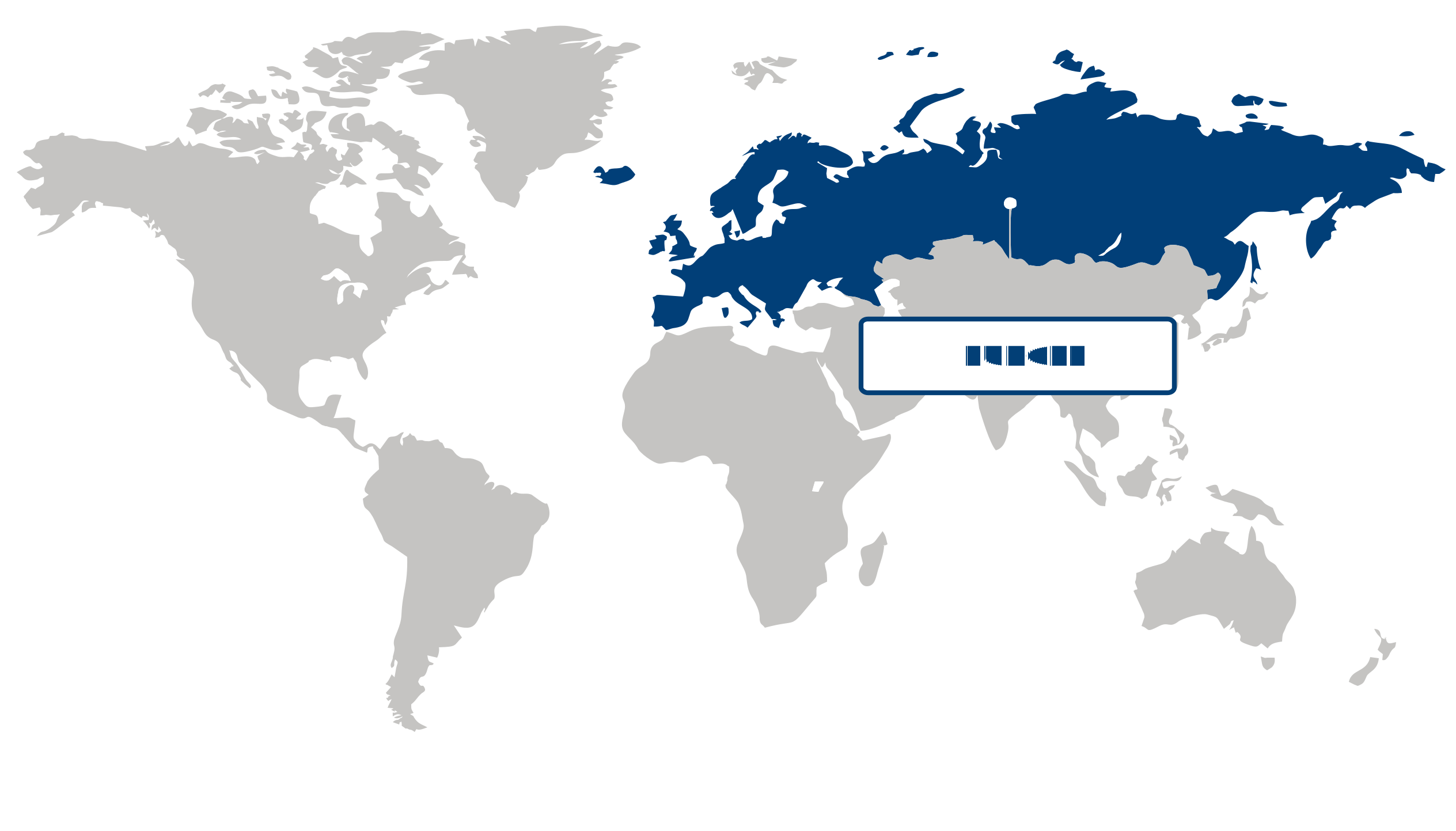
Europe (Largest Region)
Europe accounted for the largest share of the offshore marine emission control systems market in 2026, supported by strong environmental priorities and stringent efforts to reduce emissions from maritime operations. The region's extensive maritime activity and emphasis on cleaner shipping technologies have encouraged investment in systems designed to control pollutants generated by offshore and marine vessels. Regulatory pressure to improve vessel environmental performance is reinforcing demand for emission control technologies, while fleet modernization and sustainability initiatives are encouraging operators to adopt more effective solutions. The continued development of cleaner marine infrastructure and increasing focus on reducing the environmental impact of shipping further strengthen the regional market.
Asia Pacific (Fastest-Growing Region)
Asia Pacific is projected to be the fastest-growing region, driven by expanding maritime trade, increasing vessel activity, and the rapid development of port and offshore infrastructure. Growing environmental concerns and the tightening of marine emission requirements are encouraging vessel operators and offshore asset owners to improve emissions management. The region's expanding shipbuilding and maritime industries also provide a broad application base for emission control technologies. As governments and industry participants place greater emphasis on cleaner marine operations, fleet modernization, and compliance with evolving environmental standards, demand for offshore marine emission control systems is expected to accelerate.
| Parameter | North America | Asia Pacific | Europe | Latin America | MEA |
|---|---|---|---|---|---|
| Innovation Hub i Scale Nascent Developing Advanced | |||||
| Cost-Sensitive Region i Scale Low Medium High | |||||
| Regulatory Environment i Scale Restrictive Neutral Supportive | |||||
| Demand Drivers i Scale Weak Moderate Strong | |||||
| Development Stage i Scale Emerging Developing Developed | |||||
| Adoption Rate i Scale Low Medium High | |||||
| New Entrants / Startups i Scale Sparse Moderate Dense | |||||
| Macro Indicators i Scale Weak Stable Strong |
Key Country Insights
United States 🇺🇸
Offshore Fleet ComplianceThe U.S. offshore marine emission control systems market focuses on reducing emissions from offshore support vessels and energy sector fleets. U.S. operators increasingly invest in integrated exhaust treatment technologies that align with evolving environmental compliance requirements and operational efficiency goals.
Germany 🇩🇪
Advanced Marine TechnologiesGermany develops offshore marine emission control systems through its expertise in marine engineering and environmental technologies. German suppliers emphasize integrated solutions that improve vessel performance while supporting compliance across offshore maritime operations.
Japan 🇯🇵
Offshore Vessel EfficiencyJapan prioritizes compact, efficient emission control technologies for offshore vessels operating in energy and commercial applications. Japanese shipowners seek durable systems that reduce maintenance requirements while supporting compliance with international environmental standards.
South Korea 🇰🇷
Offshore Shipyard IntegrationSouth Korea incorporates offshore marine emission control systems into offshore support vessels and specialized marine platforms. South Korean shipbuilders increasingly integrate advanced emissions technologies during vessel construction to improve operational readiness and regulatory compliance.
France 🇫🇷
Energy Sector SustainabilityFrance supports offshore marine emission control systems through investments linked to offshore energy operations and environmentally responsible vessel management. French operators increasingly evaluate integrated technologies that balance emissions reduction with dependable offshore performance.
Italy 🇮🇹
Offshore Operations UpgradesItaly modernizes offshore support vessels with emission control systems designed for efficient operation in offshore energy and marine service activities. Italian fleet operators prioritize retrofit-friendly technologies that improve environmental performance without disrupting vessel availability.
Segment Leadership and Growth Trends
Offshore Marine Emission Control Systems Market Share (%), by Fuel, 2026
Go beyond the chart, access full insights & data tables
Request Free Sample ReportFuel Segment Analysis: MDO (Largest Segment) vs Hybrid (Fastest-Growing Segment)
The MDO fuel segment dominated the offshore marine emission control systems market in 2026 due to its widespread use across offshore vessels requiring dependable fuel performance while complying with increasingly stringent marine emission standards. Marine diesel oil offers a practical balance between operational efficiency, fuel quality, and compatibility with existing propulsion systems, enabling vessel operators to integrate emission control technologies without extensive modifications. Its established supply infrastructure and broad acceptance across offshore operations have reinforced the segment's leading position in 2026.
The hybrid fuel segment is expected to witness the fastest growth as offshore operators increasingly adopt cleaner and more flexible propulsion solutions to reduce emissions and improve fuel efficiency. Hybrid systems enable vessels to optimize fuel consumption by combining conventional engines with alternative power sources, supporting compliance with evolving environmental regulations. Growing investments in sustainable maritime technologies and the industry's focus on lowering operating costs and carbon emissions are accelerating the adoption of hybrid fuel systems.
Market, Technology Segment Analysis: Scrubber (Largest Segment) vs SCR (Fastest-Growing Segment)
Holding the largest share of the offshore marine emission control systems market, the scrubber technology segment led the market in 2026 owing to its effectiveness in reducing sulfur oxide emissions while allowing continued use of conventional marine fuels. Scrubber systems have gained broad acceptance among offshore vessel operators seeking compliance with international emission requirements without significantly altering existing engine configurations. Their ability to deliver long-term operational flexibility and support cost-efficient regulatory compliance has sustained the segment's dominant position.
The selective catalytic reduction (SCR) technology segment is projected to register the fastest growth as the maritime industry places greater emphasis on reducing nitrogen oxide emissions from offshore vessels. SCR systems provide highly efficient emission control by converting harmful exhaust gases into less harmful compounds, making them increasingly attractive for operators navigating stricter environmental regulations. Rising adoption of advanced exhaust after-treatment technologies and continued modernization of offshore fleets are expected to drive rapid growth in this segment.
| Segment | Sub-Segment | Largest Segment | Fastest Growing |
|---|---|---|---|
| Fuel | MDO, MGO, Hybrid, Others | MDO | Hybrid |
| Market, Technology | SCR, Scrubber, ESP, Others | Scrubber | SCR |
Competitive Landscape and Market Positioning
Major players in the offshore marine emission control systems market:
- Alfa Laval AB (Sweden)
- Wärtsilä Corporation (Finland)
- Valmet Corporation (Finland)
- Fuji Electric Co., Ltd. (Japan)
- Babcock & Wilcox Enterprises, Inc. (United States)
- Tenneco, Inc. (United States)
- Yara International ASA (Norway)
- Langh Tech Oy Ab (Finland)
- Clean Marine AS (Norway)
- CR Ocean Engineering LLC (United States)
The offshore marine emission control systems market is being shaped by tightening environmental expectations that are driving competition toward increasingly sophisticated compliance solutions. Market participants are focusing on technologies that improve emissions management while minimizing operational complexity, vessel downtime, and maintenance demands under challenging offshore conditions. Competitive differentiation is expanding beyond regulatory compliance to include system efficiency, adaptability to varying vessel configurations, and compatibility with evolving marine propulsion strategies. The ability to support long-term environmental performance alongside operational resilience is becoming a defining factor as fleet operators seek solutions that remain effective across changing regulatory and fuel landscapes.
| Company | Market Share | Company Revenue | Revenue CAGR (%) | Product Portfolio | Geographic Presence | Innovation / R&D Focus | Strategic Developments |
|---|---|---|---|---|---|---|---|
| Alfa Laval AB (Sweden) | |||||||
| Wärtsilä Corporation (Finland) | |||||||
| Valmet Corporation (Finland) | |||||||
| Fuji Electric Co. Ltd. (Japan) | |||||||
| Babcock & Wilcox Enterprises Inc. (United States) | |||||||
| Tenneco Inc. (United States) | |||||||
| Yara International ASA (Norway) | |||||||
| Langh Tech Oy Ab (Finland) | |||||||
| Clean Marine AS (Norway) | |||||||
| CR Ocean Engineering LLC (United States) |
Industry Development/News
| Company Name | Date | Key Development |
|---|---|---|
| Wärtsilä | Mar-23 | Wärtsilä secured its first order for "CCS-Ready" scrubber systems, designed to facilitate future carbon capture and storage integration on marine vessels. The solution incorporates modular design, optimized utilities, and particulate matter filter compatibility, enabling shipowners to meet current SOx compliance while future-proofing assets for upcoming decarbonization requirements and transition to full-scale CCS adoption. |
| Valmet | Jan-21 | Valmet introduced a fully automated, chemical-free water treatment technology for marine scrubber and exhaust gas recirculation systems. Utilizing patented cross-flow membrane filtration, the four-module system is designed for both newbuilds and retrofits, offering operational cost savings through reduced chemical and freshwater consumption while ensuring strict compliance with international maritime emission regulations. |
Customize Your Report
Explore examples of how this report can be tailored to different research needs, including custom segments, additional topics or chapters, and related reports. Click a section of the wheel or its numbered marker to explore the available options.
Offshore Marine Emission Control Systems Market — Custom Segments
| Segment | Sub-Segment |
|---|---|
| Vessel Type | Offshore Support Vessels, Drilling & Production Vessels, Offshore Construction Vessels, Service & Supply Vessels |
| Engine Type | Two-Stroke Engines, Four-Stroke Engines, Gas Engines, Dual-Fuel Engines |
| Installation Type | New-Build Installation, Retrofit Installation |
Offshore Marine Emission Control Systems Market — Custom TOC
| Custom Chapter | Custom Details |
|---|---|
| Vessel Compliance Investment Roadmap |
|
| Fleet Retrofit Prioritization |
|
| Shipowner Decarbonization Economics |
|
Need a different cut of the data?
Request Custom ResearchHow big is the offshore marine emission control systems market?
How is the offshore marine emission control systems industry expected to grow over the next 10 years?
How are tightening offshore emission regulations influencing control system adoption?
How is offshore energy expansion broadening demand for emission control technologies?
Why did the scrubber technology segment lead the offshore marine emission control systems market?
Which fuel segment is expected to grow the fastest in the offshore marine emission control systems market?
Why does Europe lead the offshore marine emission control systems market?
How is Asia Pacific expected to drive future market growth?
Who are the major participants shaping the offshore marine emission control systems landscape?
Our Clients
"The team surpassed our expectations with the report depth. The actionable insights provided proved crucial in navigating market challenges."
Tata Motors
"We found the report to be very informative. The expertise and attention to market nuances significantly influenced our business direction."
DENSO Corporation
"The consumer survey findings were quite good. We now have a clearer picture of the customer churning and retention strategy."
HL Mando
Our Research Team & Methodology
Every Fundamental Business Insights report is built by a dedicated vertical research team, validated through a structured primary-and-secondary methodology, and reviewed for accuracy before it reaches you.
Research Team Overview
Prepared by the Automotive & Transportation Research Team
Delivery
Published
Demand
Available
Support
Trust & Compliance
Research Domains
10 coverage areasResearch Intelligence
| Source | Reference |
|---|---|
| International Organization of Motor Vehicle Manufacturers (OICA) | www.oica.net |
| SAE International | www.sae.org |
| International Energy Agency (IEA) | www.iea.org |
| International Transport Forum (ITF) | www.itf-oecd.org |
| International Road Federation (IRF) | www.irf.global |
| International Organization for Standardization (ISO) | www.iso.org |
| United Nations Economic Commission for Europe (UNECE) | unece.org |
| National Highway Traffic Safety Administration (NHTSA) | www.nhtsa.gov |
| U.S. Department of Transportation (USDOT) | www.transportation.gov |
| European Automobile Manufacturers' Association (ACEA) | www.acea.auto |
| Society of Indian Automobile Manufacturers (SIAM) | www.siam.in |
| International Air Transport Association (IATA) | www.iata.org |
| International Civil Aviation Organization (ICAO) | www.icao.int |
| International Maritime Organization (IMO) | www.imo.org |
| International Union of Railways (UIC) | uic.org |
| American Public Transportation Association (APTA) | www.apta.com |
| International Federation of Robotics (IFR) | ifr.org |
| CharIN | www.charin.global |
| World Shipping Council | www.worldshipping.org |
| International Federation of Freight Forwarders Associations (FIATA) | fiata.org |
Research Workflow & Quality Assurance
Data Collection
Verified information gathered through primary and secondary research.
Data Triangulation
Cross-validation using multiple independent data sources.
Forecast Modelling
Market estimates developed using historical trends and analytical models.
Analyst Validation
Findings reviewed by domain experts for accuracy and consistency.
Editorial & Quality Review
Final editorial, quality, and compliance checks before publication.
Final Publication
Released after successful completion of the internal review process.
Report Coverage
📊 Market Assessment
- Market Size & Forecast
- Market Segmentation
- Regional Analysis
- Growth Drivers & Challenges
- Market Dynamics
🏢 Competitive Intelligence
- Competitive Landscape
- Company Profiles
- Competitive Benchmarking
- Mergers & Acquisitions
- Market Share Analysis or Key Company Strategies
🔍 Strategic Analysis
- Value Chain Analysis
- Porter's Five Forces
- PESTLE Analysis
- Pricing Trends
- Supply-Demand Analysis
🚀 Future Outlook
- Technology Landscape
- Regulatory Landscape
- Investment & Funding Landscape
- Emerging Opportunities
- Future Market Outlook
Have a question about this report or need a custom scope?
Request Customization