Offshore Marine Selective Catalytic Reduction Systems Market Size & Growth Forecast 2027–2036, By Segments (Application), Regional Demand Trends (North America, Asia Pacific, Europe), Key Country Insights (U.S., Japan, South Korea, Germany, France, Italy), and Competitive Landscape
Jump to Content
Market Size and Growth Outlook
Offshore Marine Selective Catalytic Reduction Systems Market size was worth USD 328.29 Million in 2026 and is poised to grow at 7% CAGR between 2027 and 2036, exceeding USD 645.8 Million by 2036. The industry revenue for 2027 is assessed at USD 347.79 Million.
Get more details on this report
Request Free Sample ReportOffshore Marine Selective Catalytic Reduction Systems Market Intelligence Snapshot
Regional Market Dynamics
- Europe led in 2026, supported by stringent environmental regulations, established maritime infrastructure, and strong demand for technologies that reduce marine nitrogen oxide emissions.
- Expanding maritime trade, offshore activities, fleet development, and stricter emissions standards are creating favorable conditions for emission-control technology deployment.
Segment Momentum
- AHTS accounted for the largest share of 39.42% in 2026, driven by the need to meet stringent marine emission regulations while maintaining reliable propulsion performance in demanding offshore operations.
- Continued offshore exploration, fleet modernization, and increasing compliance with environmental regulations are accelerating SCR system adoption on AHTS vessels to reduce nitrogen oxide emissions without compromising operational performance.
Market Expansion Drivers
- Expanding seaborne trade driving emissions control systems in offshore vessels
- Environmental compliance requirements accelerating SCR adoption in offshore operations
- Rising offshore energy exploration boosting demand for emission reduction technologies
Leading Market Participants
- Top companies in the offshore marine selective catalytic reduction systems market include Wärtsilä Corporation (Finland), MAN Energy Solutions SE (Germany), Mitsubishi Heavy Industries, Ltd. (Japan), Caterpillar Inc. (USA), Hitachi Zosen Corporation (Japan), Johnson Matthey plc (United Kingdom), Yara International ASA (Norway), Ecospray Technologies S.r.l. (Italy), CECO Environmental Corp. (USA), Hug Engineering AG (Switzerland)
Global Market Forecast Snapshot
Market Outlook
- 2026 Market Size: USD 328.29 Million
- 2027 Estimated Market Size: USD 347.79 Million
- Projected Market Size: USD 645.8 Million by 2036
- Growth Forecast: 7% CAGR (2027-2036)
Regional and Segment Outlook
- Leading Regional Market: Europe
- High-Growth Regional Hub: Asia Pacific
- Core Revenue Segment: AHTS (Application)
- Emerging Opportunity Segment: AHTS (Application)
Market Growth Drivers and Industry Trends
Expanding seaborne trade driving emissions control systems in offshore vessels
The steady increase in global maritime transportation is driving higher utilization of offshore support vessels, cargo ships, and specialized marine fleets, creating greater demand for advanced emissions control technologies. The offshore marine selective catalytic reduction systems market growth is driven by expanding seaborne trade as vessel operators seek effective solutions to reduce nitrogen oxide emissions while maintaining efficient engine performance during extended operations. Increasing fleet activity also encourages shipowners to incorporate emission control systems into both new vessel construction and retrofit projects to align with evolving operational requirements.
Environmental compliance requirements accelerating SCR adoption in offshore operations
Stringent environmental regulations governing marine emissions are compelling offshore operators to adopt technologies capable of meeting increasingly rigorous air pollution standards. As regulatory oversight expands, the offshore marine selective catalytic reduction systems market benefits from rising installation of selective catalytic reduction systems that enable vessels to achieve compliance without compromising operational efficiency. Compliance-driven investments are particularly significant for offshore fleets operating across multiple jurisdictions where consistent emission performance is necessary to satisfy diverse regulatory frameworks.
Rising offshore energy exploration boosting demand for emission reduction technologies
Growing exploration and production activities in offshore oil, gas, and renewable energy projects are increasing the deployment of marine vessels that operate continuously in demanding environments. This trend will propel the offshore marine selective catalytic reduction systems market growth by creating stronger demand for emission reduction technologies that support cleaner engine operation across drilling, construction, supply, and maintenance vessels. Offshore operators are increasingly integrating advanced exhaust treatment systems into marine assets to improve environmental performance while maintaining reliable operations under intensive duty cycles.
| Growth Driver | Impact on CAGR | Regulatory Influence | Geographic Relevance | Adoption Rate | Impact Timeline |
|---|---|---|---|---|---|
| Expanding seaborne trade driving emissions control systems in offshore vessels | 2% | High | Asia Pacific, Europe | High | Near Term |
| Environmental compliance requirements accelerating SCR adoption in offshore operations | 1.8% | High | Europe, North America | High | Mid Term |
| Rising offshore energy exploration boosting demand for emission reduction technologies | 1.5% | Moderate | Middle East & Africa, Asia Pacific | Medium | Mid Term |
Unlock insights tailored to your business with our bespoke market research solutions.
Click to get your customized report now.
Regional Demand Dynamics
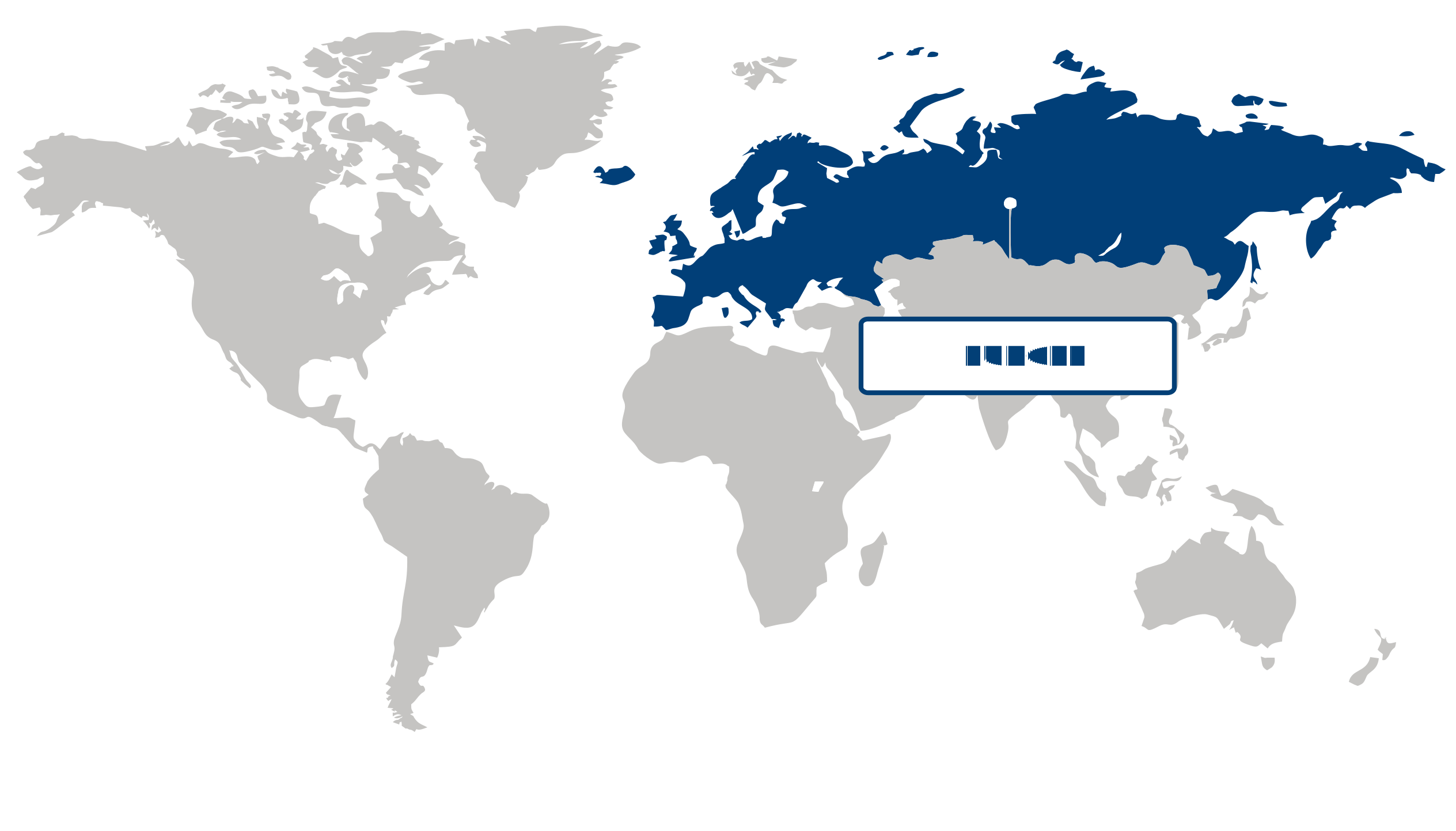
Europe (Largest Region)
Europe led the offshore marine selective catalytic reduction systems market in 2026, supported by stringent environmental regulations, established maritime infrastructure, and strong emphasis on reducing emissions from marine operations. The region’s regulatory focus on controlling nitrogen oxide emissions is encouraging vessel operators and maritime stakeholders to adopt advanced exhaust treatment technologies. Established shipping activity, environmental compliance requirements, and ongoing modernization of marine fleets are contributing to sustained demand for selective catalytic reduction systems in offshore applications.
Asia Pacific (Fastest-Growing Region)
Asia Pacific is expected to experience the fastest growth, driven by expanding maritime trade, increasing offshore activities, and the continued development of marine infrastructure. Growing environmental awareness and the adoption of stricter emissions standards are encouraging shipowners and operators to invest in emission-control technologies. The region’s expanding fleet base, rising offshore energy activity, and increasing focus on cleaner marine operations are expected to create favorable conditions for the deployment of selective catalytic reduction systems.
| Parameter | North America | Asia Pacific | Europe | Latin America | MEA |
|---|---|---|---|---|---|
| Innovation HubiScaleNascentDeveloping Advanced | |||||
| Cost-Sensitive RegioniScaleLowMedium High | |||||
| Regulatory EnvironmentiScaleRestrictiveNeutral Supportive | |||||
| Demand DriversiScaleWeakModerate Strong | |||||
| Development StageiScaleEmergingDeveloping Developed | |||||
| Adoption RateiScaleLowMedium High | |||||
| New Entrants / StartupsiScaleSparseModerate Dense | |||||
| Macro IndicatorsiScaleWeakStable Strong |
Key Country Insights
United States 🇺🇸
Emissions Compliance UpgradesThe U.S. offshore marine selective catalytic reduction systems market centers on vessel retrofits and new installations supporting stricter emissions requirements. U.S. operators prioritize durable systems that maintain engine efficiency while reducing nitrogen oxide emissions across offshore fleets.
Germany 🇩🇪
Marine Engineering ExpertiseGermany leverages its marine engineering capabilities to integrate advanced selective catalytic reduction technologies into offshore vessels. German manufacturers emphasize efficient catalyst performance, digital monitoring, and dependable operation under demanding maritime conditions.
Japan 🇯🇵
Efficient Vessel IntegrationJapan focuses on compact selective catalytic reduction systems suited for commercial and offshore marine applications. Japanese shipbuilders increasingly integrate emissions control technologies during vessel design to improve operational compliance and lifecycle efficiency.
South Korea 🇰🇷
Shipyard Technology AdoptionSouth Korea incorporates selective catalytic reduction systems into offshore vessels through its advanced shipbuilding sector. South Korean shipyards prioritize scalable emissions solutions that align with evolving environmental standards and customer performance expectations.
France 🇫🇷
Sustainable Offshore OperationsFrance supports offshore marine selective catalytic reduction adoption through environmental initiatives affecting commercial and support vessels. French operators seek emissions technologies that balance regulatory compliance with dependable offshore operational performance.
Italy 🇮🇹
Retrofit Equipment DemandItaly experiences steady demand for selective catalytic reduction systems in retrofit projects across commercial and offshore marine fleets. Italian marine service providers focus on installation flexibility and maintaining vessel availability during emissions compliance upgrades.
Offshore Marine Selective Catalytic Reduction Systems Market Share (%), by Application, 2026
Go beyond the chart, access full insights & data tables
Request Free Sample ReportApplication Segment Analysis: AHTS (Largest & Fastest-Growing Segment)
The AHTS segment dominated the offshore marine selective catalytic reduction systems market, accounting for a 39.42% share in 2026 and is also expected to remain the fastest-growing segment. Anchor handling tug supply vessels operate under demanding offshore conditions that require reliable propulsion systems while meeting increasingly stringent marine emission requirements. The adoption of selective catalytic reduction systems enables these vessels to significantly reduce nitrogen oxide emissions without compromising operational performance. Continued offshore exploration activities, fleet modernization programs, and growing compliance with environmental regulations are expected to sustain strong demand for SCR systems in AHTS vessels over the coming years.
| Segment | Sub-Segment | Largest Segment | Fastest Growing |
|---|---|---|---|
| Application | AHTS, PSV, FSV, MPSV, Others | AHTS | AHTS |
Competitive Landscape and Market Positioning
Top players in the offshore marine selective catalytic reduction systems market:
- Wärtsilä Corporation (Finland)
- MAN Energy Solutions SE (Germany)
- Mitsubishi Heavy Industries Ltd. (Japan)
- Caterpillar, Inc. (USA)
- Hitachi Zosen Corporation (Japan)
- Johnson Matthey plc (United Kingdom)
- Yara International ASA (Norway)
- Ecospray Technologies S.r.l. (Italy)
- CECO Environmental Corp. (USA)
- Hug Engineering AG (Switzerland)
Evolving environmental compliance requirements across global shipping are changing the basis of competition in the offshore marine selective catalytic reduction systems market, where engineering expertise and operational adaptability have become more influential than conventional equipment supply alone. Suppliers are refining catalyst efficiency, system compactness, and integration flexibility to accommodate space-constrained vessel designs while minimizing operational disruption during installation and service. Competitive dynamics are also increasingly influenced by the ability to support diverse engine configurations, simplify maintenance under demanding marine conditions, and deliver solutions that maintain emission performance throughout extended operating cycles, encouraging continuous innovation in both system architecture and lifecycle support capabilities.
| Company | Market Share | Company Revenue | Revenue CAGR (%) | Product Portfolio | Geographic Presence | Innovation / R&D Focus | Strategic Developments |
|---|---|---|---|---|---|---|---|
| Wärtsilä Corporation (Finland) | |||||||
| MAN Energy Solutions SE (Germany) | |||||||
| Mitsubishi Heavy Industries Ltd. (Japan) | |||||||
| Caterpillar Inc. (USA) | |||||||
| Hitachi Zosen Corporation (Japan) | |||||||
| Johnson Matthey plc (United Kingdom) | |||||||
| Yara International ASA (Norway) | |||||||
| Ecospray Technologies S.r.l. (Italy) | |||||||
| CECO Environmental Corp. (USA) | |||||||
| Hug Engineering AG (Switzerland) |
Industry Development/News
| Company Name | Date | Key Development |
|---|---|---|
| Acta Marine | Jun-23 | Acta Marine successfully repowered the vessel Offshore Waddenzee with Volvo D13 Tier III engines equipped with a selective catalytic reduction system to curb nitrogen oxide emissions. Deployed on a Dutch wind farm for crew and cargo transfers, this technical upgrade achieves a 73% reduction in NOx emissions while simultaneously supporting broader corporate targets for reducing project carbon dioxide emissions. |
| Trakindo | Mar-23 | Caterpillar dealer Trakindo received an order for 100 CAT C32 engines featuring high power-to-weight ratios and producing between 600 hp and 1,800 hp at 2,300 rpm. Integrated with a selective catalytic reduction system, these engines achieve IMO III compliance, enabling the company to leverage partner relationships, fulfill order requirements, and strengthen brand value within the offshore marine sector. |
Customize Your Report
Explore examples of how this report can be tailored to different research needs, including custom segments, additional topics or chapters, and related reports. Click a section of the wheel or its numbered marker to explore the available options.
Offshore Marine Selective Catalytic Reduction Systems Market — Custom Segments
| Segment | Sub-Segment |
|---|---|
| Engine Type | Four-Stroke Diesel Engines, Two-Stroke Diesel Engines, Dual-Fuel Engines |
| Vessel Size | Small Offshore Vessels, Medium Offshore Vessels, Large Offshore Vessels |
| Installation Type | Newbuild Installations, Retrofit Installations |
Offshore Marine Selective Catalytic Reduction Systems Market — Custom TOC
| Custom Chapter | Chapter Details |
|---|---|
| Vessel Retrofit Opportunity Assessment |
|
| Maritime Emissions Compliance Roadmap |
|
| SCR Lifecycle Service Business Models |
|
Need a different cut of the data?
Request Custom ResearchFrequently Asked Questions
What is the current size of the offshore marine selective catalytic reduction systems market?
How much is the offshore marine selective catalytic reduction systems industry expected to grow by 2036?
What factors are accelerating adoption of selective catalytic reduction systems in offshore marine vessels?
How are environmental regulations and offshore energy activities shaping the offshore marine selective catalytic reduction systems market?
Which application segment leads the offshore marine selective catalytic reduction systems market?
Why is the AHTS segment also the fastest-growing application?
Why does Europe lead the offshore marine selective catalytic reduction systems market?
How is Asia Pacific driving future growth in offshore marine selective catalytic reduction systems?
Who are the leading players in the offshore marine selective catalytic reduction systems landscape?
Our Clients
"The team at Fundamental Business Insights & Consulting demonstrated a commitment to excellence, not only in the quality of the report but also in their client-centric approach."
FANUC
"The level of detail in the market segmentation provided were particularly noteworthy. The detailed country-level insights were also very helpful."
B&R Industrial Automation GmbH
"The consultant took the time to understand our specific business objectives, ensuring that the reports were tailored to address our unique challenges and opportunities."
KUKA SE & Co. KGaA
Our Research Team & Methodology
Every Fundamental Business Insights report is built by a dedicated vertical research team, validated through a structured primary-and-secondary methodology, and reviewed for accuracy before it reaches you.
This report was prepared by the Industrial Automation & Equipment Research Team at Fundamental Business Insights, a dedicated research group specializing in industrial automation technologies, manufacturing systems, and industrial equipment markets. Our analysts continuously monitor advancements in factory automation, robotics, industrial IoT (IIoT), smart manufacturing, process optimization, equipment modernization, supply chain developments, industrial safety standards, and evolving digital transformation initiatives across manufacturing industries to deliver timely and reliable market intelligence. The research is developed using a structured methodology that combines primary discussions with equipment manufacturers, automation solution providers, system integrators, industrial end users, distributors, and industry experts, along with company annual reports, regulatory publications, government industrial statistics, industry associations, technical standards, engineering publications, and other authoritative secondary sources. Market estimates are validated through multiple research techniques, including top-down and bottom-up analysis, before undergoing an internal quality review to ensure accuracy, consistency, and methodological integrity prior to publication.
Delivery
Published
Available
Support
- Market Size & Forecast
- Market Segmentation
- Regional Analysis
- Growth Drivers & Challenges
- Market Dynamics
- Competitive Landscape
- Company Profiles
- Competitive Benchmarking
- Mergers & Acquisitions
- Market Share Analysis or Key Company Strategies
- Value Chain Analysis
- Porter's Five Forces
- PESTLE Analysis
- Pricing Trends
- Supply-Demand Analysis
- Technology Landscape
- Regulatory Landscape
- Investment & Funding Landscape
- Emerging Opportunities
- Future Market Outlook