



Offshore Wind Cable Market Size & Growth Forecast 2027–2036, By Segments (Component, Conductor Material), Regional Demand Trends (North America, Asia Pacific, Europe), Key Country Insights (U.S., Japan, South Korea, Germany, France, Italy), and Competitive Landscape
Market Size and Growth Outlook
Offshore Wind Cable Market size was more than USD 5.21 Billion in 2026 and is set to grow at 28.76% CAGR between 2027 and 2036, exceeding USD 65.26 Billion by 2036. The industry revenue for 2027 is estimated at USD 6.53 Billion.
Base Year Value (2026)
USD 5.21 Billion
CAGR (2027-2036)
28.76%
Forecast Year Value (2036)
USD 65.26 Billion

Historical Data Period
2022-2026

Largest Region
Europe

Forecast Period
2027-2036
Offshore Wind Cable Market Intelligence Snapshot:
-
Regional Market Dynamics:
- Europe led in 2025 due to its mature offshore wind industry, established marine infrastructure, strong renewable policies, and extensive offshore project development.
- Asia Pacific is growing fastest as offshore wind pipelines expand, coastal renewable investments rise, and transmission networks and local cable capabilities develop.
-
Segment Momentum:
- Inter-array cables held 57.56% of the market in 2025, supported by their essential role in connecting offshore wind turbines and enabling efficient power transmission within expanding offshore wind farms.
- Aluminum is expected to record the fastest growth as developers increasingly prioritize lighter, cost-efficient cable solutions supported by ongoing improvements in aluminum conductor technology.
-
Market Expansion Drivers:
- Rapid expansion of offshore wind capacity driving large-scale subsea cable deployment
- Rising global electricity demand accelerating offshore renewable energy investments
- Government offshore wind targets and subsidies supporting long-term project pipelines
-
Leading Market Participants:
Leading players in the offshore wind cable market include Prysmian Group (Italy), Nexans S.A. (France), NKT A/S (Denmark), LS Cable & System Ltd. (South Korea), Sumitomo Electric Industries, Ltd. (Japan), Hengtong Group Co., Ltd. (China), Furukawa Electric Co., Ltd. (Japan), Fujikura Ltd. (Japan), KEI Industries Limited (India)
Global Market Forecast Snapshot:
-
Market Outlook:
- 2026 Market Size: USD 5.21 Billion
- 2027 Estimated Market Size: USD 6.53 Billion
- Projected Market Size: USD 65.26 Billion by 2036
- Growth Forecasts: 28.76% CAGR (2027-2036)
-
Regional and Segment Outlook:
- Leading Regional Market: Europe
- High-Growth Regional Hub: Asia Pacific
- Core Revenue Segment: Inter-array Cables (Component) | Copper (Conductor Material)
- Emerging Opportunity Segment: Inter-array Cables (Component) | Aluminum (Conductor Material)
Market Growth Drivers and Industry Trends
Rapid expansion of offshore wind capacity driving large-scale subsea cable deployment
The increasing installation of offshore wind farms requires extensive subsea transmission infrastructure to connect turbines, offshore substations, and onshore power networks. The offshore wind cable market will drive growth as every new project depends on reliable inter-array and export cable systems capable of transmitting electricity efficiently in challenging marine environments. Project developers also prioritize cable solutions engineered for long operational lifecycles, mechanical durability, and dependable performance under continuous exposure to offshore conditions.
Rising global electricity demand accelerating offshore renewable energy investments
Growing electricity consumption across residential, commercial, and industrial sectors is encouraging governments and utilities to diversify power generation through renewable energy sources. This transition will propel the offshore wind cable market growth because expanding offshore generation capacity requires robust transmission networks that can deliver electricity from remote marine locations to national grids. Grid modernization efforts and increasing emphasis on dependable renewable power integration further reinforce demand for advanced subsea cable infrastructure supporting large-scale offshore developments.
Government offshore wind targets and subsidies supporting long-term project pipelines
Supportive public policies, financial incentives, and long-term renewable energy strategies are encouraging developers to advance offshore wind installations with greater investment confidence. The offshore wind cable market benefits from these initiatives because stable project pipelines create sustained demand for specialized cable systems throughout planning, construction, and grid connection activities. Regulatory frameworks promoting clean energy deployment also encourage infrastructure expansion, requiring dependable subsea transmission solutions that comply with technical and environmental standards across offshore projects.
| Growth Driver Assessment Framework | |||||
| Growth Driver | Impact On CAGR | Regulatory Influence | Geographic Relevance | Adoption Rate | Impact Timeline |
|---|---|---|---|---|---|
| Rapid expansion of offshore wind capacity driving large-scale subsea cable deployment | 3.2% | High | Europe, Asia Pacific | High | Near Term |
| Rising global electricity demand accelerating offshore renewable energy investments | 3% | High | Asia Pacific, Europe | High | Mid Term |
| Government offshore wind targets and subsidies supporting long-term project pipelines | 2.8% | High | Europe, North America | High | Mid Term |
Unlock insights tailored to your business with our bespoke market research solutions - Click to get your customized report now!
Regional Demand Dynamics
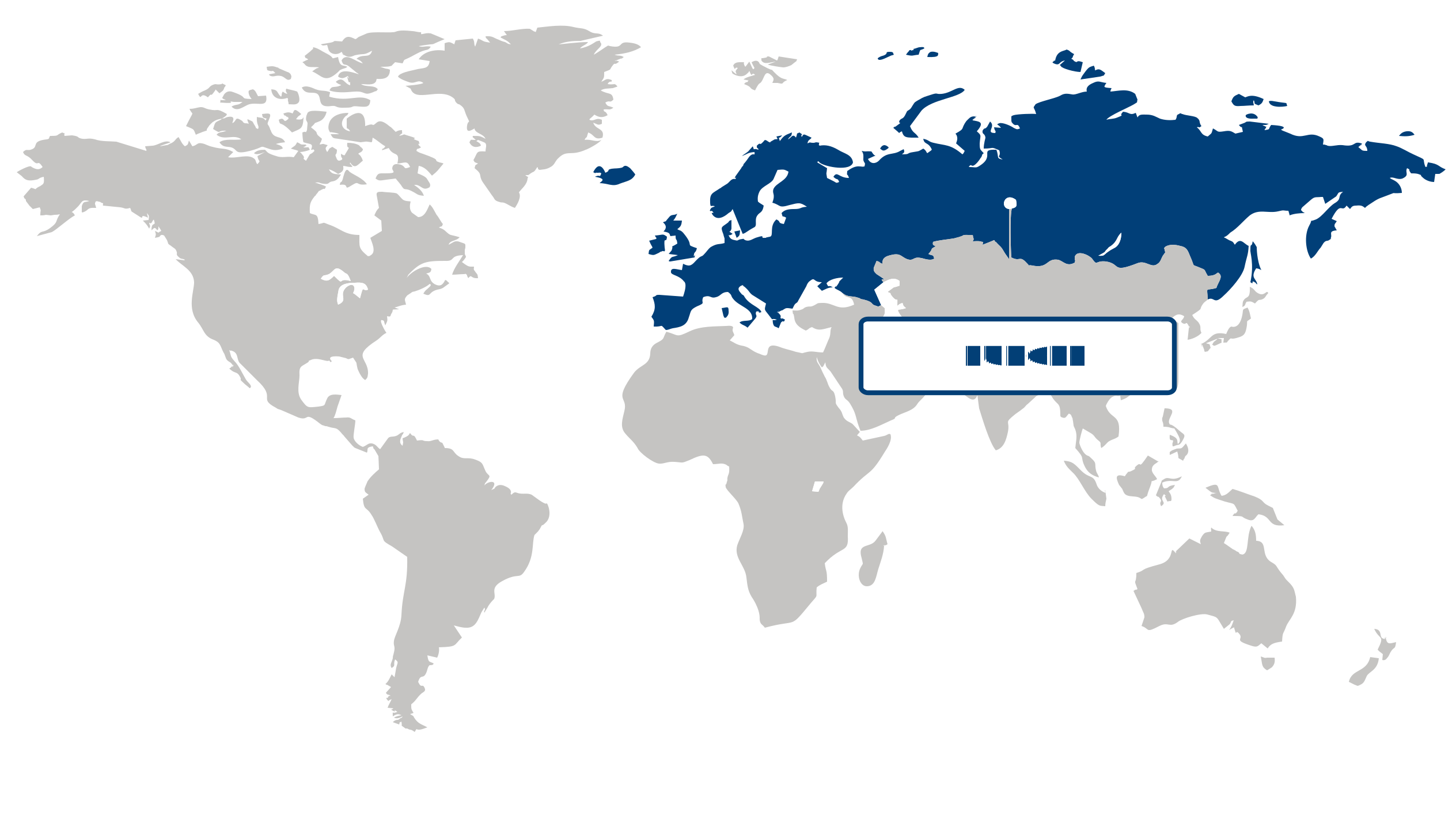
Largest Region
Europe
Largest Market Share in 2026
Europe (Largest Region) vs Asia Pacific (Fastest-Growing Region)
Europe held the largest position in the offshore wind cable market in 2026, supported by its mature offshore wind industry, established marine infrastructure, and strong policy commitment toward expanding renewable power generation. Extensive development of offshore wind farms across the north sea and other coastal areas has created sustained demand for subsea export and inter-array cables, while grid modernization and cross-border electricity transmission initiatives are strengthening the need for reliable offshore power connections. The region’s accumulated expertise in offshore engineering, permitting, and marine construction further supports the deployment of increasingly complex wind projects and reinforces Europe’s established market position.
Asia Pacific is emerging as the fastest-growing regional market as countries accelerate offshore wind development to diversify energy systems, reduce dependence on fossil fuels, and meet decarbonization objectives. Rising investments in coastal renewable energy infrastructure, expanding offshore wind project pipelines, and improvements in regional transmission networks are creating new opportunities for offshore cable deployment. The development of large-scale projects in countries with extensive coastlines is also encouraging investment in local cable manufacturing, installation capabilities, and supporting marine infrastructure, strengthening the region’s growth trajectory.
No card data available for this language/report.
Segment Leadership and Growth Trends
Component Segment Analysis: Inter-array Cables (Largest & Fastest-Growing Segment)
The offshore wind cable market was led by the inter-array cables segment, which accounted for 57.56% in 2026 while also emerging as the fastest-growing segment. Inter-array cables play a critical role in connecting individual wind turbines within offshore wind farms, enabling efficient transmission of generated electricity to offshore substations. The continued development of larger offshore wind projects, increasing turbine installations, and growing investments in renewable energy infrastructure are driving sustained demand for these cables. Advancements in cable reliability and installation technologies further reinforce the segment’s strong market position.
Conductor Material Segment Analysis: Copper (Largest Segment) vs Aluminum (Fastest-Growing Segment)
The copper conductor material segment accounted for 92.12% in 2026, supported by its superior electrical conductivity, mechanical strength, and long-term reliability in demanding offshore operating environments. Copper-based cables are widely preferred for their ability to minimize transmission losses while maintaining high performance under harsh marine conditions. Their established use across offshore wind installations has reinforced the segment’s dominant position.
In the offshore wind cable market, the aluminum conductor material segment is expected to witness the fastest growth due to increasing industry focus on reducing cable weight and optimizing overall project costs. Ongoing improvements in aluminum conductor technology, combined with expanding offshore wind deployments and greater emphasis on cost-efficient infrastructure development, are expected to support rising adoption across future installations.
| Report Segmentation | |||
| Segment | Sub-Segment | Largest Segment | Fastest Growing Segment |
|---|---|---|---|
| Component | Inter-array Cables, Export Cables | Inter-array Cables | Inter-array Cables |
| Conductor Material | Aluminum, Copper | Copper | Aluminum |
 Read our Research Approach
Competitive Landscape and Market Positioning
Top players in the offshore wind cable market:
- Prysmian Group (Italy)
- Nexans S.A. (France)
- NKT A/S (Denmark)
- LS Cable & System Ltd. (South Korea)
- Sumitomo Electric Industries Ltd. (Japan)
- Hengtong Group Co., Ltd. (China)
- FurUKawa Electric Co., Ltd. (Japan)
- Fujikura Ltd. (Japan)
- KEI Industries Limited (India)
Rising project complexity is redefining competition in the offshore wind cable market, where technical capability and long-term execution capacity increasingly outweigh conventional manufacturing advantages. Suppliers are strengthening their positions by developing advanced cable solutions that support larger installations, demanding marine environments, and evolving grid connection requirements while expanding engineering and installation expertise alongside production capabilities. Competition is also becoming more closely linked to supply chain resilience and project delivery reliability, as developers place greater importance on partners capable of supporting complex deployment schedules and long operational lifecycles across expanding offshore energy networks.
Industry Development/News
| Company Name | Date | Key Development |
|---|---|---|
| Boskalis | May-26 | Boskalis announced the procurement of a high-capacity cable laying vessel, with delivery expected in 2029. This strategic fleet investment is designed to enhance the company’s offshore installation capabilities, ensuring it remains positioned to meet the growing global demand for complex subsea cable projects. |
| DeepOcean | Apr-26 | DeepOcean secured the TPC-II contract for inter-array cable installation in Taiwan. By utilizing its upgraded vessel, the Orient Adventurer, the company is executing a strategic expansion of its subsea service capabilities to better support regional offshore renewable energy development in the Asia-Pacific market. |
| LD TravOcean | Apr-26 | LD TravOcean, a subsidiary of the Louis Dreyfus Armateurs Group, acquired the DP2 multipurpose support vessel, Siddis Mariner. Renamed TVO Mariner, this addition expands the company’s specialized subsea service fleet, enabling greater operational capacity and integration for offshore wind cable installation and maintenance activities. |
| NKT | Jul-25 | NKT formed a partnership with Helix to integrate the T3600 subsea trencher, currently recognized for its high power capacity. Operations are scheduled to commence in 2027, aimed at enhancing deep-water cable installation capabilities and improving the technical delivery of future complex subsea energy projects. |
| Prysmian Group | Mar-25 | Prysmian Group launched a 245 kV cable system designed specifically for floating offshore wind applications. The innovation emphasizes enhanced mechanical performance and durability to withstand harsh marine environments, aligning with the company’s strategic objective to accelerate floating wind adoption and strengthen energy transition infrastructure across European markets. |
| Prysmian Group | Oct-24 | Prysmian Group is actively evaluating the development of a new offshore wind cable manufacturing plant at Brayton Point. This potential investment underscores a strategic effort to enhance regional production capacity and secure a stronger competitive advantage within the North American offshore wind infrastructure market. |
| Nexans | Sep-24 | Nexans allocated USD 106 million toward the expansion and modernization of its European cable manufacturing and processing facilities. This capital investment is a core component of the company's long-term electrification strategy, intended to bolster production capacity and support the increasing demand for renewable energy infrastructure. |
| NKT | Aug-23 | NKT entered a formal agreement with SSEN Transmission to produce and install power cable systems for two HVDC transmission links in Scotland. The project involves connecting Spittal to Peterhead and the Western Isles to the mainland, significantly contributing to the expansion of regional grid infrastructure. |
| Prysmian Group | Jul-23 | Prysmian Group secured a major contract from Ørsted Wind Power for the Hornsea 3 offshore wind farm in the UK. The scope includes the design, manufacture, and supply of inter-array submarine cables, covering over 50% of the project's requirements and reinforcing the company's market-leading position in large-scale offshore wind supply chains. |
| Seaway7 | Feb-23 | Seaway7 secured a contract for the installation of offshore cables for the Hai Long Offshore Wind Power project in Taiwan. The agreement strengthens the company's operational footprint in the Asia-Pacific region and reinforces its competitive position within the high-growth offshore wind energy sector. |
Why Choose Us
Specialized Expertise: Our team comprises industry experts with a deep understanding of your market segment. We bring specialized knowledge and experience that ensures our research and consulting services are tailored to your unique needs.
Customized Solutions: We understand that every client is different. That's why we offer customized research and consulting solutions designed specifically to address your challenges and capitalize on opportunities within your industry.
Proven Results: With a track record of successful projects and satisfied clients, we have demonstrated our ability to deliver tangible results. Our case studies and testimonials speak to our effectiveness in helping clients achieve their goals.
Cutting-Edge Methodologies: We leverage the latest methodologies and technologies to gather insights and drive informed decision-making. Our innovative approach ensures that you stay ahead of the curve and gain a competitive edge in your market.
Client-Centric Approach: Your satisfaction is our top priority. We prioritize open communication, responsiveness, and transparency to ensure that we not only meet but exceed your expectations at every stage of the engagement.
Continuous Innovation: We are committed to continuous improvement and staying at the forefront of our industry. Through ongoing learning, professional development, and investment in new technologies, we ensure that our services are always evolving to meet your evolving needs.
Value for Money: Our competitive pricing and flexible engagement models ensure that you get maximum value for your investment. We are committed to delivering high-quality results that help you achieve a strong return on your investment.
Select Licence Type

