



Oleoresin Market Size & Growth Forecast 2027–2036, By Segments (Application, Product), Regional Demand Trends (North America, Asia Pacific, Europe), Key Country Insights (U.S., Japan, South Korea, Germany, France, Italy), and Competitive Landscape
Market Size and Growth Outlook
Oleoresin Market size was valued at USD 2.2 billion in 2026 and is projected to grow at a 5.13% CAGR from 2027 to 2036, surpassing USD 3.63 billion by 2036. The industry revenue for 2027 is estimated at USD 2.3 billion.
Base Year Value (2026)
USD 2.2 billion
CAGR (2027-2036)
5.13%
Forecast Year Value (2036)
USD 3.63 billion

Historical Data Period
2022-2026

Largest Region
Europe

Forecast Period
2027-2036
Oleoresin Market Intelligence Snapshot:
-
Regional Market Dynamics:
- Europe held a 31.97% market share in 2026, supported by mature food processing industries, established ingredient supply chains, and strong demand for natural flavor and color solutions.
- Asia Pacific is expected to grow at a 7.91% CAGR as food manufacturing expands and producers increasingly adopt concentrated spice extracts to improve processing efficiency and product consistency.
-
Segment Momentum:
- The Food segment accounted for 30.24% of the market in 2026, driven by widespread use in processed foods, sauces, seasonings, and convenience products requiring consistent flavor, color, and formulation control.
- Turmeric is expanding fastest as demand rises for natural ingredients that combine color functionality with health-oriented positioning, strengthening its use in botanical and clean-label product formulations.
-
Market Expansion Drivers:
- Rising demand for clean-label natural flavoring agents in food and beverage processing industries.
- Expanding applications in pharmaceuticals and nutraceuticals driving standardized natural extract adoption.
- Advancements in solvent-free and supercritical extraction technologies improving oleoresin yield and purity.
-
Leading Market Participants:
Top players in the oleoresin market include Givaudan SA (Switzerland), Kalsec Inc. (United States), Synthite Industries Ltd. (India), Kancor Ingredients Limited (India), Plant Lipids Private Limited (India), AVT Natural Products Limited (India), Chenguang Biotech Group Co., Ltd. (China), Akay Natural Ingredients Private Limited (India), Universal Oleoresins (India), Paprika Oleo's India Limited (India).
Global Market Forecast Snapshot:
-
Market Outlook:
- 2026 Market Size: USD 2.2 billion
- 2027 Estimated Market Size: USD 2.3 billion.
- Projected Market Size: USD 3.63 billion by 2036
- Growth Forecasts: 5.13% CAGR (2027-2036)
-
Regional and Segment Outlook:
- Leading Regional Market: Europe
- High-Growth Regional Hub: Asia Pacific
- Core Revenue Segment: Food (Application) | Black Pepper (Product)
- Emerging Opportunity Segment: Nutraceutical (Application) | Turmeric (Product)
Market Growth Drivers and Industry Trends
Rising demand for clean-label natural flavoring agents in food and beverage processing industries
The shift toward natural and recognizable ingredients is creating favorable conditions for the oleoresin market, particularly as food and beverage manufacturers seek alternatives to synthetic flavoring agents. Oleoresins provide concentrated flavor and aroma characteristics while allowing processors to incorporate botanical ingredients into a variety of formulations with greater consistency. Growing consumer interest in clean-label products is encouraging manufacturers to reassess ingredient selections across sauces, snacks, seasonings, beverages, and prepared foods, where natural flavor profiles can support product positioning and formulation requirements.
Expanding applications in pharmaceuticals and nutraceuticals driving standardized natural extract adoption
Increasing use of botanical ingredients in health-oriented formulations is broadening the oleoresin market beyond conventional food applications. Oleoresins can provide concentrated extracts containing characteristic compounds from spices and other plant sources, making them relevant to pharmaceutical, nutraceutical, and functional product development. The preference for standardized natural extracts is also encouraging manufacturers to seek ingredients with more consistent composition and performance, while growing interest in plant-derived formulations supports incorporation of oleoresins into capsules, functional supplements, and other specialized preparations.
Advancements in solvent-free and supercritical extraction technologies improving oleoresin yield and purity
Technological progress in extraction is improving the efficiency and quality of oleoresin production, thereby supporting the oleoresin market through better control over yield, purity, and preservation of desirable botanical compounds. Solvent-free processes and supercritical fluid extraction can provide alternatives to conventional extraction approaches while helping manufacturers manage concerns associated with residual solvents and product quality. Improved process control also enables producers to obtain concentrated extracts with more consistent characteristics, which is important for applications requiring reproducible flavor, aroma, or functional properties.
| Growth Driver Assessment Framework | |||||
| Growth Driver | Impact On CAGR | Regulatory Influence | Geographic Relevance | Adoption Rate | Impact Timeline |
|---|---|---|---|---|---|
| Rising demand for clean-label natural flavoring agents in food and beverage processing industries | 2.30% | Moderate | North America, Europe | High | Near Term |
| Expanding applications in pharmaceuticals and nutraceuticals driving standardized natural extract adoption | 2.00% | High | Asia Pacific, North America | High | Mid Term |
| Advancements in solvent-free and supercritical extraction technologies improving oleoresin yield and purity | 1.70% | Moderate | Europe, Asia Pacific | Emerging | Mid Term |
Unlock insights tailored to your business with our bespoke market research solutions - Click to get your customized report now!
Regional Demand Dynamics
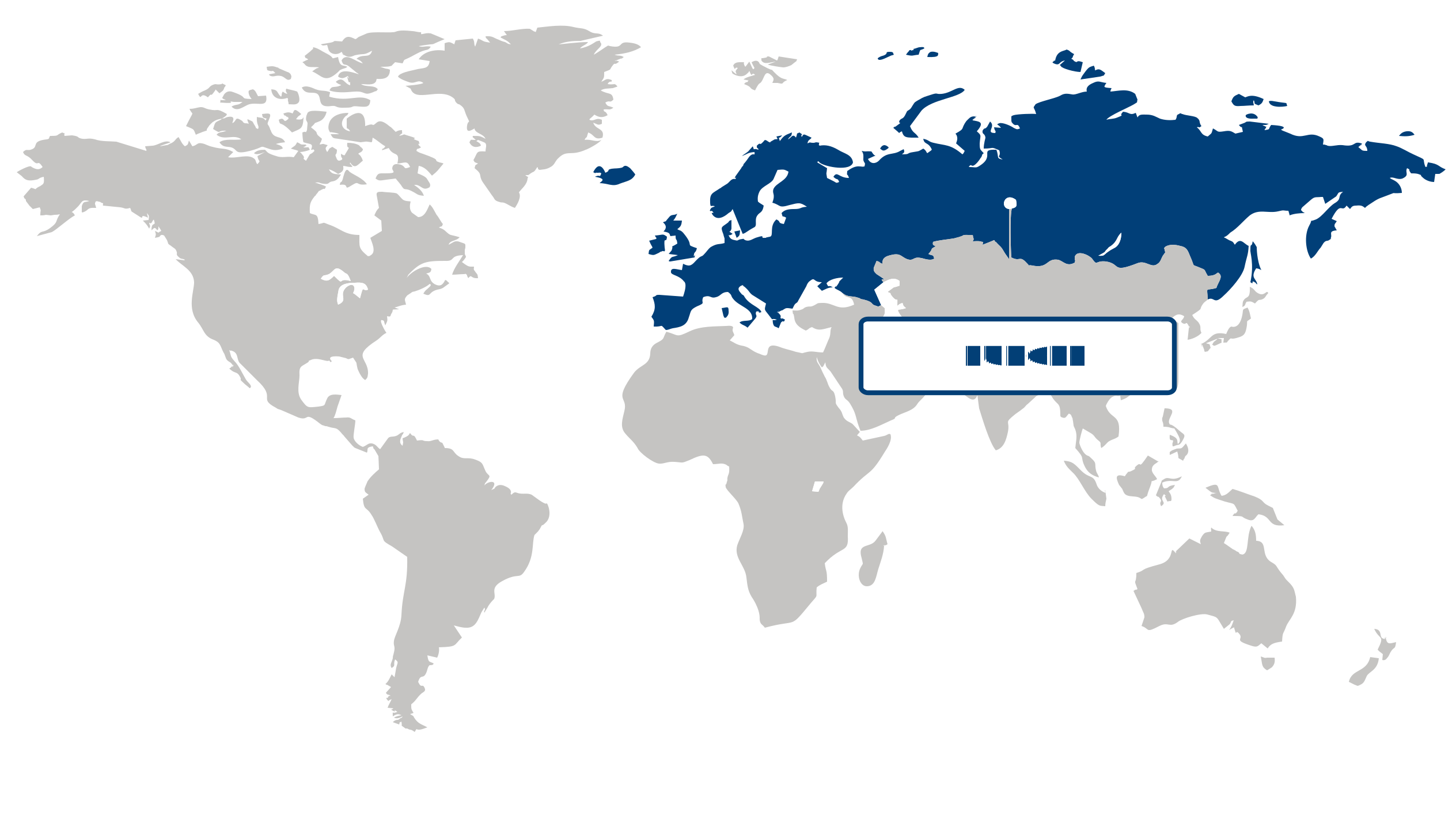
Largest Region
Europe
31.97% Market Share in 2026
Europe (Largest Region) vs Asia Pacific (Fastest-Growing Region)
In the oleoresin market, Europe accounted for the largest share of 31.97% in 2026, reflecting strong demand for natural flavoring and coloring ingredients across food, beverage, nutraceutical, and related applications. European consumers and food manufacturers increasingly favor plant-derived ingredients that support clean-label positioning, while regulatory emphasis on ingredient quality and traceability encourages the use of standardized natural extracts. Oleoresins offer advantages in flavor consistency, storage stability, and formulation efficiency compared with some conventional spice ingredients, making them attractive for processed food applications. Established food-processing industries and sophisticated ingredient supply chains further strengthen regional consumption, while ongoing product reformulation toward natural ingredients supports continued adoption.
Asia Pacific is the fastest-growing region, driven by expanding processed food and beverage industries, rising consumer interest in natural ingredients, and the region's strong connection to spice cultivation and processing. Increasing urbanization and changing dietary patterns are encouraging greater consumption of packaged foods that require consistent flavor and color profiles, creating opportunities for concentrated spice extracts. Growing demand for convenience foods, functional products, and naturally derived ingredients is also broadening oleoresin applications beyond traditional food uses. Improvements in extraction technologies, processing infrastructure, and supply-chain capabilities are helping producers deliver more consistent and application-specific products, supporting wider adoption across regional food and ingredient markets.
Key Country Insights
The U.S. oleoresin market emphasizes natural flavoring, coloring, and preservative ingredients for food, beverages, and nutraceuticals. Companies in the U.S. continue to prioritize traceable sourcing and consistent extract quality to support premium product formulations.
Japan integrates oleoresins into functional foods, premium seasonings, and health-oriented formulations requiring precise sensory performance. Japanese manufacturers emphasize stable flavor profiles and advanced extraction technologies to support product differentiation.
South Korea is expanding the use of oleoresins in processed foods, convenience meals, and cosmetic formulations seeking natural ingredients. Local manufacturers focus on product innovation and ingredient versatility to address evolving consumer preferences.
Germany prioritizes high-purity oleoresins for food processing, seasonings, and specialty ingredients where formulation consistency is essential. Manufacturers in Germany are investing in standardized extraction methods and compliance with stringent ingredient quality requirements.
France applies oleoresins across gourmet foods, sauces, and natural flavor systems where ingredient authenticity is valued. French producers are strengthening partnerships with certified raw material suppliers to maintain premium formulation standards.
Italy utilizes oleoresins in food manufacturing to preserve authentic flavor characteristics across processed products. Italian manufacturers increasingly adopt customized extract blends that improve production consistency while supporting premium culinary applications.
Segment Leadership and Growth Trends
Application Segment Analysis: Food (Largest Segment) vs Nutraceutical (Fastest-Growing Segment)
Food applications dominated the oleoresin market, accounting for a 30.24% share in 2026, supported by the extensive use of oleoresins as concentrated sources of flavor, aroma, and color in processed and prepared foods. Their ability to provide consistent sensory characteristics while simplifying ingredient handling makes them valuable across seasoning blends, sauces, snacks, and other food formulations. Demand for convenient food products, standardized flavor profiles, and clean-label-oriented ingredient solutions is encouraging broader use of oleoresins, while manufacturers benefit from their concentrated nature and formulation flexibility.
Nutraceutical applications are growing at the fastest pace as consumers increasingly seek botanical ingredients associated with wellness, functional nutrition, and natural health products. Oleoresins can provide concentrated plant-derived compounds while supporting convenient incorporation into supplements and functional formulations. Rising interest in preventive wellness, plant-based ingredients, and products positioned around natural health benefits is encouraging nutraceutical manufacturers to explore a wider range of oleoresin-based formulations.
Product Segment Analysis: Black Pepper (Largest Segment) vs Turmeric (Fastest-Growing Segment)
Black pepper represented the largest product segment in the oleoresin market, holding a 27.5% share in 2026, driven by its widespread use as a familiar flavoring ingredient across food processing and seasoning applications. Black pepper oleoresin provides concentrated flavor and aroma while offering manufacturers greater consistency and convenience than handling raw spice materials in certain formulations. Strong global demand for pepper-based flavors, extensive use in processed foods, and continued interest in concentrated natural flavor ingredients are supporting its established market position.
Turmeric is the fastest-growing product segment as demand increases for botanical ingredients associated with natural wellness and functional food applications. Turmeric oleoresin offers concentrated flavor, color, and bioactive components, making it suitable for food, nutraceutical, and health-oriented formulations. Growing consumer preference for plant-derived ingredients, increasing interest in functional foods and beverages, and expanding use of turmeric in wellness products are creating favorable conditions for continued adoption of turmeric oleoresin.
| Report Segmentation | |||
| Segment | Sub-Segment | Largest Segment | Fastest Growing Segment |
|---|---|---|---|
| Application | Food, Beverages, Fragrances, Pharmaceutical, Nutraceutical, Others | Food | Nutraceutical |
| Product | Paprika, Black Pepper, Capsicum, Turmeric, Ginger, Garlic, Onion, Seed Spice, Herbs, Others | Black Pepper | Turmeric |
 Read our Research Approach
Competitive Landscape and Market Positioning
Major players in the oleoresin market:
1. Givaudan SA (Switzerland)
2. Kalsec Inc. (United States)
3. Synthite Industries Ltd. (India)
4. Kancor Ingredients Limited (India)
5. Plant Lipids Private Limited (India)
6. AVT Natural Products Limited (India)
7. Chenguang Biotech Group Co. Ltd. (China)
8. Akay Natural Ingredients Private Limited (India)
9. Universal Oleoresins (India)
10. Paprika Oleo's India Limited (India)
The oleoresin market is experiencing steady development driven by growing demand for natural flavoring and aromatic ingredients. Innovation in extraction techniques is improving yield efficiency and product purity. Collaborative initiatives are enabling broader application development across food, cosmetics, and pharmaceuticals. Market expansion efforts are further supporting global adoption of natural extract-based solutions.
Industry Development/News
| Company Name | Date | Key Development |
|---|---|---|
| MANE KANCOR | May-23 | MANE KANCOR inaugurated its largest manufacturing facility in Byadgi, Karnataka, significantly expanding oleoresin production capacity and consolidating manufacturing operations. The facility is designed to improve operational efficiency, strengthen raw material sourcing from farmers, and enhance supply chain integration and product consistency in spice-derived oleoresin production. |
| OfBusiness | Apr-25 | OfBusiness acquired Kerala-based Elixir Extracts Pvt Ltd, a manufacturer of standardized natural extracts, essential oils, oleoresins, and flavors. The acquisition expands OfBusiness’s footprint in natural ingredient manufacturing and strengthens its downstream capabilities in oleoresin production and distribution across industrial flavor and fragrance supply chains. |
| Kalsec Inc. | Aug-24 | Kalsec Inc. opened its Mildenhall Finishing and Distribution Centre in the United Kingdom to enhance its European customer service capabilities. The facility improves distribution efficiency, enables localized product customization, and reduces delivery timelines, strengthening Kalsec’s regional supply chain infrastructure for flavor and oleoresin-based ingredients. |
| Ultra International, Ecospice Ingredients Pvt. Ltd. | Feb-24 | Ultra International and Ecospice Ingredients Pvt. Ltd. formed a strategic partnership to expand global distribution of Indian spice oleoresins. The collaboration enhances international market penetration for oleoresin products and strengthens export-oriented supply chain integration for spice extract manufacturers in India. |
| LycoRed Ltd. | Mar-21 | LycoRed Ltd. launched a new oleoresin derived from Haematococcus Pluvialis algae for use in soft gel applications. The product expands the company’s functional ingredient portfolio and introduces a novel bio-based oleoresin variant targeting nutritional and nutraceutical applications. |
| Mane Kancor Ingredients Pvt. Ltd. | Feb-20 | Mane Kancor Ingredients Pvt. Ltd. invested USD 20 million to expand its production facilities, increasing manufacturing capacity for oleoresins and related spice extracts. The investment supports capacity scaling and strengthens the company’s position in domestic and international ingredient supply chains. |
| Mul Group | Jan-17 | Mul Group established Mul Aromatiques as a sister company to strengthen sourcing of raw materials and improve production chain management. The initiative enhances supply security and supports more efficient procurement and processing of oleoresin and aroma ingredient inputs. |
| Ungerer Columbia | 2017 | Ungerer Columbia established a new production facility and subsidiary in Latin America to expand regional market presence. The development strengthens the company’s global manufacturing footprint and improves access to local markets for flavor and fragrance-related ingredients, including oleoresin applications. |
| Givaudan | Jan-19 | Givaudan opened a Flavors Technical and Commercial Center in Casablanca, Morocco to support African customers with localized flavor and ingredient solutions. The center enhances regional technical capabilities and strengthens commercial support infrastructure for flavor systems, including oleoresin-based formulations. |
| Florida National Guard | Jan-25 | The Florida National Guard conducted joint operational readiness training at Camp Blanding Joint Training Center, including oleoresin capsicum (OC) spray certification for personnel. The program focuses on standardized deployment of OC-based defensive tools to enhance law enforcement and military preparedness. |
| Jefferson County Sheriff's Office | Jan-25 | The Jefferson County Sheriff’s Office conducted regional jail standards training incorporating oleoresin capsicum (OC) spray usage protocols. The initiative aims to improve correctional facility safety standards and ensure controlled application of chemical deterrents in law enforcement operations. |
Why Choose Us
Specialized Expertise: Our team comprises industry experts with a deep understanding of your market segment. We bring specialized knowledge and experience that ensures our research and consulting services are tailored to your unique needs.
Customized Solutions: We understand that every client is different. That's why we offer customized research and consulting solutions designed specifically to address your challenges and capitalize on opportunities within your industry.
Proven Results: With a track record of successful projects and satisfied clients, we have demonstrated our ability to deliver tangible results. Our case studies and testimonials speak to our effectiveness in helping clients achieve their goals.
Cutting-Edge Methodologies: We leverage the latest methodologies and technologies to gather insights and drive informed decision-making. Our innovative approach ensures that you stay ahead of the curve and gain a competitive edge in your market.
Client-Centric Approach: Your satisfaction is our top priority. We prioritize open communication, responsiveness, and transparency to ensure that we not only meet but exceed your expectations at every stage of the engagement.
Continuous Innovation: We are committed to continuous improvement and staying at the forefront of our industry. Through ongoing learning, professional development, and investment in new technologies, we ensure that our services are always evolving to meet your evolving needs.
Value for Money: Our competitive pricing and flexible engagement models ensure that you get maximum value for your investment. We are committed to delivering high-quality results that help you achieve a strong return on your investment.
Select Licence Type

