



Overhead Conductor Market Size & Growth Forecast 2027–2036, By Segments (Product, Voltage, Application, Current, Rated Strength), Regional Demand Trends (North America, Asia Pacific, Europe), Key Country Insights (U.S., Japan, South Korea, Germany, France, Italy), and Competitive Landscape
Market Size and Growth Outlook
Overhead Conductor Market size stood at USD 862.22 Million in 2026 and is predicted to grow at 5.08% CAGR from 2027 to 2036, attaining USD 1.42 Billion by 2036. The industry revenue for 2027 is calculated at USD 898.69 Million.
Base Year Value (2026)
USD 862.22 Million
CAGR (2027-2036)
5.08%
Forecast Year Value (2036)
USD 1.42 Billion

Historical Data Period
2022-2026

Largest Region
Asia Pacific

Forecast Period
2027-2036
Overhead Conductor Market Intelligence Snapshot:
-
Regional Market Dynamics:
- Asia Pacific led in 2025 due to expanding electricity transmission networks, rapid urbanization, industrial development, rising power demand, and grid modernization investments.
- The region is also the fastest-growing, supported by continued electrification, renewable power integration, grid expansion, and infrastructure development across emerging economies.
-
Segment Momentum:
- Conventional conductors accounted for 62.54% of the market in 2025 due to their proven reliability, cost-effective deployment, straightforward installation, and seamless integration with existing transmission and distribution infrastructure.
- Ultra high tension applications are growing fastest as utilities expand long-distance, high-capacity transmission networks to support renewable energy integration, rising electricity demand, and more efficient bulk power transfer.
-
Market Expansion Drivers:
- Refurbishment and retrofit of aging grid infrastructure improving transmission efficiency
- Rising peak electricity demand stressing transmission capacity and reliability requirements
- Expansion of smart grid systems requiring advanced high-capacity conductors
-
Leading Market Participants:
Prominent companies in the overhead conductor market include Prysmian Group (Italy), Nexans S.A. (France), Southwire Company, LLC (United States), LS Cable & System Ltd. (South Korea), Sumitomo Electric Industries, Ltd. (Japan), Sterlite Power Transmission Ltd. (India), ZTT Group (China), Bekaert NV (Belgium), Elsewedy Electric S.A.E. (Egypt), KEI Industries Limited (India)
Global Market Forecast Snapshot:
-
Market Outlook:
- 2026 Market Size: USD 862.22 Million
- 2027 Estimated Market Size: USD 898.69 Million
- Projected Market Size: USD 1.42 Billion by 2036
- Growth Forecasts: 5.08% CAGR (2027-2036)
-
Regional and Segment Outlook:
- Leading Regional Market: Asia Pacific
- High-Growth Regional Hub: Asia Pacific
- Core Revenue Segment: Conventional (Product) | > 220 kV to 660 kV (Voltage) | High Tension (Application) | HVAC (Current) | Ultra High Strength (Rated Strength)
- Emerging Opportunity Segment: High Temperature (Product) | 132 kV to 220 kV (Voltage) | Ultra High Tension (Application) | HVDC (Current) | Ultra High Strength (Rated Strength)
Market Growth Drivers and Industry Trends
Refurbishment and retrofit of aging grid infrastructure improving transmission efficiency
Many electricity transmission networks are operating with aging infrastructure that requires modernization to improve operational performance and reduce transmission losses. The overhead conductor market is supported by refurbishment programs that replace older conductors with advanced alternatives offering higher current-carrying capacity, improved thermal performance, and greater mechanical strength. Utilities undertaking retrofit projects can enhance network reliability while making better use of existing transmission corridors, allowing infrastructure upgrades without the need for entirely new transmission routes.
Rising peak electricity demand stressing transmission capacity and reliability requirements
Increasing electricity consumption from residential, commercial, and industrial users is placing greater pressure on transmission systems to deliver stable power during periods of peak demand. In response to these changing load profiles, the overhead conductor market will boost demand for conductors capable of carrying higher electrical loads while maintaining grid stability and operational efficiency. Utilities are prioritizing network reinforcement strategies that reduce congestion, improve resilience, and support uninterrupted power delivery across expanding service territories.
Expansion of smart grid systems requiring advanced high-capacity conductors
The integration of smart grid technologies is reshaping electricity transmission by enabling more intelligent monitoring, automation, and power flow management across interconnected networks. As utilities invest in digital grid infrastructure, the overhead conductor market benefits from increased deployment of high-capacity conductors designed to support enhanced system performance and compatibility with advanced grid operations. These conductors facilitate efficient electricity transfer across increasingly complex transmission networks while supporting flexible grid management and improved operational visibility.
| Growth Driver Assessment Framework | |||||
| Growth Driver | Impact On CAGR | Regulatory Influence | Geographic Relevance | Adoption Rate | Impact Timeline |
|---|---|---|---|---|---|
| Refurbishment and retrofit of aging grid infrastructure improving transmission efficiency | 2.2% | High | North America, Europe | High | Near Term |
| Rising peak electricity demand stressing transmission capacity and reliability requirements | 2% | Moderate | Asia Pacific, Middle East | High | Mid Term |
| Expansion of smart grid systems requiring advanced high-capacity conductors | 1.8% | High | Europe, Asia Pacific | High | Mid Term |
Unlock insights tailored to your business with our bespoke market research solutions - Click to get your customized report now!
Regional Demand Dynamics
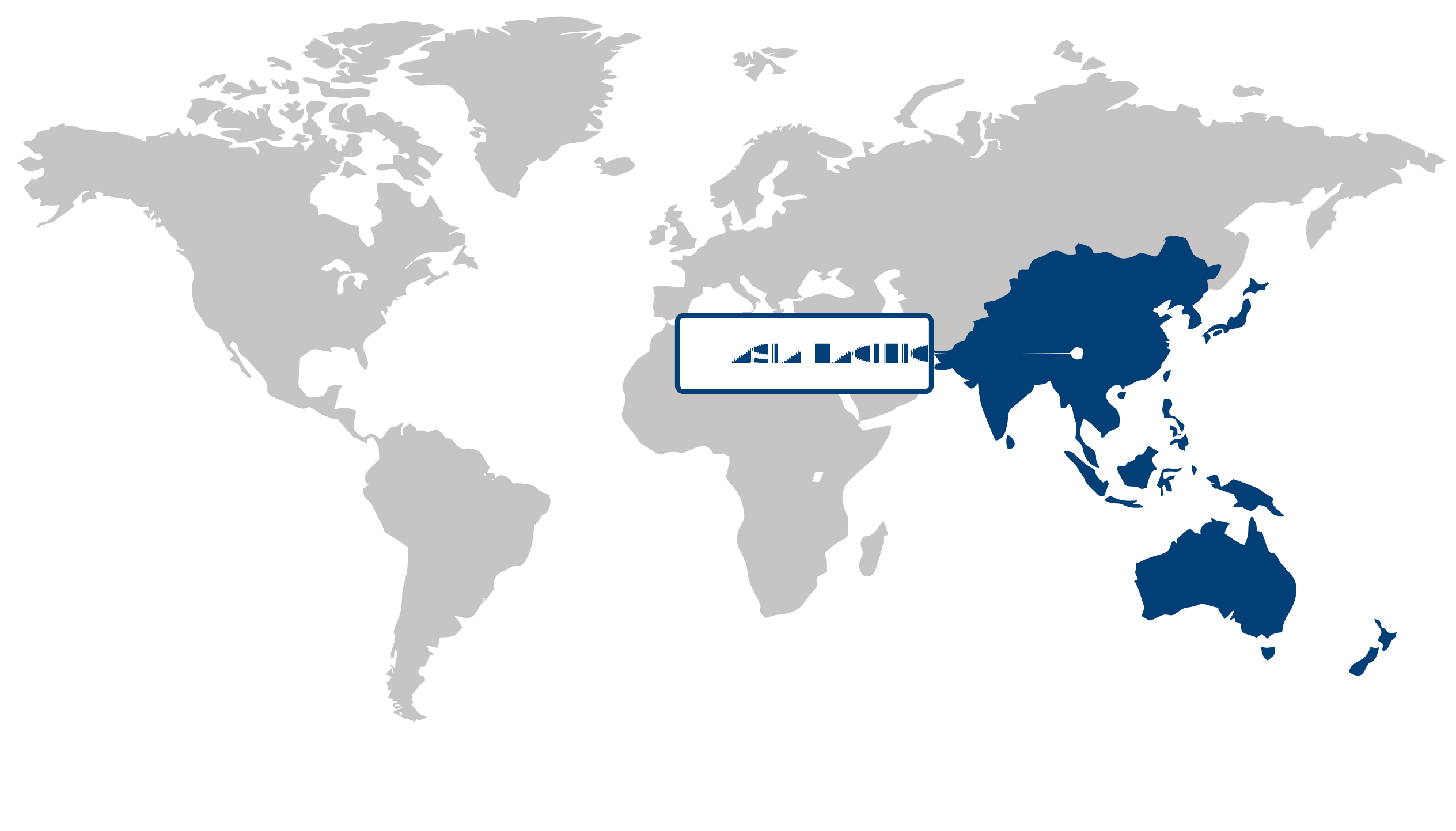
Largest Region
Asia Pacific
Largest Market Share in 2026
Asia Pacific (Largest & Fastest-Growing Region)
Asia Pacific maintained the leading position in the overhead conductor market in 2026 and is also expected to witness the fastest growth. The region’s strong market position is closely associated with expanding electricity transmission networks, rapid urbanization, industrial development, and rising power demand. Ongoing investments in grid expansion and modernization are increasing the need for reliable transmission infrastructure, while the integration of renewable power generation is creating additional requirements for efficient electricity transmission. Continued electrification and infrastructure development across emerging economies are further supporting the deployment of overhead conductors.
No card data available for this language/report.
Segment Leadership and Growth Trends
Product Segment Analysis: Conventional (Largest Segment) vs High Temperature (Fastest-Growing Segment)
The conventional product segment dominated the overhead conductor market, accounting for 62.54% of the market share in 2026. Its leading position is supported by its long-established use across transmission and distribution networks, where utilities prioritize proven reliability, straightforward installation, and cost-effective deployment. Conventional conductors remain widely adopted for grid expansion and refurbishment projects because they offer dependable electrical performance while integrating seamlessly with existing infrastructure, making them a practical choice for a broad range of operating conditions.
The high-temperature product segment is witnessing the fastest growth as utilities increasingly modernize aging transmission infrastructure to accommodate higher electricity demand without extensive network reconstruction. High-temperature conductors enable greater current-carrying capacity while utilizing existing transmission corridors, making them well suited for grid congestion management and renewable energy integration. Their ability to improve transmission efficiency and support capacity upgrades is driving broader adoption across advanced power network projects.
Voltage Segment Analysis: > 220 kV to 660 kV (Largest Segment) vs 132 kV to 220 kV (Fastest-Growing Segment)
Holding the largest share of 42.12% in 2026, the greater than 220 kv to 660 kv voltage segment maintained its leadership due to its extensive deployment in long-distance bulk power transmission. These voltage levels are widely used to transport large volumes of electricity efficiently while minimizing transmission losses, making them essential for interconnecting regional grids, supporting renewable energy projects, and ensuring reliable power delivery to high-demand urban and industrial centers.
In the overhead conductor market, the 132 kv to 220 kv voltage segment is expanding at the fastest pace as investments in regional transmission infrastructure and sub-transmission networks continue to accelerate. This voltage range is increasingly utilized to strengthen grid reliability, connect new renewable generation facilities, and improve electricity distribution across expanding residential, commercial, and industrial areas. Growing electrification initiatives and grid modernization programs are further supporting demand for this segment.
Application Segment Analysis: High Tension (Largest Segment) vs Ultra High Tension (Fastest-Growing Segment)
The high tension application segment held the largest share in 2026, driven by its widespread use in transmitting electricity across national and regional power networks. High tension overhead conductors provide an effective balance between transmission efficiency, infrastructure cost, and operational reliability, making them suitable for a broad range of utility projects and grid expansion initiatives. Their extensive deployment across established transmission systems continues to reinforce their dominant market position.
The ultra high tension application segment is projected to record the fastest growth as electricity systems increasingly require long-distance, high-capacity transmission to support renewable energy integration and rising power consumption. Ultra high tension networks enable efficient bulk power transfer over extended distances while reducing transmission losses, making them a preferred solution for next-generation grid infrastructure and cross-regional interconnections.
| Report Segmentation | |||
| Segment | Sub-Segment | Largest Segment | Fastest Growing Segment |
|---|---|---|---|
| Product | Conventional, High Temperature, Others | Conventional | High Temperature |
| Voltage | 132 kV to 220 kV, > 220 kV to 660 kV, > 660 kV | > 220 kV to 660 kV | 132 kV to 220 kV |
| Application | High Tension, Extra High Tension, Ultra High Tension | High Tension | Ultra High Tension |
| Current | HVAC, HVDC | HVAC | HVDC |
| Rated Strength | High Strength, Extra High Strength, Ultra High Strength | Ultra High Strength | Ultra High Strength |
 Read our Research Approach
Competitive Landscape and Market Positioning
Leading companies in the overhead conductor market:
- Prysmian Group (Italy)
- Nexans S.A. (France)
- Southwire Company LLC (United States)
- LS Cable & System Ltd. (South Korea)
- Sumitomo Electric Industries Ltd. (Japan)
- Sterlite Power Transmission Ltd. (India)
- ZTT Group (China)
- Bekaert NV (Belgium)
- Elsewedy Electric S.A.E. (Egypt)
- KEI Industries Limited (India)
Expanding transmission infrastructure and the modernization of aging power networks are redefining competitive priorities in the overhead conductor market, shifting emphasis toward higher-performance materials capable of supporting greater electrical capacity while minimizing transmission losses. Manufacturers are strengthening their positions by developing conductors that balance mechanical strength, thermal performance, and installation efficiency to address increasingly complex grid expansion projects. Competitive differentiation is also emerging through engineering support, customization for diverse environmental conditions, and dependable supply capabilities, as utilities place greater value on long-term operational reliability and lifecycle performance rather than procurement cost alone.
Industry Development/News
| Company Name | Date | Key Development |
|---|---|---|
| Sterlite Electric Ltd | Oct-25 | Sterlite Electric Ltd filed a Draft Red Herring Prospectus (DRHP) with the Securities and Exchange Board of India to initiate an initial public offering (IPO) targeting to raise approximately ₹1,500 crore. The capital raised is designated to accelerate company growth and consolidate its market position within the power transmission infrastructure and overhead conductor value chain. |
| APAR Industries Limited | May-25 | APAR Industries Limited announced a capital allocation of USD 34.4 million dedicated to its conductor business, specifically for manufacturing rod production. This investment is projected to increase the company's total conductor manufacturing capacity by 25,000 tonnes, facilitating operational growth and strengthening its competitive footprint across India and surrounding regional markets. |
| Sterlite Power | Feb-25 | Sterlite Power secured new contract orders valued at approximately INR 2,250 crore, significantly expanding its project portfolio within the transmission infrastructure sector. These contract wins directly support the company's development of power transmission networks and reinforce its market position through continued project execution and infrastructure expansion. |
| Sterlite Power | Feb-25 | Sterlite Power announced new order wins totaling USD 256 million, alongside securing L1 positions for additional contracts worth USD 7.41 million during the third quarter of fiscal year 2025. The scope of these orders includes the supply of high-performance conductors and optical ground wire (OPGW), underscoring the company’s sustained commercial activity in global power infrastructure markets. |
| Southwire Company LLC | Nov-24 | Southwire Company LLC, in partnership with Georgia Power, received a federal funding grant of USD 160 million to modernize the electrical grid in Georgia. A core component of this infrastructure initiative involves the deployment of Southwire’s proprietary C7 overhead conductor technology to improve grid reliability for approximately 2.7 million customers across the state. |
Why Choose Us
Specialized Expertise: Our team comprises industry experts with a deep understanding of your market segment. We bring specialized knowledge and experience that ensures our research and consulting services are tailored to your unique needs.
Customized Solutions: We understand that every client is different. That's why we offer customized research and consulting solutions designed specifically to address your challenges and capitalize on opportunities within your industry.
Proven Results: With a track record of successful projects and satisfied clients, we have demonstrated our ability to deliver tangible results. Our case studies and testimonials speak to our effectiveness in helping clients achieve their goals.
Cutting-Edge Methodologies: We leverage the latest methodologies and technologies to gather insights and drive informed decision-making. Our innovative approach ensures that you stay ahead of the curve and gain a competitive edge in your market.
Client-Centric Approach: Your satisfaction is our top priority. We prioritize open communication, responsiveness, and transparency to ensure that we not only meet but exceed your expectations at every stage of the engagement.
Continuous Innovation: We are committed to continuous improvement and staying at the forefront of our industry. Through ongoing learning, professional development, and investment in new technologies, we ensure that our services are always evolving to meet your evolving needs.
Value for Money: Our competitive pricing and flexible engagement models ensure that you get maximum value for your investment. We are committed to delivering high-quality results that help you achieve a strong return on your investment.
Select Licence Type

