Paint Protection Film Market Size & Growth Forecast 2027–2036, By Segments (Material, Application), Regional Demand Trends (North America, Asia Pacific, Europe), Key Country Insights (U.S., Japan, South Korea, Germany, France, Italy), and Competitive Landscape
Market Size and Growth Outlook
Paint Protection Film Market size was more than USD 556.7 million in 2026 and is set to grow at a 3.99% CAGR between 2027 and 2036, reaching USD 823.26 million by 2036. The industry revenue for 2027 is estimated at USD 575.41 million.
Get more details on this report
Request Free Sample ReportPaint Protection Film Market Intelligence Snapshot
Regional Market Dynamics
- Europe held a 33.37% market share in 2026, supported by strong premium vehicle ownership, an established detailing network, and consistent demand for exterior protection that preserves vehicle value.
- Asia Pacific is projected to grow at a 6.78% CAGR as vehicle ownership rises, aftermarket installation services expand, and consumers increasingly invest in long-term vehicle appearance protection.
Segment Momentum
- TPU held a 78.62% share in 2026 because its durability, flexibility, optical clarity, and self-healing performance align closely with customer expectations for long-term exterior surface protection and finish preservation.
- Aerospace and defense is the fastest-growing application segment as operators increasingly adopt protective films to reduce surface wear, improve maintenance efficiency, and preserve high-value exterior assets under demanding operating conditions.
Market Expansion Drivers
- Rising automotive ownership and consumer focus on preserving vehicle exterior aesthetics driving PPF adoption.
- Expansion of used car markets increasing demand for resale value protection and repaint cost reduction.
- Advancements in self-healing TPU-based films improving durability and long-term surface protection performance.
Leading Market Participants
- Major companies in the paint protection film market include 3M Company (United States), Eastman Chemical Company (United States), XPEL, Inc. (United States), Avery Dennison Corporation (United States), Saint-Gobain S.A. (France), RENOLIT SE (Germany), SWM International (United States), HEXIS S.A.S. (France), Ziebart International Corporation (United States), Garware Hi-Tech Films Limited (India).
Global Market Forecast Snapshot
Market Outlook
- 2026 Market Size: USD 556.7 million
- 2027 Estimated Market Size: USD 575.41 million.
- Projected Market Size: USD 823.26 million by 2036
- Growth Forecast: 3.99% CAGR (2027-2036)
Regional and Segment Outlook
- Leading Regional Market: Europe
- High-Growth Regional Hub: Asia Pacific
- Core Revenue Segment: Thermoplastic Polyurethane (TPU) (Material) | Automotive & Transportation (Application)
- Emerging Opportunity Segment: Thermoplastic Polyurethane (TPU) (Material) | Aerospace & Defense (Application)
Market Growth Drivers and Industry Trends
Rising automotive ownership and consumer focus on preserving vehicle exterior aesthetics driving PPF adoption
Growing vehicle ownership and increasing consumer attention to maintaining exterior appearance will drive paint protection film market growth as vehicle owners seek ways to protect painted surfaces from everyday damage. Paint protection films provide a transparent barrier against road debris, minor scratches, stone chips, environmental contaminants, and other surface-level wear that can affect vehicle appearance. The increasing availability of premium and customized vehicles is also encouraging owners to preserve factory-finish paint for longer periods, particularly where exterior condition influences perceived vehicle quality. Greater awareness of vehicle detailing and paint preservation is expanding the use of protective films beyond specialized automotive applications into broader consumer and aftermarket vehicle-care practices.
Expansion of used car markets increasing demand for resale value protection and repaint cost reduction
Expansion of the used vehicle market is supporting paint protection film market demand because owners and dealers increasingly focus on maintaining vehicle condition to support resale prospects. A well-preserved exterior can reduce the visible signs of wear associated with prolonged vehicle use, potentially limiting the need for costly repainting or extensive cosmetic restoration before resale. Paint protection films can be applied to vulnerable areas such as bumpers, hoods, fenders, and mirrors, helping protect surfaces that are frequently exposed to road debris and minor abrasions. Growing participation in vehicle resale and trade-in activities is therefore increasing interest in preventive exterior protection as part of long-term vehicle maintenance.
Advancements in self-healing TPU-based films improving durability and long-term surface protection performance
Technological improvements in thermoplastic polyurethane formulations are strengthening the paint protection film market by enhancing the performance characteristics expected from modern protective films. Self-healing TPU-based materials can help minimize the appearance of certain light surface scratches through the material's ability to recover when exposed to suitable conditions, while maintaining flexibility and optical clarity. Improvements in film construction, adhesive performance, resistance to environmental exposure, and surface finish are also supporting longer-lasting applications. These developments make advanced films more suitable for vehicle owners seeking durable protection without significantly altering the appearance of the underlying paint.
| Growth Driver | Impact on CAGR | Regulatory Influence | Geographic Relevance | Adoption Rate | Impact Timeline |
|---|---|---|---|---|---|
| Rising automotive ownership and consumer focus on preserving vehicle exterior aesthetics driving PPF adoption | 2.00% | Low | North America, Europe | High | Near Term |
| Expansion of used car markets increasing demand for resale value protection and repaint cost reduction | 1.60% | Low | Asia Pacific, North America | High | Mid Term |
| Advancements in self-healing TPU-based films improving durability and long-term surface protection performance | 1.20% | Moderate | Europe, North America | Emerging | Mid Term |
Explore Growth Opportunities
Request Free Sample ReportRegional Demand Dynamics
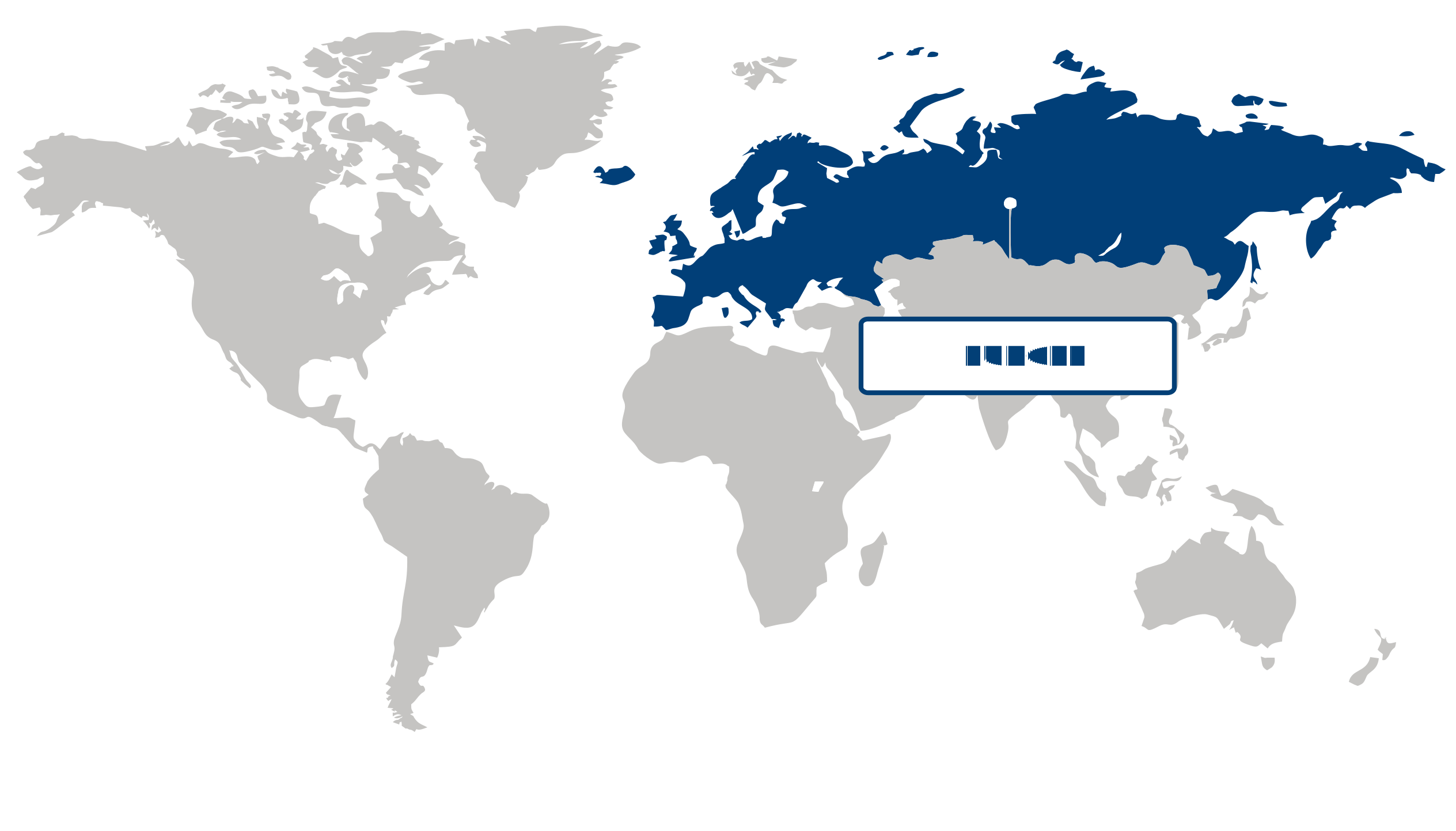
Europe (Largest Region)
In the paint protection film market, Europe held the largest share of 33.37% in 2026, supported by strong automotive demand, established premium vehicle markets, and growing consumer interest in maintaining exterior vehicle appearance. Paint protection films are increasingly used to preserve vehicle finishes against stone chips, scratches, road debris, and environmental exposure, particularly for high-value and performance-oriented vehicles. The region's mature automotive aftermarket, strong detailing culture, and availability of specialized installation services provide a favorable environment for adoption. Growing consumer preference for durable vehicle-care solutions and increasing awareness of protective coatings and films are also expanding applications beyond traditional enthusiast segments.
Asia Pacific (Fastest-Growing Region)
Asia Pacific represents the fastest-growing region, benefiting from expanding vehicle ownership, rising disposable incomes, and growing demand for automotive appearance and protection products. Increasing sales of premium and luxury vehicles are creating greater interest in technologies that help preserve exterior finishes, while the expansion of professional automotive detailing services is improving access to paint protection film installation. Urban consumers are becoming more attentive to vehicle maintenance and long-term appearance, supporting demand for higher-performance protective solutions. In addition, the region's expanding automotive manufacturing and aftermarket ecosystems are creating broader distribution opportunities for paint protection films across passenger vehicles and other applications.
| Parameter | North America | Asia Pacific | Europe | Latin America | MEA |
|---|---|---|---|---|---|
| Innovation Hub i Scale Nascent Developing Advanced | |||||
| Cost-Sensitive Region i Scale Low Medium High | |||||
| Regulatory Environment i Scale Restrictive Neutral Supportive | |||||
| Demand Drivers i Scale Weak Moderate Strong | |||||
| Development Stage i Scale Emerging Developing Developed | |||||
| Adoption Rate i Scale Low Medium High | |||||
| New Entrants / Startups i Scale Sparse Moderate Dense | |||||
| Macro Indicators i Scale Weak Stable Strong |
Key Country Insights
Germany 🇩🇪
OEM Finish PreservationGermany integrates paint protection films into premium automotive manufacturing and aftermarket services to maintain vehicle appearance. Customers in Germany value precision installation, durable coatings, and materials compatible with high-performance automotive finishes.
France 🇫🇷
Luxury Appearance MaintenanceFrance favors paint protection solutions that complement premium automotive ownership and long-term exterior care. Vehicle owners in France increasingly select high-quality films that preserve paint quality while minimizing visible surface damage.
Italy 🇮🇹
Performance Vehicle CareItaly adopts paint protection films across premium and performance vehicle segments where appearance and finish retention are key purchasing considerations. Professional installers in Italy increasingly offer customized protection packages for automotive enthusiasts.
Japan 🇯🇵
Precision Surface CareJapan focuses on high-quality paint protection films that preserve vehicle aesthetics without altering original finishes. Automotive consumers in Japan increasingly seek thin, optically clear films offering reliable resistance to scratches and environmental exposure.
South Korea 🇰🇷
Advanced Film InnovationSouth Korea supports development of technologically advanced paint protection films featuring self-healing properties and improved durability. Domestic automotive and detailing businesses continue expanding premium protection services for passenger vehicles.
United States 🇺🇸
Premium Vehicle ProtectionThe U.S. market emphasizes paint protection films for luxury vehicles, electric vehicles, and aftermarket customization. Installers and distributors in the U.S. increasingly prioritize durable, self-healing films with enhanced optical clarity and long-term surface protection.
Segment Leadership and Growth Trends
Paint Protection Film Market Share (%), by Material, 2026
Go beyond the chart, access full insights & data tables
Request Free Sample ReportMaterial Segment Analysis: Thermoplastic Polyurethane (TPU) (Largest & Fastest-Growing Segment)
Thermoplastic polyurethane (TPU) dominated the paint protection film market and accounted for a 78.62% share in 2026, while also representing the fastest-growing material segment. Its strong combination of flexibility, durability, transparency, and resistance to abrasion makes TPU particularly suitable for protecting painted surfaces from scratches, stone chips, environmental exposure, and everyday wear. The material can conform closely to complex vehicle surfaces while maintaining visual appeal, supporting its widespread use in automotive protection. Continued demand for durable surface-protection solutions and greater awareness of vehicle appearance preservation are further reinforcing TPU's leading and rapidly expanding position.
Application Segment Analysis: Automotive & Transportation (Largest Segment) vs Aerospace & Defense (Fastest-Growing Segment)
Automotive & transportation held the largest share of the paint protection film market at 70.69% in 2026, driven by the widespread need to preserve vehicle finishes against road debris, scratches, weather exposure, and routine surface damage. Paint protection film provides a practical means of maintaining exterior appearance while potentially reducing the need for frequent refinishing, making it attractive for both new and existing vehicles. Rising consumer and commercial interest in vehicle appearance, durability, and long-term surface preservation continues to support the segment's dominant position.
Aerospace & defense is advancing at a faster pace as operators increasingly prioritize surface protection for aircraft and specialized vehicles exposed to demanding operating environments. Paint protection films can help shield exterior surfaces from abrasion, debris, environmental conditions, and other forms of physical wear while preserving the underlying finish. Their lightweight and conformable characteristics also make them suitable for applications where maintaining surface integrity without adding substantial material burden is important, supporting greater adoption across aerospace and defense uses.
| Segment | Sub-Segment | Largest Segment | Fastest Growing |
|---|---|---|---|
| Material | Thermoplastic Polyurethane (TPU), Polyvinyl Chloride (PVC), Others | Thermoplastic Polyurethane (TPU) | Thermoplastic Polyurethane (TPU) |
| Application | Automotive & Transportation, Electrical & Electronics, Aerospace & Defense, Others | Automotive & Transportation | Aerospace & Defense |
Unlock insights tailored to your business with our bespoke market research solutions.
Click to get your customized report now.
Competitive Landscape and Market Positioning
Top players in the paint protection film market:
1. 3M Company (United States)
2. Eastman Chemical Company (United States)
3. XPEL Inc. (United States)
4. Avery Dennison Corporation (United States)
5. Saint-Gobain S.A. (France)
6. RENOLIT SE (Germany)
7. SWM International (United States)
8. HEXIS S.A.S. (France)
9. Ziebart International Corporation (United States)
10. Garware Hi-Tech Films Limited (India)
Rising automotive customization trends are driving demand for advanced surface protection solutions. The paint protection film market is evolving with improved self-healing and UV-resistant material technologies. Enhanced film clarity and durability are improving aesthetic preservation of vehicle surfaces. Continuous innovation in adhesive systems is also expanding application versatility across vehicle types.
| Company | Market Share | Company Revenue | Revenue CAGR (%) | Product Portfolio | Geographic Presence | Innovation / R&D Focus | Strategic Developments |
|---|---|---|---|---|---|---|---|
| 3M Company (United States) | |||||||
| Eastman Chemical Company (United States) | |||||||
| XPEL Inc. (United States) | |||||||
| Avery Dennison Corporation (United States) | |||||||
| Saint-Gobain S.A. (France) | |||||||
| RENOLIT SE (Germany) | |||||||
| SWM International (United States) | |||||||
| HEXIS S.A.S. (France) | |||||||
| Ziebart International Corporation (United States) | |||||||
| Garware Hi-Tech Films Limited (India). |
Industry Development/News
| Company Name | Date | Key Development |
|---|---|---|
| The Lubrizol Corporation | Feb-25 | Lubrizol launched a new ESTANE TPU production line at its Shanghai facility, significantly increasing local manufacturing capacity for the paint protection film industry. This strategic expansion is designed to enhance supply chain resilience and improve market responsiveness across the Asia-Pacific region, supporting the growing demand for high-performance thermoplastic polyurethane materials in automotive protective applications. |
| ALP Group | Jan-25 | ALP Group introduced its "Defender, Armor, and Ranger" paint protection film line at the Bharat Mobility Global Expo 2025. The new range incorporates advanced self-healing and UV-resistant technologies, marking a strategic effort to capture market share in the Indian automotive aftermarket by providing enhanced surface durability and aesthetic preservation for vehicle exteriors. |
| XPEL | Nov-24 | XPEL expanded its strategic partnership with electric vehicle manufacturer Rivian, launching a direct-order program for R1T and R1S owners in the U.S. and Canada. This integration streamlines the procurement of paint protection and window films, reinforcing XPEL’s competitive positioning within the high-growth EV customization ecosystem through direct OEM-aligned service channels. |
| Cosmo First | Nov-24 | Cosmo First announced its strategic entry into the paint protection film and ceramic coatings market, diversifying its portfolio to address rising consumer demand for automotive surface protection. This expansion leverages the company's manufacturing capabilities to capitalize on long-term trends in vehicle customization and asset preservation within the automotive aftermarket. |
| Luminous | Nov-24 | Luminous launched a new line of colored paint protection films that integrate aesthetic personalization with high-performance protective features. By combining self-healing properties and enhanced durability with visual customization, the product addresses dual consumer needs for vehicle styling and long-term paint preservation, strengthening the brand's differentiation in the competitive film aftermarket. |
| Onyx Coating | Nov-24 | Onyx Coating introduced Vunyx Innoguard, a next-generation paint protection film engineered for superior surface durability. This product launch enhances the company's technical portfolio, focusing on delivering improved environmental resistance and longevity to address evolving performance requirements for high-end vehicle paint protection and surface safeguarding. |
| ALSET Auto | Nov-24 | ALSET Auto expanded its EV-focused service network through franchise growth, broadening its service scope beyond Tesla to include a wider range of electric vehicle models. This development reinforces the company’s position in the EV personalization market by standardizing premium paint protection, aesthetic modification, and specialized service experiences for the growing electric vehicle consumer segment. |
| RideWrap | Nov-24 | RideWrap launched a high-performance bicycle protection film manufactured from 77% recycled materials. Featuring self-healing and superhydrophobic technologies, the product addresses sustainability demands within the cycling industry while ensuring specialized surface protection. This initiative represents a strategic expansion of protective film applications into non-automotive, performance-driven sporting sectors. |
| Promo Box LLC | Nov-24 | Promo Box LLC completed an expansion of its Everett facility to incorporate advanced paint protection and window tinting service capabilities. This infrastructure investment significantly increases the company's operational capacity, enabling it to meet rising regional demand for vehicle graphics and professional-grade surface protection solutions within the automotive aftermarket. |
Customize Your Report
Explore examples of how this report can be tailored to different research needs, including custom segments, additional topics or chapters, and related reports. Click a section of the wheel or its numbered marker to explore the available options.
Paint Protection Film Market — Custom Segments
| Segment | Sub-Segment |
|---|---|
| Vehicle Type | Passenger Cars, Commercial Vehicles, Two-Wheelers, Specialty & Recreational Vehicles |
| Finish | Gloss, Matte, Satin, Color-Tinted |
| Installation Type | Professional Installation, Dealer-Installed, DIY Installation |
Paint Protection Film Market — Custom TOC
| Custom Chapter | Chapter Details |
|---|---|
| Automotive Aftermarket Demand Analysis |
|
| Dealer & Installer Network Assessment |
|
| Film Technology Adoption Outlook |
|
Need a different cut of the data?
Request Custom ResearchHow large is the paint protection film market?
What is the expected industry size of paint protection film by 2036?
How is changing vehicle ownership behavior supporting growth in the paint protection film market?
How are material innovations strengthening adoption of paint protection films?
Why does thermoplastic polyurethane (TPU) dominate the paint protection film market?
Which application segment is expanding fastest in the paint protection film market?
Why is Europe the leading regional market for paint protection film?
What factors are driving paint protection film adoption in Asia Pacific?
Who holds a significant market share in the paint protection film landscape?
Our Clients
"The report helped us understand emerging consumer trends in our product category. It clarified where to focus innovation for the next product launch."
LyondellBasell
"The regional forecast section was incredibly useful. We were able to identify two new potential partners in Europe thanks to the vendor mapping you included."
SABIC
"We appreciated how actionable the recommendations were. It guided us to improve supply chain resilience."
Olin Corporation
Our Research Team & Methodology
Every Fundamental Business Insights report is built by a dedicated vertical research team, validated through a structured primary-and-secondary methodology, and reviewed for accuracy before it reaches you.
Research Team Overview
Prepared by the Chemicals & Materials Research Team
Delivery
Published
Demand
Available
Support
Trust & Compliance
Research Intelligence
| Source | Reference |
|---|---|
| American Chemistry Council (ACC) | www.americanchemistry.com |
| European Chemical Industry Council (Cefic) | cefic.org |
| International Council of Chemical Associations (ICCA) | icca-chem.org |
| European Chemicals Agency (ECHA) | echa.europa.eu |
| U.S. Environmental Protection Agency (EPA) | www.epa.gov |
| ASTM International | www.astm.org |
| International Organization for Standardization (ISO) | www.iso.org |
| National Institute of Standards and Technology (NIST) | www.nist.gov |
| Plastics Industry Association (PLASTICS) | www.plasticsindustry.org |
| European Biplastics | www.european-bioplastics.org |
| The Adhesive and Sealant Council (ASC) | www.ascouncil.org |
| National Association of Corrosion Engineers (AMPP) | www.ampp.org |
| Society of Plastics Engineers (SPE) | www.4spe.org |
| International Fertilizer Association (IFA) | www.fertilizer.org |
| CropLife International | croplife.org |
| Packaging Europe | packagingeurope.com |
| Flexible Packaging Association (FPA) | www.flexpack.org |
| Battery Council International (BCI) | batterycouncil.org |
| International Copper Association (ICA) | internationalcopper.org |
| World Steel Association | worldsteel.org |
Research Workflow & Quality Assurance
Data Collection
Verified information gathered through primary and secondary research.
Data Triangulation
Cross-validation using multiple independent data sources.
Forecast Modelling
Market estimates developed using historical trends and analytical models.
Analyst Validation
Findings reviewed by domain experts for accuracy and consistency.
Editorial & Quality Review
Final editorial, quality, and compliance checks before publication.
Final Publication
Released after successful completion of the internal review process.
Report Coverage
📊 Market Assessment
- Market Size & Forecast
- Market Segmentation
- Regional Analysis
- Growth Drivers & Challenges
- Market Dynamics
🏢 Competitive Intelligence
- Competitive Landscape
- Company Profiles
- Competitive Benchmarking
- Mergers & Acquisitions
- Market Share Analysis or Key Company Strategies
🔍 Strategic Analysis
- Value Chain Analysis
- Porter's Five Forces
- PESTLE Analysis
- Pricing Trends
- Supply-Demand Analysis
🚀 Future Outlook
- Technology Landscape
- Regulatory Landscape
- Investment & Funding Landscape
- Emerging Opportunities
- Future Market Outlook
Have a question about this report or need a custom scope?
Request Customization