Palliative Care Market Size & Growth Forecast 2027–2036, By Segments (Age Group, Provider, Condition, Diagnostic Group), Regional Demand Trends (North America, Asia Pacific, Europe), Key Country Insights (U.S., Japan, South Korea, Germany, France, Italy), and Competitive Landscape
Market Size and Growth Outlook
Palliative Care Market size was assessed at USD 166.1 billion in 2026 and is poised to grow at a 9.41% CAGR between 2027 and 2036, surpassing USD 408.26 billion by 2036. The industry revenue for 2027 is calculated at USD 179.26 billion.
Get more details on this report
Request Free Sample ReportPalliative Care Market Intelligence Snapshot
Regional Market Dynamics
- Europe leads with 38.69% share due to integrated palliative care networks, structured referral systems, and multidisciplinary teams delivering coordinated chronic and end-of-life care across hospitals and communities.
- Asia Pacific is growing at 11.31% CAGR, driven by rising chronic disease burden, expanding service availability, and gradual integration of palliative care into broader treatment pathways.
Segment Momentum
- Adults held a 53.55% market share in 2026 due to the large population requiring ongoing symptom management, pain control, and coordinated support for chronic and life-limiting conditions.
- Pediatric care is the fastest-growing age-group segment as providers expand specialized capabilities for children requiring family-centered support, complex symptom management, and longer-term care coordination.
Market Expansion Drivers
- Rising prevalence of chronic and life-threatening diseases increasing demand for integrated palliative services.
- Supportive government funding and policy initiatives improving accessibility of end-of-life care programs.
- Expanding telehealth adoption enhancing remote palliative consultations and patient support services.
Leading Market Participants
- Leading companies in the palliative care market include VITAS Healthcare (United States), Amedisys Inc. (United States), Gentiva Health Services (United States), Genesis HealthCare System (United States), HammondCare (Australia), Baptist Health (United States), Adventist Health (United States), BAYADA Home Health Care (United States), Providence Health & Services (United States), Kaiser Permanente (United States).
Global Market Forecast Snapshot
Market Outlook
- 2026 Market Size: USD 166.1 billion
- 2027 Estimated Market Size: USD 179.26 billion.
- Projected Market Size: USD 408.26 billion by 2036
- Growth Forecast: 9.41% CAGR (2027-2036)
Regional and Segment Outlook
- Leading Regional Market: Europe
- High-Growth Regional Hub: Asia Pacific
- Core Revenue Segment: Adult (Age Group) | Home-based (Provider) | Cancer (Condition) | Non-Communicable Diseases (Diagnostic Group)
- Emerging Opportunity Segment: Pediatric (Age Group) | Home-based (Provider) | Respiratory Disease (Condition) | Maternal, Perinatal and Nutritional Conditions (Diagnostic Group)
Market Growth Drivers and Industry Trends
Rising prevalence of chronic and life-threatening diseases increasing demand for integrated palliative services
The growing burden of chronic, progressive, and life-threatening diseases is expanding the palliative care market as patients and families require coordinated support for symptom management, psychological needs, and quality of life throughout serious illness. Palliative services can be integrated with disease-directed treatment and provided across hospitals, specialized facilities, outpatient settings, and home environments, allowing care to be tailored to individual patient needs. Increasing recognition that symptom control and supportive care are important throughout the course of serious disease is also encouraging healthcare systems to incorporate multidisciplinary palliative services into broader care pathways.
Supportive government funding and policy initiatives improving accessibility of end-of-life care programs
Government funding and healthcare policies focused on improving access to supportive and end-of-life services are strengthening the palliative care market by helping expand service availability beyond specialized centers. Public investment can support workforce development, community-based programs, hospice infrastructure, and reimbursement mechanisms that make palliative services more accessible to patients with serious illnesses. Policy attention to quality of life, coordinated care, and appropriate resource utilization is also encouraging healthcare systems to develop structured programs that connect patients with medical, nursing, psychological, and social support.
Expanding telehealth adoption enhancing remote palliative consultations and patient support services
The increasing use of telehealth is broadening the palliative care market by allowing patients with limited mobility or those living far from specialized facilities to access consultations and ongoing support remotely. Virtual appointments can facilitate symptom discussions, medication reviews, caregiver guidance, and coordination among multidisciplinary care teams without requiring frequent travel for patients with advanced illness. Remote monitoring and digital communication can also help providers maintain regular contact with patients receiving care at home, supporting continuity between in-person visits and enabling caregivers to communicate emerging concerns more efficiently.
| Growth Driver | Impact on CAGR | Regulatory Influence | Geographic Relevance | Adoption Rate | Impact Timeline |
|---|---|---|---|---|---|
| Rising prevalence of chronic and life-threatening diseases increasing demand for integrated palliative services | 1.90% | High | Europe, North America | High | Near Term |
| Supportive government funding and policy initiatives improving accessibility of end-of-life care programs | 1.70% | High | Europe, Asia Pacific | High | Mid Term |
| Expanding telehealth adoption enhancing remote palliative consultations and patient support services | 1.30% | Moderate | North America, Asia Pacific | Emerging | Mid Term |
Unlock insights tailored to your business with our bespoke market research solutions.
Click to get your customized report now.
Regional Demand Dynamics
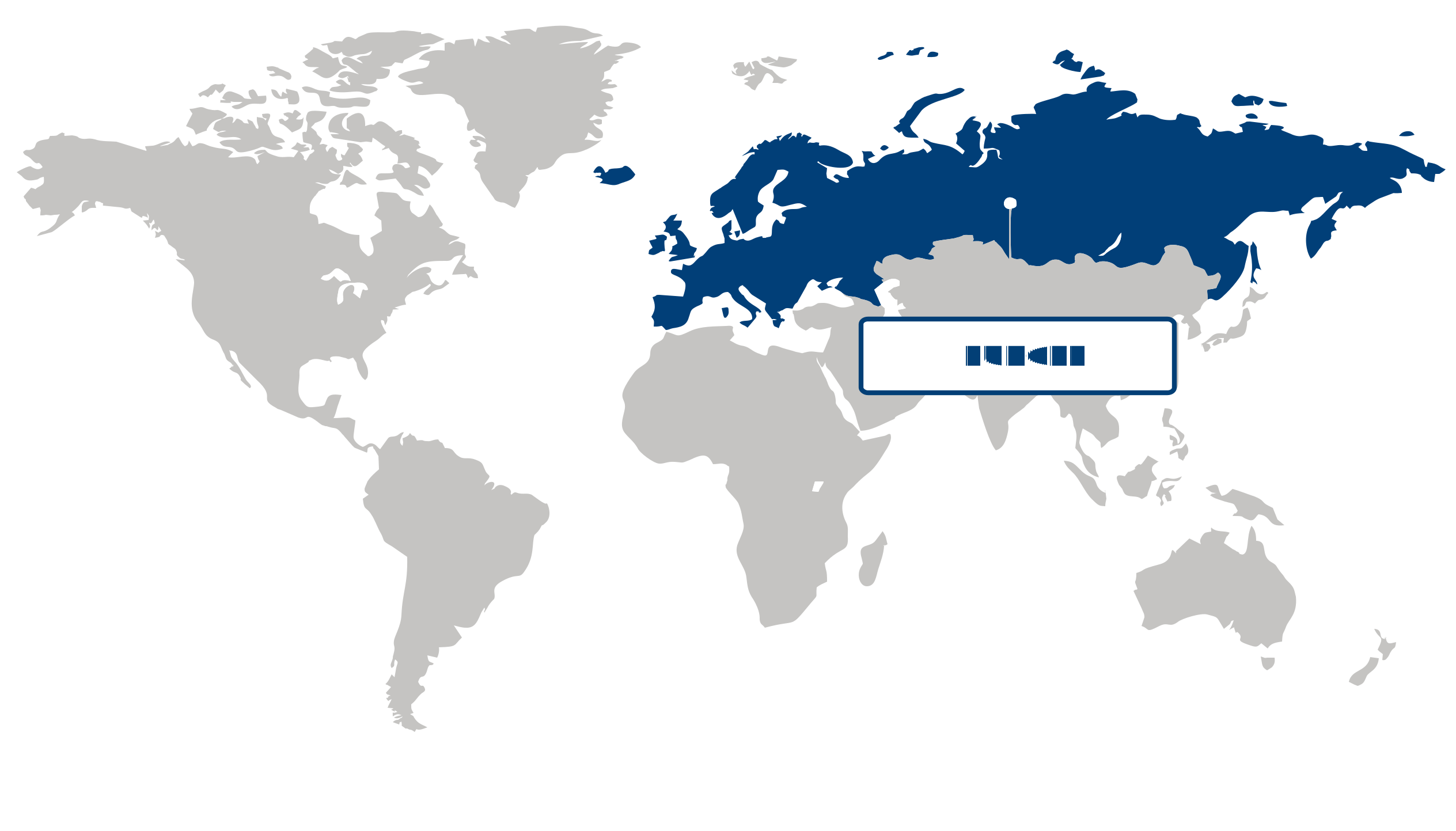
Europe (Largest Region)
In the palliative care market, Europe held the largest share in 2026, accounting for 38.69% of the market. The region benefits from relatively mature healthcare systems, established palliative care frameworks, and increasing integration of supportive services into treatment pathways for patients with serious and life-limiting conditions. An aging population and growing emphasis on quality of life are strengthening demand for coordinated pain management, symptom control, and psychosocial support. Greater recognition of palliative care as an essential component of comprehensive healthcare is also encouraging broader service integration.
Asia Pacific (Fastest-Growing Region)
Asia Pacific represents the fastest-growing region, supported by population aging, expanding healthcare access, and increasing awareness of supportive care for patients with chronic and advanced illnesses. Improvements in hospitals and community-based healthcare networks are creating more opportunities to incorporate palliative services into routine care. Rising attention to patient-centered treatment and quality-of-life outcomes is also encouraging development of specialized services. At the same time, expanding healthcare infrastructure and greater professional awareness are helping address historically limited access to formal palliative care across several markets.
| Parameter | North America | Asia Pacific | Europe | Latin America | MEA |
|---|---|---|---|---|---|
| Innovation Hub i Scale Nascent Developing Advanced | |||||
| Cost-Sensitive Region i Scale Low Medium High | |||||
| Regulatory Environment i Scale Restrictive Neutral Supportive | |||||
| Demand Drivers i Scale Weak Moderate Strong | |||||
| Development Stage i Scale Emerging Developing Developed | |||||
| Adoption Rate i Scale Low Medium High | |||||
| New Entrants / Startups i Scale Sparse Moderate Dense | |||||
| Macro Indicators i Scale Weak Stable Strong |
Key Country Insights
Germany 🇩🇪
Coordinated Care NetworksGermany is enhancing palliative care through coordinated collaboration between hospitals, community providers, and specialized care teams. Healthcare organizations in Germany continue expanding integrated service delivery to improve continuity of care for patients with complex conditions.
France 🇫🇷
Holistic Support FrameworkFrance prioritizes comprehensive palliative care by integrating physical, psychological, and supportive healthcare services. Healthcare providers in France continue strengthening coordinated treatment pathways that improve patient comfort and family engagement throughout care delivery.
Italy 🇮🇹
Home-Based Care EmphasisItaly continues expanding home-based palliative care supported by regional healthcare providers and multidisciplinary clinical teams. Healthcare organizations across Italy focus on improving continuity of care while reducing unnecessary hospital admissions for patients requiring long-term supportive services.
Japan 🇯🇵
Aging Care PrioritiesJapan is reinforcing palliative care services to address growing demand associated with an aging population and chronic disease management. Healthcare providers in Japan increasingly emphasize home-based support and coordinated clinical care to improve patient quality of life.
South Korea 🇰🇷
Community Care IntegrationSouth Korea continues expanding community-based palliative care supported by healthcare policy initiatives and specialized clinical services. Healthcare institutions in South Korea are improving multidisciplinary coordination to deliver more accessible and patient-focused supportive care.
United States 🇺🇸
Integrated Care ExpansionThe U.S. continues to strengthen palliative care through broader integration with hospitals, oncology centers, and home-based healthcare services. Healthcare providers in the U.S. increasingly emphasize multidisciplinary care models that improve symptom management and patient-centered treatment planning.
Segment Leadership and Growth Trends
Palliative Care Market Share (%), by Age Group, 2026
Go beyond the chart, access full insights & data tables
Request Free Sample ReportAge Group Segment Analysis: Adult (Largest Segment) vs Pediatric (Fastest-Growing Segment)
Adult patients accounted for the largest share of the palliative care market, representing 53.55% in 2026. The substantial need for symptom management and supportive care among adults with serious and life-limiting illnesses continues to sustain demand for palliative services. Increasing prevalence of chronic and complex diseases, together with greater recognition of the benefits of integrated pain, symptom, and psychosocial management, is supporting the use of palliative care throughout adult treatment pathways. Greater emphasis on quality of life and patient-centered care is further reinforcing the segment's leading position.
Pediatric palliative care is expected to be the fastest-growing age-group segment as healthcare systems increasingly recognize the need for specialized supportive services for children with serious or complex conditions. Pediatric programs address not only symptom management but also developmental, emotional, and family-centered care requirements. Growing awareness of early integration of palliative services, improvements in specialized pediatric healthcare, and increasing emphasis on comprehensive support for children and caregivers are creating opportunities for expansion in this segment.
Provider Segment Analysis: Home-based (Largest & Fastest-Growing Segment)
Home-based care held the largest share of the palliative care market, accounting for 47.28% in 2026, and is also the fastest-growing provider segment. Delivering palliative services at home allows patients to receive symptom management and supportive care in a familiar environment while reducing the need for frequent facility visits. Increasing preference for personalized care, greater emphasis on comfort and dignity, and improvements in home healthcare coordination are supporting adoption. Expansion of community-based care models and remote communication capabilities is further enabling healthcare professionals to manage patients outside traditional clinical settings.
| Segment | Sub-Segment | Largest Segment | Fastest Growing |
|---|---|---|---|
| Age Group | Pediatric, Adult, Geriatric | Adult | Pediatric |
| Provider | Hospitals and Clinics, Home-based, Community Settings | Home-based | Home-based |
| Condition | Cancer, Dementia, HIV, Cerebrovascular Disease, Respiratory Disease, Others | Cancer | Respiratory Disease |
| Diagnostic Group | Communicable Diseases, Non-communicable Diseases, Injury, Poisoning, External Causes, Maternal, Perinatal and Nutritional Conditions | Non-Communicable Diseases | Maternal, Perinatal and Nutritional Conditions |
Competitive Landscape and Market Positioning
Major players in the palliative care market:
1. VITAS Healthcare (United States)
2. Amedisys Inc. (United States)
3. Gentiva Health Services (United States)
4. Genesis HealthCare System (United States)
5. HammondCare (Australia)
6. Baptist Health (United States)
7. Adventist Health (United States)
8. BAYADA Home Health Care (United States)
9. Providence Health & Services (United States)
10. Kaiser Permanente (United States)
The palliative care market is evolving with increased focus on integrated care delivery models and patient-centered treatment approaches. Healthcare providers are incorporating telehealth platforms and remote monitoring technologies to improve accessibility and continuity of care for patients with chronic illnesses. Expansion of multidisciplinary support services and partnerships across healthcare ecosystems are also contributing to improved care coordination and market development.
| Company | Market Share | Company Revenue | Revenue CAGR (%) | Product Portfolio | Geographic Presence | Innovation / R&D Focus | Strategic Developments |
|---|---|---|---|---|---|---|---|
| VITAS Healthcare (United States) | |||||||
| Amedisys Inc. (United States) | |||||||
| Gentiva Health Services (United States) | |||||||
| Genesis HealthCare System (United States) | |||||||
| HammondCare (Australia) | |||||||
| Baptist Health (United States) | |||||||
| Adventist Health (United States) | |||||||
| BAYADA Home Health Care (United States) | |||||||
| Providence Health & Services (United States) | |||||||
| Kaiser Permanente (United States). |
Industry Development/News
| Company Name | Date | Key Development |
|---|---|---|
| Cornerstone Caregiving | May-26 | Warburg Pincus completed an investment in Cornerstone Caregiving, supported by a senior credit facility arranged by Monroe Capital. This capital infusion is strategically aimed at bolstering the organization’s capacity to scale home-based care operations, with a specific focus on expanding the delivery and reach of its palliative care service offerings. |
| Mayo Clinic | May-26 | Mayo Clinic has entered a strategic partnership with Bayesian Health to develop and deploy an AI-driven clinical tool. The initiative aims to enhance the early identification of patient palliative care needs, optimize referral pathways, and improve overall clinical outcomes by supporting data-informed decision-making within the care delivery process. |
| Hosparus Health | Jan-26 | Hosparus Health, alongside its affiliate Pallitus Health Partners, has expanded its collaborative partnership with Baptist Health into southern markets. This integration aims to strengthen the regional healthcare network, effectively increasing patient access to a coordinated suite of hospice and palliative care services through an enhanced provider-system alignment. |
| Big Bend Hospice | Jan-26 | Big Bend Hospice has expanded its regional service footprint and care delivery infrastructure through the opening of a new facility in Calhoun County, Florida. The expansion directly increases local capacity for hospice and palliative care, strengthening the organization's ability to provide specialized end-of-life services to the community. |
| Tuesday Health | Oct-25 | After one year of collaboration with CareSource, Tuesday Health reported successful operational outcomes in their value-based care partnership. The initiative has demonstrated a material reduction in patient hospitalizations and successfully expanded access to palliative care services, validating the efficacy of their integrated payer-provider model for supportive care delivery. |
| Hospice of the Chesapeake | Sep-25 | Hospice of the Chesapeake has finalized a partnership with OnSite Medical House Calls to broaden the availability of in-home palliative care. By integrating mobile medical services, the organization aims to enhance care continuity and accessibility for patients managing serious illnesses within community-based settings, addressing critical gaps in home-centered care delivery. |
| Koda Health | Apr-25 | Koda Health has established a strategic partnership with Guidehealth to integrate proprietary technology-enabled care planning tools into clinical provider workflows. This digital integration is designed to improve care coordination and expand access to palliative services, allowing for more scalable and efficient management of patients with serious, long-term health conditions. |
| Humana | Mar-25 | Humana has partnered with Thyme Care to broaden the scope of palliative care services specifically for oncology patients. This collaborative delivery model aims to provide integrated supportive care, ensuring that oncology patients have timely access to palliative resources as part of their comprehensive cancer treatment and management strategy. |
| Compassus | Oct-24 | Compassus has advanced its growth strategy by leveraging joint venture models with healthcare systems, following a collaboration with Providence. This approach is intended to scale home-based care delivery, allowing Compassus to increase market presence and enhance the accessibility of palliative and related supportive care services across its partner network. |
| Community Hospice & Palliative Care | Jun-24 | Community Hospice & Palliative Care has strengthened its regional infrastructure by opening a new location in Florida. This expansion supports the operation of interdisciplinary care teams and serves as a strategic platform to facilitate further growth and service accessibility across the Florida and Georgia markets, increasing overall regional capacity. |
Customize Your Report
Explore examples of how this report can be tailored to different research needs, including custom segments, additional topics or chapters, and related reports. Click a section of the wheel or its numbered marker to explore the available options.
Palliative Care Market — Custom Segments
| Segment | Sub-Segment |
|---|---|
| Payment Model | Public Insurance, Private Insurance, Out-of-Pocket, Government-Funded Programs |
| Disease Stage | Early-Stage Disease, Advanced Disease, End-of-Life Care |
| Referral Source | Primary Care Providers, Specialist Physicians, Hospitals, Home Healthcare Providers, Self/Family Referral |
Palliative Care Market — Custom TOC
| Custom Chapter | Custom Details |
|---|---|
| Care Delivery Model Benchmarking |
|
| Home-Based & Community Care Expansion |
|
| Provider Referral Pathways & Care Coordination |
|
Need a different cut of the data?
Request Custom ResearchWhat is the market valuation of palliative care?
What are the growth projections for the palliative care industry?
How is telehealth reshaping service delivery in the palliative care market?
Why are government funding initiatives important for expansion of the palliative care market?
Why does the adult age group dominate the palliative care market?
What is fueling growth in pediatric palliative care services?
Why does Europe lead the palliative care market?
What is driving Asia Pacific growth in the palliative care market?
Which companies dominate the palliative care landscape?
Our Clients
"The team took the time to understand our specific business needs and delivered a report that was well aligned with our objectives. Their expertise and understanding of the industry were clearly reflected in the quality and relevance of the insights provided."
Siemens Healthcare
"Our experience in acquiring the research report has been excellent. The depth of analysis, and actionable insights provided have been extremely valuable in supporting our ongoing R&D efforts."
GC Biopharma
"The report offered a comprehensive view of the market trends. The in-depth segmentation and analysis of emerging opportunities gave us a better understanding of the market."
Medtronic
Our Research Team & Methodology
Every Fundamental Business Insights report is built by a dedicated vertical research team, validated through a structured primary-and-secondary methodology, and reviewed for accuracy before it reaches you.
Research Team Overview
Prepared by the Healthcare & Medical Devices Research Team
Delivery
Published
Demand
Available
Support
Trust & Compliance
Research Domains
10 coverage areasResearch Intelligence
| Source | Reference |
|---|---|
| World Health Organization (WHO) | www.who.int |
| U.S. Food & Drug Administration (FDA) | www.fda.gov |
| European Medicines Agency (EMA) | www.ema.europa.eu |
| Centers for Disease Control and Prevention (CDC) | www.cdc.gov |
| National Institutes of Health (NIH) | www.nih.gov |
| National Center for Biotechnology Information (NCBI) | www.ncbi.nlm.nih.gov |
| PubMed | pubmed.ncbi.nlm.nih.gov |
| ClinicalTrials.gov | clinicaltrials.gov |
| International Organization for Standardization (ISO) | www.iso.org |
| ASTM International | www.astm.org |
| Advanced Medical Technology Association (AdvaMed) | www.advamed.org |
| Medical Device Innovation Consortium (MDIC) | mdic.org |
| Biotechnology Innovation Organization (BIO) | www.bio.org |
| International Federation of Pharmaceutical Manufacturers & Associations (IFPMA) | www.ifpma.org |
| U.S. Pharmacopeia (USP) | www.usp.org |
| European Directorate for the Quality of Medicines & HealthCare (EDQM) | www.edqm.eu |
| World Organisation for Animal Health (WOAH) | www.woah.org |
| American Hospital Association (AHA) | www.aha.org |
| OECD Health | www.oecd.org/health |
| World Bank Data | data.worldbank.org |
Research Workflow & Quality Assurance
Data Collection
Verified information gathered through primary and secondary research.
Data Triangulation
Cross-validation using multiple independent data sources.
Forecast Modelling
Market estimates developed using historical trends and analytical models.
Analyst Validation
Findings reviewed by domain experts for accuracy and consistency.
Editorial & Quality Review
Final editorial, quality, and compliance checks before publication.
Final Publication
Released after successful completion of the internal review process.
Report Coverage
📊 Market Assessment
- Market Size & Forecast
- Market Segmentation
- Regional Analysis
- Growth Drivers & Challenges
- Market Dynamics
🏢 Competitive Intelligence
- Competitive Landscape
- Company Profiles
- Competitive Benchmarking
- Mergers & Acquisitions
- Market Share Analysis or Key Company Strategies
🔍 Strategic Analysis
- Value Chain Analysis
- Porter's Five Forces
- PESTLE Analysis
- Pricing Trends
- Supply-Demand Analysis
🚀 Future Outlook
- Technology Landscape
- Regulatory Landscape
- Investment & Funding Landscape
- Emerging Opportunities
- Future Market Outlook
Have a question about this report or need a custom scope?
Request Customization