



Palmitic Acid Market Size & Growth Forecast 2027–2036, By Segments (End-use), Regional Demand Trends (North America, Asia Pacific, Europe), Key Country Insights (U.S., Japan, South Korea, Germany, France, Italy), and Competitive Landscape
Market Size and Growth Outlook
Palmitic Acid Market size was around USD 462.9 million in 2026 and is slated to grow at a 3.14% CAGR from 2027 to 2036, attaining USD 630.61 million by 2036. The industry revenue for 2027 is calculated at USD 475.12 million.
Base Year Value (2026)
USD 462.9 million
CAGR (2027-2036)
3.14%
Forecast Year Value (2036)
USD 630.61 million

Historical Data Period
2022-2026

Largest Region
Europe

Forecast Period
2027-2036
Palmitic Acid Market Intelligence Snapshot:
-
Regional Market Dynamics:
- Europe held a 34.98% market share in 2026, supported by its established oleochemical processing base, mature supply networks, and consistent downstream demand across personal care, food ingredients, and industrial applications.
- Asia Pacific is projected to grow at a 3.88% CAGR, driven by expanding manufacturing capacity, cost-competitive processing, and increasing consumption of oleochemical derivatives across consumer and industrial sectors.
-
Segment Momentum:
- Soap & Detergent accounted for 50.88% of the market in 2026 because palmitic acid is widely used to improve product texture, hardness, and surfactant performance in large-scale cleaning product manufacturing.
- Personal Care and Cosmetics is the fastest-growing segment as formulators increase the use of palmitic acid for emollient properties, formulation stability, and consistency in skincare and beauty products.
-
Market Expansion Drivers:
- Widespread use in cosmetics and personal care formulations including soaps and surfactants.
- Rising disposable incomes boosting global consumption of soaps and detergents.
- Shift toward bio-based surfactants and sustainable oleochemical feedstocks in industrial applications.
-
Leading Market Participants:
Major players in the palmitic acid market include Wilmar International Limited (Singapore), KLK OLEO (Malaysia), IOI Oleochemicals (Malaysia), BASF SE (Germany), Akzo Nobel N.V. (Netherlands), ADM (Archer Daniels Midland Company) (United States), Emery Oleochemicals (Malaysia), Vantage Specialty Chemicals (United States), Kao Corporation (Japan), Oleon NV (Belgium).
Global Market Forecast Snapshot:
-
Market Outlook:
- 2026 Market Size: USD 462.9 million
- 2027 Estimated Market Size: USD 475.12 million.
- Projected Market Size: USD 630.61 million by 2036
- Growth Forecasts: 3.14% CAGR (2027-2036)
-
Regional and Segment Outlook:
- Leading Regional Market: Europe
- High-Growth Regional Hub: Asia Pacific
- Core Revenue Segment: Soap & Detergent (End-use)
- Emerging Opportunity Segment: Personal Care and Cosmetics (End-use)
Market Growth Drivers and Industry Trends
Widespread use in cosmetics and personal care formulations including soaps and surfactants
The extensive application of palmitic acid across cosmetics and personal care products is supporting steady demand from formulators seeking functional ingredients for everyday consumer products. In the palmitic acid market, its use in soaps, surfactants, creams, lotions, and other personal care formulations is driven by its ability to contribute to product texture, stability, cleansing performance, and emollient properties. Its compatibility with a broad range of formulation systems allows manufacturers to incorporate it into diverse product categories, while continued consumption of personal hygiene and skincare products maintains recurring requirements for fatty acid-based ingredients. The expanding range of cosmetic and personal care formulations further increases opportunities for palmitic acid across both cleansing and skin-conditioning applications.
Rising disposable incomes boosting global consumption of soaps and detergents
Higher disposable incomes in developing and emerging economies are enabling consumers to spend more on household hygiene and personal care products, increasing the consumption of soaps and detergents. This trend will drive the palmitic acid market growth as palmitic acid is used in the production of surfactants and other formulation components required for cleansing products. Greater awareness of hygiene and rising household consumption of packaged cleaning products are also encouraging manufacturers to expand production capacities and product offerings. As purchasing power improves, demand is broadening from basic cleansing products toward differentiated personal care and household formulations, creating additional requirements for oleochemical ingredients such as palmitic acid.
Shift toward bio-based surfactants and sustainable oleochemical feedstocks in industrial applications
The increasing preference for renewable raw materials is encouraging industrial manufacturers to incorporate bio-based feedstocks into surfactant and chemical production. For the palmitic acid market, this transition is creating opportunities because palmitic acid derived from oleochemical sources can serve as a functional feedstock in applications where manufacturers seek alternatives to petroleum-based ingredients. Sustainability considerations across chemical manufacturing are encouraging greater attention to renewable sourcing, biodegradable formulations, and lower-impact production pathways. This shift is particularly relevant for surfactants and specialty chemicals, where bio-based fatty acids can provide useful functional characteristics while supporting manufacturers' efforts to develop more sustainable product formulations.
| Growth Driver Assessment Framework | |||||
| Growth Driver | Impact On CAGR | Regulatory Influence | Geographic Relevance | Adoption Rate | Impact Timeline |
|---|---|---|---|---|---|
| Applications in Personal Care & Industrial Sectors | 1.20% | Short term (≤ 2 yrs) | Europe, North America (spillover: Asia Pacific) | Medium | Fast |
| Technological Advancements in Palmitic Acid Production | 1.00% | Medium term (2–5 yrs) | Asia Pacific, Europe (spillover: North America) | Low | Moderate |
| Regulatory Guidelines on Fatty Acids & Chemicals | 1.20% | Long term (5+ yrs) | North America, Europe (spillover: MEA) | High | Moderate |
| Widespread use in cosmetics and personal care formulations including soaps and surfactants | 1.90% | Moderate | Asia Pacific, North America, Europe | High | Near Term |
| Rising disposable incomes boosting global consumption of soaps and detergents | 1.60% | Low | Asia Pacific | High | Near Term |
| Shift toward bio-based surfactants and sustainable oleochemical feedstocks in industrial applications | 1.20% | Moderate | Europe, North America, Asia Pacific | Emerging | Mid Term |
Unlock insights tailored to your business with our bespoke market research solutions - Click to get your customized report now!
Regional Demand Dynamics
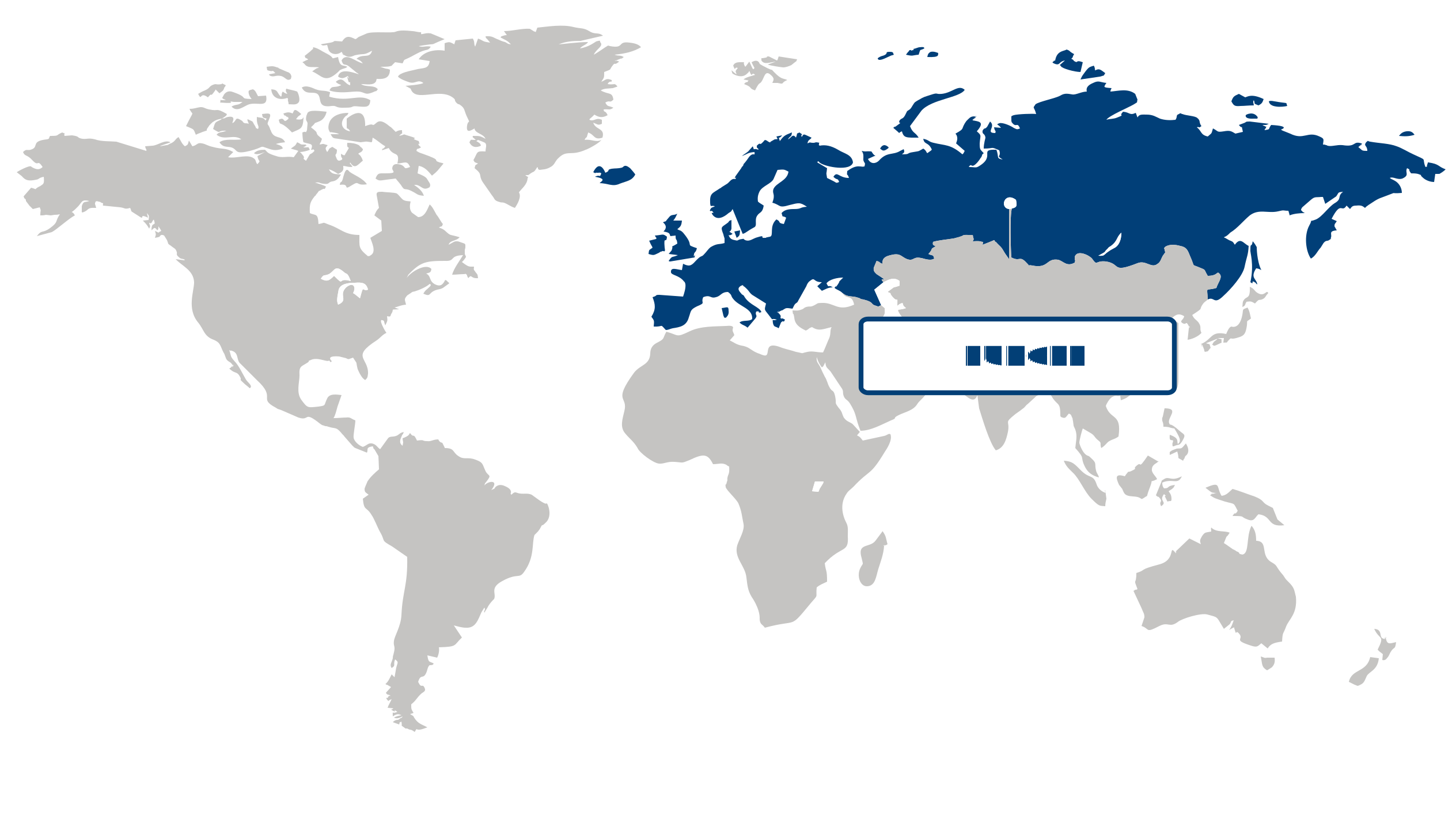
Largest Region
Europe
34.98% Market Share in 2026
Europe (Largest Region) vs Asia Pacific (Fastest-Growing Region)
Europe held the largest share of the palmitic acid market at 34.98% in 2026, supported by its mature oleochemical and specialty chemical industries and established demand from food, personal care, pharmaceutical, and industrial applications. The region benefits from sophisticated processing infrastructure, strong quality and safety standards, and growing interest in bio-based and sustainably sourced raw materials. Demand for functional ingredients in cosmetics and personal care formulations, together with established manufacturing capabilities for specialty chemicals, continues to reinforce the region's market position. Increasing emphasis on traceability and environmentally responsible production is also encouraging suppliers to adopt more sustainable sourcing and processing practices.
Asia Pacific is the fastest-growing regional market, benefiting from expanding manufacturing activity, rising consumption of personal care and processed food products, and increasing industrial demand across emerging economies. The region's growing consumer base is supporting broader use of fatty acids and oleochemical derivatives in consumer and industrial formulations. Expanding chemical-processing capacity and improving supply-chain infrastructure are further strengthening regional production capabilities. In addition, rising investments in cosmetics, food processing, and specialty chemical manufacturing are creating new applications and supporting sustained demand for palmitic acid.
Key Country Insights
The U.S. maintains broad palmitic acid demand across personal care, food processing, pharmaceuticals, and industrial chemicals. Manufacturers increasingly seek reliable feedstock sources that support consistent product quality and diversified downstream applications.
Japan values palmitic acid for cosmetic, food, and pharmaceutical formulations requiring dependable purity and stable performance. Manufacturers continue emphasizing quality assurance and supply chain reliability to meet demanding application requirements.
South Korea integrates palmitic acid into cosmetics and personal care production where ingredient functionality and formulation compatibility are important. Domestic manufacturers increasingly favor high-quality raw materials that support premium product positioning.
Germany uses palmitic acid extensively in specialty chemicals, lubricants, and personal care manufacturing where product consistency is essential. Companies prioritize sustainable raw material procurement alongside efficient processing technologies.
France utilizes palmitic acid across cosmetics, specialty chemicals, and food ingredients with emphasis on sustainable sourcing and formulation quality. Manufacturers continue aligning procurement strategies with evolving environmental and consumer expectations.
Italy supports palmitic acid demand through food processing, personal care, and industrial chemical production requiring dependable oleochemical inputs. Businesses increasingly focus on supply flexibility and efficient integration into established manufacturing operations.
Segment Leadership and Growth Trends
End-use Segment Analysis: Soap & Detergent (Largest Segment) vs Personal Care and Cosmetics (Fastest-Growing Segment)
The soap & detergent segment held the largest share of the palmitic acid market in 2026, accounting for 50.88%, reflecting the established use of palmitic acid in cleansing and formulation applications. Its functional properties make it suitable for supporting product consistency, texture, and formulation performance in soaps and detergents. Broad household and commercial demand for cleaning products provides a stable consumption base, while established formulation practices and the versatility of palmitic acid continue to support its strong position within this end-use segment.
Personal care and cosmetics represent the fastest-growing end-use segment, supported by increasing demand for functional ingredients that contribute to desirable texture, stability, and sensory characteristics in beauty and personal care formulations. Palmitic acid can serve multiple formulation roles, making it suitable for a broad range of cosmetic and personal care products. Rising consumer interest in skincare, grooming, and appearance-oriented products is expanding the application base, while continued product innovation is creating further opportunities for palmitic acid in this segment.
| Report Segmentation | |||
| Segment | Sub-Segment | Largest Segment | Fastest Growing Segment |
|---|---|---|---|
| End-use | Soap & Detergent, Personal Care and Cosmetics, Greases and Lubricants, Others | Soap & Detergent | Personal Care and Cosmetics |
 Read our Research Approach
Competitive Landscape and Market Positioning
Prominent players in the palmitic acid market:
1. Wilmar International Limited (Singapore)
2. KLK OLEO (Malaysia)
3. IOI Oleochemicals (Malaysia)
4. BASF SE (Germany)
5. Akzo Nobel N.V. (Netherlands)
6. ADM (Archer Daniels Midland Company) (United States)
7. Emery Oleochemicals (Malaysia)
8. Vantage Specialty Chemicals (United States)
9. Kao Corporation (Japan)
10. Oleon NV (Belgium)
The palmitic acid market is evolving with increasing emphasis on sustainable sourcing and industrial-grade quality improvements. Process optimization efforts are enhancing production efficiency and consistency. The palmitic acid market continues to grow as demand spans food, cosmetics, and chemical applications.
Industry Development/News
| Company Name | Date | Key Development |
|---|---|---|
| Checkerspot; Huvepharma | Oct-25 | Checkerspot and Huvepharma initiated large-scale production of human milk fat analog (OPO) using precision-fermented sn-2 palmitate algal oil. The collaboration focuses on industrial manufacturing of structured lipids designed to replicate human milk fat composition, supporting applications in infant nutrition while advancing fermentation-based oleochemical production pathways relevant to palmitic acid derivatives. |
| Adani Wilmar | Jul-24 | Adani Wilmar acquired a 67% stake in Omkar Chemicals to strengthen its position in the specialty chemicals and oleochemical value chain. The investment enhances downstream integration and expands the company’s manufacturing and processing capabilities across fats, oils, and derivatives, reinforcing its strategic exposure to palmitic acid-linked chemical segments. |
| Wilmar International Limited | Dec-24 | Wilmar International subsidiary Lence Pte. Ltd. entered into an agreement with Adani Commodities LLP granting an option to acquire up to 31.06% equity in Adani Wilmar Limited. The transaction strengthens strategic alignment across oleochemical supply chains and reinforces Wilmar’s long-term positioning in edible oils and fatty acid-based chemical markets. |
| Kuala Lumpur Kepong Bhd | Jul-24 | Kuala Lumpur Kepong Bhd inaugurated a high-purity fatty acids and glycerin production facility in Zhangjiagang, China. The plant increases annual processing capacity to 500,000 tonnes, strengthening the company’s downstream oleochemical manufacturing footprint and enhancing supply availability for fatty acid derivatives, including palmitic acid, across industrial applications. |
Why Choose Us
Specialized Expertise: Our team comprises industry experts with a deep understanding of your market segment. We bring specialized knowledge and experience that ensures our research and consulting services are tailored to your unique needs.
Customized Solutions: We understand that every client is different. That's why we offer customized research and consulting solutions designed specifically to address your challenges and capitalize on opportunities within your industry.
Proven Results: With a track record of successful projects and satisfied clients, we have demonstrated our ability to deliver tangible results. Our case studies and testimonials speak to our effectiveness in helping clients achieve their goals.
Cutting-Edge Methodologies: We leverage the latest methodologies and technologies to gather insights and drive informed decision-making. Our innovative approach ensures that you stay ahead of the curve and gain a competitive edge in your market.
Client-Centric Approach: Your satisfaction is our top priority. We prioritize open communication, responsiveness, and transparency to ensure that we not only meet but exceed your expectations at every stage of the engagement.
Continuous Innovation: We are committed to continuous improvement and staying at the forefront of our industry. Through ongoing learning, professional development, and investment in new technologies, we ensure that our services are always evolving to meet your evolving needs.
Value for Money: Our competitive pricing and flexible engagement models ensure that you get maximum value for your investment. We are committed to delivering high-quality results that help you achieve a strong return on your investment.
Select Licence Type

