



Pedestrian Protection Airbag Market Size & Growth Forecast 2027–2036, By Segments (Vehicle, Airbag Placement, Deployment Mechanism, Sales Channel, Technology), Regional Demand Trends (North America, Asia Pacific, Europe), Key Country Insights (U.S., Japan, South Korea, Germany, France, Italy), and Competitive Landscape
Market Size and Growth Outlook
Pedestrian Protection Airbag Market size was assessed at USD 4.15 Billion in 2026 and is poised to grow at 10.92% CAGR between 2027 and 2036, crossing USD 11.7 Billion by 2036. The industry revenue for 2027 is calculated at USD 4.54 Billion.
Base Year Value (2026)
USD 4.15 Billion
CAGR (2027-2036)
10.92%
Forecast Year Value (2036)
USD 11.7 Billion

Historical Data Period
2022-2026

Largest Region
Europe

Forecast Period
2027-2036
Pedestrian Protection Airbag Market Intelligence Snapshot:
-
Regional Market Dynamics:
- Europe held 36.72% in 2025, supported by stringent vehicle safety requirements, established automotive manufacturing, and strong emphasis on protecting vulnerable road users.
- Asia Pacific is projected to grow fastest as automotive production, vehicle ownership, safety regulations, consumer awareness, and fleet modernization accelerate adoption.
-
Segment Momentum:
- Passenger cars held 62.01% of the market in 2025 because manufacturers are increasingly integrating advanced pedestrian safety technologies into vehicle safety architectures to reduce injury severity.
- Hood airbags are the fastest-growing placement segment, with a 59.36% market share in 2025, as they provide added protection during pedestrian impacts and integrate with advanced sensing and collision detection systems.
-
Market Expansion Drivers:
- Strict pedestrian safety regulations accelerating integration of advanced exterior airbag systems
- Rising pedestrian accident rates driving automotive OEM investment in active safety systems
- ADAS integration enhancing deployment of predictive collision mitigation and protection systems
-
Leading Market Participants:
Key companies in the pedestrian protection airbag market include Autoliv Inc. (Sweden), Robert Bosch GmbH (Germany), Continental AG (Germany), Joyson Safety Systems (China), ZF Friedrichshafen AG (Germany), Toyoda Gosei Co., Ltd. (Japan), Magna International Inc. (Canada), Hyundai Mobis Co., Ltd. (South Korea)
Global Market Forecast Snapshot:
-
Market Outlook:
- 2026 Market Size: USD 4.15 Billion
- 2027 Estimated Market Size: USD 4.54 Billion
- Projected Market Size: USD 11.7 Billion by 2036
- Growth Forecasts: 10.92% CAGR (2027-2036)
-
Regional and Segment Outlook:
- Leading Regional Market: Europe
- High-Growth Regional Hub: Asia Pacific
- Core Revenue Segment: Passenger Cars (Vehicle) | Hood Airbags (Airbag Placement) | Sensor-based Systems (Deployment Mechanism) | OEM (Sales Channel) | Sensor-based Detection Systems (Technology)
- Emerging Opportunity Segment: Passenger Cars (Vehicle) | Hood Airbags (Airbag Placement) | Sensor-based Systems (Deployment Mechanism) | OEM (Sales Channel) | AI-powered Pedestrian Recognition (Technology)
Market Growth Drivers and Industry Trends
Strict pedestrian safety regulations accelerating integration of advanced exterior airbag systems
Strengthening vehicle safety requirements are encouraging manufacturers to adopt technologies that reduce pedestrian injury severity, which will drive the pedestrian protection airbag market growth. Regulatory authorities are placing greater emphasis on protecting vulnerable road users during vehicle impact assessments, prompting automotive manufacturers to integrate exterior airbag systems into advanced vehicle safety architectures. These systems are designed to deploy rapidly during pedestrian collisions, helping reduce the impact force on critical body regions while supporting compliance with evolving automotive safety standards.
Rising pedestrian accident rates driving automotive OEM investment in active safety systems
Growing concern over pedestrian-related road accidents is motivating automakers to expand investment in advanced protection technologies, and the pedestrian protection airbag market is benefiting from this increased focus on occupant and pedestrian safety. Automotive manufacturers are incorporating active safety features that combine sensing technologies with rapid-response protection mechanisms to minimize injury risks in urban and high-traffic environments. The broader emphasis on comprehensive vehicle safety encourages the integration of pedestrian-focused systems alongside existing collision avoidance and impact mitigation technologies.
ADAS integration enhancing deployment of predictive collision mitigation and protection systems
The increasing deployment of advanced driver assistance systems is creating favorable conditions that will propel the pedestrian protection airbag market growth through improved detection and response capabilities. Cameras, radar, and other sensing technologies continuously monitor the driving environment, enabling vehicles to recognize potential pedestrian collision scenarios before impact occurs. This predictive capability allows exterior airbag systems to coordinate with other safety functions, improving deployment timing and supporting more effective protection within increasingly intelligent vehicle platforms.
| Growth Driver Assessment Framework | |||||
| Growth Driver | Impact On CAGR | Regulatory Influence | Geographic Relevance | Adoption Rate | Impact Timeline |
|---|---|---|---|---|---|
| Strict pedestrian safety regulations accelerating integration of advanced exterior airbag systems | 2% | High | Europe, North America | High | Near Term |
| Rising pedestrian accident rates driving automotive OEM investment in active safety systems | 1.8% | High | Asia Pacific, Europe | High | Near Term |
| ADAS integration enhancing deployment of predictive collision mitigation and protection systems | 1.6% | High | North America, Asia Pacific | High | Mid Term |
Unlock insights tailored to your business with our bespoke market research solutions - Click to get your customized report now!
Regional Demand Dynamics
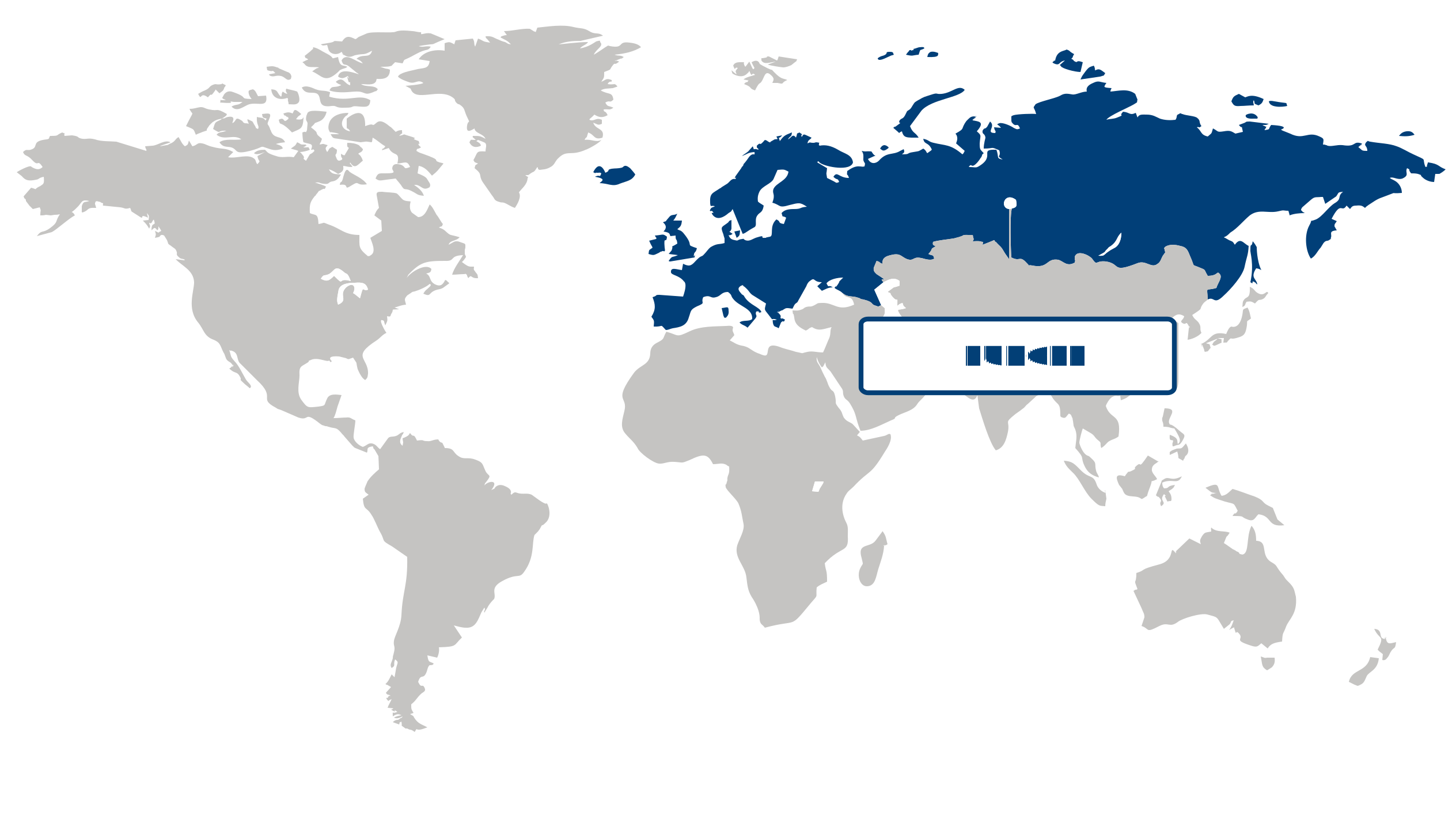
Largest Region
Europe
36.72% Market Share in 2026
Europe (Largest Region) vs Asia Pacific (Fastest-Growing Region)
In the pedestrian protection airbag market, Europe held the largest share of 36.72% in 2026, supported by stringent vehicle safety requirements and strong emphasis on protecting vulnerable road users. Automotive manufacturers in the region continue to prioritize advanced passive safety systems as vehicle safety standards evolve, encouraging the integration of technologies designed to reduce pedestrian injury severity during collisions. High consumer awareness of vehicle safety and the region's established automotive manufacturing base further reinforce demand for pedestrian protection airbags.
Asia Pacific is projected to be the fastest-growing region, supported by expanding automotive production, rising vehicle ownership, and increasing attention to road safety technologies. Growing regulatory focus on vehicle safety is encouraging manufacturers to incorporate advanced pedestrian protection features into new vehicle platforms. In addition, increasing consumer awareness of automotive safety and the modernization of vehicle fleets are creating favorable conditions for wider adoption of pedestrian protection airbags.
No card data available for this language/report.
Segment Leadership and Growth Trends
Vehicle Segment Analysis: Passenger Cars (Largest & Fastest-Growing Segment)
Passenger cars accounted for the largest market share of 62.01% in 2026 and are also projected to be the fastest-growing vehicle segment in the pedestrian protection airbag market. The segment benefits from the widespread adoption of advanced vehicle safety technologies and increasing emphasis on reducing the severity of injuries involving pedestrians. Pedestrian protection airbags are increasingly considered part of broader vehicle safety architectures that combine sensing, collision detection, and external protection technologies. Rising attention to road safety and the integration of advanced safety systems into passenger vehicles are expected to sustain strong demand in this segment.
Airbag Placement Segment Analysis: Hood Airbags (Largest & Fastest-Growing Segment)
Hood airbags held the largest market share of 59.36% in 2026 and are also expected to be the fastest-growing airbag placement segment in the pedestrian protection airbag market. These systems are designed to provide an additional protective layer between pedestrians and hard vehicle structures, particularly around areas associated with severe impact risk. Their integration with vehicle sensing and collision detection technologies supports rapid deployment when a pedestrian impact is identified. Growing focus on improving pedestrian safety and the continued development of advanced vehicle protection systems are strengthening demand for hood airbags.
Deployment Mechanism Segment Analysis: Sensor-based Systems (Largest & Fastest-Growing Segment)
Sensor-based systems accounted for the largest market share in 2026 and are also projected to be the fastest-growing deployment mechanism in the pedestrian protection airbag market. Accurate and rapid detection is essential for deploying pedestrian airbags within the required response window, making advanced sensing capabilities central to system performance. Sensor-based technologies can identify collision conditions and provide the necessary input for coordinated airbag deployment. As vehicle safety architectures become more intelligent and increasingly dependent on real-time environmental and impact detection, the integration of sensor-based deployment systems is expected to continue expanding.
| Report Segmentation | |||
| Segment | Sub-Segment | Largest Segment | Fastest Growing Segment |
|---|---|---|---|
| Vehicle | Passenger Cars, Commercial Vehicle | Passenger Cars | Passenger Cars |
| Airbag Placement | Hood Airbags, Side Airbags, Front Bumper Airbag Systems | Hood Airbags | Hood Airbags |
| Deployment Mechanism | Sensor-based Systems, Crash Detection Systems | Sensor-based Systems | Sensor-based Systems |
| Sales Channel | OEM, Aftermarket | OEM | OEM |
| Technology | Sensor-based Detection Systems, AI-powered Pedestrian Recognition, Automatic Emergency Braking Integration, Pre-collision Assistance Systems | Sensor-based Detection Systems | AI-powered Pedestrian Recognition |
 Read our Research Approach
Competitive Landscape and Market Positioning
Leading companies in the pedestrian protection airbag market:
- Autoliv, Inc. (Sweden)
- Robert Bosch GmbH (Germany)
- Continental AG (Germany)
- Joyson Safety Systems (China)
- ZF Friedrichshafen AG (Germany)
- Toyoda Gosei Co., Ltd. (Japan)
- Magna International, Inc. (Canada)
- Hyundai Mobis Co., Ltd. (South Korea)
Advancing vehicle safety expectations are encouraging manufacturers in the pedestrian protection airbag market to compete through engineering precision and system responsiveness rather than component supply alone. Product development is increasingly focused on improving sensor coordination, deployment accuracy, and compatibility with evolving vehicle front-end designs while maintaining compliance with changing safety requirements across global markets. Suppliers that can integrate pedestrian protection technologies without significantly affecting vehicle weight, styling, or manufacturing complexity are strengthening their competitive position, particularly as automakers seek safety solutions that can be adapted across multiple vehicle platforms.
Industry Development/News
| Company Name | Date | Key Development |
|---|---|---|
| Subaru | Apr-25 | Subaru has advanced its safety portfolio by developing an external airbag system specifically engineered to protect cyclists and pedestrians during vehicle collisions. This innovation represents a strategic shift toward proactive safety measures that mitigate injury severity for vulnerable road users, reinforcing the company's commitment to achieving an accident-free future through specialized protective technologies. |
| Sumitomo Electric Industries | Oct-24 | Sumitomo Electric Industries commenced commercial sales of its NEXUSEYE millimeter-wave sensors, designed for high-accuracy pedestrian detection in challenging visibility conditions. By utilizing advanced radar technology to detect vulnerable road users at distances up to 60 meters, the product offers a resilient alternative to traditional LiDAR and image-based sensors, directly enhancing the sensing infrastructure necessary for pedestrian safety systems. |
Why Choose Us
Specialized Expertise: Our team comprises industry experts with a deep understanding of your market segment. We bring specialized knowledge and experience that ensures our research and consulting services are tailored to your unique needs.
Customized Solutions: We understand that every client is different. That's why we offer customized research and consulting solutions designed specifically to address your challenges and capitalize on opportunities within your industry.
Proven Results: With a track record of successful projects and satisfied clients, we have demonstrated our ability to deliver tangible results. Our case studies and testimonials speak to our effectiveness in helping clients achieve their goals.
Cutting-Edge Methodologies: We leverage the latest methodologies and technologies to gather insights and drive informed decision-making. Our innovative approach ensures that you stay ahead of the curve and gain a competitive edge in your market.
Client-Centric Approach: Your satisfaction is our top priority. We prioritize open communication, responsiveness, and transparency to ensure that we not only meet but exceed your expectations at every stage of the engagement.
Continuous Innovation: We are committed to continuous improvement and staying at the forefront of our industry. Through ongoing learning, professional development, and investment in new technologies, we ensure that our services are always evolving to meet your evolving needs.
Value for Money: Our competitive pricing and flexible engagement models ensure that you get maximum value for your investment. We are committed to delivering high-quality results that help you achieve a strong return on your investment.
Select Licence Type

