Perfume and Fragrances Market Size & Forecasts 2026-2035, By Segments (End User, Sales Channel, Product Type, Fragrance Family), Growth Opportunities, Innovation Landscape, Regulatory Shifts, Strategic Regional Insights (U.S., Japan, China, South Korea, UK, Germany, France), and Competitive Dynamics (L'Oréal, Estée Lauder, Coty, Shiseido, Givaudan)
Market Size and Growth Outlook
Perfume and Fragrances Market size is projected to expand significantly, moving from USD 78.76 billion in 2025 to USD 118.85 billion by 2035, with a CAGR of 4.2% during the 2026-2035 forecast period. The expected revenue for 2026 is USD 81.6 billion.
Get more details on this report
Request Free Sample ReportPerfume and Fragrances Market Intelligence Snapshot
Regional Market Dynamics
Segment Momentum
Market Expansion Drivers
Leading Market Participants
Global Market Forecast Snapshot
Market Outlook
Regional and Segment Outlook
Market Growth Drivers and Industry Trends
The shift toward innovative fragrance blends is reshaping the perfume and fragrances market by responding to evolving consumer preferences for unique and personalized scent experiences. Leading companies like Givaudan and Firmenich have invested heavily in biotechnological advances and sustainable ingredients, enabling the creation of novel aroma profiles. This evolution is also driven by rising consumer interest in natural and ethically sourced components, as highlighted by the International Fragrance Association’s (IFRA) emphasis on clean-label formulations. For incumbents, these trends necessitate continued R&D investments to maintain relevance, while new entrants can capitalize on niche market segments targeting eco-conscious or health-aware demographics. As innovation accelerates, the market is poised to see a broader spectrum of differentiated offerings that blend artistry with science, reinforcing brand loyalty and encouraging trial behavior.
Rising Demand in Personal & Household Products
Growth in personal care and household cleaning sectors is a significant catalyst within the perfume and fragrances market, fueled by heightened consumer focus on wellness and home ambiance, especially post-pandemic. Corporations such as Procter & Gamble have expanded their fragrance portfolios to include scent-infused detergents and hand sanitizers, illustrating the integration of fragrance into everyday essentials. This cross-category demand reinforces fragrance ubiquity, enabling market players to leverage brand equity across multiple touchpoints. Both established firms and startups benefit by innovating around convenience and multi-functionality, suggesting that consumer lifestyles emphasizing hygiene and comfort will underpin sustained adoption of fragranced products beyond personal cosmetics.
Regulatory Compliance on Fragrance Safety
Increasingly stringent regulatory frameworks centered on fragrance safety, such as the European Union’s REACH regulations and IFRA’s updated standards, are shaping the operational landscape of the perfume and fragrances market. These measures emphasize transparency, allergen disclosure, and ingredient restrictions, compelling companies like L’Oréal to enhance testing and documentation processes. While compliance introduces complexity and cost, it also presents strategic opportunities to differentiate through certified safety and sustainability credentials. For emerging players, early alignment with regulatory expectations supports faster market entry and consumer trust. The ongoing regulatory evolution is expected to drive greater industry consolidation and innovation in alternative ingredients that meet safety mandates without compromising olfactory appeal.
Industry Restraints:
Stringent Regulatory and Compliance Frameworks
The perfume and fragrances market grapples with complex regulatory landscapes, particularly related to ingredient safety and labeling requirements, which significantly slow product launches and innovation cycles. Agencies like the European Chemicals Agency (ECHA) impose stringent restrictions on allergenic substances, compelling manufacturers to reformulate products to comply with REACH regulations. This regulatory burden increases operational costs and limits the use of certain popular natural and synthetic ingredients. For industry leaders like Givaudan and Firmenich, navigating these compliance demands requires substantial investment in R&D and legal expertise, while smaller firms often face disproportionate challenges, creating barriers to market entry. Moving forward, these durable regulatory constraints will necessitate ongoing adaptation, fostering an environment where compliance agility becomes a critical competitive asset.
Raw Material Sourcing and Supply Chain Challenges
Persistent supply chain disruptions and sourcing difficulties for key raw materials, especially natural essences like sandalwood and oud, heighten cost volatility and limit production scalability in the fragrance industry. For instance, the Food and Agriculture Organization (FAO) has highlighted the environmental degradation affecting sandalwood availability, while COVID-19-induced logistics bottlenecks further complicated ingredient procurement. These disruptions elevate risks for both established houses and emerging brands, constraining product variety and increasing time-to-market. Strategic responses include diversification of suppliers and investment in synthetic substitutes, yet supply chain fragility is likely to remain a critical restraint. This enduring pressure underscores the importance for companies to enhance supply chain resilience and resource sustainability as cornerstones of future market competitiveness.
| Growth Driver | Impact on CAGR | Regulatory Influence | Geographic Relevance | Adoption Rate | Impact Timeline |
|---|---|---|---|---|---|
| Innovative Fragrance Blends | 1.50% | Short term (≤ 2 yrs) | North America, Europe | Medium | Fast |
| Rising Demand in Personal & Household Products | 1.20% | Medium term (2–5 yrs) | Asia Pacific, North America | Low | Moderate |
| Regulatory Compliance on Fragrance Safety | 1.50% | Long term (5+ yrs) | Europe, North America | High | Slow |
Explore Growth Opportunities
Request Free Sample ReportRegional Demand Dynamics
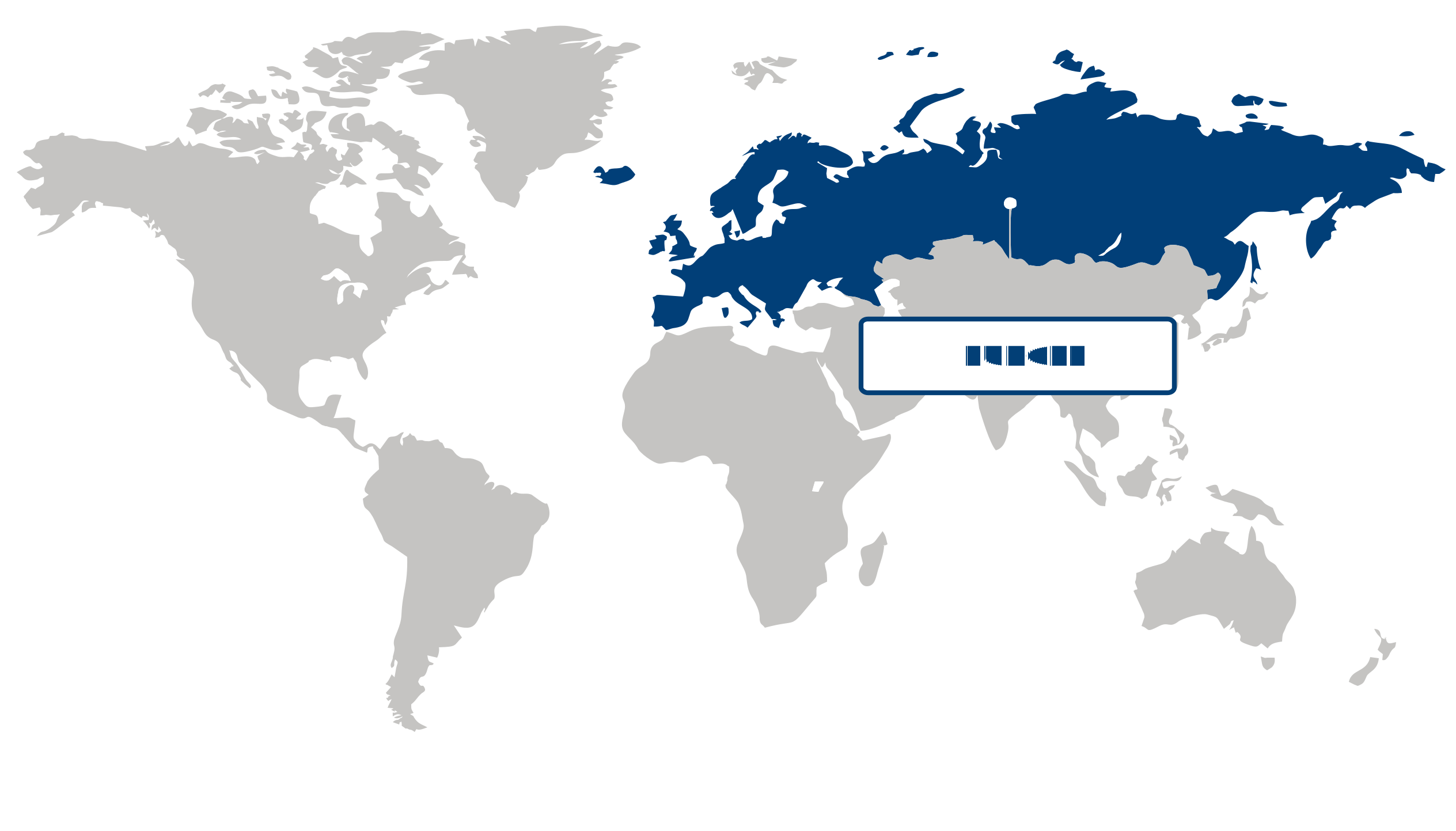
Europe dominated the perfume and fragrances market in 2025, capturing over 35.9% of the global share. This region’s leadership stems from a mature, high-value market fueled by robust demand for niche and luxury fragrances. Countries such as France and Germany continue to showcase affluent consumer bases with sophisticated preferences, supporting premiumization trends. According to the Fragrance Foundation Europe, sustained investments in artisanal products and innovative scent experiences emphasize luxury and exclusivity, bolstering market resilience. Furthermore, heightened consumer awareness around sustainable sourcing and clean beauty reinforces brand loyalty and product differentiation in European markets. Established supply chains and regulatory frameworks in the region also facilitate efficient market operations. These factors position Europe as a pivotal arena offering substantial growth avenues for niche brands and luxury conglomerates alike, underpinned by enduring consumer appreciation for heritage and craftsmanship.
Germany is a key player in Europe’s perfume and fragrances market, characterized by discerning consumers who prioritize quality and innovation. The country’s regulatory environment, overseen by the German Cosmetic, Toiletry, Perfumery and Detergent Association (IKW), ensures product safety and sustainability compliance, enriching consumer trust. According to Douglas Group’s corporate releases, German retailers increasingly emphasize experiential retail and personalization, cultivating deeper customer engagement. This enhances the market's appeal for premium and niche fragrance brands seeking to innovate within a stable regulatory landscape. Germany’s influence as a testing ground for market-leading products reinforces Europe’s overall appeal to international fragrance manufacturers targeting sophisticated consumer segments.
France anchors Europe’s perfume and fragrances market as the historical epicenter of luxury scent production and consumption. Home to iconic brands like Chanel and L’Oréal, France sustains global leadership through a blend of artisanal heritage and cutting-edge R&D, as reflected in press releases by the Fédération des Entreprises de la Parfumerie. French consumers’ preference for prestige fragrances is complemented by increasing demands for transparency and ethical sourcing, prompting brands to innovate in sustainability. This cultural nexus fuels Europe’s dominance, making France an indispensable strategic hub for companies aiming to capitalize on evolving luxury trends and reinforcing the region’s competitive edge in the global market.
Asia Pacific Market Analysis:
Asia Pacific emerged as the fastest-growing region in the perfume and fragrances market, registering a robust CAGR of 5.88%. This rapid expansion is propelled by dynamic shifts in beauty trends and an increasing consumer preference for premium and luxury scent offerings. The region benefits from a young, aspirational demographic with rising disposable incomes, especially in urban centers, driving demand for distinctive and high-quality fragrances. Market players are leveraging digital channels for personalized marketing and e-commerce, as evidenced by companies like Shiseido and L’Oreal launching online-exclusive premium lines tailored to regional tastes. Additionally, sustained investments in sustainable sourcing and clean beauty formulations align with evolving consumer values, supported by regulatory encouragement from bodies such as the Asia-Pacific Economic Cooperation (APEC). Consequently, Asia Pacific presents highly fertile opportunities for investors and strategists focused on innovation-led growth in premium perfume segments.
Japan plays a pivotal role in Asia Pacific’s perfume and fragrances market, characterized by sophisticated consumer preferences that lean toward subtle, refined scents and high-end craftsmanship. Japanese consumers increasingly seek niche and artisanal brands, fostering a competitive landscape epitomized by Shiseido’s recent release of customizable fragrance collections announced through their corporate press releases. The country’s stringent regulations on cosmetic ingredients also encourage the development of hypoallergenic and eco-friendly products, reinforcing trust and loyalty. Moreover, Japan’s mature retail environment coupled with advanced digital innovation in beauty tech underpins targeted consumer engagement and efficient supply chains. These factors amplify Japan’s strategic importance, contributing to the broader Asia Pacific momentum toward premiumization and experiential fragrance consumption.
China serves as a growth engine within Asia Pacific’s perfume and fragrances market, fueled by a surge in demand for luxury products among its expanding middle and affluent classes. Chinese consumers demonstrate strong brand consciousness and a growing appetite for international and niche perfume labels, as highlighted by LVMH’s significant market share gains documented in their annual reports. The rapid growth of e-commerce platforms like Tmall and JD.com has also democratized access to premium fragrances, enhancing customer experience through virtual try-ons and influencer-driven campaigns. Moreover, regulatory reforms facilitating cosmetic imports and a robust logistics infrastructure position China as a gateway for global brands seeking regional expansion. China’s evolving consumer landscape fortifies Asia Pacific’s leadership and unlocks strategic avenues for capitalizing on premiumization trends.
North America Market Trends:
North America held a substantial share in the perfume and fragrances market, driven by evolving consumer preferences favoring personalized and eco-friendly scent offerings. The region’s mature retail infrastructure and robust e-commerce channels, exemplified by companies such as Estée Lauder and Coty Inc., have facilitated broad product accessibility and innovation dissemination. Additionally, regulatory frameworks from the U.S. Food and Drug Administration and increased enforcement of ingredient transparency standards have nudged brands toward cleaner formulations, resonating with the environmentally conscious demographic. Investments in supply chain digitization and advanced formulation technologies by major players further reinforce North America’s competitive edge. Given these ongoing shifts, the region remains poised for significant opportunities, particularly in premium, niche, and sustainable fragrance segments.
The U.S. serves as the primary growth engine within North America’s perfume and fragrances market, propelled by high consumer spending and a culture of lifestyle-focused consumption. Market leaders like Procter & Gamble and L’Oréal leverage data-driven insights and digital marketing strategies to cater to diverse demographic segments, including millennials seeking innovative scent experiences. Additionally, the U.S. regulatory emphasis on product safety and sustainability benchmarks, as managed by the Environmental Protection Agency and FDA, fosters a market environment that incentivizes clean beauty innovations. This dynamic positions the U.S. as a critical pivot for regional manufacturers and investors aiming to capitalize on evolving consumer demands and regulatory trends shaping North America’s perfume and fragrances landscape.
| Parameter | North America | Asia Pacific | Europe | Latin America | MEA |
|---|---|---|---|---|---|
| Innovation Hub i Scale Nascent Developing Advanced | |||||
| Cost-Sensitive Region i Scale Low Medium High | |||||
| Regulatory Environment i Scale Restrictive Neutral Supportive | |||||
| Demand Drivers i Scale Weak Moderate Strong | |||||
| Development Stage i Scale Emerging Developing Developed | |||||
| Adoption Rate i Scale Low Medium High | |||||
| New Entrants / Startups i Scale Sparse Moderate Dense | |||||
| Macro Indicators i Scale Weak Stable Strong |
Segment Leadership and Growth Trends
Perfume and Fragrances Market Share (%), by End User, 2026
Go beyond the chart, access full insights & data tables
Request Free Sample ReportThe women segment held the largest share in the perfume and fragrances market in 2025, driven by higher consumption of fragrances among female consumers. This leadership is closely tied to evolving lifestyle trends and growing discretionary spending on personal care products among women globally. Consumer preference for diverse scent profiles and increasing representation of female-centric marketing campaigns by brands such as L’Oréal and Estée Lauder reinforce this dominance. Additionally, sustainability priorities have led to greater demand for natural and ethically sourced ingredients, shaping product development strategies tailored to women. Regulatory focus on ingredient transparency, promoted by organizations like the European Chemicals Agency (ECHA), further amplifies consumer trust. The segment offers strategic advantages for established firms with robust R&D and emerging players leveraging niche offerings, ensuring continued relevance as brands innovate to meet sophisticated expectations and expanding demographic reach.
Analysis by Sales Channel
Offline retail represented the largest share in the perfume and fragrances market in 2025, supported by consumer preference for in-store fragrance experiences enabling scent sampling before purchase. This channel’s leadership reflects the enduring importance of tactile interaction in consumer decision-making, which online platforms have yet to fully replicate, despite digital advances. Retailers such as Sephora and Macy’s have enhanced experiential shopping through sensory zones and expert consultations, integrating digital tools while preserving personalized service. Supply chain improvements and omnichannel inventory management ensure product availability and responsiveness. Increasing urbanization and the revival of department stores in key markets provide additional momentum. Offline retail remains strategic for incumbents and niche boutiques aiming to build brand loyalty and customer engagement, with its immersive nature framing the next phase of hybrid retail evolution.
Analysis by Product Type
Perfumes dominated the perfume and fragrances market in 2025, fueled by premiumization trends and demand for long-lasting, sophisticated scents. This segment’s leadership is bolstered by consumers’ willingness to invest in high-quality, heritage brands such as Chanel and Dior, which emphasize craftsmanship and signature fragrances. The shift towards sustainable, eco-friendly formulations aligns with global regulatory frameworks advocated by bodies like the International Fragrance Association (IFRA), encouraging innovation in ingredient sourcing and transparency. Moreover, digital marketing and social media influence have elevated the visibility of exclusive perfume launches, expanding reach. Both established luxury houses and agile indie brands can capitalize on these dynamics to differentiate offerings. With enduring consumer desire for refined multisensory experiences, perfumes are poised to sustain their prominence in the evolving fragrance landscape.
| Segment | Sub-Segment | Largest Segment | Fastest Growing |
|---|---|---|---|
| End User | Men, Women, Unisex | ||
| Sales Channel | Online, Offline Retail, Department Stores, Specialty Stores | ||
| Product Type | Perfumes, Colognes, Body Sprays, Deodorants, Home Fragrances | ||
| Fragrance Family | Floral, Woody, Oriental, Fruity, Fresh |
Unlock insights tailored to your business with our bespoke market research solutions.
Click to get your customized report now.
Competitive Landscape and Market Positioning
The competitive environment is marked by extensive collaboration, product diversification, and technological advancement among these leaders. Strategic expansions through acquisitions and alliances have strengthened portfolios, while robust innovation pipelines address evolving consumer preferences toward niche and sustainable offerings. Investment in advanced R&D platforms supports customization and rapid product development, pushing companies to differentiate their fragrance lines. By integrating digital tools within marketing and consumer engagement strategies, top players maintain agility, continuously enhancing brand equity and market share amid intensifying competition.
Strategic / Actionable Recommendations for Regional Players
North American entities could benefit from forging partnerships with tech startups specializing in AI-driven scent design and immersive consumer experiences to capitalize on digital engagement trends. Emphasizing clean and ethically sourced ingredients may resonate strongly within premium and millennial demographics, reinforcing loyalty amid rising eco-consciousness.
In Asia Pacific, tapping into the burgeoning demand for personalized and culturally nuanced fragrances offers a fertile ground for expansion. Regional players should explore collaborations with local luxury retailers and invest in biotechnology innovations to align products with evolving skin and scent preferences across emerging urban centers.
European firms might prioritize enhancing sustainable sourcing practices and leverage heritage craftsmanship alongside cutting-edge natural extraction techniques. Aligning new product launches with heritage values whilst embracing artisanal trends can consolidate their luxury leadership while adapting to shifting regulatory and consumer landscapes.
| Company | Market Share | Company Revenue | Revenue CAGR (%) | Product Portfolio | Geographic Presence | Innovation / R&D Focus | Strategic Developments |
|---|---|---|---|---|---|---|---|
| No companies available. | |||||||
Customize Your Report
Explore examples of how this report can be tailored to different research needs, including custom segments, additional topics or chapters, and related reports. Click a section of the wheel or its numbered marker to explore the available options.
Perfume and Fragrances Market — Custom Segments
| Segment | Sub-Segment |
|---|---|
| No segment data available. | |
Perfume and Fragrances Market — Custom TOC
| Custom Chapter | Chapter Details | ||
|---|---|---|---|
| No custom TOC data available. | |||
Need a different cut of the data?
Request Custom ResearchHow much is the perfume and fragrances industry expected to grow by 2035?
Which geographical region leads the perfume and fragrances market market?
What is the fastest growing region in the perfume and fragrances sector?
Why does women sub-segment dominate the end user segment of perfume and fragrances sector?
How does offline retail segment fare in the perfume and fragrances industry?
What share does perfumes segment hold in the perfume and fragrances sector as of 2025?
Where is the floral segment seeing the strongest adoption within the perfume and fragrances industry?
What are the prominent companies operating in the perfume and fragrances landscape?
Our Clients
"The report provided us with a clear direction, and the level of detail was beyond what we expected. I would definitely recommend their services to others."
Haier Appliances
"The collaboration with Fundamental Business Insights has added significant value to our decision-making process, and we look forward to continuing this partnership for our future market research requirements."
Luxottica Group S.p.A.
"The team at FBI delivered an exceptional research report. The insights on industry innovations were particularly impressive and added a lot of value to the overall report."
Nike
Our Research Team & Methodology
Every Fundamental Business Insights report is built by a dedicated vertical research team, validated through a structured primary-and-secondary methodology, and reviewed for accuracy before it reaches you.
Research Team Overview
Prepared by the Consumer Goods & Services Research Team
Delivery
Published
Demand
Available
Support
Trust & Compliance
Research Intelligence
| Source | Reference |
|---|---|
| International Organization for Standardization (ISO) | www.iso.org |
| ASTM International | www.astm.org |
| U.S. Consumer Product Safety Commission (CPSC) | www.cpsc.gov |
| European Commission – Consumer Safety | ec.europa.eu/safety-gate |
| Consumer Technology Association (CTA) | www.cta.tech |
| National Retail Federation (NRF) | nrf.com |
| World Retail Congress | www.worldretailcongress.com |
| World Travel & Tourism Council (WTTC) | wttc.org |
| UN Tourism | www.unwto.org |
| Personal Care Products Council (PCPC) | www.personalcarecouncil.org |
| Cosmetics Europe | cosmeticseurope.eu |
| International Housewares Association (IHA) | www.housewares.org |
| American Apparel & Footwear Association (AAFA) | www.aafaglobal.org |
| World Federation of the Sporting Goods Industry (WFSGI) | wfsgi.org |
| Juvenile Products Manufacturers Association (JPMA) | www.jpma.org |
| Pet Industry Joint Advisory Council (PIJAC) | pijac.org |
| International Council of Toy Industries (ICTI) | www.toy-icti.org |
| International Association of Amusement Parks and Attractions (IAAPA) | iaapa.org |
| Organisation for Economic Co-operation and Development (OECD) | www.oecd.org |
| World Bank Data | data.worldbank.org |
Research Workflow & Quality Assurance
Data Collection
Verified information gathered through primary and secondary research.
Data Triangulation
Cross-validation using multiple independent data sources.
Forecast Modelling
Market estimates developed using historical trends and analytical models.
Analyst Validation
Findings reviewed by domain experts for accuracy and consistency.
Editorial & Quality Review
Final editorial, quality, and compliance checks before publication.
Final Publication
Released after successful completion of the internal review process.
Report Coverage
📊 Market Assessment
- Market Size & Forecast
- Market Segmentation
- Regional Analysis
- Growth Drivers & Challenges
- Market Dynamics
🏢 Competitive Intelligence
- Competitive Landscape
- Company Profiles
- Competitive Benchmarking
- Mergers & Acquisitions
- Market Share Analysis or Key Company Strategies
🔍 Strategic Analysis
- Value Chain Analysis
- Porter's Five Forces
- PESTLE Analysis
- Pricing Trends
- Supply-Demand Analysis
🚀 Future Outlook
- Technology Landscape
- Regulatory Landscape
- Investment & Funding Landscape
- Emerging Opportunities
- Future Market Outlook
Have a question about this report or need a custom scope?
Request Customization