



Pipe Insulation Market Size & Growth Forecast 2027–2036, By Segments (Application, Material), Regional Demand Trends (North America, Asia Pacific, Europe), Key Country Insights (U.S., Japan, South Korea, Germany, France, Italy), and Competitive Landscape
Market Size and Growth Outlook
Pipe Insulation Market size was more than USD 11 billion in 2026 and is set to grow at a 5.51% CAGR between 2027 and 2036, crossing USD 18.81 billion by 2036. The industry revenue for 2027 is assessed at USD 11.51 billion.
Base Year Value (2026)
USD 11 billion
CAGR (2027-2036)
5.51%
Forecast Year Value (2036)
USD 18.81 billion

Historical Data Period
2022-2026

Largest Region
Asia Pacific

Forecast Period
2027-2036
Pipe Insulation Market Intelligence Snapshot:
-
Regional Market Dynamics:
- Asia Pacific holds the largest regional share, supported by extensive industrial, commercial, and residential construction, alongside strong manufacturing, energy, and infrastructure development that sustain insulation demand.
- Asia Pacific is expected to expand at a 6.33% CAGR as new construction, industrial installations, utility network expansion, and retrofit projects continue to increase demand for insulated piping systems.
-
Segment Momentum:
- Building and Construction leads the market because insulated piping is routinely specified for thermal efficiency, condensation control, and reliable HVAC and plumbing performance across new construction and renovation projects.
- Elastomeric Foam is growing fastest due to increasing demand for moisture-resistant, closed-cell insulation that delivers effective condensation control and thermal efficiency in compact mechanical systems.
-
Market Expansion Drivers:
- Rising energy conservation awareness increasing adoption of industrial and commercial pipe insulation systems.
- Expansion of district heating and gas liquefaction infrastructure driving insulation material demand.
- Growing pharmaceutical and chemical processing investments supporting insulated process piping installations.
-
Leading Market Participants:
Top companies in the pipe insulation market include Armacell International S.A. (Germany), Owens Corning (United States), ROCKWOOL A/S (Denmark), Kingspan Group plc (Ireland), Compagnie de Saint-Gobain S.A. (France), Johns Manville (United States), Knauf Insulation GmbH (Germany), L’ISOLANTE K-FLEX S.p.A. (Italy), NMC SA (Belgium), Covestro AG (Germany).
Global Market Forecast Snapshot:
-
Market Outlook:
- 2026 Market Size: USD 11 billion
- 2027 Estimated Market Size: USD 11.51 billion.
- Projected Market Size: USD 18.81 billion by 2036
- Growth Forecasts: 5.51% CAGR (2027-2036)
-
Regional and Segment Outlook:
- Leading Regional Market: Asia Pacific
- High-Growth Regional Hub: Asia Pacific
- Core Revenue Segment: Building & Construction (Application) | Fiberglass (Material)
- Emerging Opportunity Segment: District Energy System (Application) | Elastomeric Foam (Material)
Market Growth Drivers and Industry Trends
Rising energy conservation awareness increasing adoption of industrial and commercial pipe insulation systems
Increasing attention to energy efficiency is driving greater use of thermal insulation around piping systems, supporting the pipe insulation market as industrial and commercial facilities seek to minimize heat loss, maintain process temperatures, and improve energy utilization. Uninsulated or inadequately insulated pipes can result in unnecessary thermal losses in hot-water, steam, heating, cooling, and process applications, increasing operating requirements. Facility owners are therefore incorporating insulation into new installations and refurbishment projects to improve thermal performance while also helping protect piping surfaces and maintain more stable operating conditions.
Expansion of district heating and gas liquefaction infrastructure driving insulation material demand
Investment in energy distribution infrastructure is generating additional requirements for specialized insulation materials, particularly as district heating networks and gas liquefaction facilities involve extensive piping systems operating under demanding thermal conditions. The pipe insulation market benefits from district heating expansion because efficient thermal transfer across distribution networks requires effective control of heat loss between generation facilities and end users. Similarly, liquefied gas infrastructure relies on insulation systems capable of managing extremely low temperatures and maintaining the required thermal conditions throughout processing, storage, and transportation-related piping applications.
Growing pharmaceutical and chemical processing investments supporting insulated process piping installations
Expansion of pharmaceutical and chemical processing facilities is increasing the need for properly insulated process piping, creating a strong application base for the pipe insulation market. These industries often require precise temperature control across pipelines carrying heated, cooled, corrosive, or temperature-sensitive materials, making insulation important for maintaining process stability and operational efficiency. Insulated piping can also help protect personnel from contact with hot or cold surfaces and reduce condensation in temperature-controlled environments. As processing facilities adopt more sophisticated production systems and expand their capacity, insulation requirements extend across utility lines, process equipment connections, and specialized piping networks.
| Growth Driver Assessment Framework | |||||
| Growth Driver | Impact On CAGR | Regulatory Influence | Geographic Relevance | Adoption Rate | Impact Timeline |
|---|---|---|---|---|---|
| Rising energy conservation awareness increasing adoption of industrial and commercial pipe insulation systems | 1.90% | High | Europe, North America | High | Near Term |
| Expansion of district heating and gas liquefaction infrastructure driving insulation material demand | 1.60% | Moderate | North America, Asia Pacific | Medium | Mid Term |
| Growing pharmaceutical and chemical processing investments supporting insulated process piping installations | 1.30% | Moderate | Asia Pacific, Europe | Emerging | Mid Term |
Unlock insights tailored to your business with our bespoke market research solutions - Click to get your customized report now!
Regional Demand Dynamics
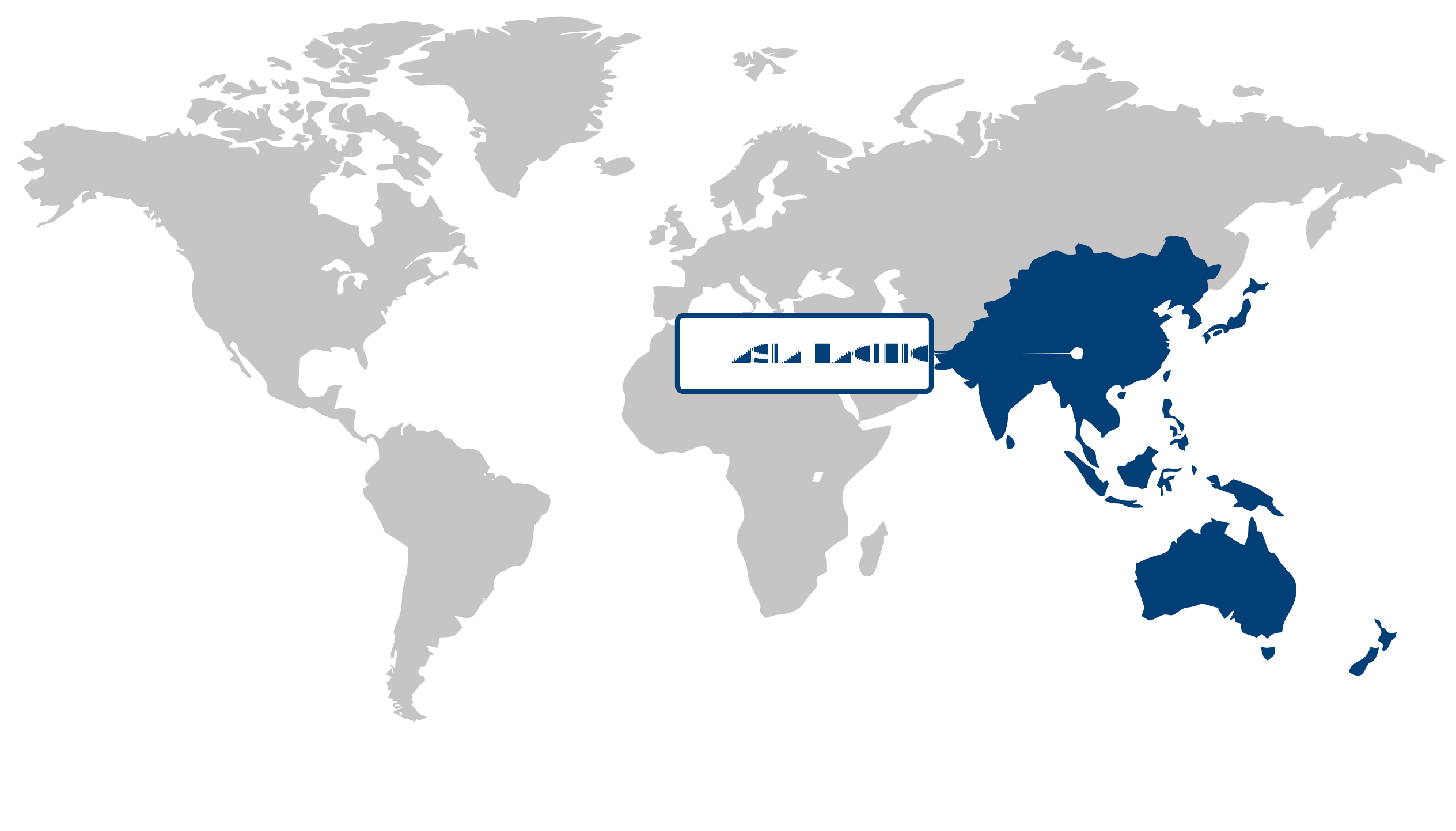
Largest Region
Asia Pacific
Largest Market Share in 2026
Asia Pacific (Largest & Fastest-Growing Region)
Asia Pacific dominated the pipe insulation market in 2026 and also emerged as the fastest-growing region, driven by extensive industrial development, expanding construction activity, and increasing investment in energy-efficient infrastructure. Rapid urbanization is supporting the development of residential, commercial, and industrial facilities that require effective thermal management across heating, cooling, water, and process systems. Pipe insulation is increasingly valued for reducing heat loss, improving energy efficiency, protecting piping systems, and maintaining stable operating conditions in industrial environments. Growth in manufacturing, chemical processing, power generation, and other energy-intensive industries is creating additional demand for reliable insulation solutions. At the same time, government and industry efforts to improve building efficiency and reduce energy consumption are encouraging the adoption of higher-performance insulation materials. Expanding infrastructure investment, industrial modernization, and growing awareness of lifecycle energy savings are collectively strengthening Asia Pacific’s market leadership and growth trajectory.
Key Country Insights
The U.S. pipe insulation market is driven by energy-efficient construction, industrial upgrades, and HVAC modernization. Demand in the U.S. favors insulation products that improve thermal performance while supporting compliance with evolving building efficiency requirements.
Japan utilizes pipe insulation to improve operational efficiency across commercial buildings, utilities, and industrial infrastructure. Japanese buyers increasingly value compact, durable insulation solutions that simplify installation while reducing long-term energy losses.
South Korea expands pipe insulation adoption across industrial processing, district energy systems, and modern building projects. Manufacturers serving South Korea emphasize durable insulation materials capable of supporting demanding operational environments and energy-saving objectives.
Germany prioritizes pipe insulation across manufacturing facilities and commercial buildings to improve energy efficiency and process reliability. German suppliers focus on high-performance insulation materials capable of supporting stringent industrial operating standards.
France encourages pipe insulation adoption through building renovation projects focused on improving thermal efficiency and reducing operational energy use. French demand increasingly favors insulation materials that balance performance, durability, and environmental considerations.
Italy supports pipe insulation demand through commercial renovation, industrial maintenance, and building efficiency improvements. Italian project developers increasingly specify insulation systems that enhance thermal performance while minimizing maintenance requirements over extended operating periods.
Segment Leadership and Growth Trends
Application Segment Analysis: Building & Construction (Largest Segment) vs District Energy System (Fastest-Growing Segment)
Building & construction held the largest share of the pipe insulation market in 2026, supported by the widespread use of insulated piping across residential, commercial, and institutional structures. Pipe insulation helps limit heat loss from hot-water and heating systems while reducing condensation and improving overall energy efficiency. Growing emphasis on energy-efficient buildings, improved thermal performance, and sustainable construction practices is encouraging the incorporation of insulation into new projects as well as renovation activities. The need to control building energy consumption while maintaining indoor comfort continues to reinforce demand from the construction sector.
District energy system is emerging as the fastest-growing application as cities and large developments increasingly adopt centralized heating and cooling networks. Effective pipe insulation is essential in these systems because it minimizes thermal losses as energy is transported between centralized generation facilities and connected buildings. Expansion of district heating and cooling infrastructure, combined with increasing attention to energy conservation and efficient urban utility networks, is creating favorable conditions for advanced insulation solutions. The growing development of centralized energy systems is therefore supporting stronger demand for high-performance pipe insulation.
Material Segment Analysis: Fiberglass (Largest Segment) vs Elastomeric Foam (Fastest-Growing Segment)
Fiberglass accounted for the largest share of the pipe insulation market in 2026, reflecting its established use across building, industrial, and mechanical insulation applications. Its combination of thermal resistance, durability, fire performance, and broad applicability makes it a reliable choice for insulating hot and cold piping systems. Fiberglass solutions are also widely recognized for their ability to provide consistent thermal protection in demanding environments, while their established installation practices support continued adoption among contractors and facility operators. Ongoing investment in energy-efficient infrastructure further sustains demand for this conventional insulation material.
Elastomeric foam is gaining traction as the fastest-growing material segment due to its flexibility, closed-cell structure, and strong resistance to moisture and condensation. These characteristics make it particularly suitable for chilled-water, refrigeration, HVAC, and other applications where controlling moisture ingress is important. The material can conform readily to complex piping configurations, simplifying installation while providing effective thermal protection. Rising demand for efficient cooling systems, improved moisture management, and durable insulation in modern buildings is accelerating the adoption of elastomeric foam.
| Report Segmentation | |||
| Segment | Sub-Segment | Largest Segment | Fastest Growing Segment |
|---|---|---|---|
| Application | Industrial, Building & Construction, District Energy System | Building & Construction | District Energy System |
| Material | Cellular Glass, Polyurethane & Polyisocyanurate Foam, Fiberglass, Elastomeric Foam, Others | Fiberglass | Elastomeric Foam |
 Read our Research Approach
Competitive Landscape and Market Positioning
Leading companies in the pipe insulation market:
1. Armacell International S.A. (Germany)
2. Owens Corning (United States)
3. ROCKWOOL A/S (Denmark)
4. Kingspan Group plc (Ireland)
5. Compagnie de Saint-Gobain S.A. (France)
6. Johns Manville (United States)
7. Knauf Insulation GmbH (Germany)
8. L’ISOLANTE K-FLEX S.p.A. (Italy)
9. NMC SA (Belgium)
10. Covestro AG (Germany)
The pipe insulation market is driven by rising demand for energy conservation across industrial and building infrastructure. Improved insulation materials are enhancing thermal efficiency and system performance. The pipe insulation market is also influenced by stricter energy standards encouraging higher-quality insulation adoption.
Industry Development/News
| Company Name | Date | Key Development |
|---|---|---|
| Saint-Gobain | May-25 | Saint-Gobain broke ground on a low-carbon rockwool insulation factory in Leicestershire, UK, designed to operate on renewable energy and electric melting systems to manufacture 50,000 tonnes of material annually by 2027. |
| Knauf Insulation, Inc. | May-25 | Knauf Insulation, Inc. added several products to its Asthma and Allergy Friendly® Certification roster, expanding its portfolio with certified selections like the Performance+® Earthwool® 1000˚ Pipe Insulation, Pipe and Tank Insulation, and KwikFlex® variants. |
| Saint-Gobain | Apr-25 | Saint-Gobain established a strategic manufacturing alliance with Knauf Insulation to ramp up fiberglass insulation production, specifically targeting the North American building sector to navigate import tariffs. |
| BASF SE | May-25 | BASF SE finalized the acquisition of DOMO Chemicals’ 49% stake in the Alsachimie joint venture, successfully reinforcing its market footprint in polyamide-based pipe insulation materials across the European building sector. |
| BASF SE | Nov-24 | BASF SE teamed up with Acies Bio to engineer a specialized technology platform that synthesizes fatty alcohols from methanol, creating sustainable components for industrial and construction pipe insulation. |
| Saint-Gobain S.A. | Aug-24 | Saint-Gobain S.A. purchased a minority stake in the German startup BioInsulate to accelerate the development of bio-based insulation formulas in line with the environmental targets of Europe’s Green Deal. |
Why Choose Us
Specialized Expertise: Our team comprises industry experts with a deep understanding of your market segment. We bring specialized knowledge and experience that ensures our research and consulting services are tailored to your unique needs.
Customized Solutions: We understand that every client is different. That's why we offer customized research and consulting solutions designed specifically to address your challenges and capitalize on opportunities within your industry.
Proven Results: With a track record of successful projects and satisfied clients, we have demonstrated our ability to deliver tangible results. Our case studies and testimonials speak to our effectiveness in helping clients achieve their goals.
Cutting-Edge Methodologies: We leverage the latest methodologies and technologies to gather insights and drive informed decision-making. Our innovative approach ensures that you stay ahead of the curve and gain a competitive edge in your market.
Client-Centric Approach: Your satisfaction is our top priority. We prioritize open communication, responsiveness, and transparency to ensure that we not only meet but exceed your expectations at every stage of the engagement.
Continuous Innovation: We are committed to continuous improvement and staying at the forefront of our industry. Through ongoing learning, professional development, and investment in new technologies, we ensure that our services are always evolving to meet your evolving needs.
Value for Money: Our competitive pricing and flexible engagement models ensure that you get maximum value for your investment. We are committed to delivering high-quality results that help you achieve a strong return on your investment.
Select Licence Type

