



Plastic Pipe Market Size & Growth Forecast 2027–2036, By Segments (End-use, Material, Application Type), Regional Demand Trends (North America, Asia Pacific, Europe), Key Country Insights (U.S., Japan, South Korea, Germany, France, Italy), and Competitive Landscape
Market Size and Growth Outlook
Plastic Pipe Market size was over USD 78 billion in 2026 and is likely to grow at a 5.8% CAGR between 2027 and 2036, exceeding USD 137.07 billion by 2036. The industry revenue for 2027 is calculated at USD 81.81 billion.
Base Year Value (2026)
USD 78 billion
CAGR (2027-2036)
5.80%
Forecast Year Value (2036)
USD 137.07 billion

Historical Data Period
2022-2026

Largest Region
Asia Pacific

Forecast Period
2027-2036
Plastic Pipe Market Intelligence Snapshot:
-
Regional Market Dynamics:
- Asia Pacific leads due to extensive construction activity, urban infrastructure development, and expanding utility networks supporting consistent demand across water, drainage, sewage, and irrigation applications.
- Continued infrastructure investment, ongoing residential development, industrial facility expansion, and municipal upgrading programs are steadily driving sustained pipeline installation demand across the region.
-
Segment Momentum:
- Building & Construction accounted for 43% of the market in 2026 due to extensive use of plastic pipes in water supply, drainage, and conduit systems across residential, commercial, and infrastructure projects.
- Polyethylene is gaining momentum because end users increasingly value its flexibility and operational resilience in varied installation conditions and more demanding utility and fluid transport applications.
-
Market Expansion Drivers:
- Rapid urbanization and water infrastructure expansion increasing plastic pipe deployment across utility networks.
- Growing irrigation and water management requirements accelerating agricultural plastic pipe adoption.
- Increasing adoption of IoT-enabled smart piping systems supporting predictive infrastructure maintenance capabilities.
-
Leading Market Participants:
Key companies in the plastic pipe market include Aliaxis Group S.A. (Belgium), Orbia Advance Corporation, S.A.B. de C.V. (Mexico), JM Eagle, Inc. (United States), Chevron Phillips Chemical Company LLC (United States), China Lesso Group Holdings Limited (China), Finolex Industries Ltd. (India), Astral Limited (India), Wienerberger AG (Austria), Kubota ChemiX Co., Ltd. (Japan), Tommur Industry (Shanghai) Co., Ltd. (China).
Global Market Forecast Snapshot:
-
Market Outlook:
- 2026 Market Size: USD 78 billion
- 2027 Estimated Market Size: USD 81.81 billion.
- Projected Market Size: USD 137.07 billion by 2036
- Growth Forecasts: 5.8% CAGR (2027-2036)
-
Regional and Segment Outlook:
- Leading Regional Market: Asia Pacific
- High-Growth Regional Hub: Asia Pacific
- Core Revenue Segment: Building & Construction (End-use) | Polyvinyl Chloride (Material) | Water Supply (Application Type)
- Emerging Opportunity Segment: Agriculture (End-use) | Polyethylene (Material) | Irrigation (Application Type)
Market Growth Drivers and Industry Trends
Rapid urbanization and water infrastructure expansion increasing plastic pipe deployment across utility networks
Rapid urban development is increasing requirements for water distribution, drainage, sanitation, and utility infrastructure, strengthening the plastic pipe market across expanding urban networks. Plastic pipes offer advantages such as corrosion resistance, lightweight handling, and flexibility, making them suitable for installation across diverse municipal applications. Their ability to support efficient water conveyance and withstand different environmental conditions is encouraging their use in new infrastructure projects as well as network replacement activities.
Growing irrigation and water management requirements accelerating agricultural plastic pipe adoption
Increasing agricultural water requirements are supporting the plastic pipe market as farmers and irrigation operators seek efficient systems for transporting and distributing water across cultivated areas. Plastic piping can facilitate controlled water delivery while offering ease of installation and resistance to corrosion and moisture-related deterioration. Its suitability for drip, sprinkler, and other irrigation configurations allows agricultural users to develop more structured water distribution networks and manage available water resources more effectively.
Increasing adoption of IoT-enabled smart piping systems supporting predictive infrastructure maintenance capabilities
The integration of IoT technologies into piping infrastructure is creating new opportunities for the plastic pipe market by enabling more connected approaches to monitoring and maintenance. Sensors and digital monitoring systems can track parameters such as pressure, flow, leakage, and system performance, providing information that can help identify potential infrastructure issues before failures occur. When combined with modern plastic piping networks, these technologies support condition-based maintenance and improve visibility into the operational performance of utility systems.
| Growth Driver Assessment Framework | |||||
| Growth Driver | Impact On CAGR | Regulatory Influence | Geographic Relevance | Adoption Rate | Impact Timeline |
|---|---|---|---|---|---|
| Rapid urbanization and water infrastructure expansion increasing plastic pipe deployment across utility networks | 2.20% | High | Asia Pacific, Middle East & Africa | High | Near Term |
| Growing irrigation and water management requirements accelerating agricultural plastic pipe adoption | 1.80% | Moderate | Asia Pacific, Latin America | High | Mid Term |
| Increasing adoption of IoT-enabled smart piping systems supporting predictive infrastructure maintenance capabilities | 1.30% | Moderate | North America, Europe | Emerging | Long Term |
Unlock insights tailored to your business with our bespoke market research solutions - Click to get your customized report now!
Regional Demand Dynamics
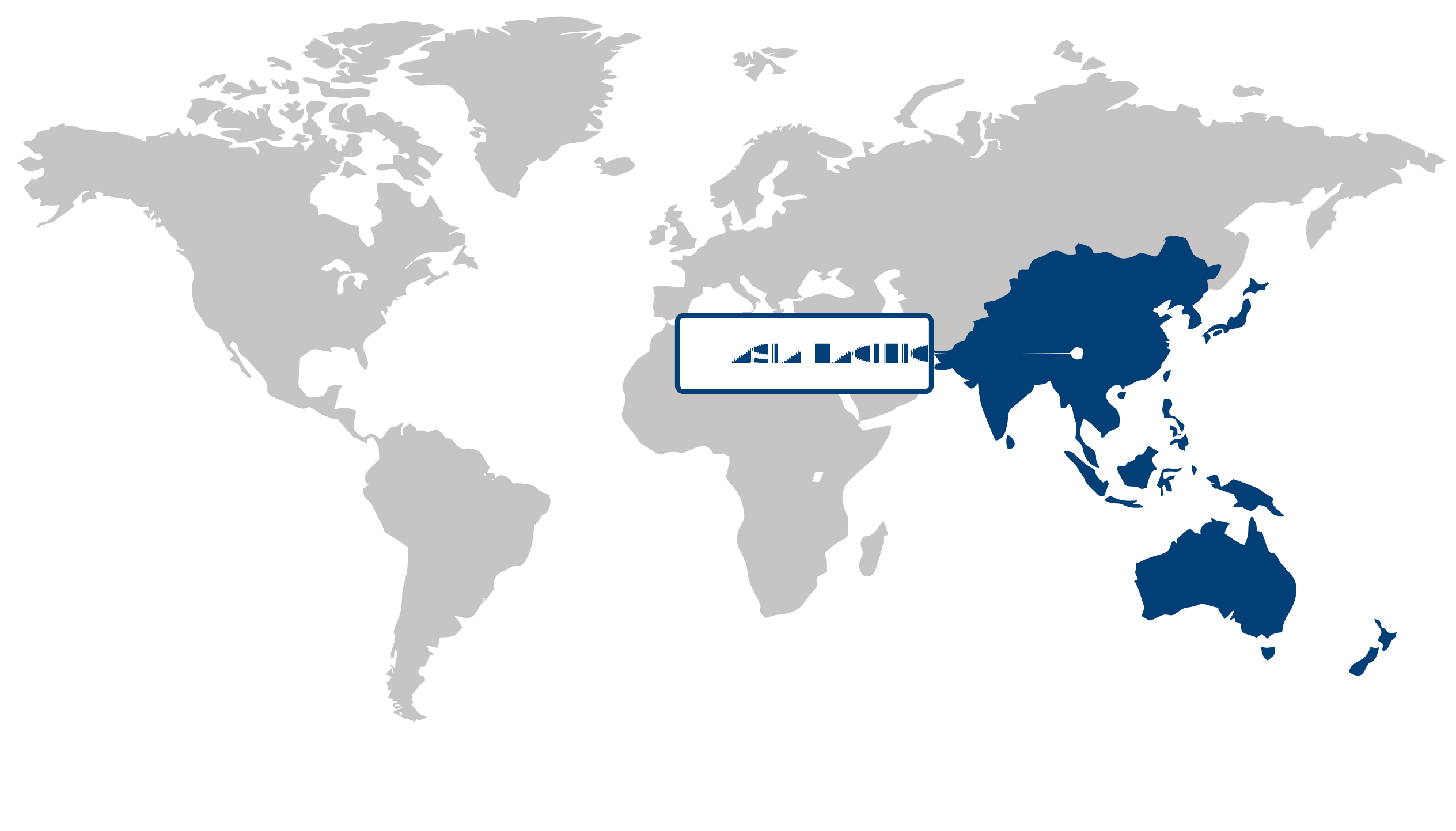
Largest Region
Asia Pacific
Largest Market Share in 2026
Asia Pacific (Largest & Fastest-Growing Region)
Asia Pacific dominated the plastic pipe market in 2026 and is also the fastest-growing region, supported by rapid urban development, infrastructure expansion, and increasing requirements for efficient water and utility distribution systems. Plastic pipes are widely adopted because of their corrosion resistance, lightweight characteristics, installation flexibility, and relatively low maintenance requirements, making them suitable for residential, commercial, agricultural, and industrial applications. Expanding water supply and sanitation networks are creating additional demand as governments and infrastructure developers focus on improving essential services. Construction activity and investment in urban infrastructure are further broadening applications for plastic piping in drainage, irrigation, plumbing, and utility systems. The region's expanding population, industrial base, and continued infrastructure modernization provide a strong foundation for sustained market development.
Key Country Insights
The U.S. continues increasing plastic pipe adoption across water distribution, wastewater management, and energy infrastructure upgrades. Manufacturers are prioritizing durable piping systems that reduce maintenance requirements and support long-term network reliability.
Japan focuses on plastic pipe deployment that enhances infrastructure resilience for water supply, drainage, and utility applications. Manufacturers continue developing high-quality piping materials capable of meeting demanding environmental and operational conditions.
South Korea is expanding plastic pipe usage across residential construction, municipal utilities, and industrial infrastructure developments. The market prioritizes efficient piping systems that support reliable installation and long-term operational performance.
Germany emphasizes plastic pipe solutions for municipal utilities, industrial facilities, and district infrastructure projects. The country continues replacing aging pipeline systems with materials that improve durability, installation efficiency, and operational performance.
France continues adopting plastic pipe solutions for water management and public infrastructure improvement projects. The country emphasizes efficient pipeline materials that enhance service reliability while supporting evolving environmental performance objectives.
Italy is strengthening plastic pipe demand through residential, commercial, and agricultural infrastructure applications. Manufacturers focus on versatile piping systems that simplify installation while delivering dependable performance across diverse construction projects.
Segment Leadership and Growth Trends
End-use Segment Analysis: Building & Construction (Largest Segment) vs Agriculture (Fastest-Growing Segment)
The building and construction segment dominated the plastic pipe market with a 43% share in 2026, underpinned by the extensive use of plastic piping in water distribution, drainage, plumbing, and utility infrastructure. Plastic pipes offer corrosion resistance, lightweight handling, ease of installation, and durability, making them suitable for both new construction and infrastructure upgrades. Their ability to support efficient fluid transport while reducing installation complexity strengthens adoption across residential, commercial, and infrastructure projects. Ongoing investment in modern building systems and replacement of aging piping infrastructure further supports the segment's established market position.
Agriculture is the fastest-growing end-use segment as producers increasingly require efficient water-management systems that can improve irrigation reliability and reduce losses. Plastic pipes are well suited to agricultural applications because they are lightweight, resistant to corrosion, and adaptable to different irrigation configurations. Their use in water conveyance and irrigation networks supports more controlled distribution of water across cultivated areas. Increasing attention to resource-efficient farming and improved irrigation infrastructure is consequently creating stronger demand for plastic piping within agriculture.
Material Segment Analysis: Polyvinyl Chloride (Largest Segment) vs Polyethylene (Fastest-Growing Segment)
Polyvinyl chloride held the largest share of the plastic pipe market in 2026, supported by its established use in water supply, drainage, sewerage, and building applications. PVC pipes combine durability, corrosion resistance, relatively low maintenance requirements, and ease of installation, making them suitable for a wide range of infrastructure projects. Their stable performance across common fluid-handling applications has helped establish PVC as a preferred material for piping systems. Continued construction activity and infrastructure modernization reinforce demand for PVC-based pipe solutions.
Polyethylene is the fastest-growing material segment, benefiting from its flexibility, impact resistance, and suitability for applications requiring adaptable piping systems. Polyethylene pipes can accommodate ground movement and complex installation conditions while maintaining reliable fluid conveyance, making them particularly attractive for water distribution and agricultural applications. Their resistance to corrosion and ability to support long service life further enhance their value in demanding environments. Increasing preference for flexible and durable piping solutions is strengthening polyethylene's adoption across expanding infrastructure and irrigation applications.
| Report Segmentation | |||
| Segment | Sub-Segment | Largest Segment | Fastest Growing Segment |
|---|---|---|---|
| End-use | Building & Construction, Agriculture, Oil & Gas, Others | Building & Construction | Agriculture |
| Material | Polyvinyl Chloride, Polypropylene, Polyethylene, Others | Polyvinyl Chloride | Polyethylene |
| Application Type | Irrigation, Water Supply, Sewerage, Plumbing, HVAC, Others | Water Supply | Irrigation |
 Read our Research Approach
Competitive Landscape and Market Positioning
Key companies in the plastic pipe market:
1. Aliaxis Group S.A. (Belgium)
2. Orbia Advance Corporation S.A.B. de C.V. (Mexico)
3. JM Eagle Inc. (United States)
4. Chevron Phillips Chemical Company LLC (United States)
5. China Lesso Group Holdings Limited (China)
6. Finolex Industries Ltd. (India)
7. Astral Limited (India)
8. Wienerberger AG (Austria)
9. Kubota ChemiX Co. Ltd. (Japan)
10. Tommur Industry (Shanghai) Co. Ltd. (China)
The plastic pipe market is characterized by increasing emphasis on durable infrastructure solutions and cost-efficient manufacturing practices. Industry participants are introducing advanced pipe materials with enhanced flexibility, corrosion resistance, and sustainability performance to comply with evolving construction and environmental standards. Process automation and recycling-focused initiatives are additionally helping manufacturers strengthen operational efficiency and market competitiveness.
Industry Development/News
| Company Name | Date | Key Development |
|---|---|---|
| Finolex Industries Ltd | Aug-25 | Finolex expanded its annual production capacity for pipes and fittings to approximately 495,000 tons. This growth supports the surge in domestic construction and irrigation demand in India, while also integrating sustainability-focused plant upgrades, such as increased renewable energy usage and improved water harvesting systems. |
| Aliaxis | Jul-25 | Aliaxis announced a USD 44.4 million investment to establish two new Greenfield manufacturing plants in Chennai and Hyderabad, India. The facilities are designed to enhance local production of CPVC and HDPE systems, aiming to shorten supply chains for residential and municipal infrastructure projects in southern India. |
| DCW Limited | Oct-24 | DCW Limited announced a USD 16.8 million investment to significantly scale its CPVC production capacity, increasing output from 20,000 to 50,000 metric tons annually to meet the growing demand for durable plumbing solutions. |
| Amiblu Group | Aug-24 | Amiblu Group integrated an Australian pressure pipe manufacturer into its operations. This strategic move is designed to strengthen the company’s portfolio of large-diameter pipe systems and expand its commercial footprint in the Asia-Pacific region, specifically for water supply and wastewater infrastructure applications. |
| Georg Fischer AG | Nov-23 | Georg Fischer AG finalized the acquisition of Uponor Corporation. By integrating Uponor’s extensive plastic piping systems into its existing GF Piping Systems division, the company has solidified its position as a global leader in sustainable water and flow plastic solutions. |
| Aliaxis SA | Jun-23 | Aliaxis SA completed the acquisition of the manufacturing division of Valencia Pipe Company in the U.S. This acquisition was aimed at expanding the company’s North American production footprint and strengthening its regional distribution networks for plastic pipe systems. |
Why Choose Us
Specialized Expertise: Our team comprises industry experts with a deep understanding of your market segment. We bring specialized knowledge and experience that ensures our research and consulting services are tailored to your unique needs.
Customized Solutions: We understand that every client is different. That's why we offer customized research and consulting solutions designed specifically to address your challenges and capitalize on opportunities within your industry.
Proven Results: With a track record of successful projects and satisfied clients, we have demonstrated our ability to deliver tangible results. Our case studies and testimonials speak to our effectiveness in helping clients achieve their goals.
Cutting-Edge Methodologies: We leverage the latest methodologies and technologies to gather insights and drive informed decision-making. Our innovative approach ensures that you stay ahead of the curve and gain a competitive edge in your market.
Client-Centric Approach: Your satisfaction is our top priority. We prioritize open communication, responsiveness, and transparency to ensure that we not only meet but exceed your expectations at every stage of the engagement.
Continuous Innovation: We are committed to continuous improvement and staying at the forefront of our industry. Through ongoing learning, professional development, and investment in new technologies, we ensure that our services are always evolving to meet your evolving needs.
Value for Money: Our competitive pricing and flexible engagement models ensure that you get maximum value for your investment. We are committed to delivering high-quality results that help you achieve a strong return on your investment.
Select Licence Type

