



Power Grid System Market Size & Share, By Components (Cables, Variable Speed Drives, Transformers Switchgears, Others), Application (Captive Generation, Wind Powe, Others), Depth (Shallow Water, Deepwater) - Growth Trends, Regional Insights (U.S., Japan, South Korea, UK, Germany), Competitive Positioning, Global Forecast Report 2025-2034
Market Size and Growth Outlook
Power Grid System Market size is projected to grow from USD 297.03 billion in 2024 to USD 497.83 billion by 2034, with a CAGR surpassing 5.3% throughout the forecast period (2025-2034). The industry revenue for 2025 is anticipated to be USD 311.2 billion.
Base Year Value (2024)
USD 297.03 billion
CAGR (2025-2034)
5.3%
Forecast Year Value (2034)
USD 497.83 billion

Historical Data Period
2019-2024

Largest Region
Europe

Forecast Period
2025-2034
Key Takeaways
Market Growth Drivers and Industry Trends
Growth Drivers & Opportunity:
The increasing demand for electricity in both developed and developing countries is a major growth driver for the power grid system market. As industrialization and urbanization continue to grow, the need for reliable power supply and efficient transmission becomes crucial, driving the market for power grid systems.
The growing adoption of renewable energy sources such as solar and wind power is another significant growth driver for the power grid system market. The integration of these decentralized energy sources into the grid requires advanced grid infrastructure, including smart grid technology, to ensure optimal distribution and management of power.
Rapid technological advancements in grid automation and digitalization are also propelling the growth of the power grid system market. The deployment of sensors, smart meters, and advanced grid analytics enables utilities to improve grid reliability, efficiency, and cost-effectiveness, driving market growth.
Industry Restraints:
Despite the favorable growth prospects, the high initial investment costs associated with upgrading and modernizing the power grid system serve as a major restraint for market growth. Utilities and grid operators face challenges in funding large-scale grid infrastructure projects, which can hinder the pace of adoption of advanced grid technologies.
Moreover, a significant restraint for the power grid system market is the complex regulatory environment governing the energy sector. Compliance with stringent regulations and standards, coupled with uncertainties in government policies and regulations, creates barriers for market players and can slow down the adoption of new grid technologies.
Unlock insights tailored to your business with our bespoke market research solutions - Click to get your customized report now!
Regional Demand Dynamics
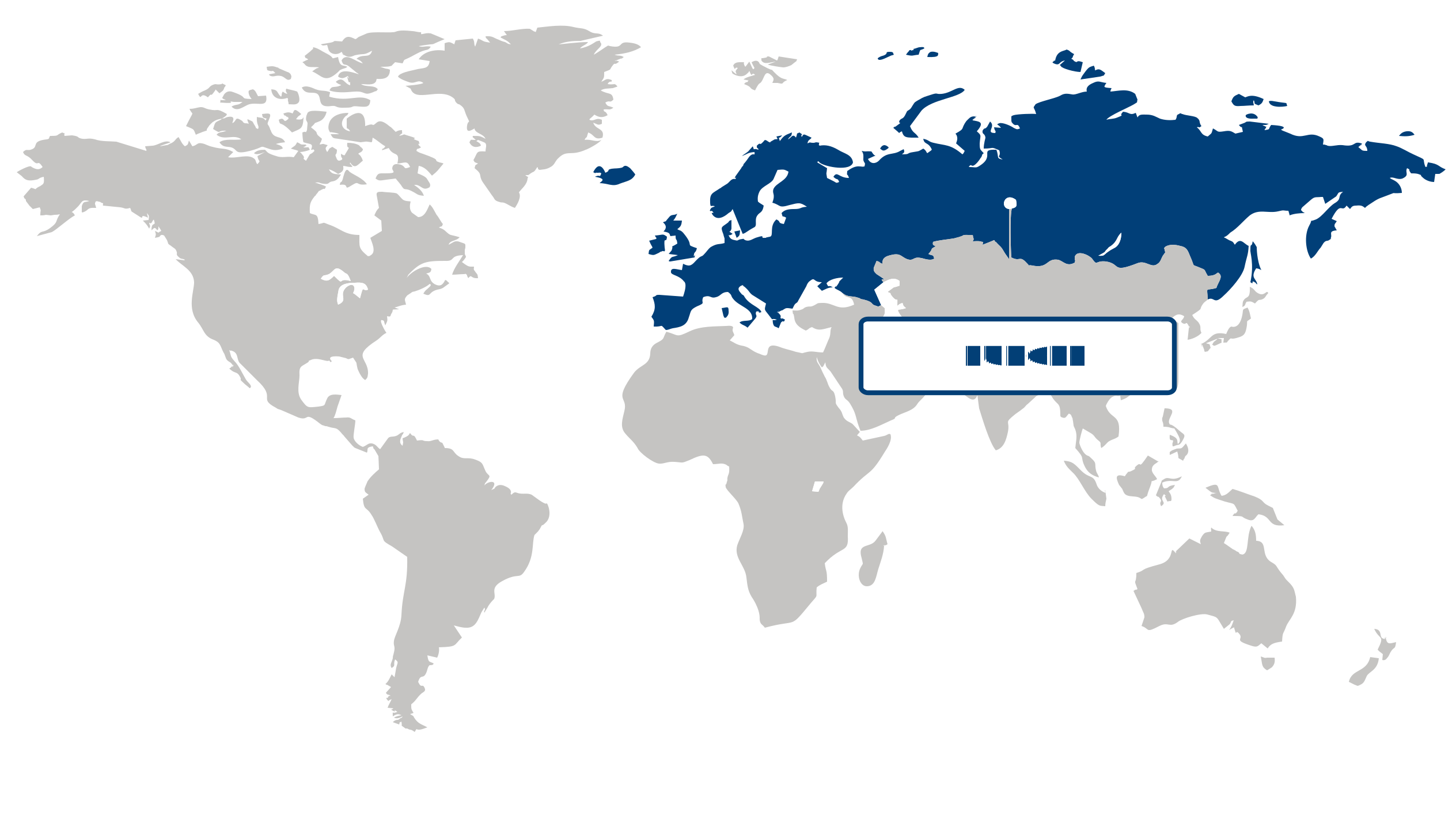
Largest Region
Europe
42% Market Share in 2024
North America:
The power grid system market in North America is witnessing steady growth, driven by increasing demand for renewable energy sources and the need for modernization of existing infrastructure. The United States and Canada are the major contributors to the market in this region. The U.S. is focusing on expanding its smart grid capabilities to improve efficiency and reliability of the overall power grid system. Canada is also investing in upgrading its grid infrastructure to integrate more renewables into the system.
Asia Pacific:
The power grid system market in Asia Pacific is experiencing rapid growth, fueled by the increasing demand for electricity in countries like China, Japan, and South Korea. China, being the largest electricity consumer in the world, is heavily investing in building a smart grid infrastructure to enhance grid reliability and efficiency. Japan is also focusing on upgrading its grid system to accommodate more renewable energy sources. South Korea is investing in smart grid technologies to improve grid stability and reduce energy losses. The Asia Pacific region is expected to witness significant growth in the power grid system market as countries strive to meet their rising energy demands.
Europe:
The power grid system market in Europe is characterized by a strong emphasis on renewable energy integration and grid modernization efforts. The United Kingdom, Germany, and France are leading the way in adopting advanced grid technologies to support the transition to a low-carbon energy system. The U.K. is investing in smart grid solutions to enable better integration of renewables and improve grid flexibility. Germany is focusing on building a more decentralized grid infrastructure to support its renewable energy targets. France is investing in research and development of grid technologies to enhance grid reliability and performance.
No card data available for this language/report.
Segment Leadership and Growth Trends
Components
The Power Grid System Market can be segmented by components into cables, variable speed drives, transformers, switchgears, and others. Cables are an essential component for transmitting electricity efficiently. Variable speed drives play a crucial role in controlling the speed of motors and optimizing energy consumption. Transformers are vital for converting voltage levels to suit different applications. Switchgears are essential for controlling, protecting, and isolating electrical circuits. Other components may include controllers, sensors, and monitoring devices that enhance the performance and efficiency of power grid systems.
Application
The Power Grid System Market can also be segmented by application into captive generation, wind power, and others. Captive generation refers to the generation of electricity for self-consumption by an individual or organization. Wind power is a renewable energy source that is becoming increasingly popular for grid integration. Other applications may include solar power, hydroelectric power, and biomass power generation. Each application has unique requirements and challenges that drive the demand for specific components and technologies in the power grid system market.
Depth
Another segmentation of the Power Grid System Market is based on the depth of installation, such as shallow water and deepwater. Shallow water installations typically refer to offshore wind farms located close to the shore, where water depth is relatively shallow. Deepwater installations, on the other hand, are located further offshore in deeper waters. The depth of installation has implications for the design, installation, and maintenance of power grid systems, as well as the choice of components and technologies that can withstand the unique challenges posed by different water depths.
 Read our Research Approach
Competitive Landscape and Market Positioning
The competitive landscape of the Power Grid System Market is characterized by a mix of established multinational corporations and innovative local players that focus on advanced technologies and sustainable solutions. The market is witnessing significant investments in smart grid technologies, automation, and renewable energy integration, driving competition among companies to provide comprehensive solutions that enhance grid reliability and efficiency. Key trends include the strategic collaborations between traditional utilities and technology firms, increasing regulatory focus on grid modernization, and the push for decarbonization which is compelling organizations to innovate rapidly. As companies strive to differentiate their offerings and capture market share, the emphasis on R&D along with customer-centric approaches becomes crucial, leading to a dynamic environment where agility and forward-thinking strategies are imperative.
Top Market Players
- Siemens AG
- General Electric Company
- Schneider Electric SE
- ABB Ltd
- Eaton Corporation plc
- Mitsubishi Electric Corporation
- Honeywell International Inc.
- Hitachi Energy
- Toshiba Corporation
- National Grid plc
Why Choose Us
Specialized Expertise: Our team comprises industry experts with a deep understanding of your market segment. We bring specialized knowledge and experience that ensures our research and consulting services are tailored to your unique needs.
Customized Solutions: We understand that every client is different. That's why we offer customized research and consulting solutions designed specifically to address your challenges and capitalize on opportunities within your industry.
Proven Results: With a track record of successful projects and satisfied clients, we have demonstrated our ability to deliver tangible results. Our case studies and testimonials speak to our effectiveness in helping clients achieve their goals.
Cutting-Edge Methodologies: We leverage the latest methodologies and technologies to gather insights and drive informed decision-making. Our innovative approach ensures that you stay ahead of the curve and gain a competitive edge in your market.
Client-Centric Approach: Your satisfaction is our top priority. We prioritize open communication, responsiveness, and transparency to ensure that we not only meet but exceed your expectations at every stage of the engagement.
Continuous Innovation: We are committed to continuous improvement and staying at the forefront of our industry. Through ongoing learning, professional development, and investment in new technologies, we ensure that our services are always evolving to meet your evolving needs.
Value for Money: Our competitive pricing and flexible engagement models ensure that you get maximum value for your investment. We are committed to delivering high-quality results that help you achieve a strong return on your investment.
Select Licence Type

