Precision Viticulture Market Size & Growth Forecast 2027–2036, By Segments (Component, Application), Regional Demand Trends (North America, Asia Pacific, Europe), Key Country Insights (U.S., Japan, South Korea, Germany, France, Italy), and Competitive Landscape
Jump to content
Market Size and Growth Outlook
Precision Viticulture Market size stood at USD 2.08 billion in 2026 and is predicted to grow at a 10.45% CAGR from 2027 to 2036, exceeding USD 5.62 billion by 2036. The industry revenue for 2027 is calculated at USD 2.26 billion.
Get more details on this report
Request Free Sample ReportPrecision Viticulture Market Intelligence Snapshot
Regional Market Dynamics
- Europe leads with a 38.90% share due to its established wine industry and strong adoption of monitoring, mapping, and data-driven vineyard management tools for yield and quality optimization.
- Asia Pacific is expanding at a 12.32% CAGR, driven by vineyard modernization and increased use of sensor-based tools to improve productivity and manage field variability.
Segment Momentum
- Yield Monitoring accounted for 41.98% of the market in 2026 due to its direct value in tracking vineyard productivity, planning harvest operations, allocating resources, and identifying areas requiring targeted intervention.
- Software is expanding rapidly as growers seek actionable insights from vineyard data, enabling more precise decisions around irrigation, disease management, canopy control, and harvest planning.
Market Expansion Drivers
- Rising adoption of sensor-based vineyard monitoring improving grape yield and quality optimization.
- Increasing use of drones and automation in vineyard management enabling precision farming practices.
- Expanding climate-smart agriculture initiatives supporting data-driven irrigation and soil management systems.
Leading Market Participants
- Leading players in the precision viticulture market include Deere & Company (United States), Trimble Inc. (United States), Topcon Corporation (Japan), Deveron UAS Corp. (Canada), Groupe ICV (France), Atlas Vineyard Management, Inc. (United States), TeeJet Technologies (United States), Tracmap (New Zealand), Ateknea Solutions (Spain), Aha Viticulture (Australia).
Global Market Forecast Snapshot
Market Outlook
- 2026 Market Size: USD 2.08 billion
- 2027 Estimated Market Size: USD 2.26 billion.
- Projected Market Size: USD 5.62 billion by 2036
- Growth Forecast: 10.45% CAGR (2027-2036)
Regional and Segment Outlook
- Leading Regional Market: Europe
- High-Growth Regional Hub: Asia Pacific
- Core Revenue Segment: Hardware (Component) | Yield Monitoring (Application)
- Emerging Opportunity Segment: Software (Component) | Irrigation Management (Application)
Market Growth Drivers and Industry Trends
Rising adoption of sensor-based vineyard monitoring improving grape yield and quality optimization
Sensor technologies are strengthening the precision viticulture market by enabling growers to monitor vineyard conditions with greater detail and respond to variations affecting grape development. Soil, moisture, temperature, plant-health, and environmental sensors can provide continuous information that helps growers identify differences between vineyard areas and adjust cultivation practices accordingly. More precise monitoring supports targeted irrigation, nutrient management, and crop assessment, helping vineyard operators optimize growing conditions while reducing unnecessary use of agricultural inputs.
Increasing use of drones and automation in vineyard management enabling precision farming practices
The precision viticulture market is benefiting from greater use of drones and automated technologies that improve the speed and coverage of vineyard monitoring and management activities. Drones equipped with imaging systems can survey large cultivation areas and identify variations in plant health, canopy conditions, water stress, or other crop characteristics without requiring extensive manual inspection. Automation can then support targeted field operations and reduce labor requirements for repetitive activities, enabling growers to make more localized decisions based on detailed vineyard observations.
Expanding climate-smart agriculture initiatives supporting data-driven irrigation and soil management systems
Climate-smart farming initiatives are creating favorable conditions for the precision viticulture market as vineyard operators increasingly seek technologies that improve resource efficiency and resilience to changing environmental conditions. Data-driven irrigation systems can combine soil moisture, weather, and crop information to determine when and where water is required, while digital soil monitoring supports more targeted management of nutrients and growing conditions. These approaches help vineyards respond to water availability, temperature variability, and soil differences through more informed resource allocation and site-specific cultivation practices.
| Growth Driver | Impact on CAGR | Regulatory Influence | Geographic Relevance | Adoption Rate | Impact Timeline |
|---|---|---|---|---|---|
| Rising adoption of sensor-based vineyard monitoring improving grape yield and quality optimization | 2.20% | Moderate | Europe, North America | High | Near Term |
| Increasing use of drones and automation in vineyard management enabling precision farming practices | 2.00% | Moderate | Europe, Asia Pacific | High | Near Term |
| Expanding climate-smart agriculture initiatives supporting data-driven irrigation and soil management systems | 1.60% | High | Europe, North America, Asia Pacific | Emerging | Mid Term |
Unlock insights tailored to your business with our bespoke market research solutions.
Click to get your customized report now.
Regional Demand Dynamics
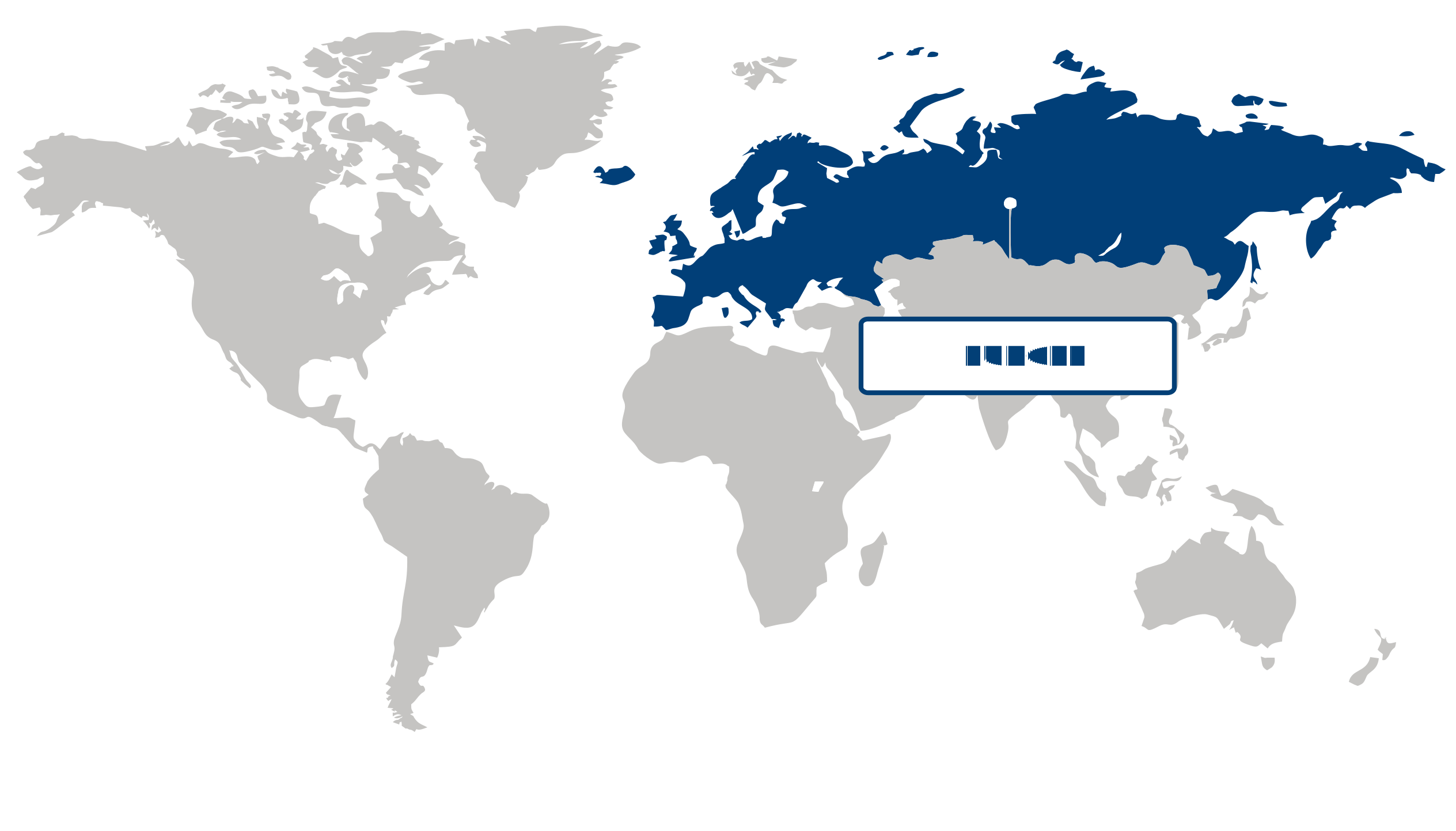
Europe (Largest Region)
Europe accounted for a 38.90% share of the precision viticulture market in 2026, maintaining its leading position due to the region’s established wine-producing industry and increasing focus on technology-enabled vineyard management. Viticulture operations are adopting precision tools to improve monitoring of soil, crop conditions, irrigation, and vineyard productivity while supporting more efficient use of agricultural resources. Greater emphasis on sustainable cultivation practices and resource optimization is further encouraging the integration of data-driven technologies across European vineyards.
Asia Pacific (Fastest-Growing Region)
Asia Pacific is the fastest-growing region, supported by the modernization of agricultural practices and increasing interest in technology-assisted vineyard management. Producers are gradually adopting precision approaches to improve crop monitoring, resource utilization, and operational decision-making as agricultural activities become more technology oriented. Growing awareness of sustainable farming practices and the need to enhance productivity amid changing environmental conditions are also supporting demand for precision viticulture solutions, giving the region strong potential for continued market expansion.
| Parameter | North America | Asia Pacific | Europe | Latin America | MEA |
|---|---|---|---|---|---|
| Innovation HubiScaleNascentDeveloping Advanced | |||||
| Cost-Sensitive RegioniScaleLowMedium High | |||||
| Regulatory EnvironmentiScaleRestrictiveNeutral Supportive | |||||
| Demand DriversiScaleWeakModerate Strong | |||||
| Development StageiScaleEmergingDeveloping Developed | |||||
| Adoption RateiScaleLowMedium High | |||||
| New Entrants / StartupsiScaleSparseModerate Dense | |||||
| Macro IndicatorsiScaleWeakStable Strong |
Key Country Insights
Germany 🇩🇪
Sustainable Vineyard AnalyticsGermany is integrating precision viticulture technologies that improve vineyard monitoring, environmental management, and production consistency. German wine producers increasingly rely on digital tools to optimize field decisions while supporting sustainable cultivation practices.
France 🇫🇷
Quality-Centered Vineyard PracticesFrance continues adopting precision viticulture technologies that enhance vineyard mapping, disease monitoring, and targeted resource application. French wine producers increasingly balance traditional production methods with digital tools that improve operational decision-making.
Italy 🇮🇹
Precision Farming AdoptionItaly is expanding precision viticulture practices by integrating satellite imagery, field sensors, and automated irrigation management. Italian vineyards increasingly invest in digital technologies that support grape quality while improving operational efficiency across diverse growing regions.
Japan 🇯🇵
Smart Cultivation SolutionsJapan is applying precision viticulture technologies to improve vineyard management despite limited cultivation areas and labor availability. Vineyard operators in Japan increasingly utilize remote monitoring and data-driven decision support to improve production quality.
South Korea 🇰🇷
Technology-Enabled CultivationSouth Korea is gradually incorporating precision viticulture solutions through sensor-based monitoring and digital farm management platforms. Vineyard operators in South Korea focus on improving cultivation efficiency and supporting consistent grape production using modern agricultural technologies.
United States 🇺🇸
Data-Driven Vineyard ManagementU.S. vineyard operators are expanding the use of sensors, drones, and analytics platforms to improve irrigation, crop monitoring, and vineyard productivity. Precision viticulture adoption in the U.S. is supported by increasing interest in resource optimization and operational efficiency.
Precision Viticulture Market Share (%), by Component, 2026
Go beyond the chart, access full insights & data tables
Request Free Sample ReportComponent Segment Analysis: Hardware (Largest Segment) vs Software (Fastest-Growing Segment)
In the precision viticulture market, the hardware segment represented the largest share of 59.46% in 2026, reflecting the foundational role of sensors, field equipment, imaging devices, and connected monitoring technologies in collecting vineyard-level data. Increasing adoption of data-driven cultivation practices is encouraging growers to deploy equipment capable of monitoring soil, crop conditions, weather, and plant health with greater precision. Hardware also provides the essential data infrastructure required for automated decision-making, helping vineyard operators improve resource utilization and respond more effectively to changing field conditions.
The software segment is advancing rapidly as vineyard operators seek to convert growing volumes of field data into actionable insights. Analytics platforms, farm-management applications, visualization tools, and decision-support systems can help growers identify variations across vineyard areas and optimize activities such as irrigation, crop monitoring, and disease management. Greater adoption of cloud-based solutions and data integration is further strengthening software's role in creating a more connected and responsive approach to vineyard management.
Application Segment Analysis: Yield Monitoring (Largest Segment) vs Irrigation Management (Fastest-Growing Segment)
The yield monitoring segment held the largest share of 41.98% in 2026, reflecting the importance of understanding production variability for vineyard planning and operational efficiency. Precision monitoring technologies allow growers to assess differences in crop performance across vineyard areas, supporting more informed harvesting, resource allocation, and cultivation decisions. As producers increasingly focus on improving consistency and maximizing the value of available agricultural resources, yield-related data is becoming an important component of precision-based vineyard management.
In the precision viticulture market, irrigation management is experiencing strong expansion as water efficiency becomes increasingly important to vineyard productivity and sustainable cultivation. Sensor-based monitoring and data analytics can help growers determine irrigation requirements more accurately by accounting for field conditions and plant needs. The broader shift toward resource-efficient agriculture is encouraging adoption of connected irrigation technologies that can reduce unnecessary water use while supporting healthier and more consistent crop development.
| Segment | Sub-Segment | Largest Segment | Fastest Growing |
|---|---|---|---|
| Component | Hardware, Software, Services | Hardware | Software |
| Application | Yield Monitoring, Field Mapping, Crop Scouting, Irrigation Management, Others | Yield Monitoring | Irrigation Management |
Competitive Landscape and Market Positioning
Key companies in the precision viticulture market:
1. Deere & Company (United States)
2. Trimble Inc. (United States)
3. Topcon Corporation (Japan)
4. Deveron UAS Corp. (Canada)
5. Groupe ICV (France)
6. Atlas Vineyard Management Inc. (United States)
7. TeeJet Technologies (United States)
8. Tracmap (New Zealand)
9. Ateknea Solutions (Spain)
10. Aha Viticulture (Australia)
The precision viticulture market is being shaped by rising adoption of smart farming technologies, including sensor-based monitoring, satellite imaging, and predictive analytics for vineyard management. Collaborative initiatives between agricultural technology providers and vineyard operators are supporting the deployment of data-driven cultivation practices. Continuous product innovation focused on crop monitoring and resource optimization is further enhancing operational efficiency within the precision viticulture market.
| Company | Market Share | Company Revenue | Revenue CAGR (%) | Product Portfolio | Geographic Presence | Innovation / R&D Focus | Strategic Developments |
|---|---|---|---|---|---|---|---|
| Deere & Company (United States) | |||||||
| Trimble Inc. (United States) | |||||||
| Topcon Corporation (Japan) | |||||||
| Deveron UAS Corp. (Canada) | |||||||
| Groupe ICV (France) | |||||||
| Atlas Vineyard Management Inc. (United States) | |||||||
| TeeJet Technologies (United States) | |||||||
| Tracmap (New Zealand) | |||||||
| Ateknea Solutions (Spain) | |||||||
| Aha Viticulture (Australia). |
Industry Development / News
| Company Name | Date | Key Development |
|---|---|---|
| ICAR–NRCG | May-26 | The ICAR–National Research Centre for Grapes emphasized a strategic shift toward export-oriented innovation and precision viticulture to enhance the competitiveness of the Indian grape industry. The initiative focuses on climate-resilient farming and public-private partnerships to facilitate the adoption of advanced monitoring and management technologies, addressing the growing need for sustainable and high-quality grape production in the region. |
| Tuscany Vineyard Research Study | Apr-26 | A localized study in Tuscany validated the economic impact of precision viticulture technologies, specifically identifying variable-rate fertilization and selective harvesting as key drivers of profitability. The findings suggest that, for larger-scale vineyard operations, the adoption of these data-driven interventions significantly offsets technology integration costs by optimizing input application and improving overall harvest quality. |
| Western Cape Wine Industry | Apr-26 | Industry stakeholders in South Africa’s Western Cape have initiated a widespread drive to adopt irrigation automation technologies. This regional push serves as a strategic response to water scarcity and economic pressures, promoting precision viticulture as a primary method to enhance resource-use efficiency and stabilize yields in one of the world's prominent wine-producing climates. |
| Michigan State University | Jan-26 | Michigan State University formalized a science-driven viticulture framework, emphasizing the integration of precision farming practices to bolster the state's wine sector. Through collaborative research and technology adoption, the program aims to improve vineyard productivity and quality, providing a scalable model for mid-sized wine regions to leverage data-backed cultivation methods in cold-climate environments. |
| Kubota Corporation | Sep-25 | Kubota Corporation expanded its open-innovation strategy by partnering with agtech startups to integrate precision solutions into vineyard operations. This move complements its ongoing focus on developing tractor-mounted sensors and AI-driven systems, which enable variable-rate spraying and precise vine health monitoring, positioning the company as a provider of comprehensive autonomous viticulture hardware and software solutions. |
| Cornell University | Sep-25 | Researchers at the Cornell Lake Erie Research and Extension Laboratory successfully integrated robotics and advanced motion-control technologies into commercial grape production. This development enhances vineyard automation capabilities, allowing for higher precision in canopy management and mechanical interventions, which serves to increase operational efficiency and labor productivity in large-scale viticulture operations. |
| USDA | Jun-24 | The USDA and Cornell University broke ground on the $70 million National Grape Improvement Center at Cornell AgriTech. This 70,000-square-foot facility is designed to centralize interdisciplinary research on grape genetics and technology transfer, aiming to accelerate the development of climate-resilient viticulture practices and advanced precision agriculture tools for the U.S. grape industry. |
| Kubota Corporation | Feb-23 | Kubota Corporation invested in French startup Chouette to leverage AI-powered image analysis for vineyard management. This strategic partnership enables the detection of diseases, water stress, and vine vigor through camera-equipped tractors. The collaboration facilitates the creation of prescription maps, allowing growers to optimize chemical application and labor usage, effectively driving the industry toward autonomous, data-backed vine care. |
Customize Your Report
Explore examples of how this report can be tailored to different research needs, including custom segments, additional topics or chapters, and related reports. Click a section of the wheel or its numbered marker to explore the available options.
Precision Viticulture Market — Custom Segments
| Segment | Sub-Segment |
|---|---|
| Vineyard Size | Small Vineyards, Medium-Sized Vineyards, Large Vineyards, Estate & Industrial Vineyards |
| Farm Ownership Model | Family-Owned Vineyards, Corporate-Owned Vineyards, Cooperative Vineyards, Contract-Farmed Vineyards |
| Distribution Channel | Direct Sales, Agricultural Technology Distributors, Dealer & Integrator Networks, Online Channels |
Precision Viticulture Market — Custom TOC
| Custom Chapter | Chapter Details |
|---|---|
| Vineyard Digitalization Maturity Assessment |
|
| Climate Resilience and Water Optimization Strategies |
|
| Vineyard ROI and Investment Prioritization Analysis |
|
Need a different cut of the data?
Request Custom ResearchFrequently Asked Questions
How much is the precision viticulture market worth?
What is the anticipated CAGR of the precision viticulture industry?
How is sensor-based monitoring influencing technology adoption across the precision viticulture market?
Why are drones and climate-smart technologies becoming central to vineyard modernization strategies?
Why is Yield Monitoring the largest application in the precision viticulture market?
Why is Software the fastest-growing component segment in precision viticulture?
Why does Europe hold the largest share in precision viticulture?
What is supporting Asia Pacific’s fastest growth in this market?
What are the key competitors in the precision viticulture landscape?
Our Clients
"The team demonstrated a great understanding of our business needs, and the reports were tailored to address our specific concerns and objectives."
Infosys
"The report was up-to-date with the latest industry trends and technological advancements. The detailed competitive landscape analysis was quite helpful."
Zebra Technologies
"The data presented in the report was accurate and well-researched. I also found the market dynamics section particularly useful."
Arlo Technologies
Our Research Team & Methodology
Every Fundamental Business Insights report is built by a dedicated vertical research team, validated through a structured primary-and-secondary methodology, and reviewed for accuracy before it reaches you.
Delivery
Published
Available
Support
- Market Size & Forecast
- Market Segmentation
- Regional Analysis
- Growth Drivers & Challenges
- Market Dynamics
- Competitive Landscape
- Company Profiles
- Competitive Benchmarking
- Mergers & Acquisitions
- Market Share Analysis or Key Company Strategies
- Value Chain Analysis
- Porter's Five Forces
- PESTLE Analysis
- Pricing Trends
- Supply-Demand Analysis
- Technology Landscape
- Regulatory Landscape
- Investment & Funding Landscape
- Emerging Opportunities
- Future Market Outlook