



Preimplantation Genetic Testing Market Size & Growth Forecast 2027–2036, By Segments (Procedure, Product, Technology, End-Use, Application), Regional Demand Trends (North America, Asia Pacific, Europe), Key Country Insights (U.S., Japan, South Korea, Germany, France, Italy), and Competitive Landscape
Market Size and Growth Outlook
Preimplantation Genetic Testing Market size was over USD 971.6 million in 2026 and is likely to grow at a 6.75% CAGR between 2027 and 2036, attaining USD 1.87 billion by 2036. The industry revenue for 2027 is calculated at USD 1.03 billion.
Base Year Value (2026)
USD 971.6 million
CAGR (2027-2036)
6.75%
Forecast Year Value (2036)
USD 1.87 billion

Historical Data Period
2022-2026

Largest Region
Europe

Forecast Period
2027-2036
Preimplantation Genetic Testing Market Intelligence Snapshot:
-
Regional Market Dynamics:
- Europe leads with 36.73% share due to mature IVF infrastructure, widespread fertility clinics, and routine integration of advanced genetic testing within assisted reproduction workflows.
- Asia Pacific grows at 11.54% CAGR driven by rising fertility treatment uptake, expanding reproductive medicine capacity, and increasing integration of genetic testing into IVF programs.
-
Segment Momentum:
- Preimplantation Genetic Diagnosis held a 74.05% share in 2026 because it directly addresses the need to identify known inherited genetic disorders before embryo transfer, supporting targeted reproductive decision-making.
- Instrument demand is rising as fertility centers and laboratories expand in-house testing capabilities, upgrade infrastructure, and adopt more integrated platforms to improve workflow efficiency and handle growing testing volumes.
-
Market Expansion Drivers:
- Rising prevalence of genetic disorders increasing demand for embryo-level genetic screening in IVF procedures.
- Advancements in non-invasive genetic testing improving embryo viability assessment and IVF success rates.
- Expanding assisted reproductive technology adoption driving demand for comprehensive embryo selection solutions.
-
Leading Market Participants:
Prominent companies in the preimplantation genetic testing market include Illumina, Inc. (United States), Thermo Fisher Scientific Inc. (United States), CooperSurgical, Inc. (United States), Natera, Inc. (United States), Quest Diagnostics Incorporated (United States), Laboratory Corporation of America Holdings (United States), F. Hoffmann-La Roche Ltd. (Switzerland), Igenomix S.L. (Spain), Genea Limited (Australia).
Global Market Forecast Snapshot:
-
Market Outlook:
- 2026 Market Size: USD 971.6 million
- 2027 Estimated Market Size: USD 1.03 billion.
- Projected Market Size: USD 1.87 billion by 2036
- Growth Forecasts: 6.75% CAGR (2027-2036)
-
Regional and Segment Outlook:
- Leading Regional Market: Europe
- High-Growth Regional Hub: Asia Pacific
- Core Revenue Segment: Preimplantation Genetic Diagnosis (Procedure) | Reagents and Consumables (Product) | Polymerase Chain Reaction (PCR) (Technology) | Hospitals (End-Use) | Aneuploidy Screening (Application)
- Emerging Opportunity Segment: Preimplantation Genetic Screening (Procedure) | Instruments (Product) | Next Generation Sequencing (NGS) (Technology) | Hospitals (End-Use) | Aneuploidy Screening (Application)
Market Growth Drivers and Industry Trends
Rising prevalence of genetic disorders increasing demand for embryo-level genetic screening in IVF procedures
The growing burden of inherited genetic conditions is encouraging prospective parents undergoing assisted reproduction to consider screening approaches that can identify specific genetic abnormalities before embryo transfer. The preimplantation genetic testing market will gain from this demand as genetic analysis can provide fertility specialists with information for selecting embryos with lower risks associated with targeted inherited disorders. Greater awareness of reproductive genetic risks among individuals and families with relevant histories is also supporting the integration of genetic screening into IVF treatment planning.
Advancements in non-invasive genetic testing improving embryo viability assessment and IVF success rates
Technological progress in embryo assessment is creating opportunities for less invasive approaches that can provide genetic information while minimizing disruption to embryo development. In the preimplantation genetic testing market, improvements in genetic analysis and sample-handling techniques can support more detailed evaluation of embryo characteristics and help fertility specialists make informed selection decisions. The development of increasingly sensitive testing methods is also supporting the integration of genetic assessment with broader embryo evaluation practices used during IVF cycles.
Expanding assisted reproductive technology adoption driving demand for comprehensive embryo selection solutions
The broader adoption of IVF and other assisted reproductive technologies is increasing the number of treatment cycles in which embryo selection becomes an important component of reproductive planning. As fertility care becomes more technologically advanced, the preimplantation genetic testing market is benefiting from demand for additional genetic information that can complement conventional embryo assessment. Patients and fertility providers are increasingly considering comprehensive selection strategies to support treatment planning, particularly when genetic considerations form an important part of reproductive decision-making.
| Growth Driver Assessment Framework | |||||
| Growth Driver | Impact On CAGR | Regulatory Influence | Geographic Relevance | Adoption Rate | Impact Timeline |
|---|---|---|---|---|---|
| Rising prevalence of genetic disorders increasing demand for embryo-level genetic screening in IVF procedures | 2.00% | High | North America, Europe | High | Near Term |
| Advancements in non-invasive genetic testing improving embryo viability assessment and IVF success rates | 1.80% | High | Europe, Asia Pacific | Medium | Mid Term |
| Expanding assisted reproductive technology adoption driving demand for comprehensive embryo selection solutions | 1.50% | Moderate | Europe, Asia Pacific | High | Mid Term |
Unlock insights tailored to your business with our bespoke market research solutions - Click to get your customized report now!
Regional Demand Dynamics
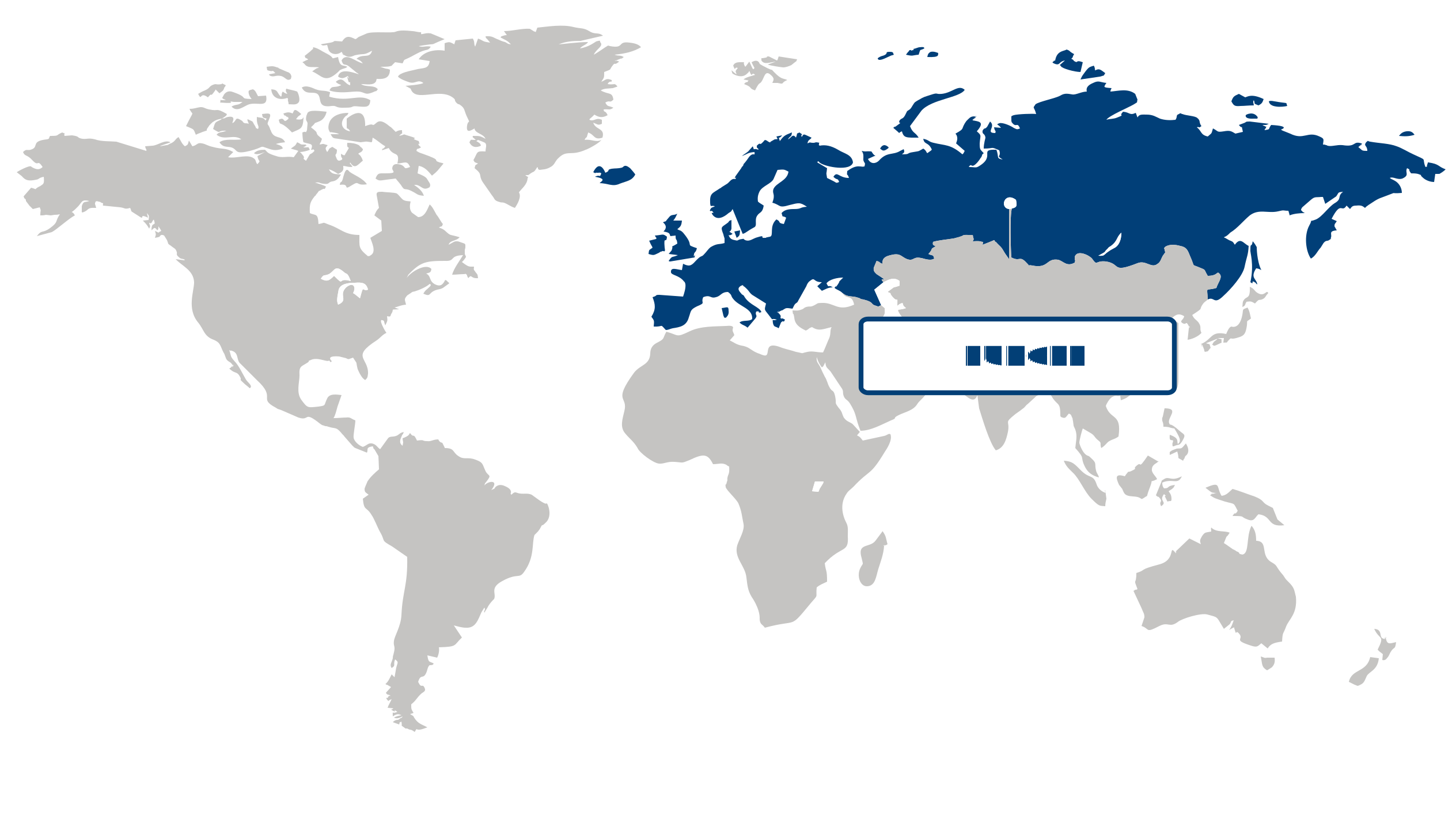
Largest Region
Europe
36.73% Market Share in 2026
Europe (Largest Region) vs Asia Pacific (Fastest-Growing Region)
Europe led the preimplantation genetic testing market, accounting for 36.73% share in 2026, supported by advanced reproductive medicine infrastructure, established assisted reproduction services, and strong clinical expertise in genetic screening. The region's market position is also shaped by regulatory frameworks governing reproductive genetics, increasing emphasis on identifying inherited genetic abnormalities, and continued integration of genetic testing into fertility care. Mature laboratory capabilities and collaboration between fertility specialists and genetic professionals further support the adoption of preimplantation testing across European healthcare systems.
Asia Pacific represents the fastest-growing regional market, propelled by expanding fertility treatment infrastructure, rising awareness of genetic screening, and increasing demand for assisted reproductive services. Greater access to specialized reproductive clinics and improvements in laboratory technologies are making preimplantation genetic testing more available across major healthcare markets. Growing awareness among prospective parents of embryo health and inherited genetic conditions is also encouraging adoption, while broader investments in reproductive healthcare are supporting the development of regional testing capabilities.
Key Country Insights
The U.S. preimplantation genetic testing market benefits from widespread integration of genetic testing within assisted reproductive services. Fertility centers across the U.S. continue investing in laboratory capabilities and genetic counseling to support informed embryo selection and personalized reproductive care.
Japan expands the use of preimplantation genetic testing through specialized fertility centers focused on improving embryo assessment. Japanese providers strengthen laboratory accuracy and patient counseling while aligning testing practices with evolving clinical guidance.
South Korea advances preimplantation genetic testing through technologically sophisticated fertility clinics and molecular diagnostic capabilities. South Korean providers emphasize laboratory efficiency, embryo assessment quality, and integrated reproductive treatment pathways for prospective parents.
Germany applies preimplantation genetic testing within a carefully regulated reproductive medicine framework. German fertility providers prioritize laboratory quality, clinical compliance, and multidisciplinary collaboration to ensure responsible implementation of genetic testing services.
France incorporates preimplantation genetic testing within structured fertility care supported by clinical oversight and genetic counseling. French providers focus on appropriate patient selection, laboratory consistency, and informed reproductive decision-making throughout treatment pathways.
Italy strengthens preimplantation genetic testing through specialized reproductive medicine centers with expanding molecular diagnostic expertise. Italian clinics prioritize coordinated clinical evaluation, laboratory reliability, and personalized fertility strategies to support complex reproductive care needs.
Segment Leadership and Growth Trends
Procedure Segment Analysis: Preimplantation Genetic Diagnosis (Largest Segment) vs Preimplantation Genetic Screening (Fastest-Growing Segment)
Preimplantation genetic diagnosis held a 74.05% share in 2026, establishing it as the leading procedure segment in the preimplantation genetic testing market. Its strong position is associated with the ability to identify specific genetic abnormalities in embryos before implantation, making it particularly relevant for individuals and families concerned about transmitting known inherited disorders. Growing awareness of reproductive genetic testing, advances in embryo assessment, and increasing integration of genetic information into assisted reproductive decision-making are supporting demand for targeted diagnostic procedures.
The preimplantation genetic screening segment is expected to be the fastest-growing segment as prospective parents and fertility specialists increasingly seek broader evaluation of embryo chromosomal status. Screening can support embryo selection by identifying chromosomal abnormalities that may affect implantation or reproductive outcomes, complementing advances in assisted reproductive care. Greater awareness of embryo health, improvements in genetic testing capabilities, and the increasing use of personalized reproductive strategies are expected to strengthen adoption of screening approaches.
Product Segment Analysis: Reagents and Consumables (Largest Segment) vs Instruments (Fastest-Growing Segment)
Reagents and consumables accounted for a 53% share in 2026, reflecting their essential role in the recurring laboratory processes involved in preimplantation genetic testing. These products support critical stages of sample preparation, genetic analysis, amplification, and detection, creating consistent demand across fertility laboratories and specialized reproductive testing facilities. Increasing testing activity and the need for reliable laboratory workflows continue to reinforce the importance of consumable products in the overall testing process.
The instruments segment is anticipated to be the fastest-growing segment as fertility laboratories increasingly adopt sophisticated platforms capable of supporting accurate, efficient, and automated genetic analysis. Advances in molecular testing technologies are encouraging investment in laboratory equipment that can improve workflow consistency and processing capabilities. The growing emphasis on high-quality embryo assessment and the modernization of reproductive genetics laboratories are further supporting demand for specialized instruments.
| Report Segmentation | |||
| Segment | Sub-Segment | Largest Segment | Fastest Growing Segment |
|---|---|---|---|
| Procedure | Preimplantation Genetic Diagnosis, Preimplantation Genetic Screening | Preimplantation Genetic Diagnosis | Preimplantation Genetic Screening |
| Product | Reagents and Consumables, Instruments, Software | Reagents and Consumables | Instruments |
| Technology | Next Generation Sequencing (NGS), Polymerase Chain Reaction (PCR), Fluorescent In-Situ Hybridization (FISH), Others | Polymerase Chain Reaction (PCR) | Next Generation Sequencing (NGS) |
| End-Use | Fertility Centers, Hospitals, Diagnostic Centers, Research Centers and Academic Labs | Hospitals | Hospitals |
| Application | Chromosomal Abnormalities, X-linked Diseases, Embryo Testing, Aneuploidy Screening, HLA Typing, Others | Aneuploidy Screening | Aneuploidy Screening |
 Read our Research Approach
Competitive Landscape and Market Positioning
Prominent players in the preimplantation genetic testing market:
1. Illumina Inc. (United States)
2. Thermo Fisher Scientific Inc. (United States)
3. CooperSurgical Inc. (United States)
4. Natera Inc. (United States)
5. Quest Diagnostics Incorporated (United States)
6. Laboratory Corporation of America Holdings (United States)
7. F. Hoffmann-La Roche Ltd. (Switzerland)
8. Igenomix S.L. (Spain)
9. Genea Limited (Australia)
The preimplantation genetic testing market is being shaped by advancements in genomic sequencing, embryo screening accuracy, and reproductive diagnostics. Market participants are investing in next-generation testing platforms and AI-assisted embryo analysis technologies to improve fertility treatment outcomes. Expanding focus on precision reproductive medicine and genetic risk assessment is also accelerating innovation across the market.
Industry Development/News
| Company Name | Date | Key Development |
|---|---|---|
| GenEmbryomics | May-26 | GenEmbryomics, in partnership with Genomic Prediction, commercialized the XGEN PGT-X™ platform, a whole-genome sequencing solution for IVF workflows. Debuted at PGDIS 2026, this technology provides comprehensive embryo genomic analysis. By launching an early access program at a competitive price point, the company is actively lowering barriers to entry for advanced genetic screening in clinical reproductive medicine. |
| Illumina | Sep-25 | Illumina’s market access division initiated a strategic drive to expand the clinical availability of noninvasive prenatal testing (NIPT) and preimplantation genetic testing (PGT) across Abu Dhabi, UAE. This initiative aims to integrate high-throughput genomic diagnostics into the regional healthcare infrastructure, supporting local fertility clinics and improving the scalability of genetic screening services for patient populations. |
| Juniper Genomics | Jun-25 | Juniper Genomics exited stealth mode with US$4.6 million in seed funding to advance its embryo screening platform. By utilizing integrated whole-genome and transcriptome sequencing, the company targets a broader range of genetic markers than conventional PGT methods. This strategic move aims to improve IVF success rates by providing higher-resolution genomic data for embryo selection and viability assessment. |
| Orchid Health | Jan-24 | Orchid Health launched the first commercially available whole-genome sequencing (WGS) service specifically for detecting monogenic diseases in preimplantation embryos. This service represents a significant technological leap in reproductive genomics, allowing for the precise screening of specific genetic conditions at the embryo stage, which effectively enhances the clinical options available for couples at risk of passing on hereditary disorders. |
| Progenesis | Dec-23 | Progenesis expanded its operational infrastructure by opening a dedicated genetic laboratory in New Delhi and an AI-driven bioinformatics center in Chennai. These facilities significantly increase the company’s regional capacity for IVF-related genetic diagnostics, demonstrating a strategic investment in localizing high-end genomic analysis and bioinformatics capabilities to serve the rapidly growing demand for fertility services in India. |
| Thermo Fisher Scientific | Jul-23 | Thermo Fisher Scientific introduced the Ion ReproSeq PGT-A Kit and the Ion AmpliSeq Polyploidy Kit for its Ion Torrent Genexus Integrated Sequencer. These next-generation sequencing (NGS) tools streamline aneuploidy detection in IVF and ICSI procedures, providing clinics with automated, high-accuracy research-use assays that reduce turnaround times and improve the reliability of genetic screening protocols. |
| Oxford Gene Technology | Jun-23 | Oxford Gene Technology (OGT) established a commercial partnership with Applied Spectral Imaging (ASI) to distribute proprietary cytogenetic imaging and analysis solutions in the UK. This agreement strengthens OGT’s diagnostic portfolio, enabling the integration of advanced digital imaging with existing genetic testing workflows to improve the precision of structural variant detection in complex cytogenetic laboratory environments. |
Why Choose Us
Specialized Expertise: Our team comprises industry experts with a deep understanding of your market segment. We bring specialized knowledge and experience that ensures our research and consulting services are tailored to your unique needs.
Customized Solutions: We understand that every client is different. That's why we offer customized research and consulting solutions designed specifically to address your challenges and capitalize on opportunities within your industry.
Proven Results: With a track record of successful projects and satisfied clients, we have demonstrated our ability to deliver tangible results. Our case studies and testimonials speak to our effectiveness in helping clients achieve their goals.
Cutting-Edge Methodologies: We leverage the latest methodologies and technologies to gather insights and drive informed decision-making. Our innovative approach ensures that you stay ahead of the curve and gain a competitive edge in your market.
Client-Centric Approach: Your satisfaction is our top priority. We prioritize open communication, responsiveness, and transparency to ensure that we not only meet but exceed your expectations at every stage of the engagement.
Continuous Innovation: We are committed to continuous improvement and staying at the forefront of our industry. Through ongoing learning, professional development, and investment in new technologies, we ensure that our services are always evolving to meet your evolving needs.
Value for Money: Our competitive pricing and flexible engagement models ensure that you get maximum value for your investment. We are committed to delivering high-quality results that help you achieve a strong return on your investment.
Select Licence Type

