



Private Label Packaged Food Market Size & Growth Forecast 2026–2035, By Segments (Distribution Channel, Product), Regional Demand Trends (North America, Asia Pacific, Europe), Key Country Insights (U.S., Japan, South Korea, Germany, France, Italy), and Competitive Landscape
Market Size and Growth Outlook
Base Year Value (2025)
USD 432.91 Billion
CAGR (2026-2035)
5.9%
Forecast Year Value (2035)
USD 767.99 Billion

Historical Data Period
2022-2025

Largest Region
Europe

Forecast Period
2026-2035
Private Label Packaged Food Market Intelligence Snapshot:
-
Regional Market Dynamics:
- Europe leads the market with mature retailer-owned brand ecosystems, strong supermarket penetration, established sourcing strategies, and widespread consumer acceptance across packaged food categories.
- Asia Pacific is projected to grow at a 6.67% CAGR, supported by expanding organized retail, broader product assortments, improved packaging, and rising consumer acceptance of retailer-owned food brands.
-
Segment Momentum:
- Hypermarkets and supermarkets held a 54.67% market share in 2025, benefiting from routine grocery shopping, strong shelf visibility, effective promotions, and broad assortments that drive high-volume private label purchases.
- Plant-based dairy is the fastest-growing product segment as retailers expand affordable private label alternatives, making these products easier to try and repurchase while responding to changing consumer preferences.
-
Market Expansion Drivers:
- Rising consumer price sensitivity increasing adoption of retailer-owned packaged food alternatives.
- Growing demand for organic and clean-label private label foods expanding premium product portfolios.
- Expansion of online grocery platforms improving visibility and accessibility of private label food brands.
-
Leading Market Participants:
Key companies in the private label packaged food market include Walmart Inc. (United States), Costco Wholesale Corporation (United States), The Kroger Co. (United States), Aldi Einkauf SE & Co. oHG (Germany), Amazon.com, Inc. (United States), Target Corporation (United States), Albertsons Companies, Inc. (United States), Loblaw Companies Limited (Canada), H-E-B Grocery Company, LP (United States), Trader Joe's Company (United States).
Global Market Forecast Snapshot:
-
Market Outlook:
- 2025 Market Size: USD 432.91 Billion
- Projected Market Size: USD 767.99 Billion by 2035
- Growth Forecasts: 5.9% CAGR (2026-2035)
-
Regional and Segment Outlook:
- Leading Regional Market: Europe
- High-Growth Regional Hub: Asia Pacific
- Core Revenue Segment: Hypermarkets & Supermarkets (Distribution Channel) | Dairy (Product)
- Emerging Opportunity Segment: Online (Distribution Channel) | Plant-based Dairy (Product)
Market Growth Drivers and Industry Trends
Rising consumer price sensitivity increasing adoption of retailer-owned packaged food alternativesAs household budgets come under pressure, shoppers are reassessing routine food purchases and shifting from national brands to lower-priced retailer-owned options that deliver acceptable quality at a visible discount. This behavior is increasing demand for the private label packaged food market by increasing trial in high-frequency categories such as pantry staples, snacks, and frozen foods, where purchase decisions are highly price-comparative and repeat buying can form quickly. Retailers respond by allocating more shelf space, expanding assortment breadth, and using in-store promotions to retain value-focused consumers, which reinforces volume growth and strengthens the competitive position of private label portfolios against branded incumbents.
Growing demand for organic and clean-label private label foods expanding premium product portfolios
Consumer interest in ingredient transparency, reduced additives, and perceived healthfulness is pushing retailers to move private label beyond entry-level value positioning and into higher-margin premium segments. In the private label packaged food market, this shift is influencing market adoption by encouraging chains to build organic, non-GMO, minimally processed, and clean-label product lines that compete directly with specialized branded offerings while preserving stronger pricing control. Retailers use these ranges to capture shoppers who want affordability without compromising on product standards, supporting market expansion by widening the customer base and improving the credibility of private label as a quality-led packaged food choice.
Expansion of online grocery platforms improving visibility and accessibility of private label food brands
Digital grocery channels are changing how packaged food is discovered, compared, and purchased, giving retailer-owned brands a more prominent and controllable position than they often receive in physical aisles. On online storefronts, retailers can feature private label products in search results, recommendation modules, and value-oriented category pages, which increases market penetration by reducing the visibility advantage long held by established national brands. For the private label packaged food market, easier access through delivery apps, click-and-collect platforms, and retailer websites also supports repeat purchasing, since consumers can quickly reorder previously tried items and compare price-per-unit in real time, reinforcing preference for retailer-owned alternatives during routine shopping.
| Growth Driver Assessment Framework | |||||
| Growth Driver | Impact On CAGR | Regulatory Influence | Geographic Relevance | Adoption Rate | Impact Timeline |
|---|---|---|---|---|---|
| Rising consumer price sensitivity increasing adoption of retailer-owned packaged food alternatives | 1.80% | Low | North America, Europe | High | Near Term |
| Growing demand for organic and clean-label private label foods expanding premium product portfolios | 1.50% | Moderate | Europe, North America | High | Mid Term |
| Expansion of online grocery platforms improving visibility and accessibility of private label food brands | 1.30% | Low | Asia Pacific, North America | Emerging | Mid Term |
Unlock insights tailored to your business with our bespoke market research solutions - Click to get your customized report now!
Regional Demand Dynamics
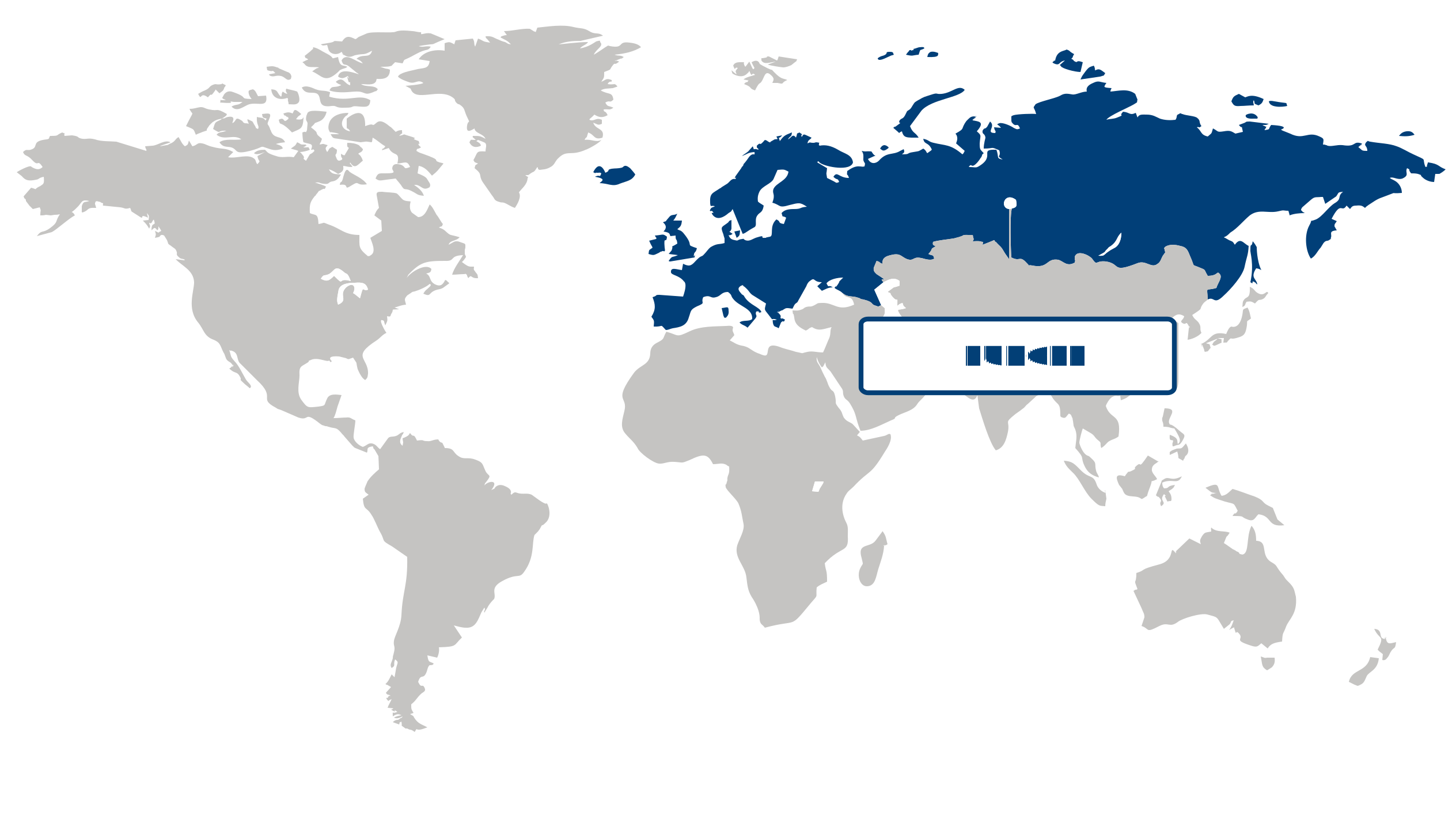
Largest Region
Europe
XX% Market Share in 2025
Europe held the largest regional share of the private label packaged food market in 2025, supported by the deep integration of retailer-owned brands across supermarket and discount chains. The region’s leadership is supported by mature private label ecosystems, broad consumer familiarity with store brands, and strong shelf presence across everyday food categories. In practice, large retail networks in Europe use established sourcing, category management, and pricing strategies to keep private label offerings visible and competitive, which helps maintain steady demand across both value-focused and quality-oriented product tiers.
Asia Pacific is projected to expand at a 6.67% CAGR over the forecast period, with growth in the private label packaged food market being propelled by the continued development of organized retail and changing consumer purchasing behavior. As modern trade formats and retail chains broaden their packaged food assortments, private label products gain greater access to high-traffic sales channels and more consistent in-store promotion. This growth is also being reinforced by rising acceptance of retailer brands among consumers seeking affordable packaged food options, particularly as retailers improve packaging, product variety, and category coverage.
Key Country Insights
In the U.S., retailers continue expanding private label packaged food portfolios through premium offerings and category innovation. Investment in quality improvements and differentiated packaging strengthens consumer acceptance across everyday grocery purchases.
Japan emphasizes private label packaged food tailored to convenience, portion control, and consistent product quality. Retail chains collaborate with manufacturers to introduce differentiated offerings that fit changing household consumption patterns.
South Korea continues strengthening private label packaged food through exclusive product development and modern retail formats. Retailers focus on premium recipes, healthier ingredients, and convenient packaging to differentiate store brands.
Germany maintains strong momentum for private label packaged food through consistent quality standards and competitive pricing. Retailers broaden premium and sustainable product ranges to reinforce long-term consumer loyalty.
France supports private label packaged food growth through retailer investment in premium selections and locally inspired products. Consumers increasingly recognize store brands that combine quality, traceability, and attractive pricing across multiple food categories.
Italy leverages private label packaged food by incorporating regional culinary preferences and authentic ingredient sourcing. Retailers expand premium and specialty assortments that reinforce value while reflecting local food traditions.
Segment Leadership and Growth Trends
Hypermarkets & Supermarkets held the strongest position in the private label packaged food market in 2025, accounting for a 54.67% share. This channel maintains its leadership because private label packaged food purchases are closely tied to routine grocery trips, where broad shelf availability, immediate product comparison, and price visibility directly influence buying decisions. Large store formats also give retailers stronger control over in-store placement, promotional execution, and assortment breadth, which helps private label lines reach high-volume household demand across essential food categories.
Online is the fastest-growing distribution channel in the private label packaged food market as digital grocery adoption continues to improve access to retailer-owned brands beyond physical shelf constraints. Growth is being backed by the convenience of repeat ordering, app-based promotions, and retailer efforts to make private label products more discoverable through search, recommendations, and bundled value offerings. Compared with store-based alternatives, online platforms are gaining momentum because they allow retailers to directly guide purchasing behavior in a price-sensitive environment where consumers actively compare options and seek affordable packaged food choices.
Product Segment Analysis: Dairy (Largest Segment) vs Plant-based Dairy (Fastest-Growing Segment)
Dairy led the private label packaged food market in 2025 with a 34.41% share. its position is underpinned by the category’s everyday consumption pattern, high purchase frequency, and strong integration into core household food baskets. Retailers benefit from consistent demand across staple dairy items, making private label dairy a practical area for scale, shelf turnover, and price-led competition, which supports its continued dominance within the private label packaged food market.
Plant-based Dairy is emerging as the fastest-growing product segment in the private label packaged food market because retailers are responding to changing consumer preferences with broader, more accessible alternatives to conventional dairy. The segment is seeing wider adoption as private label offerings help narrow price barriers that often limit adoption in newer food categories. Relative to traditional alternatives, plant-based dairy is seeing faster momentum because retailer brands can expand assortment and affordability at the same time, making these products easier to trial and repurchase.
| Report Segmentation | |||
| Segment | Sub-Segment | Largest Segment | Fastest Growing Segment |
|---|---|---|---|
| Distribution Channel | Hypermarkets & Supermarkets, Convenience Stores, Online, Others | Hypermarkets & Supermarkets | Online |
| Product | Baked Goods, Savory Snacks, Meals & Soups, Dairy, Confectionery, Processed Meat, Seafood & Meat Alternative, Ice Cream, Breakfast Cereals, Baby Food, Plant-based Dairy, Others | Dairy | Plant-based Dairy |
 Read our Research Approach
Competitive Landscape and Market Positioning
Key companies in the private label packaged food market:1. Walmart Inc. (United States)
2. Costco Wholesale Corporation (United States)
3. The Kroger Co. (United States)
4. Aldi Einkauf SE & Co. oHG (Germany)
5. Amazon.com Inc. (United States)
6. Target Corporation (United States)
7. Albertsons Companies Inc. (United States)
8. Loblaw Companies Limited (Canada)
9. H-E-B Grocery Company LP (United States)
10. Trader Joe's Company (United States)
Retail-driven food branding is influencing the private label packaged food market, where affordability and quality balance are key growth factors. Product diversification is expanding consumer choice across categories. In the private label packaged food market, value-oriented consumption is strengthening market penetration.
Industry Development/News
| Company Name | Date | Key Development |
|---|---|---|
| Walmart | May-24 | Walmart launched its private-label food brand Bettergoods, offering a broad assortment including frozen foods, dairy, snacks, beverages, pasta, soups, coffee, and chocolate. The initiative strengthens Walmart’s store-brand ecosystem and expands its competitive positioning in value-driven packaged food segments across multiple everyday consumption categories. |
| Aldi | May-24 | Aldi introduced recyclable wrapping for two of its private-label butter products, marking a packaging sustainability initiative within its own-label portfolio. The development reflects incremental improvements in packaging materials aimed at reducing environmental impact in packaged food retail operations. |
Why Choose Us
Specialized Expertise: Our team comprises industry experts with a deep understanding of your market segment. We bring specialized knowledge and experience that ensures our research and consulting services are tailored to your unique needs.
Customized Solutions: We understand that every client is different. That's why we offer customized research and consulting solutions designed specifically to address your challenges and capitalize on opportunities within your industry.
Proven Results: With a track record of successful projects and satisfied clients, we have demonstrated our ability to deliver tangible results. Our case studies and testimonials speak to our effectiveness in helping clients achieve their goals.
Cutting-Edge Methodologies: We leverage the latest methodologies and technologies to gather insights and drive informed decision-making. Our innovative approach ensures that you stay ahead of the curve and gain a competitive edge in your market.
Client-Centric Approach: Your satisfaction is our top priority. We prioritize open communication, responsiveness, and transparency to ensure that we not only meet but exceed your expectations at every stage of the engagement.
Continuous Innovation: We are committed to continuous improvement and staying at the forefront of our industry. Through ongoing learning, professional development, and investment in new technologies, we ensure that our services are always evolving to meet your evolving needs.
Value for Money: Our competitive pricing and flexible engagement models ensure that you get maximum value for your investment. We are committed to delivering high-quality results that help you achieve a strong return on your investment.
Select Licence Type

