Professional Service Robots Market Size & Growth Forecast 2027–2036, By Segments (Type, End Use), Regional Demand Trends (North America, Asia Pacific, Europe), Key Country Insights (U.S., Japan, South Korea, Germany, France, Italy), and Competitive Landscape
Jump to Content
Market Size and Growth Outlook
Professional Service Robots Market size was valued at USD 48.22 billion in 2026 and is anticipated to grow at a 12.07% CAGR from 2027 to 2036, exceeding USD 150.7 billion by 2036. The industry revenue for 2027 is assessed at USD 53.12 billion.
Get more details on this report
Request Free Sample ReportProfessional Service Robots Market Intelligence Snapshot
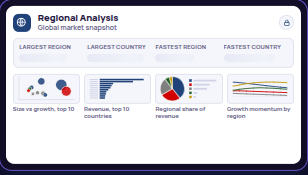
Regional Market Dynamics
- North America holds the largest share due to strong adoption across commercial, healthcare, logistics, and defense applications supported by mature robotics integration and high-value automation investments.
- Asia Pacific is growing at 12.54% CAGR driven by rapid automation uptake, expanding service infrastructure, workforce constraints, and demand for higher operational throughput in urban environments.
Segment Momentum
- AMRs held a 39.22% market share in 2026 because they provide flexible automation for material movement and internal transport across hospitals, warehouses, and commercial facilities without requiring fixed infrastructure.
- Logistics & Transportation is growing fastest as organizations deploy robots to improve warehouse movement, sorting, delivery, and transport coordination while increasing throughput and reducing reliance on manual operations.
Market Expansion Drivers
- Expanding logistics automation increasing deployment of autonomous mobile robots in warehouse operations.
- Advancements in AI-powered sensors improving precision across healthcare and service robotics applications.
- Rising SME adoption of affordable service robotics accelerating operational automation across commercial sectors.
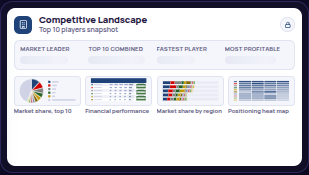
Leading Market Participants
- Leading players in the professional service robots market include ABB Ltd. (Switzerland), Intuitive Surgical, Inc. (United States), Boston Dynamics, Inc. (United States), FANUC Corporation (Japan), KUKA AG (Germany), SoftBank Robotics Group Corp. (Japan), Daifuku Co., Ltd. (Japan), iRobot Corporation (United States), CYBERDYNE Inc. (Japan), Blue Ocean Robotics ApS (Denmark).
Global Market Forecast Snapshot
Market Outlook
- 2026 Market Size: USD 48.22 billion
- 2027 Estimated Market Size: USD 53.12 billion.
- Projected Market Size: USD 150.7 billion by 2036
- Growth Forecast: 12.07% CAGR (2027-2036)
Regional and Segment Outlook
- Leading Regional Market: North America
- High-Growth Regional Hub: Asia Pacific
- Core Revenue Segment: Autonomous Mobile Robots (AMRs) (Type) | Healthcare & Medical (End Use)
- Emerging Opportunity Segment: Unmanned Aerial Vehicles (UAVs) (Type) | Logistics & Transportation (End Use)
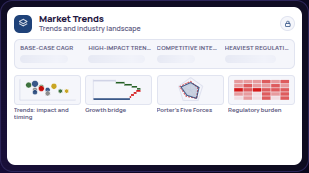
Market Growth Drivers and Industry Trends
Expanding logistics automation increasing deployment of autonomous mobile robots in warehouse operations
Growing investment in warehouse automation is strengthening demand within the professional service robots market, as logistics operators increasingly require flexible solutions for material movement, order fulfillment, and inventory handling. Autonomous mobile robots can transport goods between storage, picking, packing, and dispatch areas, reducing the need for repetitive manual movement and allowing warehouse personnel to focus on more complex activities. Their ability to operate within changing facility layouts and coordinate with existing workflows makes them suitable for environments where order volumes, product mixes, and fulfillment requirements vary. The expansion of e-commerce and the need for faster, more responsive logistics operations further encourage warehouses to adopt mobile robotic systems for internal transportation and task coordination.
Advancements in AI-powered sensors improving precision across healthcare and service robotics applications
Advances in AI-enabled sensing technologies are improving the ability of robots to perceive surroundings, identify objects, navigate complex environments, and respond appropriately, supporting growth of the professional service robots market across healthcare and service applications. More capable sensors combined with AI-based processing can help robots distinguish people and objects, detect environmental changes, and perform tasks with greater contextual awareness. In healthcare settings, these capabilities can support applications such as patient assistance, delivery of supplies, navigation within facilities, and interaction with staff and users. Service environments likewise benefit from improved perception and navigation, particularly where robots must operate safely alongside people and adapt to unpredictable surroundings.
Rising SME adoption of affordable service robotics accelerating operational automation across commercial sectors
Increasing availability of cost-effective robotic solutions is making automation more accessible to small and medium-sized enterprises, creating an important demand pathway for the professional service robots market. SMEs across hospitality, retail, healthcare, logistics, cleaning, and other commercial activities can use service robots to handle repetitive or labor-intensive tasks without requiring extensive automation infrastructure. Lower implementation complexity, scalable deployment models, and improvements in robotic usability can make these technologies more practical for businesses with limited technical resources. As SMEs seek to improve operational consistency, address routine workforce requirements, and allocate employees toward customer-facing or higher-value responsibilities, affordable service robotics can become an increasingly viable component of commercial operations.
| Growth Driver | Impact on CAGR | Regulatory Influence | Geographic Relevance | Adoption Rate | Impact Timeline |
|---|---|---|---|---|---|
| Expanding logistics automation increasing deployment of autonomous mobile robots in warehouse operations | 2.00% | Moderate | Asia Pacific, North America | High | Near Term |
| Advancements in AI-powered sensors improving precision across healthcare and service robotics applications | 1.80% | High | North America, Europe, Asia Pacific | High | Mid Term |
| Rising SME adoption of affordable service robotics accelerating operational automation across commercial sectors | 1.30% | Low | Asia Pacific, Latin America | Emerging | Mid Term |
Unlock insights tailored to your business with our bespoke market research solutions.
Click to get your customized report now.
Regional Demand Dynamics

North America (Largest Region)
North America maintained the largest share in 2026 in the professional service robots market, reflecting strong adoption of automation across healthcare, logistics, hospitality, commercial services, and other professional environments. Businesses are increasingly using robotic systems to improve operational efficiency, address repetitive labor requirements, and enhance service consistency. The region's mature technology ecosystem and strong investment in artificial intelligence, robotics, and automation support the development and deployment of increasingly capable professional robots. Demand is further reinforced by the growing need for contactless services, workplace productivity improvements, and automated workflows.
Asia Pacific (Fastest-Growing Region)
Asia Pacific is the fastest-growing region, propelled by rapid industrial modernization, expanding automation initiatives, and increasing adoption of robotics across service-oriented industries. Healthcare facilities, logistics operations, hospitality providers, and commercial establishments are exploring robotic solutions to improve productivity and manage evolving workforce requirements. Rising investment in intelligent automation and advances in robotics capabilities are making professional service robots more adaptable to diverse operating environments. The region's expanding technology infrastructure and growing focus on digital transformation are expected to further strengthen adoption across a broad range of professional applications.
| Parameter | North America | Asia Pacific | Europe | Latin America | MEA |
|---|---|---|---|---|---|
| Innovation HubiScaleNascentDeveloping Advanced | |||||
| Cost-Sensitive RegioniScaleLowMedium High | |||||
| Regulatory EnvironmentiScaleRestrictiveNeutral Supportive | |||||
| Demand DriversiScaleWeakModerate Strong | |||||
| Development StageiScaleEmergingDeveloping Developed | |||||
| Adoption RateiScaleLowMedium High | |||||
| New Entrants / StartupsiScaleSparseModerate Dense | |||||
| Macro IndicatorsiScaleWeakStable Strong |
Key Country Insights
Germany 🇩🇪
Industrial Service RoboticsGermany applies professional service robots across healthcare, industrial support, logistics, and facility management applications. German companies prioritize reliable automation, precision engineering, and seamless integration with existing digital infrastructure to improve operational performance.
France 🇫🇷
Healthcare Service IntegrationFrance is expanding professional service robot adoption across healthcare facilities, logistics operations, and commercial environments. French organizations are emphasizing collaborative robotic systems that improve service efficiency while supporting high standards of operational safety and reliability.
Italy 🇮🇹
Hospitality Automation FocusItaly increasingly deploys professional service robots in hospitality, healthcare, and logistics applications to improve service consistency and operational efficiency. Italian businesses are integrating flexible robotic solutions that complement human workers while supporting evolving customer service expectations.
Japan 🇯🇵
Aging Care AutomationJapan increasingly deploys professional service robots to support healthcare, eldercare, hospitality, and public services. Japanese organizations continue investing in advanced robotics that improve service quality while addressing workforce shortages and rising demand for assisted care solutions.
South Korea 🇰🇷
AI Robotics DeploymentSouth Korea combines artificial intelligence with advanced robotics across healthcare, retail, logistics, and public service environments. Businesses in South Korea are accelerating adoption of intelligent service robots that enhance operational flexibility and customer-facing service capabilities.
United States 🇺🇸
Enterprise Automation ExpansionThe U.S. professional service robots market is expanding across healthcare, logistics, hospitality, and commercial services where automation improves operational efficiency. Organizations in the U.S. continue investing in AI-enabled robotic systems that enhance productivity and address workforce challenges.
Professional Service Robots Market Share (%), by Type, 2026
Go beyond the chart, access full insights & data tables
Request Free Sample ReportType Segment Analysis: Autonomous Mobile Robots (AMRs) (Largest Segment) vs Unmanned Aerial Vehicles (UAVs) (Fastest-Growing Segment)
Autonomous mobile robots (AMRs) accounted for the largest share of the professional service robots market in 2026, representing 39.22%, supported by their ability to navigate dynamic environments and perform repetitive material-handling and service tasks with limited human intervention. Their flexible navigation capabilities make them suitable for applications across facilities where workflows, obstacles, and operational requirements can change frequently. Increasing emphasis on automation, labor efficiency, and continuous service delivery is encouraging organizations to integrate mobile robotic systems into operational processes. The growing adoption of autonomous technologies across commercial and institutional environments further reinforces the strong position of AMRs.
Unmanned aerial vehicles (UAVs) are expected to be the fastest-growing type segment, driven by expanding use of aerial robotics for inspection, surveillance, mapping, monitoring, and other specialized professional applications. Their ability to access difficult or hazardous locations without placing personnel directly at risk creates significant value across industries requiring remote visual assessment and data collection. Improvements in autonomous navigation, sensing, and aerial data capabilities are also broadening the range of professional tasks that can be performed by UAVs, supporting their increasing adoption as organizations seek safer and more efficient methods of completing field operations.
End Use Segment Analysis: Healthcare & Medical (Largest Segment) vs Logistics & Transportation (Fastest-Growing Segment)
The healthcare & medical segment held the largest share of the professional service robots market in 2026, reflecting the expanding role of robotics in supporting healthcare delivery, facility operations, and patient-oriented services. Professional robots can assist with tasks such as internal transportation, disinfection, delivery of supplies, and other repetitive activities, allowing healthcare personnel to focus more closely on clinical responsibilities. The need to improve operational efficiency while maintaining consistent service standards is encouraging healthcare institutions to adopt robotic solutions, particularly where automation can reduce routine workloads and support more organized facility management.
Logistics & transportation is anticipated to be the fastest-growing end-use segment as organizations increasingly deploy robotic technologies to streamline movement, handling, inspection, and delivery activities. The growing complexity of logistics operations is increasing demand for automated systems capable of operating continuously and adapting to changing workflows. Robotics can help improve material movement and reduce reliance on manual processes, while advances in autonomous navigation and sensing are expanding the range of logistics tasks suitable for professional service robots.
| Segment | Sub-Segment | Largest Segment | Fastest Growing |
|---|---|---|---|
| Type | Autonomous Mobile Robots (AMRs), Articulated Robots, Humanoid Robots, Unmanned Aerial Vehicles (UAVs), Others | Autonomous Mobile Robots (AMRs) | Unmanned Aerial Vehicles (UAVs) |
| End Use | Healthcare & Medical, Logistics & Transportation, Defense & Security, Hospitality, Inspection and Maintenance, Education, Retail, Agriculture, Others | Healthcare & Medical | Logistics & Transportation |
Competitive Landscape and Market Positioning
Key companies in the professional service robots market:
1. ABB Ltd. (Switzerland)
2. Intuitive Surgical Inc. (United States)
3. Boston Dynamics Inc. (United States)
4. FANUC Corporation (Japan)
5. KUKA AG (Germany)
6. SoftBank Robotics Group Corp. (Japan)
7. Daifuku Co. Ltd. (Japan)
8. iRobot Corporation (United States)
9. CYBERDYNE Inc. (Japan)
10. Blue Ocean Robotics ApS (Denmark)
The professional service robots market is expanding due to rising automation across healthcare, logistics, and industrial sectors. The professional service robots market is witnessing innovation in AI-driven autonomy and task precision. Continuous development is improving efficiency and expanding real-world deployment of robotic systems.
| Company | Market Share | Company Revenue | Revenue CAGR (%) | Product Portfolio | Geographic Presence | Innovation / R&D Focus | Strategic Developments |
|---|---|---|---|---|---|---|---|
| ABB Ltd. (Switzerland) | |||||||
| Intuitive Surgical Inc. (United States) | |||||||
| Boston Dynamics Inc. (United States) | |||||||
| FANUC Corporation (Japan) | |||||||
| KUKA AG (Germany) | |||||||
| SoftBank Robotics Group Corp. (Japan) | |||||||
| Daifuku Co. Ltd. (Japan) | |||||||
| iRobot Corporation (United States) | |||||||
| CYBERDYNE Inc. (Japan) | |||||||
| Blue Ocean Robotics ApS (Denmark). |
Industry Development/News
| Company Name | Date | Key Development |
|---|---|---|
| Boston Dynamics | Feb-25 | Boston Dynamics entered into a strategic partnership with the Robotics & AI Institute to accelerate humanoid robot capabilities. The collaboration focuses on leveraging reinforcement learning to develop dynamic, generalizable mobile manipulation behaviors specifically tailored for the next-generation electric Atlas robot. |
| ABB Ltd. | Jan-25 | ABB Ltd. Robotics launched AppStudio, a specialized no-code software tool engineered to create customized robotic user interfaces. The system streamlines deployment and simplifies programming, reducing automation barriers for small and medium-sized enterprises by enabling rapid, experience-agnostic configuration. |
| Honda Motor Co., Ltd | Dec-24 | Honda Motor Co., Ltd commercialized its AI-powered social robot, Haru, deploying the system within a healthcare environment in Spain to assist pediatric patients. The deployment represents a significant functional application of specialized interactive service robotics within the healthcare sector. |
| 1X | Jan-24 | 1X accelerated its commercial expansion through a strategic funding round backed by OpenAI and EQT Ventures. The investment is dedicated to advancing the development of professional service robots designed to mitigate global labor shortages and enhance enterprise workplace automation capabilities. |
Customize Your Report
Explore examples of how this report can be tailored to different research needs, including custom segments, additional topics or chapters, and related reports. Click a section of the wheel or its numbered marker to explore the available options.
Professional Service Robots Market — Custom Segments
| Segment | Sub-Segment |
|---|---|
| Deployment Model | On-Premises Deployment, Cloud-Based Deployment, Hybrid Deployment |
| Business Model | Robot Sales, Robotics-as-a-Service (RaaS), Leasing & Subscription, Managed Robotics Services |
| Enterprise Size | Large Enterprises, Mid-Sized Enterprises, Small & Medium Enterprises |
Professional Service Robots Market — Custom TOC
| Custom Chapter | Chapter Details |
|---|---|
| Human-Robot Collaboration Opportunity Analysis |
|
| Industry-Specific Use Case Expansion Analysis |
|
| Robotics-as-a-Service Business Model Assessment |
|
Need a different cut of the data?
Request Custom ResearchFrequently Asked Questions
How large is the professional service robots market?
How is the professional service robots industry projected to perform over the next decade?
Why are autonomous mobile robots seeing wider adoption in warehouse operations?
How are affordable robotic solutions expanding adoption among SMEs?
Why do Autonomous Mobile Robots (AMRs) lead the professional service robots market?
Why is Logistics & Transportation the fastest-growing end-use segment in the professional service robots market?
Which region leads the professional service robots market?
Why is Asia Pacific the fastest-growing region in service robots?
Who holds a significant market share in the professional service robots landscape?
Our Clients
"The team at Fundamental Business Insights & Consulting demonstrated a commitment to excellence, not only in the quality of the report but also in their client-centric approach."
FANUC
"The level of detail in the market segmentation provided were particularly noteworthy. The detailed country-level insights were also very helpful."
B&R Industrial Automation GmbH
"The consultant took the time to understand our specific business objectives, ensuring that the reports were tailored to address our unique challenges and opportunities."
KUKA SE & Co. KGaA
Our Research Team & Methodology
Every Fundamental Business Insights report is built by a dedicated vertical research team, validated through a structured primary-and-secondary methodology, and reviewed for accuracy before it reaches you.
Delivery
Published
Available
Support
- Market Size & Forecast
- Market Segmentation
- Regional Analysis
- Growth Drivers & Challenges
- Market Dynamics
- Competitive Landscape
- Company Profiles
- Competitive Benchmarking
- Mergers & Acquisitions
- Market Share Analysis or Key Company Strategies
- Value Chain Analysis
- Porter's Five Forces
- PESTLE Analysis
- Pricing Trends
- Supply-Demand Analysis
- Technology Landscape
- Regulatory Landscape
- Investment & Funding Landscape
- Emerging Opportunities
- Future Market Outlook