



Protective Textiles Market Size & Growth Forecast 2027–2036, By Segments (Application), Regional Demand Trends (North America, Asia Pacific, Europe), Key Country Insights (U.S., Japan, South Korea, Germany, France, Italy), and Competitive Landscape
Market Size and Growth Outlook
Protective Textiles Market size was worth USD 7.7 billion in 2026 and is expected to grow at a 3.71% CAGR between 2027 and 2036, surpassing USD 11.08 billion by 2036. The industry revenue for 2027 is calculated at USD 7.94 billion.
Base Year Value (2026)
USD 7.7 billion
CAGR (2027-2036)
3.71%
Forecast Year Value (2036)
USD 11.08 billion

Historical Data Period
2022-2026

Largest Region
Europe

Forecast Period
2027-2036
Protective Textiles Market Intelligence Snapshot:
-
Regional Market Dynamics:
- Europe leads the market due to its established industrial base, mature technical textile supply networks, and steady demand for certified protective materials driven by worker safety compliance.
- Asia Pacific is projected to grow at a 4.56% CAGR as expanding industrial activity, manufacturing capacity, and infrastructure-related employment increase demand for protective apparel and textile materials.
-
Segment Momentum:
- Ballistic Protection Clothing led the market with a 32.08% share in 2026, supported by consistent procurement from defense, law enforcement, and security organizations prioritizing certified protection and durability.
- Heat & Flame-resistant Clothing is growing rapidly as industrial workplaces strengthen safety compliance and require dependable protection against high temperatures, sparks, and flash fire hazards without affecting productivity.
-
Market Expansion Drivers:
- Stringent industrial safety regulations increasing adoption of certified protective workplace apparel.
- Rising healthcare and emergency response PPE requirements strengthening protective textile consumption.
- Growing infrastructure construction activity expanding demand for durable worker safety textiles.
-
Leading Market Participants:
Leading companies in the protective textiles market include DuPont de Nemours, Inc. (United States), W. L. Gore & Associates, Inc. (United States), Teijin Limited (Japan), Koninklijke Ten Cate B.V. (Netherlands), Schoeller Textil AG (Switzerland), PBI Performance Products, Inc. (United States), Marina Textil S.L. (Spain), DyStar Group (Singapore), Kusumgar Corporates Pvt. Ltd. (India), Madhuram Fabrics Pvt. Ltd. (India).
Global Market Forecast Snapshot:
-
Market Outlook:
- 2026 Market Size: USD 7.7 billion
- 2027 Estimated Market Size: USD 7.94 billion.
- Projected Market Size: USD 11.08 billion by 2036
- Growth Forecasts: 3.71% CAGR (2027-2036)
-
Regional and Segment Outlook:
- Leading Regional Market: Europe
- High-Growth Regional Hub: Asia Pacific
- Core Revenue Segment: Ballistic Protection Clothing (Application)
- Emerging Opportunity Segment: Heat & Flame-resistant Clothing (Application)
Market Growth Drivers and Industry Trends
Stringent industrial safety regulations increasing adoption of certified protective workplace apparel
Stringent workplace safety requirements are driving the protective textiles market as industrial employers increasingly need apparel that meets established standards for worker protection. Regulations covering hazards such as heat, chemicals, flames, electrical exposure, and mechanical risks encourage companies to replace conventional workwear with certified protective garments designed for specific operating environments. Compliance requirements also influence procurement decisions across manufacturing, energy, construction, and other high-risk industries, where employers must demonstrate appropriate measures to protect personnel. The need for garments with verified resistance and performance characteristics is increasing the use of specialized fabrics, coatings, and multilayer textile constructions in workplace apparel.
Rising healthcare and emergency response PPE requirements strengthening protective textile consumption
Rising requirements for personal protective equipment across healthcare facilities and emergency response operations are supporting the protective textiles market by increasing demand for garments that provide reliable protection against biological, chemical, and other occupational hazards. Healthcare workers, emergency personnel, and support staff require protective clothing suited to environments involving infectious materials, bodily fluids, and hazardous substances. Repeated use and replacement requirements also create ongoing consumption of gowns, coveralls, protective suits, and other textile-based equipment. Advances in breathable, lightweight, and moisture-resistant textile constructions are further enabling protective apparel to provide safety while supporting mobility and wearer comfort during extended periods of use.
Growing infrastructure construction activity expanding demand for durable worker safety textiles
Growing infrastructure construction activity will boost the protective textiles market as expanding project operations increase the workforce exposed to physical, environmental, and site-specific hazards. Construction personnel require durable protective clothing capable of withstanding abrasion, dust, weather exposure, heat, and contact with potentially hazardous materials while maintaining flexibility for physically demanding tasks. Large-scale infrastructure projects also create sustained requirements for standardized safety apparel across contractors and project teams, encouraging procurement of high-visibility garments, reinforced workwear, protective coveralls, and other specialized textile products suited to demanding construction environments.
| Growth Driver Assessment Framework | |||||
| Growth Driver | Impact On CAGR | Regulatory Influence | Geographic Relevance | Adoption Rate | Impact Timeline |
|---|---|---|---|---|---|
| Stringent industrial safety regulations increasing adoption of certified protective workplace apparel | 2.00% | High | North America, Europe | High | Near Term |
| Rising healthcare and emergency response PPE requirements strengthening protective textile consumption | 1.70% | High | North America, Asia Pacific | High | Near Term |
| Growing infrastructure construction activity expanding demand for durable worker safety textiles | 1.30% | Moderate | Asia Pacific, Middle East & Africa | Medium | Mid Term |
Unlock insights tailored to your business with our bespoke market research solutions - Click to get your customized report now!
Regional Demand Dynamics
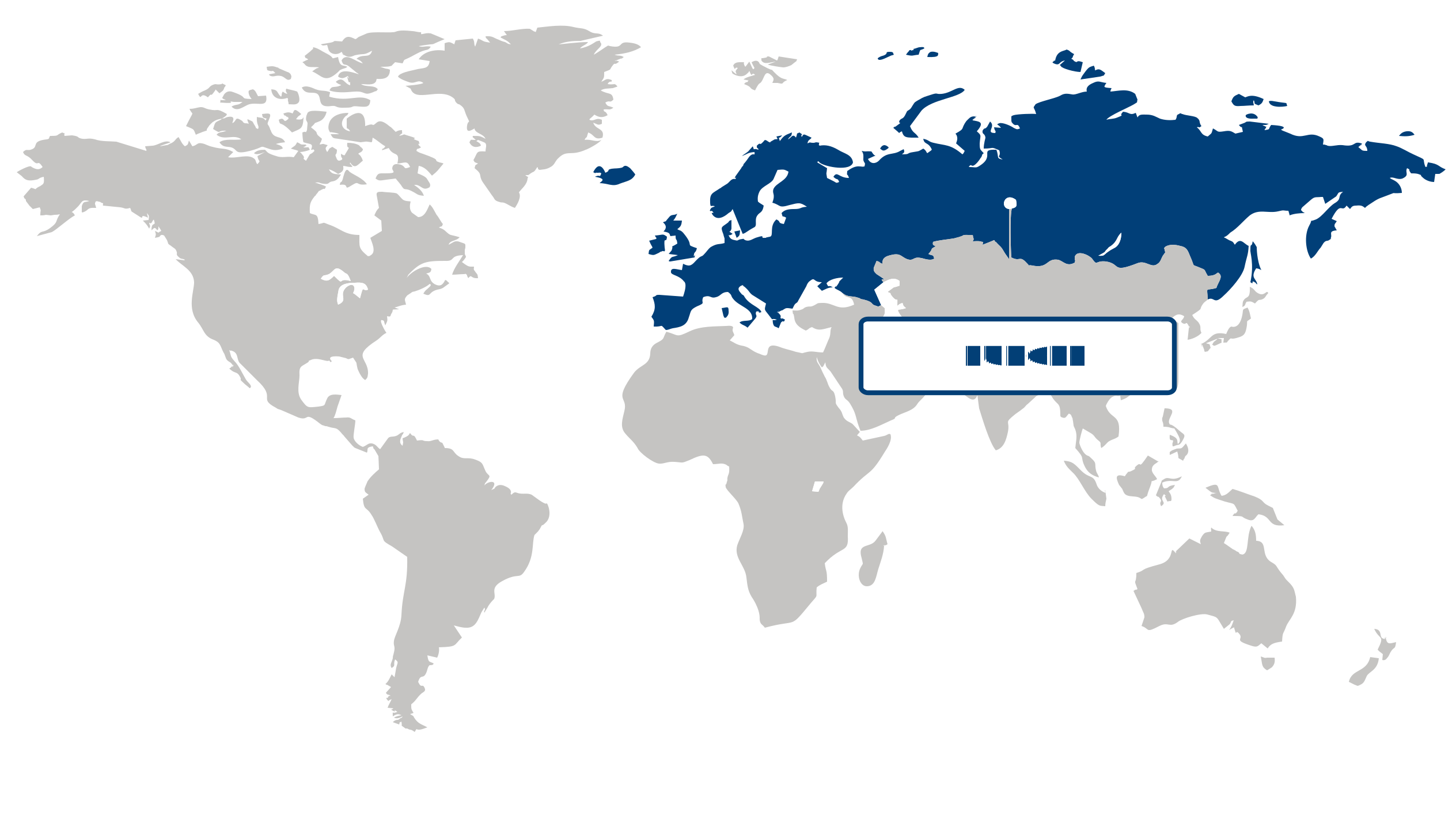
Largest Region
Europe
Largest Market Share in 2026
Europe (Largest Region) vs Asia Pacific (Fastest-Growing Region)
Europe held the largest share of the protective textiles market in 2026, supported by stringent workplace safety requirements, established industrial sectors, and strong demand for specialized protective clothing and materials. Industries such as manufacturing, construction, healthcare, and chemical processing require textiles designed to provide protection against occupational hazards, supporting consistent regional demand. Increasing emphasis on worker safety, regulatory compliance, and development of high-performance textile materials is further encouraging adoption of advanced protective textile solutions.
Asia Pacific is the fastest-growing region in the protective textiles market, driven by rapid industrialization, expanding manufacturing activity, and growing awareness of occupational safety. Increasing investment in construction, infrastructure, healthcare, and industrial facilities is creating broader requirements for protective apparel and technical textile applications. Improvements in workplace safety practices and greater attention to compliance with occupational protection standards are also encouraging organizations to adopt higher-performance protective textile products.
Key Country Insights
The U.S. prioritizes protective textiles for defense, industrial safety, and emergency response applications requiring advanced material performance. Manufacturers in the U.S. continue investing in lightweight fabrics that improve protection, durability, and wearer comfort.
Japan develops protective textiles with advanced material technologies for industrial, healthcare, and specialized occupational use. Manufacturers in Japan prioritize comfort, flexibility, and multifunctional fabric performance to address evolving workplace safety requirements.
South Korea strengthens protective textile production through innovation in technical fabrics and performance materials. Companies in South Korea increasingly develop lightweight protective solutions that balance safety, mobility, and durability across industrial applications.
Germany emphasizes protective textiles for manufacturing, construction, and industrial workplaces with demanding safety standards. Companies in Germany focus on durable, high-performance fabrics that support worker protection while maintaining long-term usability.
France emphasizes certified protective textiles for firefighting, industrial safety, and professional protective equipment. Organizations in France seek advanced fabrics that comply with stringent performance requirements while enhancing user comfort during extended use.
Italy combines technical textile expertise with protective apparel production for industrial and professional markets. Manufacturers in Italy focus on durable fabric construction, ergonomic design, and specialized material finishes that improve protection across diverse working environments.
Segment Leadership and Growth Trends
Application Segment Analysis: Ballistic Protection Clothing (Largest Segment) vs Heat & Flame-resistant Clothing (Fastest-Growing Segment)
Ballistic protection clothing accounted for a 32.08% share of the protective textiles market in 2026, reflecting sustained demand for advanced protective solutions in applications where personnel face projectile-related hazards. The segment benefits from the increasing emphasis on occupational safety, personnel protection, and the development of lightweight materials that can provide effective ballistic resistance without excessively restricting mobility. Continued demand for protective equipment across security and high-risk operational environments is encouraging investment in technically advanced textiles with improved durability and wearer comfort. Material innovations that combine protection, flexibility, and reduced weight are supporting the segment's established market position.
In the protective textiles market, heat and flame-resistant clothing is gaining momentum as industries place greater emphasis on worker safety in environments exposed to thermal hazards. Adoption is supported by stringent workplace protection requirements across industrial operations where employees may encounter high temperatures, flames, sparks, or thermal exposure. Advances in specialized fibers, fabric treatments, and multilayer textile construction are improving protection while supporting greater comfort and usability. Rising awareness of workplace risk management and the need for reliable protective apparel are further expanding demand across industrial and hazardous working environments.
| Report Segmentation | |||
| Segment | Sub-Segment | Largest Segment | Fastest Growing Segment |
|---|---|---|---|
| Application | Heat & Flame-resistant Clothing, Mechanical Protection Clothing, Chemical Protection Clothing, Ballistic Protection Clothing, Health Care Garments, Others | Ballistic Protection Clothing | Heat & Flame-resistant Clothing |
 Read our Research Approach
Competitive Landscape and Market Positioning
Major players in the protective textiles market:
1. DuPont de Nemours Inc. (United States)
2. W. L. Gore & Associates Inc. (United States)
3. Teijin Limited (Japan)
4. Koninklijke Ten Cate B.V. (Netherlands)
5. Schoeller Textil AG (Switzerland)
6. PBI Performance Products Inc. (United States)
7. Marina Textil S.L. (Spain)
8. DyStar Group (Singapore)
9. Kusumgar Corporates Pvt. Ltd. (India)
10. Madhuram Fabrics Pvt. Ltd. (India)
Advanced safety requirements are driving innovation in the protective textiles market, particularly in high-risk occupational environments. The protective textiles market is evolving through development of high-strength, lightweight, and multifunctional fabric systems. Sustainability considerations are influencing material selection and production processes. Continuous innovation is improving both comfort and protective performance.
Industry Development/News
| Company Name | Date | Key Development |
|---|---|---|
| TEXTILCOLOR AG | Jul-25 | TEXTILCOLOR AG acquired SCHOELLER TECHNOLOGIES AG, a move designed to consolidate technical textile innovation capabilities and broaden collaborative R&D efforts. This acquisition enhances the company's competitive standing in the advanced textile market by integrating specialized technology portfolios and expanding its partner ecosystem within high-performance textile segments. |
| Patria | May-25 | Patria initiated a €40 million capital investment to expand its armored vehicle production facility in Hämeenlinna. This capacity expansion aims to scale manufacturing operations to meet long-term defense production requirements, reflecting a strategic effort to enhance regional industrial output and address increasing demand for protected mobile defense platforms. |
| Numat Technologies & Milliken | Nov-25 | Numat Technologies and Milliken formed a strategic alliance to integrate Sentinel MOF technology into advanced textile structures. This partnership focuses on the commercial development of next-generation protective fabrics, combining material science expertise to engineer textiles with superior performance capabilities for high-stakes protection applications. |
| Khosla Profil | Apr-25 | Khosla Profil optimized its technical textiles business model through backward integration and expansion into new industrial verticals. This strategic shift is intended to improve operational control over the supply chain and support revenue diversification, strengthening the firm’s competitive positioning in the high-performance textile market. |
| Magnera | Dec-25 | Magnera introduced a PFAS-free nonwoven textile solution designed for healthcare and industrial protection. By addressing the critical industry requirement for fluid repellency without the use of PFAS, the launch supports manufacturers' sustainability objectives while maintaining functional safety standards necessary for complex protective textile applications. |
| Sutlej Textiles | Feb-26 | Sutlej Textiles appointed a Chief Business Officer for its Protech segment, signaling a strategic focus on leadership realignment within its protective textiles division. The appointment aims to centralize oversight of product development, operations, and supply chain management to enhance the business unit's commercial scalability and performance in the protective garment market. |
| BIOTRONIK & Texray | Apr-24 | BIOTRONIK and Texray established a strategic distribution partnership to expand market access for radiation protection products. By leveraging BIOTRONIK’s existing channels, the collaboration enhances the commercial reach of Texray's specialized protective solutions, providing healthcare professionals with broader availability of equipment designed to mitigate occupational radiation exposure. |
Why Choose Us
Specialized Expertise: Our team comprises industry experts with a deep understanding of your market segment. We bring specialized knowledge and experience that ensures our research and consulting services are tailored to your unique needs.
Customized Solutions: We understand that every client is different. That's why we offer customized research and consulting solutions designed specifically to address your challenges and capitalize on opportunities within your industry.
Proven Results: With a track record of successful projects and satisfied clients, we have demonstrated our ability to deliver tangible results. Our case studies and testimonials speak to our effectiveness in helping clients achieve their goals.
Cutting-Edge Methodologies: We leverage the latest methodologies and technologies to gather insights and drive informed decision-making. Our innovative approach ensures that you stay ahead of the curve and gain a competitive edge in your market.
Client-Centric Approach: Your satisfaction is our top priority. We prioritize open communication, responsiveness, and transparency to ensure that we not only meet but exceed your expectations at every stage of the engagement.
Continuous Innovation: We are committed to continuous improvement and staying at the forefront of our industry. Through ongoing learning, professional development, and investment in new technologies, we ensure that our services are always evolving to meet your evolving needs.
Value for Money: Our competitive pricing and flexible engagement models ensure that you get maximum value for your investment. We are committed to delivering high-quality results that help you achieve a strong return on your investment.
Select Licence Type

