



Pulsed Field Ablation Market Size & Growth Forecast 2027–2036, By Segments (Components, Indication, End-use), Regional Demand Trends (North America, Asia Pacific, Europe), Key Country Insights (U.S., Japan, South Korea, Germany, France, Italy), and Competitive Landscape
Market Size and Growth Outlook
Pulsed Field Ablation Market size was valued at USD 2.07 billion in 2026 and is anticipated to grow at a 31.45% CAGR from 2027 to 2036, reaching USD 31.88 billion by 2036. The industry revenue for 2027 is calculated at USD 2.62 billion.
Base Year Value (2026)
USD 2.07 billion
CAGR (2027-2036)
31.45%
Forecast Year Value (2036)
USD 31.88 billion

Historical Data Period
2022-2026

Largest Region
Europe

Forecast Period
2027-2036
Pulsed Field Ablation Market Intelligence Snapshot:
-
Regional Market Dynamics:
- Europe leads due to early clinical adoption, strong electrophysiology infrastructure, and established hospital workflows integrating advanced catheter-based cardiac ablation procedures.
- Asia Pacific is expanding at 34.98% CAGR, driven by rising adoption of minimally invasive cardiac procedures and expanding electrophysiology capacity across hospitals.
-
Segment Momentum:
- Catheters accounted for an 85.12% share in 2026 because every pulsed field ablation procedure depends on specialized catheter platforms for precise treatment delivery, directly linking demand to procedure volumes.
- Non-atrial fibrillation is the fastest-growing indication as clinical interest expands beyond atrial fibrillation, creating new opportunities for pulsed field ablation across additional arrhythmia-related treatment settings.
-
Market Expansion Drivers:
- Rising global atrial fibrillation prevalence increasing demand for minimally invasive cardiac ablation procedures.
- Advancements in catheter design and real-time mapping technologies improving procedural precision and safety.
- Expanding hospital electrophysiology infrastructure supporting broader adoption of next-generation PFA systems.
-
Leading Market Participants:
Key players in the pulsed field ablation market include Boston Scientific Corporation (United States), Medtronic plc (Ireland), Abbott Laboratories (United States), Johnson & Johnson (United States), Kardium Inc. (Canada), Pulse Biosciences, Inc. (United States), Adagio Medical, Inc. (United States), CardioFocus, Inc. (United States).
Global Market Forecast Snapshot:
-
Market Outlook:
- 2026 Market Size: USD 2.07 billion
- 2027 Estimated Market Size: USD 2.62 billion.
- Projected Market Size: USD 31.88 billion by 2036
- Growth Forecasts: 31.45% CAGR (2027-2036)
-
Regional and Segment Outlook:
- Leading Regional Market: Europe
- High-Growth Regional Hub: Asia Pacific
- Core Revenue Segment: Catheters (Components) | Atrial Fibrillation (Indication) | Inpatient Facilities (End-use)
- Emerging Opportunity Segment: Catheters (Components) | Non-atrial Fibrillation (Indication) | Outpatient Facilities (End-use)
Market Growth Drivers and Industry Trends
Rising global atrial fibrillation prevalence increasing demand for minimally invasive cardiac ablation procedures
The growing prevalence of atrial fibrillation will drive the pulsed field ablation market growth as healthcare systems seek effective treatment options that reduce procedural invasiveness and support faster patient recovery. PFA uses controlled electrical fields to target cardiac tissue associated with abnormal rhythms, offering an alternative to conventional thermal ablation approaches. Increasing awareness of rhythm-management therapies, combined with the need to address recurrent or symptomatic atrial fibrillation, is encouraging electrophysiology specialists to consider advanced ablation techniques for patients requiring catheter-based intervention.
Advancements in catheter design and real-time mapping technologies improving procedural precision and safety
Technological progress in catheter engineering and cardiac mapping will propel the pulsed field ablation market growth by enabling physicians to navigate complex cardiac anatomy with greater control during procedures. Improved catheter configurations can support more consistent energy delivery and tissue targeting, while real-time mapping technologies provide detailed visualization of electrical activity and treatment areas. These capabilities can assist clinicians in identifying arrhythmogenic regions, positioning ablation catheters more accurately, and monitoring procedural conditions during intervention, particularly in increasingly sophisticated electrophysiology workflows.
Expanding hospital electrophysiology infrastructure supporting broader adoption of next-generation PFA systems
Expansion of hospital electrophysiology infrastructure is creating an environment for wider deployment of advanced ablation platforms, which will boost pulsed field ablation market demand across specialized cardiac care settings. Hospitals investing in dedicated electrophysiology laboratories, cardiac imaging capabilities, catheterization resources, and trained clinical teams are better positioned to incorporate next-generation PFA systems into their treatment offerings. Greater availability of specialized facilities also supports the transition toward technologically advanced rhythm-management procedures and enables more cardiac centers to provide catheter-based interventions for eligible patients.
| Growth Driver Assessment Framework | |||||
| Growth Driver | Impact On CAGR | Regulatory Influence | Geographic Relevance | Adoption Rate | Impact Timeline |
|---|---|---|---|---|---|
| Rising global atrial fibrillation prevalence increasing demand for minimally invasive cardiac ablation procedures | 2.00% | High | North America, Europe | High | Near Term |
| Advancements in catheter design and real-time mapping technologies improving procedural precision and safety | 1.80% | High | North America, Europe | High | Mid Term |
| Expanding hospital electrophysiology infrastructure supporting broader adoption of next-generation PFA systems | 1.40% | Moderate | Asia Pacific, North America | Emerging | Mid Term |
Unlock insights tailored to your business with our bespoke market research solutions - Click to get your customized report now!
Regional Demand Dynamics
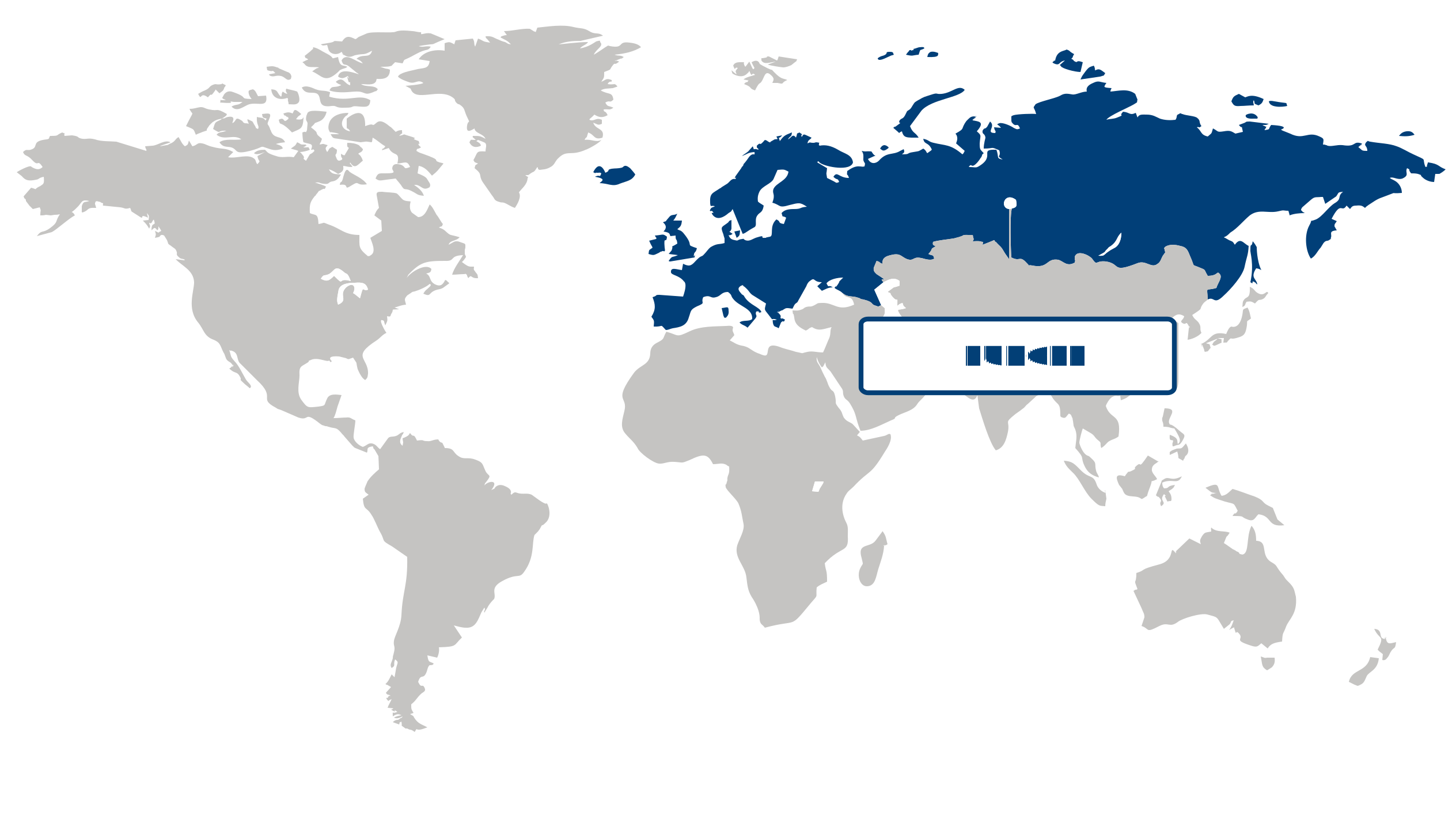
Largest Region
Europe
Largest Market Share in 2026
Europe (Largest Region) vs Asia Pacific (Fastest-Growing Region)
Europe held the largest regional position in the pulsed field ablation market in 2026, supported by advanced cardiovascular healthcare infrastructure, strong adoption of innovative electrophysiology technologies, and increasing clinical interest in minimally invasive approaches to cardiac rhythm management. The region benefits from established specialist care networks and access to sophisticated cardiac treatment facilities, which facilitate the adoption of emerging ablation technologies. Continued emphasis on improving procedural outcomes and reducing treatment-related complications is also supporting interest in pulsed field ablation solutions.
Asia Pacific is the fastest-growing region, driven by expanding cardiac care infrastructure, rising awareness of advanced arrhythmia treatments, and improving access to specialized electrophysiology services. Increasing healthcare investment and the modernization of hospitals are creating greater opportunities for the adoption of innovative cardiac technologies. Growing demand for minimally invasive procedures, together with improvements in specialist capabilities and diagnostic services, is further strengthening the region's potential for pulsed field ablation adoption.
Key Country Insights
The U.S. pulsed field ablation market is characterized by rapid clinical evaluation and integration of novel cardiac ablation technologies. Healthcare providers in the U.S. increasingly expand electrophysiology capabilities while prioritizing procedural efficiency and patient safety.
Japan emphasizes pulsed field ablation systems that support controlled and minimally invasive cardiac interventions. Hospitals in Japan increasingly evaluate technologies that integrate efficiently with existing electrophysiology infrastructure while maintaining high procedural standards.
South Korea prioritizes modern electrophysiology platforms that expand access to innovative cardiac ablation procedures. Healthcare institutions in South Korea continue adopting advanced imaging and mapping technologies alongside pulsed field ablation systems for optimized clinical workflows.
Germany focuses on incorporating pulsed field ablation into advanced cardiac rhythm management practices. Clinical centers in Germany continue assessing technology integration alongside established electrophysiology workflows to improve procedural precision and treatment consistency.
France supports pulsed field ablation through specialized cardiac treatment centers seeking efficient and precise procedural options. Healthcare providers in France increasingly evaluate technology that complements evolving arrhythmia management protocols and clinical practice standards.
Italy focuses on integrating pulsed field ablation into established electrophysiology services to improve procedural flexibility. Cardiac centers in Italy continue strengthening clinical capabilities through technology investments that support efficient arrhythmia treatment pathways.
Segment Leadership and Growth Trends
Components Segment Analysis: Catheters (Largest & Fastest-Growing Segment)
Catheters accounted for the largest share of 85.12% in 2026 and were also the fastest-growing component segment in the pulsed field ablation market, reflecting their central role in delivering ablation therapy to targeted cardiac tissue. Catheter-based systems enable controlled energy delivery within minimally invasive procedures while supporting precise treatment of arrhythmogenic tissue. Growing preference for less invasive cardiac interventions, together with increasing attention to procedural precision and treatment efficiency, is strengthening demand for advanced pulsed field ablation catheters.
Indication Segment Analysis: Atrial Fibrillation (Largest Segment) vs Non-atrial Fibrillation (Fastest-Growing Segment)
Atrial fibrillation dominated the pulsed field ablation market with a 92.53% share in 2026, reflecting the established application of pulsed field ablation in treating this major cardiac rhythm disorder. The demand for catheter-based interventions is supported by the need for effective rhythm management and minimally invasive treatment approaches. Increasing clinical interest in technologies designed to selectively target cardiac tissue while improving procedural efficiency is further reinforcing the role of pulsed field ablation in atrial fibrillation management.
Non-atrial fibrillation represents the fastest-growing indication segment as pulsed field ablation technology continues to attract interest across a broader range of cardiac rhythm disorders. Expanding clinical exploration of the technology is encouraging consideration of its potential applications beyond atrial fibrillation. Improvements in procedural capabilities and growing interest in tissue-selective ablation approaches are supporting the broader development of pulsed field ablation for additional indications.
| Report Segmentation | |||
| Segment | Sub-Segment | Largest Segment | Fastest Growing Segment |
|---|---|---|---|
| Components | Catheters, Generators | Catheters | Catheters |
| Indication | Atrial Fibrillation, Non-atrial Fibrillation | Atrial Fibrillation | Non-atrial Fibrillation |
| End-use | Inpatient Facilities, Outpatient Facilities | Inpatient Facilities | Outpatient Facilities |
 Read our Research Approach
Competitive Landscape and Market Positioning
Top players in the pulsed field ablation market:
1. Boston Scientific Corporation (United States)
2. Medtronic plc (Ireland)
3. Abbott Laboratories (United States)
4. Johnson & Johnson (United States)
5. Kardium Inc. (Canada)
6. Pulse Biosciences Inc. (United States)
7. Adagio Medical Inc. (United States)
8. CardioFocus Inc. (United States)
Rapid technological advancement is shaping the competitive dynamics of the pulsed field ablation market as healthcare providers seek minimally invasive cardiac treatment solutions. Industry participants are emphasizing next-generation ablation systems with enhanced procedural precision, shorter recovery times, and improved patient safety profiles. Strong investment in clinical research and electrophysiology innovation is also accelerating the commercialization of advanced treatment platforms.
Industry Development/News
| Company Name | Date | Key Development |
|---|---|---|
| Johnson & Johnson | May-26 | Johnson & Johnson entered a definitive agreement to acquire Atraverse Medical, a developer of next-generation left-heart access and radiofrequency technologies. This strategic acquisition is designed to enhance J&J’s electrophysiology portfolio by improving procedural access capabilities, a critical component in optimizing clinical workflows for pulsed field ablation (PFA) procedures. |
| Confluent Medical Technologies | May-26 | Confluent Medical Technologies opened a new nitinol wire manufacturing facility in India, managed through its Nitinol Wire Center of Excellence. This expansion is expected to double the company’s production capacity for specialized nitinol-based components, directly supporting the growing global demand for materials used in advanced electrophysiology and pulsed field ablation devices. |
| Johnson & Johnson | Apr-26 | Johnson & Johnson initiated the PERSIGMA multicenter randomized controlled trial involving 466 participants across 50 sites. The study is designed to generate comparative safety and effectiveness data between the company’s VARIPULSE Pro Platform and the competing FARAPULSE PFA platform for patients with persistent atrial fibrillation, influencing competitive positioning in the PFA market. |
| Boston Scientific | Mar-26 | Boston Scientific received CE mark approval to expand the indication for its Farapulse PFA platform to treat patients with persistent atrial fibrillation in Europe. This regulatory expansion broadens the platform's clinical utility beyond paroxysmal AF cases, strengthening the company's competitive standing in the European electrophysiology market. |
| Johnson & Johnson | Mar-26 | Johnson & Johnson launched its pulsed field ablation technology in Peru for the treatment of drug-refractory paroxysmal atrial fibrillation. This geographic expansion increases regional access to advanced arrhythmia treatment technologies and solidifies the company’s commercial footprint within the Latin American electrophysiology market. |
| Boston Scientific | Jan-26 | The FDA approved Boston Scientific’s Farapoint pulsed field ablation catheter for cavotricuspid isthmus ablation. This approval broadens the clinical applications of the Farapulse platform, enabling the treatment of cardiac arrhythmias beyond atrial fibrillation and demonstrating the company's commitment to expanding the versatility of its PFA ecosystem. |
| Abbott | Dec-25 | Abbott received FDA approval for its Volt pulsed field ablation system for the treatment of atrial fibrillation. This regulatory milestone enables the company to initiate commercial PFA procedures in the United States, following earlier CE mark clearance in Europe, intensifying competition in the domestic PFA market. |
| Kardium | Jul-25 | Kardium raised $250 million in an oversubscribed funding round to accelerate the development and commercialization of its pulsed field ablation technologies. The capital infusion is intended to strengthen the company’s position in the atrial fibrillation treatment market and expand its electrophysiology platform capabilities to compete more effectively against incumbent players. |
| Boston Scientific | Nov-24 | Boston Scientific acquired Cortex to bolster its pulsed field ablation business and enhance cardiac mapping capabilities. By integrating Cortex’s FDA-cleared OptiMap system, which features a 64-electrode basket-shaped mapping catheter, Boston Scientific strengthens its electrophysiology portfolio and advances its strategy to provide integrated, high-precision arrhythmia treatment solutions. |
| Medtronic | Oct-24 | Medtronic received FDA approval for its pulsed field ablation system, expanding its electrophysiology portfolio. This regulatory milestone is a significant development in the company's competitive strategy, providing a direct alternative to existing PFA platforms and supporting broader commercialization efforts in the rapidly evolving atrial fibrillation treatment landscape. |
Why Choose Us
Specialized Expertise: Our team comprises industry experts with a deep understanding of your market segment. We bring specialized knowledge and experience that ensures our research and consulting services are tailored to your unique needs.
Customized Solutions: We understand that every client is different. That's why we offer customized research and consulting solutions designed specifically to address your challenges and capitalize on opportunities within your industry.
Proven Results: With a track record of successful projects and satisfied clients, we have demonstrated our ability to deliver tangible results. Our case studies and testimonials speak to our effectiveness in helping clients achieve their goals.
Cutting-Edge Methodologies: We leverage the latest methodologies and technologies to gather insights and drive informed decision-making. Our innovative approach ensures that you stay ahead of the curve and gain a competitive edge in your market.
Client-Centric Approach: Your satisfaction is our top priority. We prioritize open communication, responsiveness, and transparency to ensure that we not only meet but exceed your expectations at every stage of the engagement.
Continuous Innovation: We are committed to continuous improvement and staying at the forefront of our industry. Through ongoing learning, professional development, and investment in new technologies, we ensure that our services are always evolving to meet your evolving needs.
Value for Money: Our competitive pricing and flexible engagement models ensure that you get maximum value for your investment. We are committed to delivering high-quality results that help you achieve a strong return on your investment.
Select Licence Type

